Cyclone Separator Challenge
Aim:
To perform anaysis on Cyclone Separator and calculate the separation efficieny and pressure drop.
Objectives:
- To explain about the four empirical methods used to calculate the cylone separator efficiency.
- To perform analysis on cyclone separator by varying the particle diameter from 1`mu`m to 5 `mu`m and calculate the separation efficiency for each case.(velocity = 3m/s).
- To perform analysis on cyclone separator by varying the particle velocity from 1m/s to 5 m/s and calculate the separation efficiency for each case.(particle diameter = 5`mu`m).
Introduction:
Cyclone Separator:
Cyclone separators or cyclones are separation devices that use the principle of inertia to remove particulate matter from flue gases. Cyclone separators is one of many air pollution control devices known as pre cleaners since they generally remove larger pieces of particulate matter.
Cyclonic separation is a method of removing particulates from an air, gas or liquid stream, without the use of filters, through vortex separation. Air flows in a spiral pattern, beginning at the top (wide end) of the cyclone and ending at the bottom (narrow) end before exiting the cyclone in a straight stream through the center of the cyclone and out the top. Larger (denser) particles in the rotating stream have too much inertia to follow the tight curve of the stream and strike the outside wall, falling then to the bottom of the cyclone where they can be
removed.
Types Of Cyclone Separator:
- Gas Cyclone
- Hydro Cyclone
When removing particulate matter from liquid, a hydro cyclone is used; while from gas, a gas cyclone is used.
Applications:
- oil refineries to separate oils and gases
- cement industry
- vacuum cleaners
Empirical models to calculate Separation Efficiency:
IOZIA AND LEITH MODEL:
Iozia and Leith (1990) logistic model is a modified version of Barth (1956) model which is developed based on force balance. The model assumes that a particle carried by the vortex endures the influence of two forces: a centrifugal force, Z, and a flow resistance, W. The collection efficiency ηi of particle diameter dpi can be calculated by
`eta_i=1/(1+(d_(pc)/d_(p i))^beta`
`beta` is an expression of slope parameter which is derived based on the statistical analysis of experimental data of cyclone with D = 0.25 m.
LI AND WANG MODEL:
Iozia and Leith logistic model is a modified version of Barth model which is developed based on force balance. The model assumes that a particle carried by the vortex endures the influence of two forces: a centrifugal force,Z, and a flow resistance, W. Core length, zc, and core diameter,dc, are given as zc= H - S for dc< Bfor dc< B The addition made by Iozia and Leith on the original Barth model are the core length zcand slope parameter βexpression which is derived based on the statistical analysis of experimental data of cyclone with D = 0.25 m. The collectionefficiency ηiof particle diameter dpican be calculated fromwhere dpc is the 50% cut size given by Barth . The Li and Wang model includes particle bounce orre-entrainment and turbulent diffusion at the cyclone wall. A two-dimensional analytical expression of particle distributionin the cyclone is obtained. Li and Wang model was developedbased on the following assumptions:The radial particle velocity and the radial concentration profile are not constant, for uncollected particles within the cyclones
KOCH AND LICHTMODEL:
Koch and Licht collection theory recognized the inherently turbulent nature of cyclones and the distribution of gas residence times within the cyclone. Koch and Licht describe particle motion in the entry and collection regions with the additional following assumptions: The tangential velocity of a particle is equal to the tangential velocity of the gas flow, i.e. there is no slip in the tangential direction between the particle and the gas.
LAPPLE MODEL:
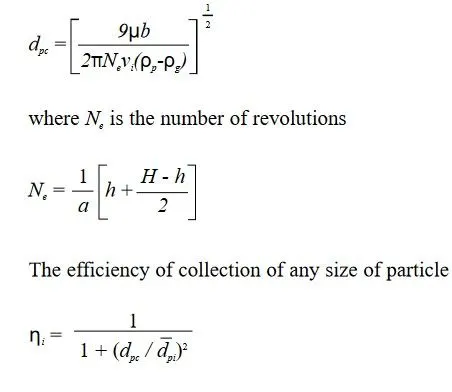
Lapple model was developed based on force balance without considering the flow resistance. Lapple assumed that a particle entering the cyclone is evenly distributed across the inlet opening. The particle that travels from inlet half width to the wall in the cyclone is collected with 50% efficiency. The semi empirical relationship developed by Lapple to calculate a 50% cut diameter, dpc, is
Part I:
Analysis on cyclone separator with varying diameter:
Case setup:
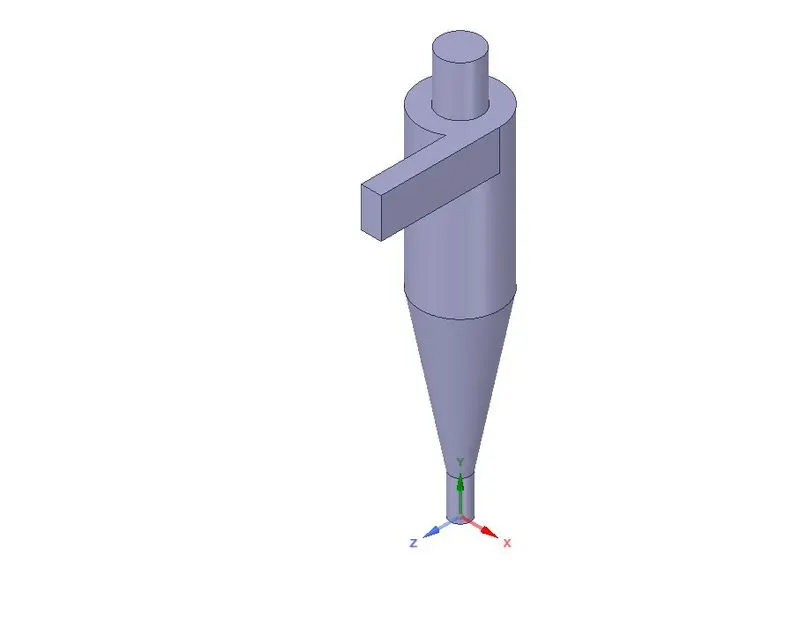
Geometry:
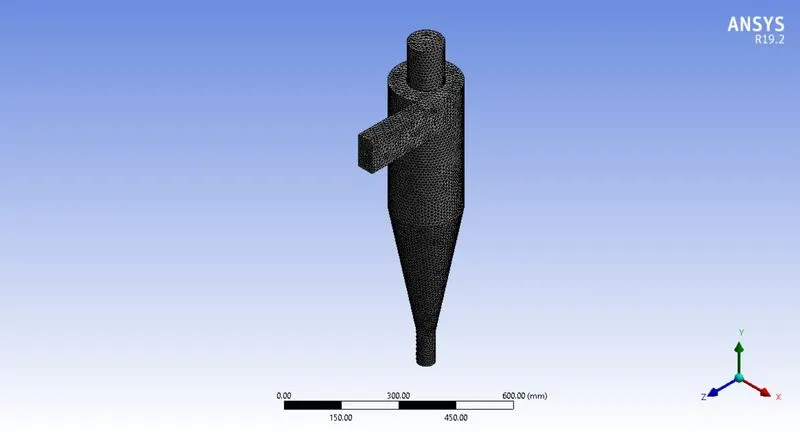
Mesh:
Mesh Element size:10 mm
Setup:
Solver -Pressure Based
Time- Steady State
Model:K-Epsilon RNG -Swirl dominated flow
Gravity- (- 9.81) In Y-direction
DPM:
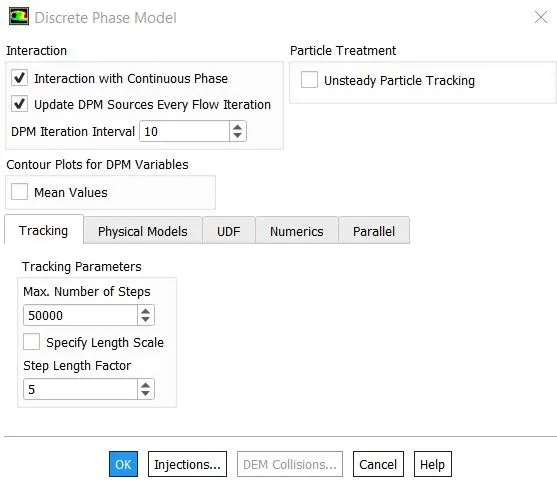
Material : Anthracite
Given Conditions:
Inlet and wall - Reflect
Outlet(Top)- Escape
Outlet(Bottom) - Trap
Separation Efficiency:
Separation Efficiency is defined as the ratio of Number of Particles trapped to the Total Number of particles Tracked.
|
PART 1 |
CASE |
PARTICLE |
PARTICLE |
|
CASE 1 |
3 m/s |
1e-06 |
|
|
CASE 2 |
2e-06 |
||
|
CASE 3 |
3e-06 |
||
|
CASE 4 |
4e-06 |
||
|
CASE 5 |
5e-06 |
|
PART 2 |
CASE |
PARTICLE |
PARTICLE |
|
CASE 1 |
1 m/s |
5e-06 |
|
|
CASE 2 |
2 m/s |
||
|
CASE 3 |
3 m/s |
||
|
CASE 4 |
4 m/s |
||
|
CASE 5 |
5 m/s |
Results:
PART1:
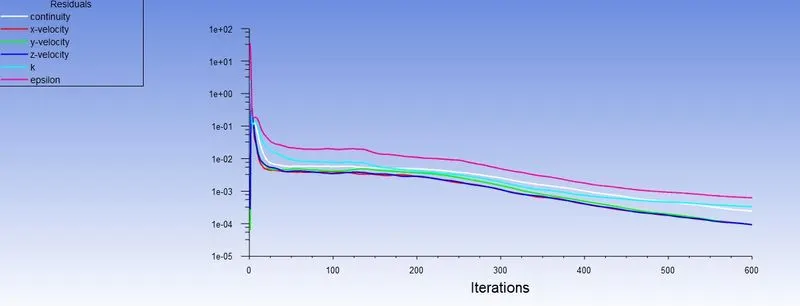
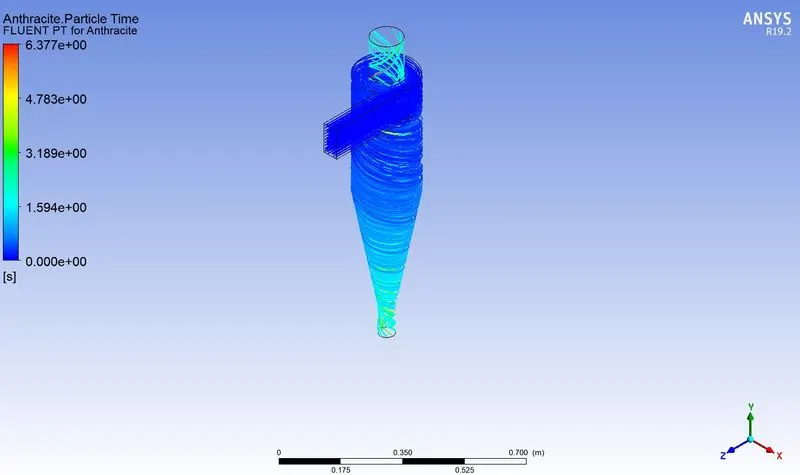
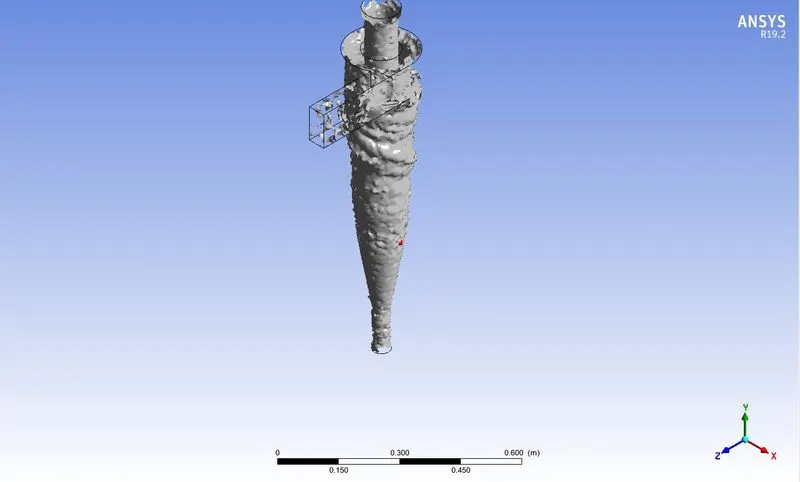
CASE 1:
Residuals:

Particle Resident Time:
Vortex:
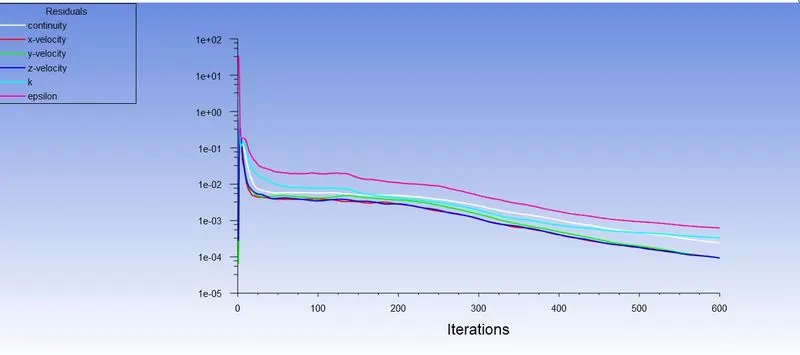
Case 2:
Residuals:

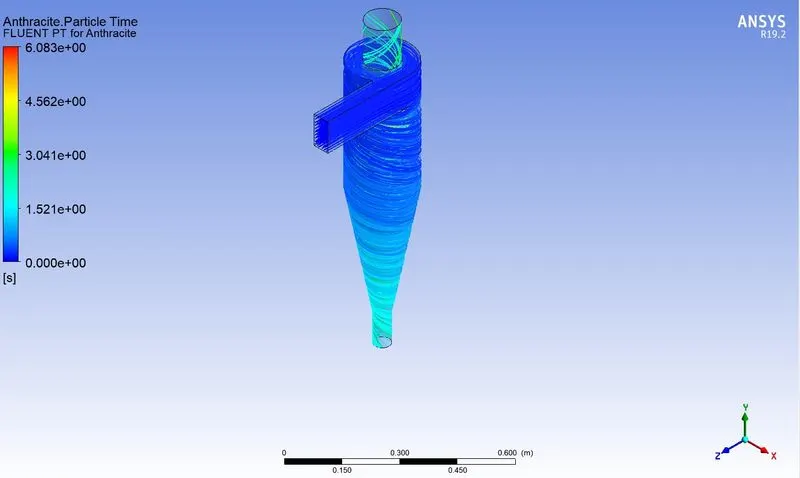
Particle Resident Time:
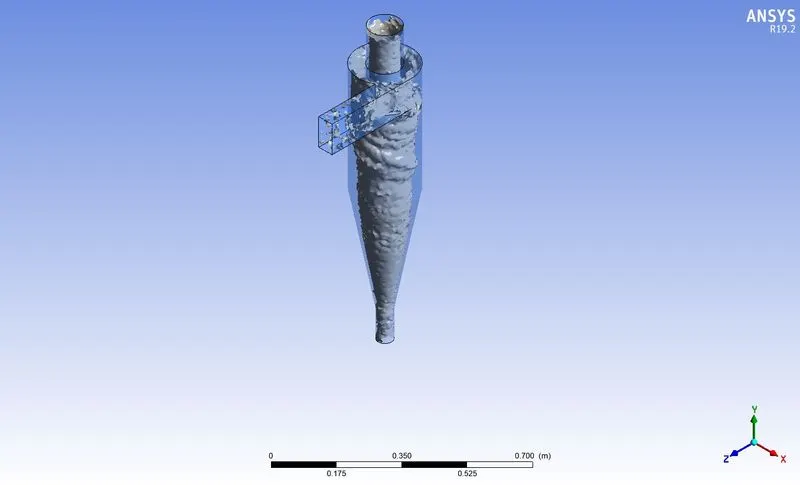
Vortex:
CASE 3:
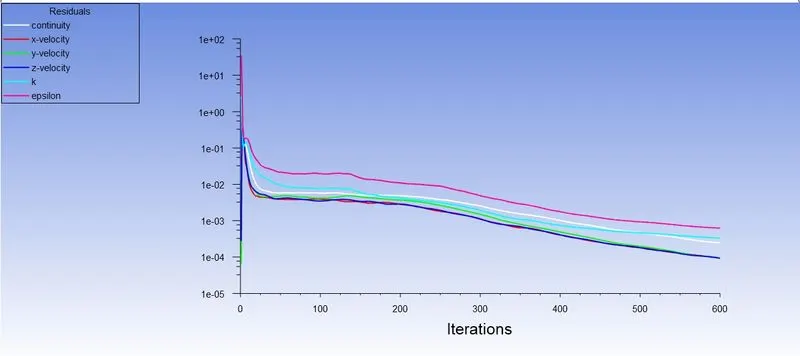
RESIDUALS:

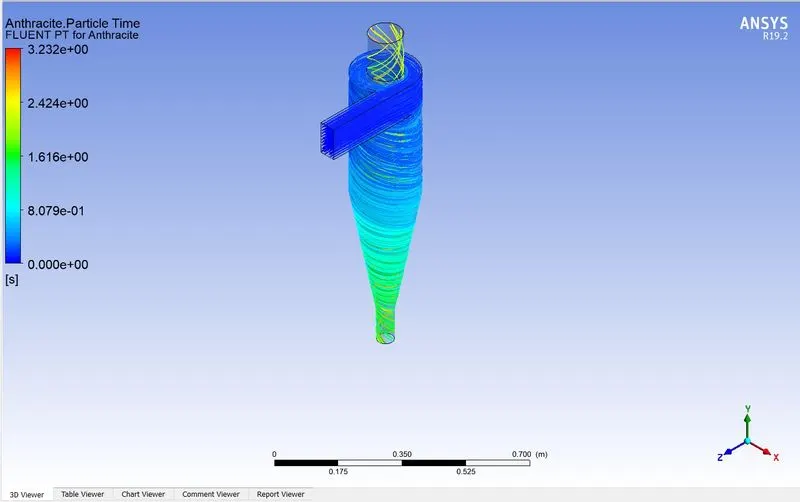
Particle Resident Time:
Vortex:
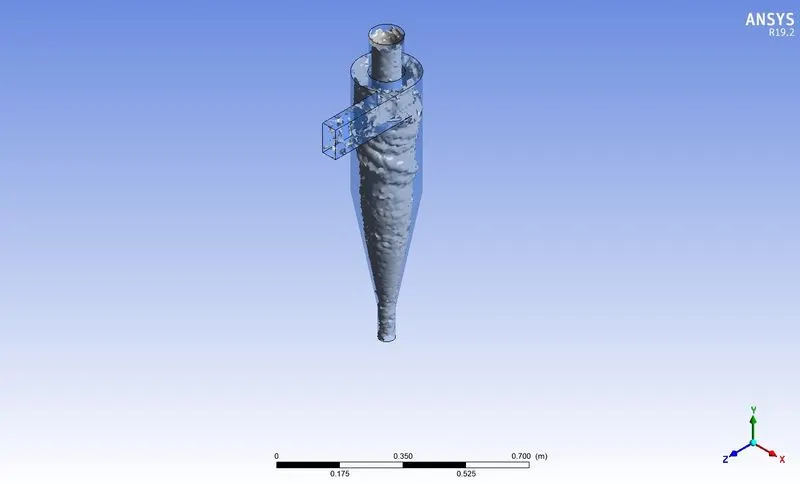
CASE 4:
RESIDUALS:
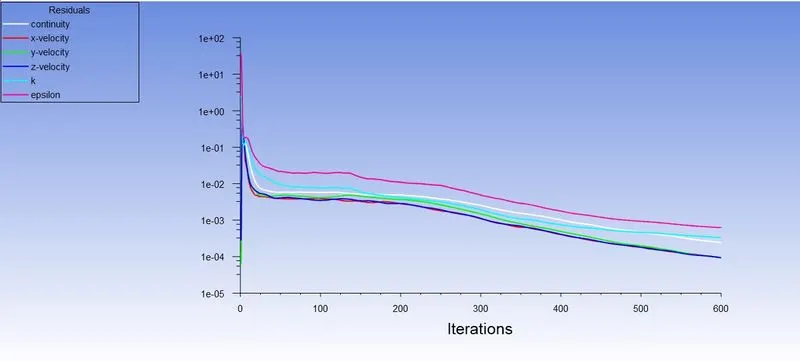

Particle Resident Time:
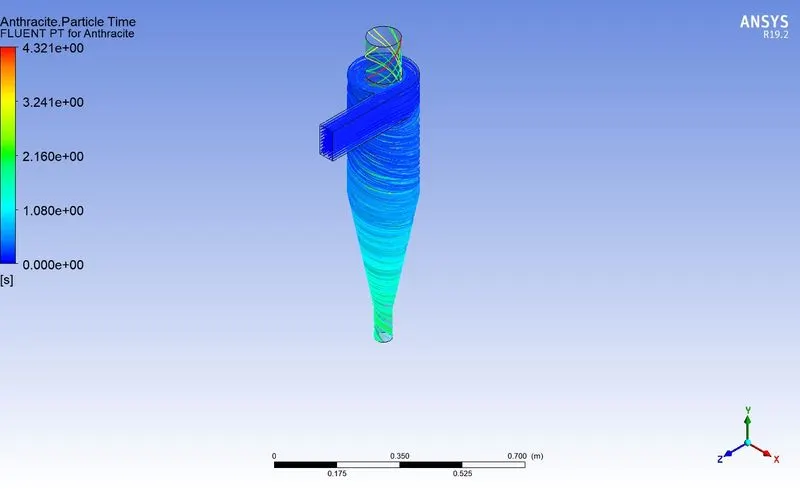
Vortex:
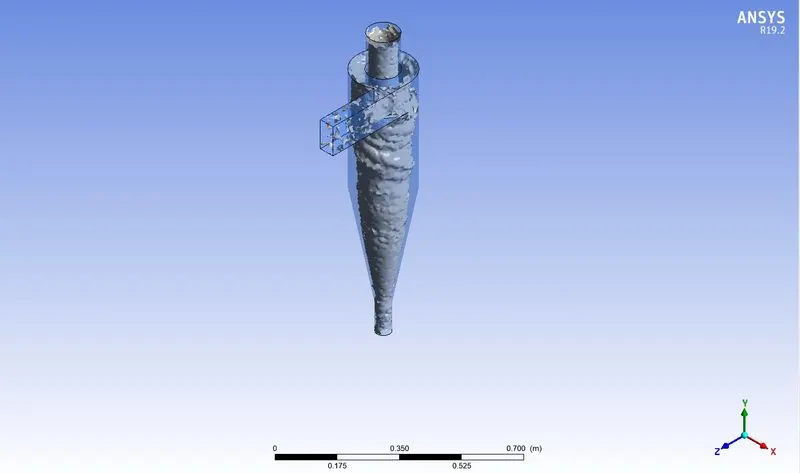
CASE 5:
RESIDUALS:
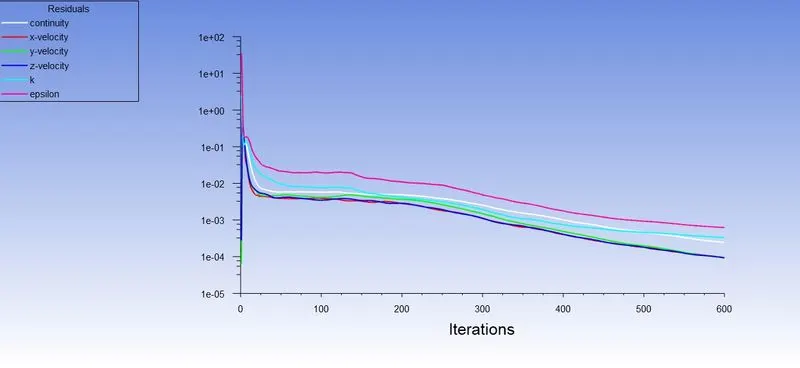

Particle Resident Time:
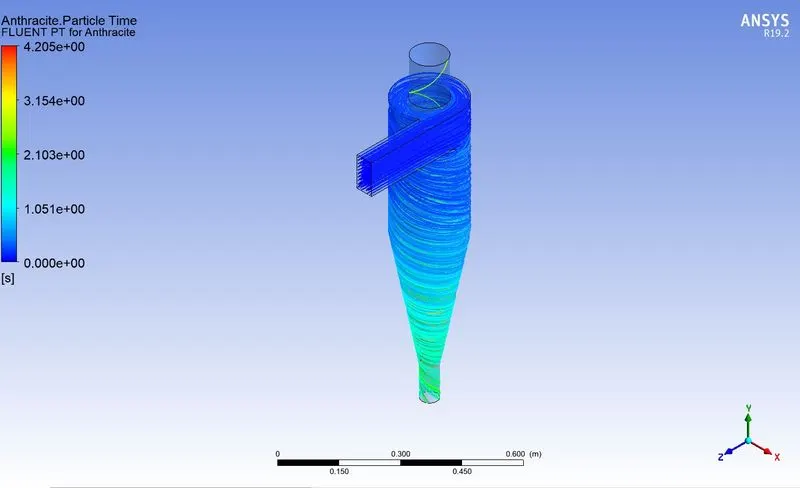
Vortex:
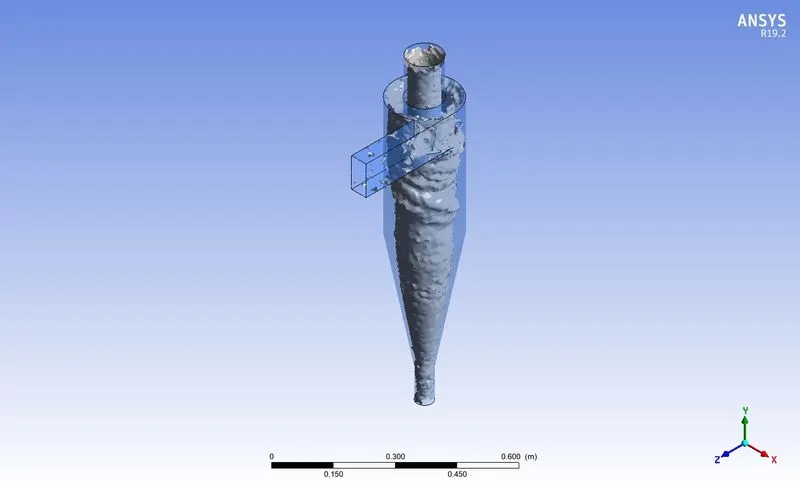
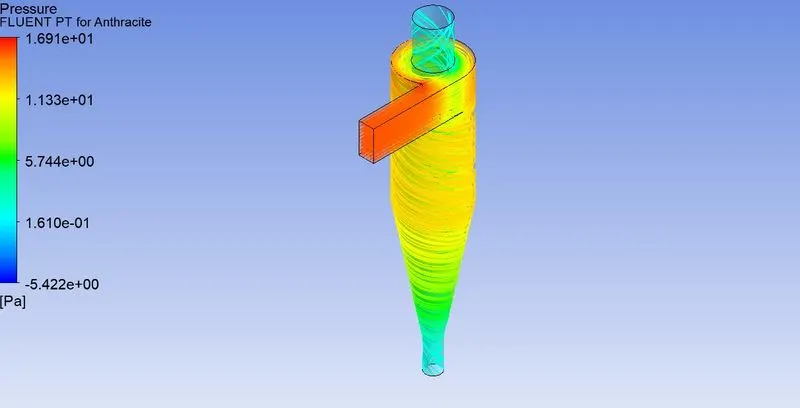
PRESSURE (ALL CASES):
PART II:
CASE 1:
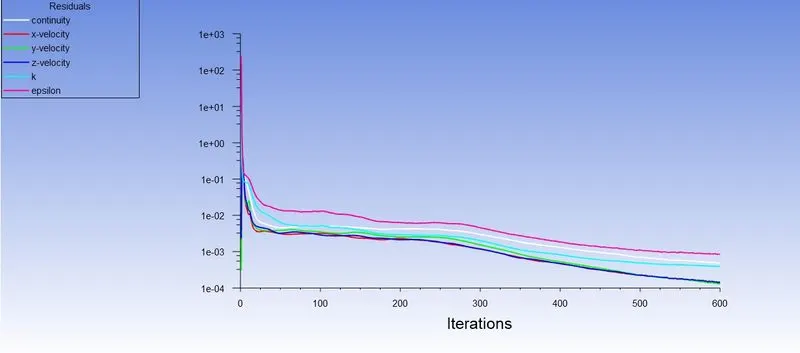
Residuals:

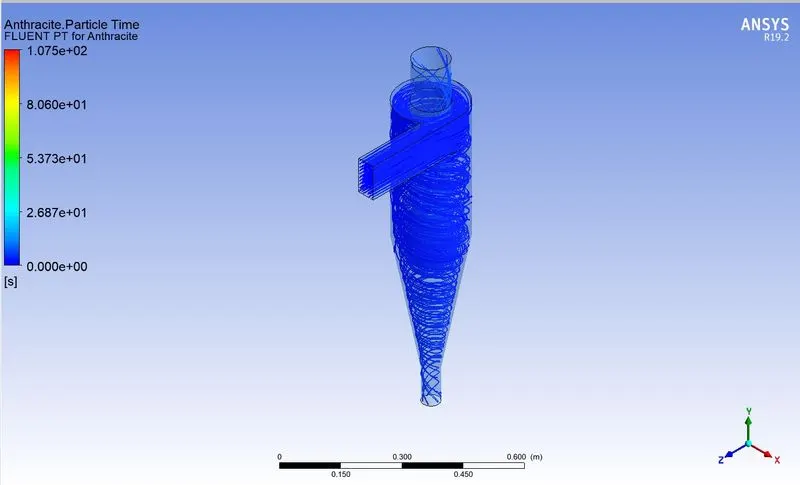
Particle Resident Time:
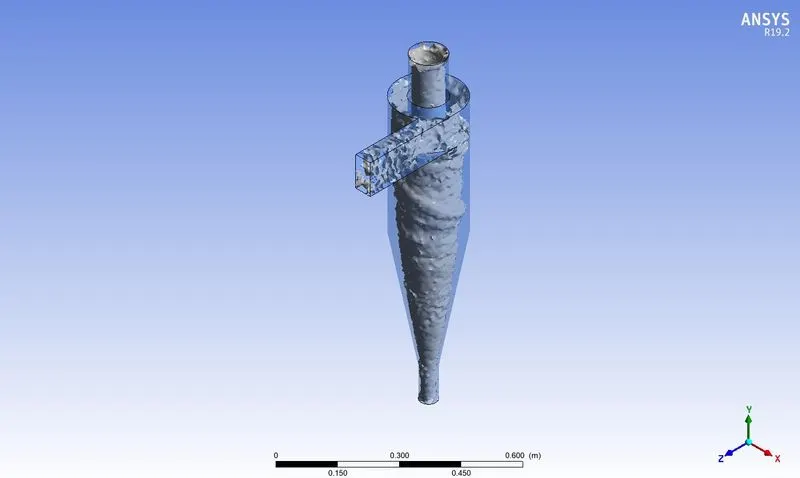
Vortex:
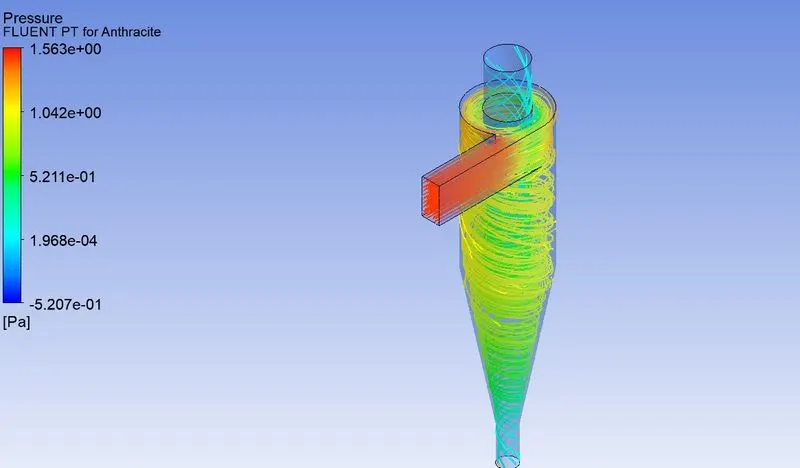
PRESSURE:
CASE 2:
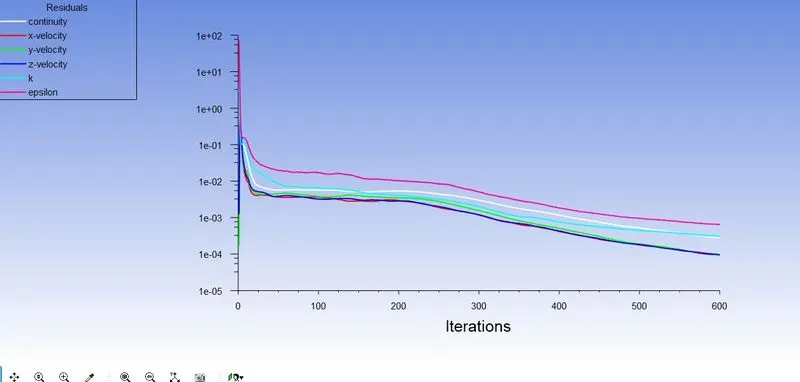
Residuals:

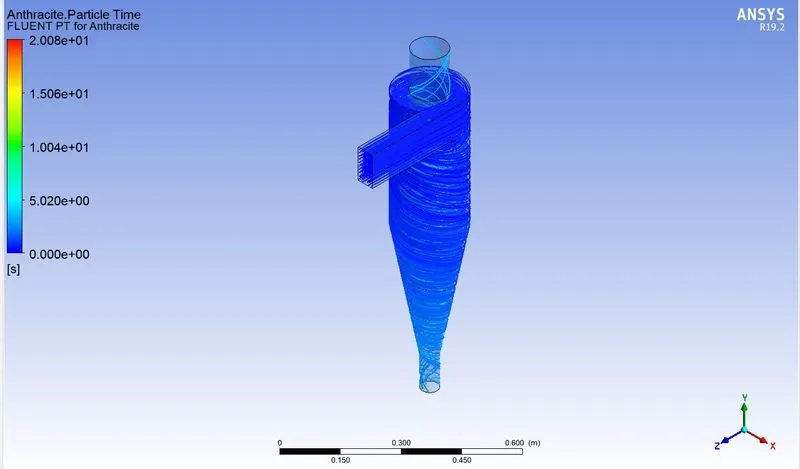
Particle Resident Time:
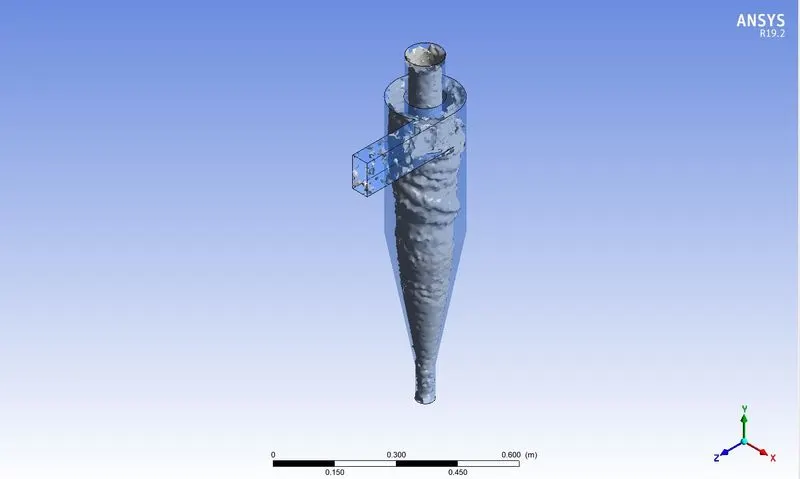
Vortex:
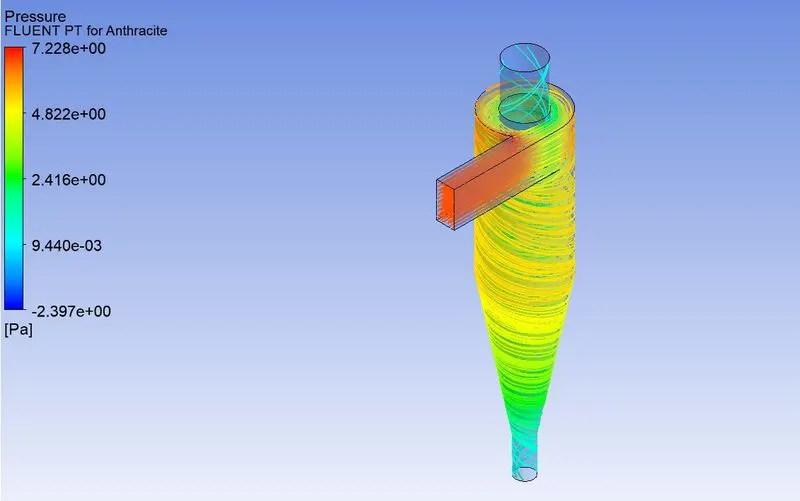
PRESSURE:
CASE 3:
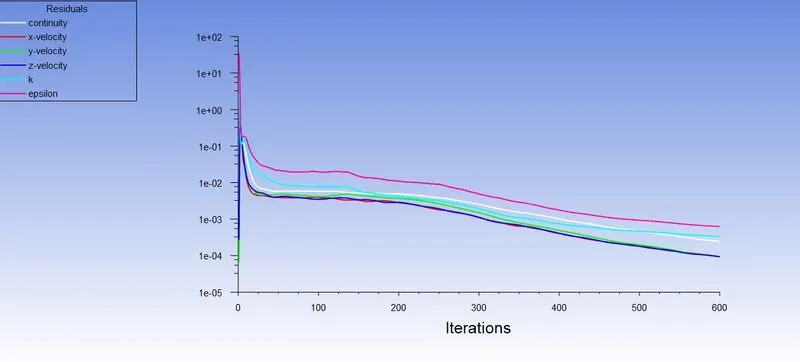
Residuals:

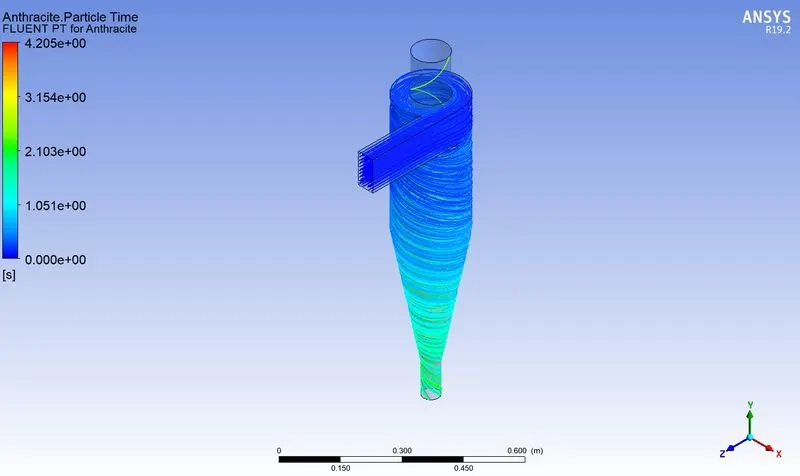
Particle Resident Time:
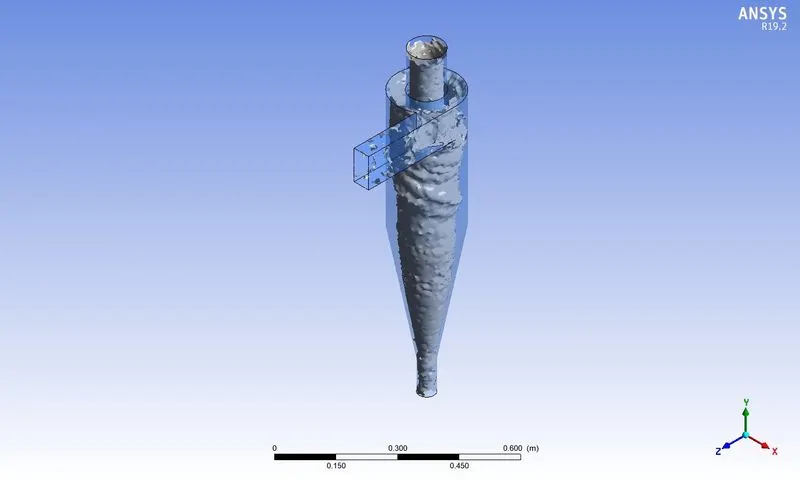
Vortex:
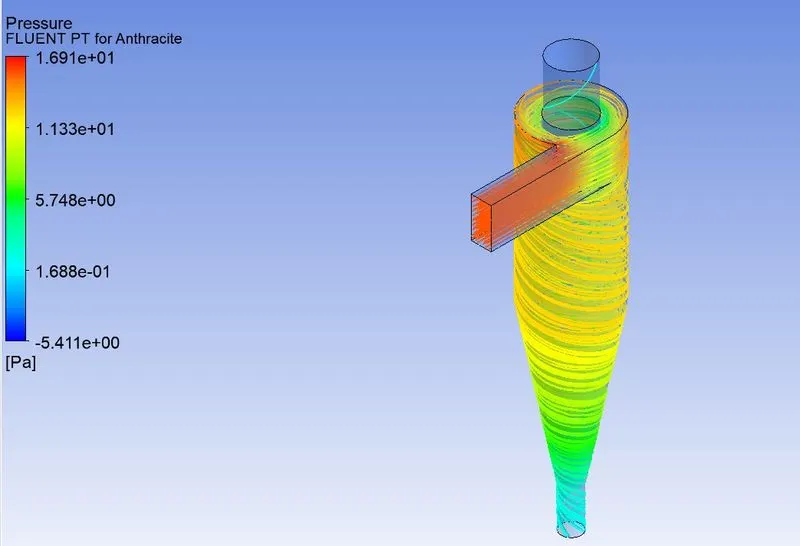
PRESSURE:
CASE 4:
Residuals:

Particle Resident Time:
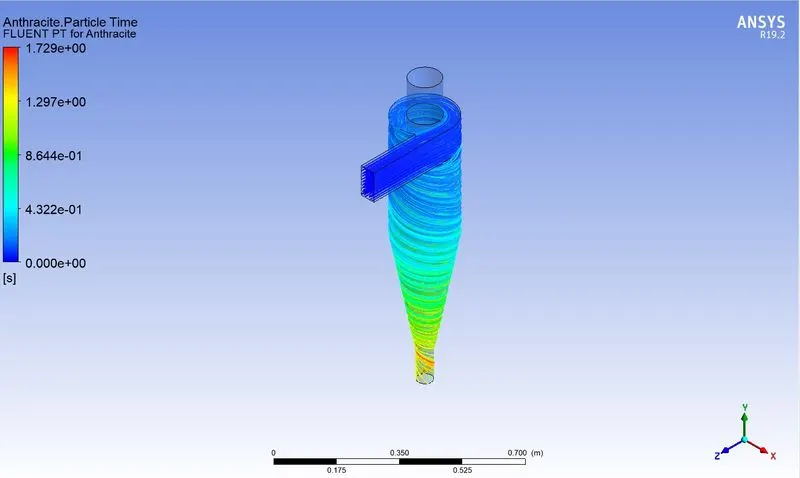
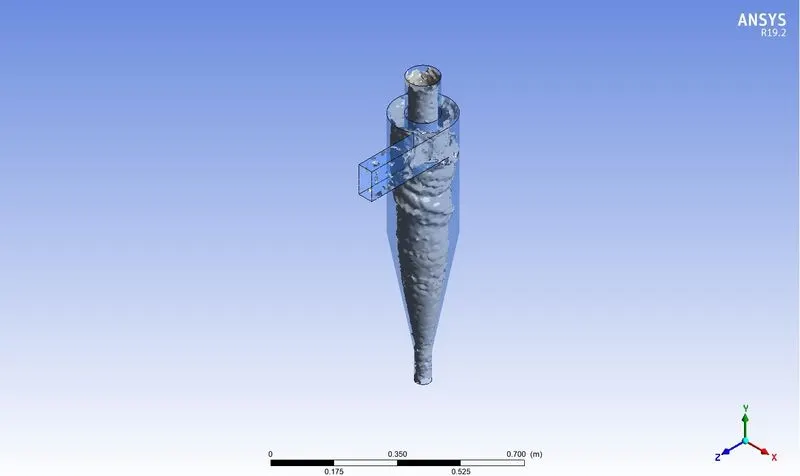
Vortex:
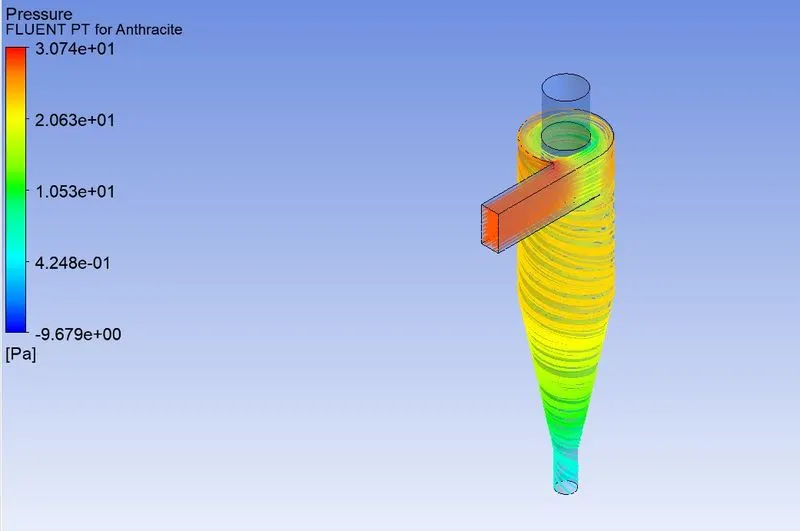
PRESSURE:
CASE 5:
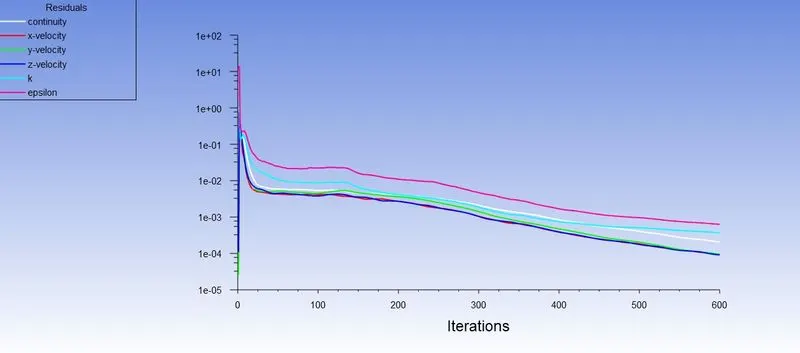
Residuals:

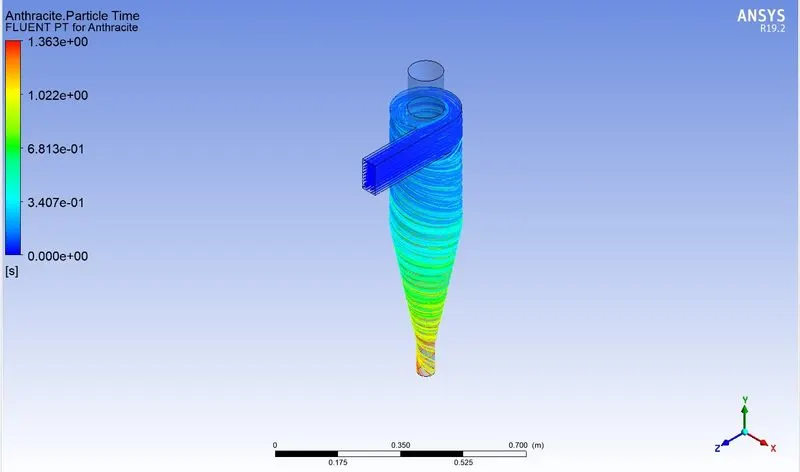
Particle Resident Time:
Vortex: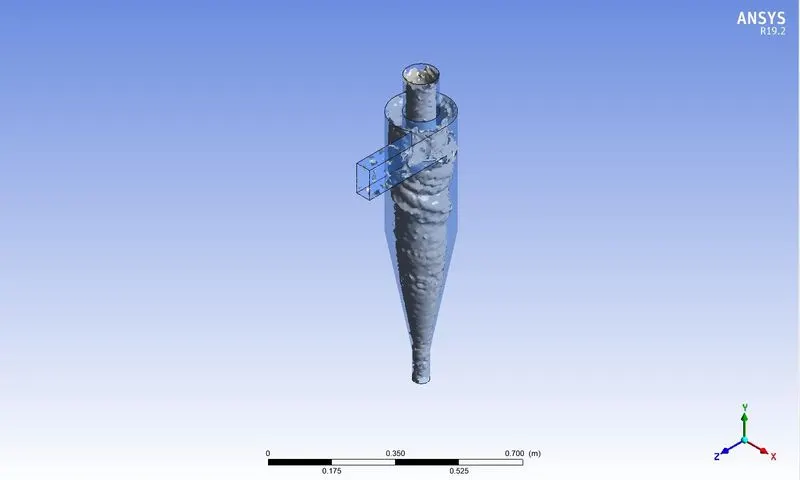
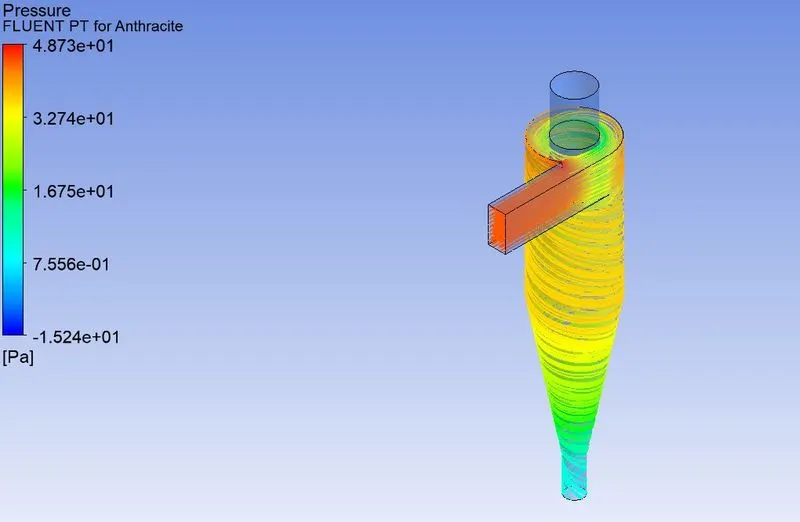
PRESSURE:
|
PART 1 |
CASE |
PARTICLE |
PARTICLE |
SEPARATION EFFICIENCY |
|
CASE 1 |
3 m/s |
1e-06 |
31.45% |
|
|
CASE 2 |
2e-06 |
79% |
||
|
CASE 3 |
3e-06 |
80.6% |
||
|
CASE 4 |
4e-06 |
89.5% |
||
|
CASE 5 |
5e-06 |
98.3% |
|
PART 2 |
CASE |
PARTICLE |
PARTICLE |
SEPARATION EFFICIENCY |
|
CASE 1 |
1 m/s |
5e-06 |
10.4% |
|
|
CASE 2 |
2 m/s |
36.2% |
||
|
CASE 3 |
3 m/s |
98.3% |
||
|
CASE 4 |
4 m/s |
100% |
||
|
CASE 5 |
5 m/s |
100% |
Conclusion:
- Separation efficiency of Cyclone Separator depends on both diameter and also the Velocity of the Particles.
- In partII Efficiency is much better,thus velocity is an important parameter for higher separation efficiency .
- Higher the Velocity, higher the Pressure Drop and highest the Efficiency.