Conjugate Heat Transfer Simulation
Objective
To simulate Conjugate heat transfer in a solid aluminum pipe. Run grid dependence test to see how it affects simulation results. Understand how the Super-cycle modeling works and realize importance of the nondimensional term Y+.
Intoduction
In this challenge we are simulating conjugate heat transfer (CHT) of a solid pipe. "CHT" is a term which describes processes of temperature variations between solids and fluids.
During simulating CHT, it's important to understand that convection (heat transfer in fluids) induces much faster, than conduction (heat transfer in solids). To accommodate this difference we would need much more simulation time to solve problems. Fortunately, to avoid the above mentioned inconvenience we can use "Super-cycle model".
The working principle of the Super-cycle model is simple, while simulating transient cases, as an input we are setting time intervals in which fluid simulation will be paused until the simulation for solid phase converges.
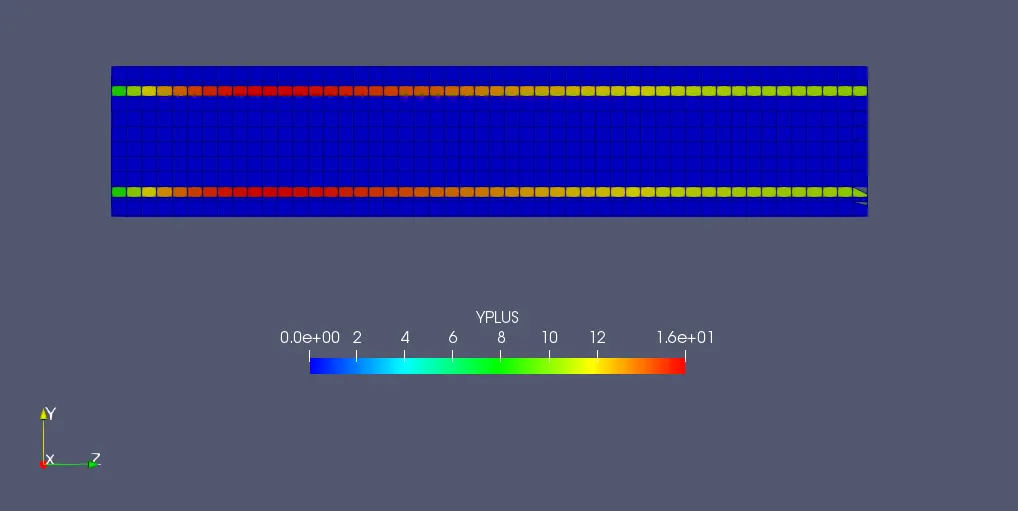
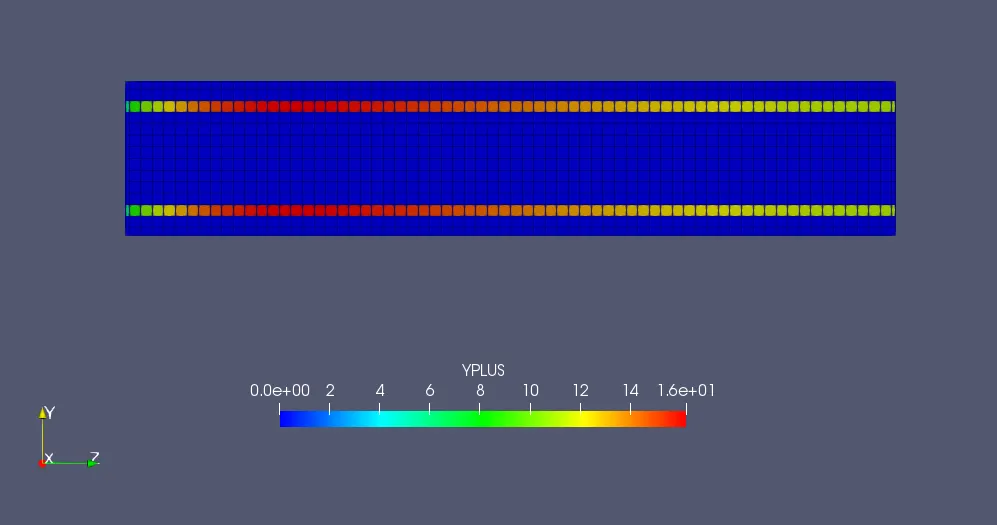
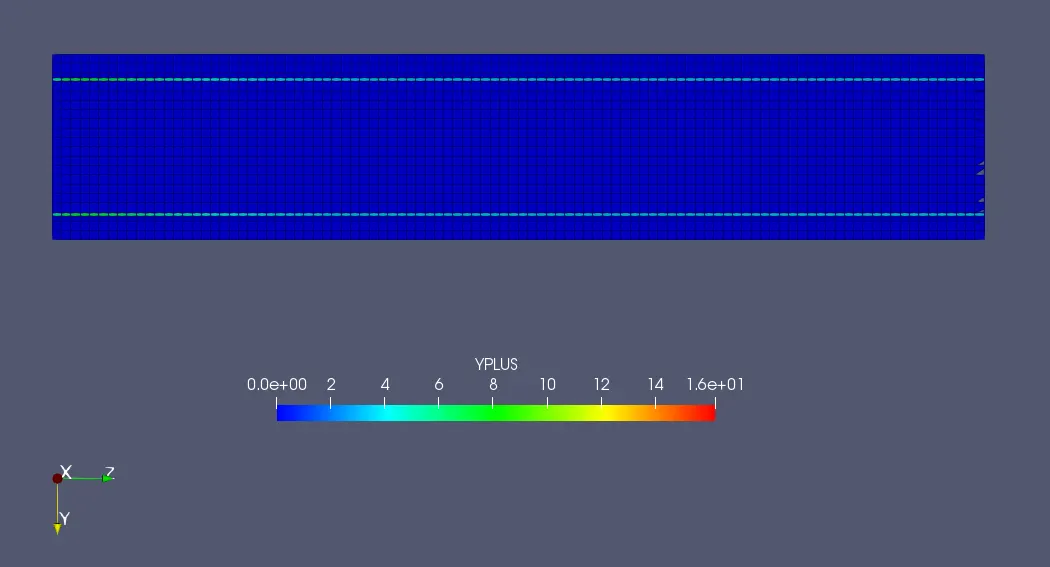
In order to accurately predict flow stucture at the wall boundaries we are using non-dimensional term, so called "Y+". The value of "Y+" tells us how fine or coarse grid is, and also determines if wall functions should be used or not.
If the flow is fully laminar then we don't need fine mesh and Y+ has no point anymore, but when it comes to the turbulent flow, when the laminar layer at the wall is pretty thin and we can divide flow into 3 layers: viscous sub-layer, buffer layer and turbulent layer we need to determine the value of the "Y+" term. For the viscous sub-layer "Y+" should be less than 10 and for the turbulent layer "Y+" should be greater than 30. Fortunately, we can also use near wall methods, for instance, "law of wall" which allows us to have coarser mesh and simulate in the range of desired accuracy.
Case Set up
- Geometry
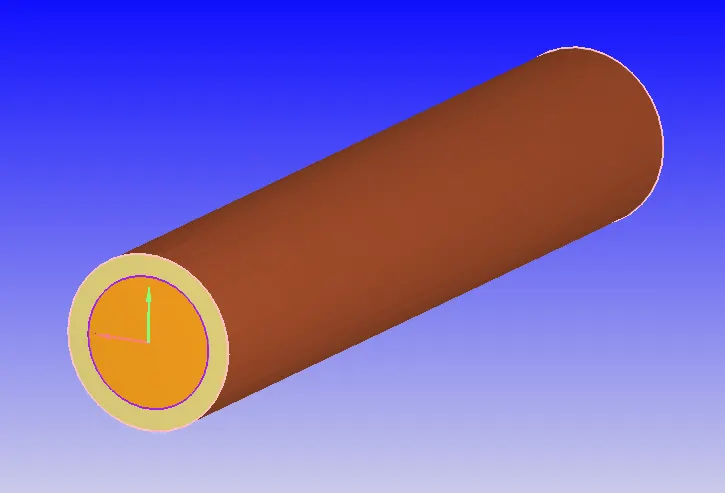
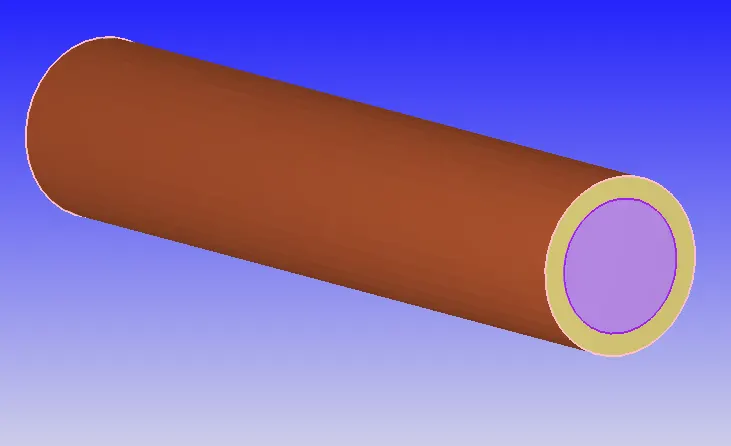
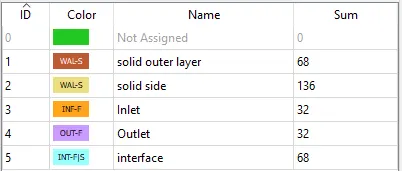
- Boundary flagging
- Materials
Real gas (Air)
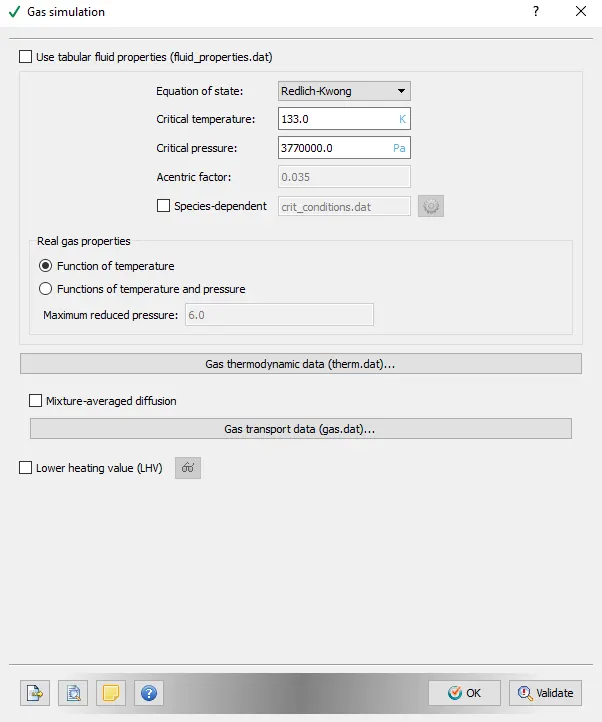
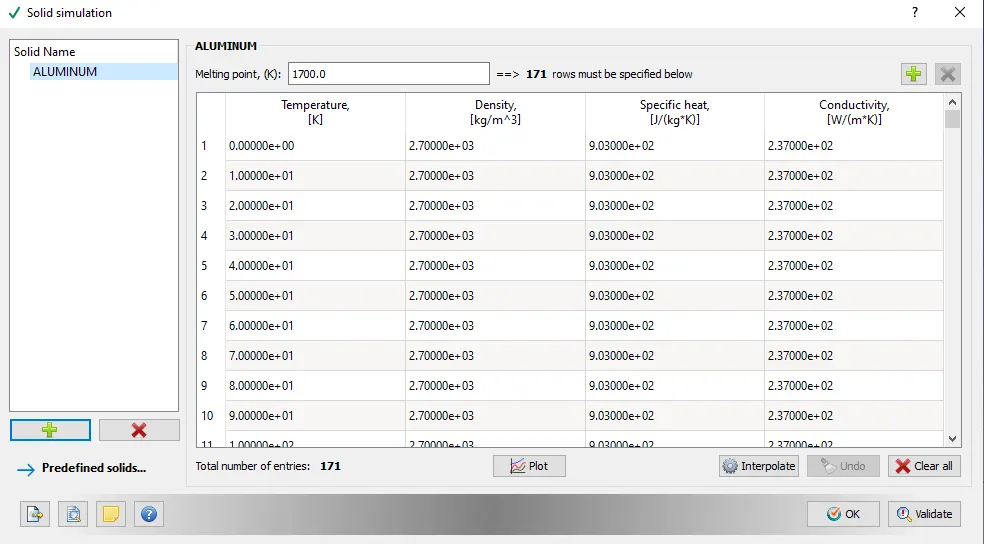
Solid pipe (Aluminum)
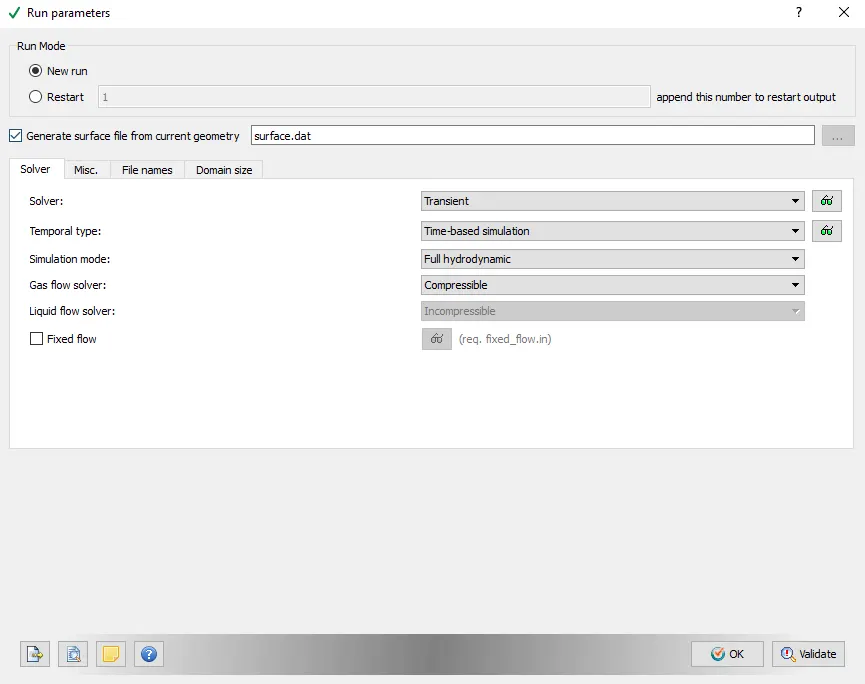
- Run parameters
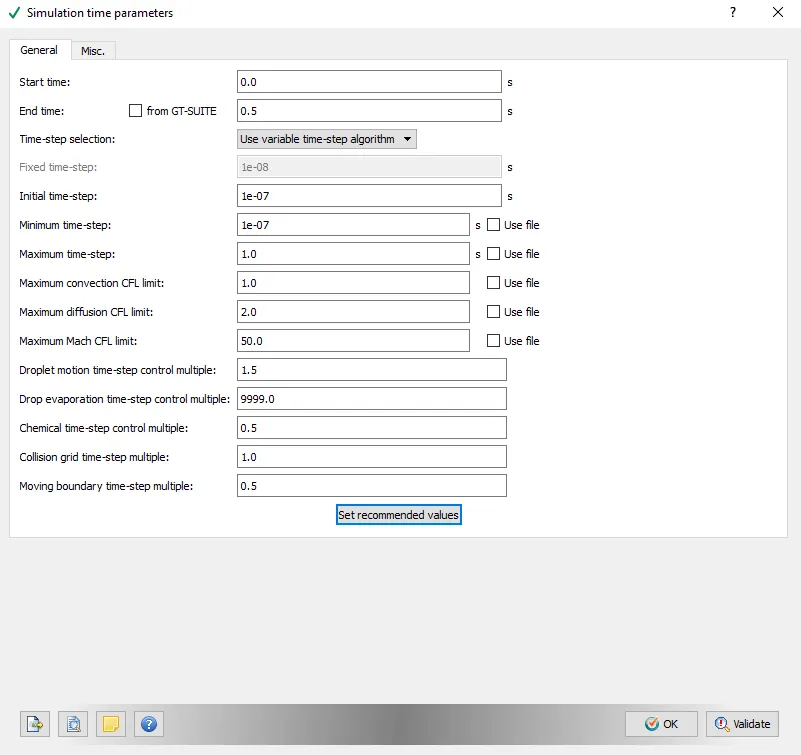
- Simulation time parameters
- Boundary Conditions
Solid outer layer (surface where we apply the heat flux)

According to the Boundary conditions, we are providing heat to the solid surface, heat flux equals 10000`W/m^2`
Solid side

Inlet
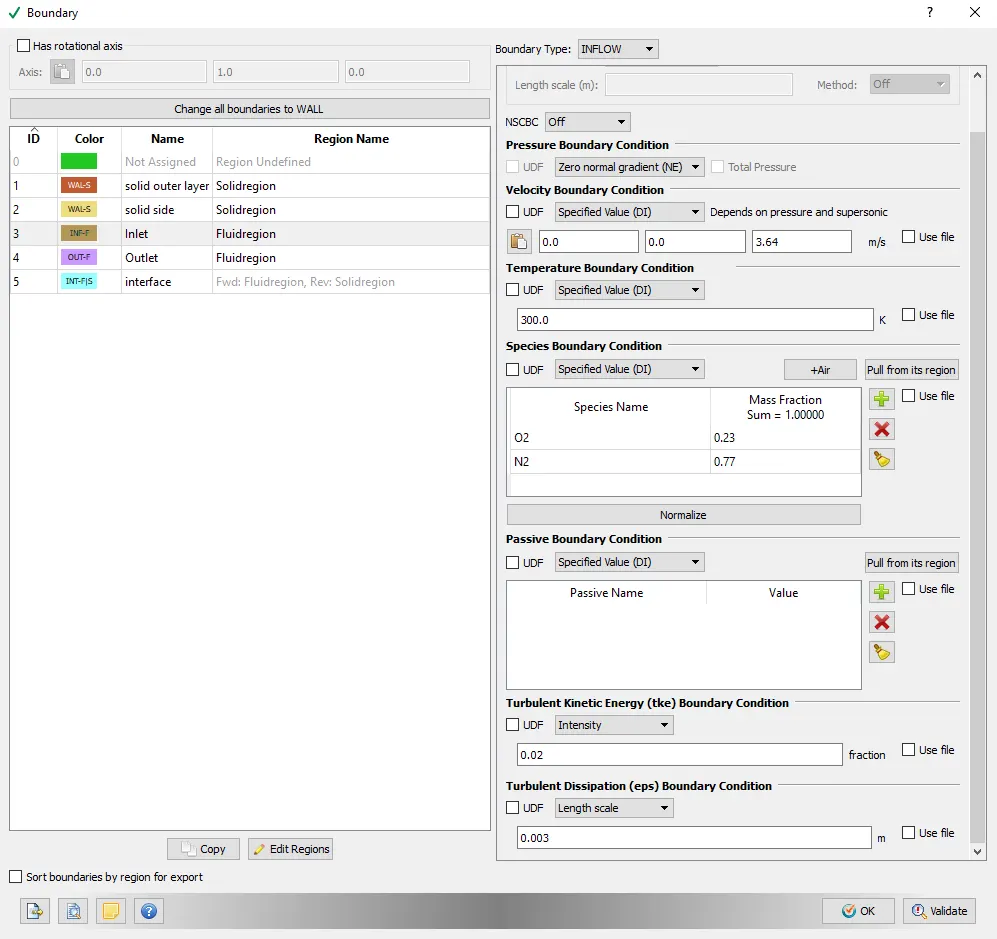
As we know, according to the problem the Reynold's number equals to 7000. to calculate the inlet velocity of the flow we are using Reynold's number equation.
`Re = (rho*v*D)/mu => v = (mu*Re)/(rho*D) = (18.1*10^-6*7000)/(1.16*0.03) = 3.64`m/s
Outlet
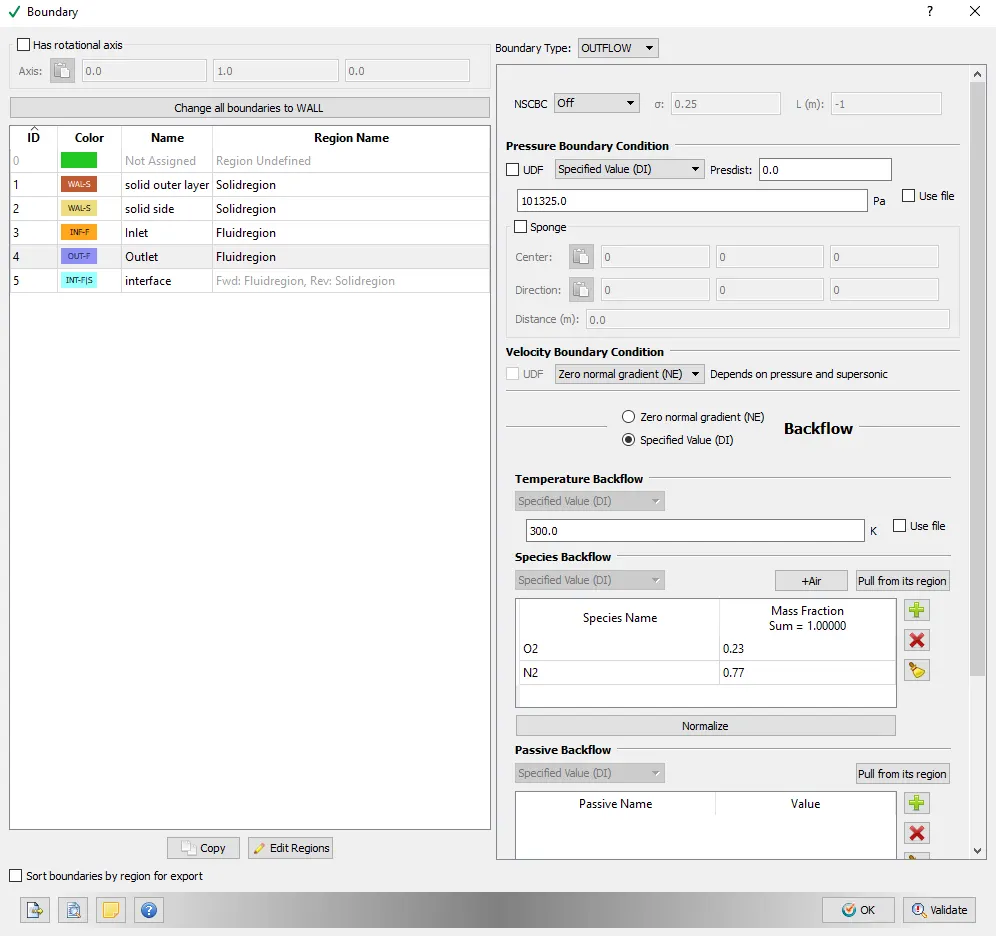
Interface (solid to fluid)


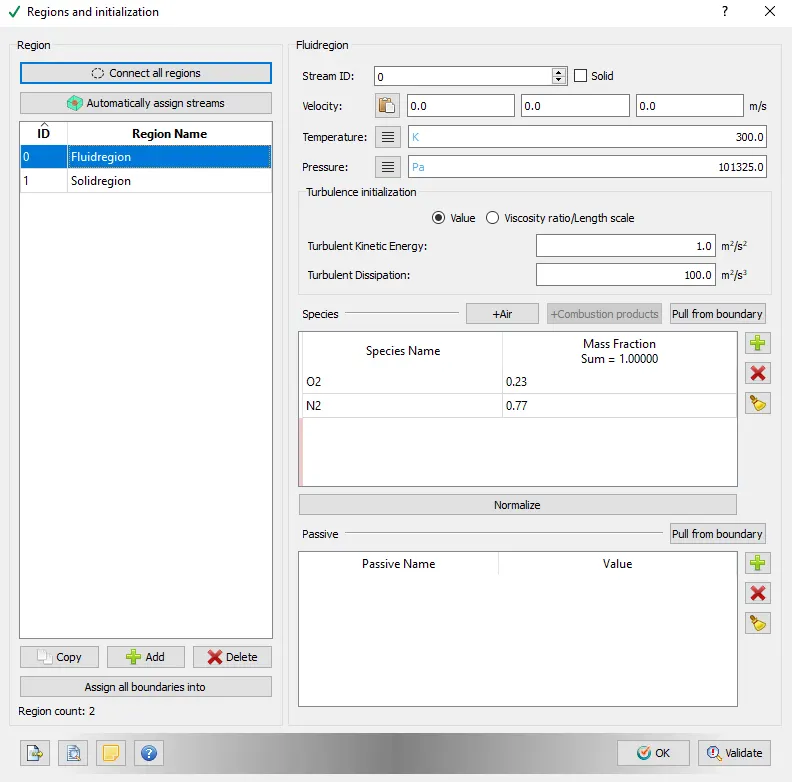
- Regions and initialization

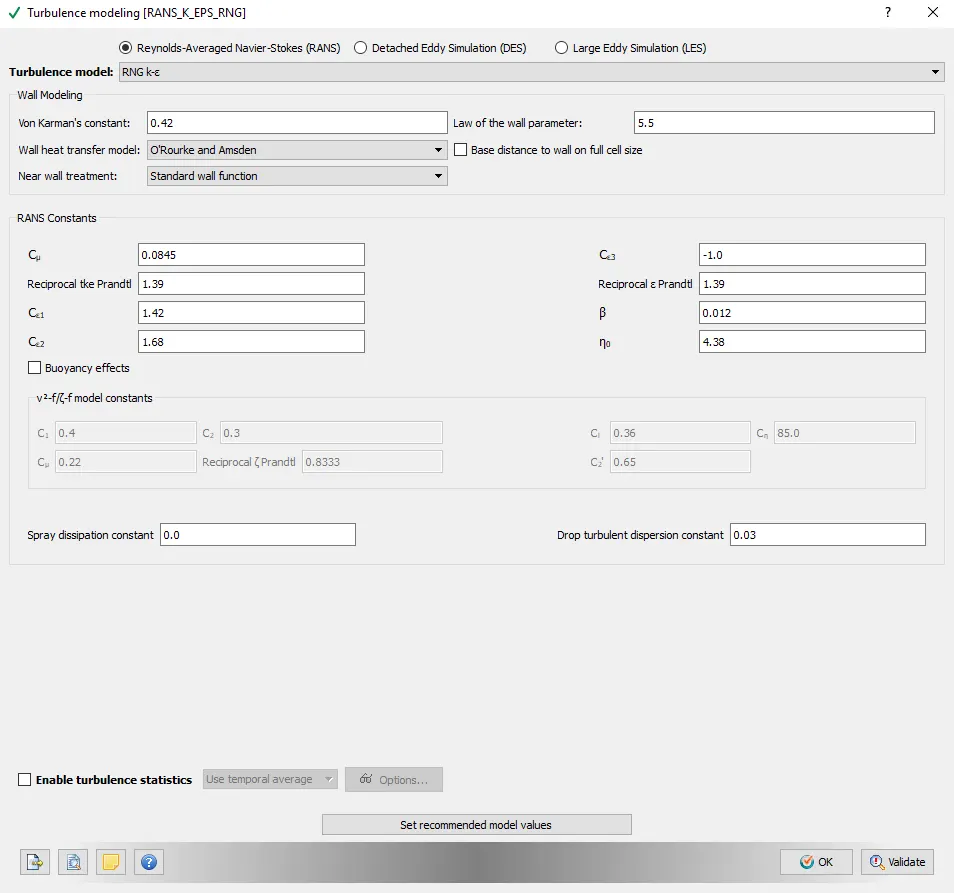
- Turbulence model
- Super-cycle model
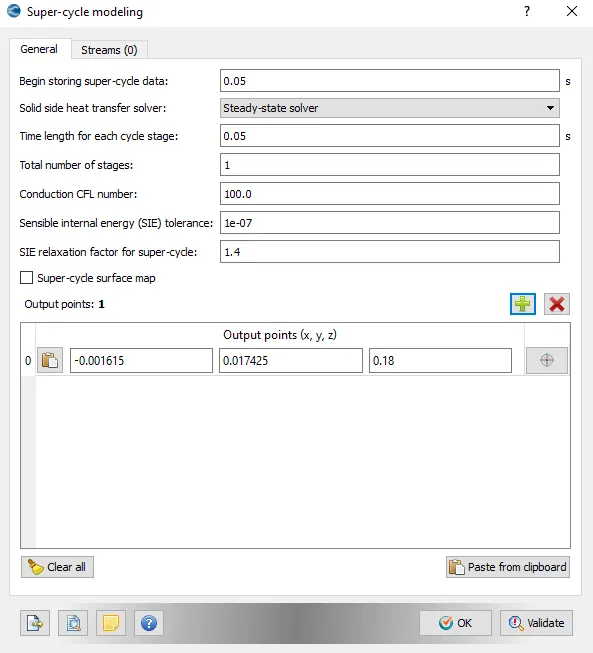
"Time length for each cycle stage" initially is 0.05sec. After running grid dependency test we will simulate cases with different "time length for each cycle stage": 0.01, 0.02 and 0.03sec to see how this value effects the time consumed by the solver.
- Mesh
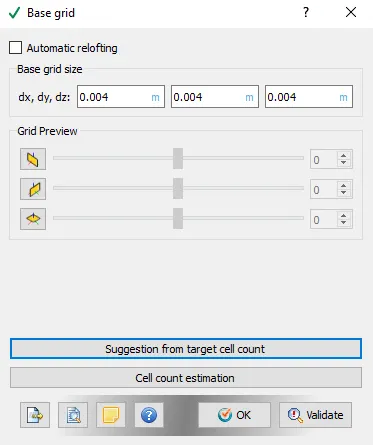
Initially the base grid size is 4mm.
4mm base grid size
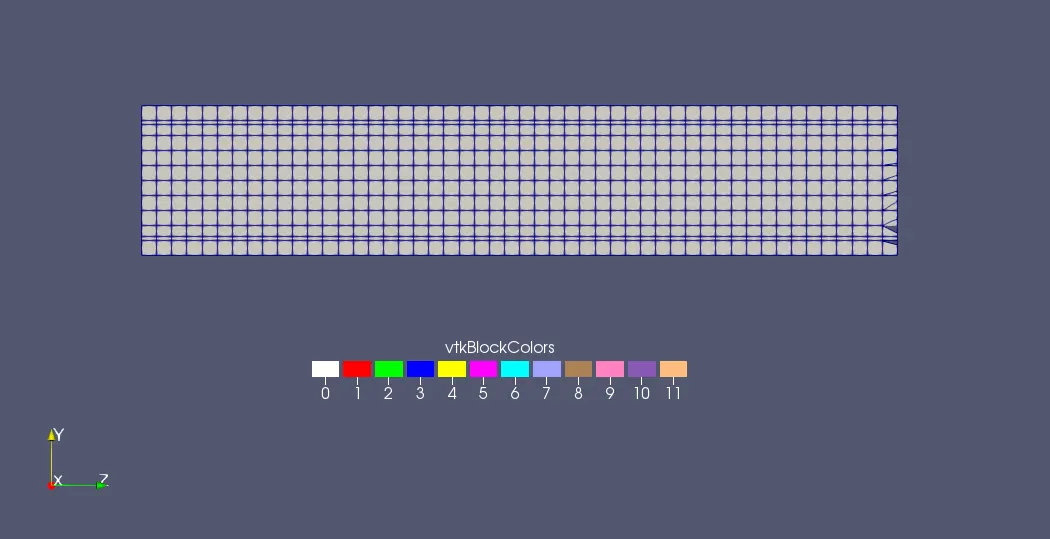
Post processing
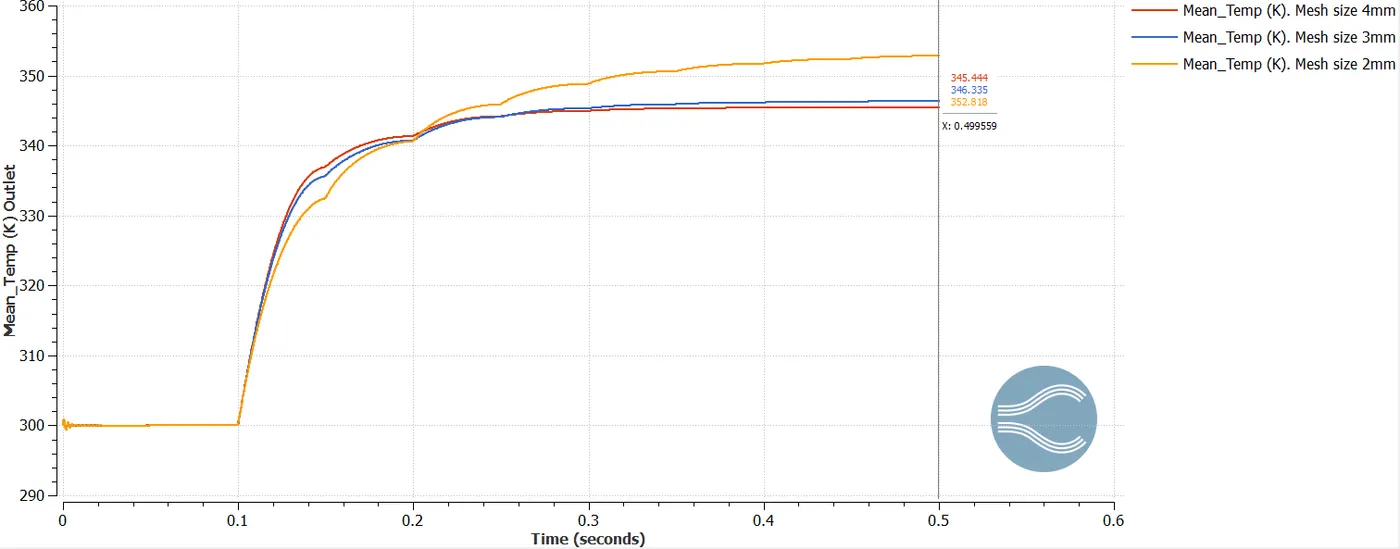
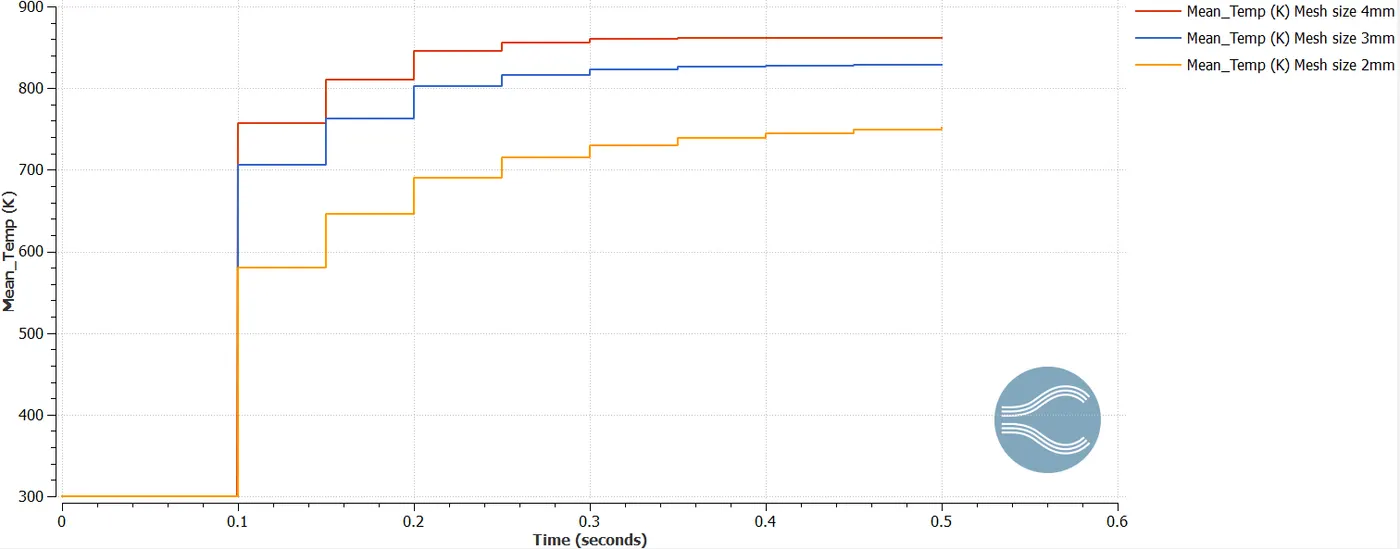
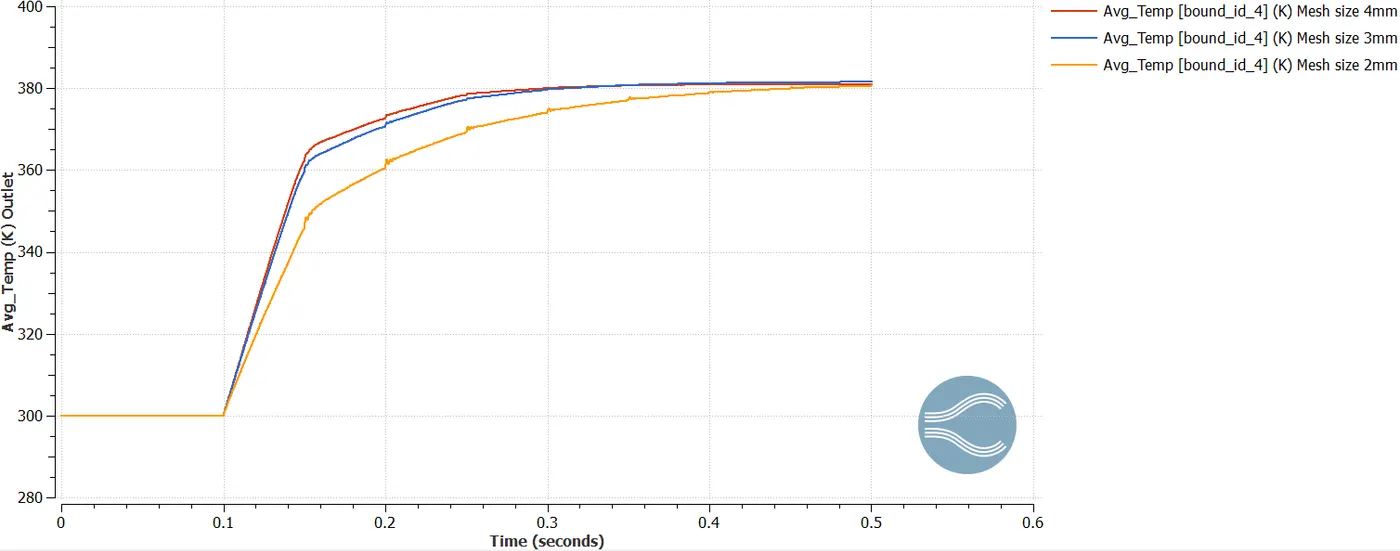
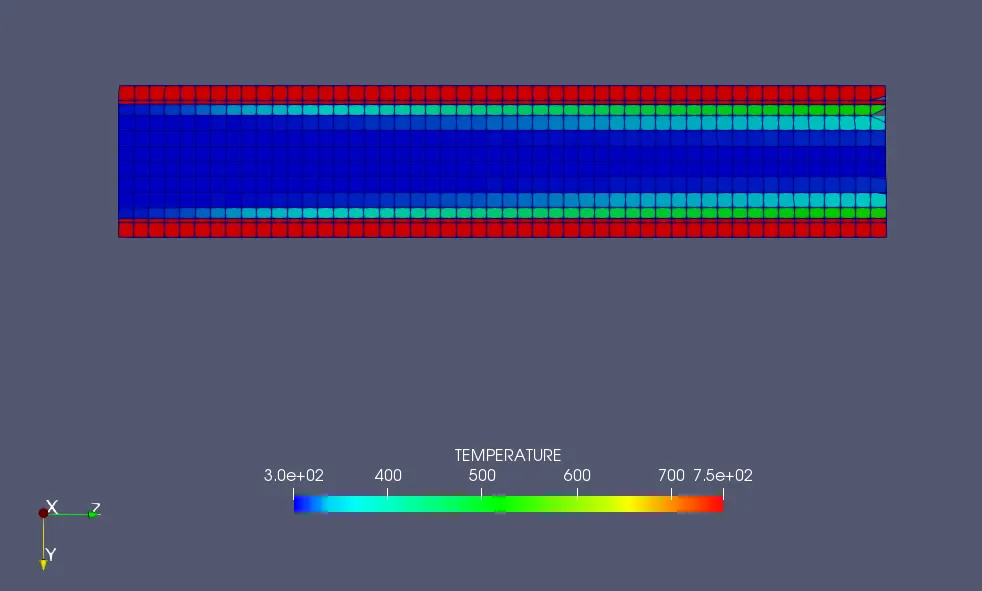
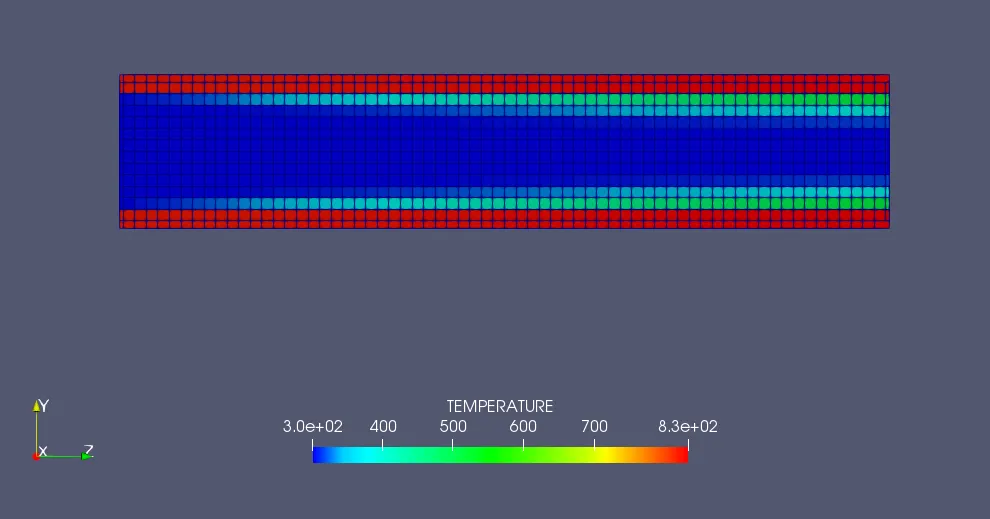
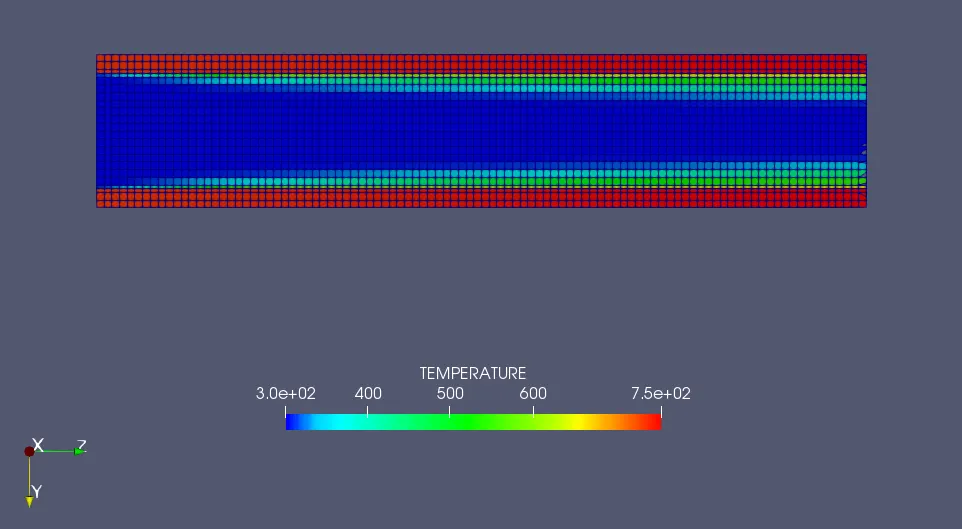
We run the exact same set up with the different base grid sizes: 4mm 3mm and 2mm to see how grid size effects the simulation results.
- Grid dependency test
Mean temperature of the fluid
Mean temperature of the Solid pipe
Air Temperature at the Outlet of the pipe.
grid size 4mm.
grid size 3mm
grid size 2mm
Y+ for 4mm base grid size
Y+ for 3mm base grid size
Y+ for 2mm base grid size
Temperature Contours (Animation)
- Effect of the Super-cycle stage interval value.
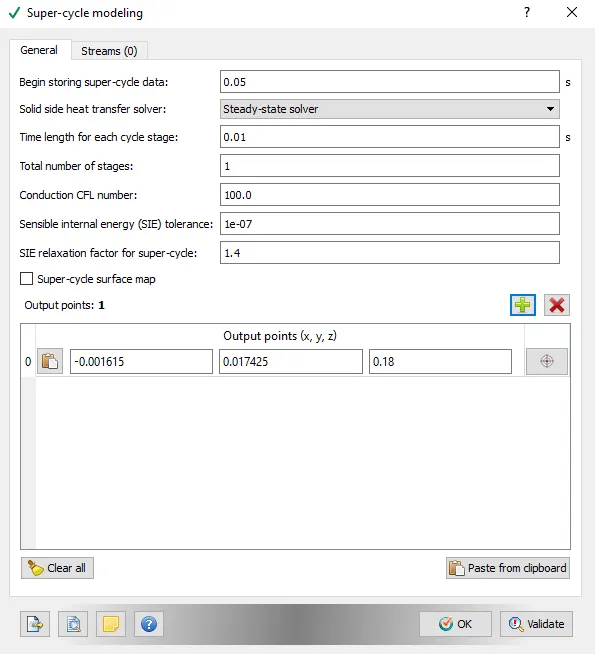
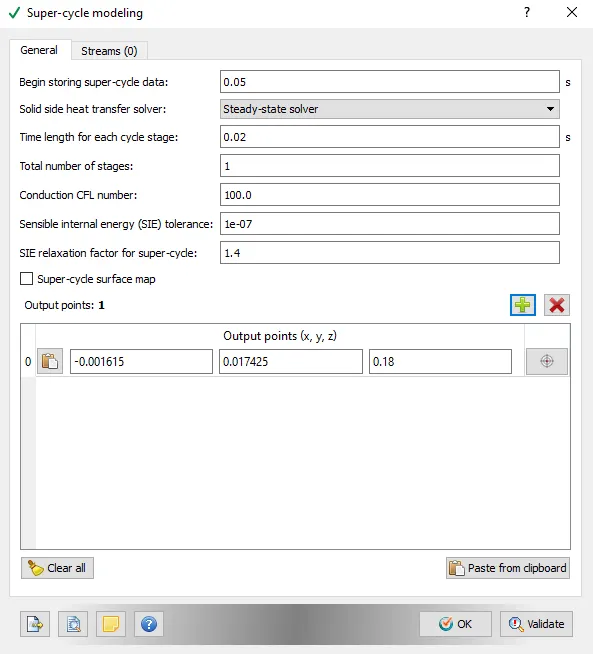
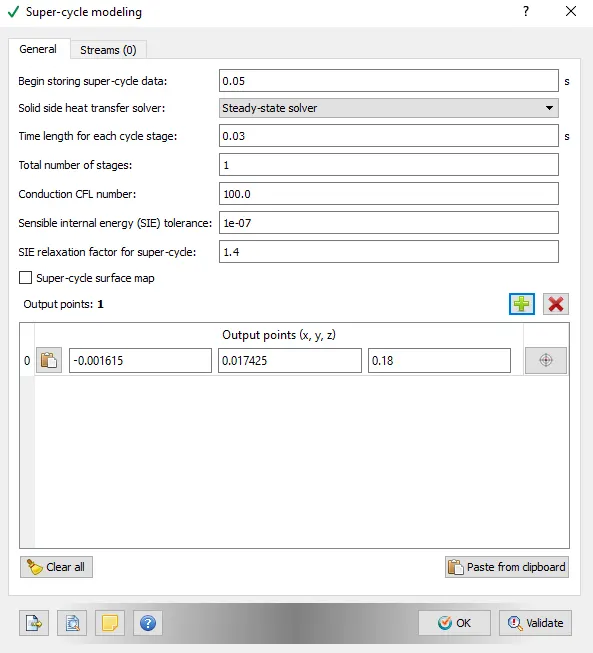
In the picture above it's shown that we have simulated Super-cycle model with 3 different stage interval values.
Note: All these simulations with different Super-cycle stage interval values have the same mesh with the base grid size 2mm.
- Super-cycle stage interval value: 0.05sec
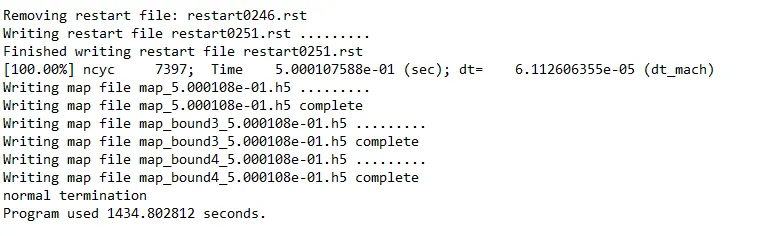
- Super-cycle stage interval value: 0.03sec
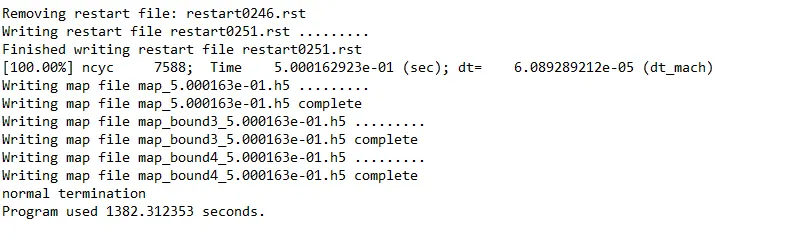
- Super-cycle stage interval value: 0.02sec
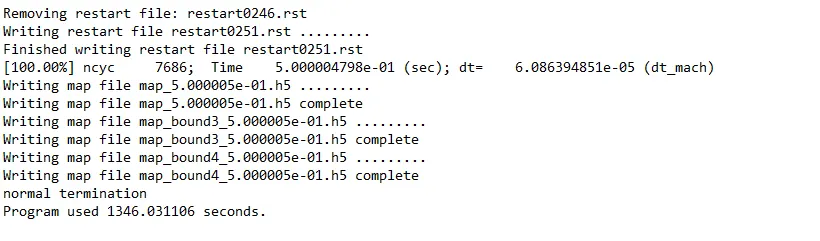
- Super-cycle stage interval value: 0.01sec
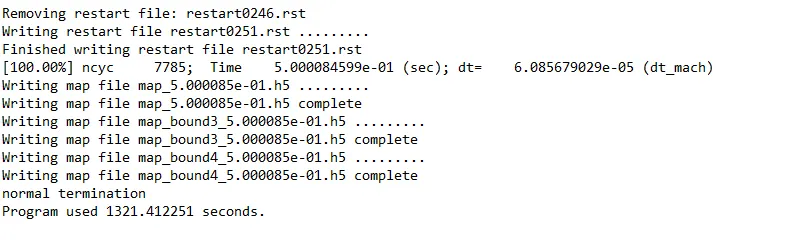
According to the figures above which shows simulation times while Super-cycle stage interval value is different we see that while stage interval value is the lowest simulation takes the least time to complete the process.
Conclusion
We successfully simulated CHT of a solid aluminum pipe. we learnt how to set up CHT simulation, realised importance of the Super-cycle model. Found out that while decreasing Super-cycle stage interval value, time required for simulating the case decreases as well.