CONJUGATE HEAT TRANSFER ANALYSIS ON A GRAPHICS CARD:
CONJUGATE HEAT TRANSFER ANALYSIS ON A GRAPHICS CARD:
AIM:
To perform a steady-state conjugate heat transfer analysis on a model of a graphics card.
INTRODUCTION:
Here we run the simulation for best possible mesh with combination of coarse and refined mesh in different regions and with various velocities of refined mesh to find out maximum temperature attained by processor and heat transfer coefficient.
OBJECTIVE:
- Run the simulation by varying the velocity from 1m/sec to 5m/sec for at least 3 velocities and discuss the results.
- Find out the maximum temperature and heat transfer coefficient attained by the processor.
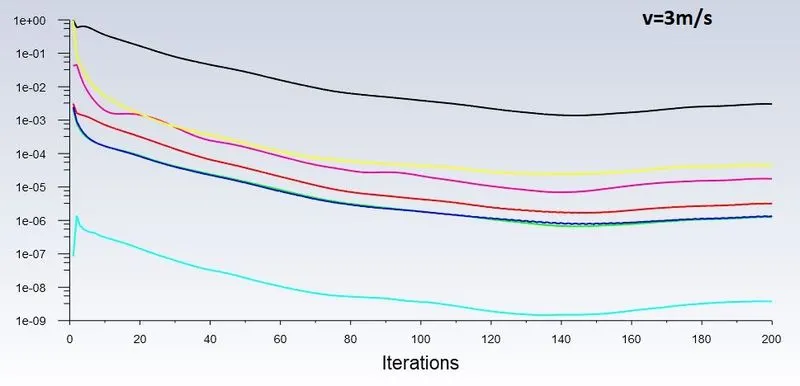
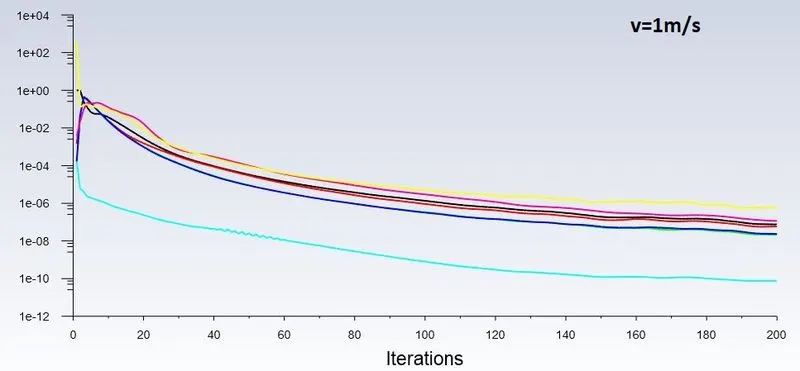
- Prove that the simulation has achieved convergence with appropriate images and plots.
- Identify potential hotspots on the model.
THEORY:
Conjugate heat transfer analysis can accurately predict heat transfer by solving all the relevant solid and flow field heat transfer processes.
Heat flow from a body at higher temperature to lower temperature in three ways.
Conduction:
- Occurs due to vibration & collision of molecules.It mostly occurs in solids zone.
- Conduction occurs between solid to solid zone.
Convection:
- Occurs due to movement of fluid molecules.When fluid is heated,volume of heat source increases & density decreases.Heating up of entire fluid movement is known as convection.
- Convection occurs between fluid to solid and solid to fluid zone.
Radiation:
- All objects greater than absolute zero emit heat in the form of electromagnetic waves.These electromagnetic waves donot need medium to travel through.Such process are known as radiation.
Simulation gives us insights into a heat transfer problem.Simulation saves us time and cost from experiments.Here we run simulation at different velocities and obtaining maximum temperature and heat transfer coefficient attained by processor.
Model given is madeup geometry where conduction occurs via processor to base & fins.
Convection cools the fins,base processed by fan air is known as forced convection.
Heat is generated at processor and supplies to fin.
When air is passed,model tries to get cooled and operate processor at optimum temperature.
GEOMETRY:
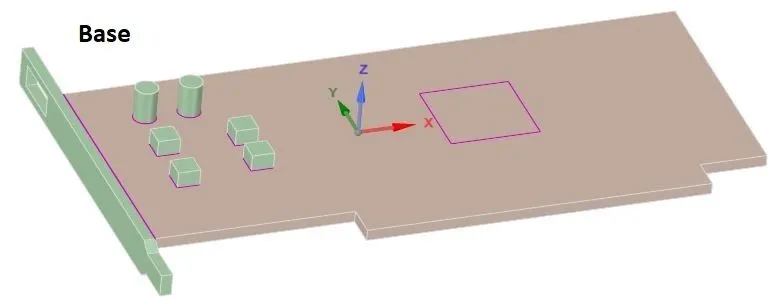
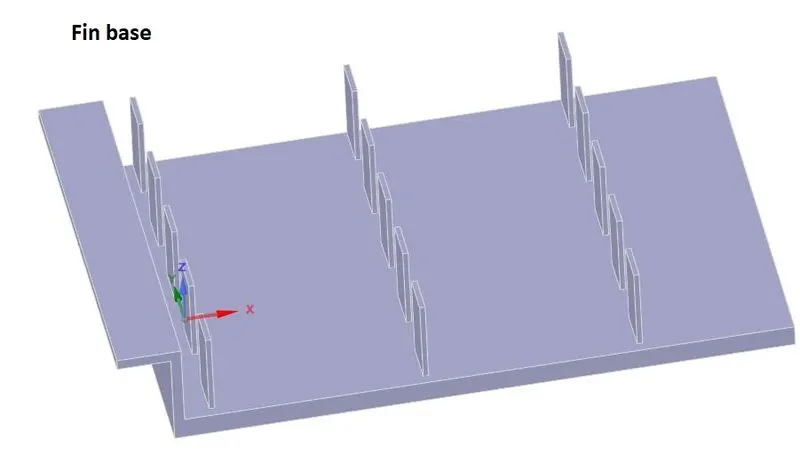
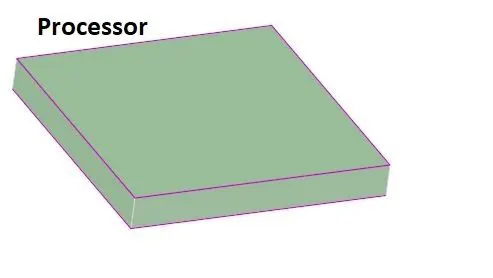
Conjugate heat transfer on a graphics card is a madeup geometry which encloses with base,fin base,processor.
Fins are the surfaces that extend from a processor to increase the rate of heat transfer
Share topology is enabled to share interfaces properly for conformal mesh.
MESH:
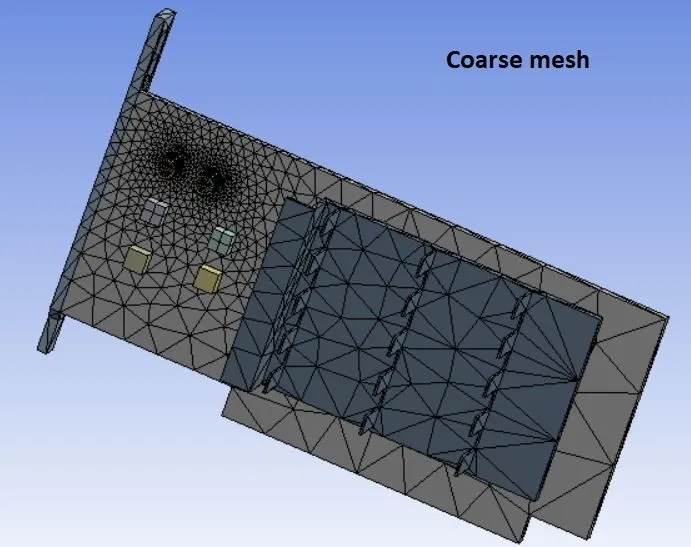
Global mesh element size= default(10.89mm)
ELEMENT QUALITY:

Cell count=54332
Nodes=12638
REFINED MESH:
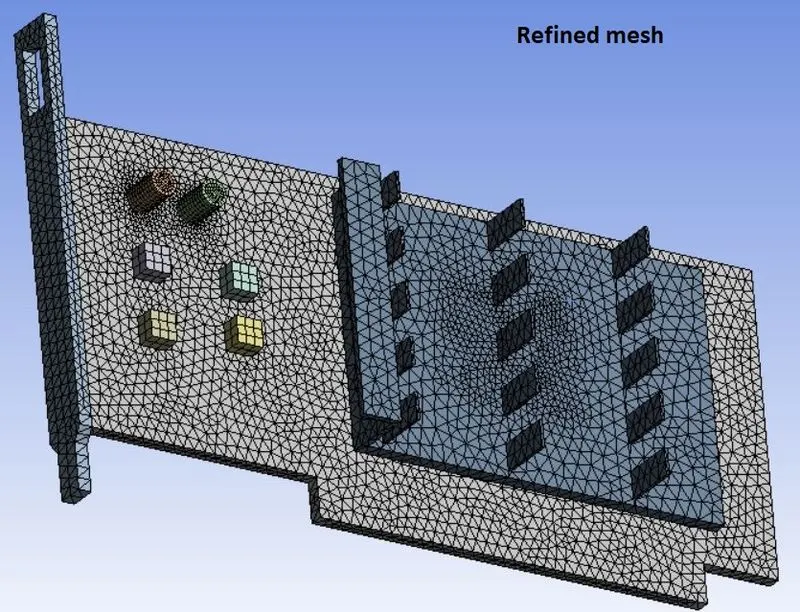
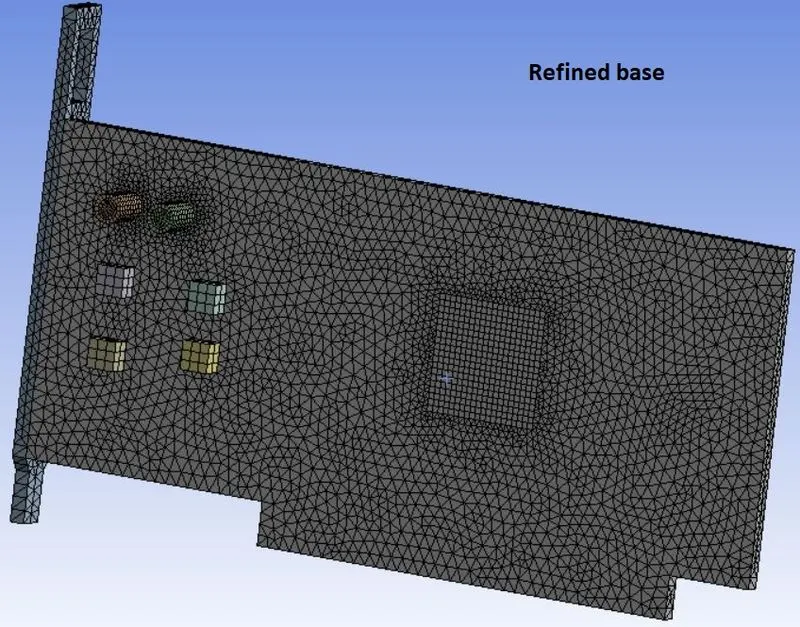
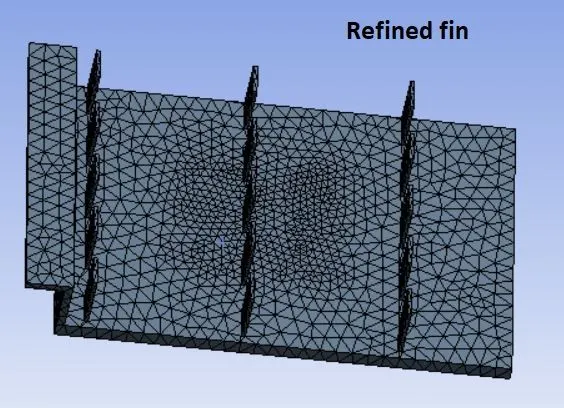
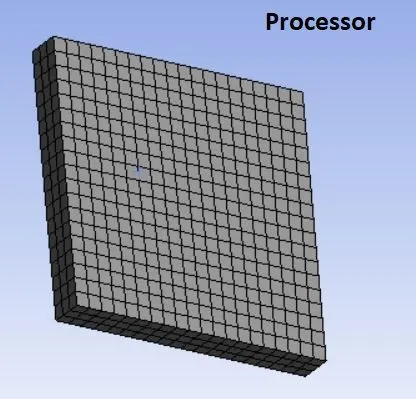
Refined mesh element size = 2mm
Body sizing has been made for base,fin base and processor with an element size of 0.8mm,1mm,0.4mm
Edge sizing has been done for 2cylinders and body sizing for 4cubes.
Cell count=497291
Nodes=101357
ELEMENT QUALITY:

SETUP:
- Here setup is much important to define fluid and solid zones,choosing of materials and bounday conditions in the graphics card.
- Pressure based solver is preferred .i.e., to describe for lower flow velocity such as 1m/s,3m/s,5m/s and the governing equations are non-linear and coupled, the solution loop must be carried out iteratively in order to obtain a converged numerical solution.
- Air flow is less than 0.3 of speed of sound in air and density is also constant.
- Steady state simulation are independent of time and chosen as per given condition and both conduction and convection occurs in this model.
- Energy is activated as we are finding out temperature zones.
- k`omega`SST model as flow is laminar
- Materials are aluminium,air,copper.Energysource of copper is calculated based on amount of power transferred (`1watt`)to the volume of processor`64*10^6`
- i.e., `E=1/(64*10^6)` ; `E=15625000watt/m^2`
- Fluid zone is enclosure whereas solid zones are fin ,base and processor.
- Chosen material for processor is copper as it has higher thermal conductivity(`398watt/m^2`) than aluminium,for fin and base material is aluminium.
- Conduction occurs betwwen solid to solid zone. i.e., base to processor to fin. Convection occurs between fluid to solid and solid to fluid zone.. i.e., four sides of processor and fluid zone of enclosure.
RESIDUAL PLOTS NOTIFYING SIMULATION HAS CONVERGED:
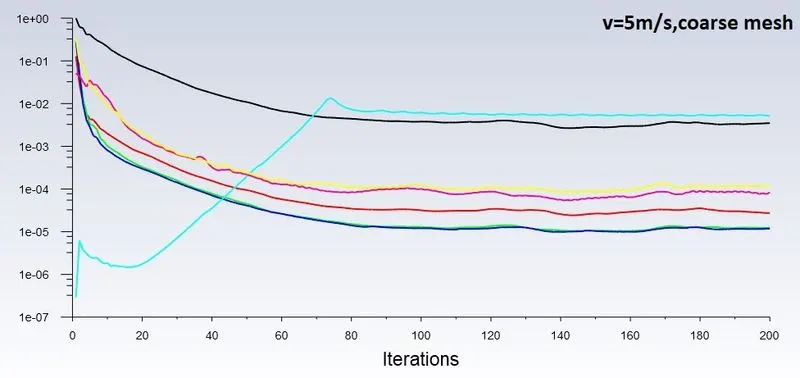
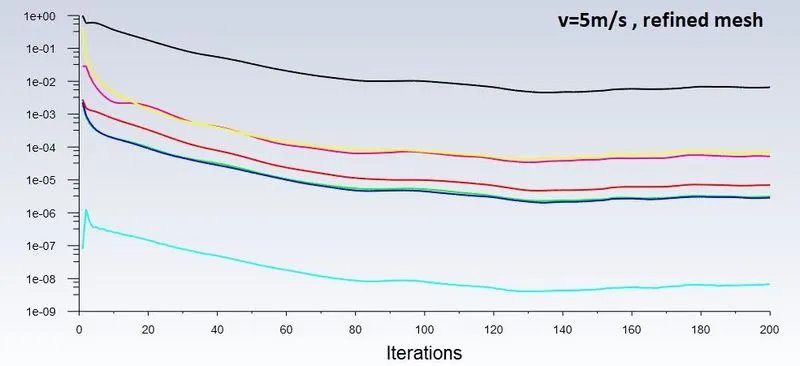
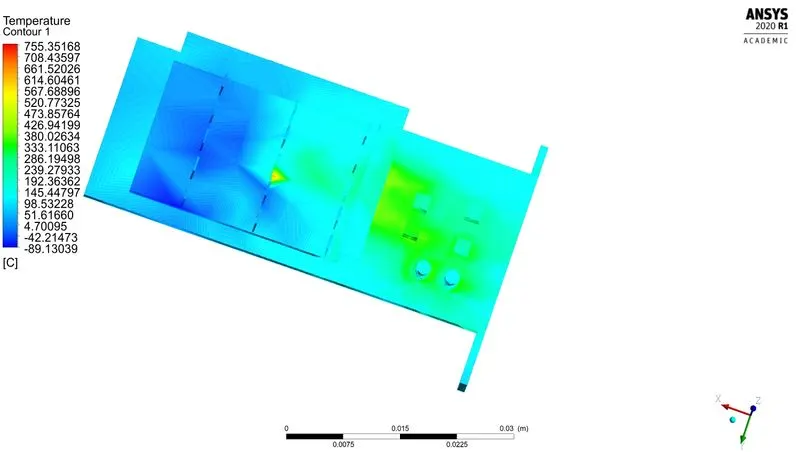
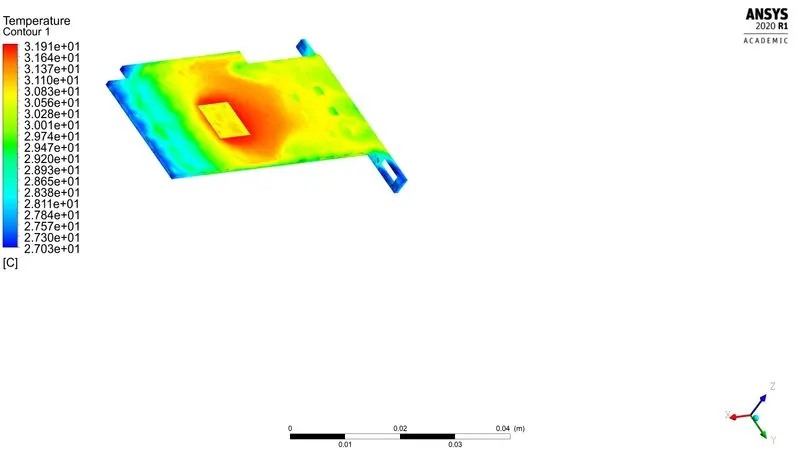
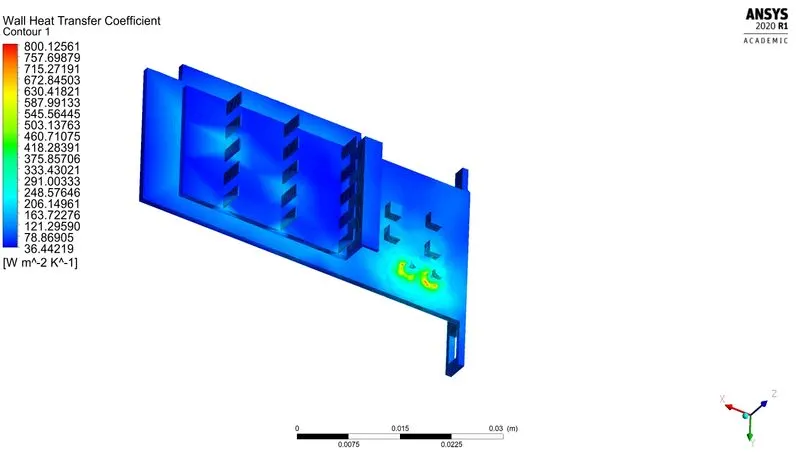
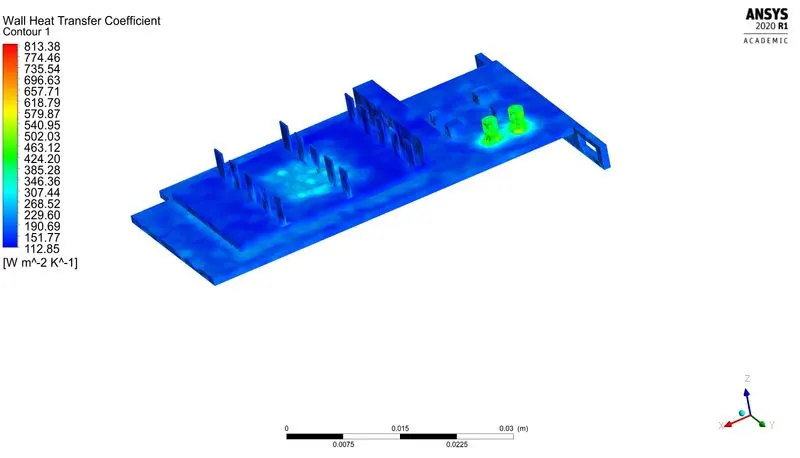
COARSE MESH VS REFINED MESH at velocity of 5m/s:
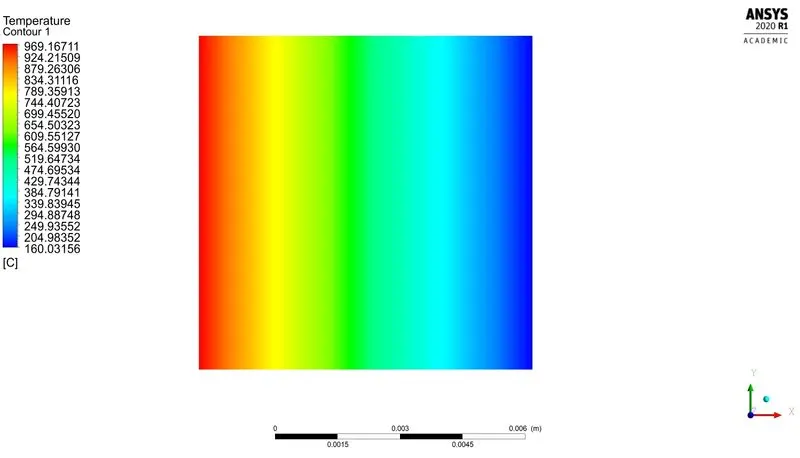
TEMPERATURE CONTOUR OF GRAPHICS CARD:
WALL HEAT TRANSFER COEFFICIENT OF GRAPHICS CARD:
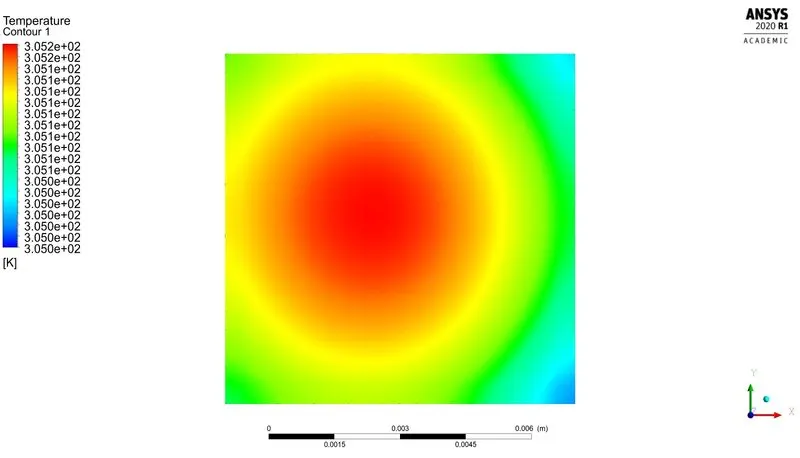
TEMPERATURE CONTOUR OF PROCESSOR:
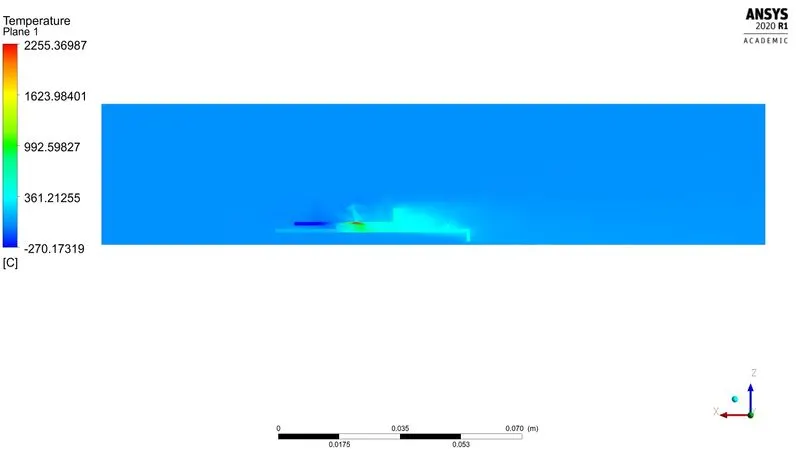
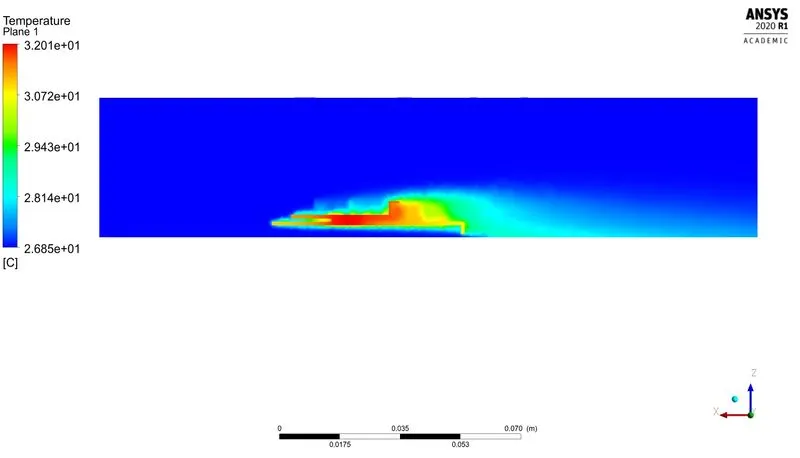
TEMPERATURE PLANE:
VELOCITY PLANE:
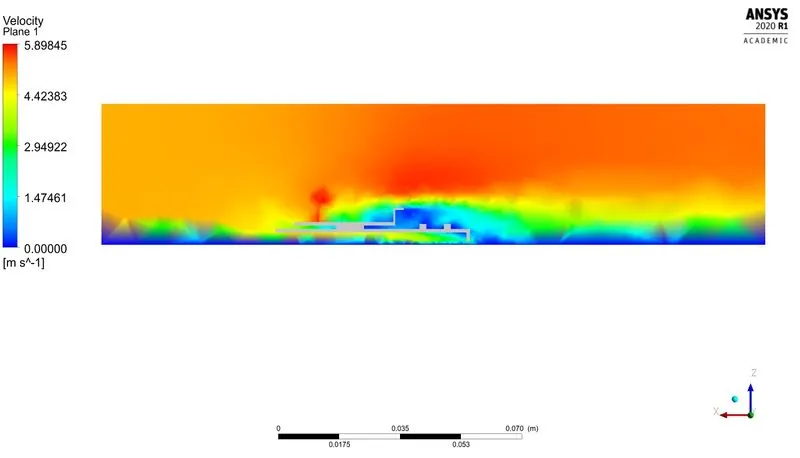
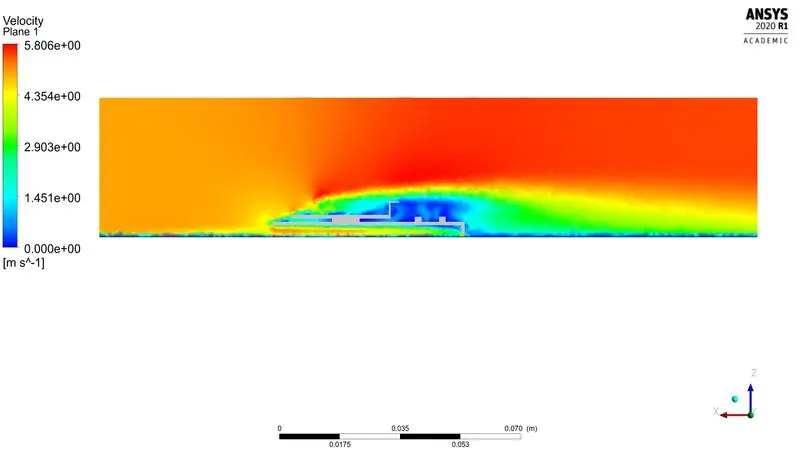
At velocity = 3m/s,
TEMPERATURE CONTOUR OF GRAPHICS CARD:
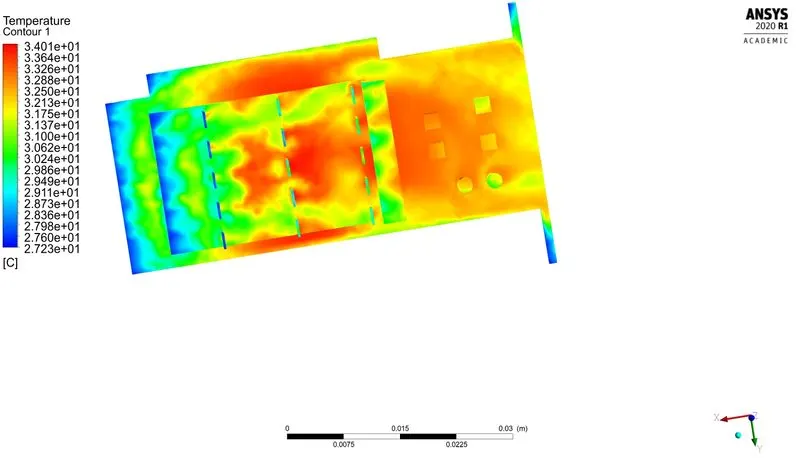
WALL HEAT TRANSFER COEFFICIENT OF GRAPHICS CARD:
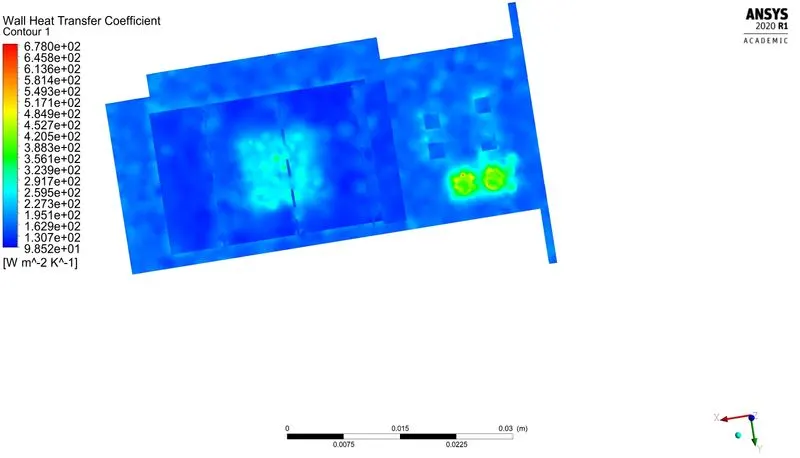
TEMPERATURE CONTOUR OF PROCESSOR:
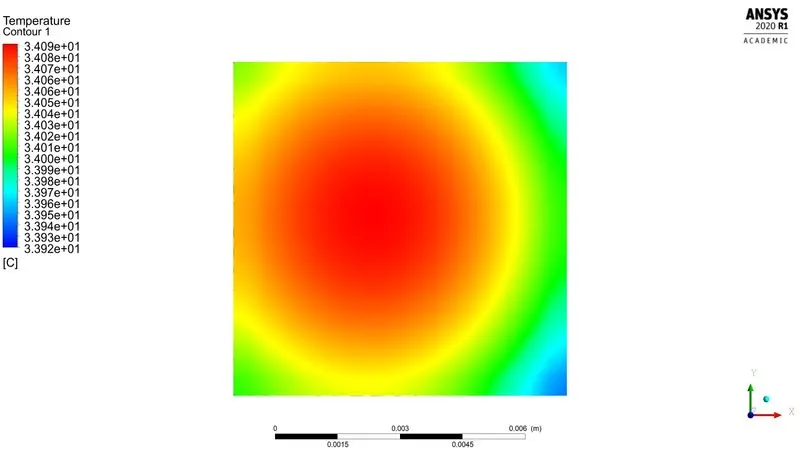
TEMPERATURE PLANE:
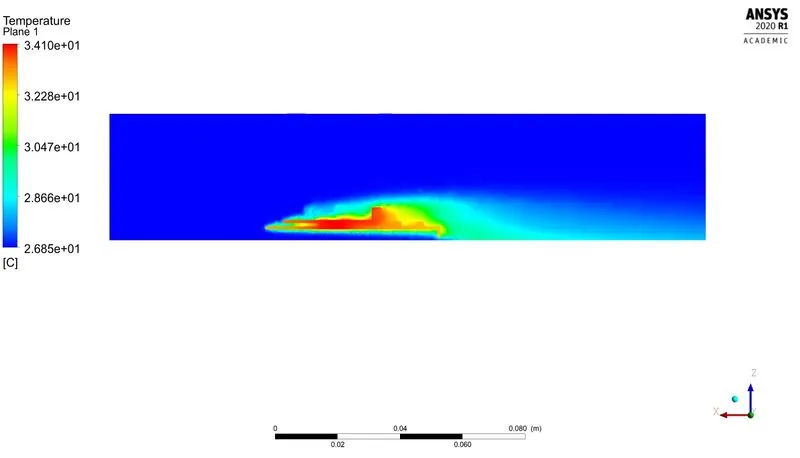
VELOCITY PLANE:
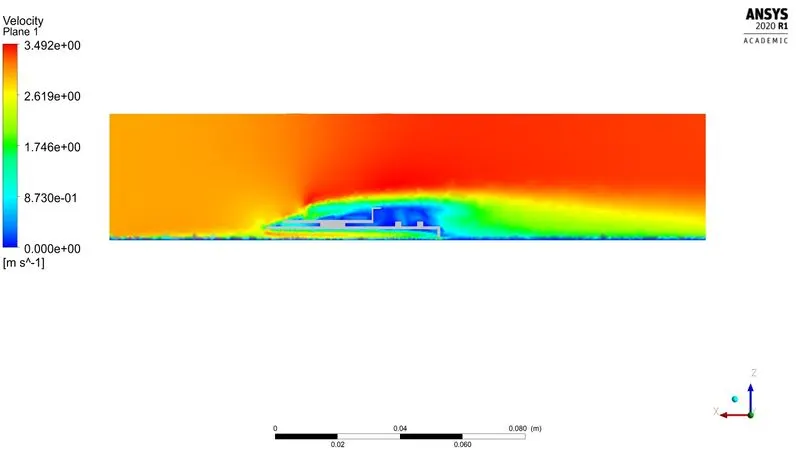
TEMPERATURE CONTOUR OF GRAPHICS CARD:
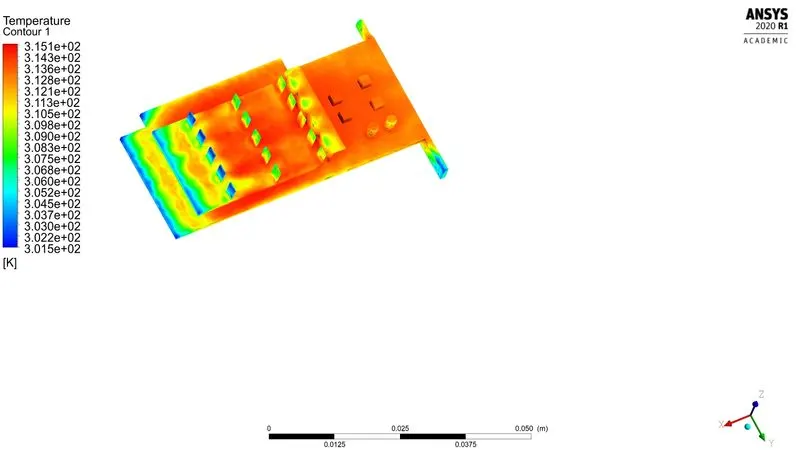
WALL HEAT TRANSFER COEFFICIENT OF GRAPHICS CARD:
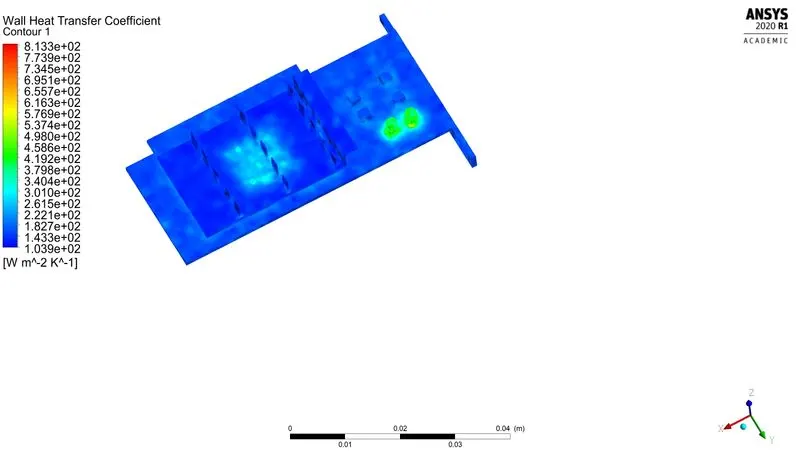
TEMPERATURE CONTOUR OF PROCESSOR:
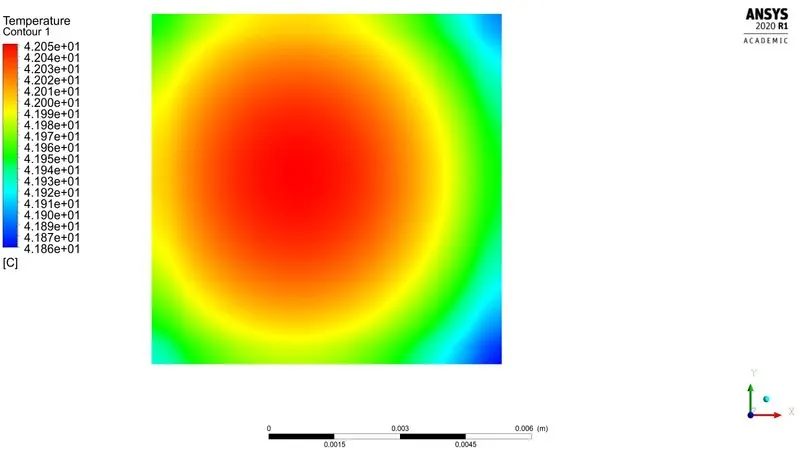
TEMPERATURE PLANE:
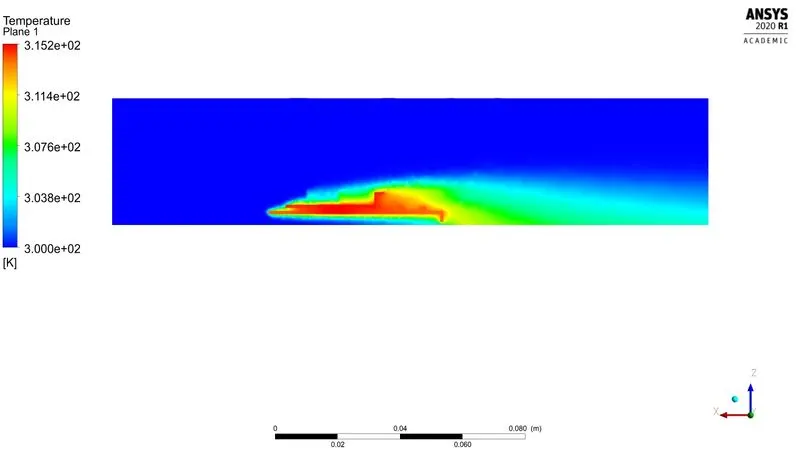
VELOCITY PLANE:
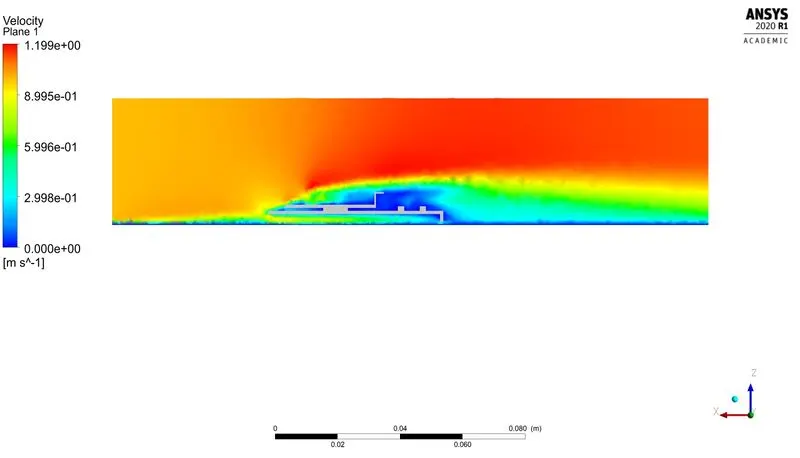
RESULTS:
MAXIMUM TEMPERATURE ATTAINED BY PROCESSOR:
At velocity=1, Maximum temperature=315.2012k
velocity=3, Maximum temperature=307.2488k
velocity=5, Maximum temperature=305.16k
From the obtained maximum temperature on processor, we came to know that when velocity increases temperature decreases.
When air fluid passes on given velocity,it starts decreasing temperature to avoid overheat.
HEAT TRANSFER COEFFICIENT ATTAINED PROCESSOR:
`q=h(T_2-T_1)`
Where h is the heat transfer coefficient.
`(Q/A)=h(T_2-T_1) ; q=Q/A`
`Power, Q = 1watt`
Area of processor, A =`32*10^-6`
`T_2=`Temperature of fluid surrounding=300k`
At velocity=1,
`T_1=`Temperature of solid surface=315.201k`
`therefore (1/(32*10^-6))=h(300-315.201)`
`h=2055.78 watt/m^2`
At velocity=3,
`T_1=`Temperature of solid surface=307.248k`
`therefore (1/(32*10^-6))=h(300-307.248)`
`h=4311.58watt/m^2`
At velocity=5,
`T_1=`Temperature of solid surface=305.07k`
`therefore (1/(32*10^-6))=h(300-305.07)`
`h=6250watt/m^2`
OBTAINED HEAT TRANSFER COEFFICIENT:
At `velocity=1,h=2055.78 watt/m^2`
`velocity=3 ,h=34311.58watt/m^2`
`velocity=5,h=6250watt/m^2`
NUSSELT NUMBER:
`Nu=(hL)/k`
Where h is the heat transfer coefficient,
L is the length,
k is the thermal conductivity.
`Nu prop h`, Nu increases h increases.
`h=q/(T_2-T_1)`
`h prop (1/(T_2-T_1))`; h increases, temperature decreases.
Velocity increases,heat transfer coefficient increases.