COMBUSTION SIMULATION ON THE COMBUSTOR MODEL
COMBUSTION SIMULATION ON THE COMBUSTOR MODEL
Objective: To perform combustion simulation on the combustor model and calculate mass fractions of the different species.
Chemical Kinetics Solver
In this the intermediary species, elementary reactions and their paths i.e. the reaction mechanism to find out the final product. These reactions depend on time and depending upon the time the final product will completely be different.
Importance of Chemical Kinetics
- Helps to find out when ignition starts.
- Heat release rate (Rate of work done).
- Emissions
Combustion
Combustion is defined as a chemical reaction in which a hydrocarbon fuel reacts with an oxidant to form products, accompanied with the release of energy in the form of heat. Being the integral part of various engineering applications like: internal combustion engines, aircraft engines, rocket engines, furnaces, and power station combustors, combustion manifests itself as a wide domain during the design, analysis and performance characteristics stages of the above-mentioned applications. With the added complexity of chemical kinetics and achieving reacting flow mixture environment, proper modelling physics has to be incorporated during computational fluid dynamic (CFD) simulations of combustion.
Types of combustion simulation
Based on mixing
- Non-premixed combustion:-In non-premixed combustion, fuel and oxidizer enter the reaction zone in distinct streams. Examples of non-premixed combustion include pulverized coal furnaces, diesel internal-combustion engines and pool fires.
- Premixed combustion:-In premixed systems the reactants are mixed at the molecular level before burning. Examples of premixed combustion include aspirated internal combustion engines, lean-premixed gas turbine combustors, and gas-leak explosions.
- Partially premixed combustion:- Partially premixed combustion systems are premixed flames with non-uniform fuel-oxidizer mixtures (equivalence ratios). Such flames include premixed jets discharging into a quiescent atmosphere, lean premixed combustors with diffusion pilot flames and/or cooling air jets, and imperfectly mixed inlets.
Based on phase
- Fluid phase (Volumetric reaction)
- Wall (Surface reaction)
- Particle (Surface reaction)
- Porous region
Model
The 3D model was imported in Spaceclaim.
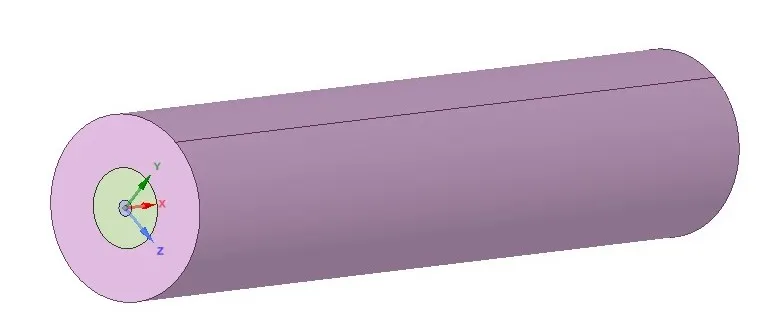
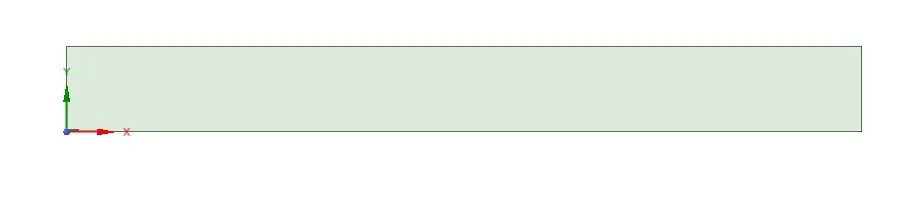
The 2D model of combustor is used for analysis instead of 3D analysis as it is difficult to analyse and need powerful computer.
Mesh
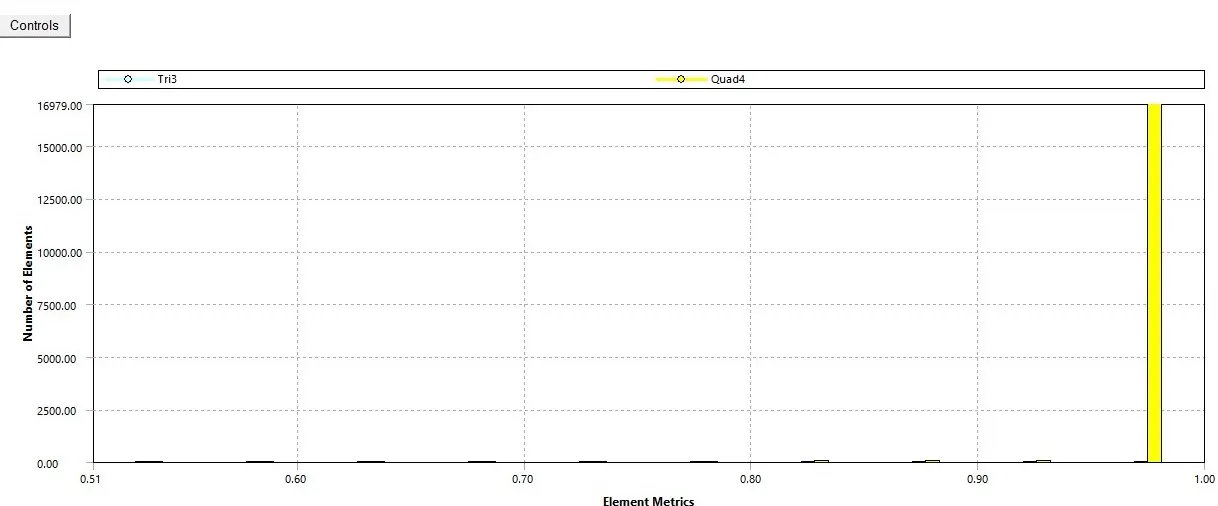
The model was meshed using ANSYS mesher with cutcell mesh approach and element size of 2 mm.


A mesh metric that identifies elements according to their quality was employed and it can be seen that the elements of lowest quality are minimal. Most of the elements have very high quality in the range of 0.98-1. Hence, the mesh is of acceptable quality. The meshed model is shown in image below. Number of Elements=17170, Nodes=17641.
Line Probe
Six line probes are created to have chart of mass fraction of different species.
|
Series |
Line |
Point 1 |
Point 2 |
|
1 |
1 |
0.13197,0 |
0.13197, 0.09 |
|
2 |
2 |
0.26394,0 |
0.26394,0.1 |
|
3 |
3 |
0.39591,0 |
0.39591,0.1 |
|
4 |
4 |
0.52788,0 |
0.52788,0.1 |
|
5 |
5 |
0.65985,0 |
0.65985,0.1 |
|
6 |
6 |
0.79182,0 |
0.79182,0.1 |
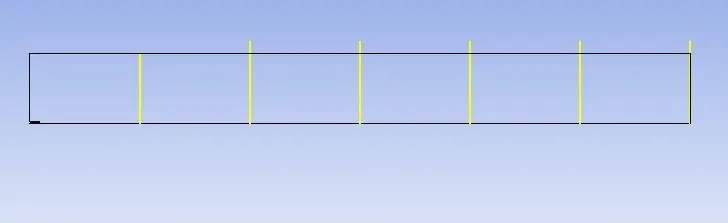
PART1
A STEADY STATE ANALYSIS of combustor model is done using ANSYS FLUENT In this we assign the inlet velocity of fuel and air and the mass fraction of different species in both the inlets.
SETUP
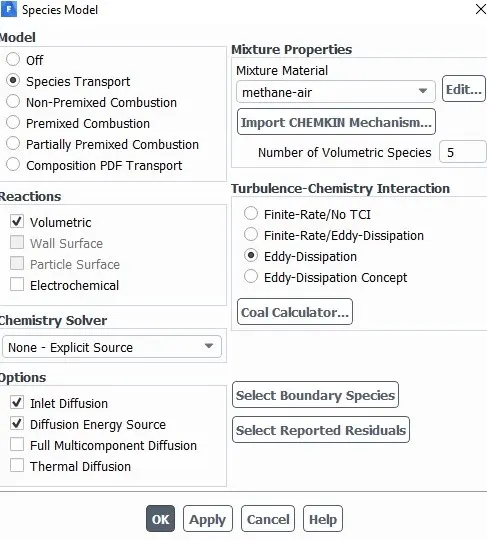
2D Space - Axisymmetric
Fuel used is methane (CH4).
Turbulence model – K-€
Mixture material – Methane-air.
Turbulence-Chemistry interaction – Eddy-Dissipation.
Mass fraction of methane (CH4) in fuel inlet= 1
Mass fraction of oxygen in air inlet= 0.23
Velocity of air inlet = 0.5 m/s.
Velocity of fuel inlet = 80 m/s.
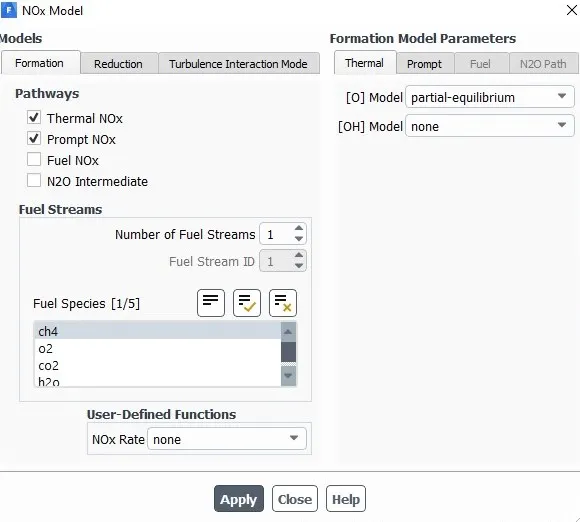
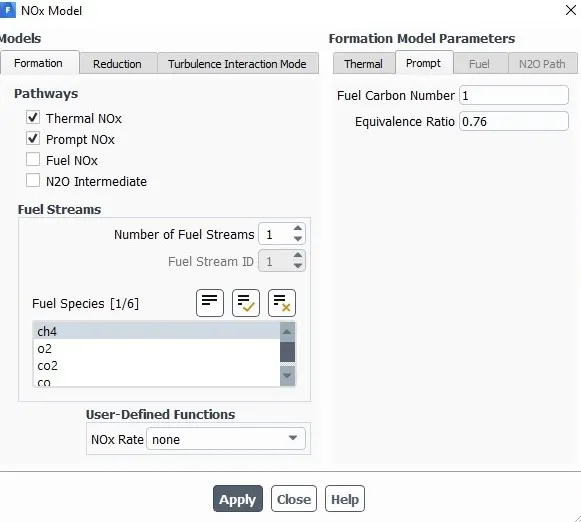
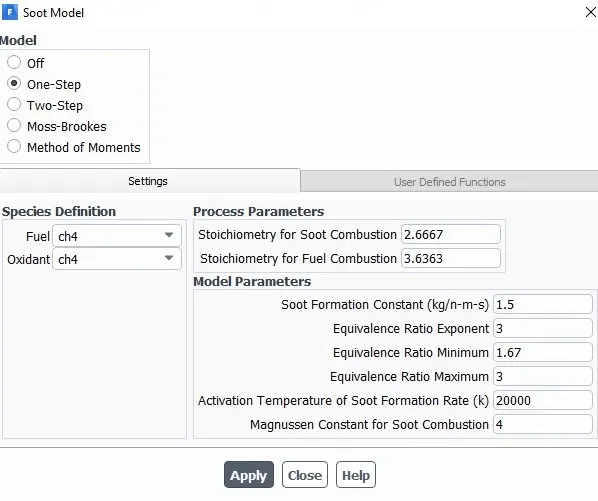
Residual
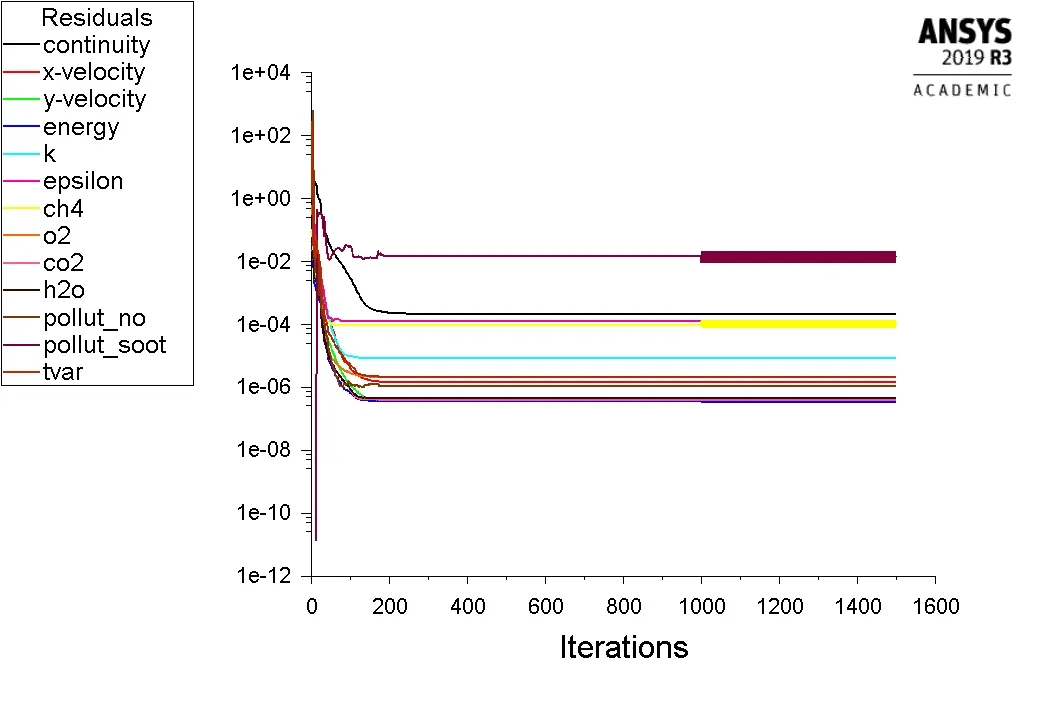
Iterations = 1500 were ran. The residual plot is plotted in ANSYS FLUENT shown below.
Result
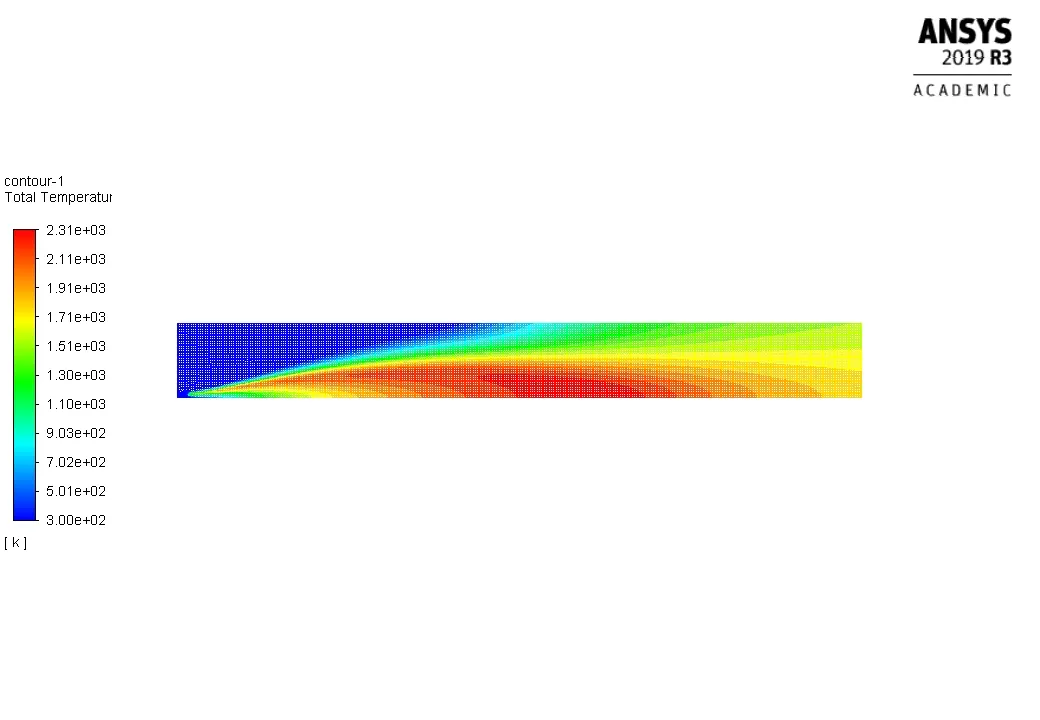
Temperature Contour
Mass fraction of methane (CH4)
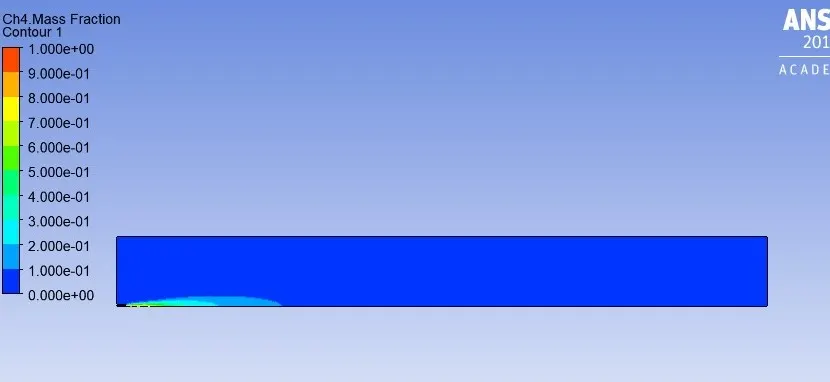
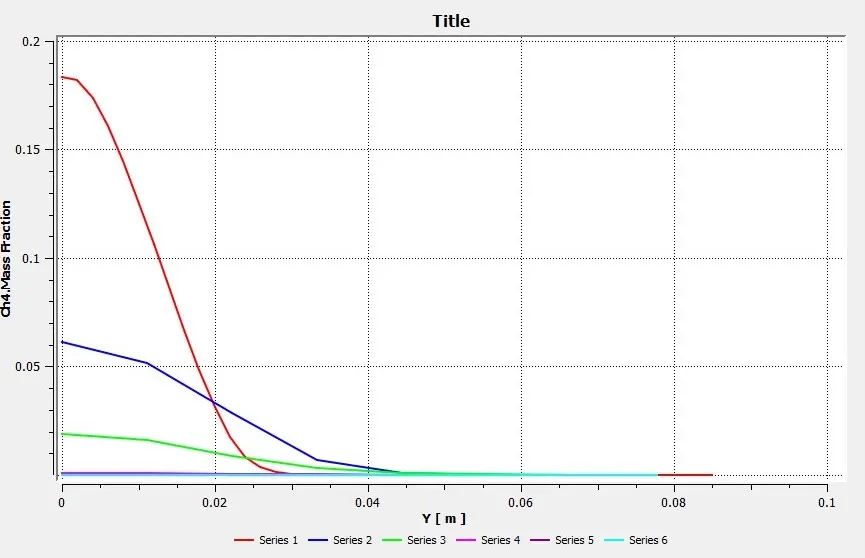
Mass fraction of CH4 is higher at series 1 and at Y = 0 m, since the fuel inlet is at the bottom. Mass fraction keeps on decreasing along the series and decreases as Y increases.
Mass fraction of CO2
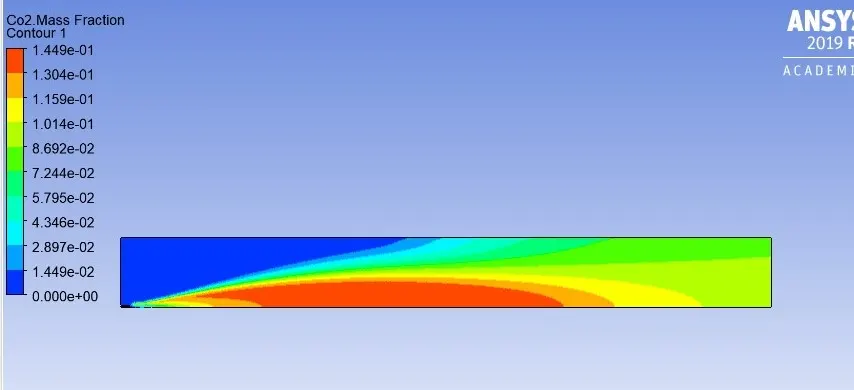
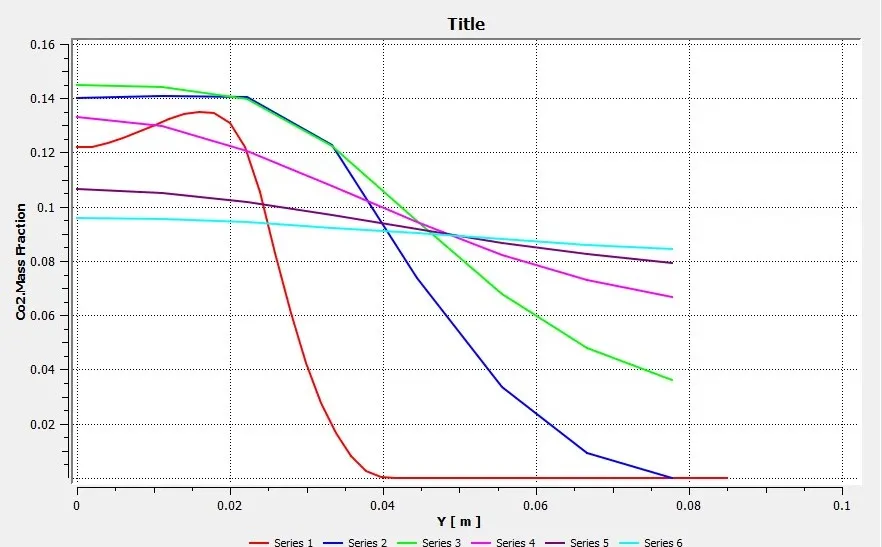
Mass fraction of CO2 is higher at series 3 and at Y = 0 m and lowest at series 6. Mass fraction decreases as Y increases. The mass fraction peaks at the middle of the combustor.
Mass fraction of H2O
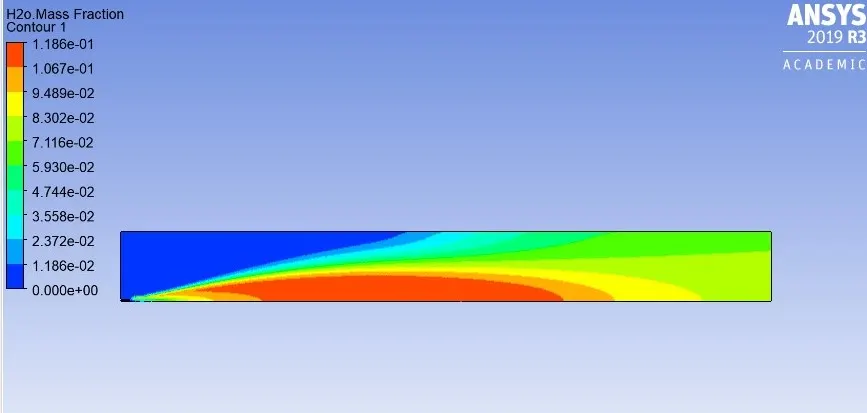
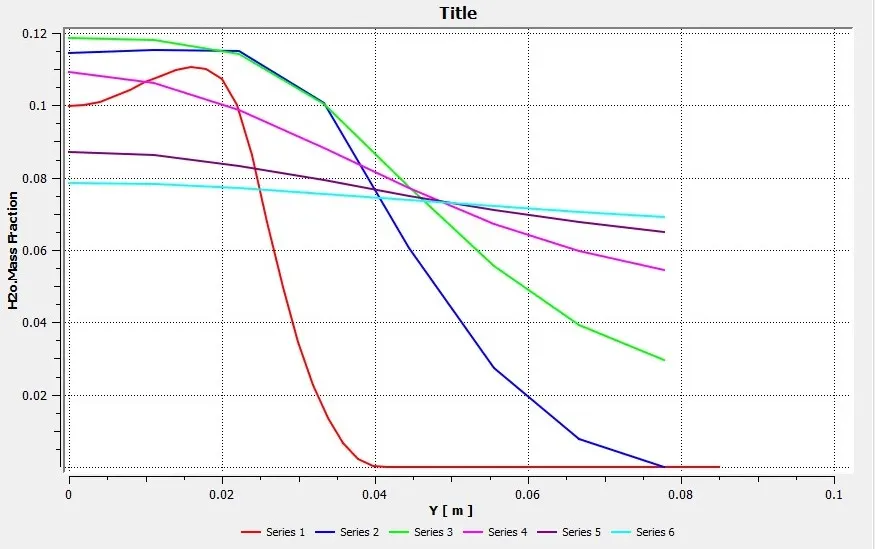
Mass fraction of H2O is higher at series 3 and at Y = 0 m and lowest at series 6. Mass fraction decreases as Y increases. The mass fraction peaks at the middle of the combustor.
Mass fraction of N2
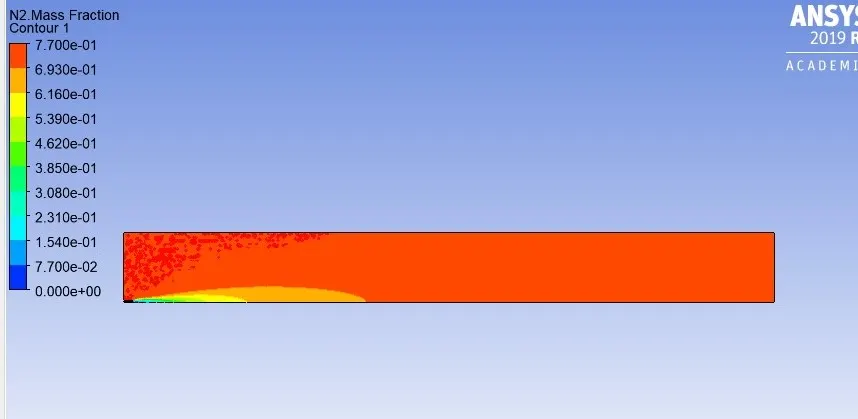
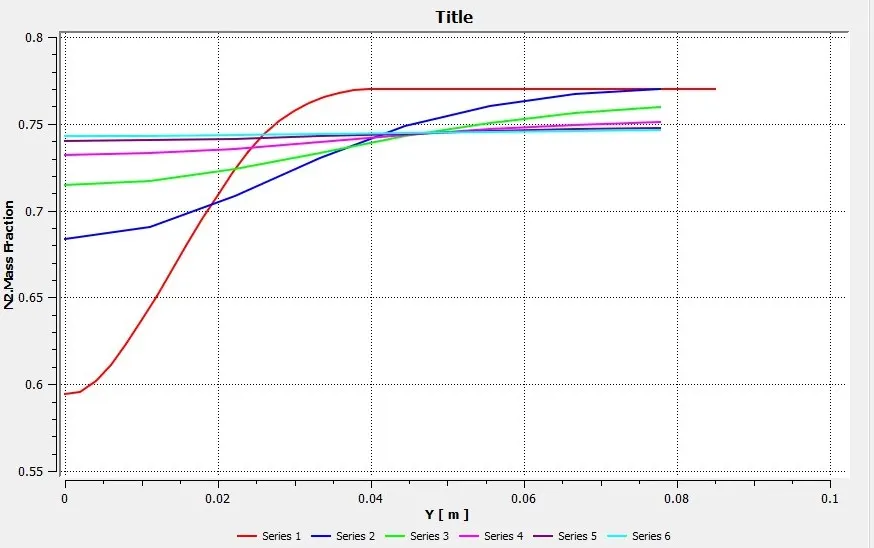
Mass fraction of N2 increases along the series at Y = 0 m. Mass fraction increases with Y and then stabilises.
Mass fraction of O2
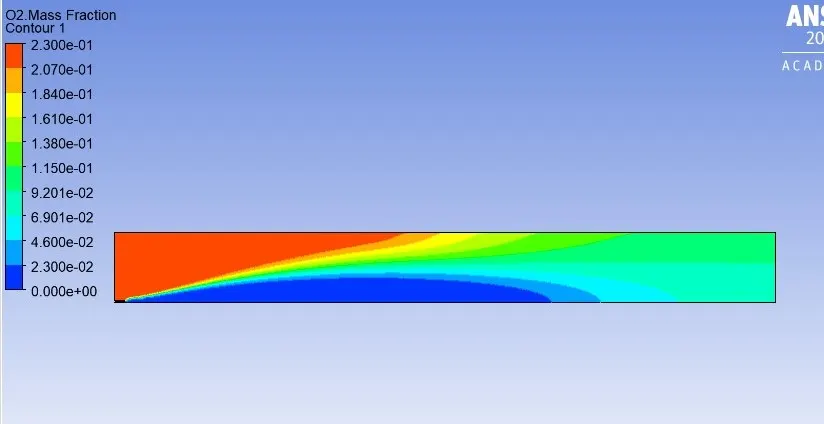
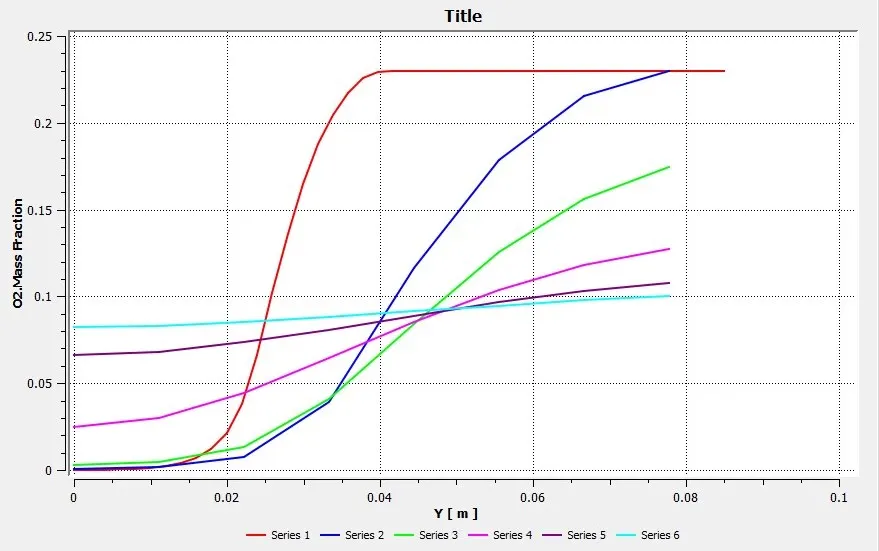
Mass fraction of O2 increases along the series at Y = 0 m. Mass fraction increases with Y and then stabilises.
Mass fraction of NOX
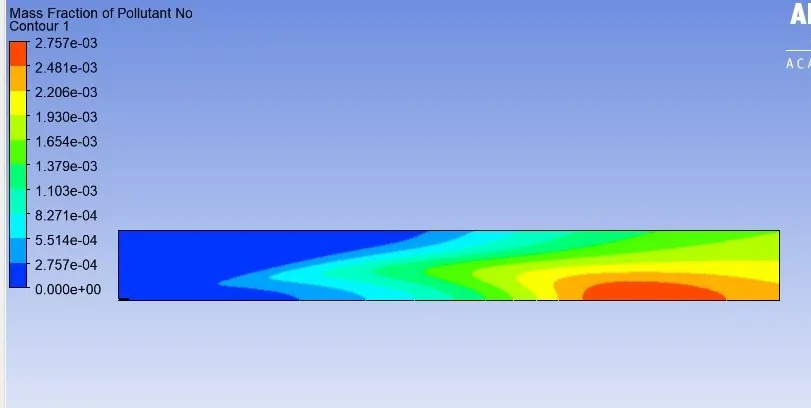
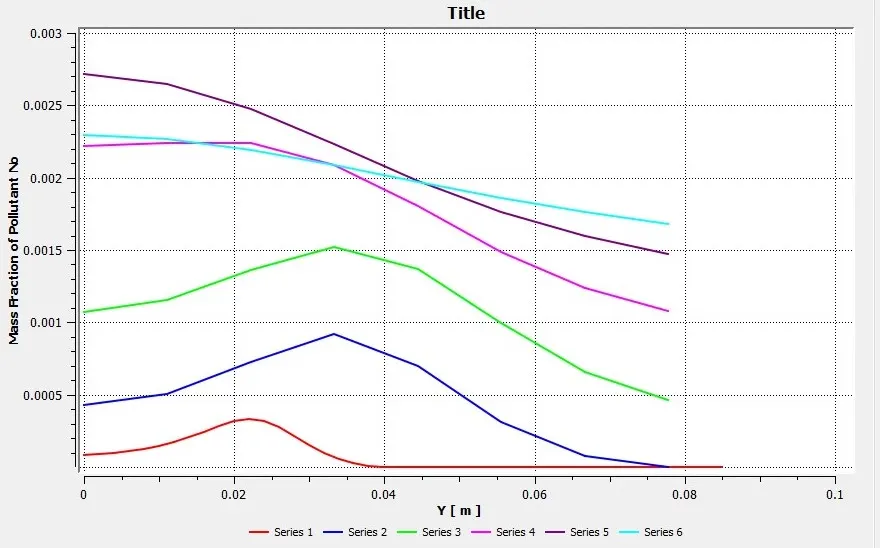
Mass fraction of NOX is at series 5 at Y = 0 m. Its highest value is 0.00254 Mass fraction decreases as Y increases.
Mass fraction of Soot
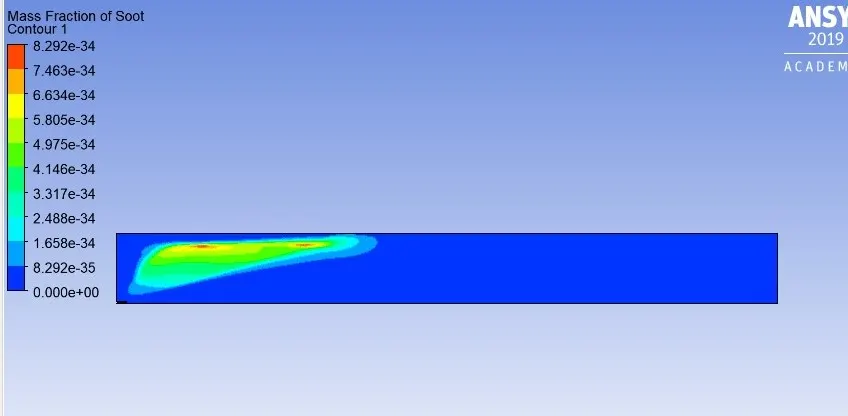
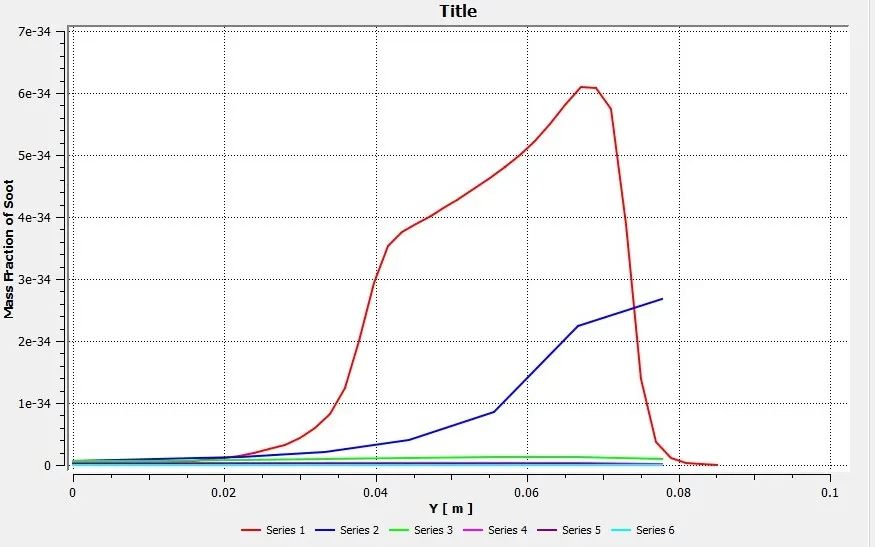
Mass fraction soot is highest at series 1. The highest value of mass fraction is about 6.2e-34 at Y = 0.07 m.
PART2
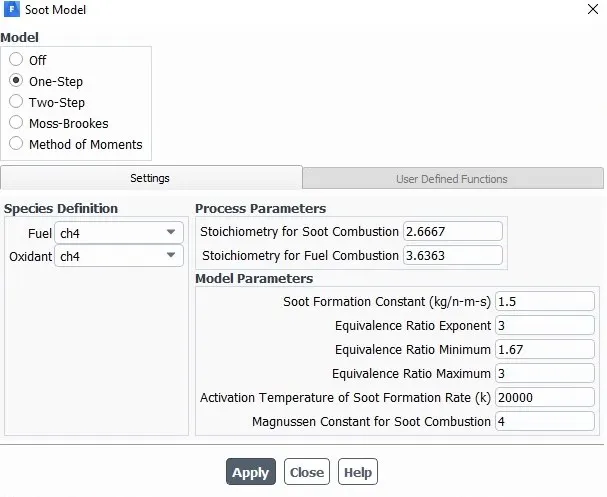
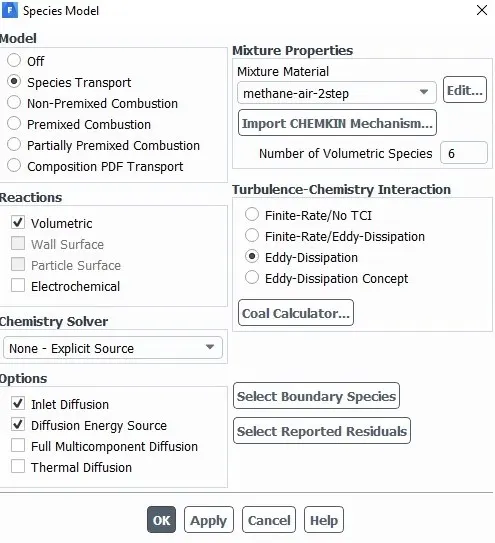
A STEADY STATE ANALYSIS of combustor model is done using ANSYS FLUENT to calculate separator efficiency. In this we add water in the fuel and vary its mole fraction from 5% - 30%. In this we assign the inlet velocity of fuel and air and the mass fraction of different species in both the inlets.
SETUP
2D Space - Axisymmetric
Fuel used is methane (CH4).
Turbulence model – K-€
Mixture material – Methane-air2Step.
Turbulence-Chemistry interaction – Eddy-Dissipation.
Mass fraction of oxygen in air inlet= 0.23
Velocity of air inlet = 0.5 m/s.
Velocity of fuel inlet = 80 m/s.
Case1
Mole fraction of H2O in fuel inlet= 0.05
Mole fraction of methane (CH4) in fuel inlet= 0.95
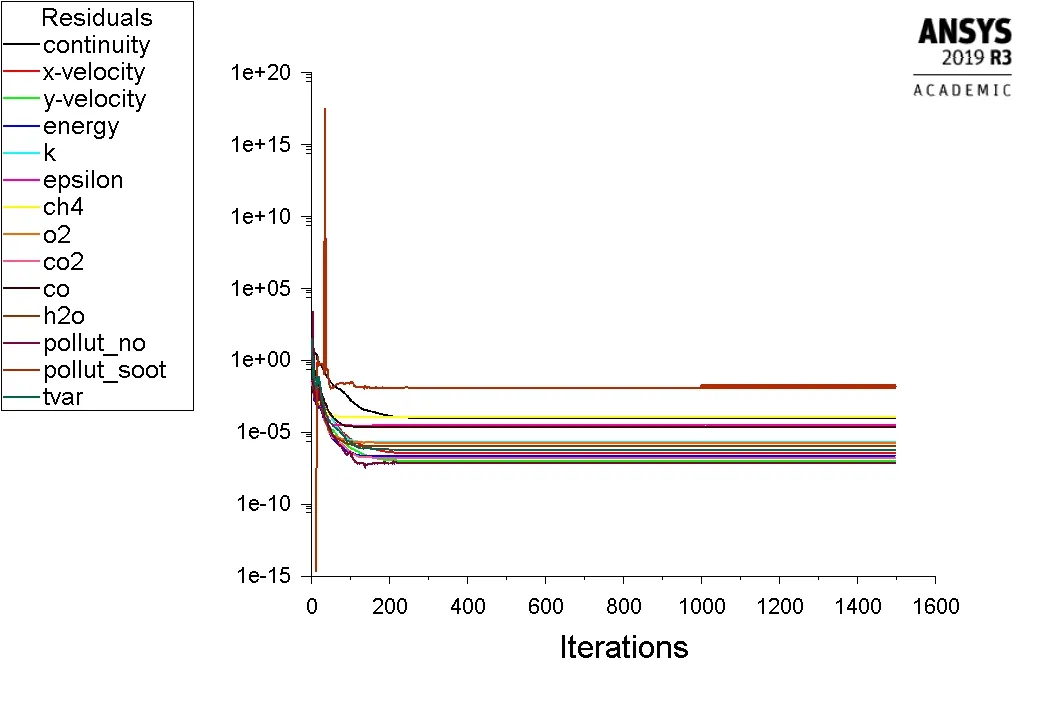
Residual
Iterations = 1500 were ran. The residual plot is plotted in ANSYS FLUENT shown below.
Mass fraction of methane (CH4)
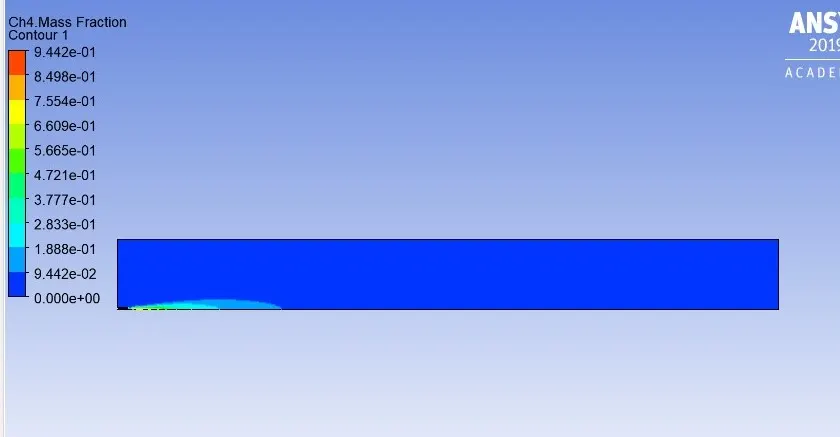
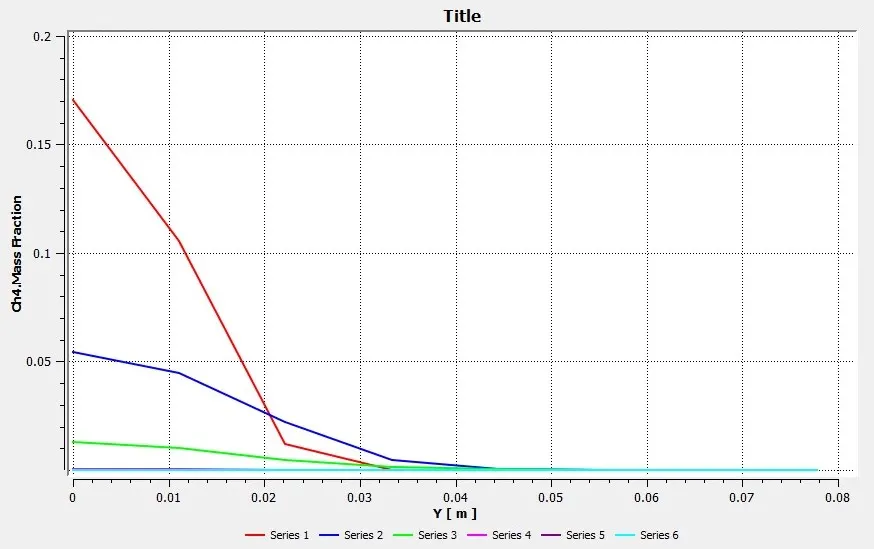
Mass fraction of CH4 is higher at series 1 and at Y = 0 m, since the fuel inlet is at the bottom. Mass fraction keeps on decreasing along the series and decreases as Y increases.
Mass fraction of CO2
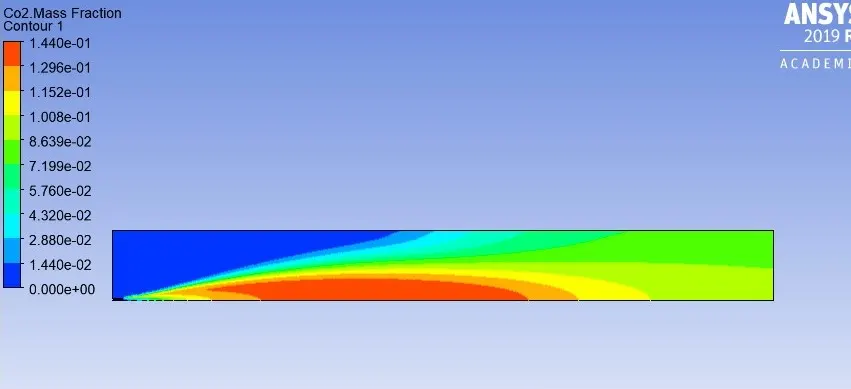
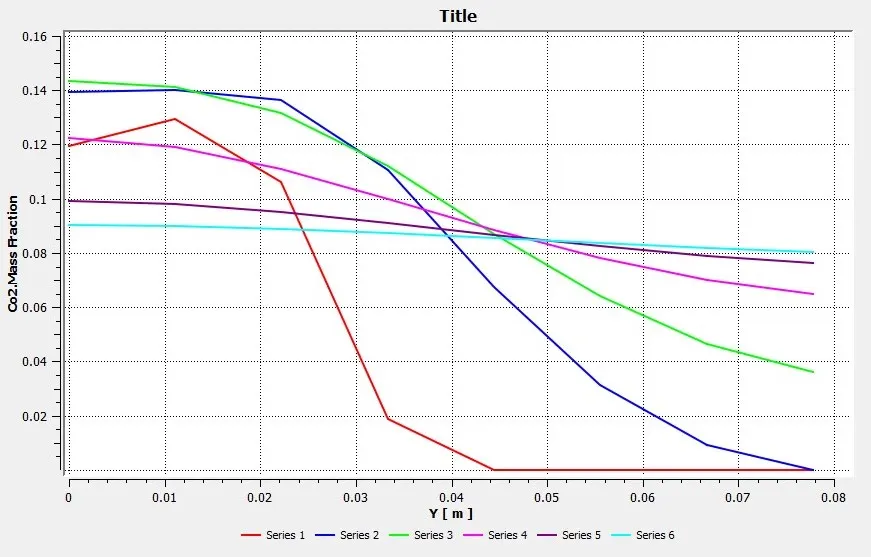
Mass fraction of CO2 is higher at series 3 and at Y = 0 m and lowest at series 6. Mass fraction decreases as Y increases. The mass fraction peaks at the middle of the combustor.
Mass fraction of H2O
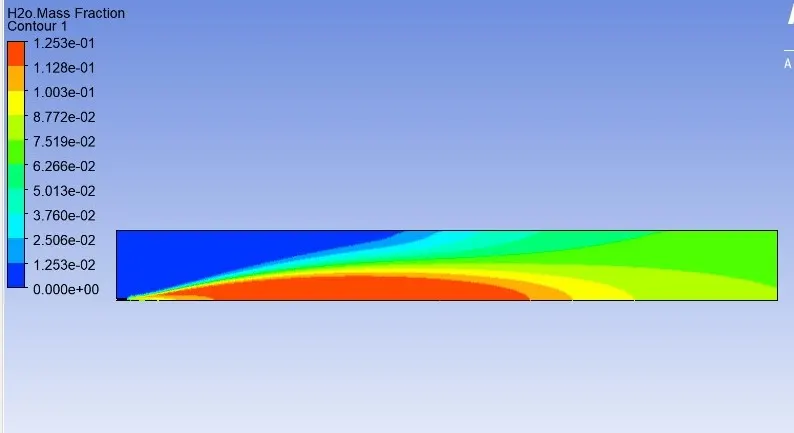
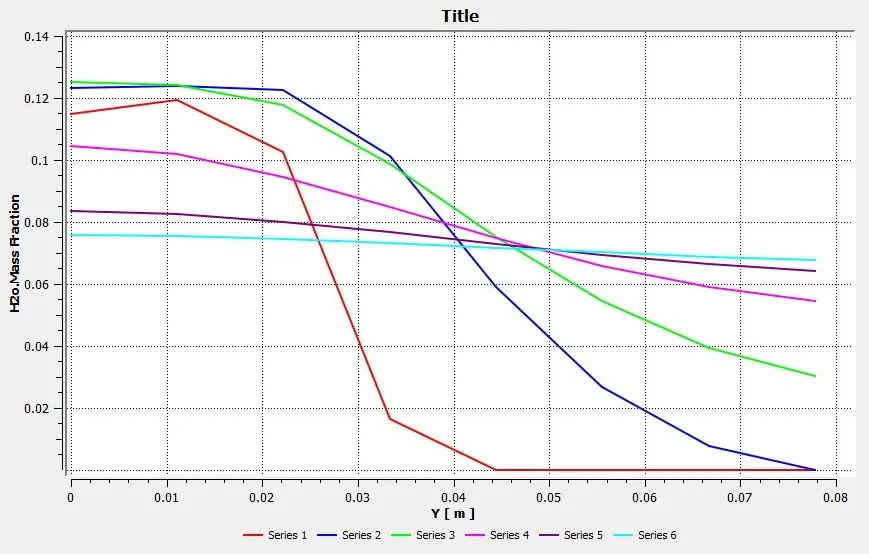
Mass fraction of H2O is higher at series 3 and at Y = 0 m and lowest at series 6. Mass fraction decreases as Y increases. The mass fraction peaks at the middle of the combustor.
Mass fraction of N2
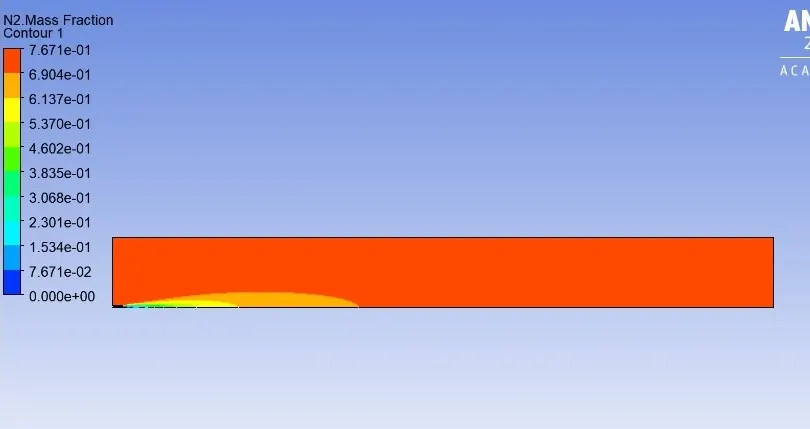
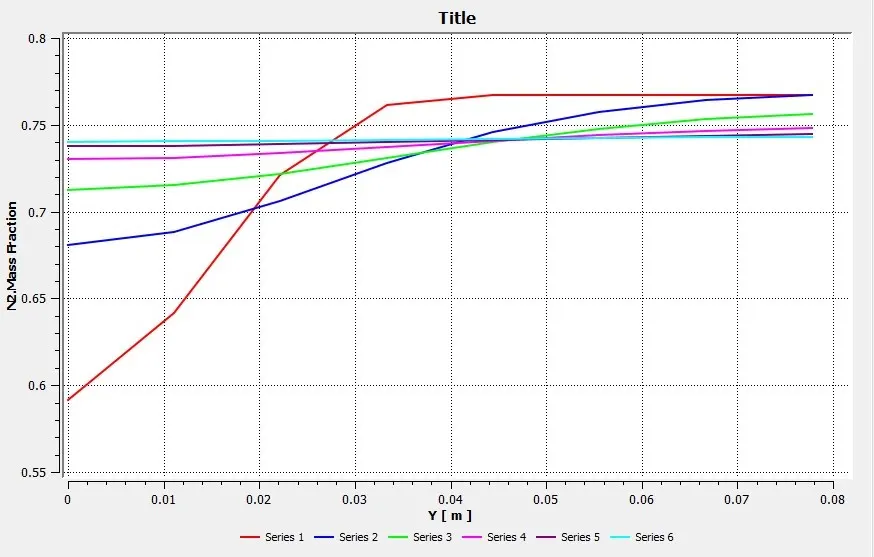
Mass fraction of N2 increases along the series at Y = 0 m. Mass fraction increases with Y and then stabilises.
Mass fraction of O2
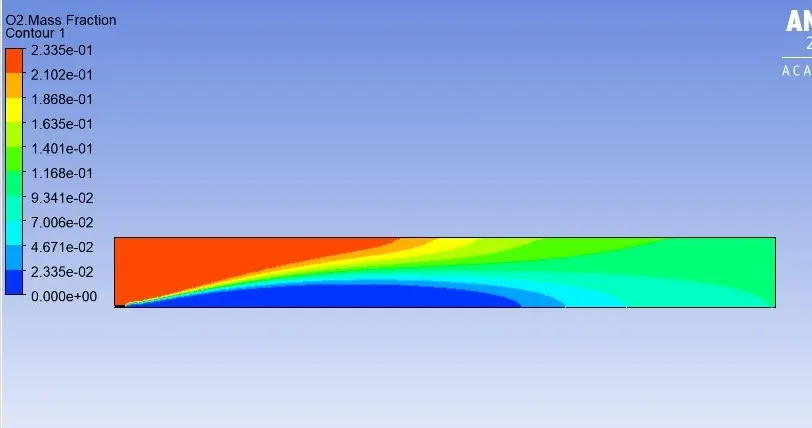
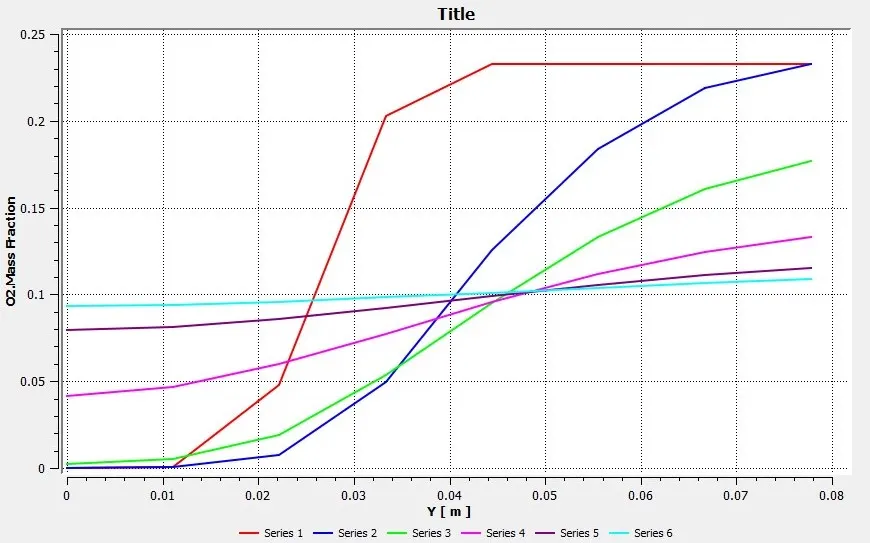
Mass fraction of O2 increases along the series at Y = 0 m. Mass fraction increases with Y.
Mass fraction of NOX
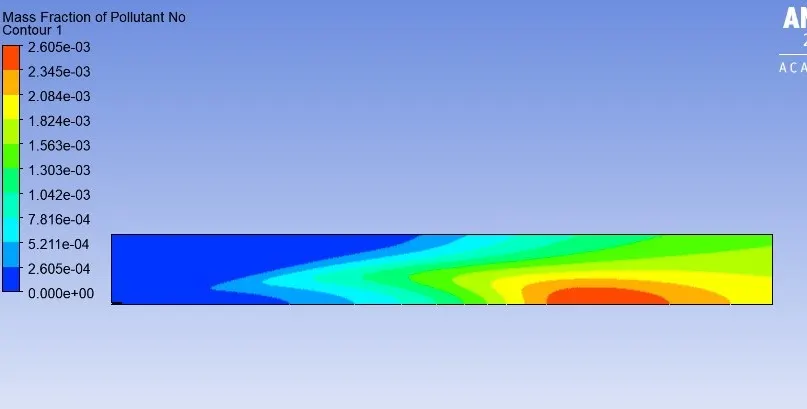
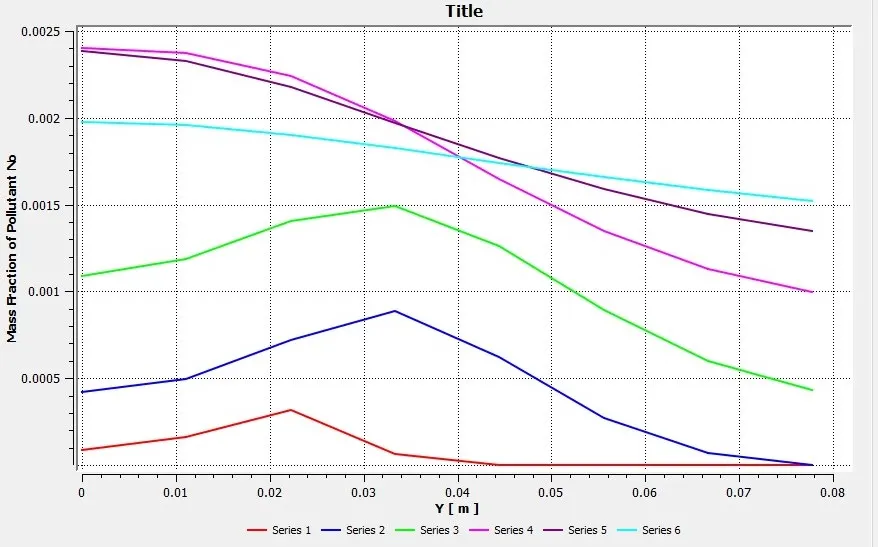
Mass fraction of NOX is at series 4 at Y = 0 m. Mass fraction decreases as Y increases. The highest value of mass fraction of NOX = 0.0024.
Mass fraction of Soot
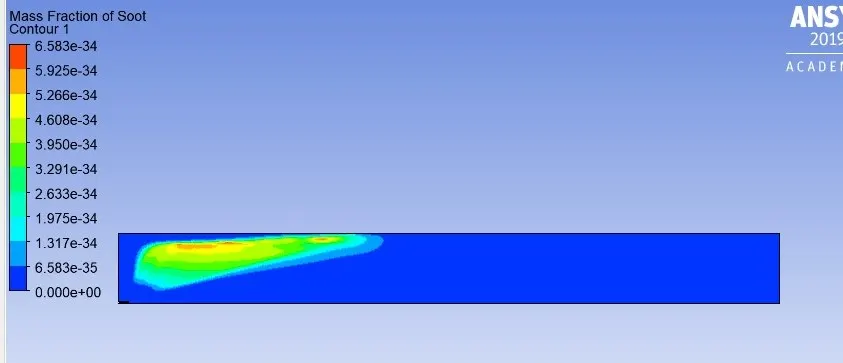
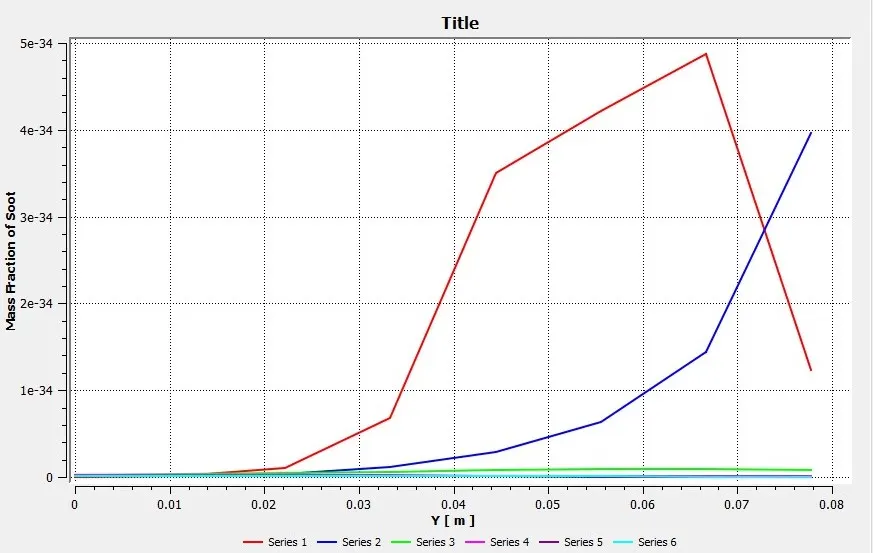
Mass fraction soot is highest at series 1. The highest value of mass fraction is about 4.8e-34 at Y = 0.066 m for series 1.
Case2
Mole fraction of H2O in fuel inlet= 0.1
Mole fraction of methane (CH4) in fuel inlet= 0.9
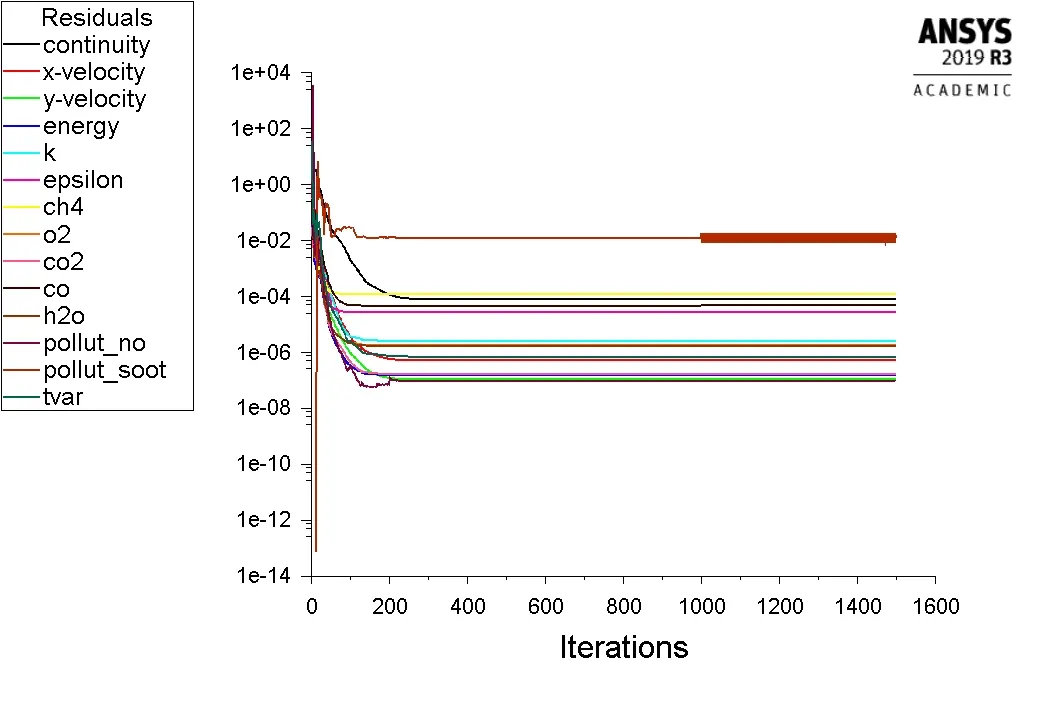
Residual
Iterations = 1500 were ran. The residual plot is plotted in ANSYS FLUENT shown below.
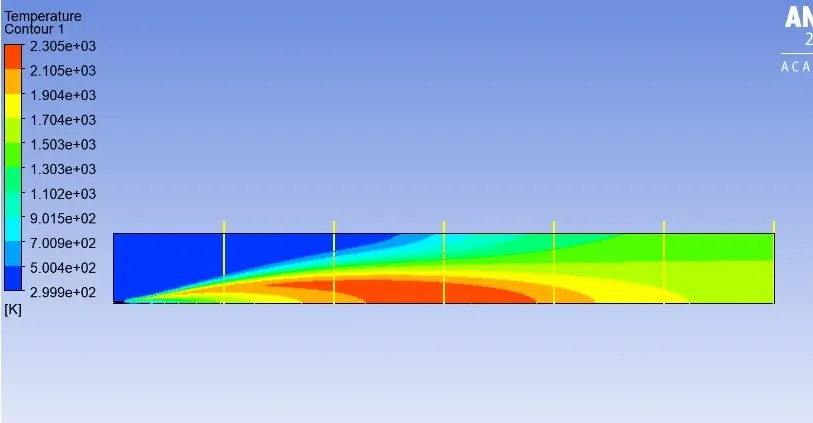
Temperature contour
Mass fraction of methane (CH4)
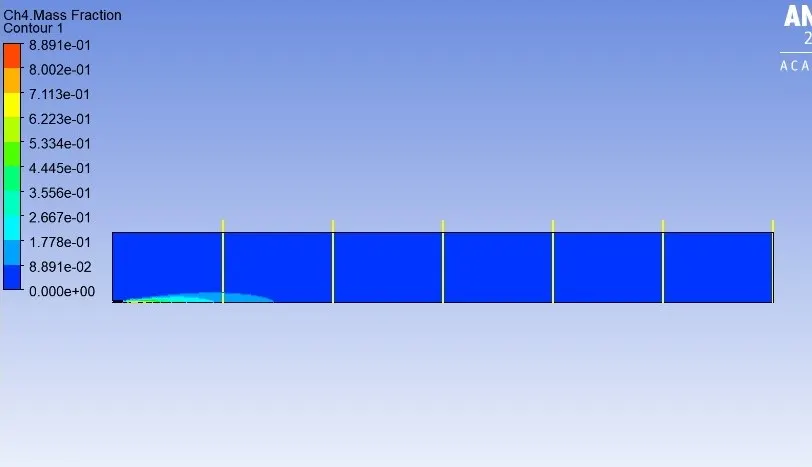
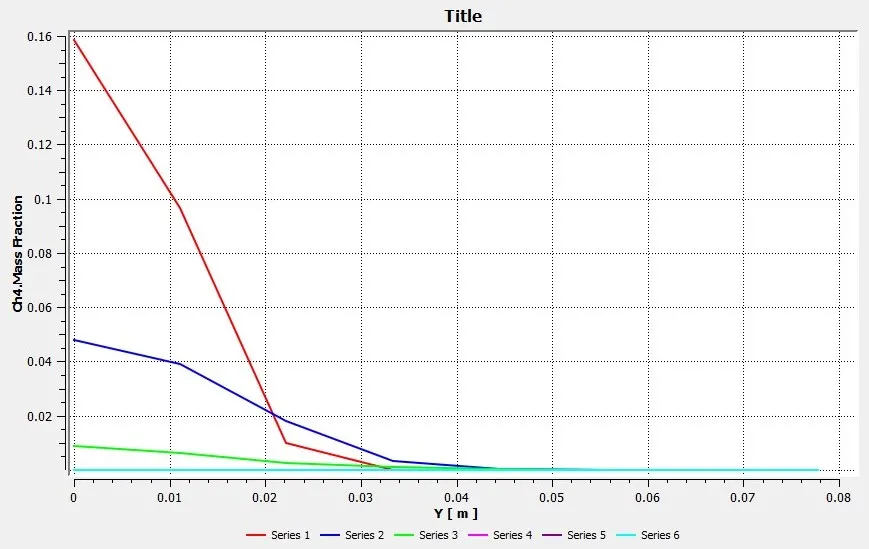
Mass fraction of CH4 is higher at series 1 and at Y = 0 m, since the fuel inlet is at the bottom. Mass fraction keeps on decreasing along the series and decreases as Y increases.
Mass fraction of CO2
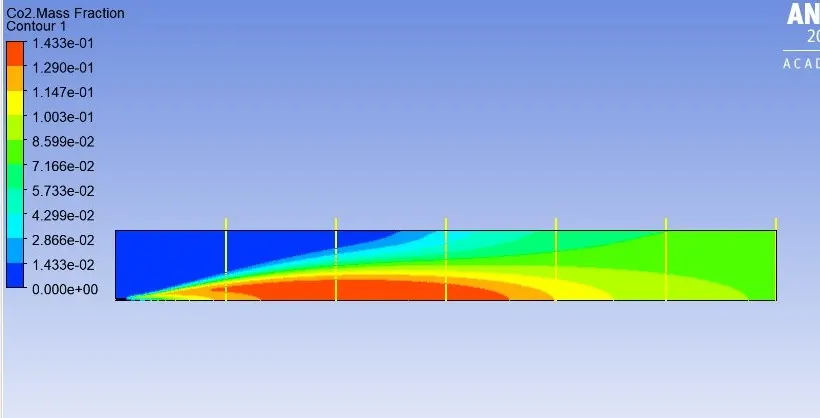
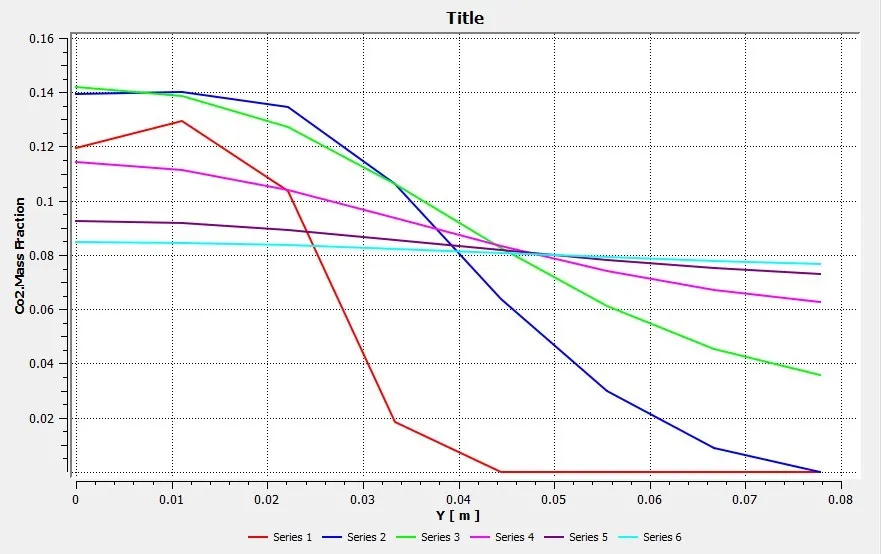
Mass fraction of CO2 is higher at series 3 and at Y = 0 m and lowest at series 6. Mass fraction decreases as Y increases. The mass fraction peaks at the middle of the combustor.
Mass fraction of H2O
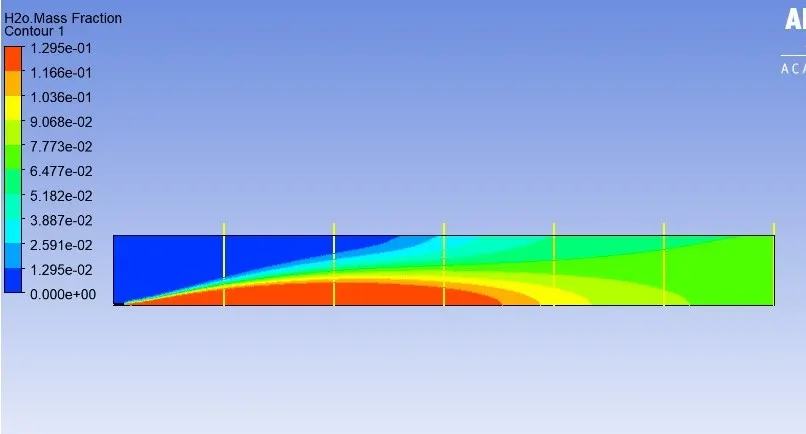
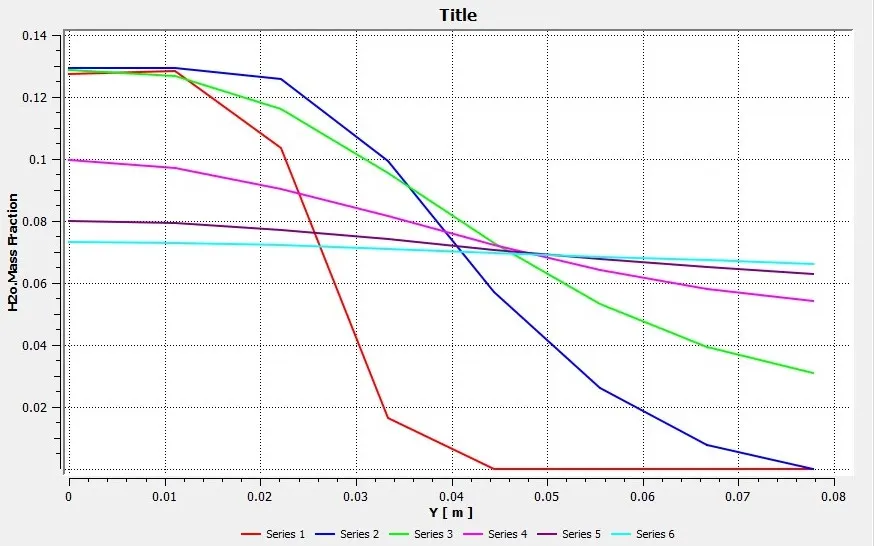
Mass fraction of H2O is higher at series 2 and at Y = 0 m and lowest at series 6. Mass fraction decreases as Y increases. The mass fracion peaks at the middle of the combustor.
Mass fraction of N2
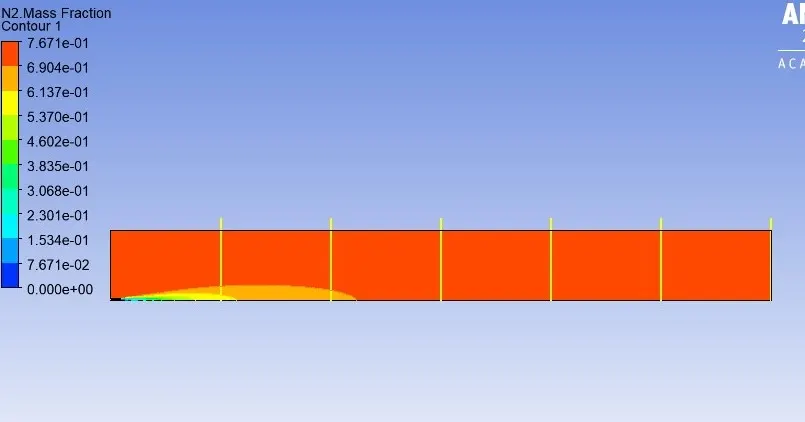
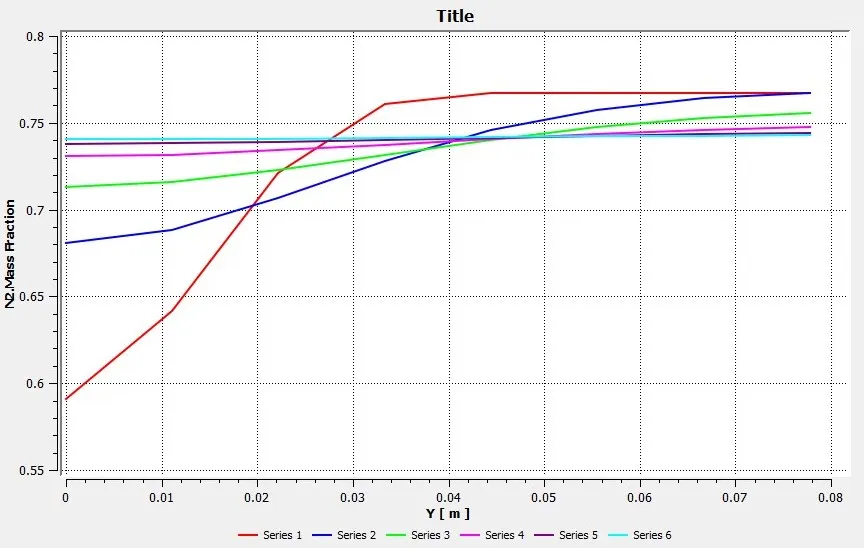
Mass fraction of N2 increases along the series at Y = 0 m. Mass fraction increases with Y and then stabilises.
Mass fraction of O2
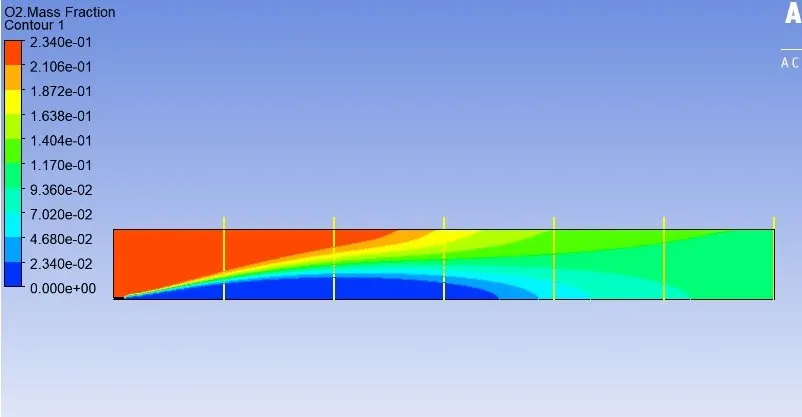
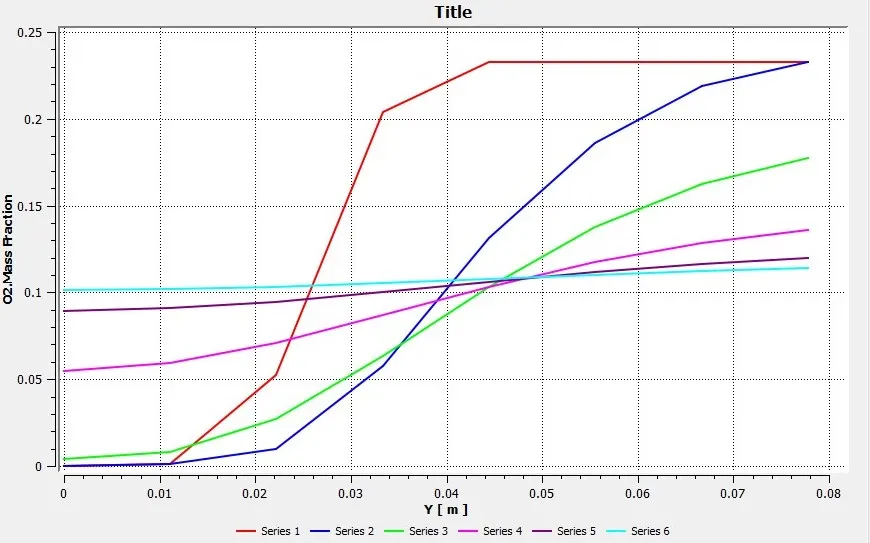
Mass fraction of O2 increases along the series at Y = 0 m. Mass fraction increases with Y.
Mass fraction of NOX
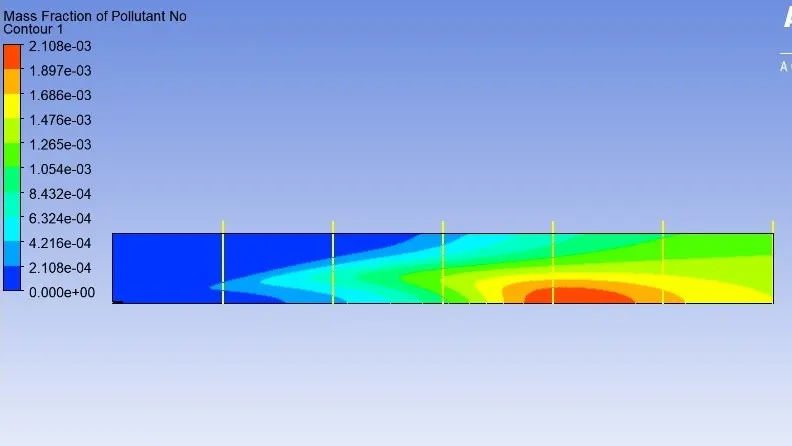
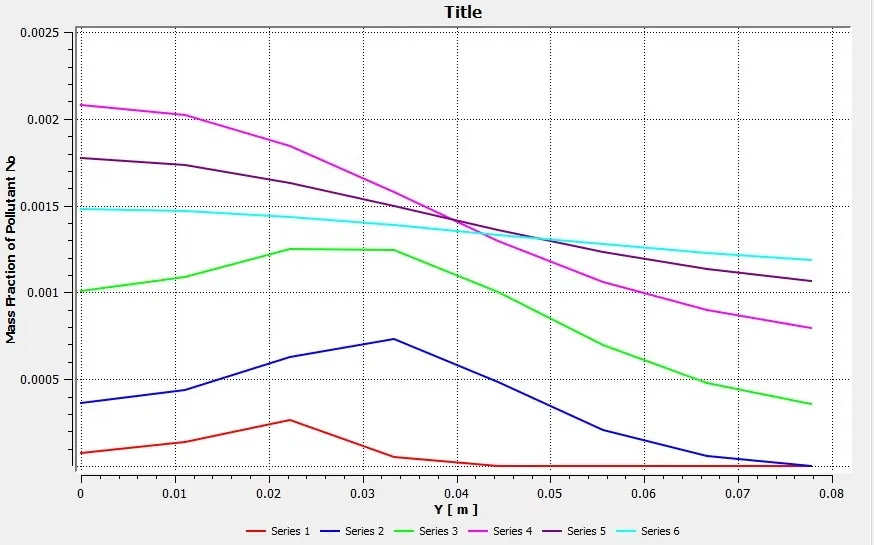
Mass fraction of NOX is at series 4 at Y = 0 m. Mass fraction decreases as Y increases. The highest value of mass fraction of NOX = 0.0021
Mass fraction of Soot
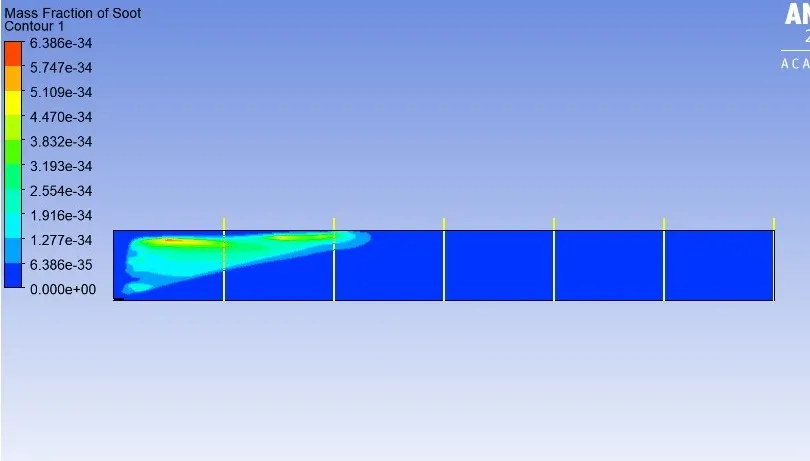
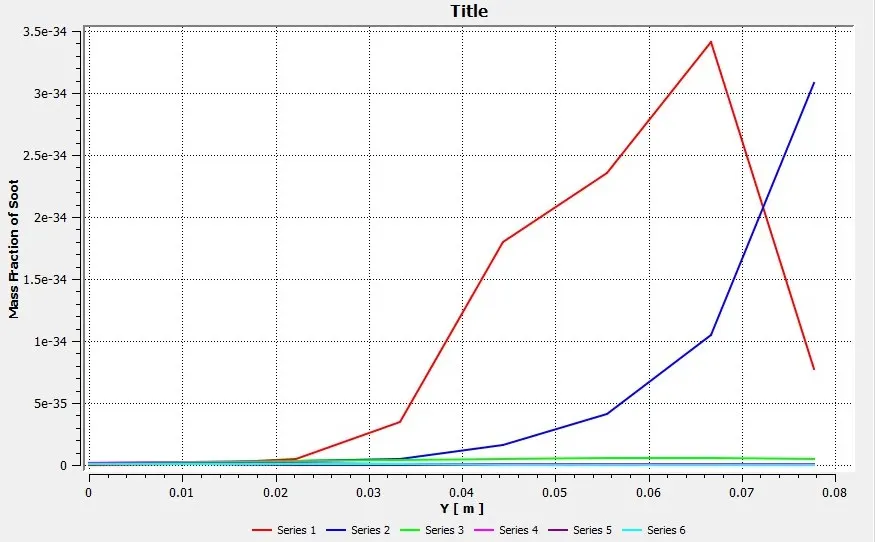
Mass fraction soot is highest at series 1. The highest value of mass fraction is about 3.4e-34 at Y = 0.066 m for series 1.
Case3
Mole fraction of H2O in fuel inlet= 0.15
Mole fraction of methane (CH4) in fuel inlet= 0.85
Residual
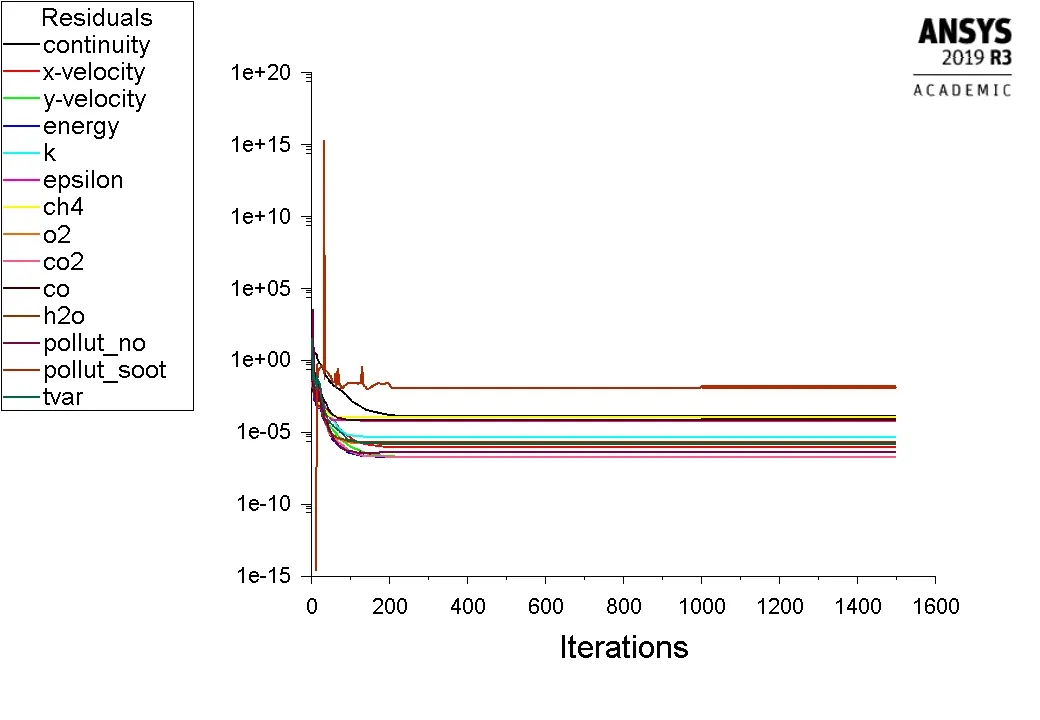
Iterations = 1500 were ran. The residual plot is plotted in ANSYS FLUENT shown below.
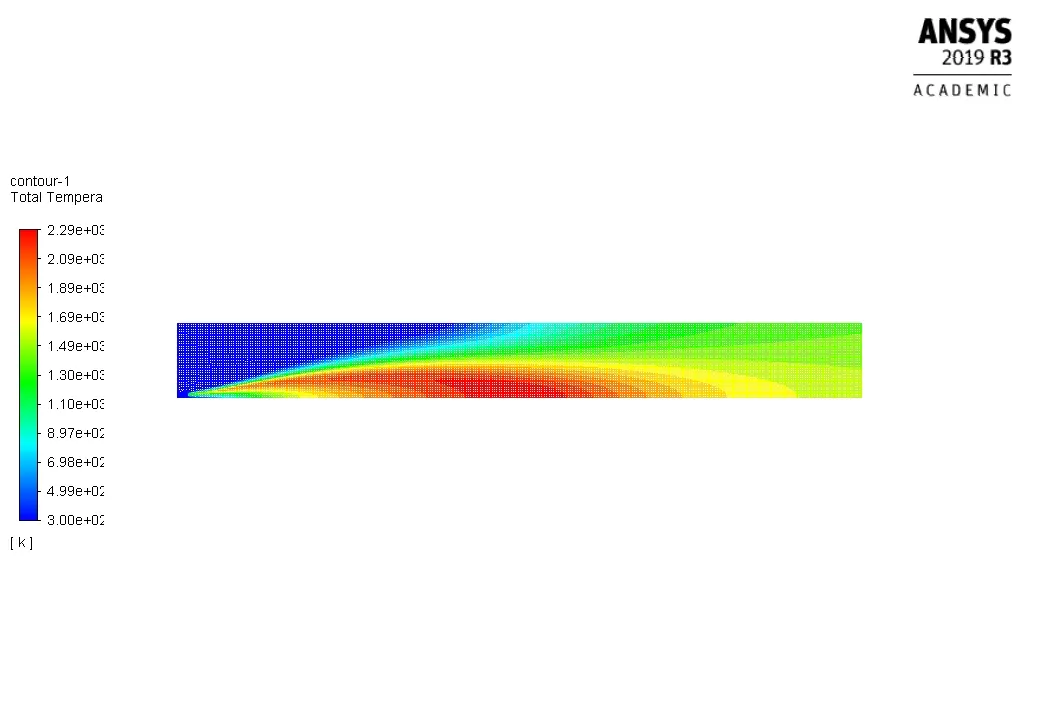
Temperature Contour
Mass fraction of methane (CH4)
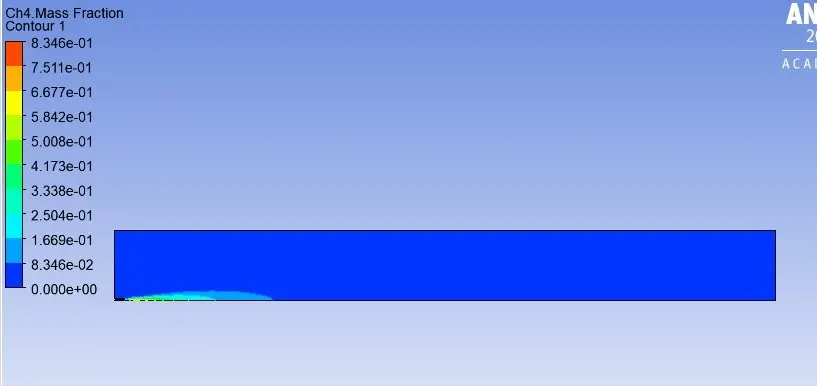
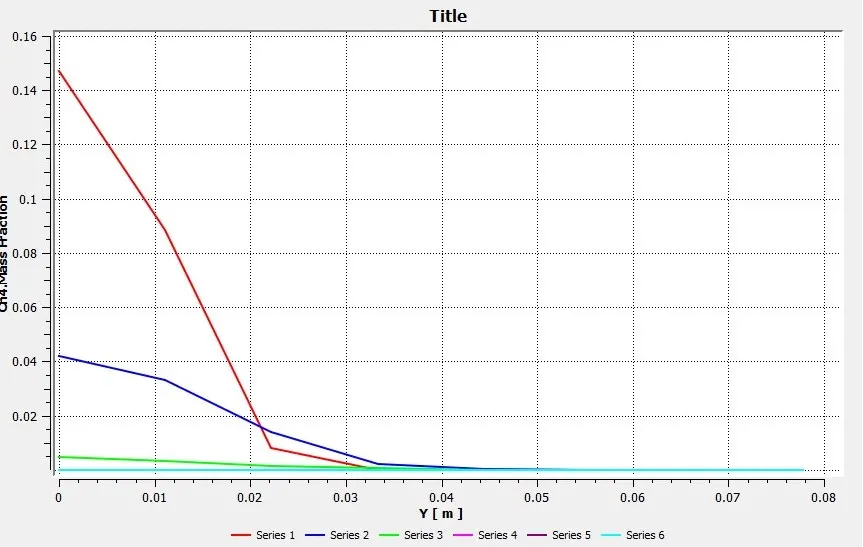
Mass fraction of CH4 is higher at series 1 and at Y = 0 m, since the fuel inlet is at the bottom. Mass fraction keeps on decreasing along the series and decreases as Y increases.
Mass fraction of CO2
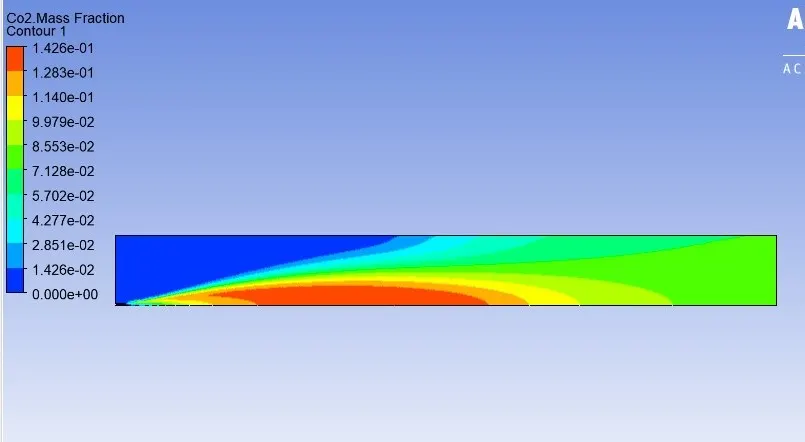
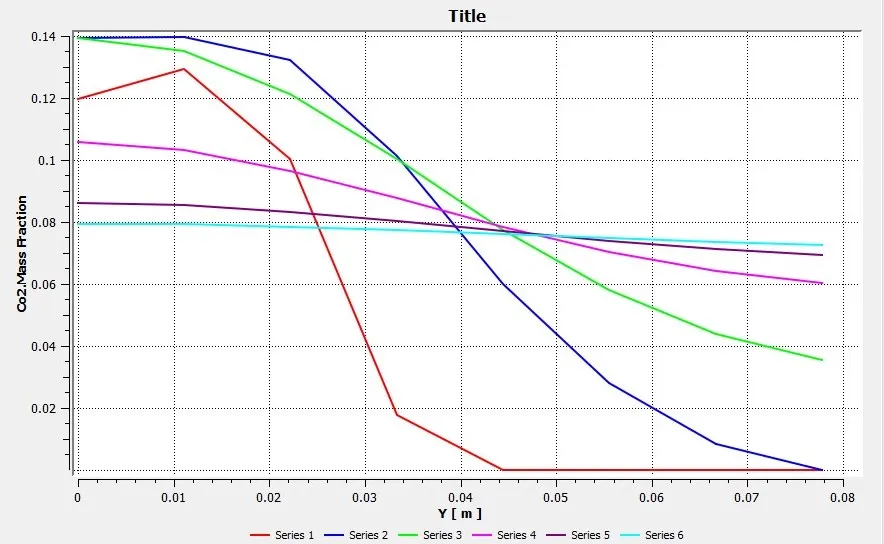
Mass fraction of CO2 is higher at series 3 and at Y = 0 m and lowest at series 6. Mass fraction decreases as Y increases. The mass fraction peaks at the middle of the combustor.
Mass fraction of H2O
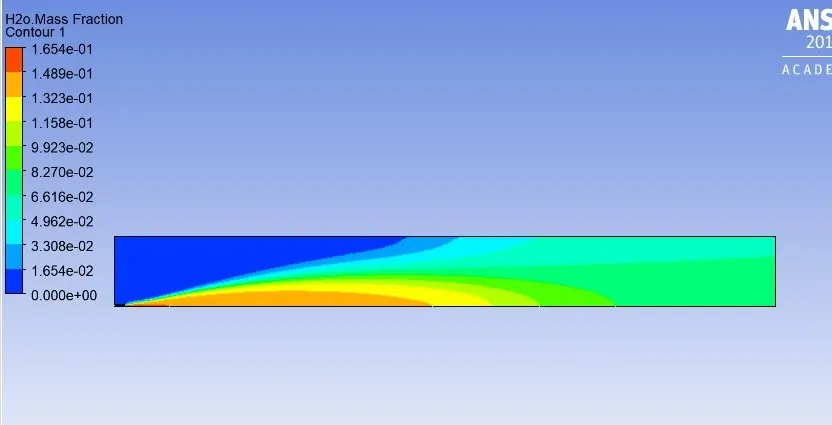
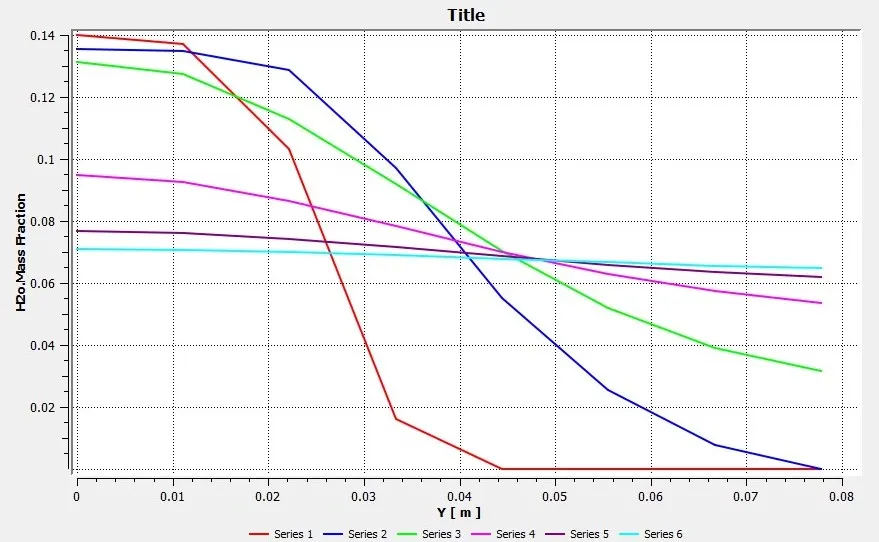
Mass fraction of H2O is higher at series 2 and at Y = 0 m and lowest at series 6. Mass fraction decreases as Y increases. The mass fraction peaks at the middle of the combustor.
Mass fraction of N2
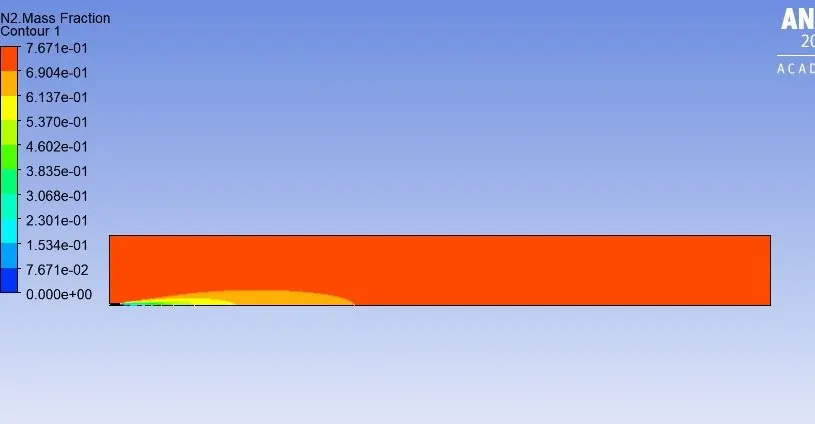
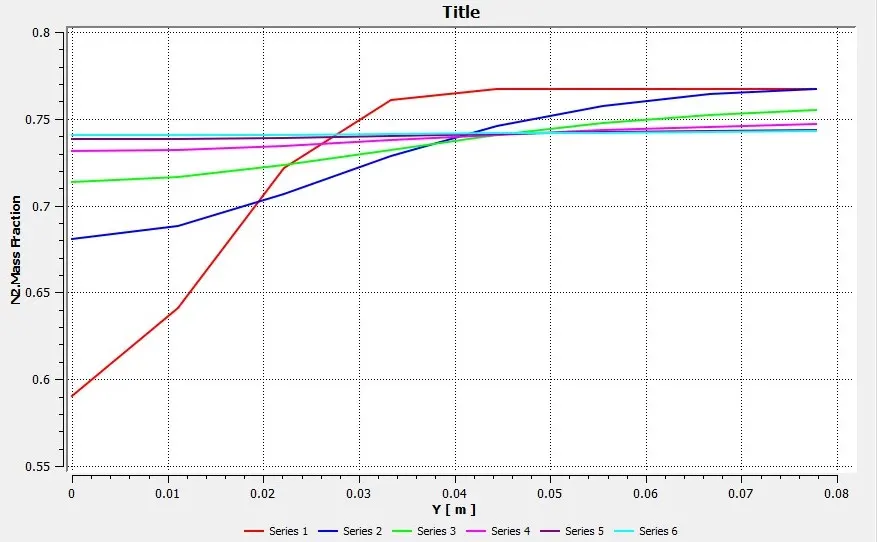
Mass fraction of N2 increases along the series at Y = 0 m. Mass fraction increases with Y and then stabilises.
Mass fraction of O2
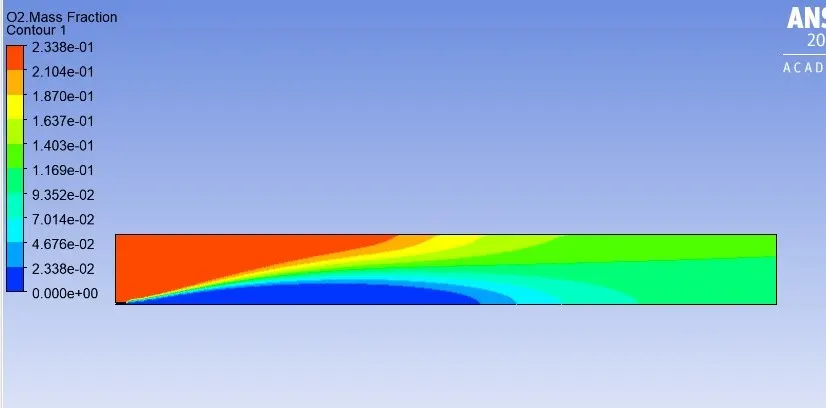
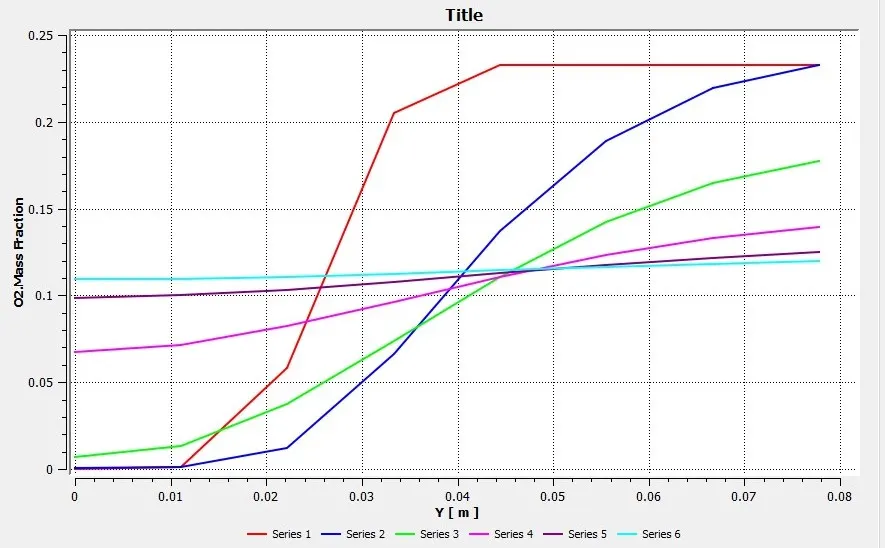
Mass fraction of O2 increases along the series at Y = 0 m. Mass fraction increases with Y.
Mass fraction of NOX
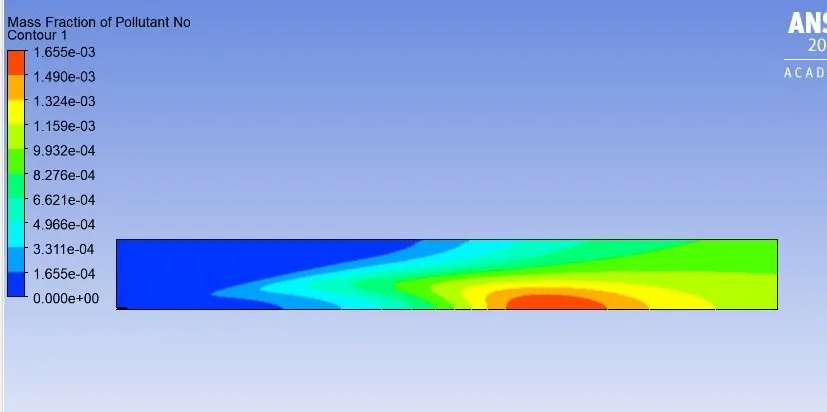
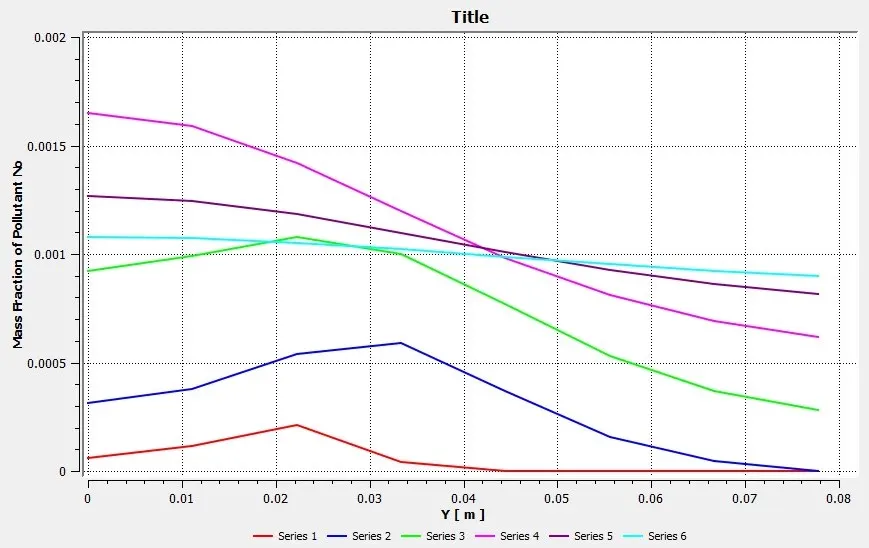
Mass fraction of NOX is at series 4 at Y = 0 m. Mass fraction decreases as Y increases. The highest value of mass fraction of NOX = 0.0021.
Mass fraction of Soot
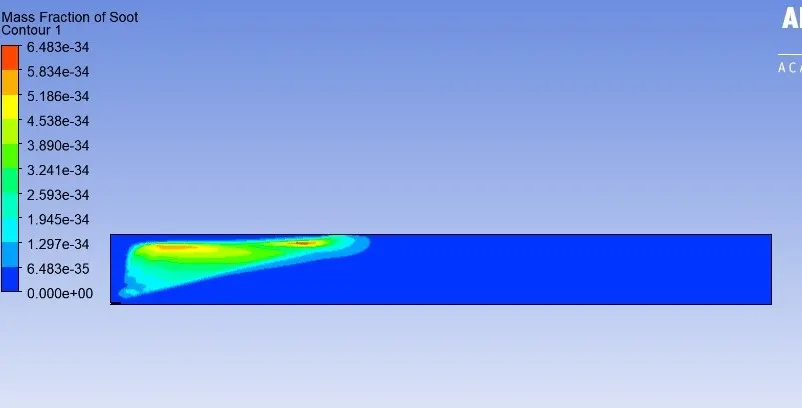
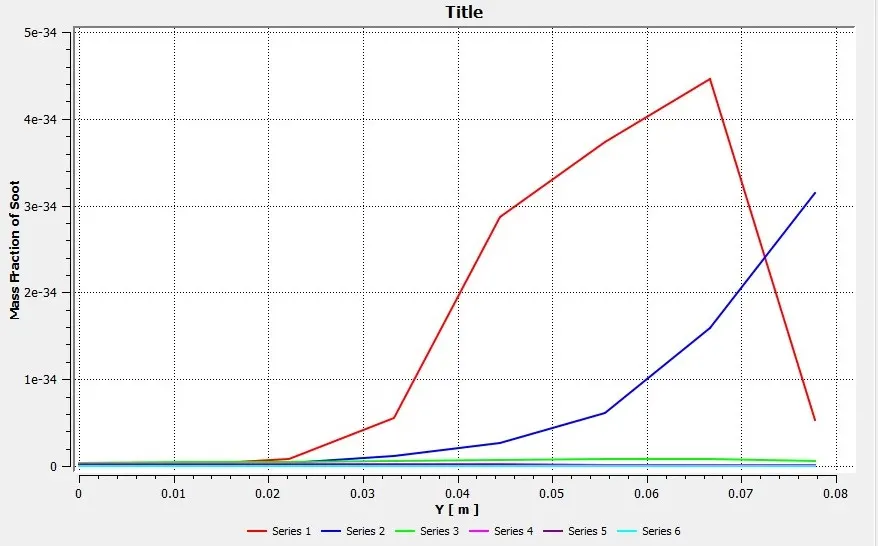
Mass fraction soot is highest at series 1. The highest value of mass fraction is about 3.4e-34 at Y = 0.066 m for series 1.
Case4
Mole fraction of H2O in fuel inlet= 0.20
Mole fraction of methane (CH4) in fuel inlet= 0.80
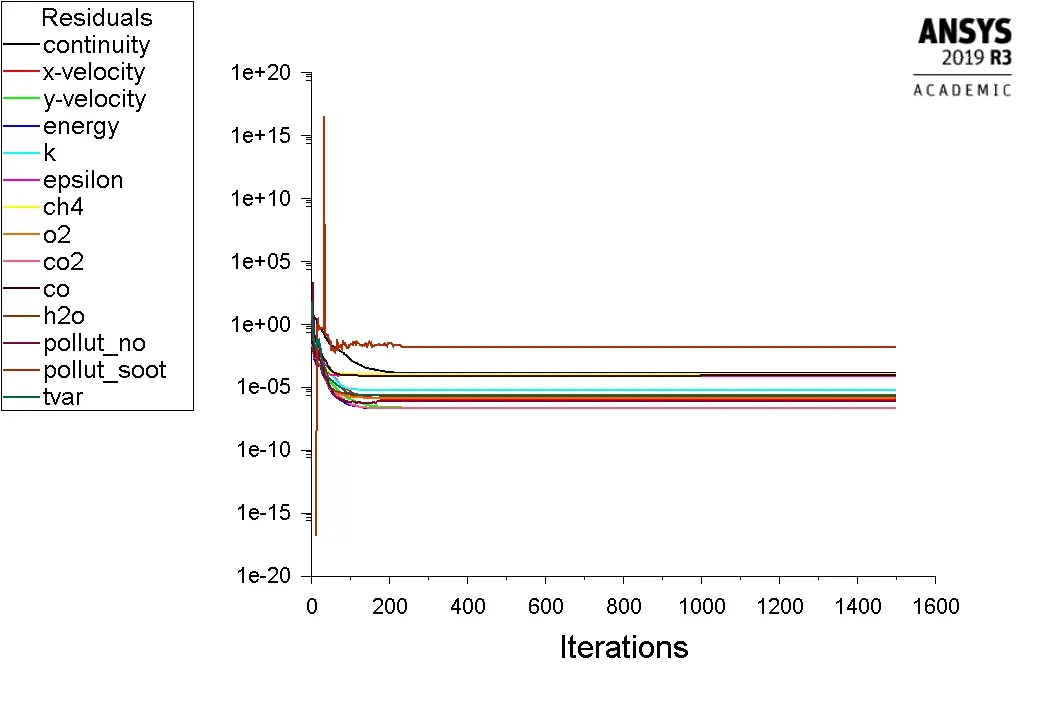
Residual
Iterations = 1500 were ran. The residual plot is plotted in ANSYS FLUENT shown below.
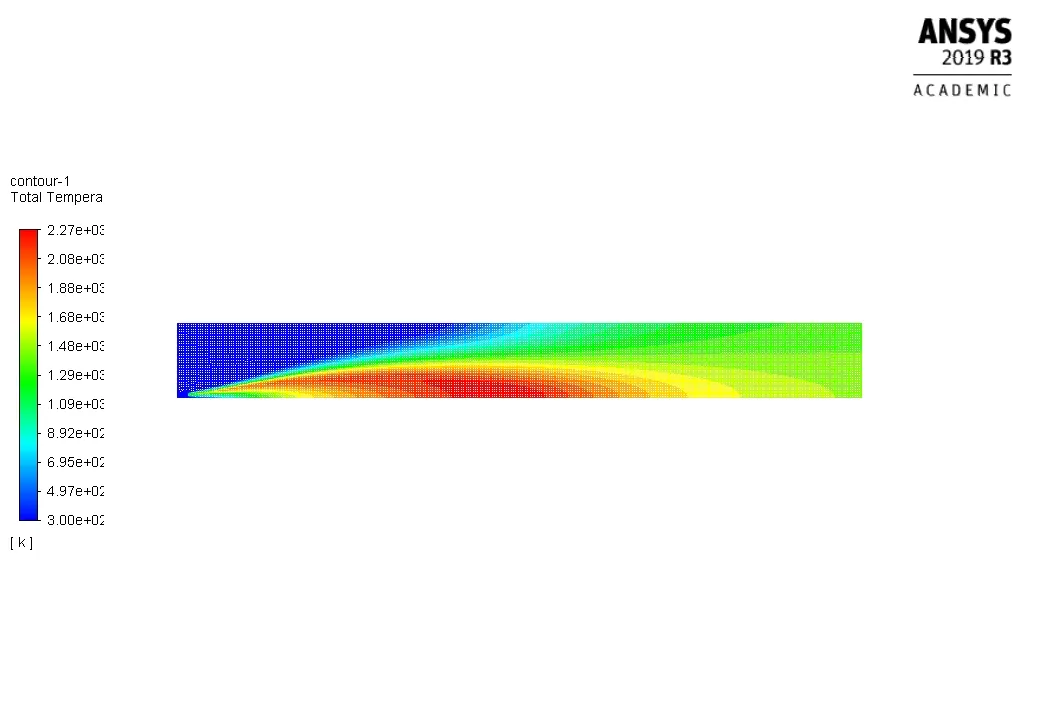
Temperature Contour
Mass fraction of methane (CH4)
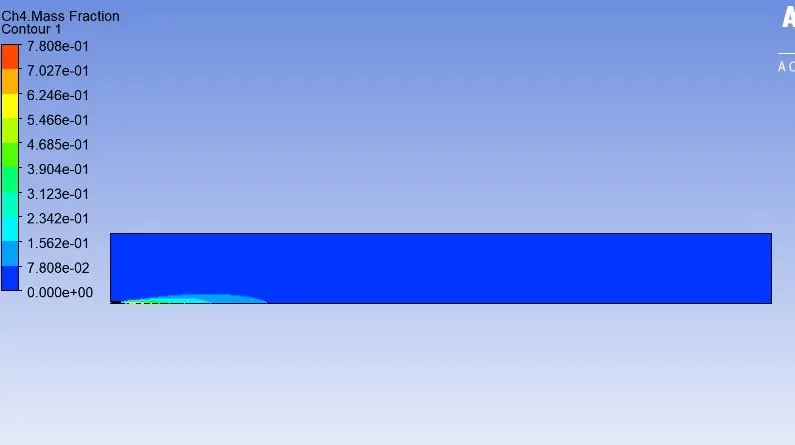
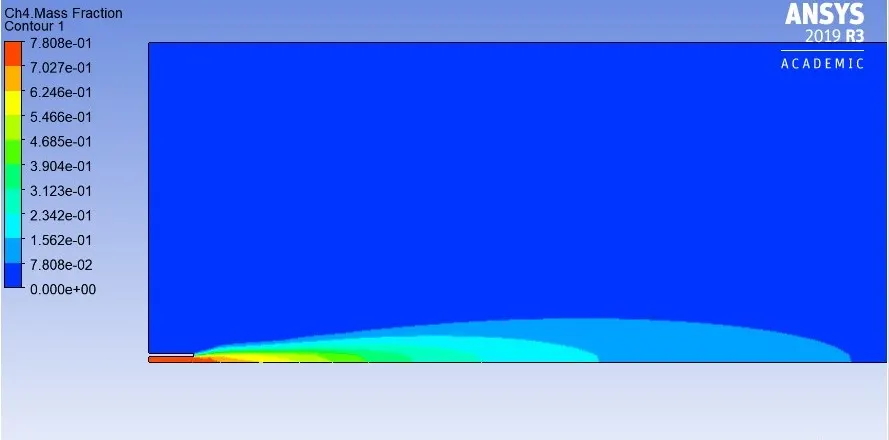
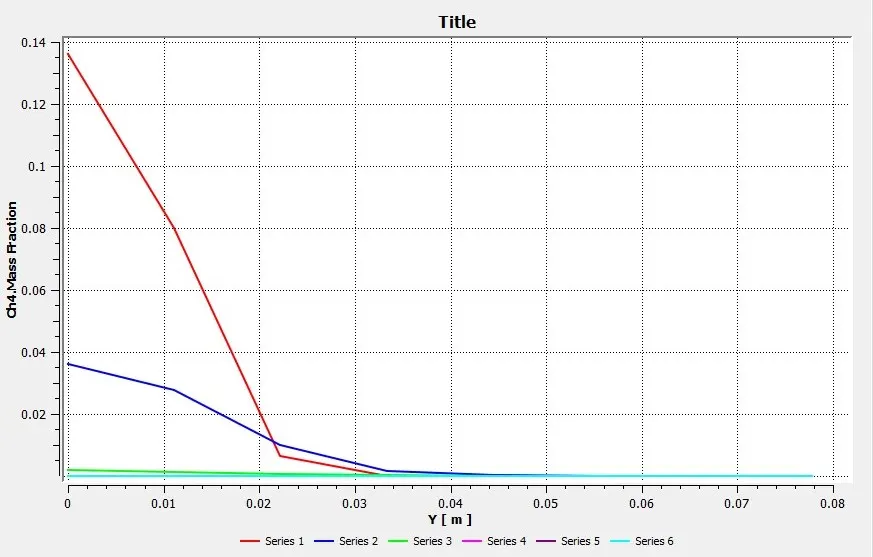
Mass fraction of CH4 is higher at series 1 and at Y = 0 m, since the fuel inlet is at the bottom. Mass fraction keeps on decreasing along the series and decreases as Y increases.
Mass fraction of CO2
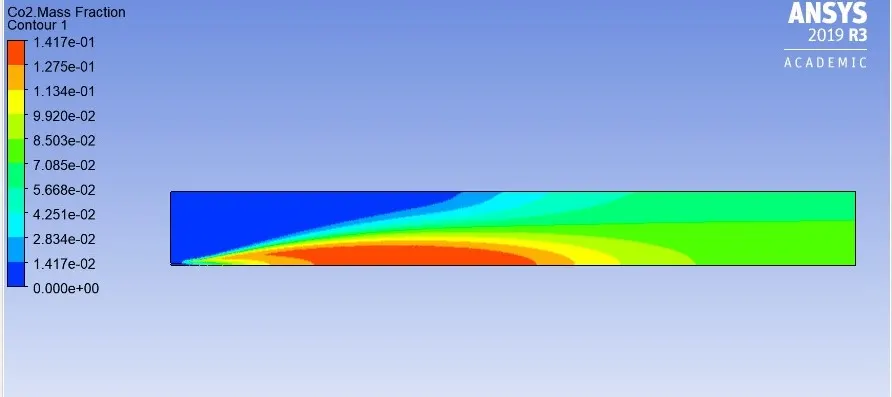
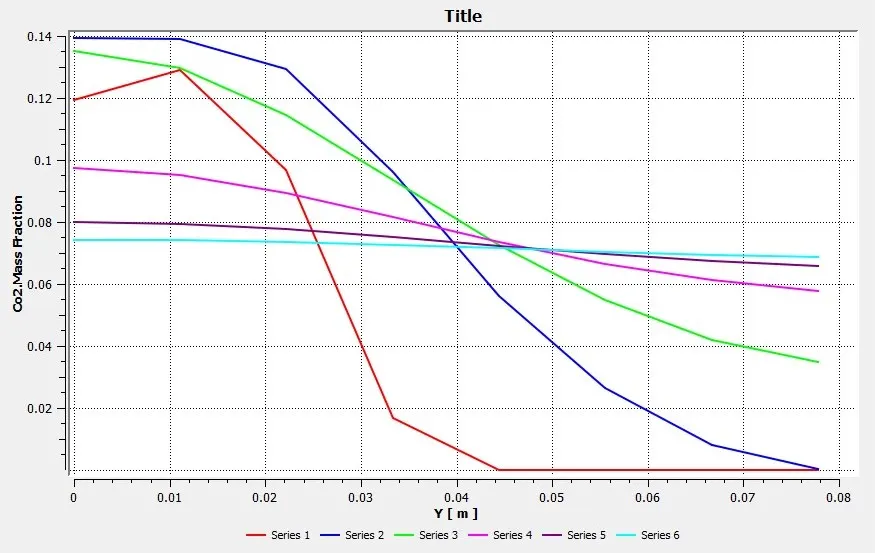
Mass fraction of CO2 is higher at series 2 and at Y = 0 m and lowest at series 6. Mass fraction decreases as Y increases. The mass fraction peaks at the middle of the combustor.
Mass fraction of H2O
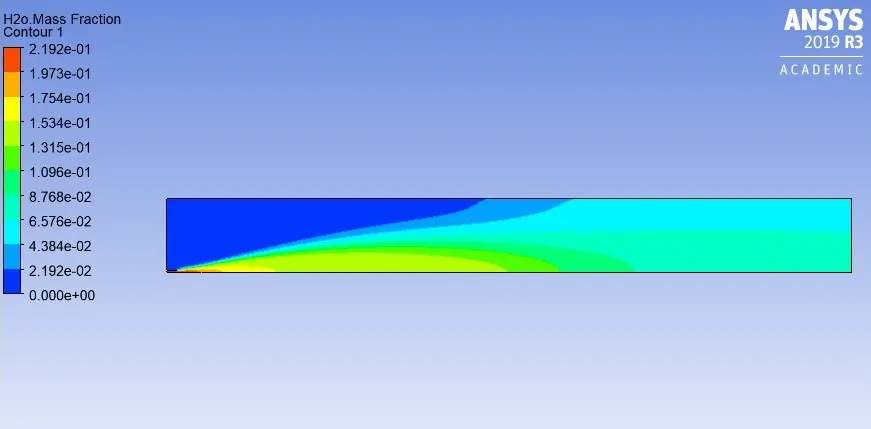
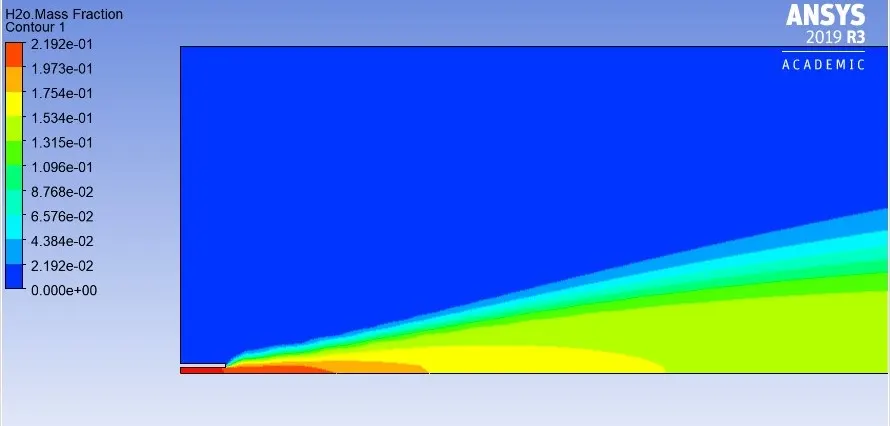
Mass fraction of H2O is higher at series 1 and at Y = 0 m and lowest at series 6. Mass fraction decreases as Y increases. The mass fraction decreases as we move along series.
Mass fraction of N2
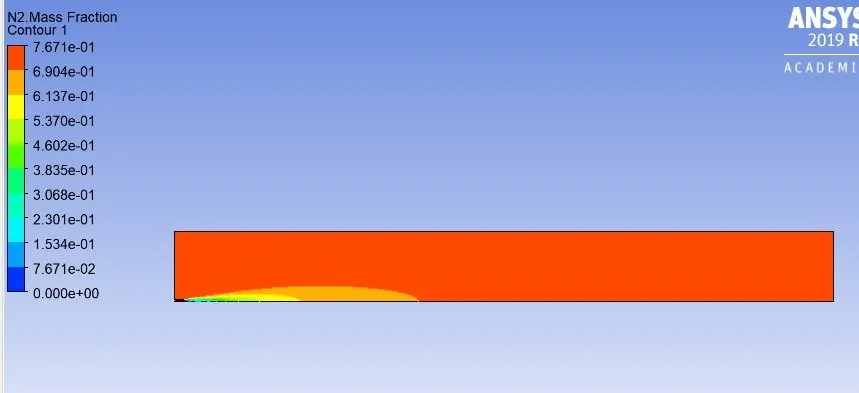
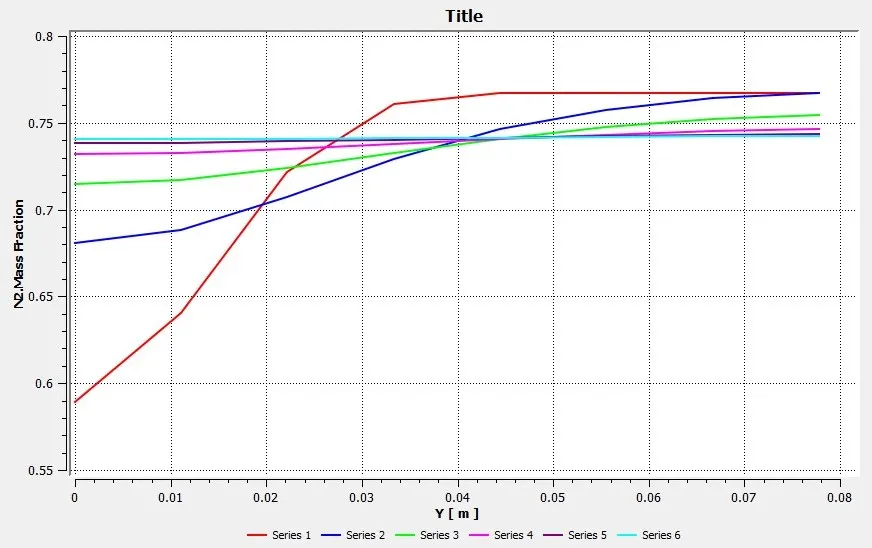
Mass fraction of N2 increases along the series at Y = 0 m. Mass fraction increases with Y and then stabilises.
Mass fraction of O2
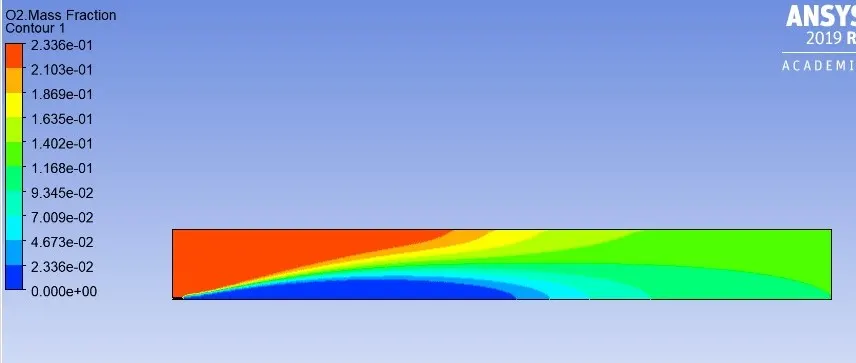
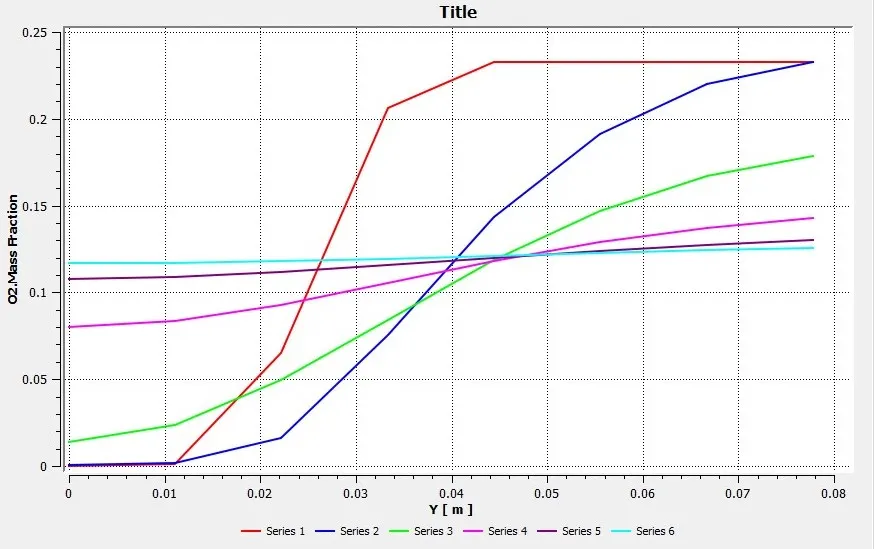
Mass fraction of O2 increases along the series at Y = 0 m. Mass fraction increases with Y.
Mass fraction of NOX
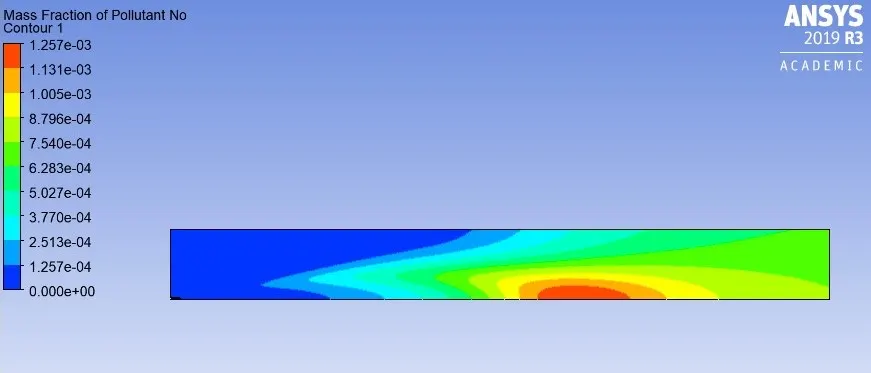
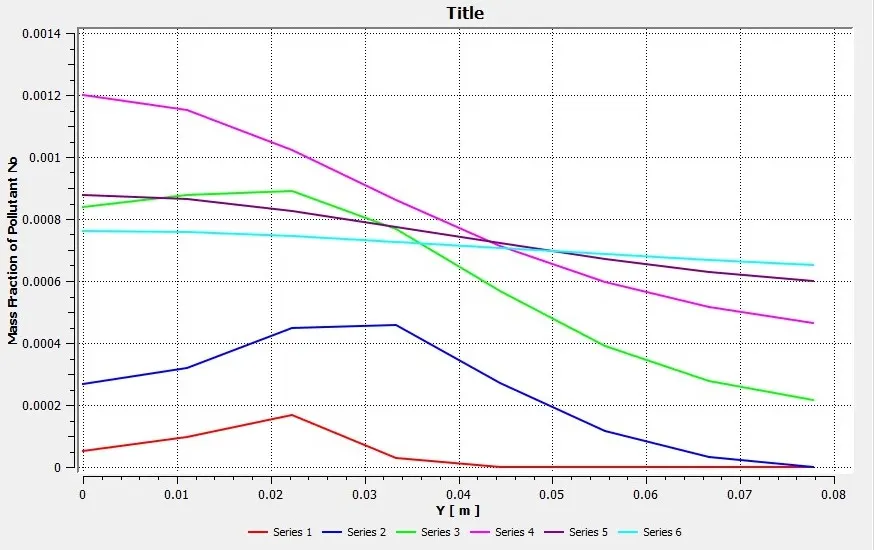
Mass fraction of NOX is at series 4 at Y = 0 m. Mass fraction decreases as Y increases. The highest value of mass fraction of NOX = 0.0012.
Mass fraction of Soot
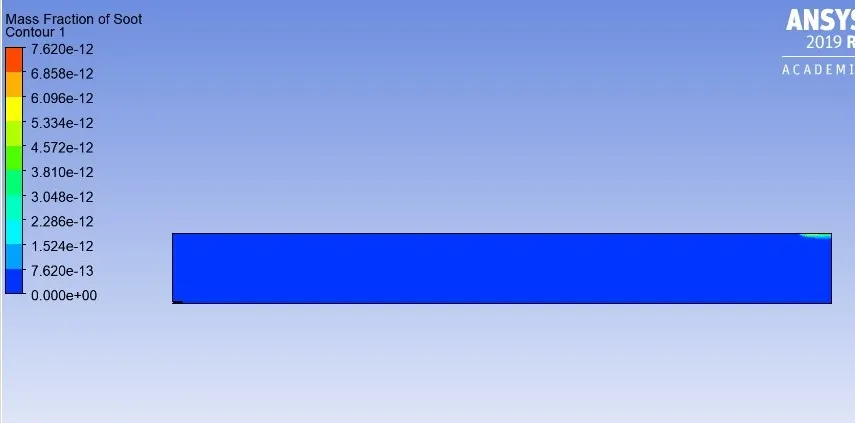
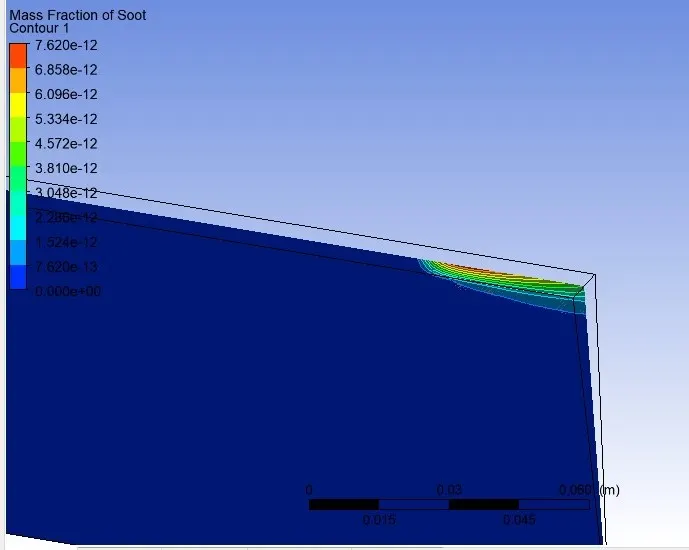
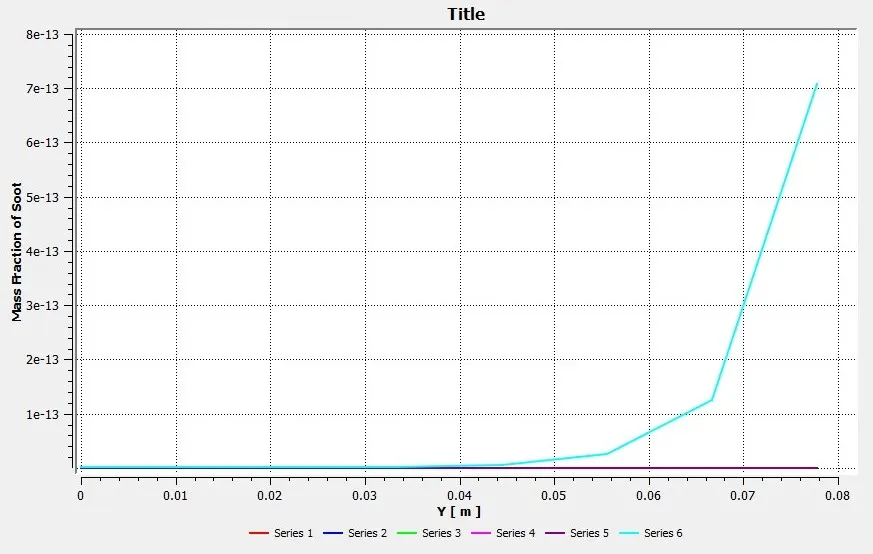
Mass fraction soot appears only at series 6 i.e. near the outlet. The highest value of mass fraction is about 7.1e-13 at Y = 0.0765 m for series 6.
Case5
Mole fraction of H2O in fuel inlet= 0.25
Mole fraction of methane (CH4) in fuel inlet= 0.75
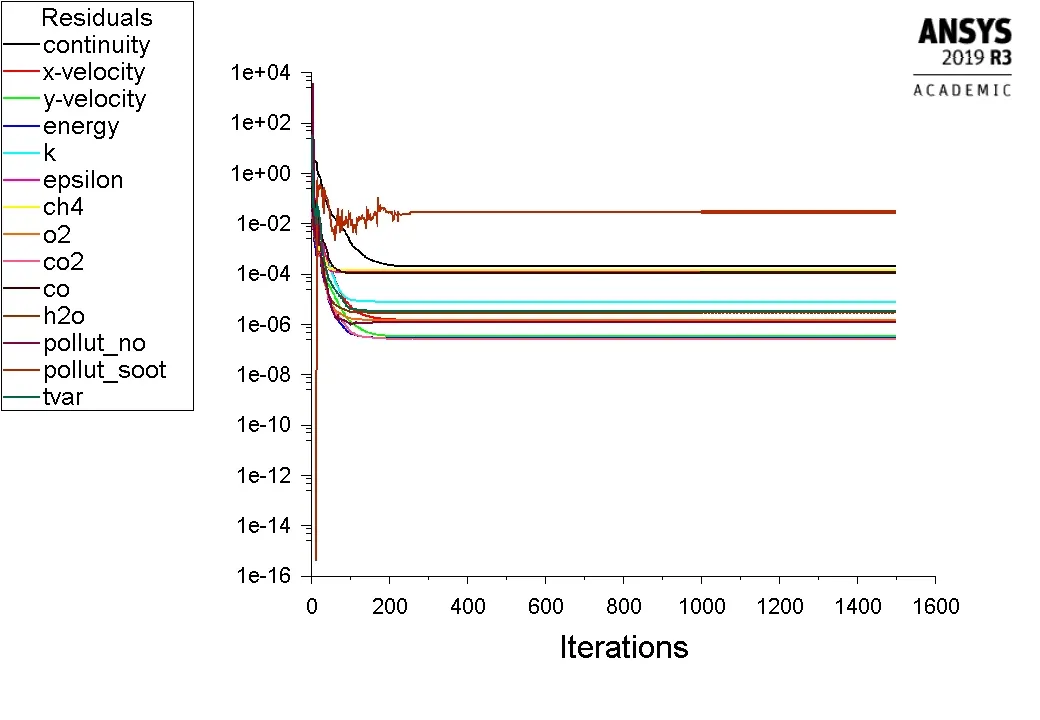
Residual
Iterations = 1500 were ran. The residual plot is plotted in ANSYS FLUENT shown below.
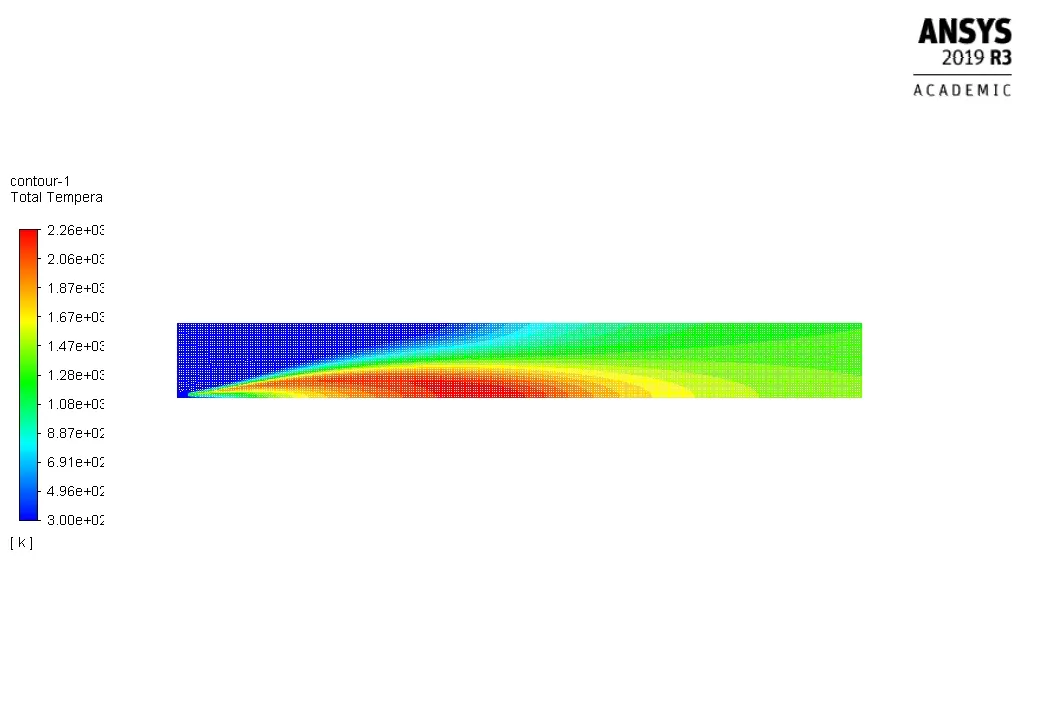
Temperature Contour
Mass fraction of methane (CH4)
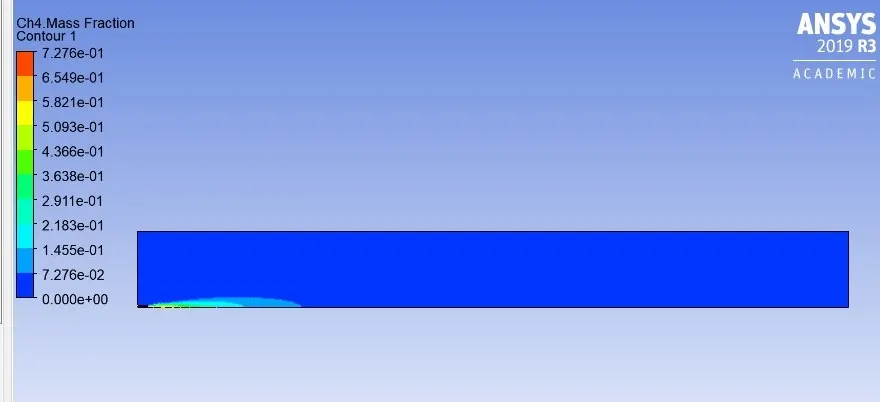
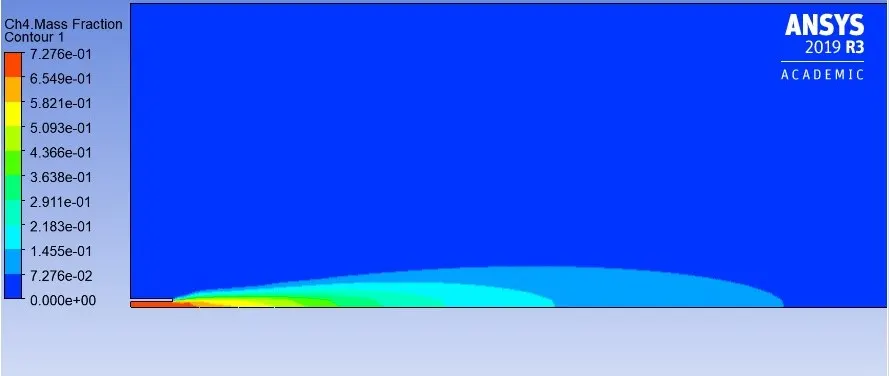
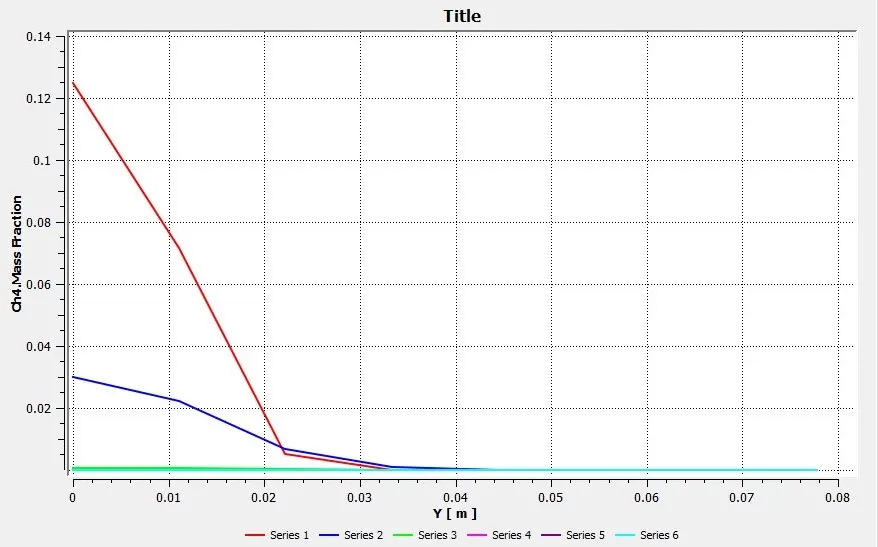
Mass fraction of CH4 is higher at series 1 and at Y = 0 m, since the fuel inlet is at the bottom. Mass fraction keeps on decreasing along the series and decreases as Y increases.
Mass fraction of CO2
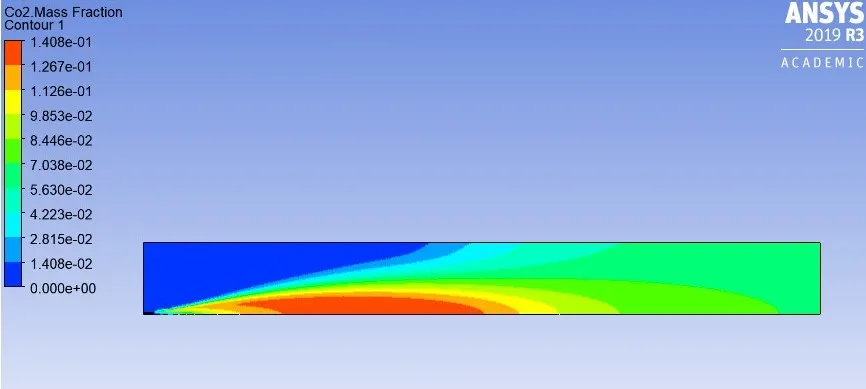
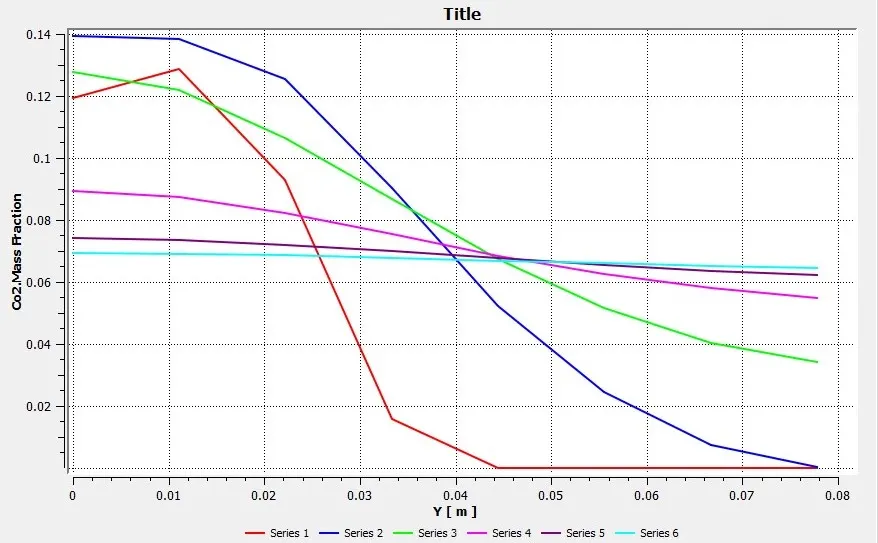
Mass fraction of CO2 is higher at series 2 and at Y = 0 m and lowest at series 6. Mass fraction decreases as Y increases. The mass fraction is higher at the middle section of the combustor.
Mass fraction of H2O
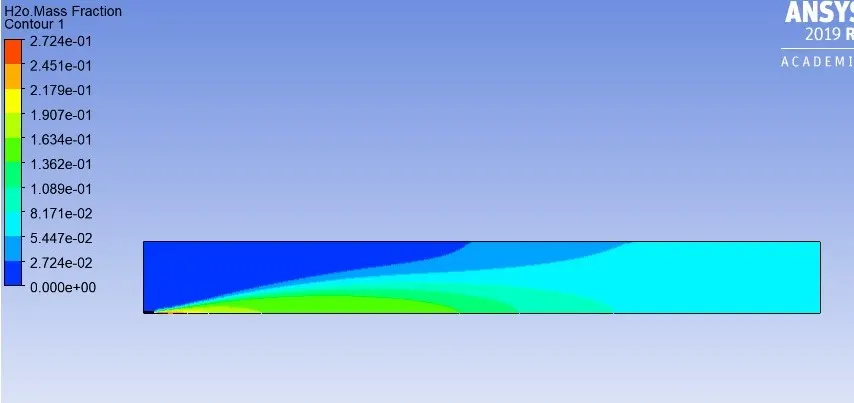
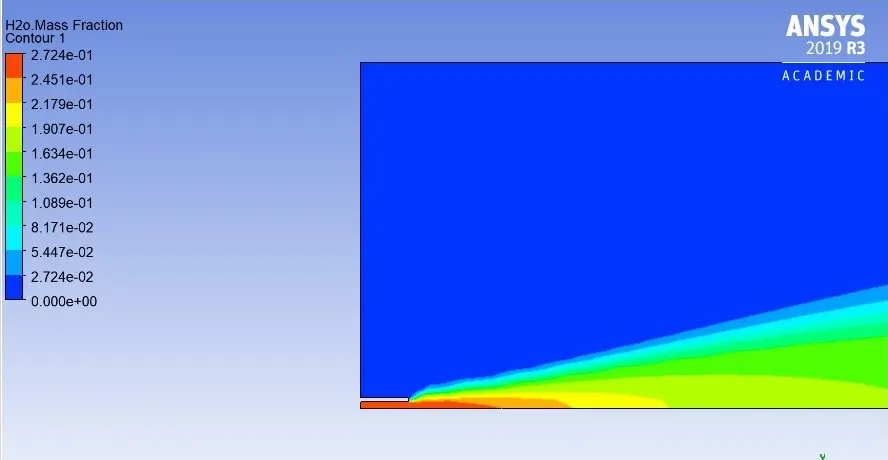
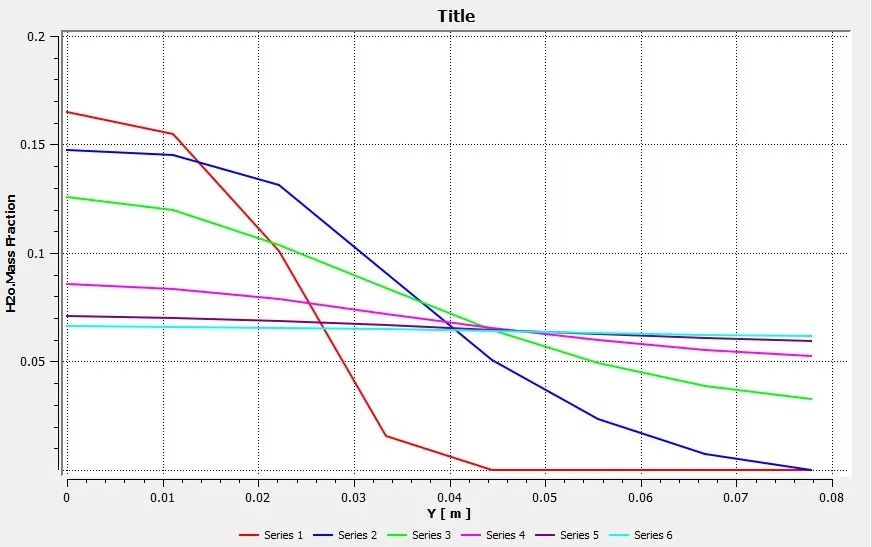
Mass fraction of H2O is higher at series 1 and at Y = 0 m and lowest at series 6. Mass fraction decreases as Y increases. The mass fraction decreases along the series.
Mass fraction of N2
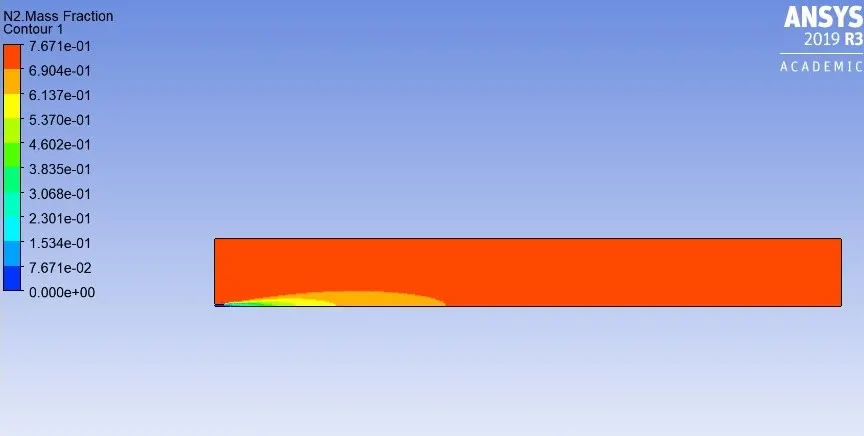
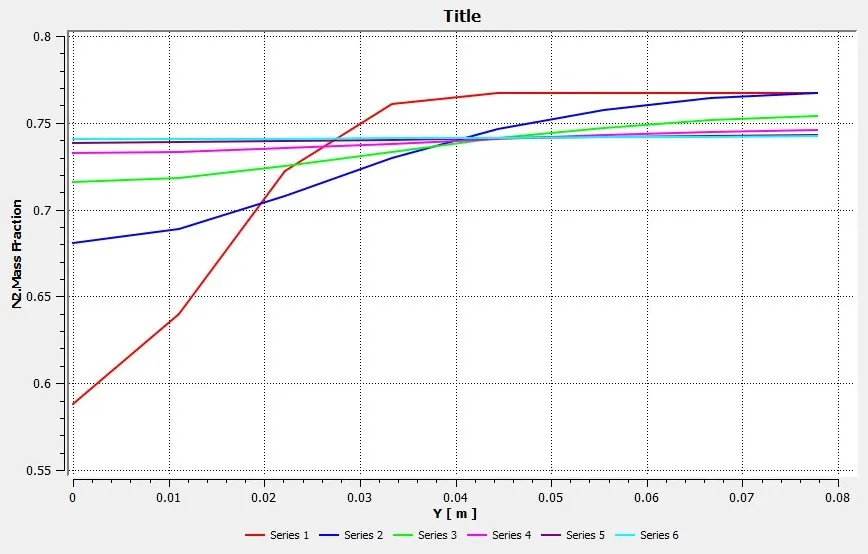
Mass fraction of N2 increases along the series at Y = 0 m. Mass fraction increases with Y and then stabilises.
Mass fraction of O2
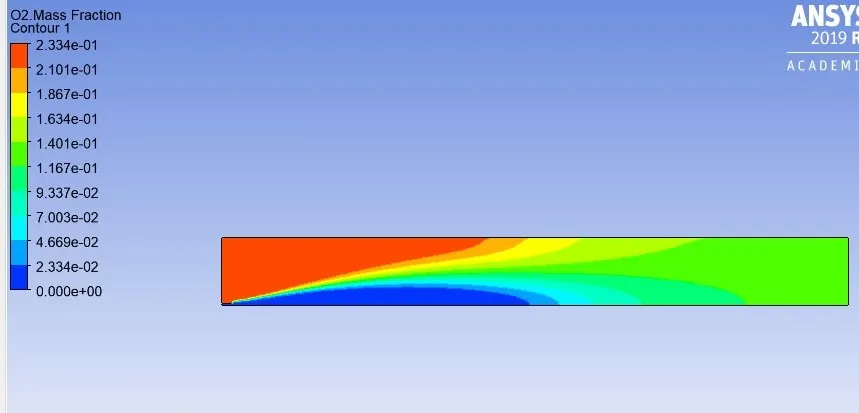
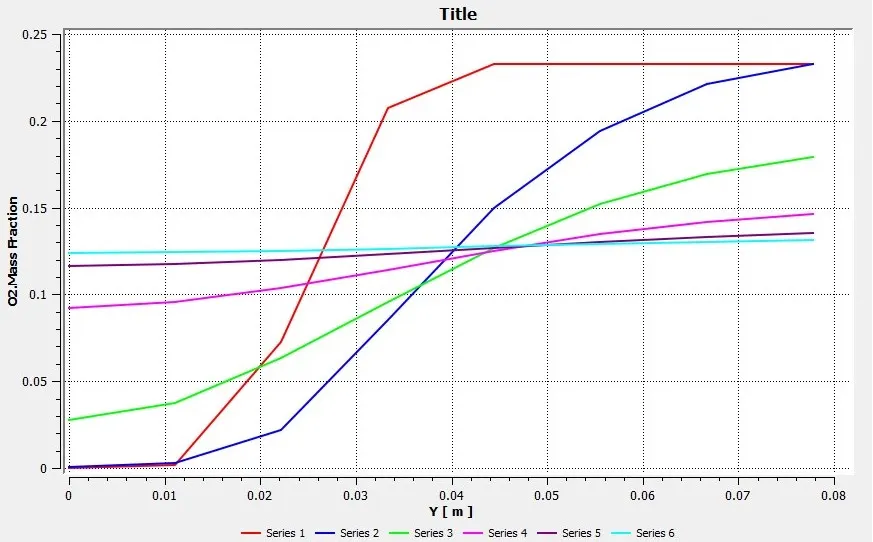
Mass fraction of O2 increases along the series at Y = 0 m. Mass fraction increases with Y.
Mass fraction of NOX
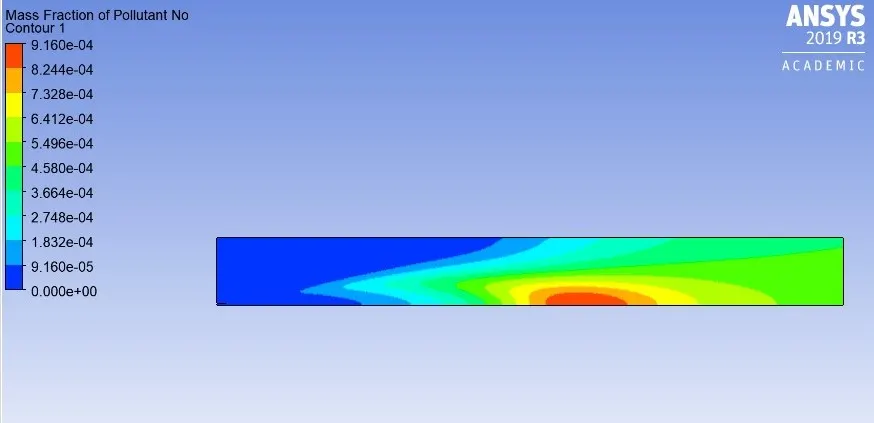
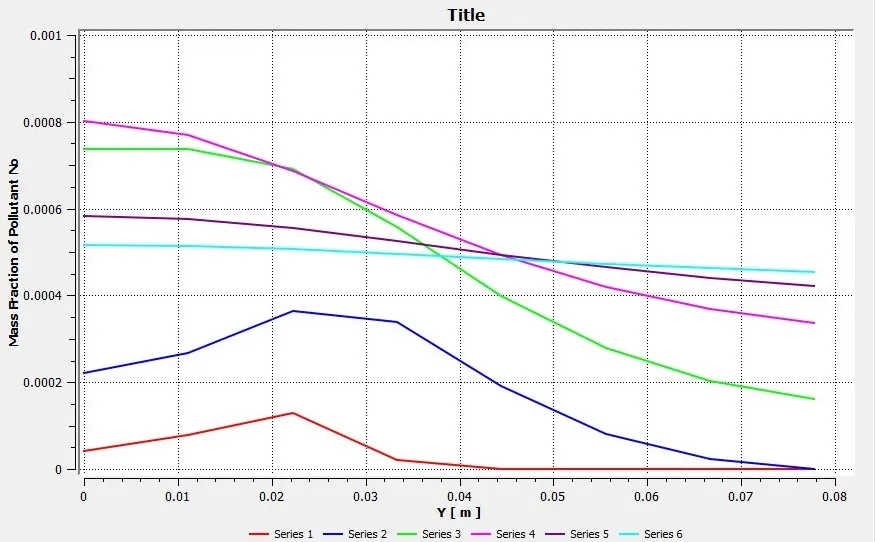
Mass fraction of NOX is at series 4 at Y = 0 m. Mass fraction decreases as Y increases. The highest value of mass fraction of NOX = 0.0008.
Mass fraction of Soot
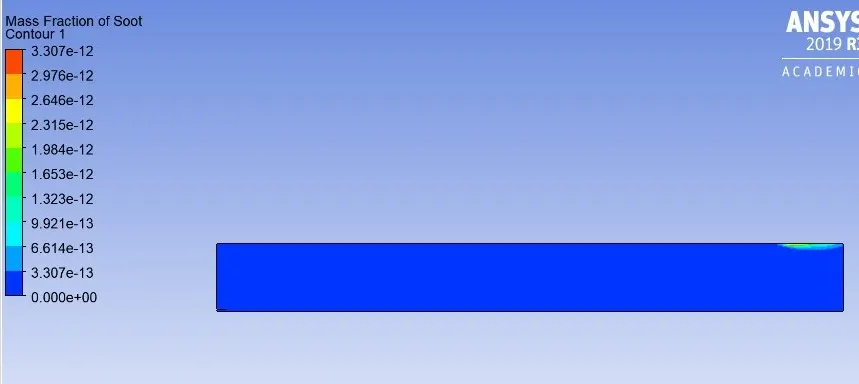
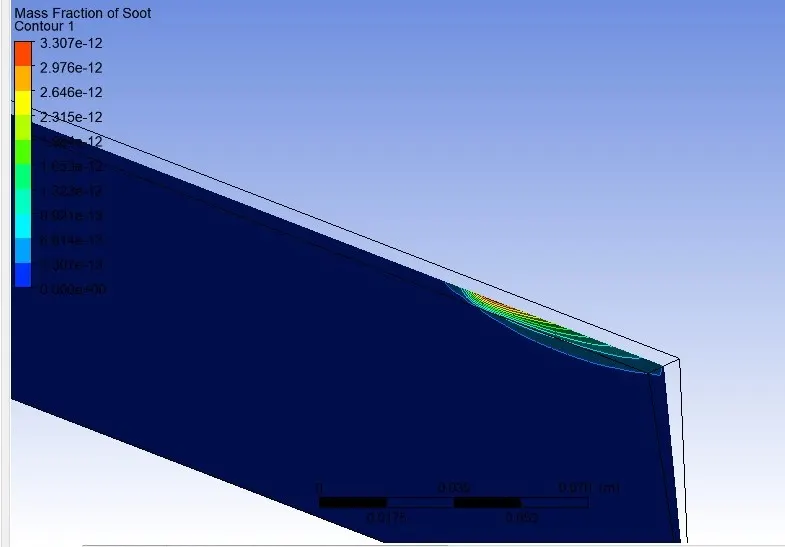
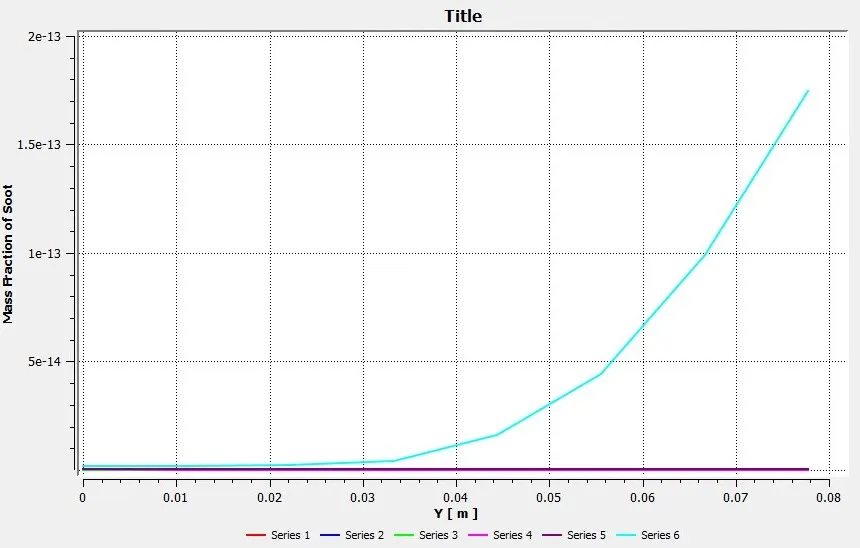
Mass fraction soot is highest at series 1. The highest value of mass fraction is about 1.8e-13 at Y = 0.078 m for series 6.
Case6
Mole fraction of H2O in fuel inlet= 0.30
Mole fraction of methane (CH4) in fuel inlet= 0.70
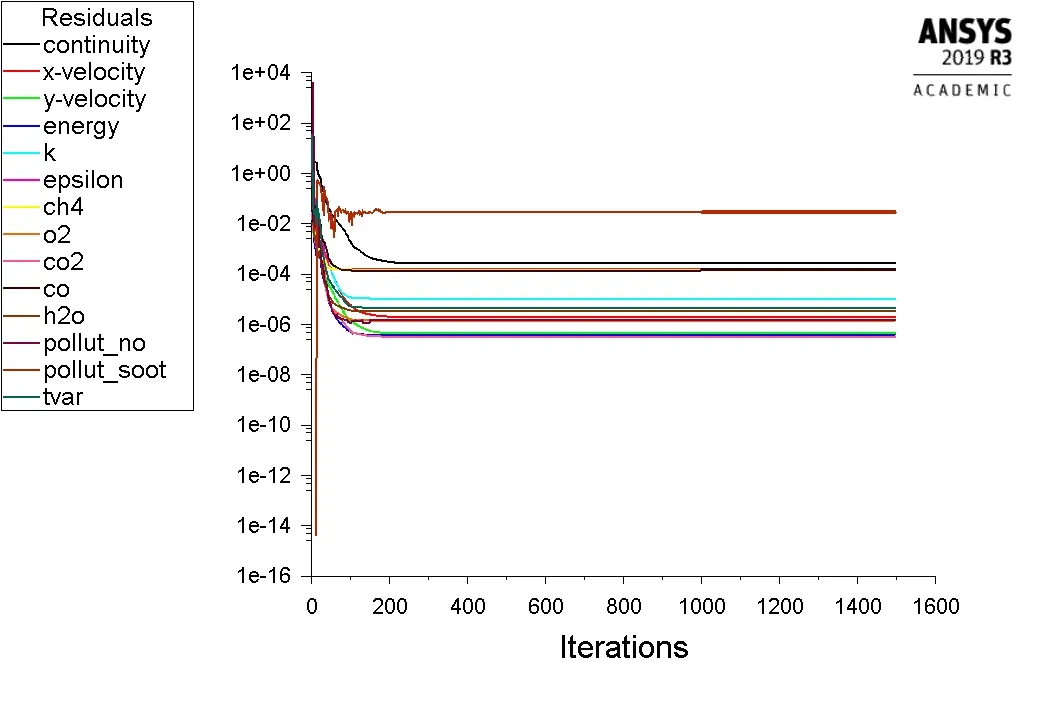
Residual
Iterations = 1500 were ran. The residual plot is plotted in ANSYS FLUENT shown below.
Temperature Contour
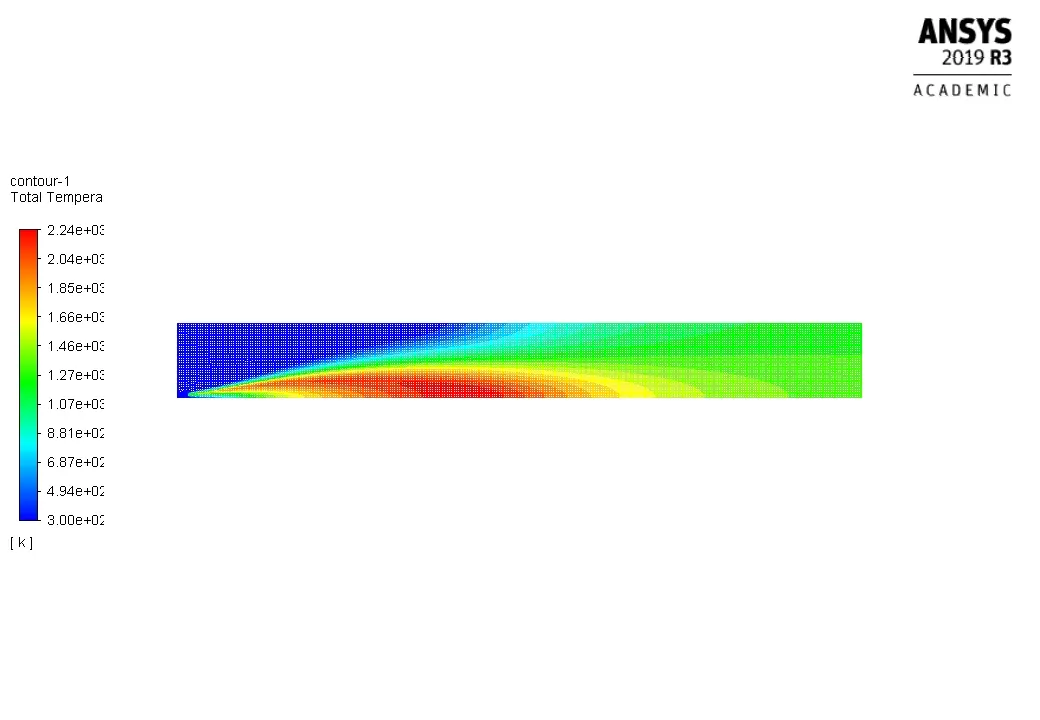
Mass fraction of methane (CH4)
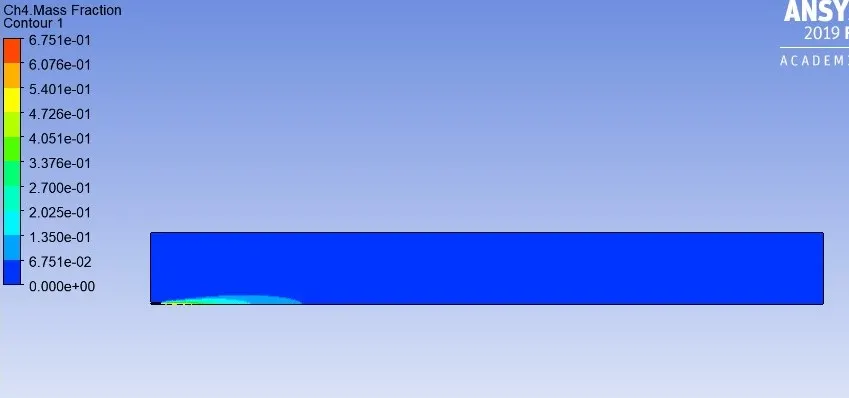
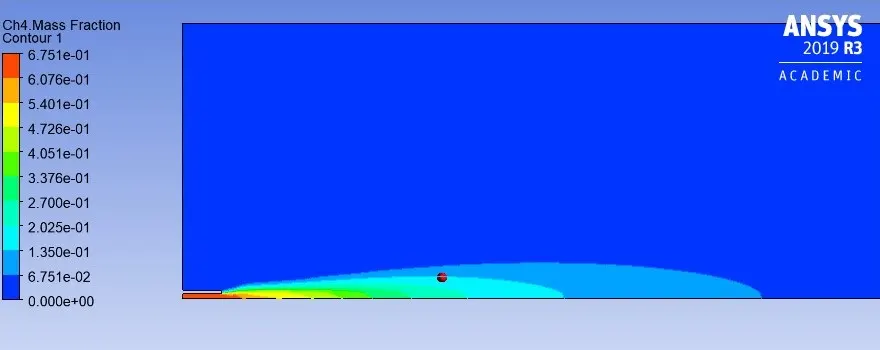
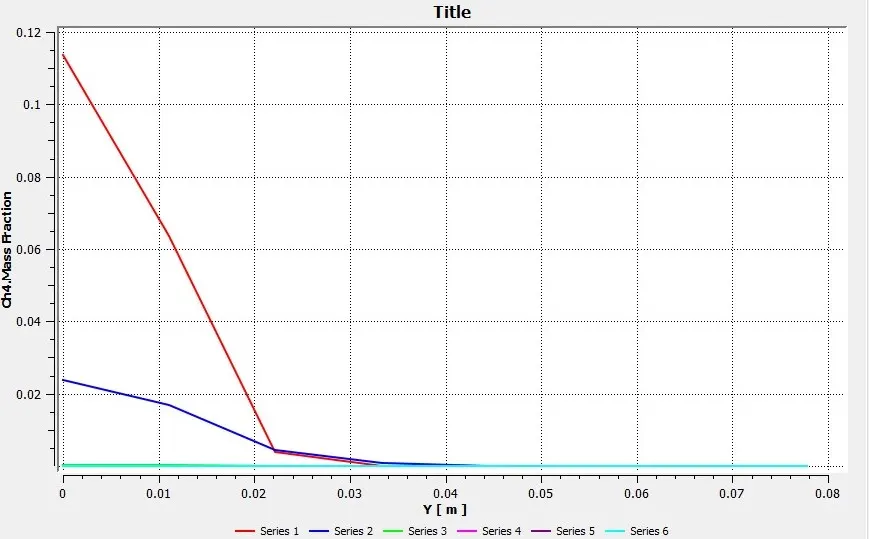
Mass fraction of CH4 is higher at series 1 and at Y = 0 m, since the fuel inlet is at the bottom. Mass fraction keeps on decreasing along the series and decreases as Y increases.
Mass fraction of CO2
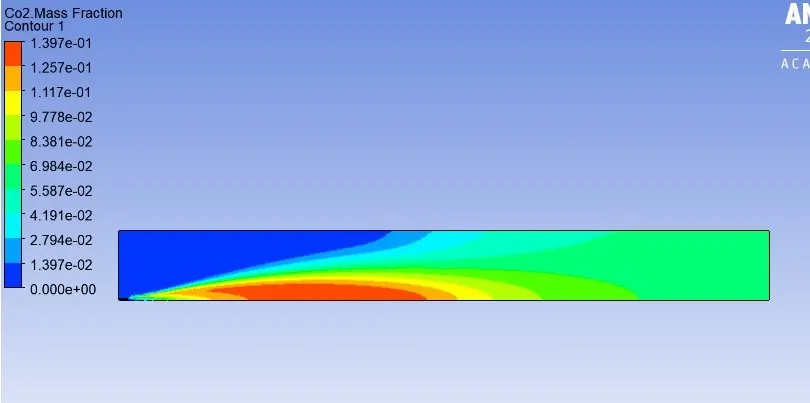
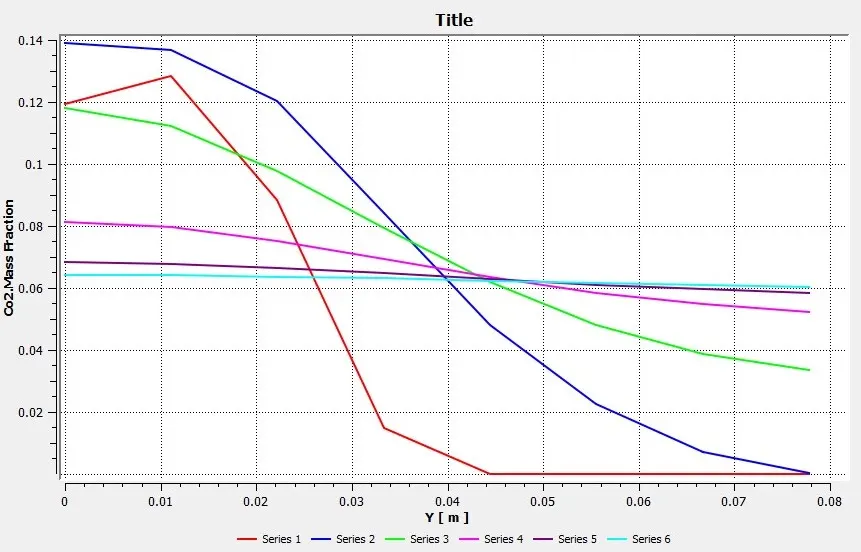
Mass fraction of CO2 is higher at series 2 and at Y = 0 m and lowest at series 6. Mass fraction decreases as Y increases. The mass fraction is higher at the middle section of the combustor.
Mass fraction of H2O
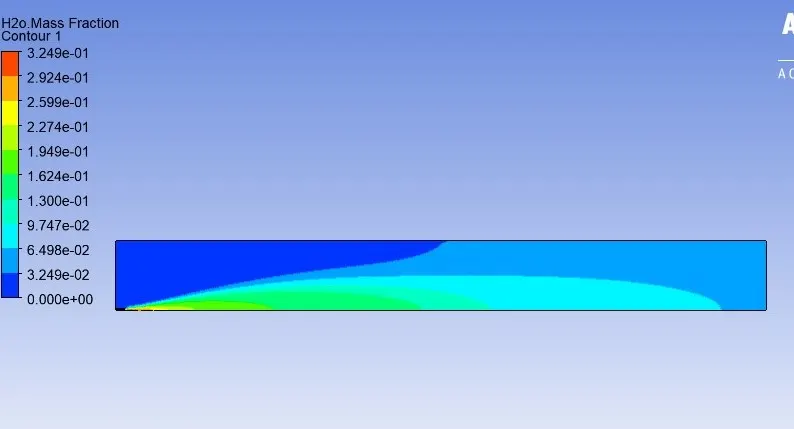
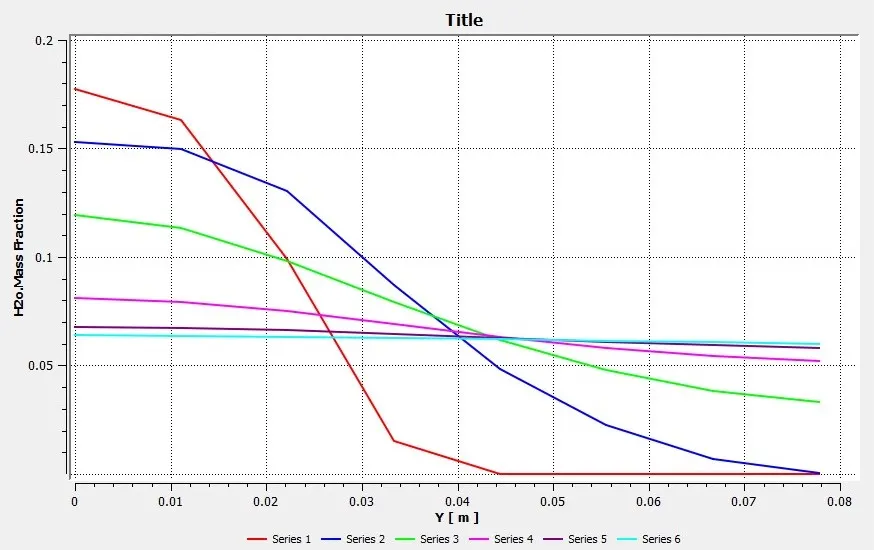
Mass fraction of H2O is higher at series 1 and at Y = 0 m and lowest at series 6. Mass fraction decreases as Y increases. The mass fraction decreases along the series.
Mass fraction of N2
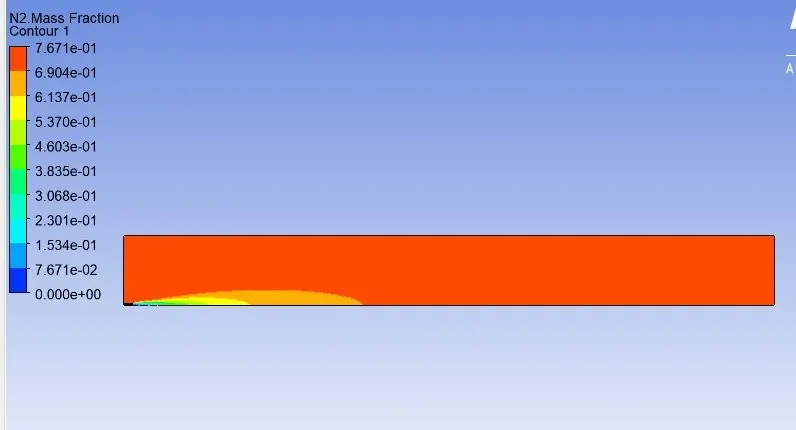
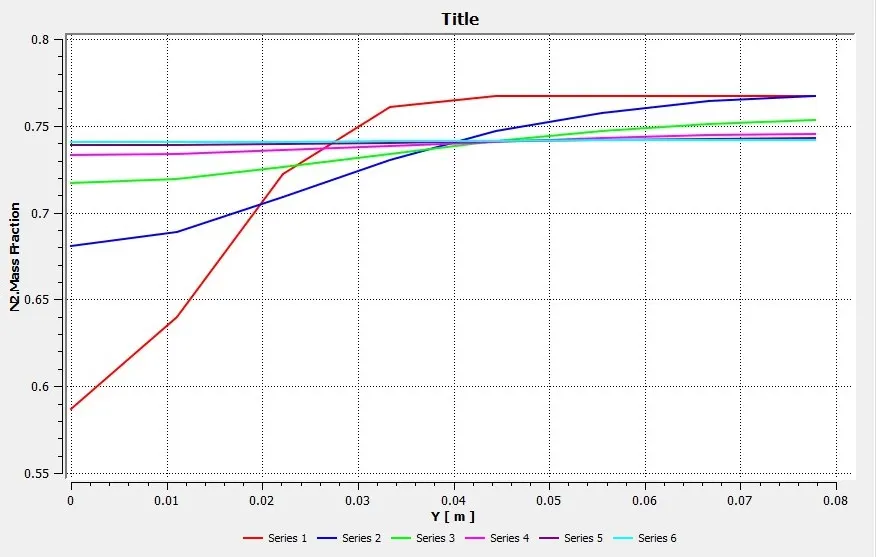
Mass fraction of N2 increases along the series at Y = 0 m. Mass fraction increases with Y and then stabilises.
Mass fraction of O2
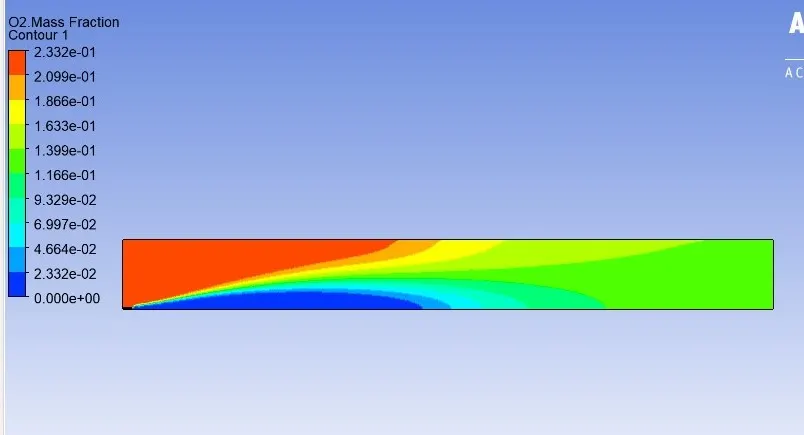
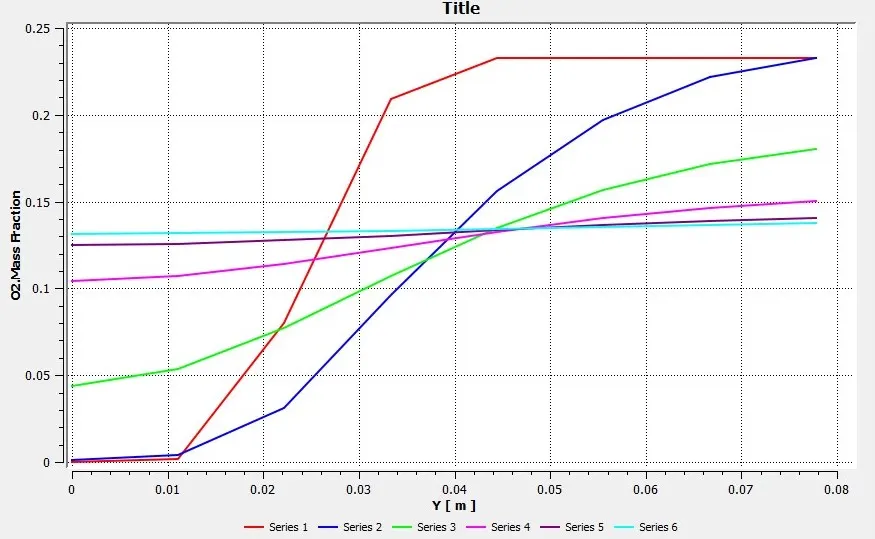
Mass fraction of O2 increases along the series at Y = 0 m. Mass fraction increases with Y.
Mass fraction of NOX
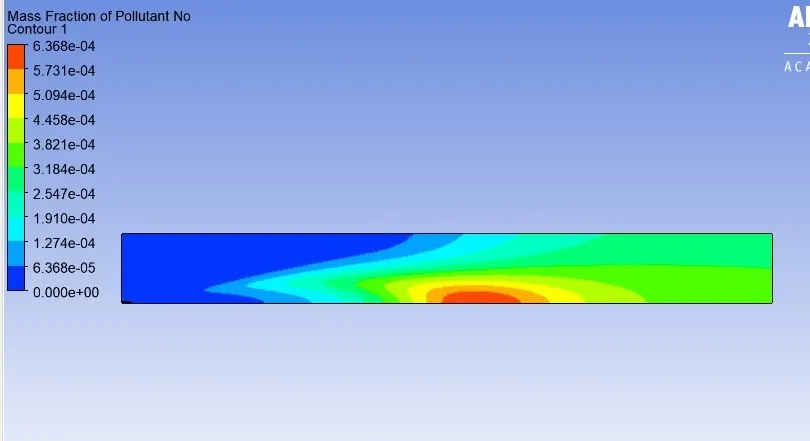
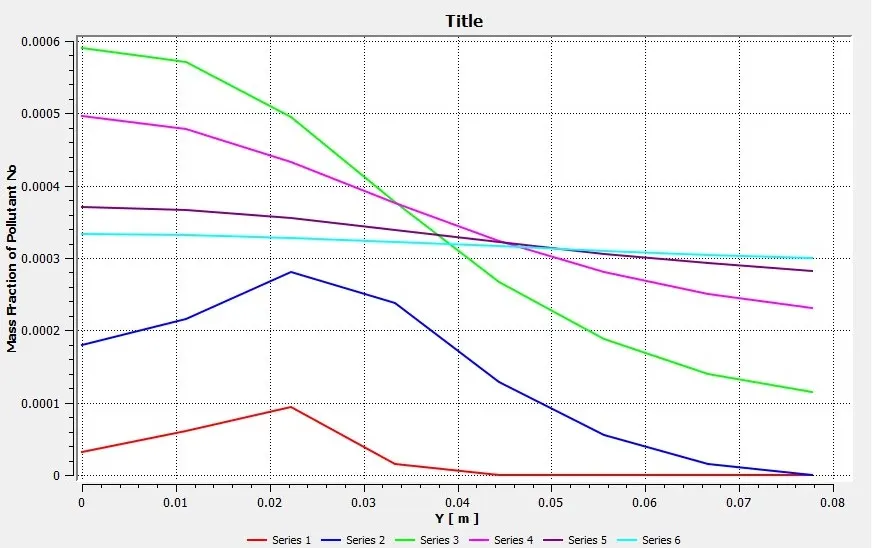
Mass fraction of NOX is at series 3 at Y = 0 m. Mass fraction decreases as Y increases. The highest value of mass fraction of NOX = 0.00058.
Mass fraction of Soot
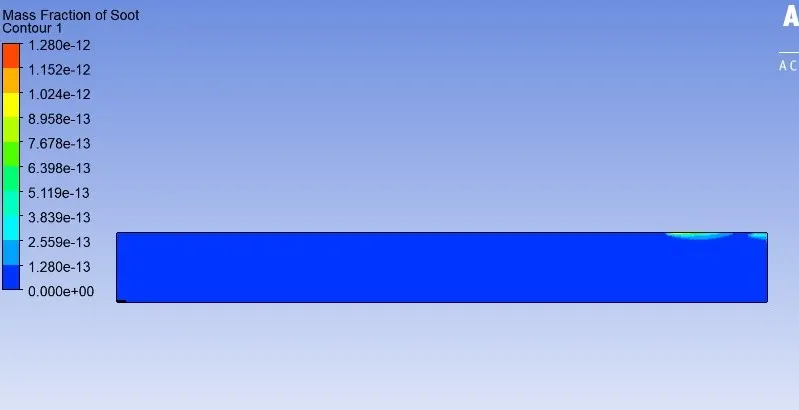
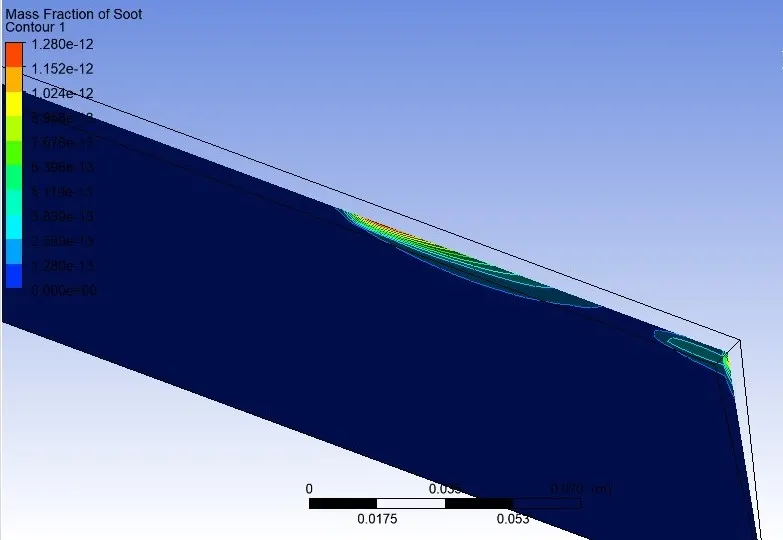
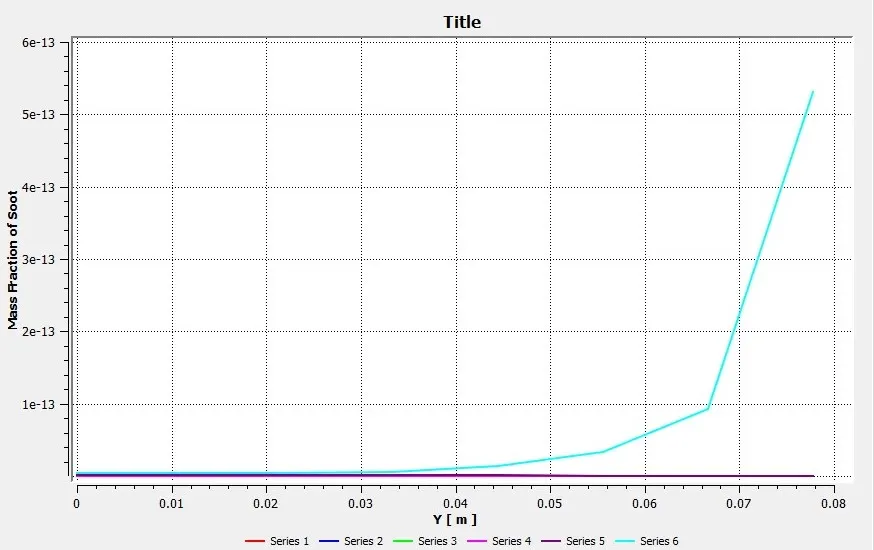
Mass fraction soot is highest at series 1. The highest value of mass fraction is about 5.2e-13 at Y = 0.0765 m for series 6.
Table from Maximum Values
|
Mole Fraction of H2O |
Mass fraction of NOX |
Mass fraction of soot |
|
5% |
0.002605 |
6.58E-34 |
|
10% |
0.002108 |
6.39E-34 |
|
15% |
0.001655 |
6.48E-34 |
|
20% |
0.001257 |
7.62E-12 |
|
25% |
0.000916 |
3.31E-12 |
|
30% |
0.000638 |
1.28E-12 |
Conclusion
Part 1
- Mass fraction of NOX = 00254, Mass fraction of soot = 6.2e-34, Mass fraction of CO2= 0.142, Mass fraction of H2O = 0.12, Mass fraction of N2 = 0.754.
Part 2
- As water contain in the fuel increases the temperature of the combustor decreases.
- As water contain in the fuel increases the mass fraction of NOX
- Mass fraction of soot increases then decreases and then increases again, so it is difficult to interpret water is effect on soot.