Study of Combustion using Ansys Fluent
Objectives:
- To perform a combustion simulation on the combustor model and observe the mass fraction of different species across the volume.
- To add water into the fuel and observe its effect on the soot and NOx formation.
Here we are conducting a non-premixed combustion simulation in fluid phase. As we are interested in observing the mass fractions of different species inside the combustion chamber, Eddy dissipation model will be used for combustion. The fuel being methane, will be coming through fuel inlet at a higher velocity than air inlet. The simulation will be conducted in a 2D axisymmetric geometry.
Geometry:
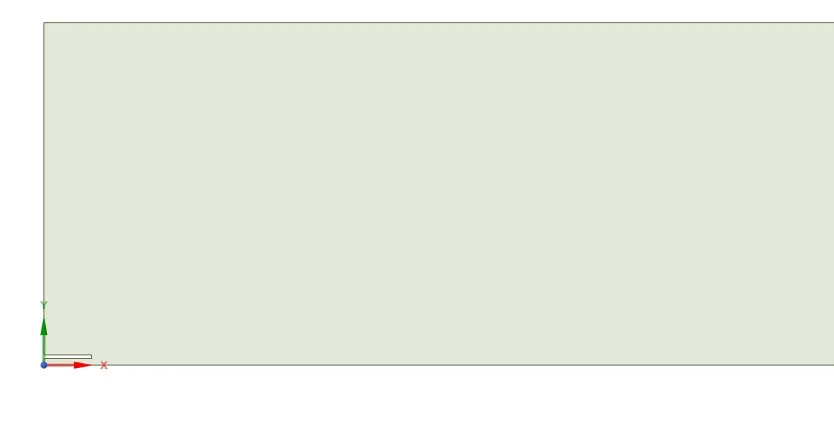
The geometry of the combustion chamber consists of a fuel-inlet, air-inlet and outlet with the air-inlet size being exponentially lager than fuel inlet. The inlet of the 2D axisymmetric geometry is shown below.
Mesh:
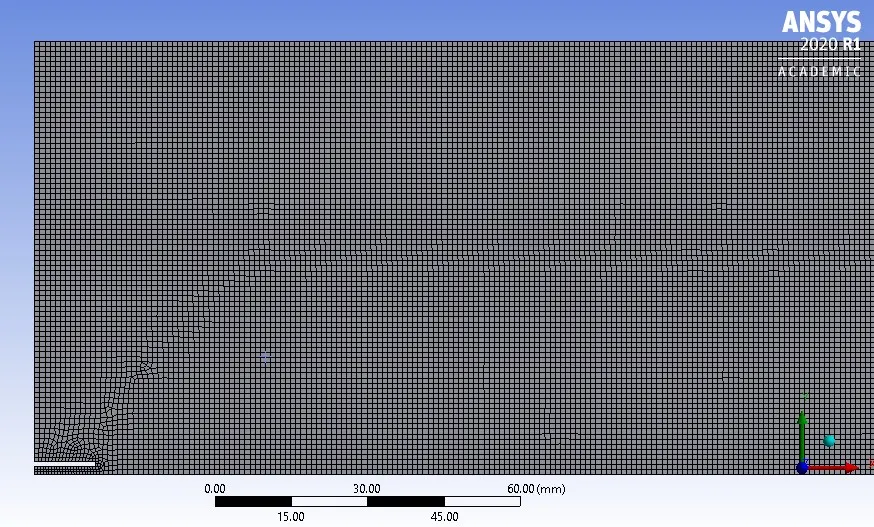
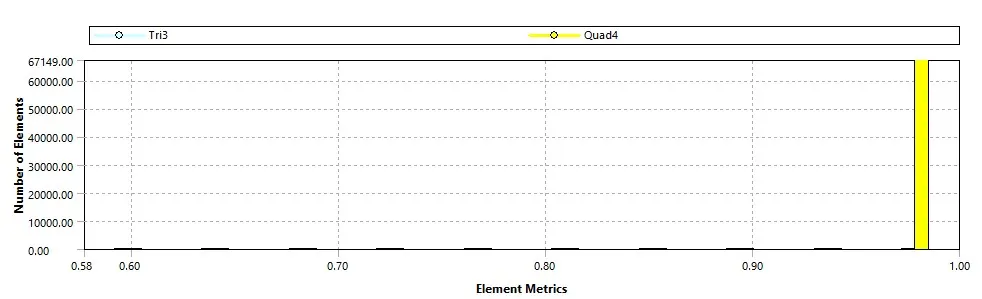
As the geometry has onlystraight lines, quad-dominant mesh method was used. The maximum element size was set to 1mm. Total numbers of mesh cells were 67422.
Mesh-metrics:
Setup:
A steady-state absolute pressure-based solver with axisymmetric 2D space was used to run the simulation. The energy equation and K-epsilon turbulance model was enabled. Also, the species transport model with volumatric reaction was also enabled. The mixture-material was set to Methane-air-2step. Eddy dissipation model was used for trubulance- chemistry interaction. The inlet diffusion and difusion energy source were also enabled to solve for the diffusion terms at the inlet.
Boundary conditions:
Air-inlet :Velocity: 0.5m/s
Temperature: 300K
species mass fraction: O2(0.23)
Fuel-inlet:Velocity: 80m/s
Temperature: 300k
species mass fraction: CH4(1.00)
Outlet: Pressure outlet(0Pa)
Solution:
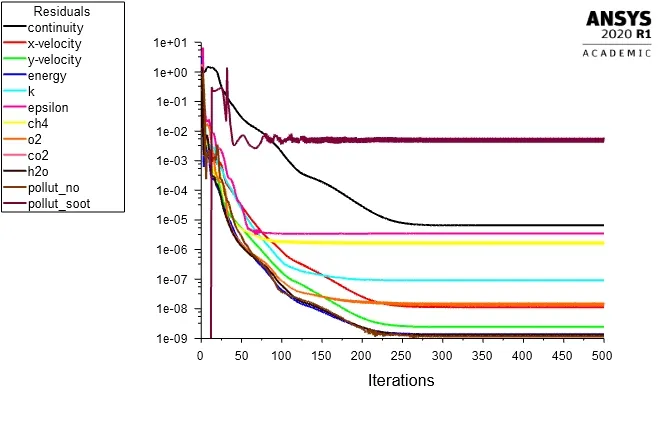
Residuals:
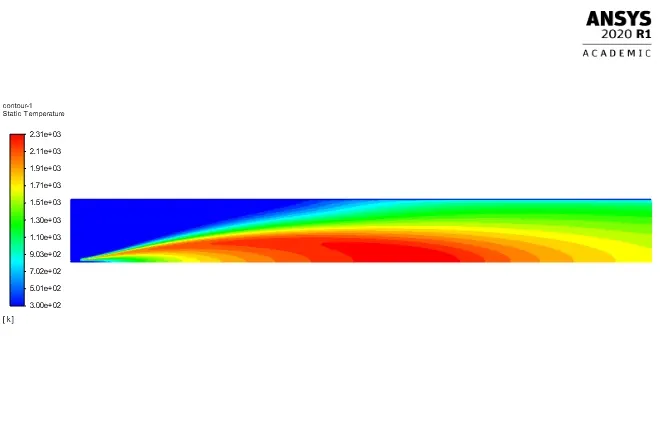
Temperature Contour:
Contour of Mass fractions of different species:
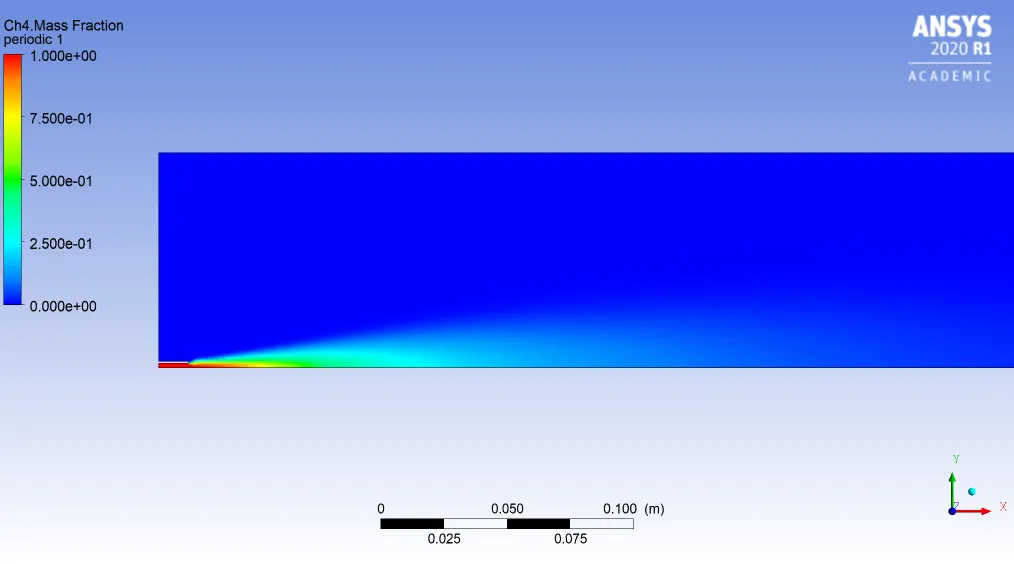
- CH4:
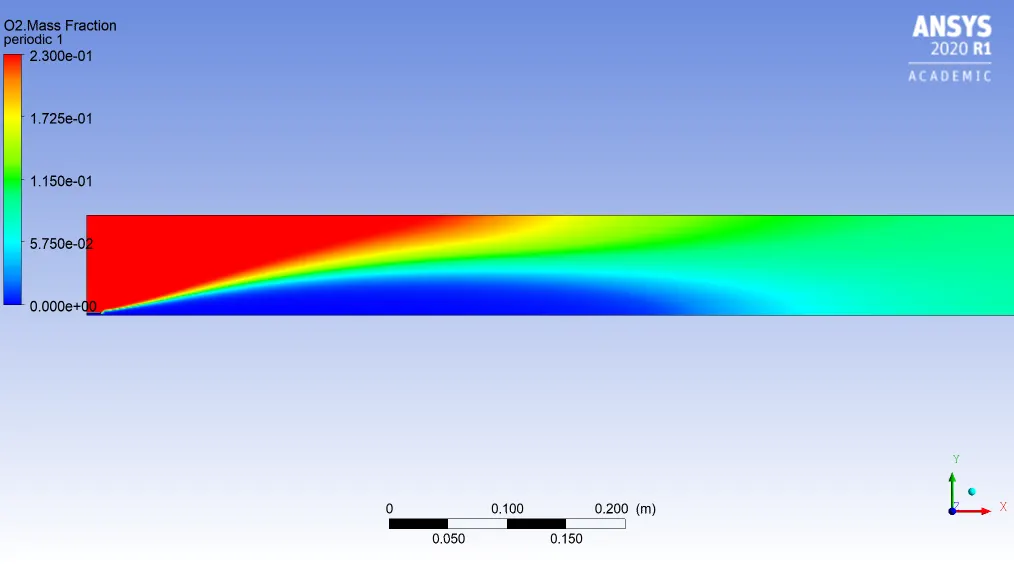
- O2:
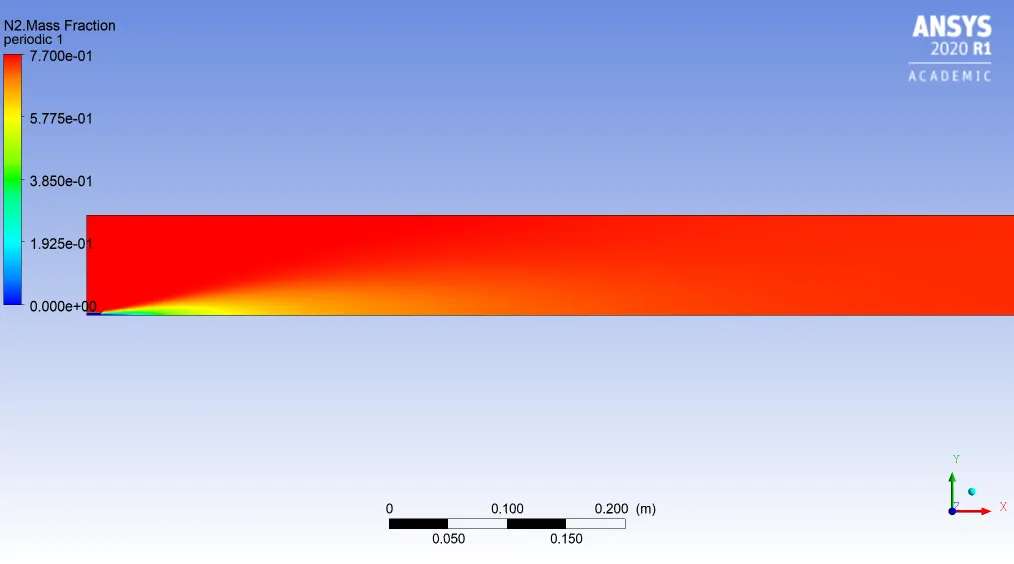
- N2:
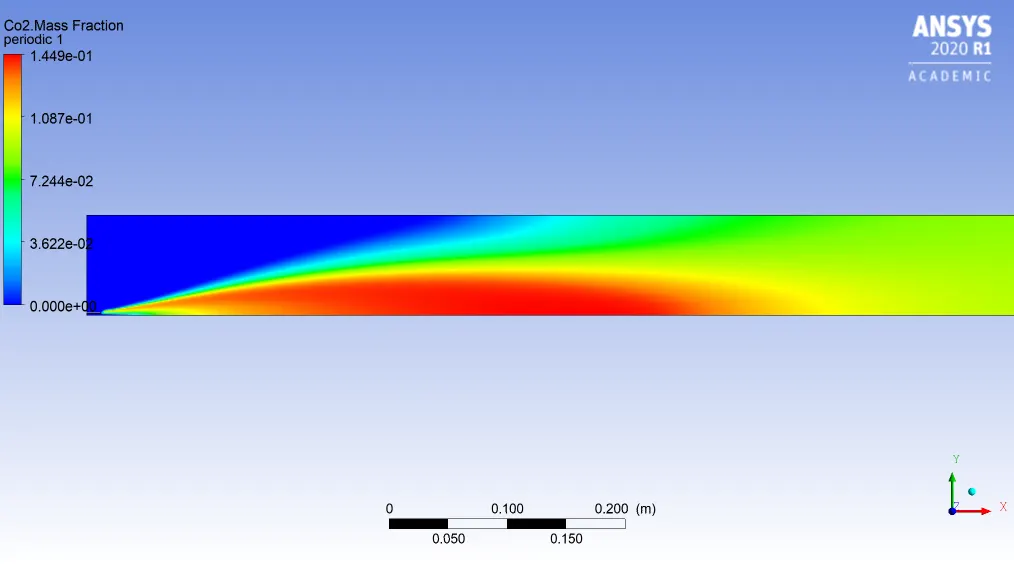
- CO2:
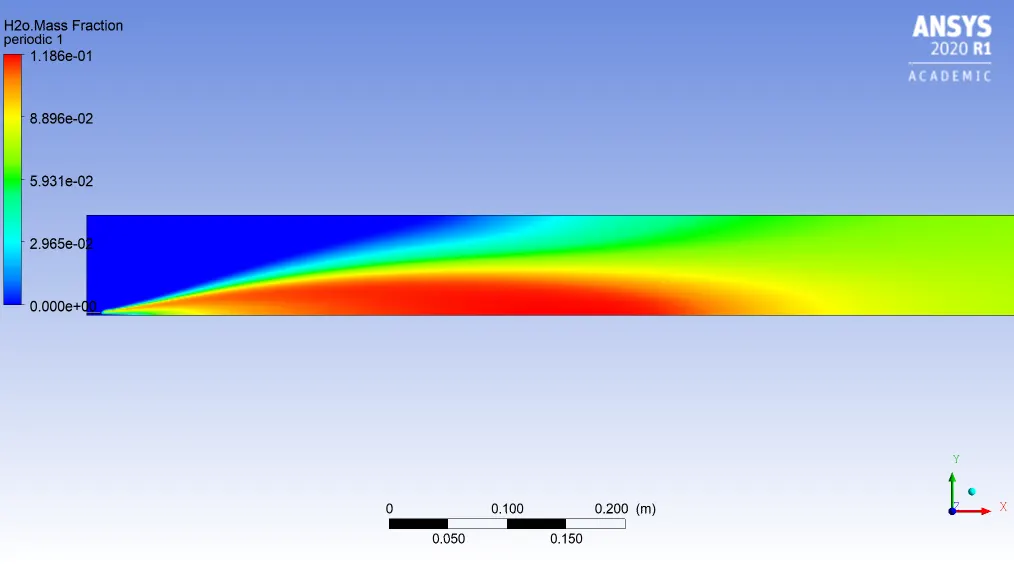
- H2O:
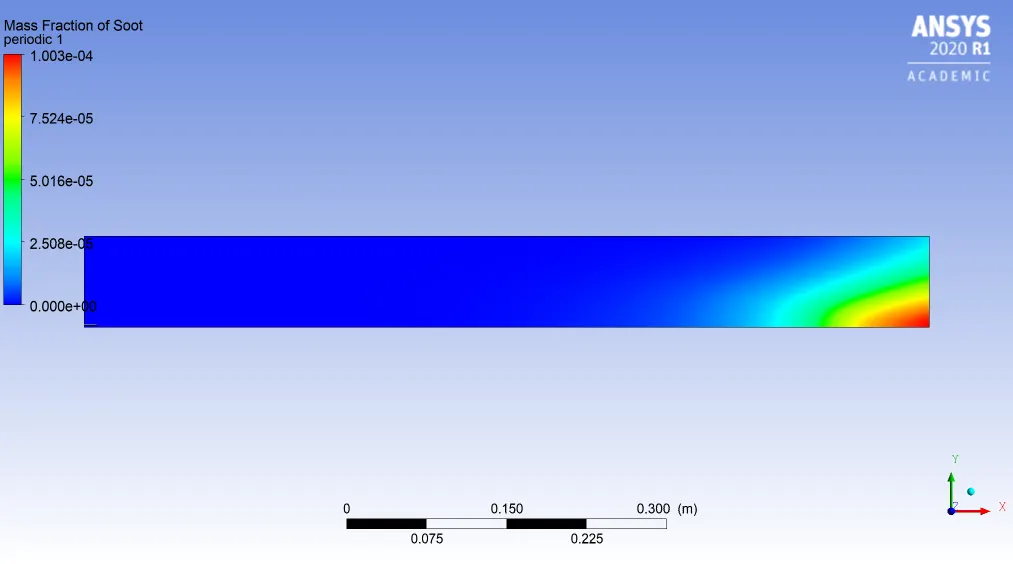
- Soot Formation:
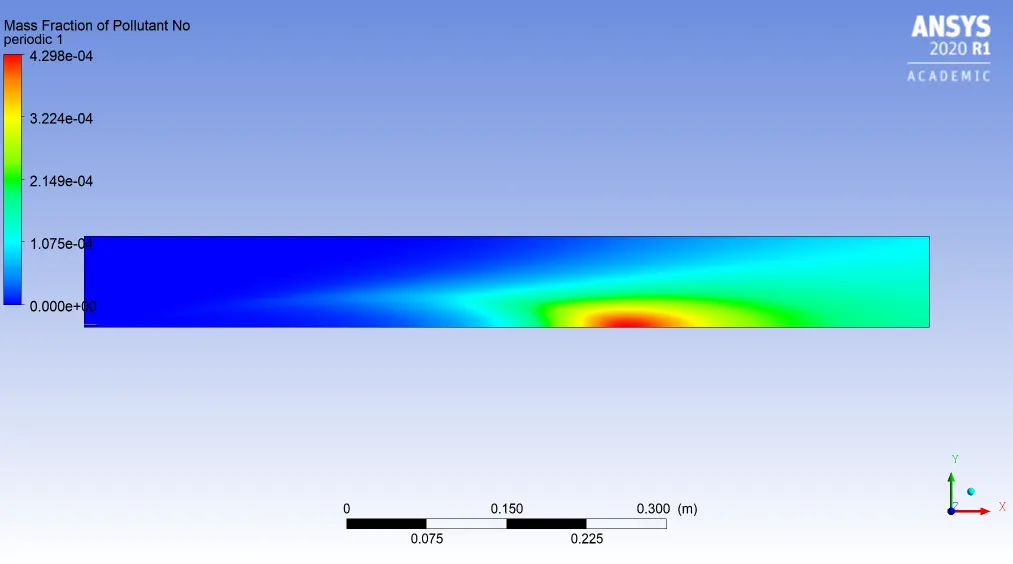
- NOx:
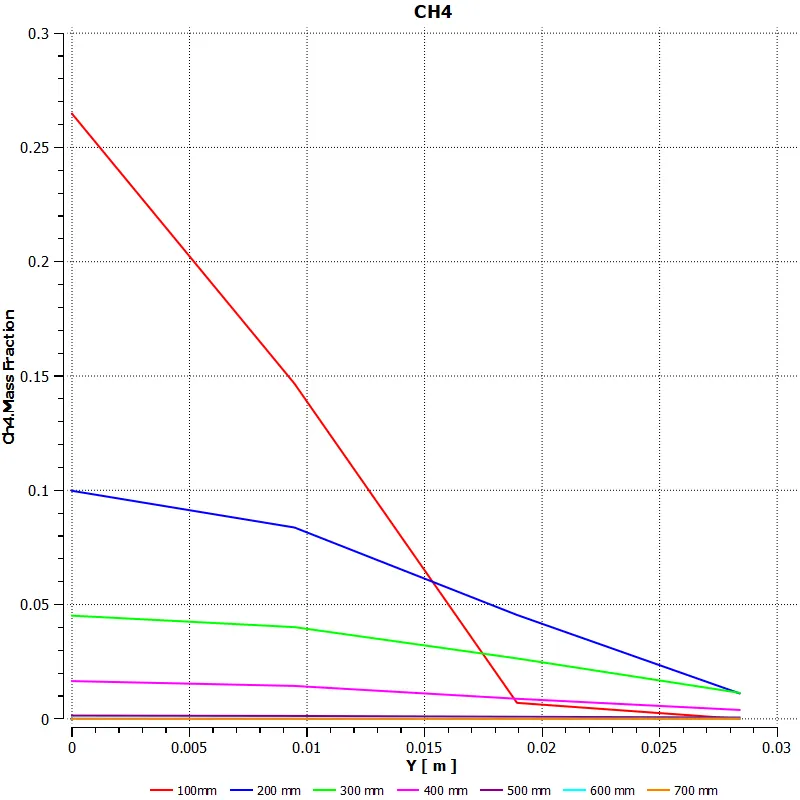
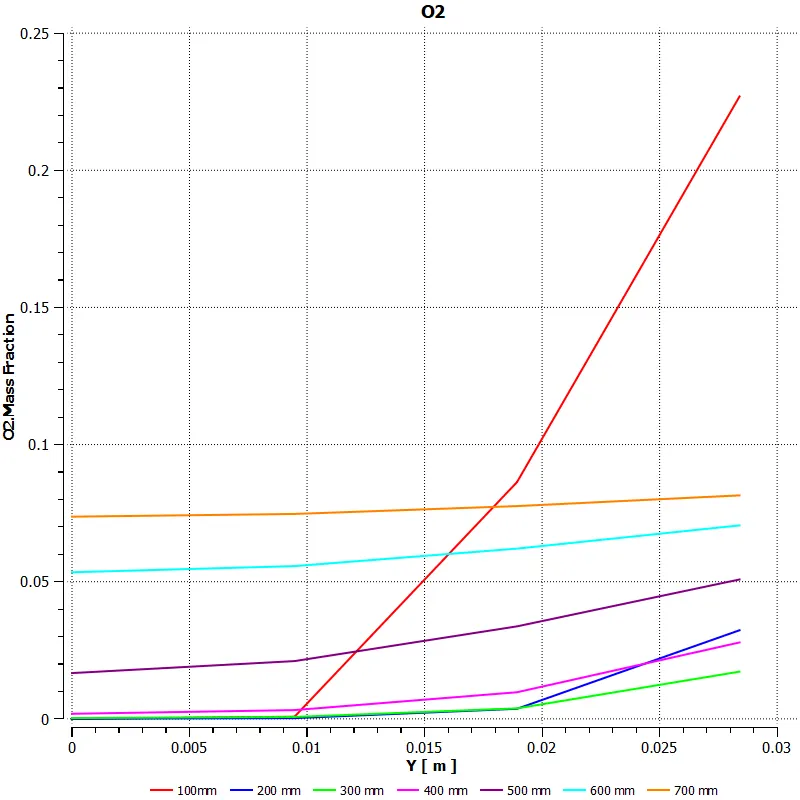
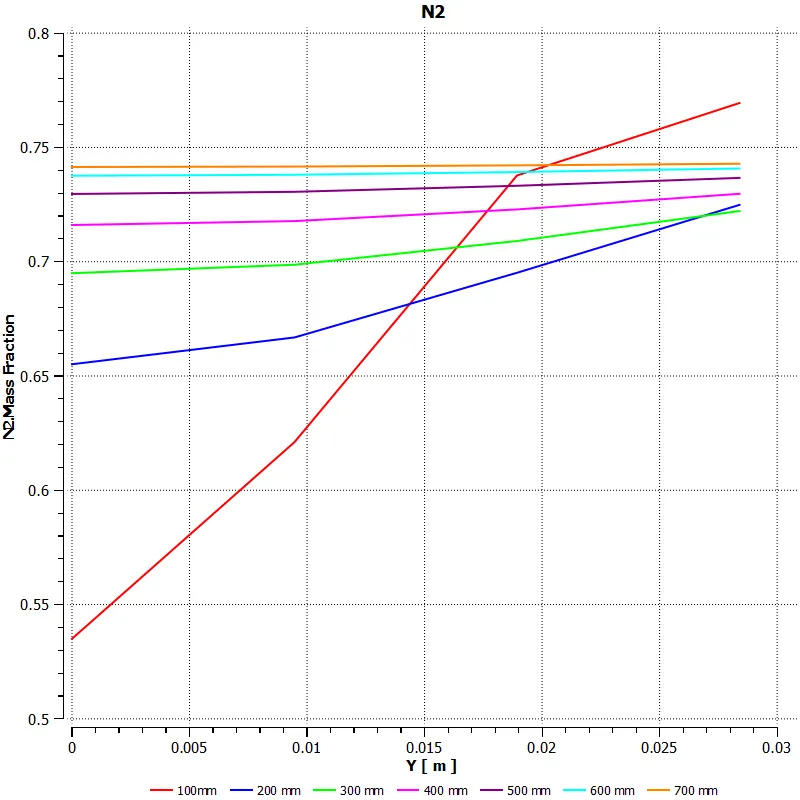
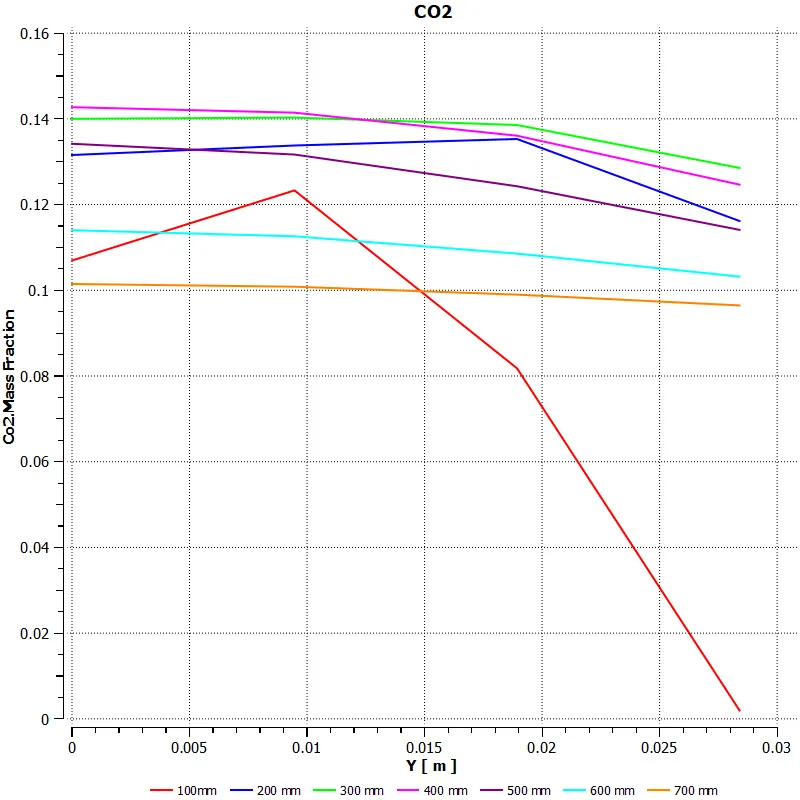
To plot the values of mass fractions of different species across the combustion chamber volume, line probes were placed across the length of volume and obtained mass fraction data.
The obtained data were plotted on charts shown below;
- CH4:
- O2
- N2
- CO2
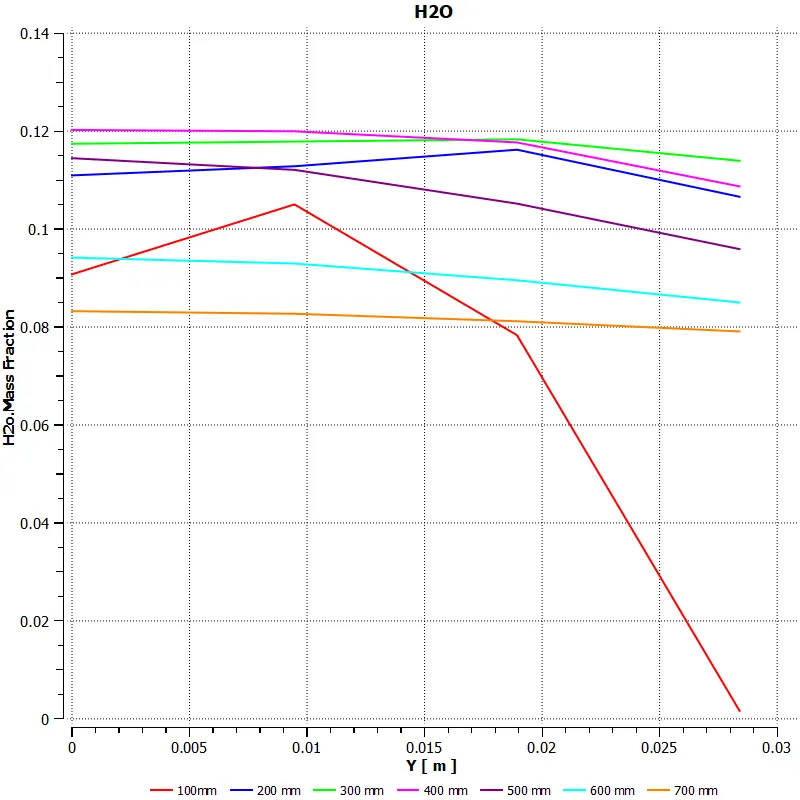
- H2O
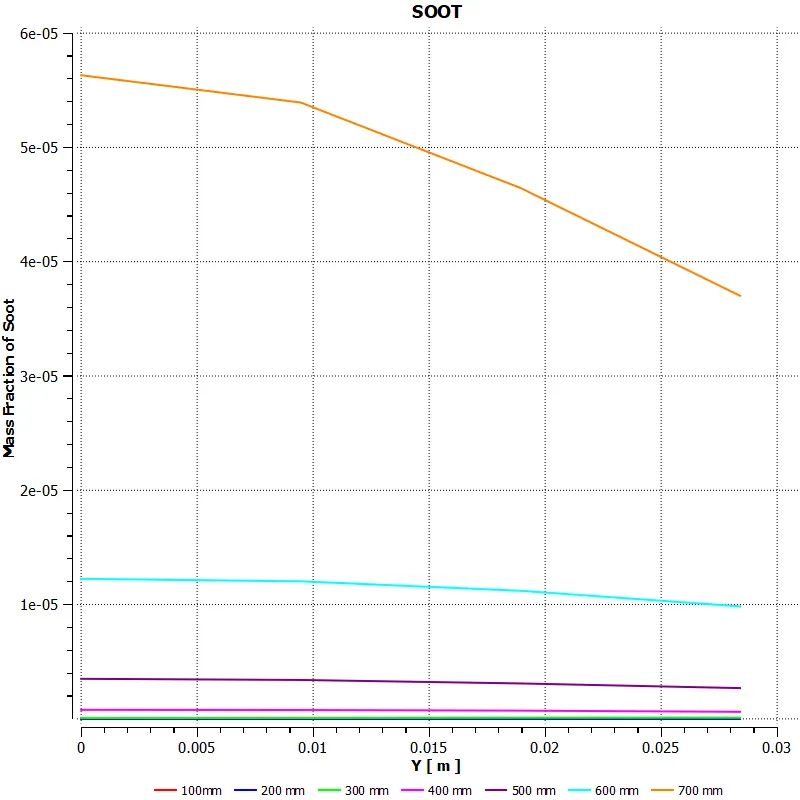
- SOOT
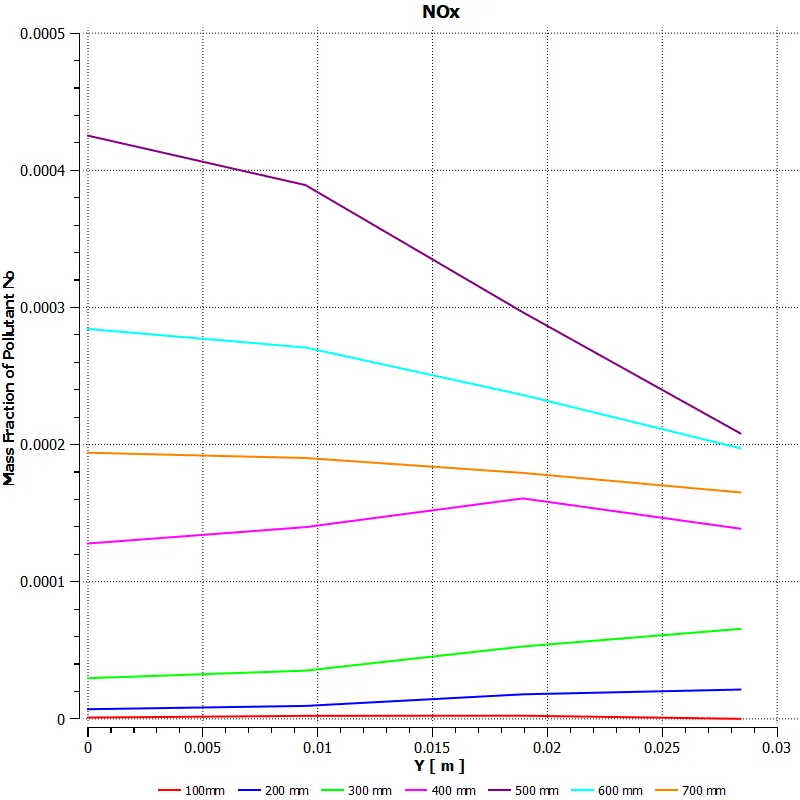
- NOx
Observations:
- The CH4 and O2 mass fractions drastically reduced after their entry and mixing in the chamber indicating combustion.
- CO2 and H2O can be seen at regions without O2 or CH4 as they are the byproducts of reaction between fuel and oxygen.
- Pollutant NOx and Soot can be seen prominently at the outlet.
- N2 mass fraction was fairly constant after inlet region.
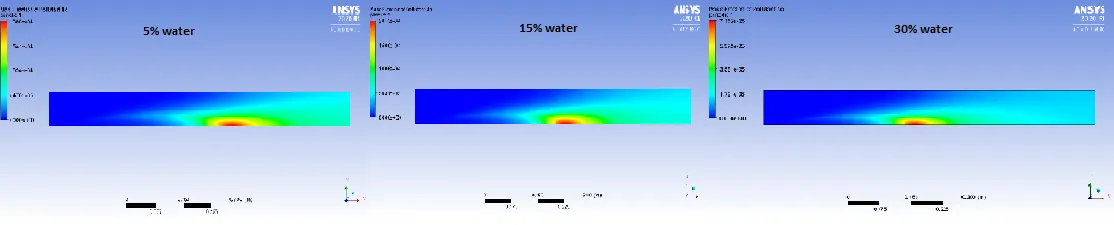
For the second part of the objective of this simulation, water was added upto 30% of the total mole fraction of fuel. The following were the results obtained;
- NOx formation after adding water to fuel:
- Soot formation after adding water to fuel:

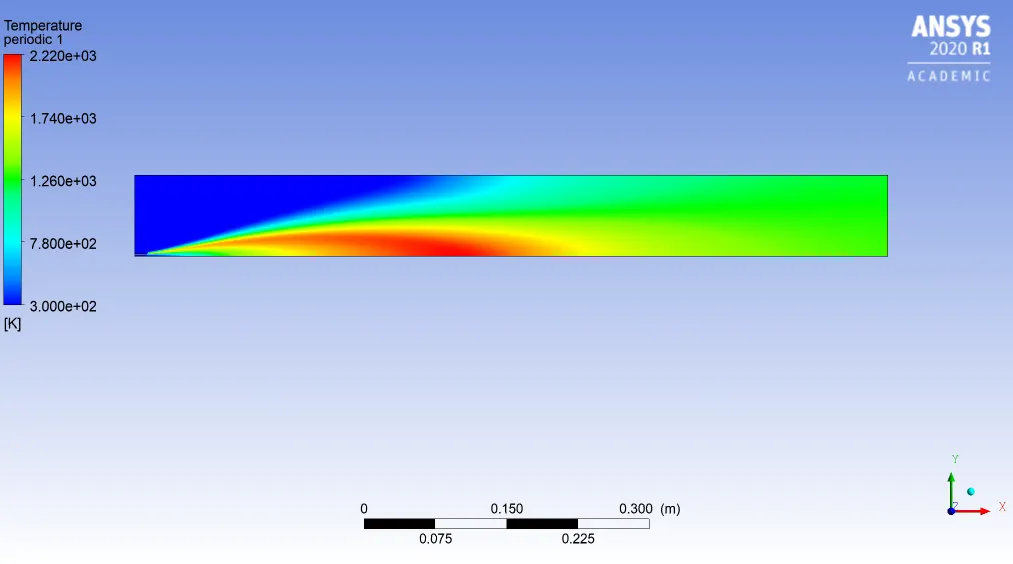
- Temperature contour with 30% water in fuel:
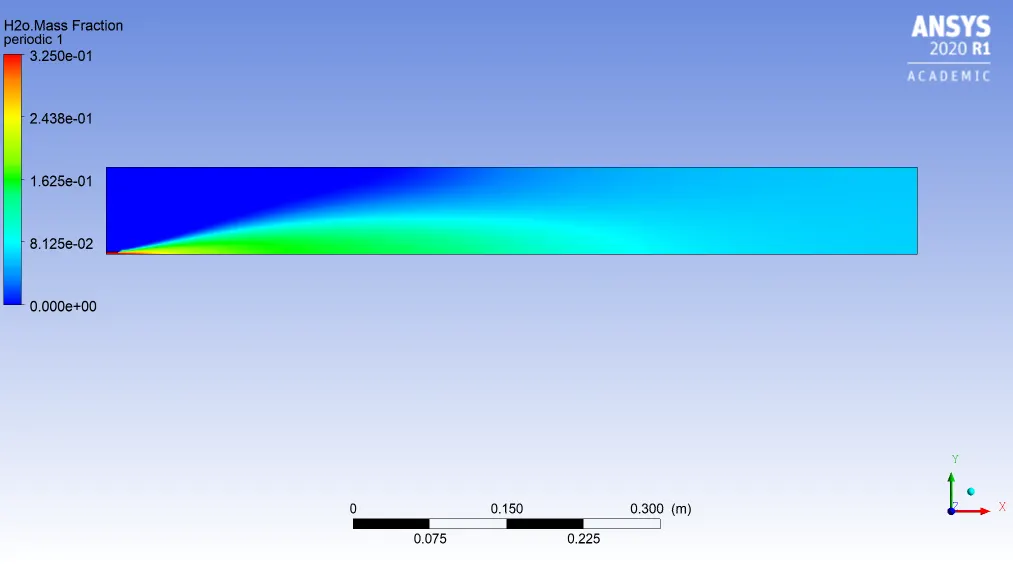
- H20 mass fraction at 30% water in fuel:
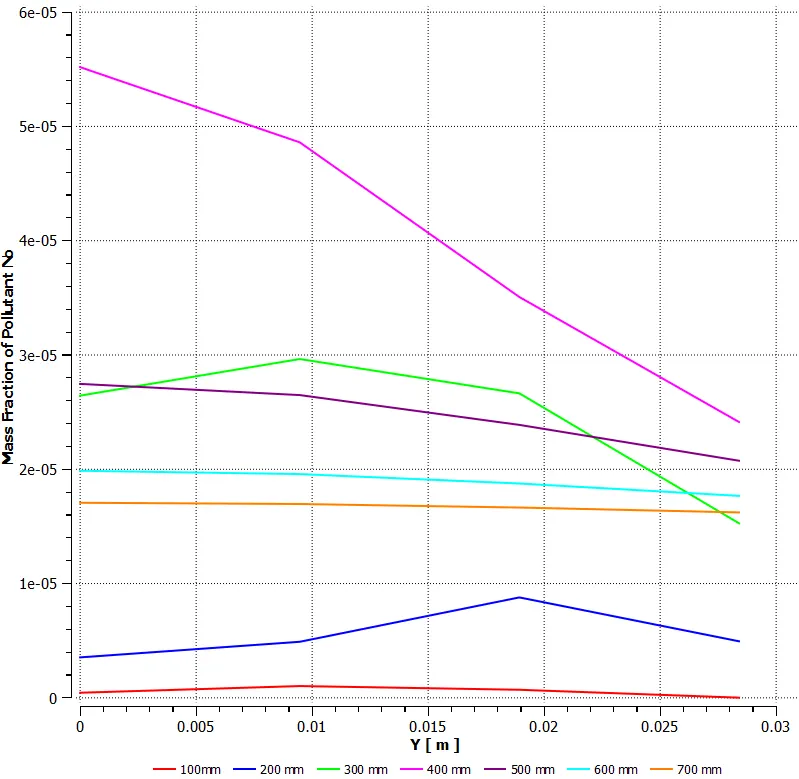
- NOx mass fractions at different points of the chamber volume(with 30% water):
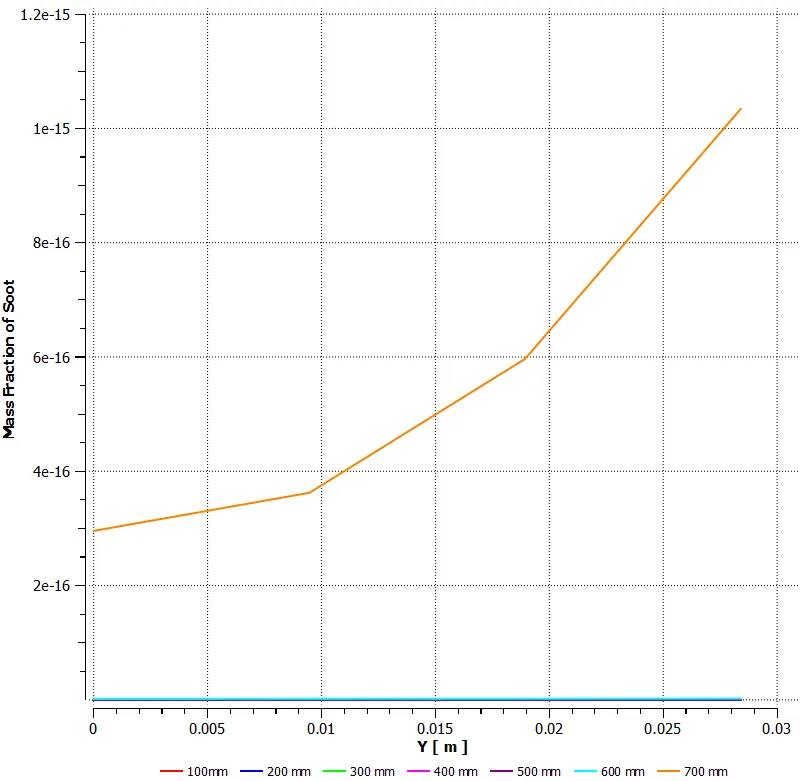
- Soot mass fractions at different points of the chamber volume(with 30% water):
Observations:
- The temperatue contours show reduction in temperature inside chamber compared to fuel without water
- The NOx formation has shown to be decreasing at oulet with addition of water.
- The soot formation at outlet shows a huge decrease with addition of water, athough with further increase of water in fuel, slight increase has been noted.
Conclusions:
Water in fuel emulsions has a negative impact on the formation of NOx polllutant. The addition of water has resulted in lowering of peak temperature inside the combustion chamber due to the high latent heat absorption of water particles. Also, the lower amount of soot formation indicates more efficient combustion. Hence, water- fuel emulsion can be an effective method for reducing emissions.