camber gradient
Questions
Why is camber gain necessary?
2.Why can’t the loss of camber during cornering be recovered by adding static camber gain?
3.You are tasked with choosing between a double wishbone setup and a McPherson strut setup for a vehicle. Purely from a handling perspective, which one would you chose and why? (No right answers here)
4.Numerical problem –
1) calculate the linear camber gradient coefficient for a 10 degree arm convergence angle (theta-yd) and 0.6m height difference between the two outer ball joints (H-bjd)
2) For an arm shortness difference of 2.2 m^-1, calculate the quadratic camber gain coefficient (20 points!!!)
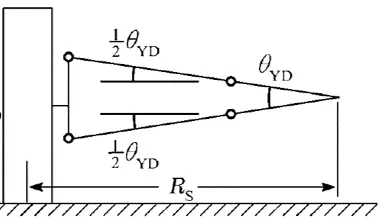
Answers:
1.Camber gain is necessary for two reasons:
Camber gain is necessary to ensure that the wheels remain perpendicular to the ground during cornering in order to maximize contact area and the grip.
By designing suspension to gain negative Camber in jounce, we can counteract the positive camber due to body roll during cornering.
2.Loss of camber during cornering can't be recovered by adding static camber gain because if too much static camber is given, it results in excessive tire wear when the vehicle is running on a straight path.
3.From handling perspective, between double wishbone and McPherson strut, double wishbone is more preferable, This is because, the desired camber gain characteristics can be obtained with double wish bone. Mcpherson strut can only provide little negative camber gain only at the beginning of jounce travel and then reverses into positive camber gain at high jounce amounts while SLA double wishbone provide increasing negative camber gain all the way to full jounce travel.
4.Numerical problem-
1.Given:
H-bjd=0.6m
Theta-yd=10°
Considering only half of the triangle from figure given in the question,
Tan (theta-yd/2) = (H-bjd/2)/Rs
Tan(5°) = 0.3/Rs
Rs = 3.43 m
Linear camber gain Coefficient =
arctan(1/Rs) = arctan(1/3.43)
Linear camber gain coefficient =
16.253°/m.
2.Given:
Arm shortness difference = 2.2 m^-1
Quadratic camber gain coefficient = - arm shortness difference/(2×H-bjd)
Quadratic camber gain coefficient = - 2.2/(2×0.6)
Quadratic camber gain coefficient = - 1.833°/m^2
Negative sign indicates negative camber