Benchmarking
BENCHMARK
- Benchmarking is the practice of comparing business process and performance metrics to industry bests and best practices from other companies. Dimensions typically measured are quality, time and cost.
- Benchmarking is used to measure performance using a specific indicator (cost per unit of measure, productivity per unit of measure, cycle time of x per unit of measure or defects per unit of measure) resulting in a metric of performance that is then compared to others.
- Also referred to as "best practice benchmarking" or "process benchmarking", this process is used in management in which organizations evaluate various aspects of their processes in relation to best-practice companies' processes, usually within a peer group defined for the purposes of comparison. This then allows organizations to develop plans on how to make improvements or adapt specific best practices, usually with the aim of increasing some aspect of performance. Benchmarking may be a one-off event, but is often treated as a continuous process in which organizations continually seek to improve their practices.
Case given:
Mr. D.S.Pughazhyendhii is married man who lives in Bangalore which is highly crowded city. His family compromises of 5 members including his wife, 5-year boy, father and his mother. He once in a month visits his native place Madurai which is almost 500 kms away from Bangalore. Also, he will be using his car to commute to his office. His budget falls between 8 lakhs to 10 lakhs on road. Please suggest him with options so that he will buy a good car for his family.
Fuel type
- Let us consider if Mr. D.S.Pughazhyendhii will travels around 1000 to 2000 kms a month. Then it good to have the petrol car.
- The difference of benefit in 1000 kms per month isn't much but depreciation in value of vehicle is big. So, I suggest to prefer petrol. If you are running at least 4-5000 kms per month then You can choose diesel.
- Plus, the maintenance cost of the petrol car is much cheaper than the diesel car.
BUDGET
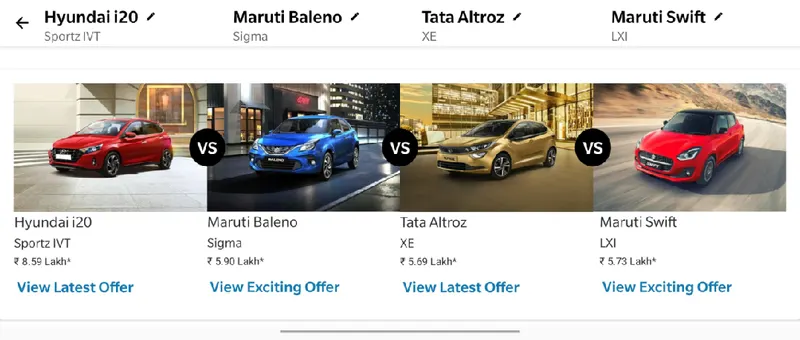
Mr. D.S.Pughazhyendhii's budget falls between 8 lakhs to 10 lakhs. Considering his budget, we can suggest some vehicles list as shown in below.
- HYUNDAI – i20
- MARUTI – BALENO
- TATA – ALTROZ
- MARUTI – SWIFT
COMPARISION BETWEEN DIFFERENT HATCHBACKS
HYUNDAI – i20
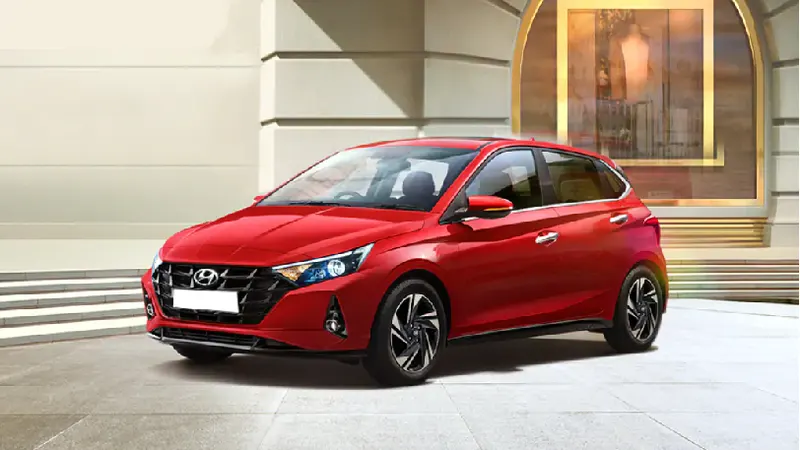
About i20
- The third-gen i20 could soon get a new base-spec Era variant.
- Hyundai i20 Price: Hyundai sells the i20 2020 from Rs 6.79 lakh to Rs 11.32 lakh (ex-showroom Delhi).
- Hyundai i20 Variants: It is available in four variants: Magna, Sportz, Asta and Asta (O).
- Hyundai i20 Powertrains: The new i20 comes with the same three engines as the Venue: two petrol and a diesel. The first petrol unit is a 1.2-litre naturally aspirated engine that puts out 83PS and 114Nm and the second is a 1.0-litre turbo petrol, in 120PS/172Nm tune. It also gets a 1.5-litre diesel engine rated at 100PS/240Nm. While the 1.2-litre petrol engine comes mated to either a 5-speed MT or CVT, the 1.0-litre turbo-petrol unit gets either a 6-speed iMT clutch less manual or the 7-speed DCT like the Venue. The diesel engine, on the other hand, isn’t offered with an automatic gearbox and comes paired to a 6-speed MT.
PROS
- Looks edgy and aggressive
- Powertrain options for every need
- Loaded with good quality features
- Rear seat space is impressive
CONS
- Turbo-petrol variants priced at a premium
- Brakes feel spongy
- Suspension should have been better damped
- Doesn't feel like a sporty hatchback to handle
TATA ALTROZ
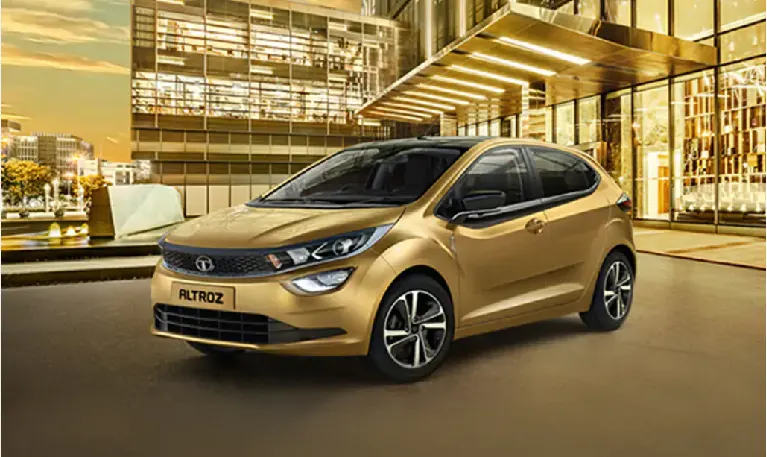
ABOUT ALTROZ
- Tata has revealed the prices of the turbocharged variants of the Altroz.
- Tata Altroz Price: It is priced from Rs 5.69 lakh to Rs 9.45 lakh (ex-showroom).
- Tata Atroz Variants: The premium hatchback is available in seven variants: XE, XM, XM+, XT, XZ, XZ (O), and XZ+.
- Tata Altroz Powertrains: Tata offers the Altroz with three engine options: a 1.2-litre naturally aspirated petrol, a 1.2-litre turbo-petrol, and a 1.5-litre diesel. Their output figures stand at 86PS/113Nm, 110PS/140Nm, and 90PS/200Nm respectively. All three engines are offered with a 5-speed manual gearbox as standard, while a 7-speed DCT automatic is expected to be introduced later.
- Tata Altroz Features: The Altroz comes with a 7-inch touchscreen infotainment system, connected car tech with 27 features, 70+ Hinglish (English+Hindi) voice commands, semi-digital instrument cluster, ambient lighting, steering-mounted audio controls, and cruise control. The Altroz also offers various customisation options.
PROS
- Turbo-petrol engine offers enjoyable performance
- Five-star safety rating
- Leatherette upholstery makes the cabin feel more premium
- Voice command recognition is accurate and quick
- Best-in-class ride and handling package
CONS
- Premium features like ventilated seats, wireless changer, and sunroof still missing
- No option for an automatic transmission yet
- Cabin insulation is lacking
MARUTI BALENO
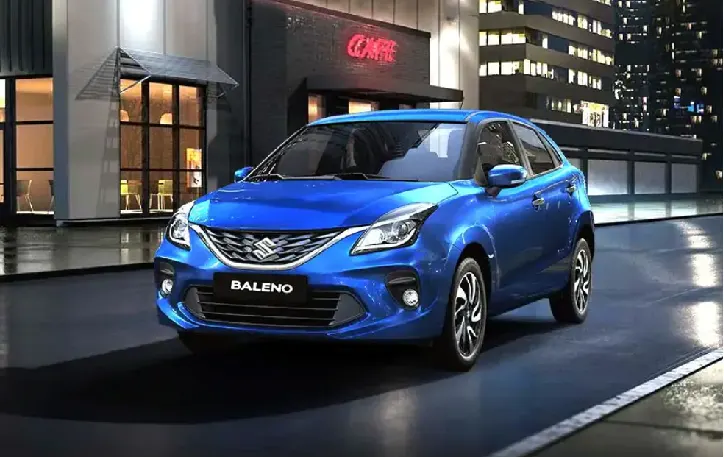
ABOUT BALENO
- Maruti Baleno is one of the Maruti models that has received a price hike of up to Rs 34,000.
- Maruti Baleno Price: The premium hatchback is priced between Rs 5.90 lakh and Rs 9.10 lakh (ex-showroom).
- Maruti Baleno Variants: The Baleno is available in four variants: Sigma, Delta, Zeta and Alpha.
- Maruti Baleno Powertrain: Maruti offers the Baleno with a 1.2-litre naturally aspirated petrol engine (83PS/113Nm), mated to either a 5-speed MT or a CVT gearbox. The hatchback also gets a 1.2-litre Dualjet petrol engine with mild-hybrid tech. It puts out 90PS and 113Nm, paired to a 5-speed MT. Maruti claims a mileage of 21.01kmpl for the petrol-manual variants, while those with the CVT gearbox return 19.56kmpl. On the other hand, the Dualjet petrol mild-hybrid powertrain has a claimed fuel efficiency of 23.87kmpl.
- Maruti Baleno Features: Maruti offers the Baleno with LED projector headlamps, a rearview camera, and 16-inch alloy wheels. The Baleno sports a 7-inch touchscreen infotainment system with Apple CarPlay and Android Auto, auto climate control, push-button stop/start, and passive keyless entry.
- Maruti Baleno Safety: It is offered with standard safety features such as rear parking sensors, ABS with EBD, ISOFIX child seat anchors, and dual front airbags across all variants.
PROS
- LED projector headlamps from Delta variant onwards. LEDs usually offer better visibility than halogens or bi-xenon units.
- Automatic climate control from Delta variant onwards. unlike a manual AC, automatic climate control allows the user to maintain a set temperature inside the cabin as per their needs.
- ISOFIX child seat anchors are standard across the range. This lets you attach a child seat on the back seat of the hatchback to offer kids below the age of 10 better safety.
CONS
- Could have been more rear passenger-centric: Misses out on side and curtain airbags, rear AC vents and rear armrest.
MARUTI SWIFT
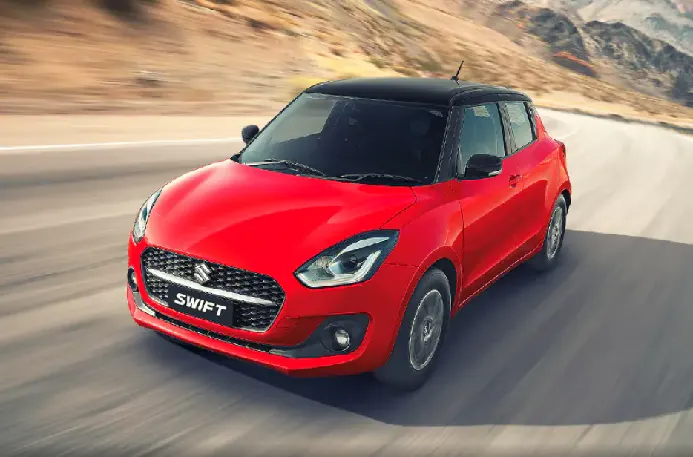
ABOUT SWIFT
Maruti has launched the facelifted Swift.
Maruti Swift Price: It is priced from Rs 5.73 lakh to Rs 8.41 lakh (ex-showroom Delhi).
Maruti Swift Variants: The hatchback is available in four variants: LXi, VXi, ZXi, and ZXi+.
Maruti Swift Powertrain: Maruti has equipped the facelifted Swift with the new 1.2-litre Dual Jet petrol engine introduced on the Dzire facelift. This engine produces 90PS (+7PS) and 113Nm and comes with an idle start-stop feature for improved fuel efficiency. It gets the same 5-speed manual and AMT gearbox options as before. The fuel efficiency figures with both the transmissions are as follows:
1.2-litre MT- 23.20kmpl
1.2-litre AMT- 23.76kmpl
Maruti Swift Features: It now features a new 4.2-inch coloured driver’s display and cruise control while retaining features such as the 7-inch touchscreen infotainment system, height-adjustable driver seat, auto AC, and LED headlamps with LED DRLs.
Maruti Swift Safety: Maruti is offering the AMT-equipped variants with Electronic Stability Control (ESC) and hill-hold control. Features such as dual front airbags, ABS with EBD, and rear parking sensors have been carried forward from the pre-facelift model.
PRONS
- New 1.2-litre Dual Jet petrol engine for better performance and fuel efficiency
- Three new dual-tone colour options
- Fun-to-drive budget hatchback
CONS
- No significant cosmetic change
- No diesel engine option
- New safety features limited to the AMT variants
Comparison between swift and baleno 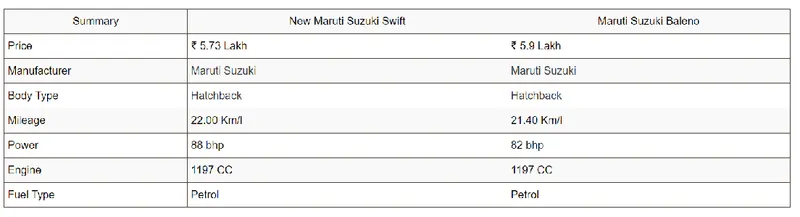
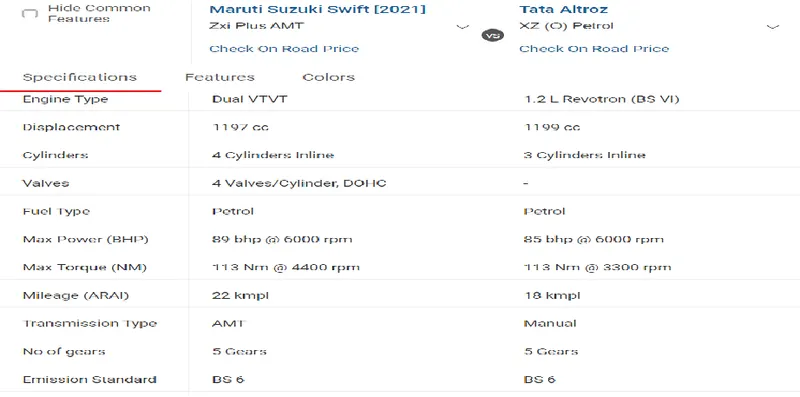
Comparison between Swift and Altroz
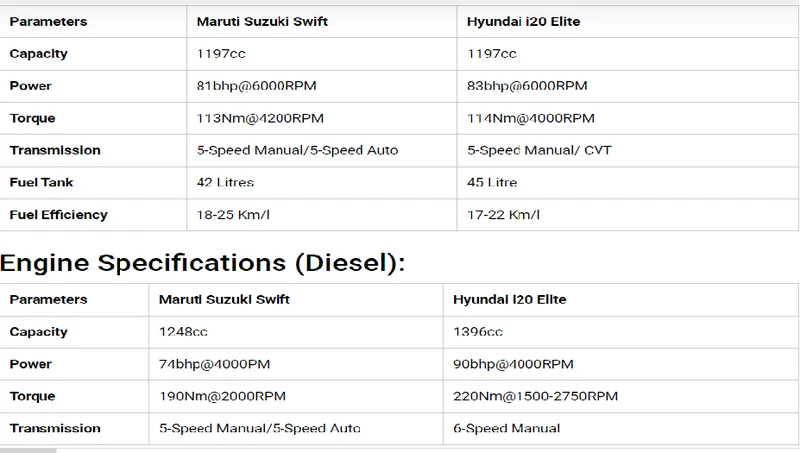
Comparison between swift and i20
Conclusion
I would like to suggest Mr. D.S.Pughazhyendhii to buy Maruti Suzuki swift ZXI Plus petrol variant as it is more fuel efficient and low maintenance cost when compared to other cars in the same segment. It can fulfil all the requirements of Mr. D.S.Pughazhyendhii.