Benchmarking
What is Benchmarking?
Benchmarking is the practice of comparing business processes and performance metrics to industry bests and best practices from other companies. Dimensions typically measured are quality, time and cost.
Benchmarking is used to measure performance using a specific indicator (cost per unit of measure, productivity per unit of measure, cycle time of x per unit of measure or defects per unit of measure) resulting in a metric of performance that is then compared to others.
Also referred to as "best practice benchmarking" or "process benchmarking", this process is used in management in which organizations evaluate various aspects of their processes in relation to best-practice companies' processes, usually within a peer group defined for the purposes of comparison. This then allows organizations to develop plans on how to make improvements or adapt specific best practices, usually with the aim of increasing some aspect of performance. Benchmarking may be a one-off event, but is often treated as a continuous process in which organizations continually seek to improve their practices.
Benchmarking Process
- Planning
The first stage of benchmarking is the most important in the process. Planning includes highlighting what you want to improve, who you will benchmark yourself against, and how you envisage success. Only once this step has been completed will you be able to move onto the next step as the results of planning will focus on the information you need to collect and what success will look like.
- Collection of Information
After planning, benchmarking is about collecting information on your processes and how competitors do them. If you are looking to improve your customer service satisfaction rating you should understand the processes involved in the department, how calls and communication are dealt with, and also how it differs from your competition. Maybe you can talk to someone in another call center, or call the center directly to gain first-hand knowledge of their processes. At this point, it is important to gather as much information as possible.
- Analysis of Data
Once you feel you have all the information you can gather, you can start to plot it and begin to understand the shortcomings you may have. It is important to remember at this point in the process that no business is perfect and you must have an open mind to be able to analyze information objectively. Once findings start to be uncovered you can draft a report and start discussing the next steps to achieve better performance in this area.
- Action
Presenting findings to a department is never an easy thing, especially when you are proposing changes. Gathering and analyzing information is only worthwhile when you can implement changes and better the company in the process. Gaining buy-in from a department can involve concessions so make sure the MVP you present is accepted and will likely equate to the success highlighted in the planning stage.
- Monitoring
No plan is ever complete without monitoring results to determine how successful the plan has been. The implementation phase will have highlighted metrics and goals for success within a time frame so monitoring these is the only way of knowing the efficacy of the changes. Monitoring can be over a short or long period of time depending on the desired outcomes.
Types of Benchmarking
- Process Benchmarking: This type of benchmarking helps you to better understand how your processes compare to others in your industry. By looking at other companies in the industry you can improve your processes to make them more efficient and cost-effective.
- Strategic Benchmarking: Strategic benchmarking, similar to process benchmarking, is all about improving parts of your company through looking at others in the industry. Strategic benchmarking relates to strategy and how to create a strategy that will allow you to be more competitive in your area.
- Performance Benchmarking: Performance benchmarking is the hardest process to improve as it involves learning about competitor performance metrics and procedures, and also making changes to processes within your business on the lower levels. Introducing new processes is a challenging action in any business as it requires buy-in from many different levels in the company. Performance benchmarking can uncover findings that might not be possible to implement in the business without creating a long-term change plan. These can be also the most effective and successful changes for a company.
Ford Figo
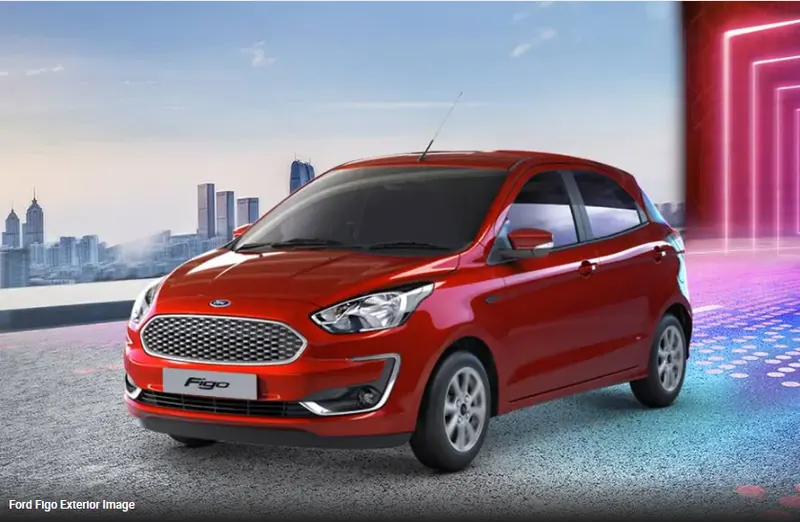
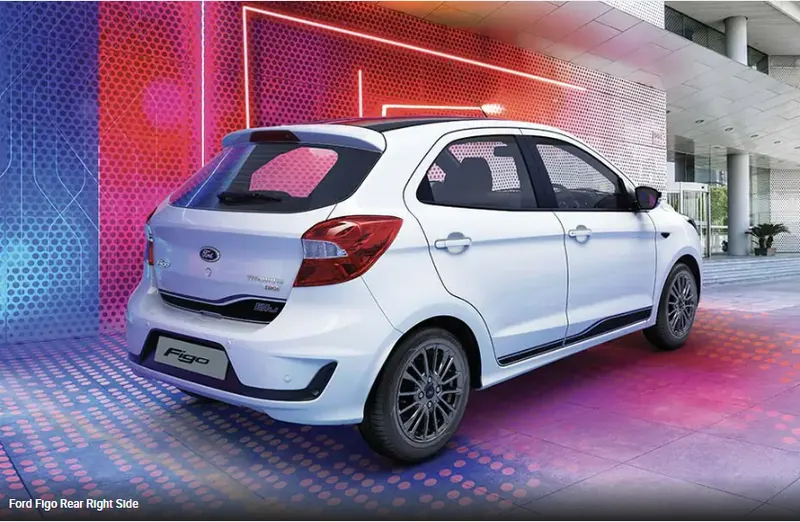
The Ford Figo has 1 Diesel Engine and 1 Petrol Engine on offer. The Diesel engine is 1499 cc while the Petrol engine is 1194 cc . It is available with the Manual transmission. Depending upon the variant and fuel type the Figo has a mileage of 18.5 to 24.4 kmpl. The Figo is a 5 seater and has length of 3941mm, width of 1704mm and a wheelbase of 2490mm.
Ford has launched the Figo facelift at Rs 5.15 lakh (ex-showroom, pan India). This makes it significantly more affordable than the pre-facelift model by close to Rs 70,000! And it isn’t limited to the base-spec variant, prices have noticeably come down throughout the range, for both petrol and diesel variants, despite several additions to its equipment list. The new petrol engines definitely make it a strong contender for a buyer looking for a petrol hatchback in this space, while the diesel can punch above its weight without even breaking a sweat.
There are some downsides, like no fancy things such as DRLs, LED head or tail lamps and unavailability of Apple CarPlay and Android Auto, which have started to become hygiene now. That said, the dramatic drop in prices makes it an even more compelling buy now, especially given the new petrol engines and improved transmissions. It easily ticks most of the right boxes in the segment.
Pros :
- Punchy diesel engine is sure to put a smile on your face.
- Among the most fun to drive cars in the sub-10 lakh bracket.
- Efficient and powerful petrol engine with a sweet exhaust note.
- A proper automatic with a powerful petrol compared to AMTs offered by rivals.
- A good value-packed safe package with a long equipment list.
- Comfortable ride quality gobbles up potholes and broken surfaces.
Cons:
- Missing feel-good features such as projector headlamps, daytime running lamps.
- Major miss: Apple CarPlay and Android Auto, features that all its arch rivals offer.
- Rear headroom continues to be an issue, especially for those around six feet tall.
Maruthi Suzuki Swift
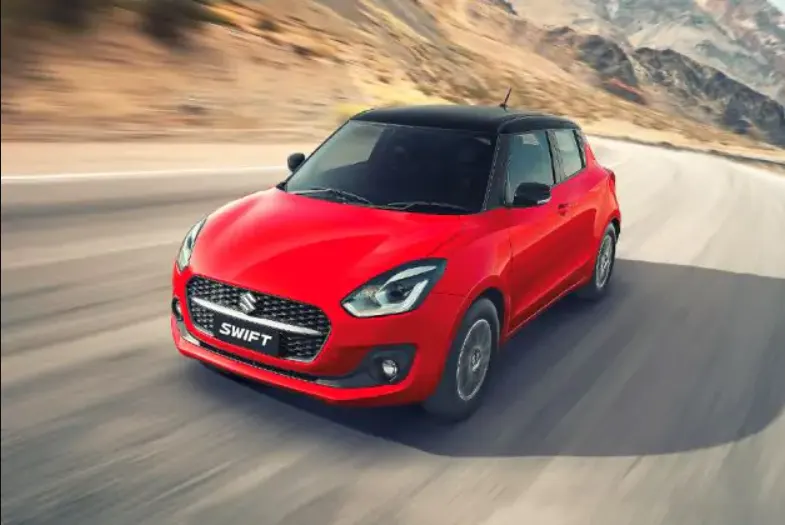
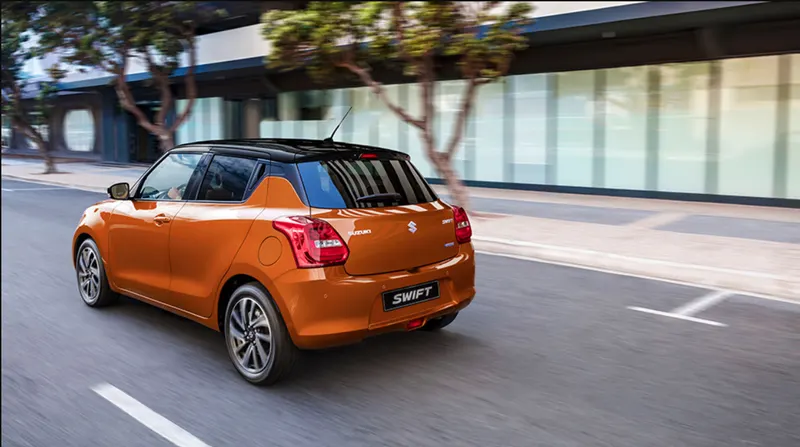
Arguably, India’s most-loved car, the Swift is also the model that changed Maruti Suzuki’s image forever. Now in its third generation, the Swift has grown in size and seemingly, so has its popularity – the hatch having become a permanent fixture on the best-sellers list. The Swift’s appeal has also widened after the introduction of the automatic transmission options. With Marugi having discontinued diesels for BS6, the Maruti Suzuki Swift is now available only in petrol-manual and petrol-AMT forms.
It may be larger than its predecessors but the latest model hasn’t veered from the sporty styling template which is synonymous with the Swift name. The size increase has benefited cabin room and it’s actually quite spacious on the inside. However, the all-black theme and small rear windows can make it feel gloomy. Also, its cabin quality is not really special. The Maruti Suzuki Swift’s 83hp, 1.2-litre, petrol engine is refined, peppy and quite enjoyable when paired with the 5-speed manual gearbox. The petrol-AMT unit also works well enough in average city conditions. Ride and handling are good, though the latest model is not as sharp as the older Swifts.
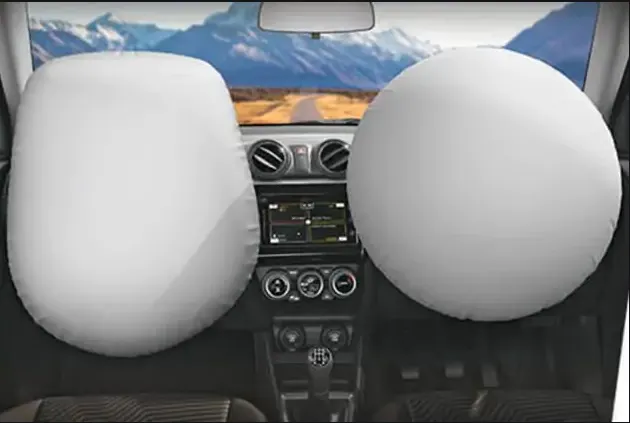
The petrol-manual Swift is our pick of the entire range. The Swift petrol-automatic is also a good choice for city dwellers, even if it’s not the best of automatic cars around. Of the four trims on offer, we’d recommend the top-spec Swift Z+. It's on the expensive side but also gets goodies such as LED headlamps and a touchscreen infotainment system. The second-from-top Z variant misses out on these features but makes for a real value-for-money buy. Commendably, all versions of the Maruti Suzuki Swift get dual airbags, ABS, EBD and Isofix child seat mounts.
Pros :
- Improved scalability
- Safety and performance
- Stunning design
- Better performance with higher mileage
- Fully-loaded feature list
Cons:
-
Interior plastic quality: It would be better if the Swift comes with higher quality material which will make it even more premium.
-
Stiff riding: The stiff suspension makes the Swift better at handling, however, the riding quality will be sacrificed. As the result, it could not offer a comfortable ride, especially on bad roads.
-
Safety: Ironically, even packed with a fully-loaded safety kit, the Swift turns out to poorly-perform in the Global NCAP crash tests, only score 2 stars on the test due to the unstable structure. It causes a serious concern about the safety of the Swift.
Hyundai I20
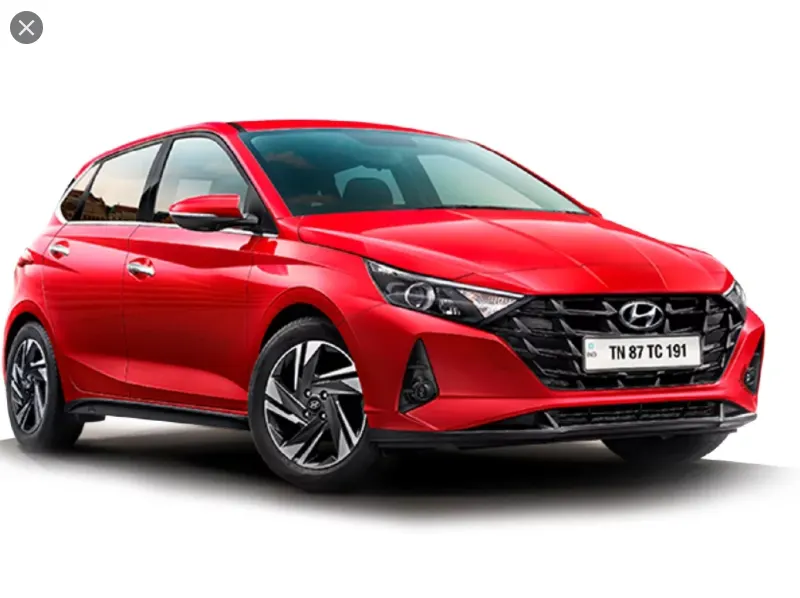
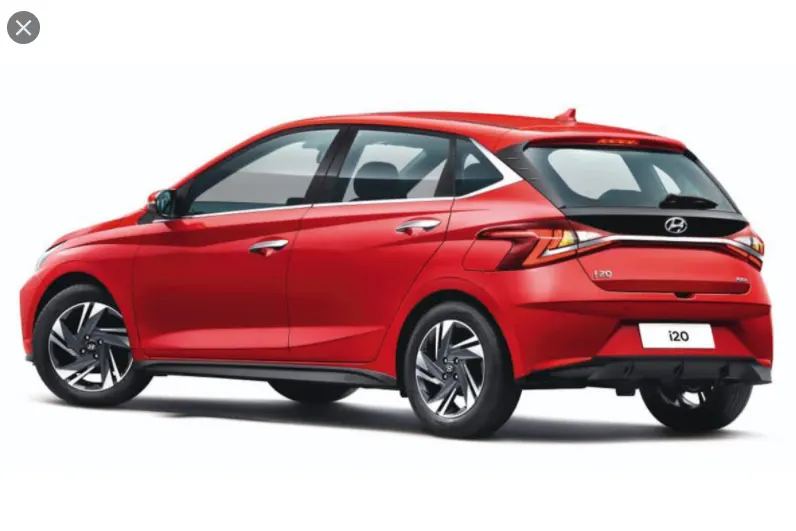
he Hyundai i20 has entered its third generation for the Indian car market. It is now available across three engine and gearbox options as well as eight colour options. The most eye catching detail of the new Hyundai i20 is its exterior design which has taken a sporty route and as a result you get this sharp looking hatchback.
What catches your attention immediately is the sharply raked front and once you acclimatise to that, you get hit by this glossy parametric jewel pattern grille. The massive grille really looks good in the metal with an all-black finish. Complementing the grille are these angry looking LED headlights that also get an LED DRL. The front bumper also gets an extended lip spoiler that adds to the sportiness.
Finally, talking about the price, the new 2020 Hyundai i20 is available in four variants - Magna, Sportz, Asta and Asta (O). The price of the new third-generation model of this premium hatch starts at Rs. 6.79 lakhs and it goes all the way up to Rs. 11.18 lakhs. All prices stick to Ex-showroom Delhi. The top-spec variants of the new i20 feel a bit overpriced and Hyundai should have priced it a bit more competitively.
Pros
- Good looking.
- Comfortable n spacious.
- Feature loaded.
- Light controls.
- Strong diesel engine.
Cons
- Steering lacks feel.
- Petrol engine is neither efficient nor peppy.
Tata Altroz
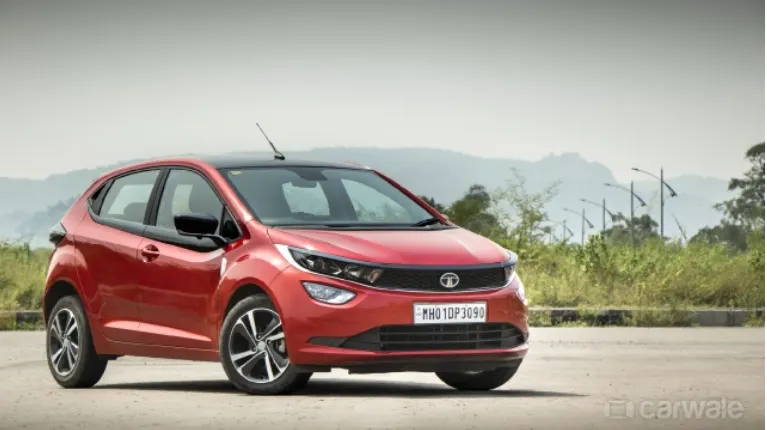
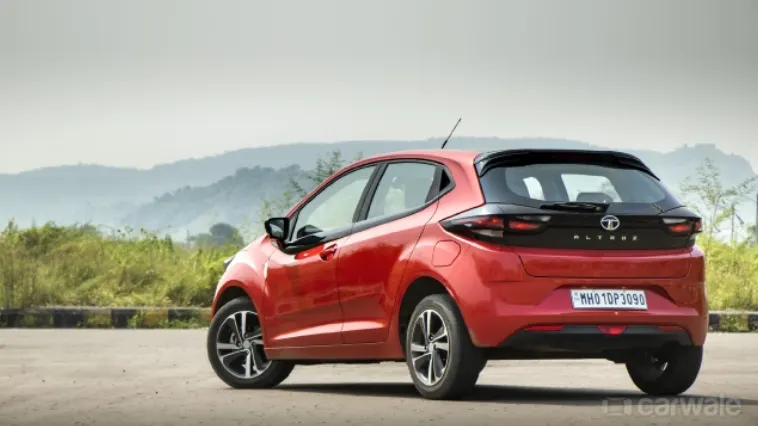
The Altroz is Tata Motors’ premium hatchback that goes up against the Maruti Suzuki Baleno, Toyota Glanza, Hyundai Elite i20 and Honda Jazz. The Tata Altroz is the first model to be built on the carmaker’s ALFA platform and has been developed with electrification in mind. On offer are BS6-compliant 1.2-litre petrol and 1.5-litre diesel engines, both available with manual transmissions only. A dual-clutch auto-equipped Altroz petrol comes soon and a more powerful 1.2-litre turbo-petrol engine is also in development. Commendably, the Tata Altroz has been awarded a 5 star adult occupant protection rating by Global NCAP.
The Tata Altroz’s 86hp, 1.2-litre petrol engine is pleasant at low speeds but that pep you get in a Baleno is simply missing. The engine doesn't have much to give at the top end and revving the engine only draws your attention to the thrum from the three-cylinder engine. A light clutch makes the Altroz petrol easy to live with in town, but again, the 5-speed gearbox isn't the slickest in the business. It's the diesel Altroz that feels like the more complete package. The 90hp, 1.5-litre, four-cylinder diesel engine can feel a bit hesitant in low-speed driving but it's quick to settle into a rhythm too.
Pros
- Stunning looks and solid build quality
- Spacious and feature-packed cabin
- Good drivability
- Confident road manners / Great on-road behaviour
- A mile-muncher with excellent ride comfort
Cons
- No automatic trim
- Expensive
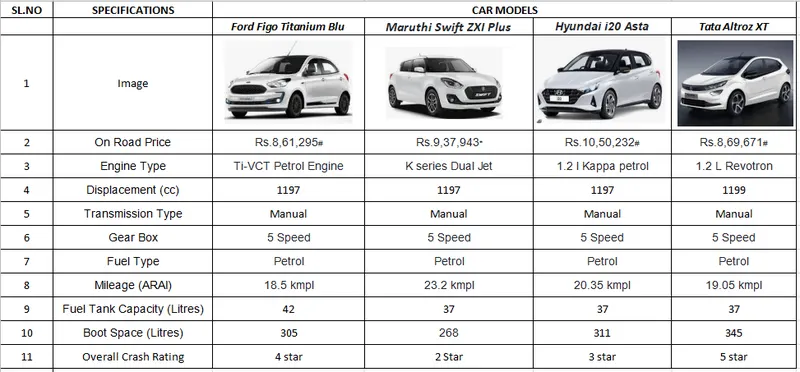
I would suggest Mr. D.S. Pughazhyendhi to buy Maruthi suzuki swift zxi plus petrol variant as it is more fuel effecient and fair maintainance cost when compared to other cars in this segment. Its a friendly car for both long drives and city drives with seating capacity of 5 people.The interior trims are pretty much satisfied for the pricing of the car and has decent power.
Exterior
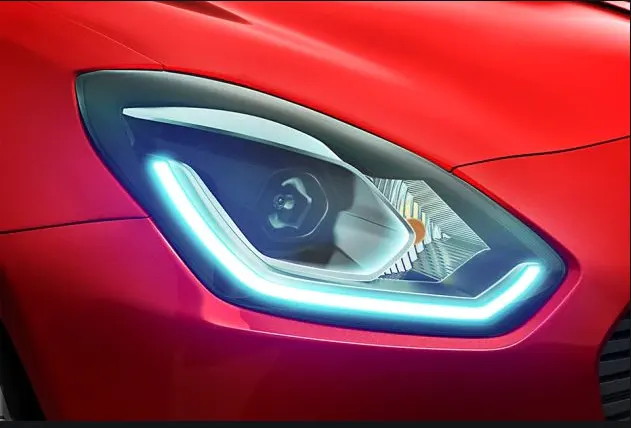
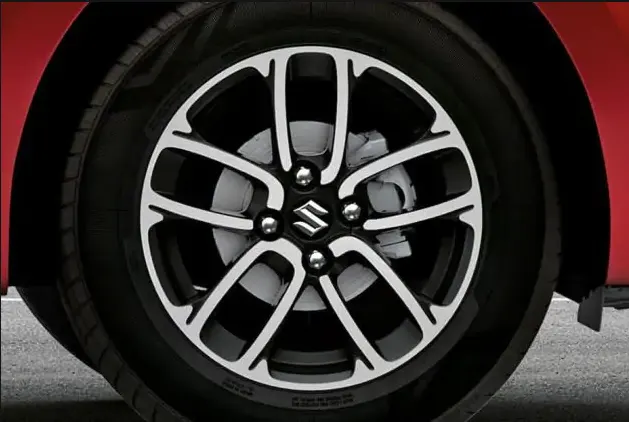
The Maruti Suzuki ZXI exteriors feature the body color front and rear bumpers with stylish contours, black radiator grills with central logo, and new halogen headlamps. The side profile feature the ORVMs with electric adjust, body color door handles, new set of alloy wheels, and glossy paint options get the spontaneous attention of the onlookers. At the rear, the wide opening hatch door, the new LED combination lamp, LED high mount stop lamp, and badging in chrome body color front and rear bumper with stylish contours and glossy paint options leave a distinctive on the road image.
Engine and Performance
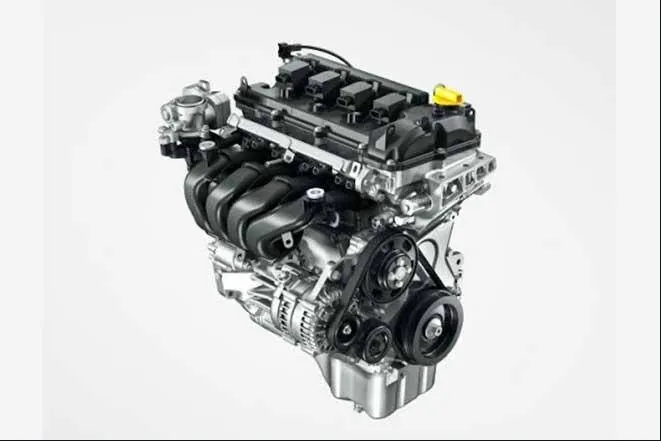
Maruti Suzuki has gone with its tried and tested 1.2 K12 petrol engine. Many of us motoring hacks are going to get hassled about this - and ask why we aren't getting new engines. The petrol engine comes across as refined and well tuned, but its character is rather predictable given how well we know it from the old Swift and the Baleno, and the Ignis.The powerful VVT engine in the Swift promises to deliver an unmatched driving experience. The 1.2L VVT engine produces a maximum power output of 81.80bhp at 6000rpm and a peak torque output of 113Nm at 4200rpm. The Maruti Swift has always been famous for its butter-like smooth ride and this new car is no different.
Interior and Entertainment
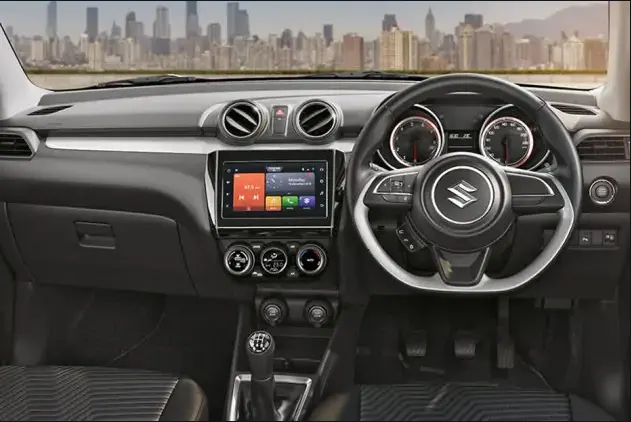
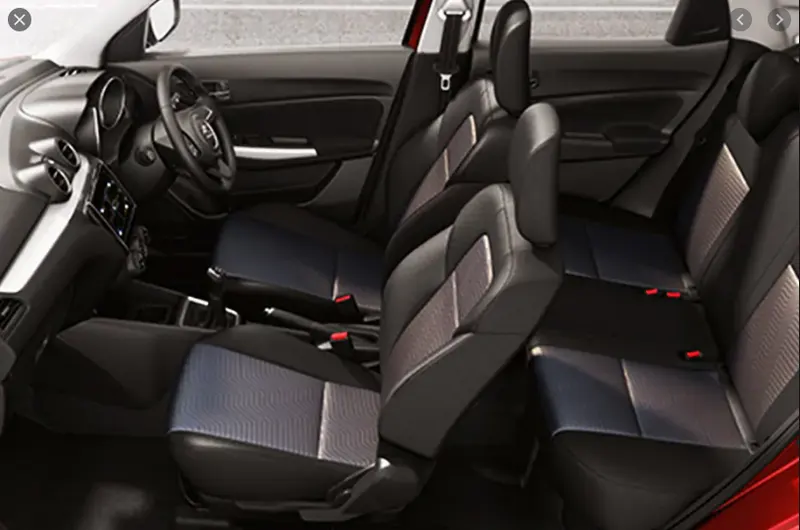
On the interior of the ZXi+ you get the fully loaded cabin. There is a sense of width that you get from the design of this dash. It adds to that sense of space the Maruti Suzuki Swift always desperately needed. The touchscreen in the central console is a carry over from some of the other models so I won't get into the functionality. (It's exactly the same as what you see on the S-Cross, the Ignis, the Baleno and so it gives you Apple CarPlay and Android Auto). But it's only on the ZDI+ and ZXi+. The climate control system is well executed. It's got a three dial-like design, and the central one is a screen, which has the climate display. The flat-bottom steering wheel, overall plastic quality and the layout will convey that sense of modernity. The instrument cluster is well finished and the dials have a reddish-orange trim which looks nice.
Braking and Safety
The Maruti Suzuki Swift ZXI braking system has the ventilated discs brakes at the front, and drum brakes at the rear, the antilock braking system with electronic brake force distribution and brake assist system featured for efficient braking. The safety features of side door impact beams, dual front airbags, front seat belt with pre-tensioner and force limiter, reverse parking sensors, rear child door lock, provided for protection of the occupants. The pedestrian protection compliance, reverse parking sensors with audio and visual assistance, and engine immobilizer featured for a safe driving experience and protection against theft attempts.