Benchmarking
Aim: To expain about Benchmarking and finding a good car for Mr.D.S.Pughazhyendhii by comparing the cars.
Benchmarking :-
- Benchmarking is a process of measuring the performance of a company’s products, services, or processes against those of another business considered to be the best in the industry, “best in class.” The point of benchmarking is to identify internal opportunities for improvement. By studying companies with superior performance, breaking down what makes such superior performance possible, and then comparing those processes to how your business operates, you can implement changes that will yield significant improvements.
- That might mean tweaking a product’s features to more closely match a competitor’s offering, or changing the scope of services you offer, or installing a new customer relationship management (CRM) system to enable more personalized communications with customers. There are two basic kinds of improvement opportunities: continuous and dramatic. Continuous improvement is incremental, involving only small adjustments to reap sizeable advances. Dramatic improvement can only come about through reengineering the whole internal work process.
Process benchmarking of this kind can operate at several levels:
- Between similar processes in the same factory or service branch
- Between different factories or service branches
- Between different competing organizations
- Between different sectors using the same process
Benchmarking is a simple, but detailed, five-step process:
- Choose a product, service, or internal department to benchmark.
- Determine which best-in-class companies you should benchmark against, which organizations you’ll compare your business to.
- Gather information on their internal performance, or metrics.
- Compare the data from both organizations to identify gaps in your company’s performance.
- Adopt the processes and policies in place within the best-in-class performers.
Benchmarking will point out what changes will make the most difference, but it’s up to you to actually put them in place.
In order to benchmark anything, you need to have quantitative data available to study. That means breaking down internal processes to
calculate performance metrics. Quantify everything, because only quantifiable information can be accurately compared.
Cars compared:
- Tata Punch
- Hyundai Venue
- Maruti Suzuki Vitara Breeza
- Tata Nexon
Model & Specification
| Model | Maruti Suzuki Vitara Breeza LXi | Hyundai Venue E | Tata Nexon XE | Renault Kiger RXT MT DT | |
| Engine | 1462 cc, 4 Cylinders Inline, 4 Valves/Cylinder, DOHC | 1197 cc, 4 Cylinders Inline, 4 Valves/Cylinder, DOHC | 1199 cc, 3 Cylinders Inline, 2 Valves/Cylinder, SOHC |
999 cc, 3 Cylinders Inline, 4 Valves/Cylinder, DOHC |
|
| Engine Type | K15B | 1.2 l Kappa |
|
1.0L Energy |
|
| Fuel Type | Petrol | Petrol | Petrol |
Petrol |
|
| Max Power (bhp@rpm) | 103 bhp @ 6000 rpm | 82 bhp @ 6000 rpm | 118 bhp @ 5500 rpm |
71 bhp @ 6250 rpm |
|
| Max Torque (Nm@rpm) | 138 Nm @ 4400 rpm | 114 Nm @ 4000 rpm | 170 Nm @ 1750 rpm | 96 Nm @ 3500 rpm | |
| Mileage (ARAI) (kmpl) | 17 | 17.52 | 17.5 | 19.1 | |
| Driving Range (Km) | 817 | 788 | 773 | 767 | |
| Drivetrain | FWD | FWD | FWD | FWD | |
| Transmission | Manual - 5 Gears | Manual - 5 Gears | Manual - 6 Gears, Sport Mode | Manual - 5 Gears | |
| Emission Standard | BS 6 | BS 6 | BS 6 | BS 6 | |
| Turbocharger/Supercharger | X | X | Turbocharged | X | |
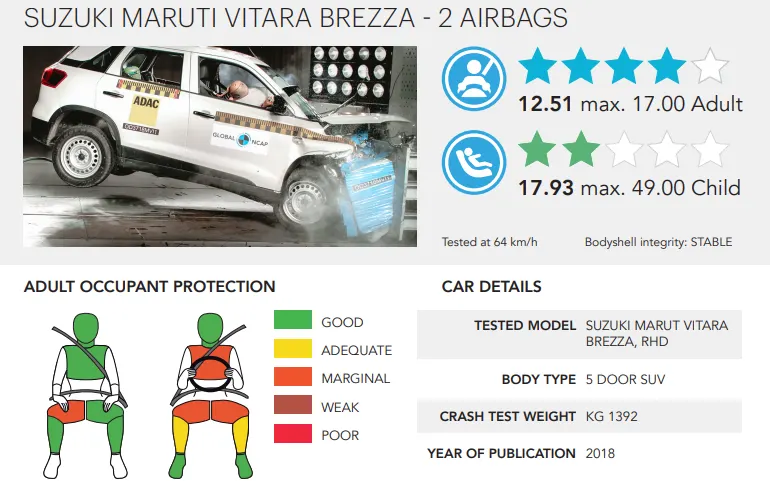
| NCAP Rating | 4 Star (Global NCAP) |
4 Star(A-NCAP) not tested by GNCAP |
5 Star (Global NCAP) | 4 Star (Global NCAP) |
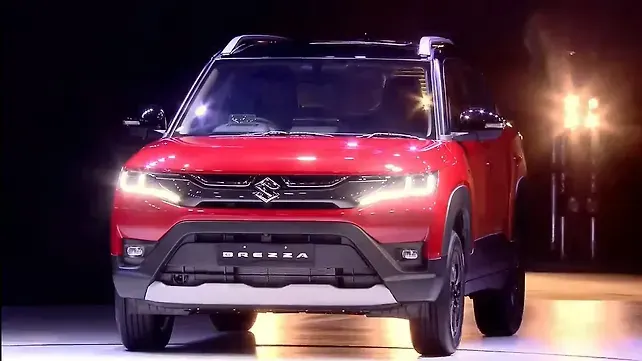
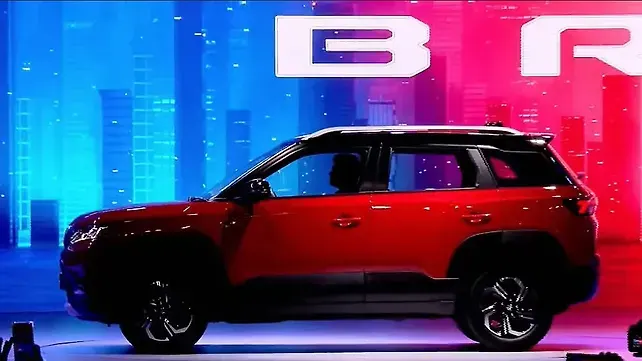
1)Vitara Breeza
It has got a 4-star rating from GNCAP. It gets a 1.5-litre petrol engine (105PS/138Nm), paired with a standard 5-speed manual. An optional 4-speed AT is also available. The sub-compact SUV is sold in four trims : LXi, VXi, ZXi, and ZXi+. It is a five-seater.Safety kit on board consists of dual front airbags, ABS with EBD, and rear parking sensors. Maruti’s su-compact SUV rivals the Toyota Urban Cruiser, Mahindra XUV300, Hyundai Venue, Tata Nexon, Renault Kiger, Nissan Magnite, and Kia Sonet. Coming with McPherson Strut with Coil Spring as a front suspension and has a ventilated disc brake in front and a drum bake in rear
Dimensions
LENGTH = 3995,WIDTH=1790,HEIGHT=1640,BOOT SPACE 328 L,WHEEL BASE 2500MM
GROSS WEIGHT 1600 KG.
Safety
- Overspeed Warning
- 2 Airbags
- Child Seat Anchor Points
- Seat Belt Warning
- Anti-Lock Braking System (ABS)
- Electronic Brake-force Distribution (EBD)
- Central Locking
- Child Safety Lock
- Speed Sensing Door Lock
CRASH TEST REPORT
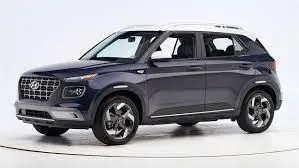
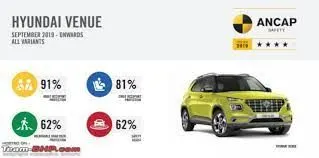
2)Hyundai Venue
Hyundai India has launched hyundai venue mIT at Rs 10 lakh (ex-showroom).
It’s offered with the 120PS 1.0-litre turbo-petrol engine and comes in two variants.
The clutchless transmission utilises a 6-speed gearbox and takes care of the clutching duties.
Hyundai has also introduced a new Sport trim which comes with plenty of sporty cosmetic enhancements.
Moreover, there’s a new top-spec S+ variant introduced in the 1.2-litre petrol variant which is priced from Rs 8.32 lakh (ex-showroom).
DIMENSIONS OF VENUE
LENGTH =3995 ,WIDTH 1770=,HEIGHT=1605,BOOT SPACE 350 LITRE,WHEEL BASE 2500mm
SAFETY SPECS
- Anti lock braking system
- Brake assist :no
- center locking
- Child safety lock
- driver air bag and passanger air bag
- speed sensing auto door lock
- impact sensing auto door unlock.
- 2 airbags
3) Tata Nexon
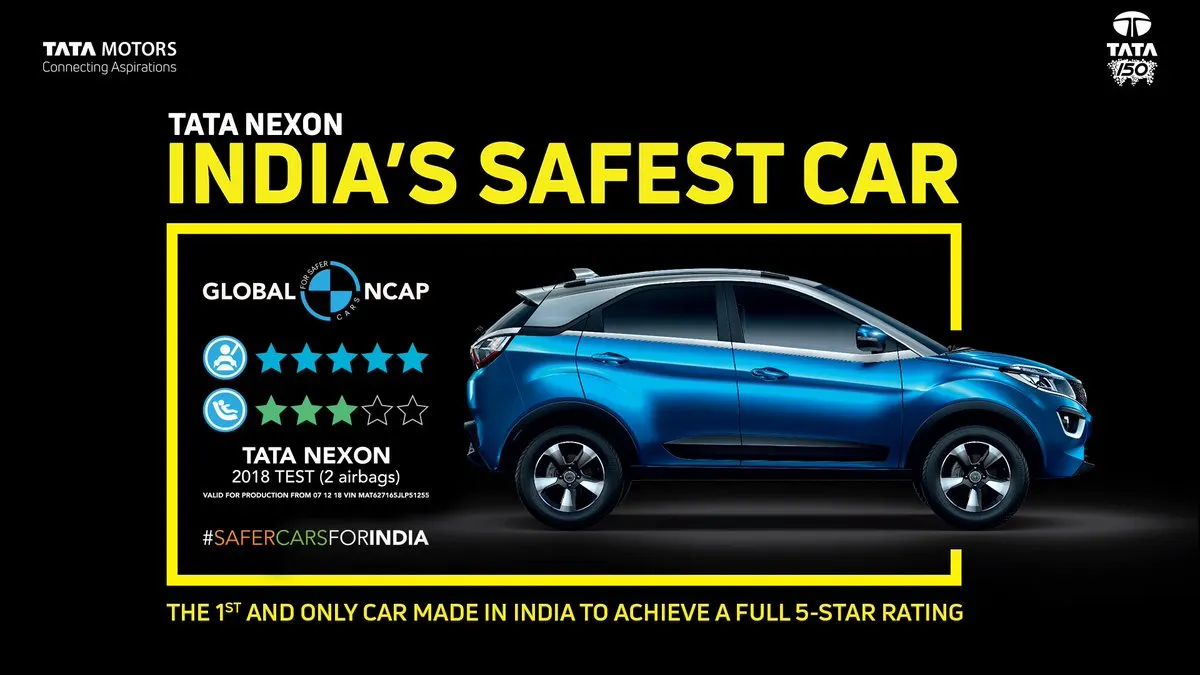
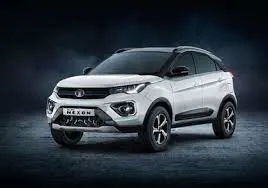
The Tata Nexon is a 5-star rated car.
It was the first compact SUV to get this accreditation as well.
Tata Motors ensured that the Nexon is suitably kitted and gets all the right goodies including a sunroof and petrol/diesel engines with auto transmissions as well.
The Tata Nexon has a 1.2-litre turbo petrol good for 120hp of power and 170Nm whereas the 1.5-litre diesel makes 110hp and 260Nm. Both engines are available with a 6-speed manual or AMT.
Prices of the Nexon start from Rs 6.99 lakh, ex-showroom.
SAFETY SPECS
- 2 airbags.
- anti-lockbraking system
- brake assist
- cental locking
- power door locks
- child safety locks
- anti- theft alarm
- back cam.
- Puncture repair kit
- brake assist
- hill hold control
DIMENSIONS
3993 MM IN LENGTH, 1811 MM IN WIDTH,1606 MM IN HEIGHT, WHEEL BASE OF 2498 MM, BOOT SPACE 350
CRASH TEST REPORT
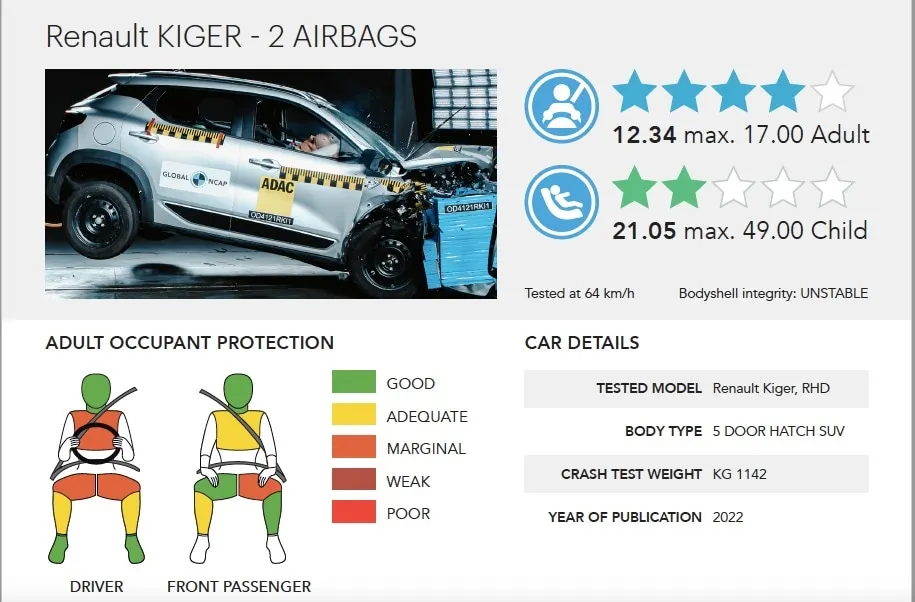
Renault Kiger
The Petrol engine is 999 cc . It is available with Manual & Automatic transmission.Depending upon the variant and fuel type the Kiger has a mileage of 18.24 to 20.5 kmpl.It comes with 1.0L energy engine type which produce max power of 71bhp@6250rpm and 96NM@3500rpm.
DIMENSIONS
3991 MM IN LENGTH, 1750 MM IN WIDTH,1605 MM IN HEIGHT, WHEEL BASE OF 2500MM, BOOT SPACE 405
SAFETY SPECS
- Overspeed Warning
- 4 Airbags
- Seat Belt Warning
- Anti-Lock Braking System (ABS)
- Electronic Brake-force Distribution (EBD)
- Central Locking-keyless
- Child Safety Lock
- Speed Sensing Door Lock
CRASH TEST REPORT
i have chosen a vehicle to do a benchmarking for a Pughazhyendhii requirement. the four different cars have their own unique specifications, After analyzing these four cars i suggest him TATA NEXON
because it was the first car from an Indian brand to score five stars in Global NCAP's crash test. This makes it one of the safest sub-compact SUVs in the country. The SUV gets dual airbags, ABS with EBD, electronic stability program, and reverse parking sensors as standard while higher trims get electronic traction control, roll-over mitigation, hydraulic brake assist, hill-hold control, and reversing camera.Its 1.2-litre turbo petrol engine churns out 118 bhp with 170 Nm. And TATA is an Indian company, by buying car from indian maker it definitely increase our economy and it comes with Pughazhyendhii budget.
CONCLUSION
From the above 4 cars i'm suggesting a TATA NEXON car for higher safety rating.