Benchmarking
- Benchmark with presently available cars in the market for the following case.
Mr. D.S. Pughazhyendhii is a married man who lives in Bangalore which is a highly crowded city. His Family comprises five members including his wife, a five-year-old boy, his father, and his mother. He visits his native place Madurai which is 500kms away from Bangalore once a month. Also, he will be using his car to commute to his office. His budget falls between 8 to 10 lakhs on road. Please suggest to him options so that he will buy a good car for his family.
Note: Pughazhyendhii is fond of big cars
- Prepare a report explaining what is Bench-Marking
- Compare at least 4 vehicles.
- Provide a proper conclusion for the report, suggesting a single suitable vehicle among the comparison made with images.
Answer:
- Suggested Cars Listed Below:
- Suggested Cars Listed Below:-
|
Sr No |
Model |
Prize in Rupees |
|
1 |
Hyundai Verna |
9.43 Lakhs |
|
2 |
Mahindra XUV300 |
8.41 Lakhs |
|
3 |
Tata Tiago EV |
8.49 Lakhs |
|
4 |
Toyota Urban Cruiser |
9.02 Lakhs |
|
5 |
Honda WR-V |
9.25 Lakhs |
|
6 |
Maruti Suzuki Ciaz |
8.78 Lakhs |
|
7 |
Honda Jazz |
8.11 Lakhs |
|
8 |
Honda City |
9.50 Lakhs |
|
9 |
Hyundai i20 N Line |
10 Lakhs |
|
10 |
Nissan Kicks |
9.50 Lakhs |
What is Benchmarking:
The point of benchmarking is to identify internal opportunities for improvement. By studying companies with superior performance, breaking down what makes such superior performance possible, and then comparing those processes to how your business operates, you can implement changes that will yield significant improvements.
Step-by-Step Benchmarking:
Benchmarking is a simple, but detailed, five-step process:
- Choose a product, service, or internal department to benchmark
- Determine which best-in-class companies you should benchmark against which organizations you’ll compare your business to
- Gather information on their internal performance, or metrics
- Compare the data from both organizations to identify gaps in your company’s performance
- Adopt the processes and policies in place within the best-in-class performers
Key Benefits:
- Improving employee understanding of cost structures and internal processes
- Encouraging team-building and cooperation in the interests of becoming more competitive
- Enhancing familiarity with key performance metrics and opportunities for improvement company-wide
- In essence, benchmarking helps employees understand how one small piece of a company’s processes or products can be the key to major success, just as one employee’s contributions can lead to a big
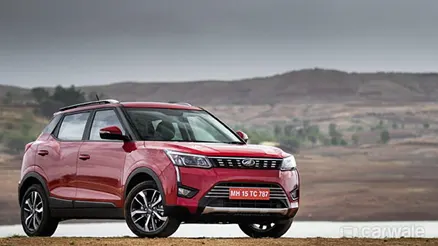
1.Mahindra XUV300:
A] Positives
1.Features
But, for this price, you get keyless entry and start, automatic headlamps and wipers, two-zone climate control, cruise control, a 6-way adjustable driver’s seat, a comprehensive driver information system, and a touchscreen multimedia system. The latter, as is the norm, comes with USB and AUX playback, Bluetooth telephony, Apple CarPlay and it's Android-cousin. And yes, there’s a sunroof as well. The only SUV in its class to get one... for now.
2.Interiors
Now, given the tall stance, the XUV 300 might not be the best car for your tiny Pug to jump into. But your parents would love it. Because arthritis or not, one can just slip onto the seats, front or rear and be comfortable.
It’s also a practical cabin, this. Apart from roomy and comfy seats, there’s good head and knee room, you get storage and cup and bottle holders all around. And you also get a central armrest with storage for both the front and rear passengers.
3.Engines
The Mahindra XUV300 comes with two engines. The 1.5 diesel is a lovely thing. It is refined, smooth and surprisingly quiet for a diesel. And it has a solid mid-range as well. Be it driving in the city or cruising on the highway, the diesel with its 6-speed manual gearbox is a good fit. And it’s efficient too.
The petrol we have here is agreeable as well. Like the diesel, this one is refined and torquey too. And though it has some turbo lag, it only feels pronounced because the kick close to 2,000rpm is a little too potent.
But, even without the turbo on the song, one still can’t term the XUV300 performance as underwhelming. It’s right on the ball. But, it’s between 2,000-3000rpm that the petrol XUV feels is at its best. It won’t set any quarter-mile records, but it does get you to three-digit speeds with ease. And in pretty quick time. Plus, like the diesel, XUV300 petrol has a slick-shifting gearbox as well.
4.Comfort
Four things define comfort over all else. Seating comfort, light driving controls, a pliant ride and good visibility.
The 300 has it all, but not in equal measure. The visibility and the ride are really good. There are hardly any blind spots, and no matter whether you show the XUV broken Tarmac or a dirt trail, it’s more than up to flatten it all.
The seats are good too. Not the best we have seen, even for its class, but you can spend long hours in them. And like a cherry on top, it has light controls too, be it the steering, the clutch or the gear shifts.
5.Safety
Seven airbags.
B] Negatives
1.Boot space
The boot on the XUV is tiny. As you can see it can’t hold the 85-litre bag. And with the 65-litre suitcase, there’s barely space for a soft bag. Not good, and for an SUV, not good at all.
2.No Petrol Automatic
Yes, we like the manual gearboxes on the XUV. These are slick-shifting boxes with a reasonably light clutch operation. But, not having a petrol automatic is a miss. Especially for petrol, which will extensively be used in crowded cities.
3.No Rear AC Vents
The XUV seems to have it all! But then you step in the rear, and on a hot day like this. You reach for your set of vents at the back. And there’s none! That’s no good.
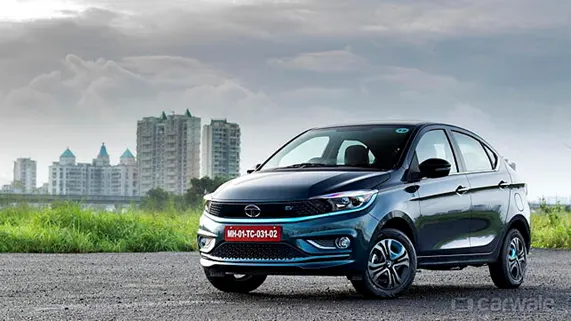
Tata Tigor EV :
Positives
- Most affordable EV
- Looks and feels like ICE Tigor
- Real-world range of 225kms
- Low running costs
- Growing awareness and charging infrastructure
Negatives
- There needs to be a long-range version
- More expensive than ICE Tigor.
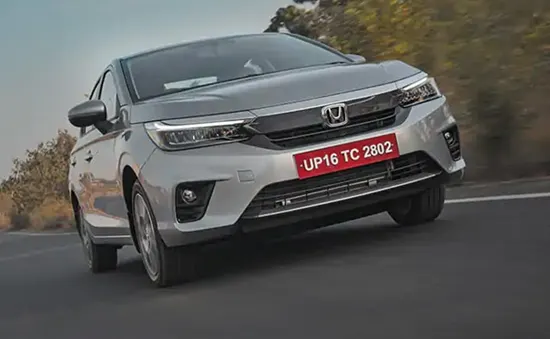
Honda City:
A] Advantage :
- The new-generation Honda City comes with a new design, improved styling, and a host of new smart tech and features. The sedan has grown in size as well, it is now over 100 mm longer and 53 mm wider than the previous model. However, the height has been lowered by a good 28 mm that makes it a sleek looking sedan.
- The new City comes with a spacious cabin sporting a dual-tone beige and black paint scheme. It gets a large sunroof, a new multi-functional steering wheel, new air-con vents, and a larger 8-inch touchscreen infotainment system with Apple CarPlay and Android Auto compatibility.
- The new Honda City sedan comes with the company's connected car system - Honda Connect. Moreover, it is India's first car to feature Alexa remote compatibility, which is also the industry's first. The carmaker also brought an enhanced version of Honda Connect by introducing Honda Action on Google.
- The Honda City is currently in its 5th generation in India
- The latest generation model is offered with six airbags, 3-point seatbelts for all passengers, Vehicle Stability Assist, Agile Handling Assist, Hill Start, Tyre Pressure Monitoring System (TPMS), Honda Lone Watch camera, ISOFIX compatible rear seats, ABS with EBD, Brake Assist, multi-angle rear camera, and more.
- The new-gen Honda City is a well-rounded package offered with an extensive list of features right from the base variant. It gets several segment-first features like full LED headlamps, HD full-colour TFT instrument cluster, G-Meter, Digital Speed and Cruise Control Display, Eco-assist and Eco mode indicators, and 8-speaker sound system.
B] Negative :
- The Honda City misses out on a powerful 1.0-litre IVTEC Turbo engine, which is offered on the City RS in Thailand. We think Honda should have been considered for the Indian market.
- There's no diesel automatic option on the new generation Honda City, despite being offered on the younger sibling, the Amaze. In fact, its close rival - the Verna also gets a diesel automatic.
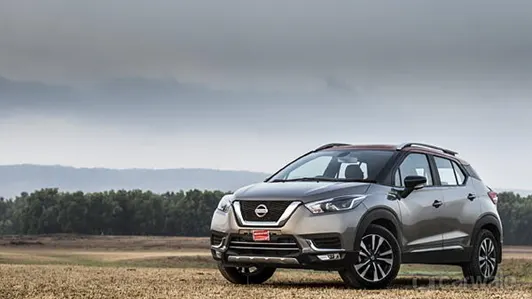
Nissan Kicks:
Positives
Design
Now in general, a good looking SUV is defined by its boxy dimensions and muscular proportions. The Kicks is neither of these and yet manages to look quite good.
For starters, it’s quite a large car. In fact, it’s wider and longer than the current benchmark - the Hyundai Creta. The front gets the Nissan V-motion grille, a butch looking skid-plate and nicely placed fog lamps that also act as cornering lamps. However, it’s from the rear that the Kicks looks the best. There’s a surprisingly rakish rear windscreen and those protruding boomerang tail lamps round up one of the funkiest looking heinies out there. Overall, the Kicks comes across as a very smart looking car that is sure to connect with the millennials that Nissan is looking to rope in.
Interiors
The radical exteriors follow to the insides as well. The dashboard layout looks good and Nissan has used the right combination of colour and materials that make it look and feel very welcoming.
What is immediately noticeable is that Nissan has used soft-touch materials abundantly especially in the centre of the dashboard, door armrest and the centre armrest. The cab-forward design means the dashboard extends quite a bit making the cabin feel roomier. Another brilliant addition is the eight-inch touch screen infotainment system which is chiselled beautifully.
Ride Quality
With 210mm of ground clearance, the Kicks has got plenty of suspension travel and it works extremely well. Ride quality of the Kicks is fantastic and it feels extremely pliant. The suspension is quiet and goes about absorbing undulations with nary a squeak. And with such a tall stance it does not roll excessively when pushed into corners.
Features
The Kicks comes with plenty of features that make it innovative and convenient. The floating eight-inch infotainment screen does not have the best resolution but comes with all the connectivity options like Apple CarPlay, Android Auto and BT connectivity. Heck, you can even connect your smartwatch to it. You also get rain-sensing wipers, engine start/stop button and then some. But the Kicks main party piece is the first-in-class around view monitor.
There are cameras on all four sides that offer a 360-degree view of the surroundings. Different modes also allow you to choose from a list of camera views depending on the situation. This makes parking even in the tightest of spots an easy affair.
B] Negatives
Heavy controls
The Kicks controls feel quite heavy while driving around the tight city confines. The clutch is the first thing that makes you realise this and in choc-a-block traffic, you will be wishing it was an AT. Even the gear throw feels heavy and requires a decent amount of effort and unfortunately, the Kicks does beg a lot of shifting. And finally the steering, which again feels cumbersome should you need to manoeuvre the car in tight confines.
Lack of smart storage
The Kicks cabin lacks some smart storage. What do I mean by that? Let me explain. Firstly, there are no cup holders in the front, so the day you decide to get your coffee, you will be in a fix. Also, the centre armrest you see here, one keeps thinking it might have storage in there, but again it doesn’t. And finally, should you decide to fold the rear seats to make room for additional luggage, there is no 60:40 split and one needs to go through the inconvenient process of lifting the knobs simultaneously, which are way apart to fold the entire backrest.
Conclusion:
- I would suggest 04. NISSAN KICKS.
- if the buyer prefers MANUAL TRANSMISSION and budget is a bit high.
- it has the best ground clearance of 210mm and the largest Boot Capacity of 400L.
- If the buyer prefers AUTOMATICA TRANSMISSION over manual then,
- I would suggest 04. TATA NEXON, it has a 1497CC Turbocharged engine with 3 driving modes. Economy city and sport models.
- It also decent ground clearance of 209 mm and Boot Capacity 350L.it gives a good mileage of 23.97 kmpl and also Euro NCAP 5-Star Rating for SAFETY.