Assignment 4-RADIOSS Material Laws Challenge
AIM:
- To conduct the different case studies by modifying the material cards
- To compare the results of each case study after post-processing
THEORY:
We learnt different material cards for Isotropic elasto-plastic materials and viscous materials.
For Isotropic elasto-plastic materials:
- Law 2/ Johnson-cook material (/JOHNS)
- Law 36/ Tabulated Piecewise Linear material (/PLAS_TAB)
- Law 27/ Brittle materials; von-mises hardening with damage/ (/PLAS_BRIT)
For Hyper Visco-Elastic materials:
- Law 42/ Hyper Visco-elastic material (/OGDEN)
- Law 70/ Tabulated Hyper Visco-elastic material (/FOAM_TAB)
PROCEDURE:
- STEP-1: Import FAILURE_JOHNSON_0000.rad into HyperMesh and check the relevant cards to see the animation frequency and the units of the system
- STEP-2: Modify the material properties as posed in the question and run the analysis
- STEP-3: Check the maximum energy error and the values obtained in the last cycle
- STEP-4: Plot the graphs of kinetic energy, internal energy, hourglass energy and contact forces
- STEP-5: Compare between all analysis and make a table of the results
ANIMATIONS OBTAINED:
Case-1: Running the model as it is
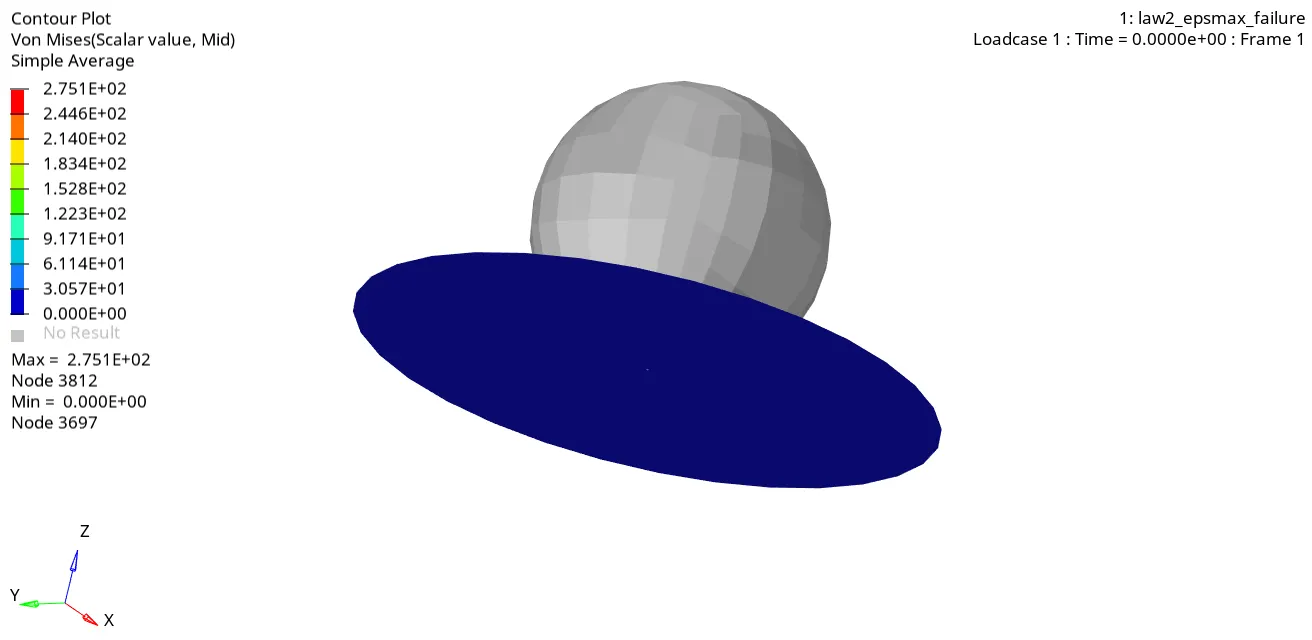
Case-2: Modifying failure card by changing Ifail, Dadv and Ixfem values to 1
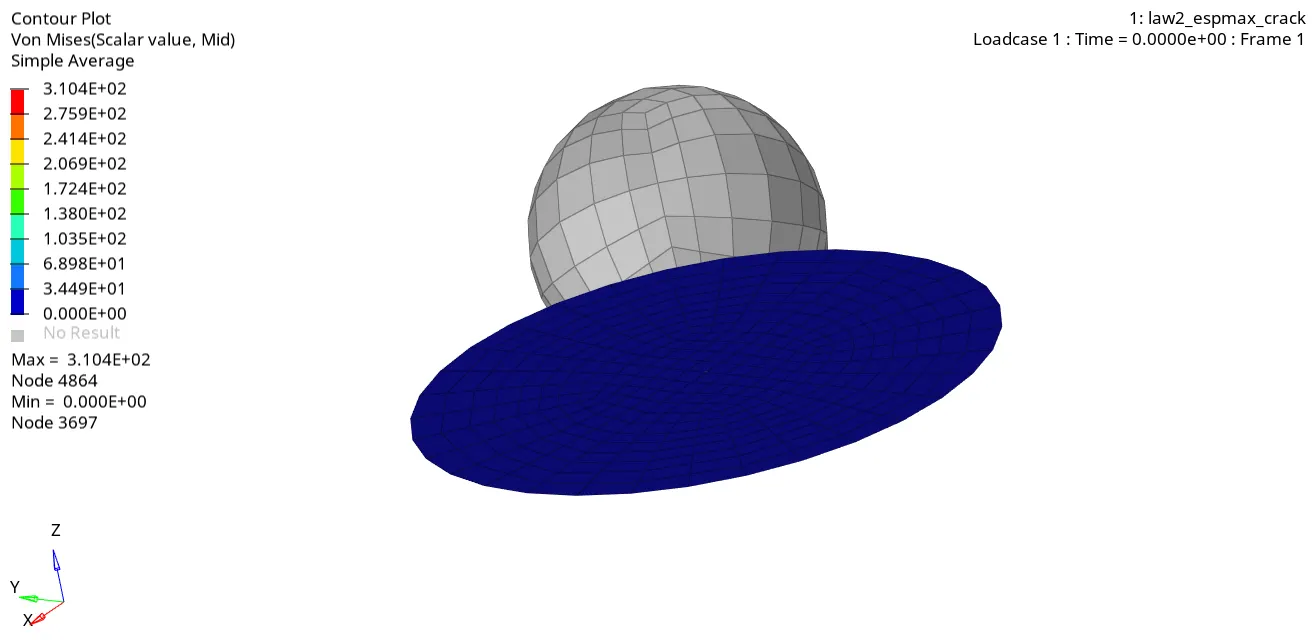
Case-3: Deleting the /FAIL/JOHNSON card
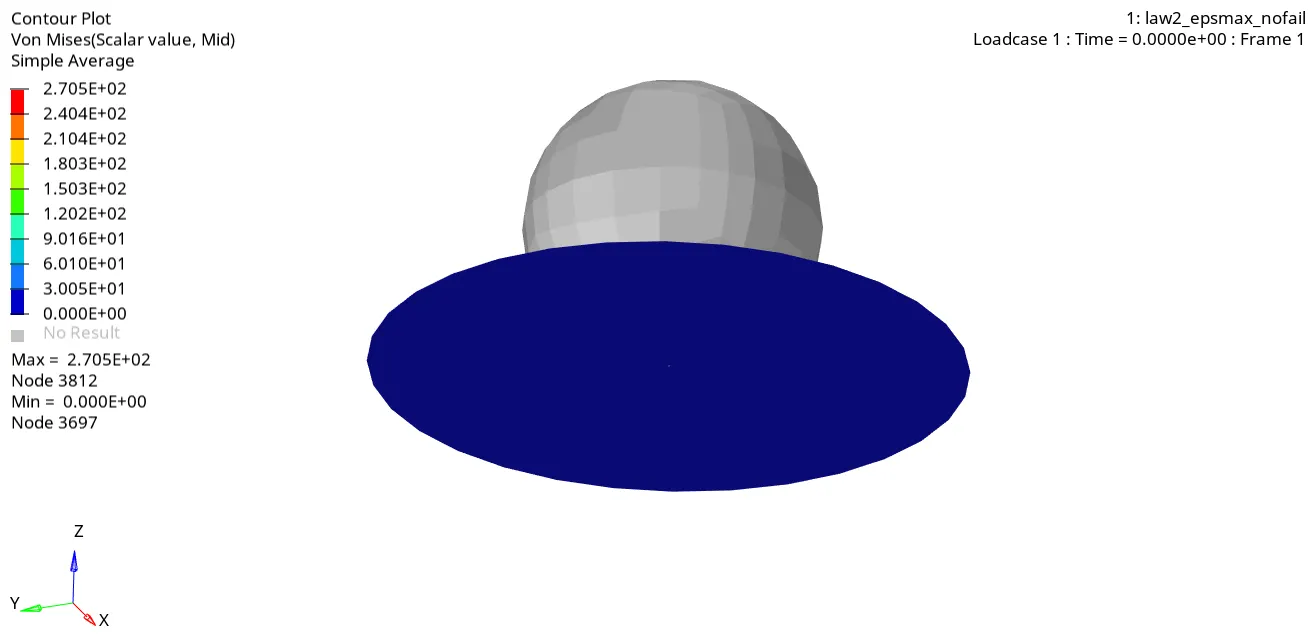
Case-4: Deleting EPS_p_max value (max plastic strain)
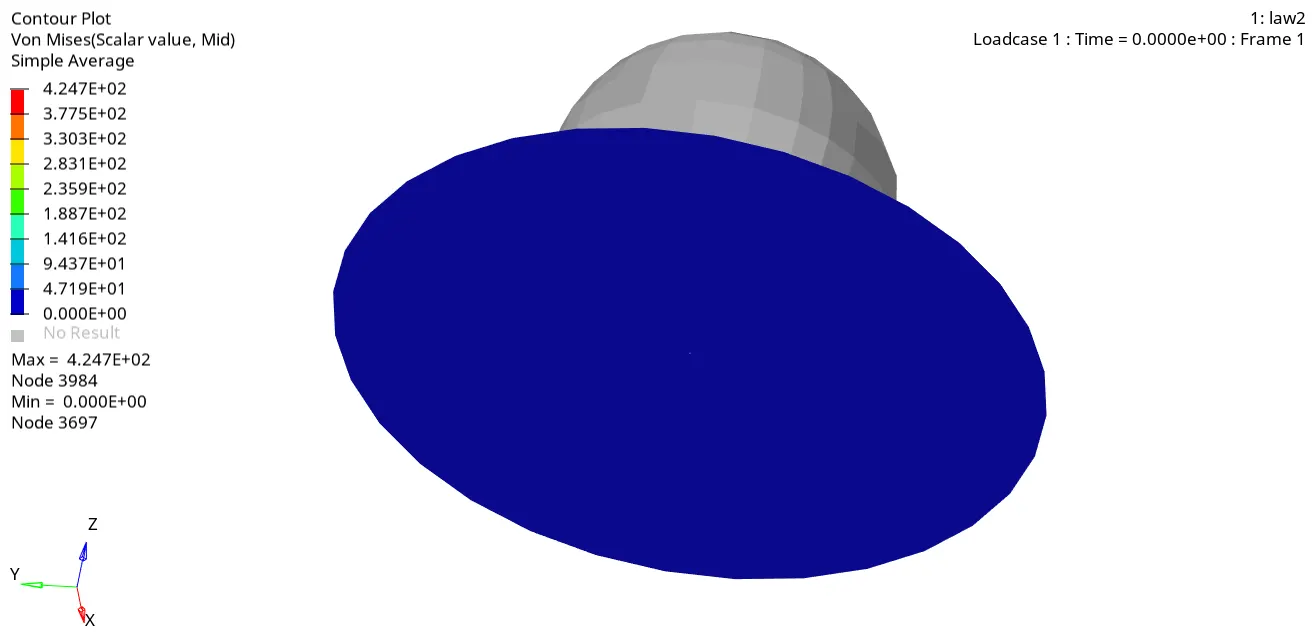
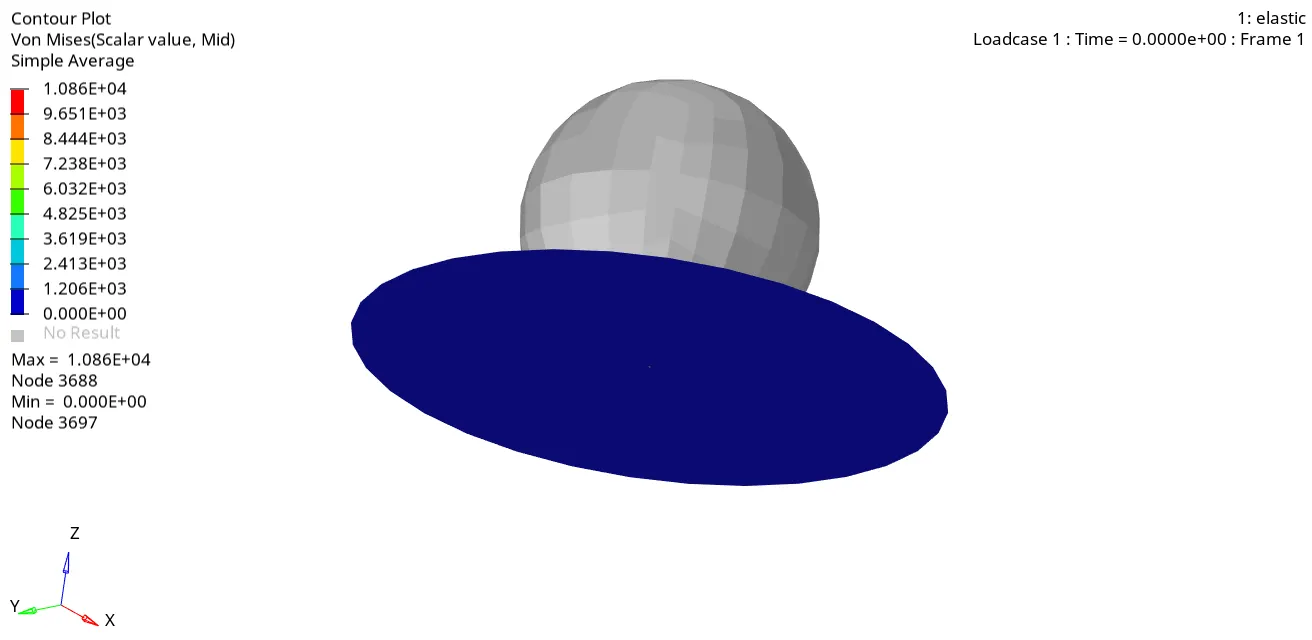
Case-5: Changing the material card to Law 1, i.e., elastic material
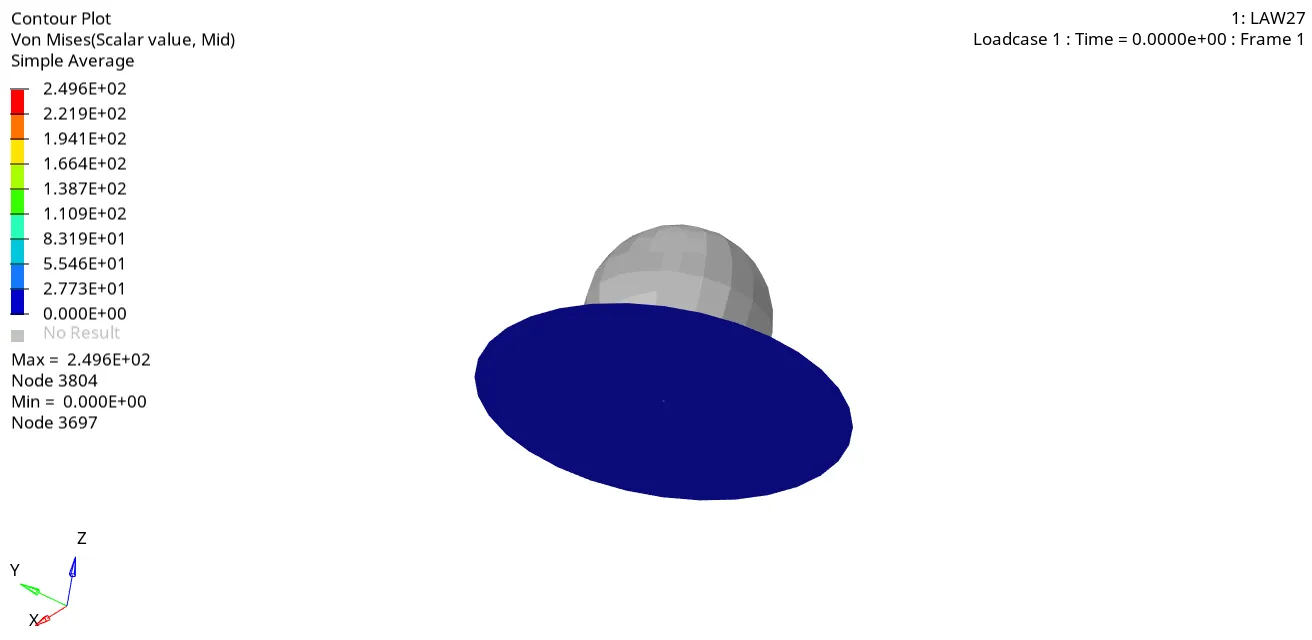
Case-6: Changing the material card to law 27, i.e., brittle material
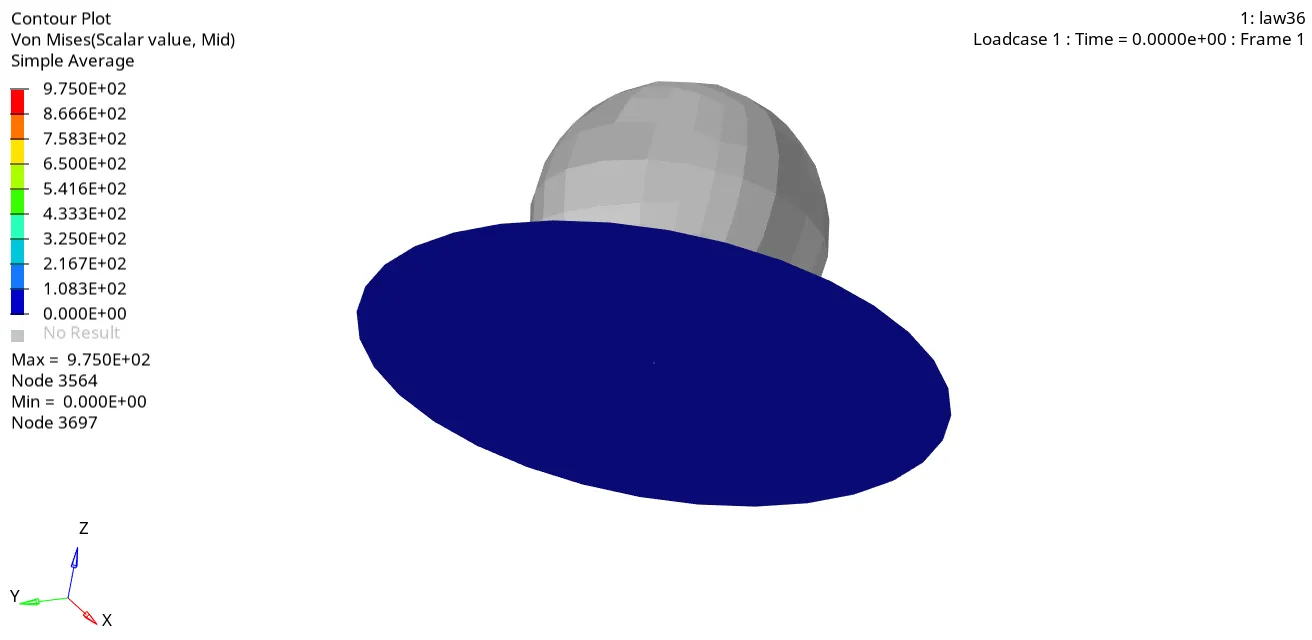
Case-7: Piecewise Tabulated elastic material, i.e, Law 36
FORCE GRAPHS OBTAINED:
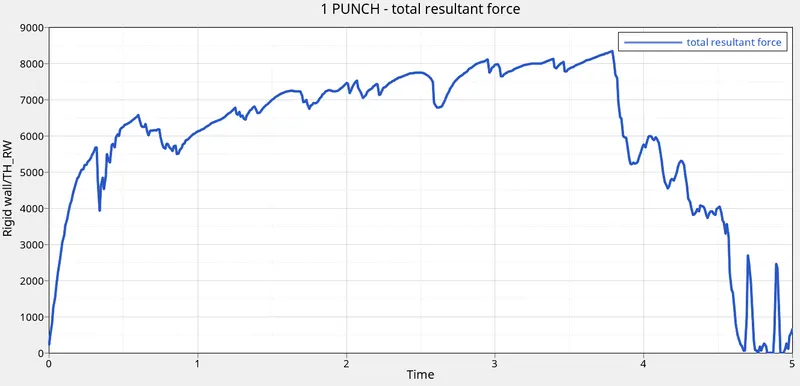
Case-1: Running the model as it is
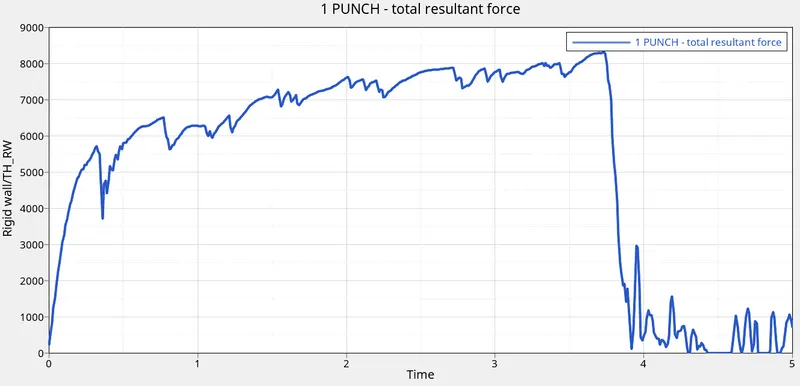
As the displcement of the rigid sphere increases, the magnitude of the contact forces increases as well. After reaching the maximum plastic strain, the elements get deleted, hence the contact forces drop sharply.
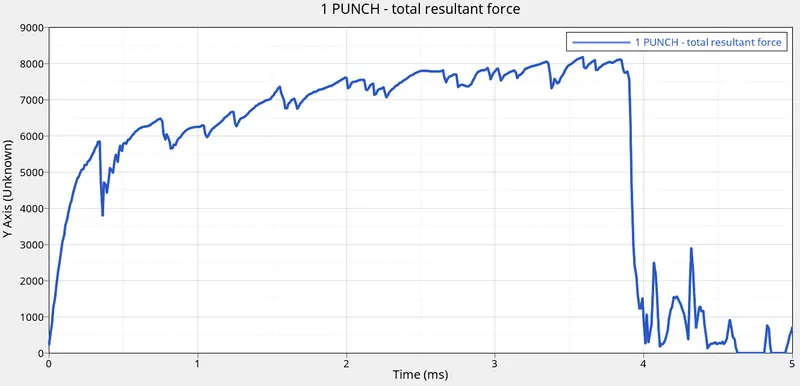
Case-2: Modifying failure card by changing Ifail, Dadv and Ixfem values to 1
As Ixfem is applied, the software includes modelling of crack propagation. The elements get deleted after reaching maximum plastic strain as well, but since crack propagation is taken into account, the contact forces come down gradually rather than a steep decrease.
Case-3: Deleting the /FAIL/JOHNSON card
Case-4: Deleting EPS_p_max value (max plastic strain)
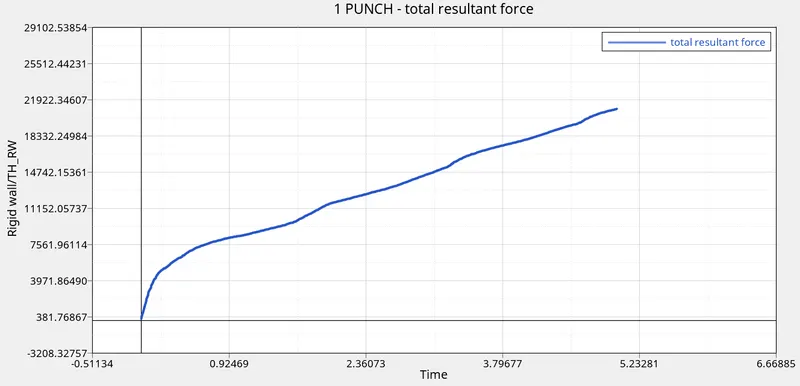
Case-5: Changing the material card to Law 1, i.e., elastic material
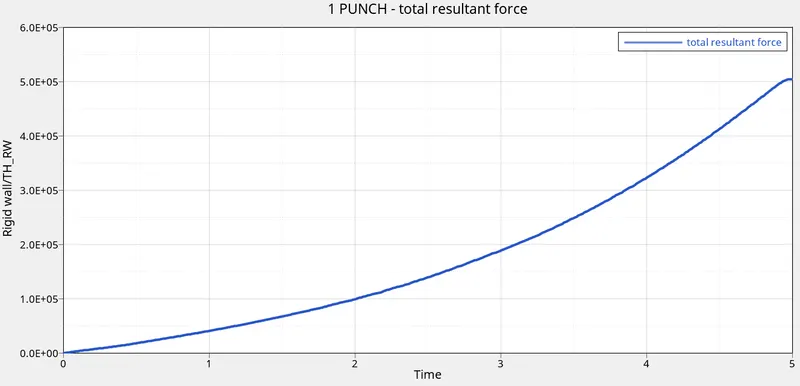
Due to elastic behaviour, no elements will be deleted, hence the contact forces go on increasing.
Case-6: Changing the material card to law 27, i.e., brittle material
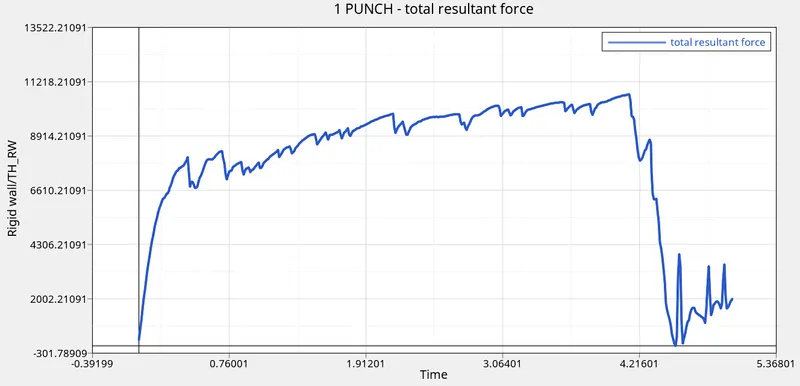
The rigid wall forces will reach a peak and then start decreasing gradually.
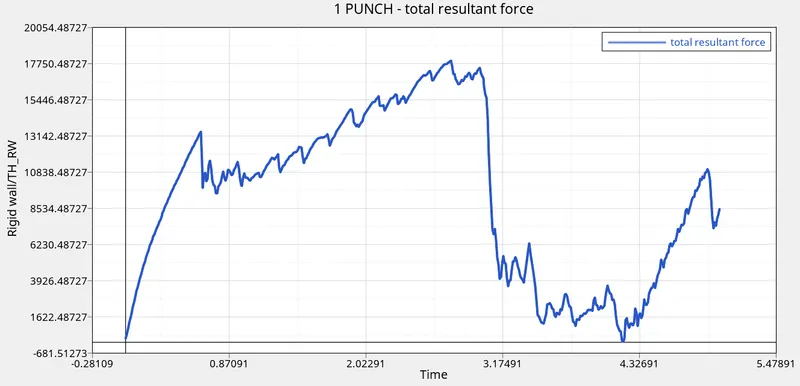
Case-7: Piecewise Tabulated elastic material, i.e, Law 36
INTERNAL ENERGY GRAPHS OBTAINED:
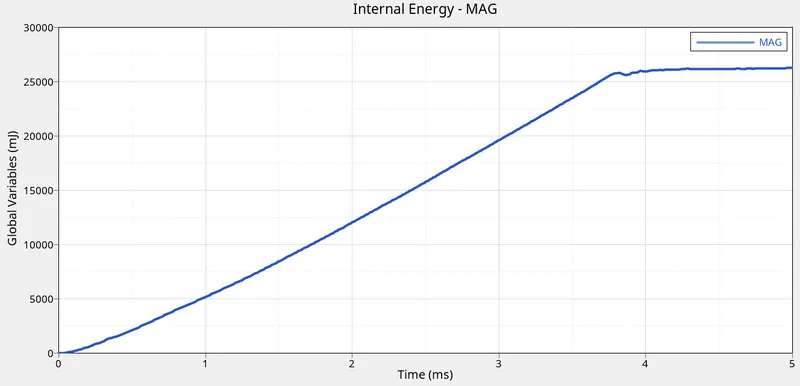
Case-1: Running the model as it is
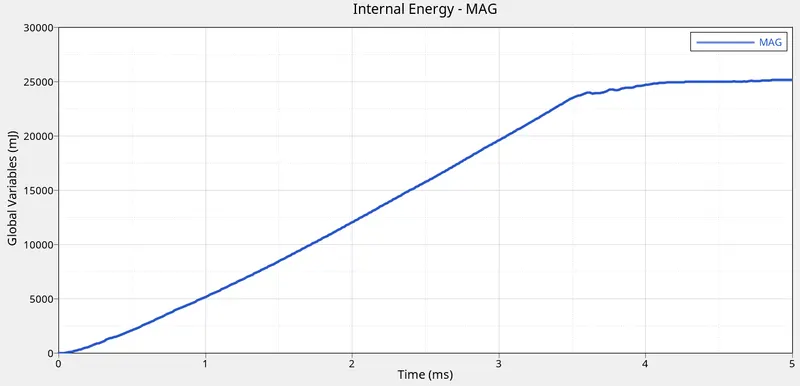
Case-2: Modifying failure card by changing Ifail, Dadv and Ixfem values to 1
Case-3: Deleting the /FAIL/JOHNSON card
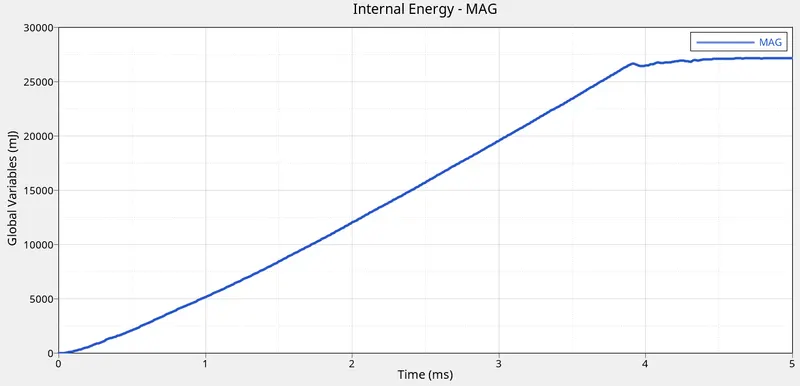
Case-4: Deleting EPS_p_max value (max plastic strain)
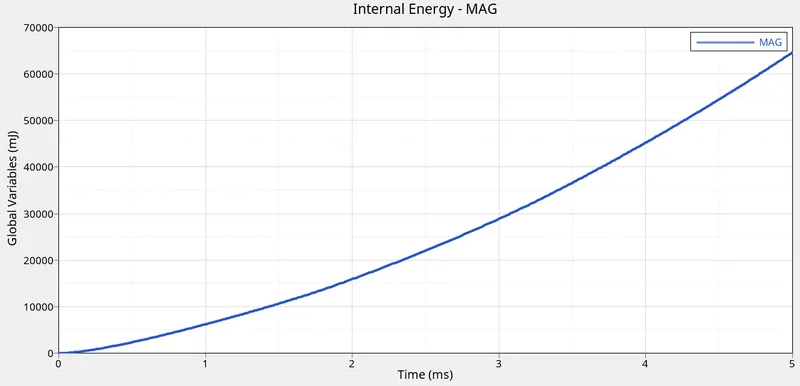
Case-5: Changing the material card to Law 1, i.e., elastic material
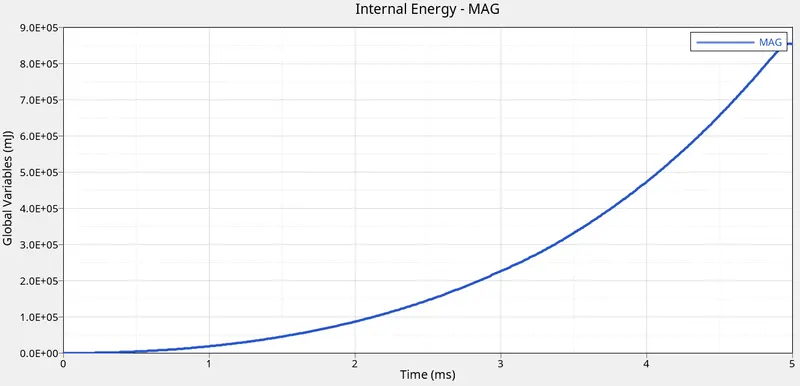
Case-6: Changing the material card to law 27, i.e., brittle material
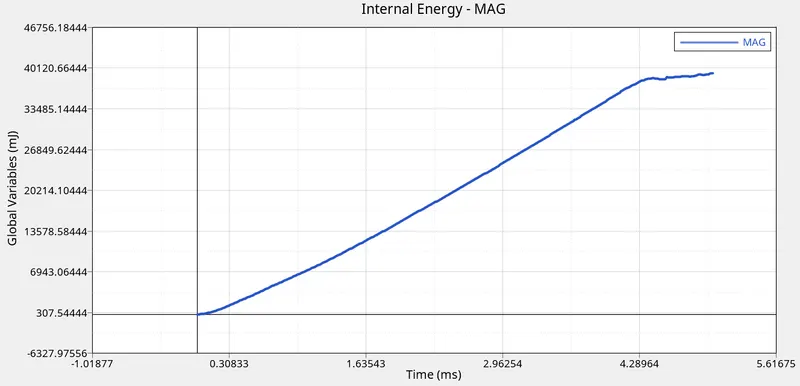
Case-7: Piecewise Tabulated elastic material, i.e, Law 36
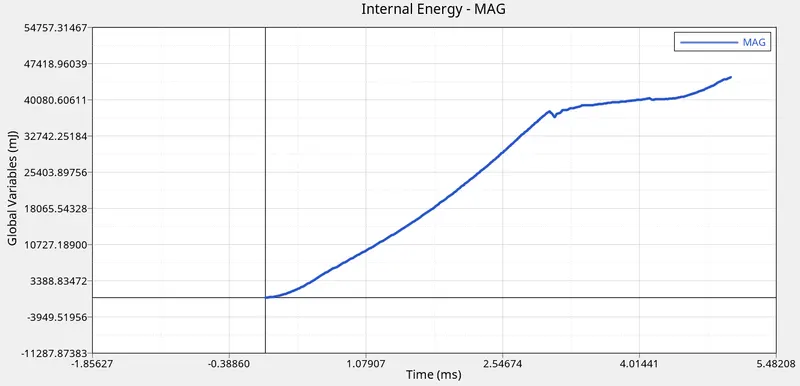
Conclusion: In case-4&5 the internal energy continuously increases without reaching a peek as no elements are deleted in the analysis.
RESULT DISCUSSION:

RESULT: Based on the studies, I say case-7 would be the most appropriate analysis which represents the real life scenario as the stress-strain graph is provided for the corresponding strain rate. To make the results more accurate, Ixfem could be integrated in case-7 along with the law 36 material card.
CONCLUSION:
- Learnt the theory behind material laws in RADIOSS
- Learnt how each material law is different through practical application, i.e., through running an analysis
- Compared all the case studies and studied how different parameters vary with the change in material cards