Assignment 4-RADIOSS Material Laws Challenge
REPORT ON Assignment 4-RADIOSS Material Laws Challenge
AIM: In this study different materials models and their effect on simulation results are studied. The material and failure model which are studied are listed below:
- LAW1-ELASTIC
- LAW2-Johnson-Cook
- Law-27-Elastic-Plastic brittle
- LAW-36-ELASTIC-Plastic Tabulated.
CASE-1:
In this case only failure Johnson model is employed as it is known that it is a failure model, so this model is used to capture the failure. In addition to the Johnson model eps-p-max value is given.
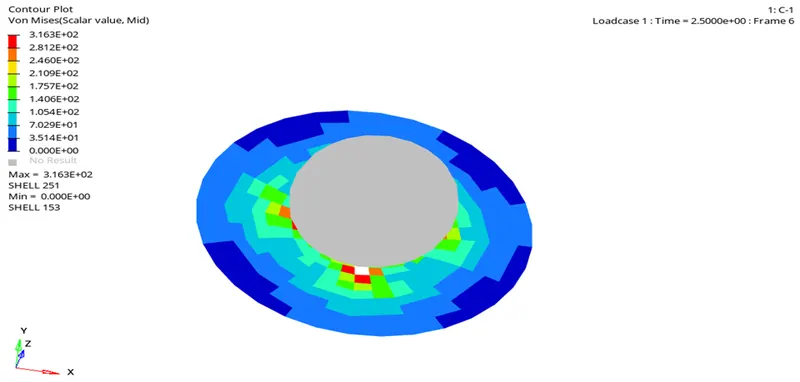
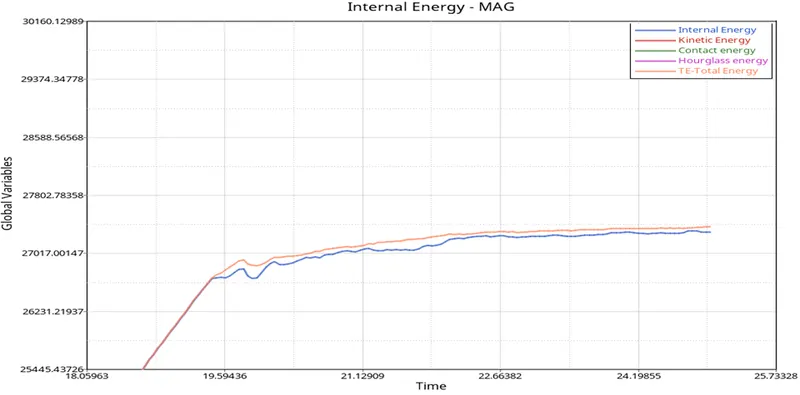
From results it can be said that the failure is captured properly because the encircled region in the energy curve suggested that there are a lot of deleted or cracked elements present in the model.
CASE-2:
In this case only failure Johnson model is employed as it is known that it is a failure model, so this model is used to capture the failure. In addition to the Johnson model eps-p-max value is given also, but some parameters of failure Johnson model were adjusted.
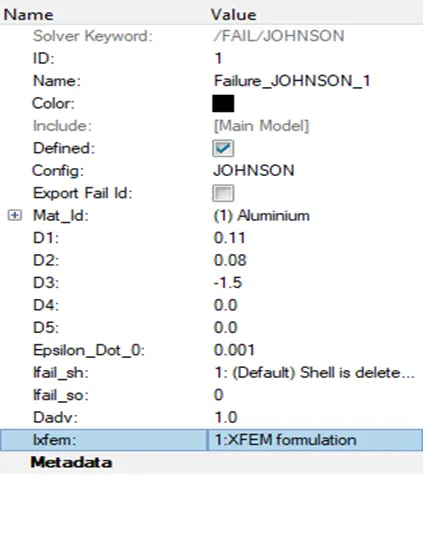
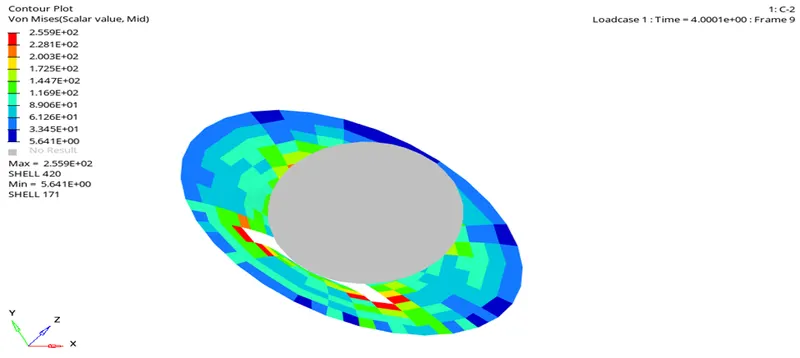
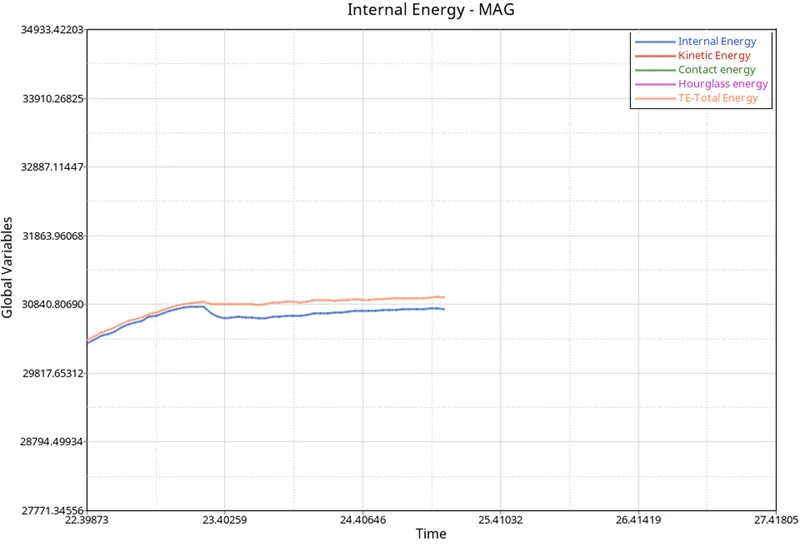
Due to the adjustment in the settings the failure was captured more accurately as the result suggested.
CASE-3:
In this case Johnson model was deleted
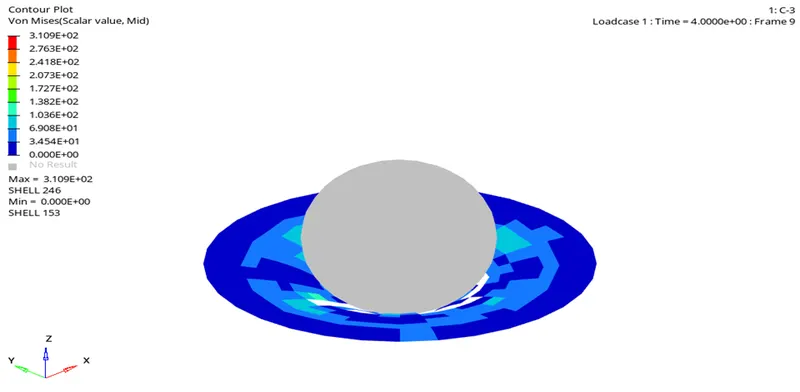
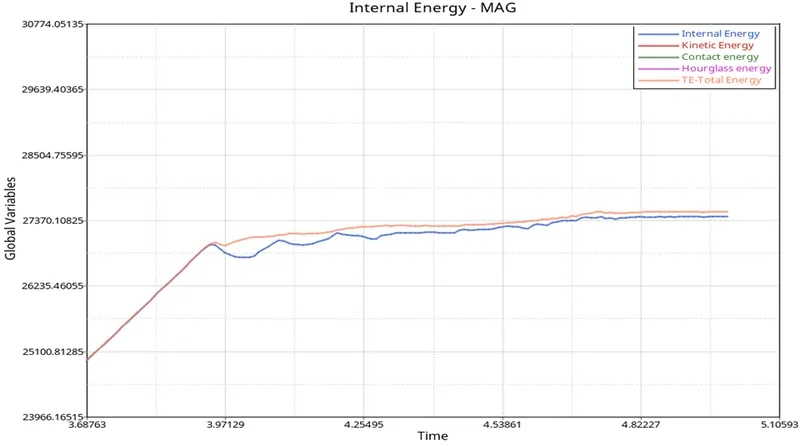
From the results it can be said that failure was not captured properly.
CASE-4:
Here both failure plastic strain (EPS_p_max) and the fail_Jhonson failure card is removed.
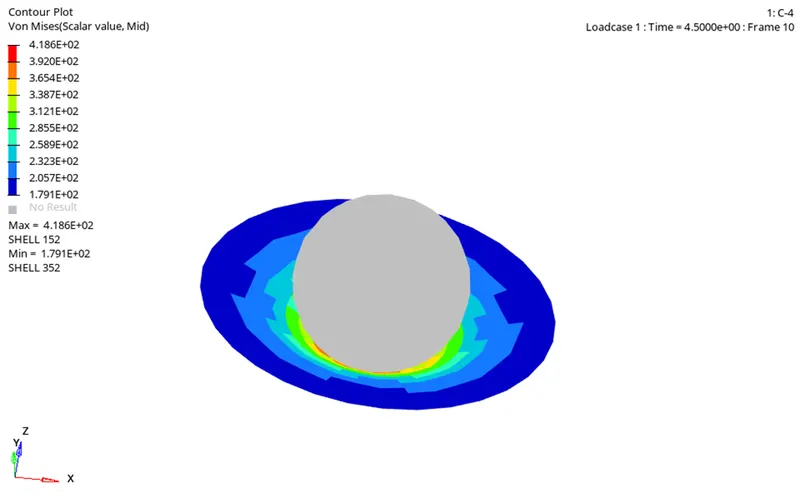
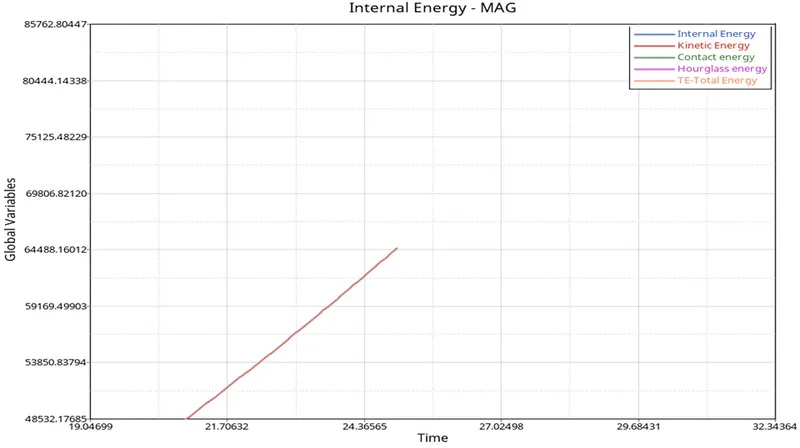
From the results it can be said that no capture of failure and plasticiy.
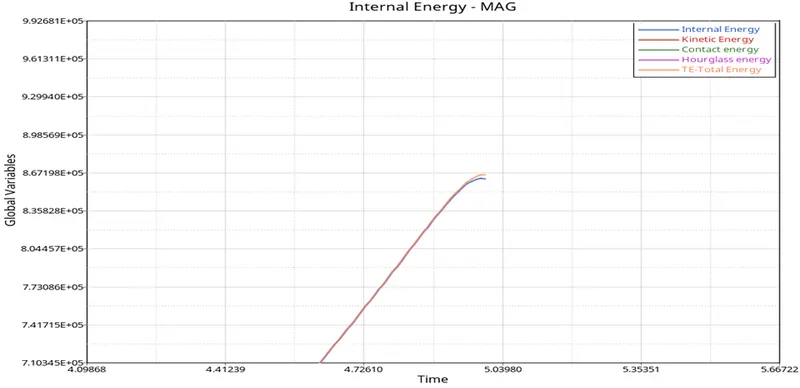
CASE-5:
In this study only material law 1 is used.
CASE-6:
- In this study LAW-36-ELASTIC-Plastic Tabulated model is used. In this model plasticity data is present.
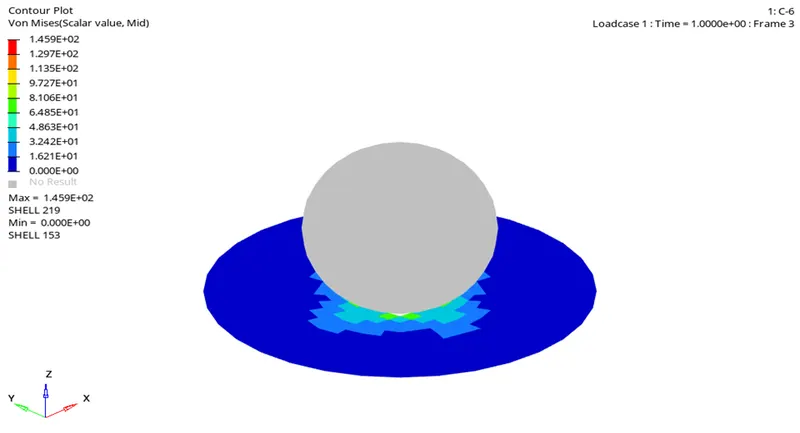
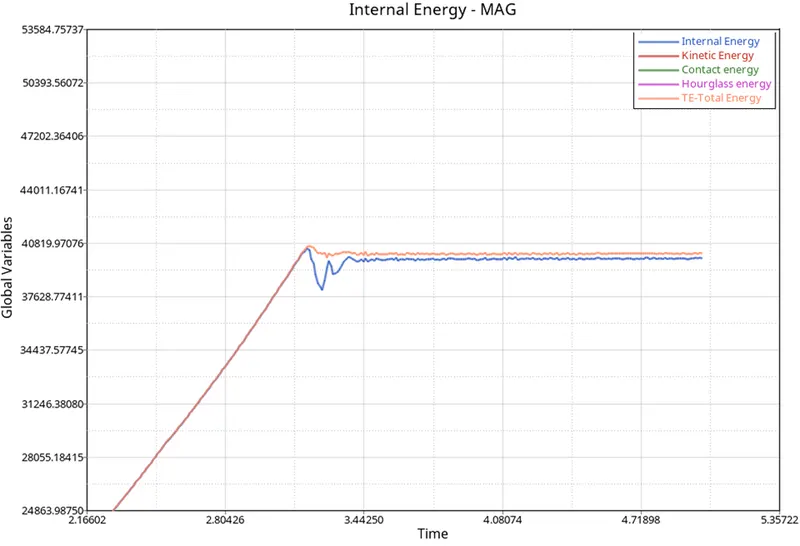
From the result it can be said that plasticity region of stress-strain curve is well captured in this case.
CASE-7:
In this case Law-27-Elastic-Plastic brittle is used.
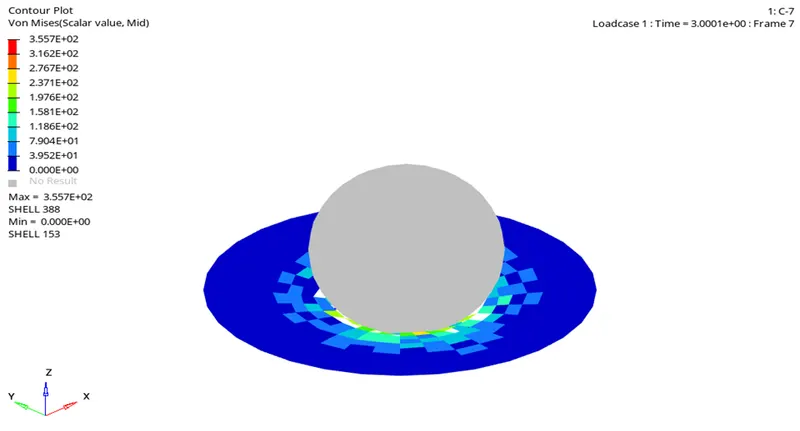
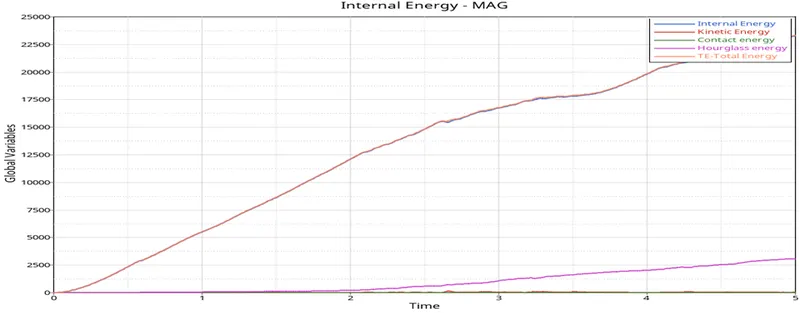
From the results it can be said that plasticity is captured but as it is a brittle model it is not appropriate to the study.
RESULTS(CASE1-7)
|
CYCLES |
ENERGY ERROR |
MASS ERROR |
SIMULATION TIME |
|
49380 |
0.8% |
0.0% |
171.50 S |
|
49217 |
4.1% |
0.0% |
189.71s |
|
49408 |
0.8% |
0.0% |
139.44s |
|
48737 |
3% |
0.0% |
157.10s |
|
47969 |
1.3% |
0.0% |
51.39s |
|
47443 |
0.1% |
0.0% |
254.71s |
|
41113 |
-7.1% |
0.0% |
156.03s |
CONCLUSION:
From the above it is quite clear that case-6 is most accurate model to implement due to less stress development.