Assignment 4
Assignment 4
OBJECTIVE :-
We have to Compare 7 cases as discussed in last 3 slides, in a tabulated format on the basis of:
1. Total number of cycles, Energy error, mass error and simulation time.
2. Notice the animation of all 5 and describe the animations in brief on the
basis of whether the elements are being deleted or cracked.
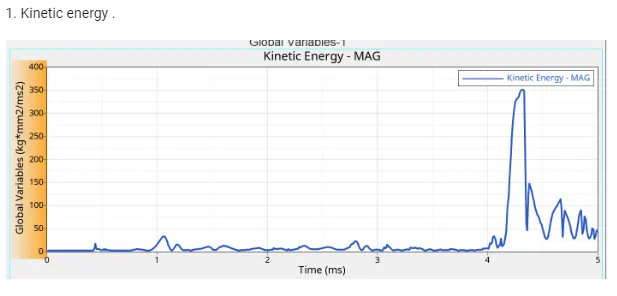
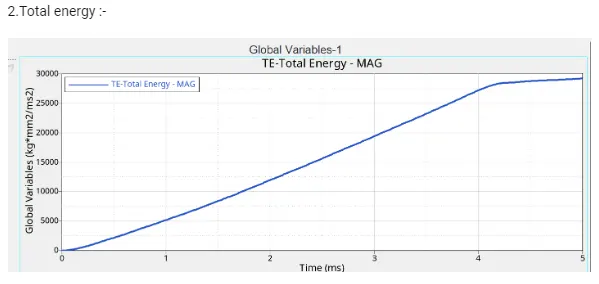
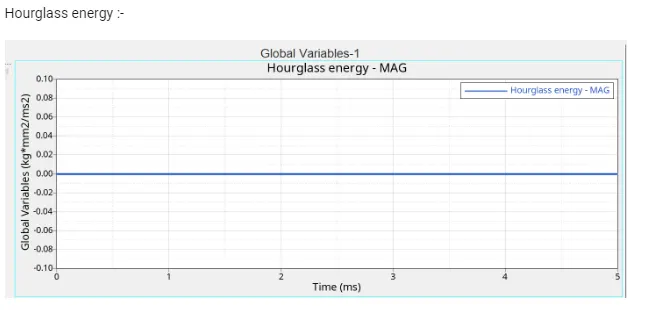
3. Plot energies and notice any difference.
4. Based on all the results, which case would represent the on-field
scenario.
5. Prepare a ppt/docx and list down case by case result and your conclusion
as to why the failure happened.
JOHNSON COOK MATERIAL APPLICATION:
CASE-1:Run the model as it is. Name the model as Law2_epsmax_failure.
CASE-2:In /FAIL/JOHNSON, change Ifail_sh=1, Dadv=1,and Ixfem=1. Run the model as Law2_epsmax_crack.
CASE-3:Delete /FAIL/JOHNSON card. Run the model as Law2_epsmax_nofail.
CASE-4:Delete the value of EPS_p_max and run the model with the name Law2.
CASE-5:Convert this material model to Law1 elastic with same density, E, nu and run.Check the results.
PLAST_BRIT MATERIAL APPLICATION:
CASE-6:Open Law27_0000.rad.change the shell properties to recommended shell properties.Notice the material card. Johnson cook parameters, but different values for EPS based failure.Run the model with name Law27.
PLAS_TAB MATERIAL APPLICATION:
CASE-7:Creating a material card with Law36, and adding some details.
Procedure :-
Case 1:-
1. We have to run the FAILURE_JOHNSON_0000.rad file as it is with out any changes .
2.We have to import FAILURE_JOHNSON_0000.rad file .
S.NO Total number of cycles Energy error Mass error Simulation time
1 49480 0.2% 0 1231.41 s
video:
- Graphs
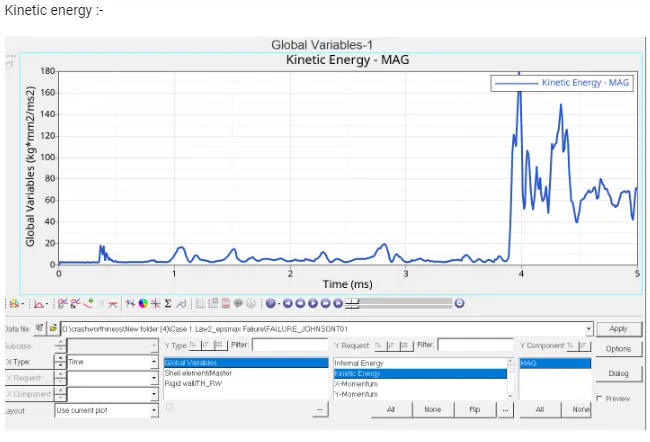
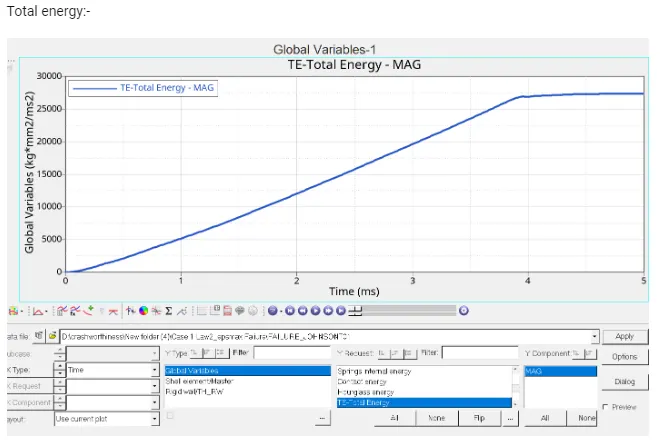
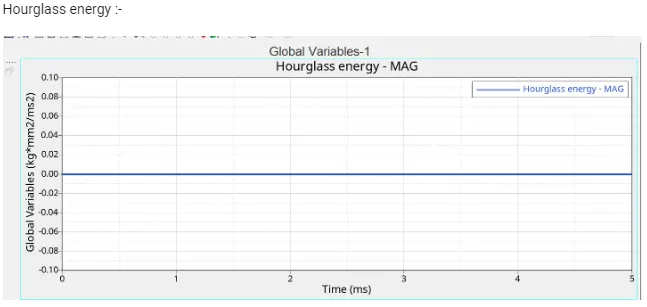
Material used is /MAT/LAW2 (PLAS_JOHNS)This law represents an isotropic elasto-plastic material using the Johnson-Cook material model.
ENERGY ERROR: Basically energy error must be negative and decreasing.The Error must be less than 15% at the end of computation, as per the condition. If the error is below 15% than the results could be acceptable.So from the above figure,
at the end of computation the energy error is 0.2% and mass error is 0.000 As per the condition the energy error is 0.2% which is below the 15% and the results could be acceptable for further simulation and ploting of graphs.
In case-2,
we have to change some parameters in /fail/johnson.
such as:Ifail_sh = 1 (shell is deleted or cracked)Dadv = 1Ixfem = 1
the reason behind changing the parameters is that we have to compare that how a model we behave at different parameters by changing some parameters.so go to failure johnson and edit the parameters

So from the above figure, at the end of computation the energy error is 3.8% and mass error is 0.000
As per the condition the energy error is below the 15% and the results could be acceptable for further simulation and ploting of graphs.
case-3:
Delete /FAIL/JOHNSON card. Run the model as Law2_epsmax_nofail.
In case three we have to delete the johnson fail card. for this we have to go to the model option and select the failure and delete it.
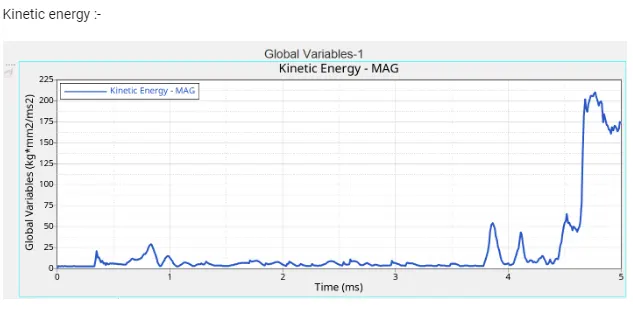
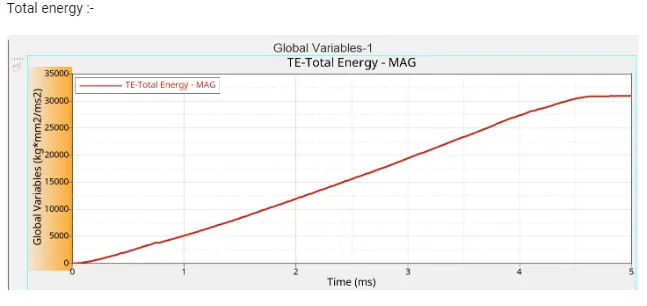
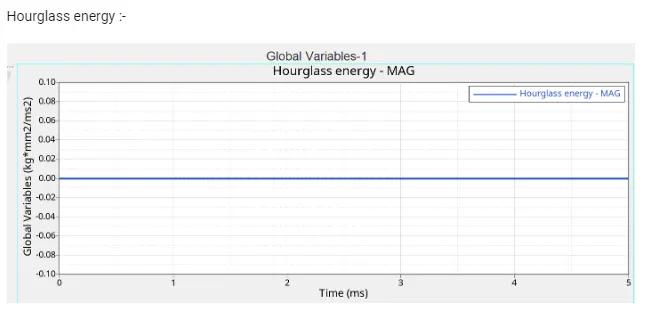

So from the above figure, at the end of computation the energy error is 4.0% and mass error is 0.000 As per the condition the energy error is 0.2% which is below the 15% and the results could be acceptable for further simulation and ploting of graphs.
case-4:
Delete the value of EPS_p_max and run the model with the name Law2.In case-4, we have to delete the EPS_p_max. so go to material properties and select the EPS_p_max and keep it value as zero.

So from the above figure, at the end of computation the energy error is 3.0% and mass error is 0.000 As per the condition the energy error is 0.2% which is below the 15% and the results could be acceptable for further simulation and ploting of graphs.
case-5: Convert this material model to Law1 elastic with same density, E, nu and run.Check the results.
In case-5 we have to convert the Law2 material card to Law1 material card for that we have to go to the material card and select the Law1 material.
AFTER selecting the material give some input values such as,
Density = 0.0028E = 71000.0nu = 0.33
after runnig simulation
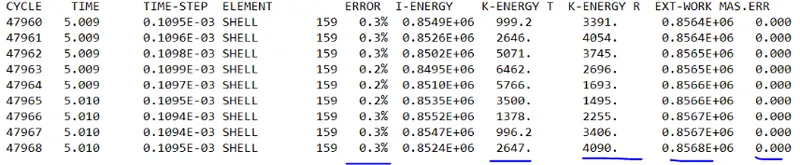
So from the above figure, at the end of computation the energy error is 3.0% and mass error is 0.000 As per the condition the energy error is 0.2% which is below the 15% and the results could be acceptable for further simulation and ploting of graphs.
Case 6:-
1. we have to import LAW27_0000.rad file
.2. The material used here is plastic brittle type .
3.This law combines an isotropic elasto-plastic Johnson-Cook material model with an orthotropic brittle failure model. Material damage is accounted for prior to failure. Failure and damage occur only in tension. This law is applicable only for shells.
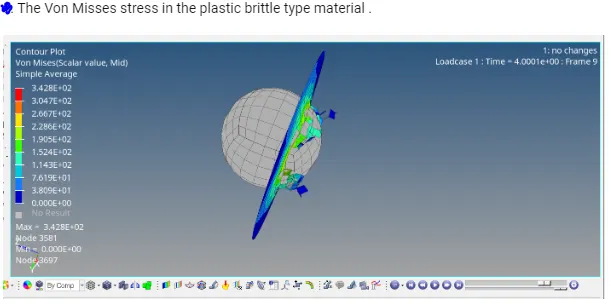
The elements are getting deleted when the punch hits the model due to plastic and brittle nature in the material .
In this model, the material behaves as a linear-elastic material when the equivalent stress is lower than the plastic yield stress .
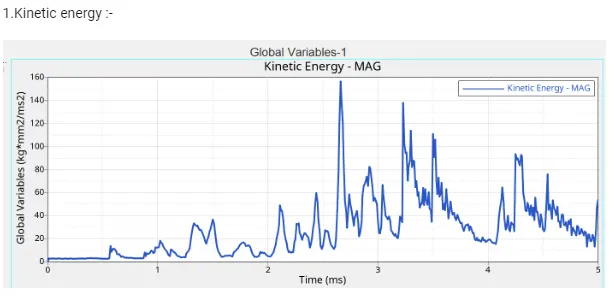
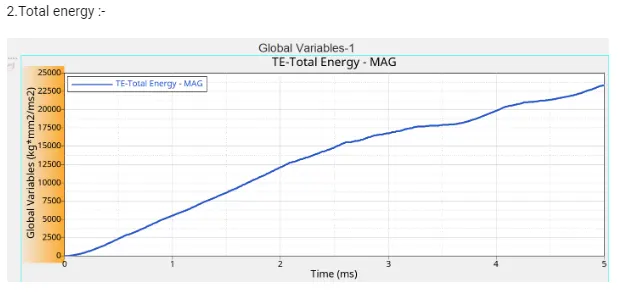
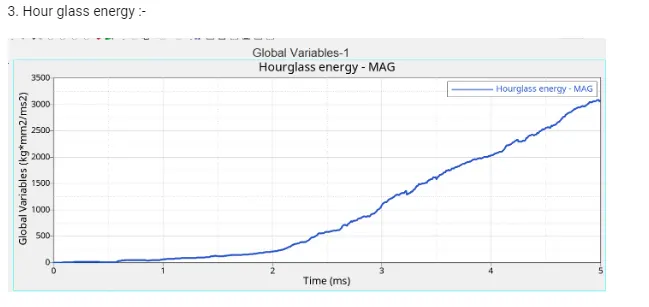
Graphs:
Case 7 :-We have to assign the required shell properties .
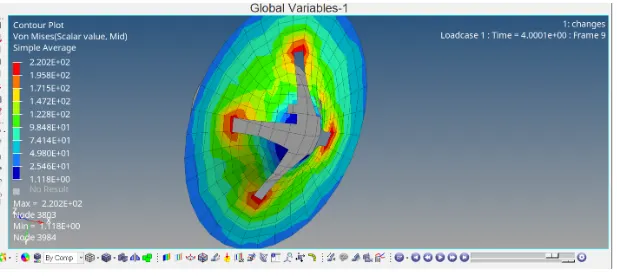
The elements are cracking as the case 2 .
Conclusion :-Based on the above all cases ND RESULT , case1 would better case.