Assignment 4
Aim:
To run and stimulate all 7 cases and compare them to give a proper conclusion.
Case 1:
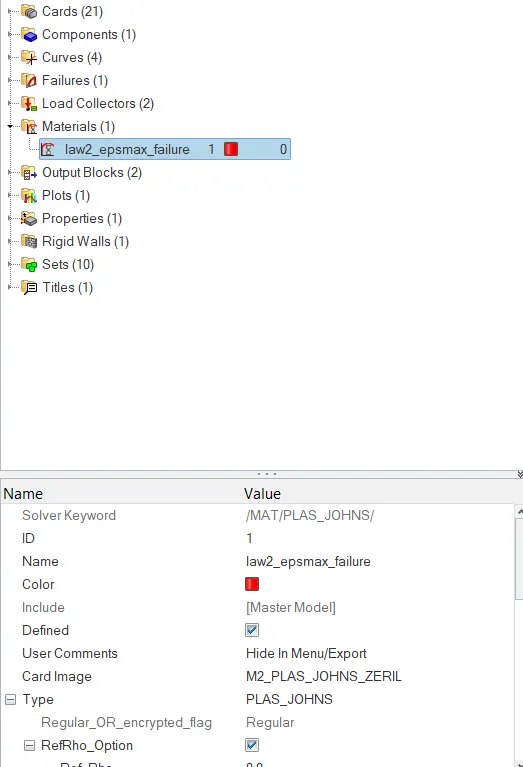
First importing the starter file (FAILURE JOHNSON.0000.rad)file. Once the file is imported,the material name is changed with Law2_espmax_failure and run the stimulation as it is.
All the file gets generted during running and gets saved where we saved a first during meshing. The main files h3d file and T01 file which are starter and engine file.
For the animation .h3d file is used. For plotting the graph T01 file is used.
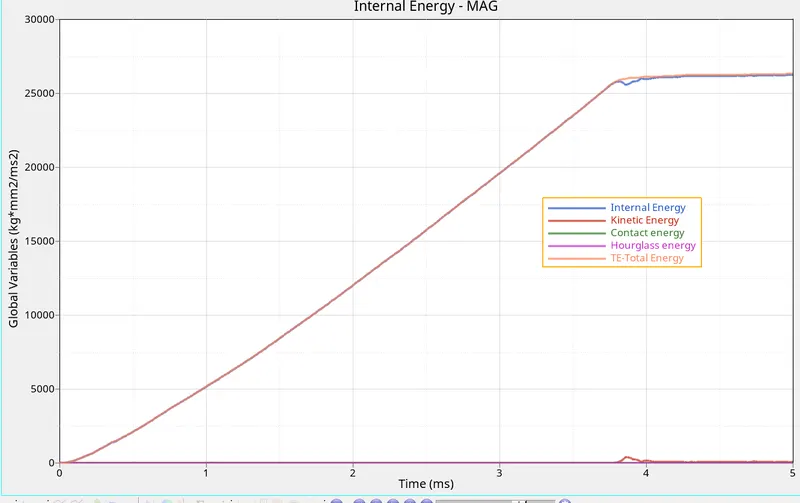
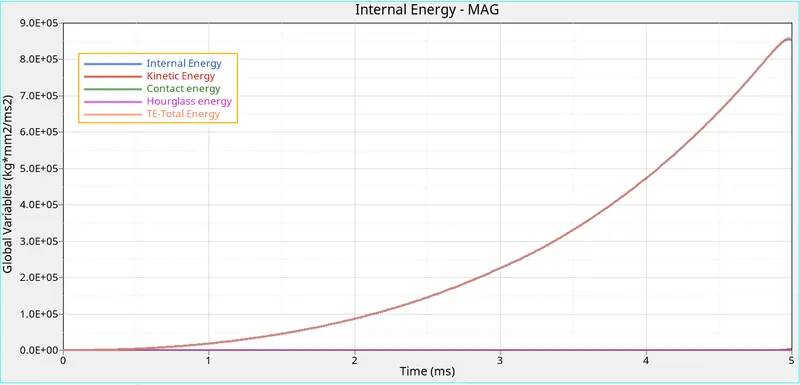
The graph shows then changes in energies during the case1.
Case 2:
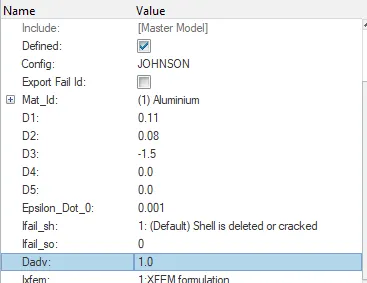
In this we are changing the values in the failure johnson card.
Ifail_sh=1 - shell is deleted for cracked.
Dadv = 1 - criterion for crack advancement
ixfem= 1 - crack of the element
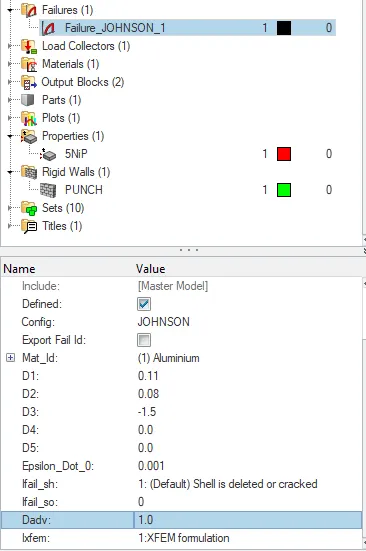
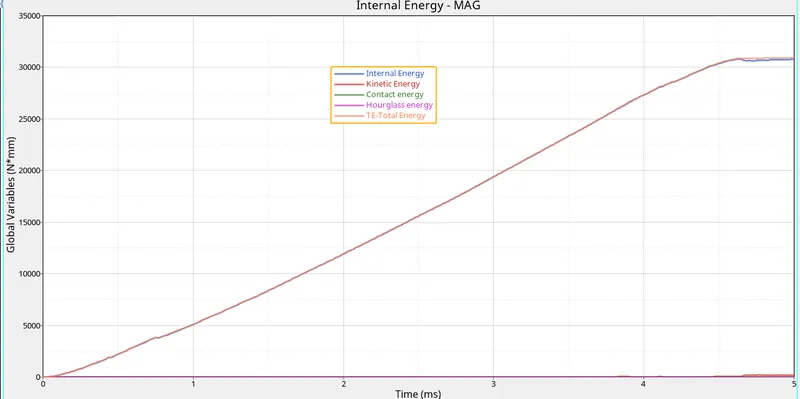
After changing the values run the stimulation and plot the graph for internal energy,Kinemtic energy,Contact energy,Hourglass,Total energy.
Case 3:
In this case we are using the case 2 starter file and before running the stimulation we are deleting the failure card.
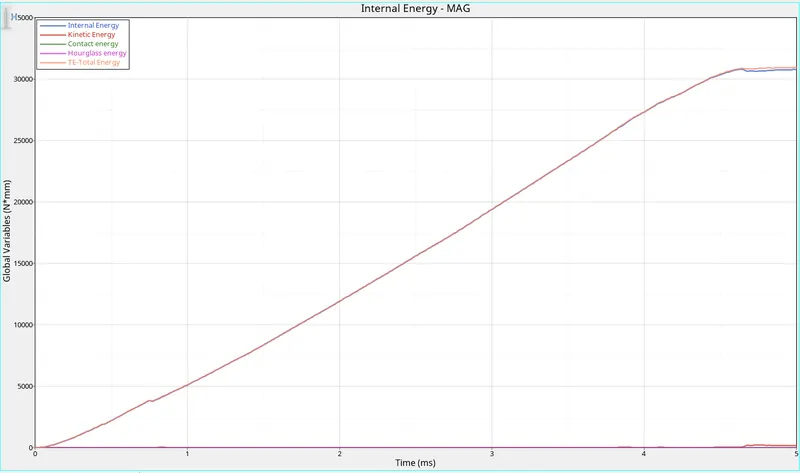
After deleting the failure run the stimulation as Law2_epsmax_nofail and save it in separate folder. After the stimulation the graph is plotted.
Case 4:
In this case we using the case3 starter file and we are deleting the EPS_p_max value this means the value will be 0.
The EPS_p_max is plastic strain and shows at what stage it gets fails. Once the plastic strain gets fail either it gets break into pieces or gets deleted.
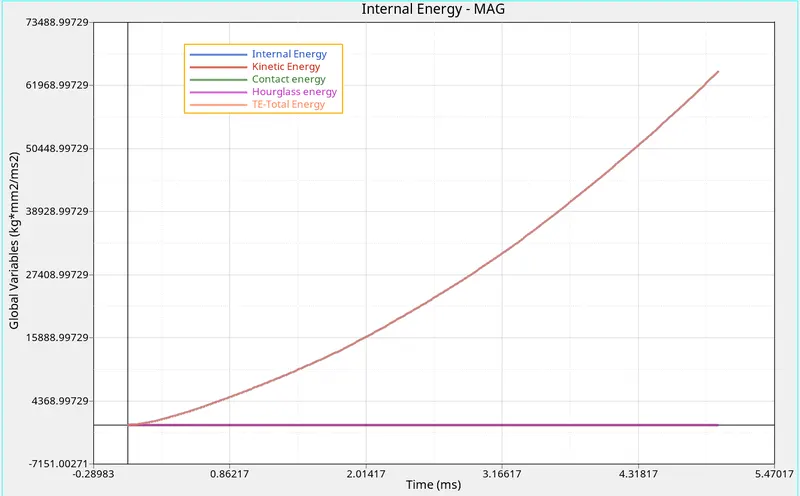
Once the stimulation runs the graph plotted.
Case 5:
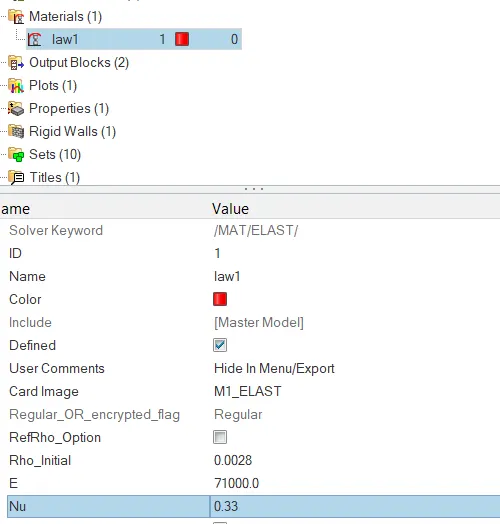
In this we are converting the model law 2 to law 1 with same density,young's modulus and poisson's ratio.
Law1:M1 elastic;
Using this 3 values almost each and every details of the materials.
Density = 0.0028
Young's modulus = 71000
Poisson's ratio = 0.33
After the values gets changed the plot is graphed with the necessary energies.
Case 6:
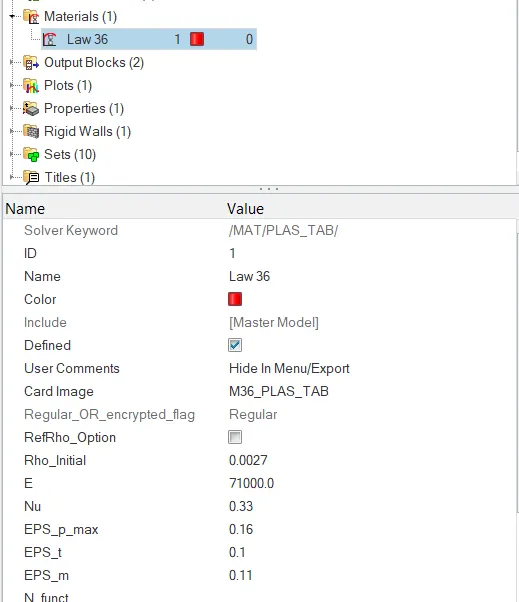
In this curve we are using the Law 36 material card also known as Elastoplastic.
The values for the law 36 material is given below.
Density = 0.0027
Young's modulus(E) = 71000
Poisson's ratio(Nu) = 0.33
EPS_p_max = 0.16
EPS_t = 0.1
Eps_m = 0.11
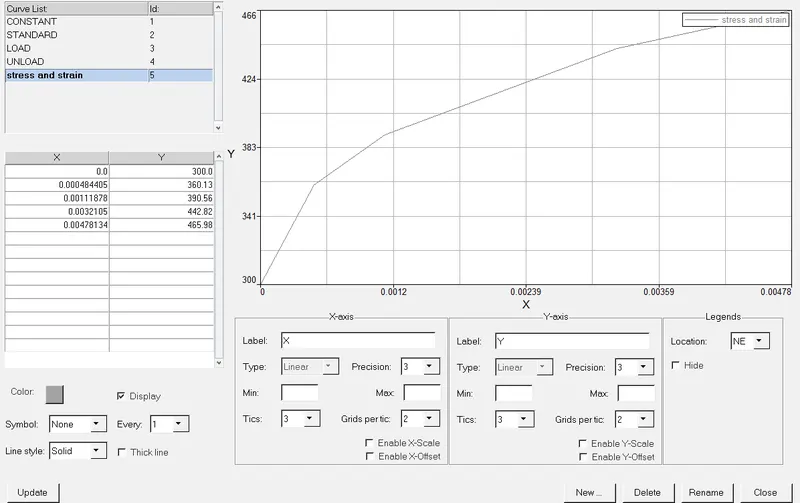
In this a addiction curve is added as stress and strain curve which is used to predict the curve at what stage the deformation occurs at each materials.
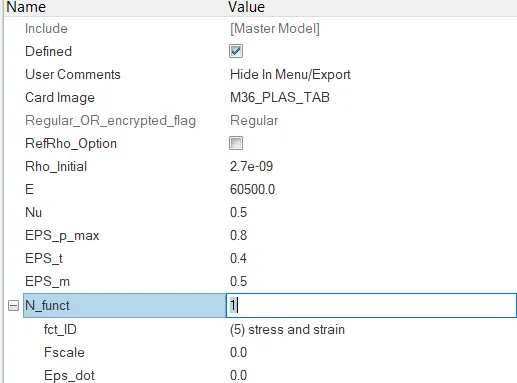
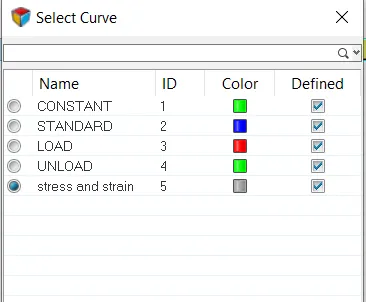
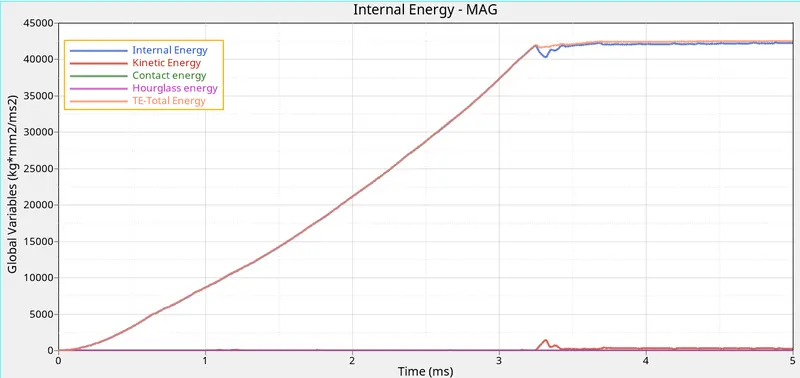
After apply the above values and the stimulation is runned as Law 36. Now plotting the necessary graph and graph is shown below.
Case 7:
In this case a new file is being imported i.e., Law 27. This card is elasto plastic material.
This Plas_Brit material is used for brittle material.
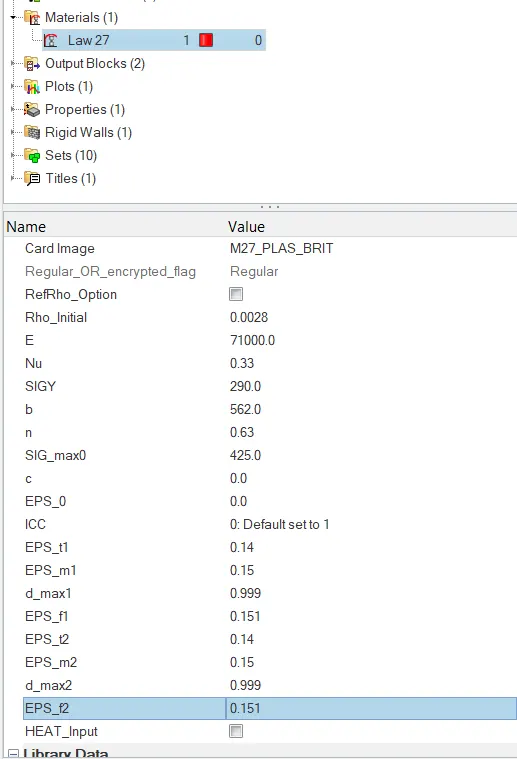
After the vlaues being changed the stimulation is runned the graph is plotted.
dmax - it will accelerate the fsilure of the element.
Eps_f - Maximum tensile strain for the element
Now comparison of the case 1 and case 2
Case1
Case 2
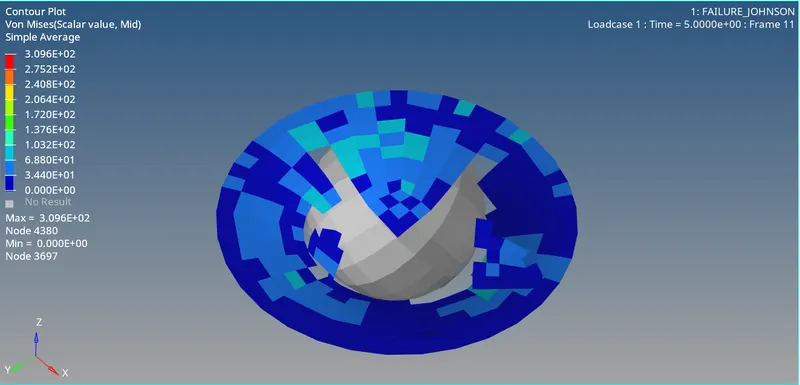
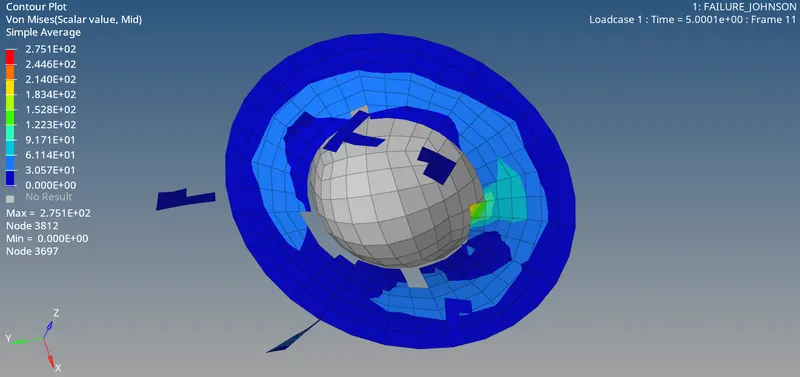
The elements in case 1 is getting deleted while the stimulation. The ixfem value is kept 0 at first condition and in case 2 the ixfem values is changed into 1. Changing the value the element gets cracked after the stimulation. Because the ixfem value decides how tofail the particular element.
From the curve it can be observed that the energies gets distorted form the stimulation with the default value. In case 2 the ixfem values is changed after that the element gets cracked in order to produce a proper manner.
Comparsion of case 3 and case 4:
Case 3
Case 4
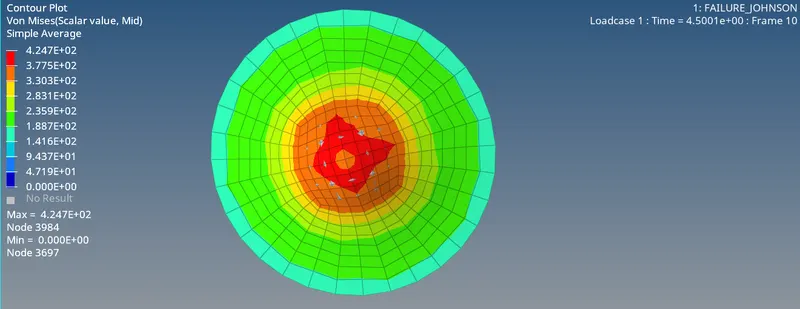
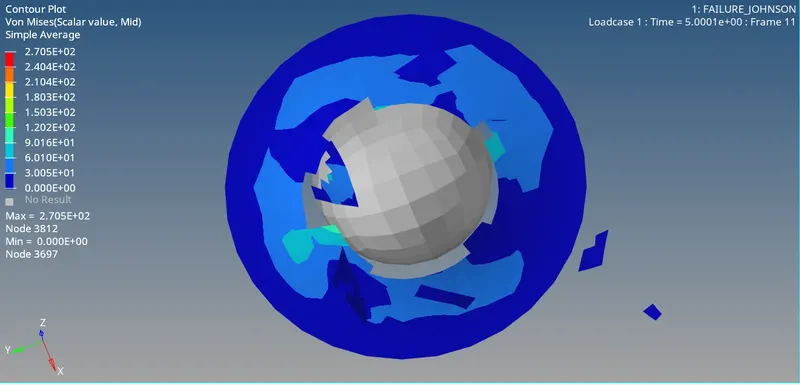
In the case 3 it is seen that the element gets cracked after deleting the element which is not in a regular manner. In case 4 EPS_p_max is kept zero which show the element in strain.
Since it is defined that Sig_max: 425 in case 4, in which the stress has not exceeded that the value if it gets exceeded it shows the element as deleted during the stimulation.
The element will be failing from 15% strain after that the element will be deleted.
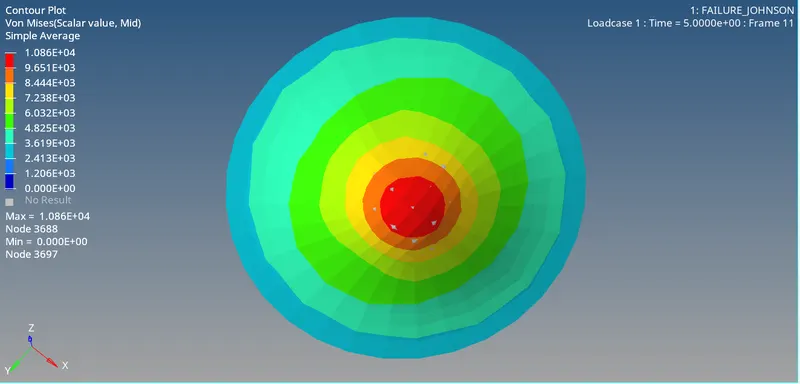
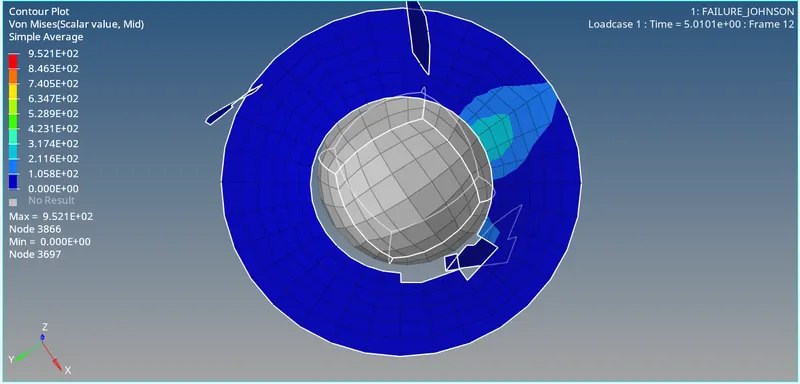
Comparison of case 5 and case 6
case 5
Case 6
In case 5 it is used the elastic materia. In the elastic material whatever the deformation occurs will come back to zero to its original position after the process gets finished.
Majorly during the large deformation process the elastic material is not used. Elastic material is not used for the crash analysis.
In case 6 Law36 PLAS_TAB materila is used. In which the material generates a proper hole with low stress.
Case 7
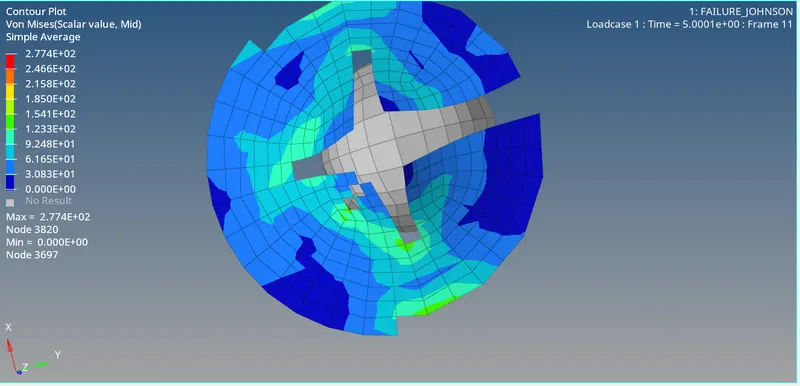
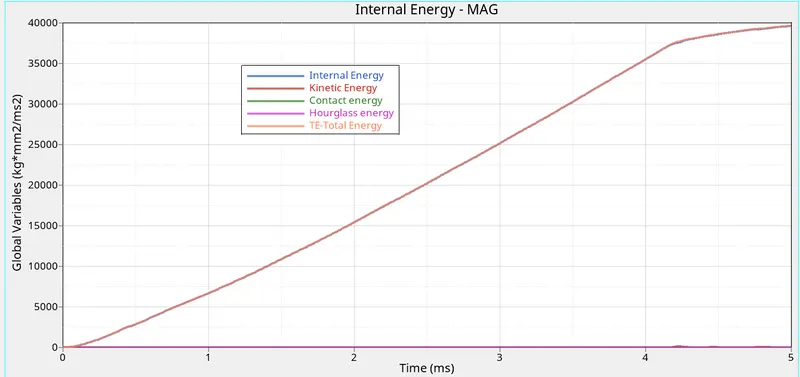
Here from the stimulation it is seen that the whole materila is getting ruptured, even the circumference of the material is also gets deleted. This is due to the material is in brittle.
In this material the element are getting deleted not only where the impact occurs bit also the circumference of the component.
A material is brittle if, when subjected to stress, it breaks with little elastic deformation and without significant plastic deformation. Brittle materials include most ceramics and glasses (which do not deform plastically) and some polymers, such as PMMA and polystyrene.
Here the element depend upon the following parameters which is in material cards,
SIG_max
EPS_t1
EPS_t2
EPS_m1
EPS_m2
EPS_f1
EPS_f2
d_max1
d_max2
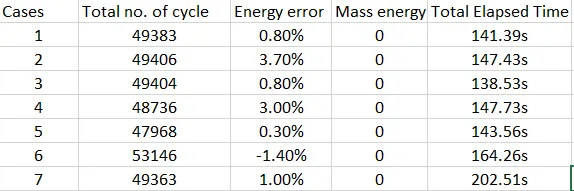
The values during each stimulation takes to run the cycle after the each paramter is changed.
Conclusion:
From all 7 cases the LAw 36 which is elatic plastic material which can be used wisely in order to reduce the failure and manage it easily. Thus this material card can be used for better performance.
Result:
We have got different varities of the material during stimulation on using the differnt parameters.