Assignment 4
Aim- Study of different materials cards available in radios workbench. Apply various material properties on a given part and study the behavioral changes in the respective property.
Objective-
1- Set the material card for the model and run the simulation.
2- Collect the output data from radios and run into hyper view and hyper graph-2D.
3- Plot the contour and graph for various data.
4- Compare the output file for the different material properties.
Material types we going to use in this assignment.
The Radioss platform gives us a broad area of material card/LAW which include various type of material and we are going to discuss some the material which we going to use in a simulation too.
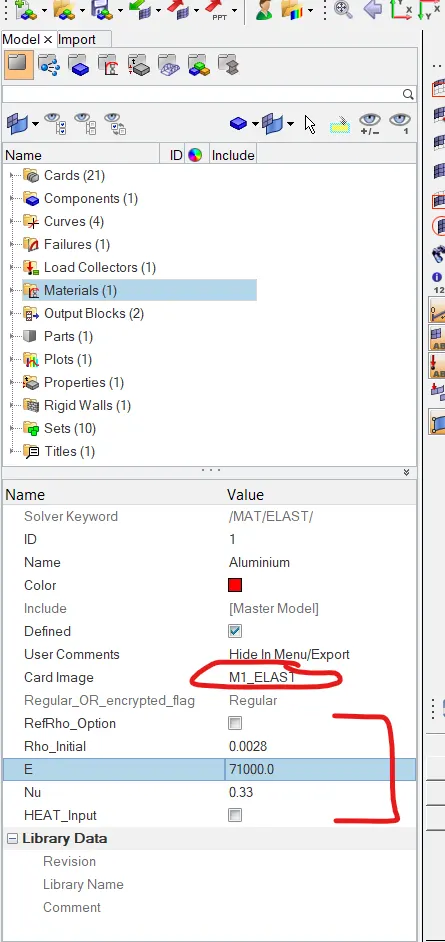
1) LAW-1/ M1_ELAST:- Elastic Material
2) LAW- 2/ M2_PLAS_JOHNS_ZERIL:- Elasto-Plastic Material
3) LAW-27/ M27_PLAS_BRIT:- Brittle Material
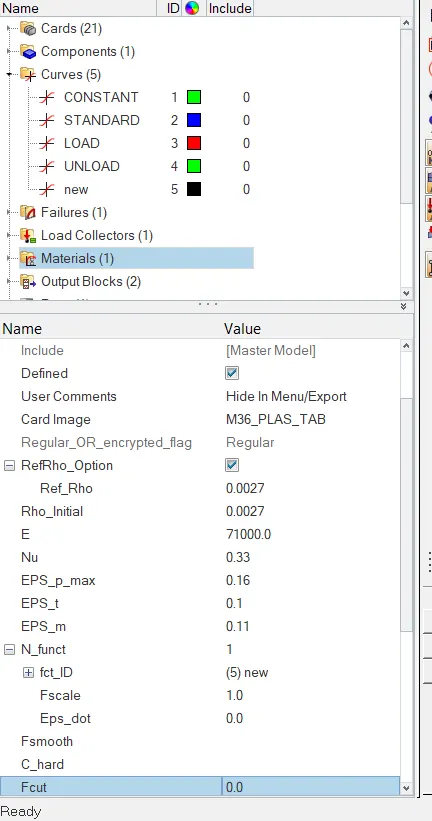
4) LAW-36/ M36_PLAS_TAB:- Elasto-Plastic Material
In these LAW-2 and LAW-36 are mostly used.
1)LAW-1/ M1_ELAST:- Elastic Material
A- This type of material follows Hooks Law (Stress directly proportional to Strain ), which means its behavior within the elastic limit, and this type of material called by isotropic linear material.
B- This type of material applicable for Truss, Beam, Shell as well as brick (3D ELEMENT), mostly purely elastic material.
C- Mostly used in vibration and the static type of analysis.
D- Parameter used in this material type,
Rho- Density of material.
E- Young's modulus.
G- Modulus of rigidity.
μ- Poisson's ratio.
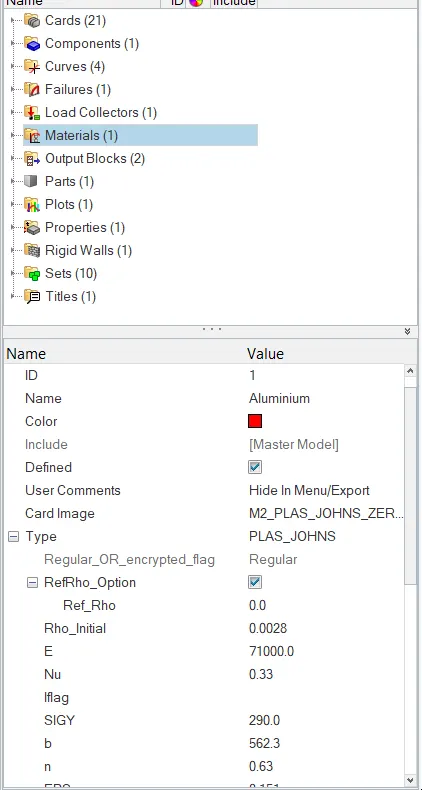
2) LAW- 2/ M2_PLAS_JOHNS_ZERIL:- Elasto-Plastic Material
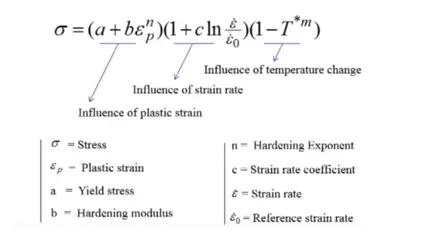
This type of material called an isotropic Elastic-Plastic Material.
Here,
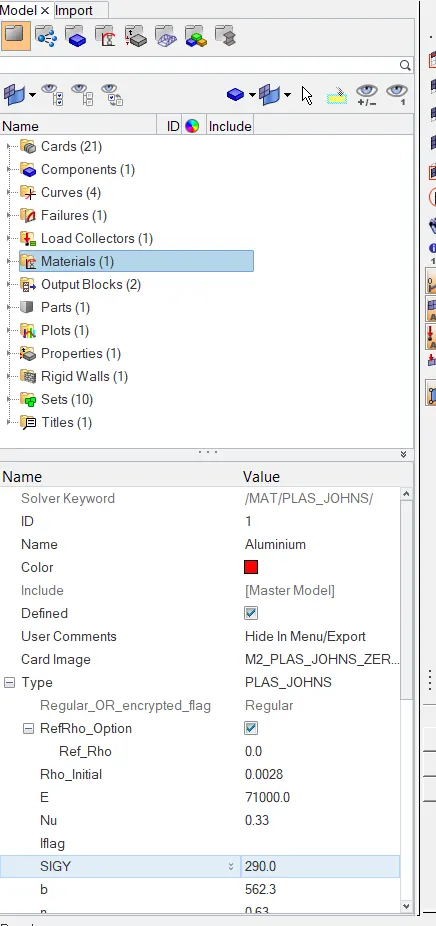
b- Represent how the curve behaving after yield bends.
n- How quickly the curve can bends.
LAW-2 material is a function of strain, stress, and temperature as we can see in the formula.
σ= ( a+b.ε^n )
Determination of Johnson Cooks Parameter a,b and n
To calculating these data we need true stress and strain values which we can calculate from engineering stress and strain.
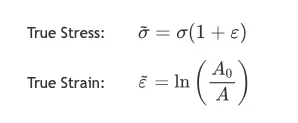
From theses formula, we can calculate-
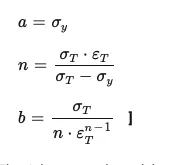
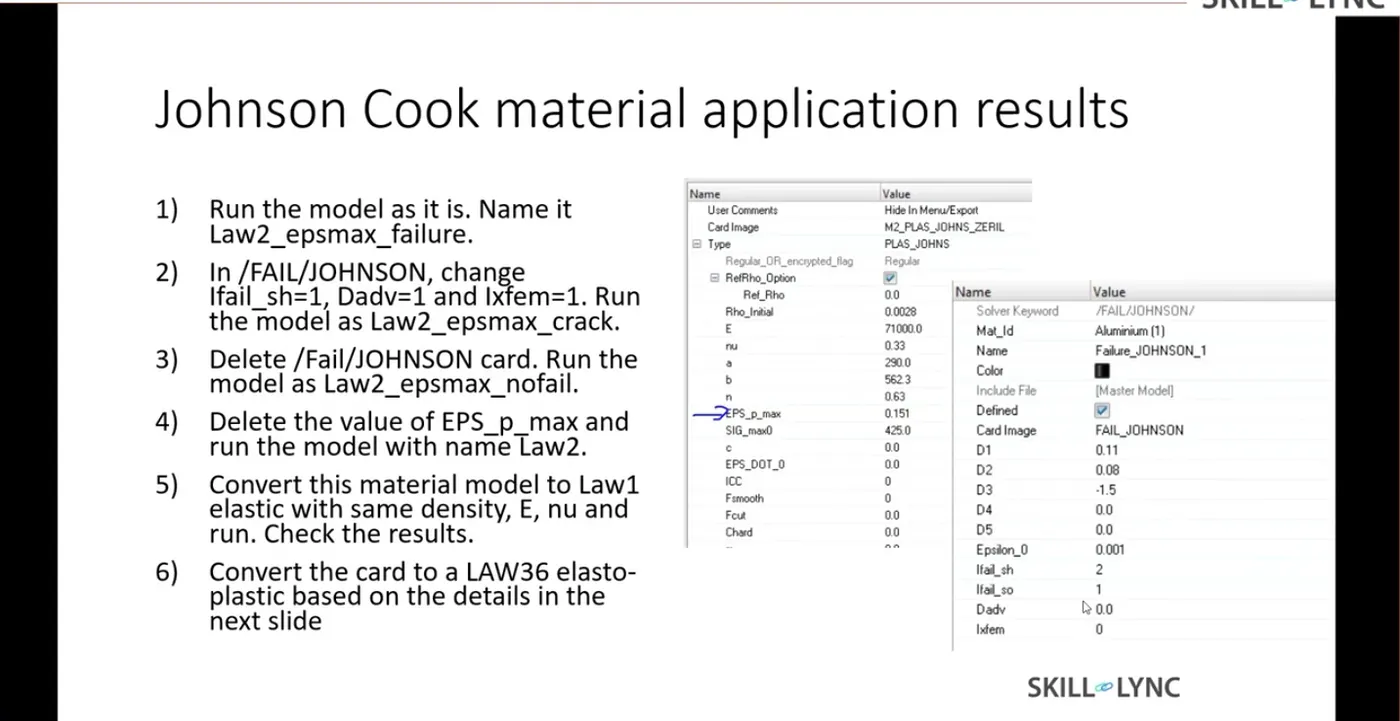
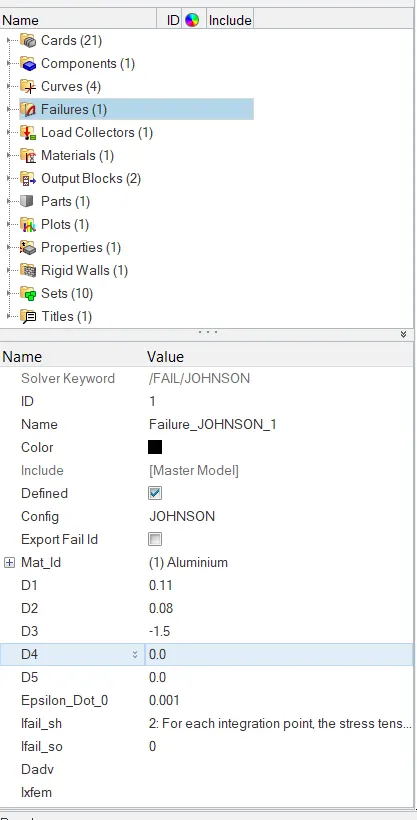
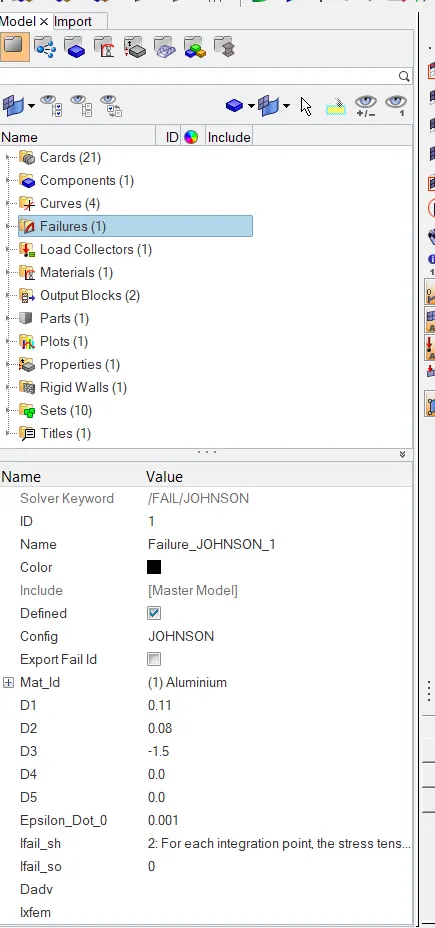
The Johnson-Cook model also comes with the "failure Johnson" model to more accurate results where we can compare with normal data, which includes EPS_p_max, D1, D2, D3 parameter.
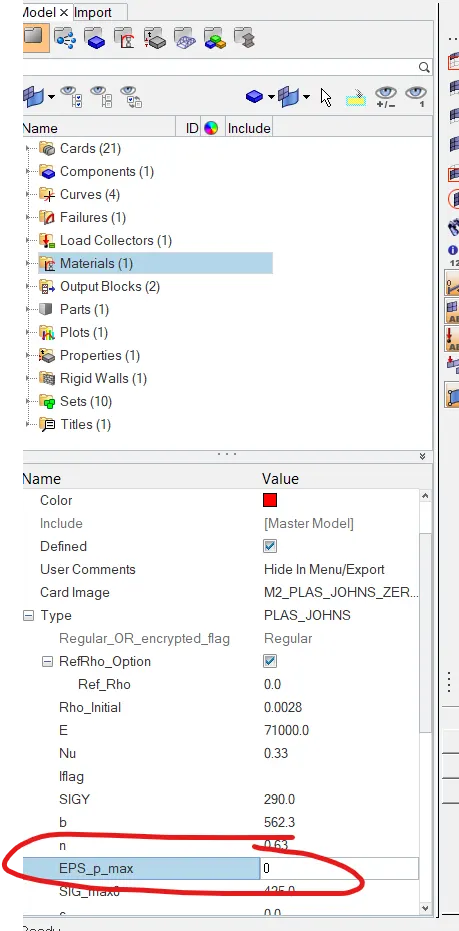
EPS_p_max= Represent the maximum strain value after which material will fail. The material will fail for strain when its value reaches or cross the EPS_p_max value. If we want to set the strain value to 80% we will put 0.7 in the property card, lower the value earlier the material will fail.
Sig_max= It represents an indication of the max stress value.
The parameter in LAW-2 material for failure-
D1, D2, D3- Determine strain mode is needed for element brake.
Ifail_sh- Set to be 2 so we can get tensor at each integration point equal to 0.
lxfem-
0( default)= Direct delete the element which is failing.
1= Represent the crack formation.
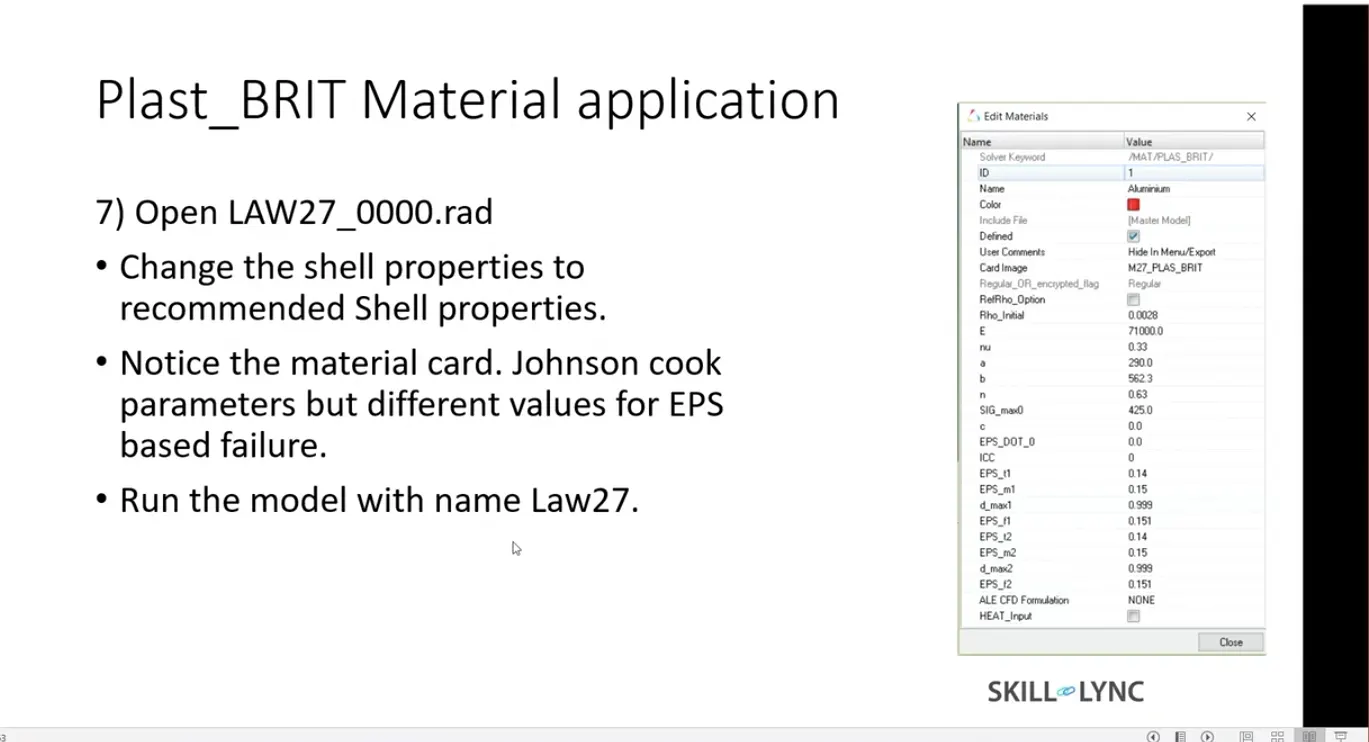
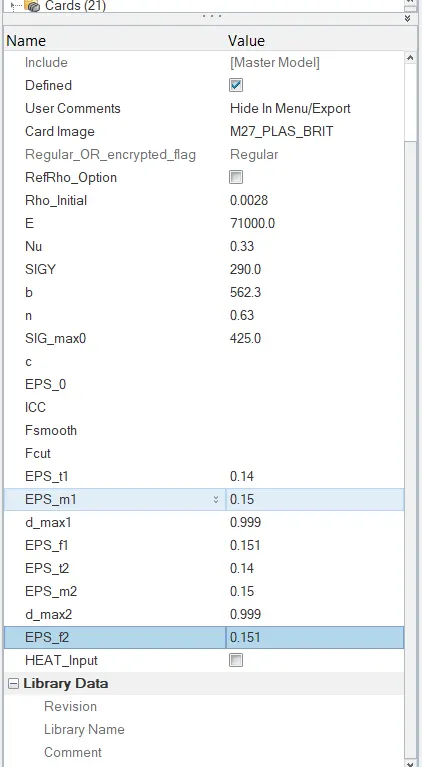
3) LAW-27/ M27_PLAS_BRIT:- Brittle Material-
A- This material card used for brittle material.
B- This card used for shell element.
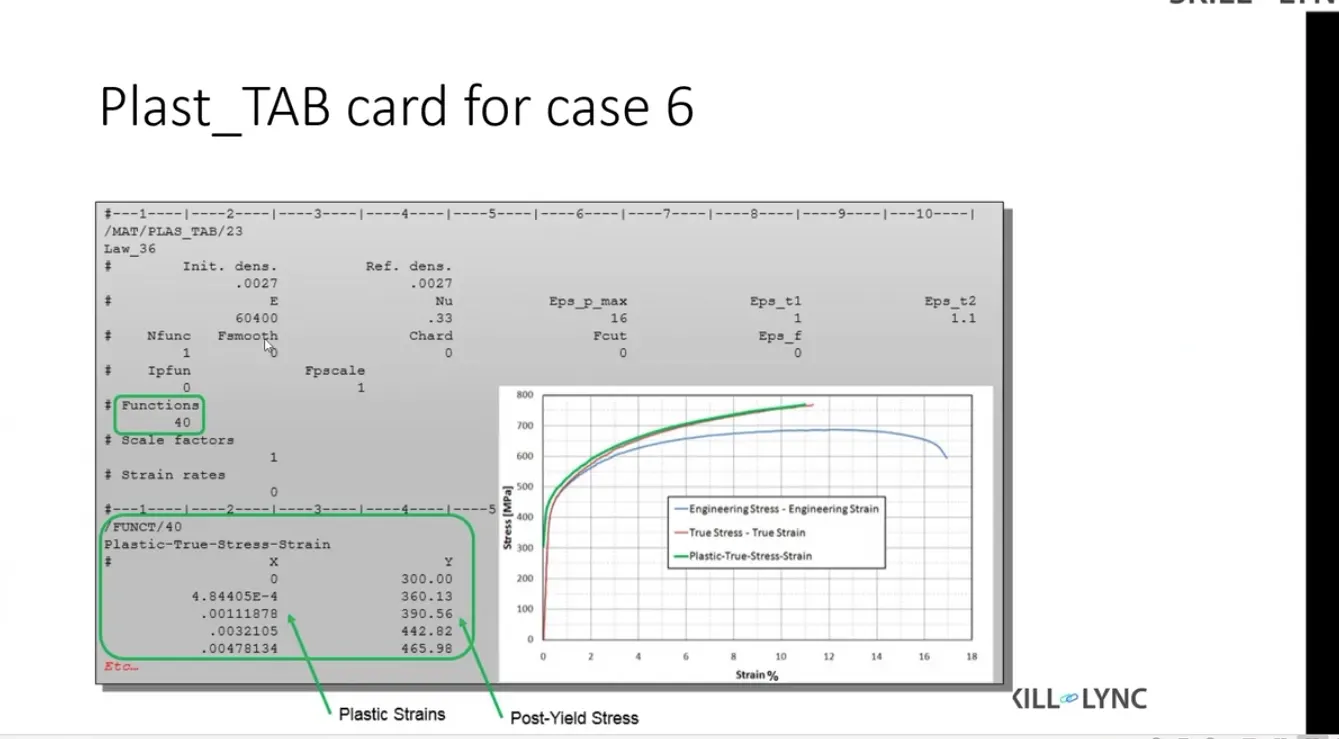
4) LAW-36/ M36_PLAS_TAB:- Elasto-Plastic Material
A- This material commonly used for elasto-plastic material.
B- This gives closed result to lab data.
Property and data given.
Recommneded Property-
QEPH prevents hourglass formulation by using the physical stabilization.
This shell property will be followed for all the cases we going to discuss.
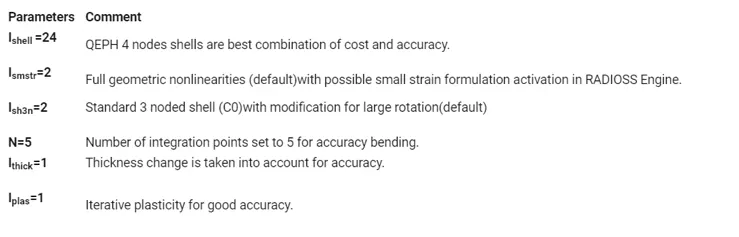
Cases we going to discuss in this assignment-
CASE-1:- Running simulation with LAW-2 material card with no change in failure card with preassign values.
CASE-2 Running the simulation with same LAW-2 material card with modification in Johnson failure card.
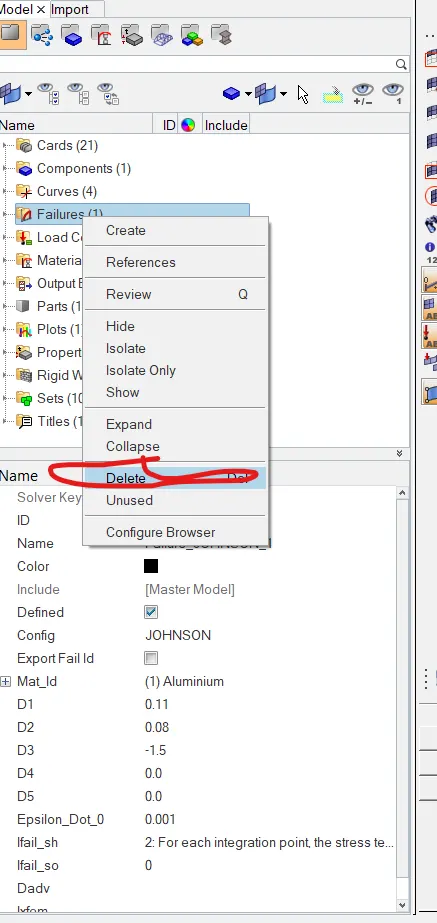
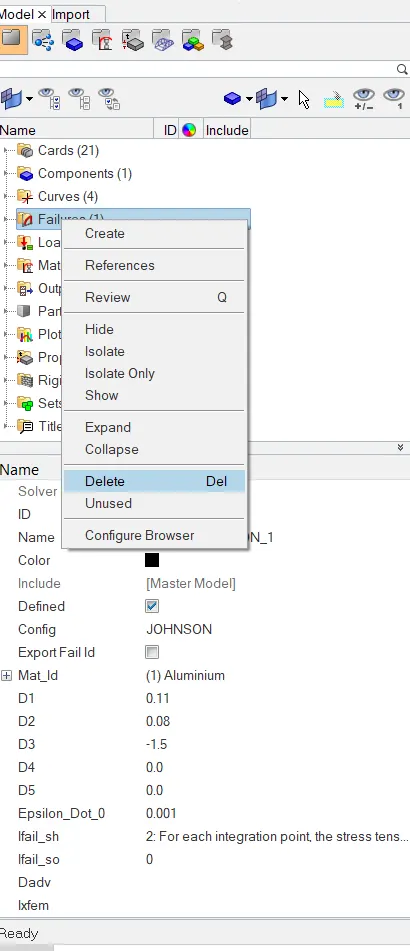
CASE-3:- Running the simulation with same LAW-2 material and deleting the failure card.
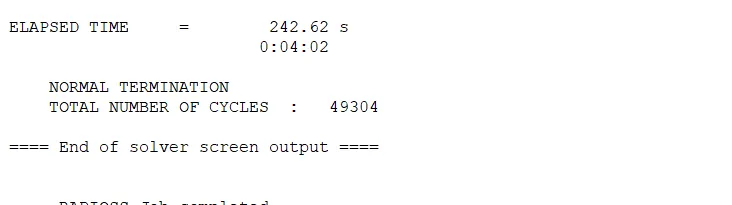
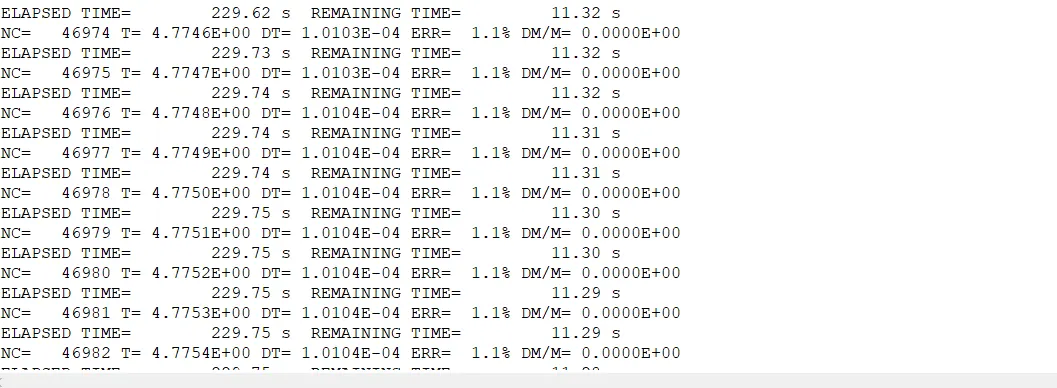
CASE:-4 Running the simulation with only LAW-2 material and set the Eps_max=0 with failure johnson card.
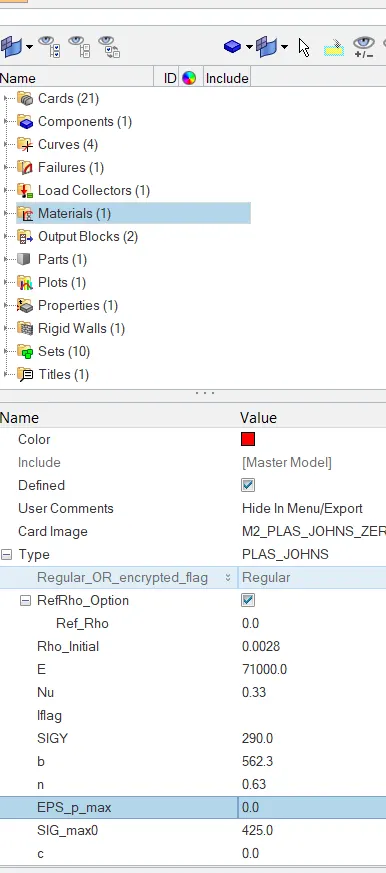
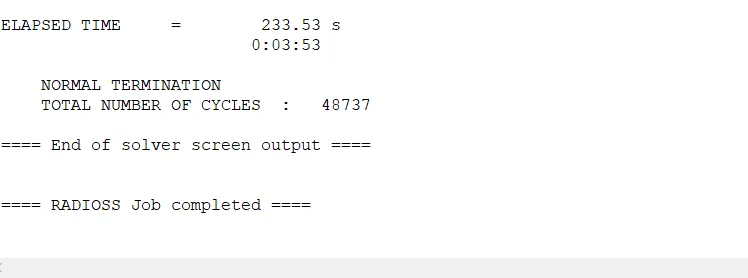
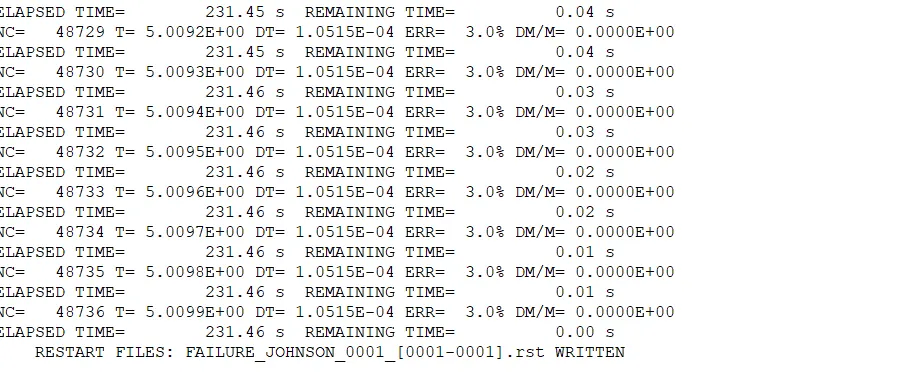
CASE:-5 Running the simulation with only LAW-2 material and set the Eps_max=0 without failure johnson card.
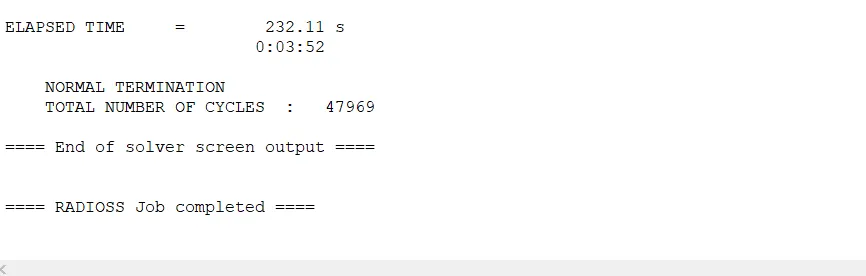
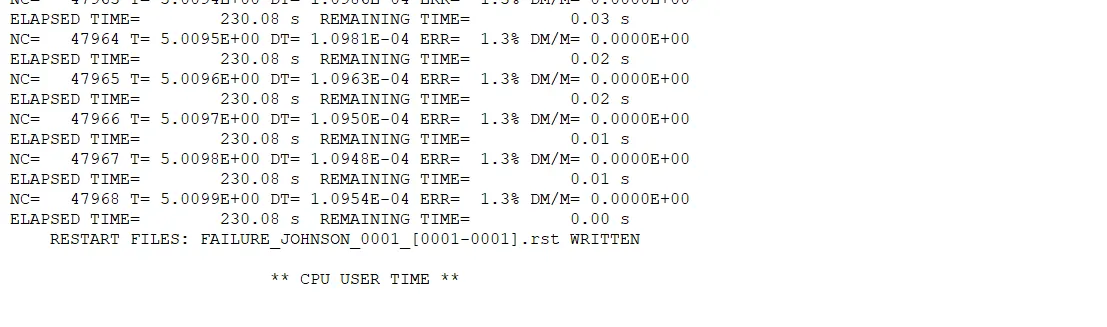
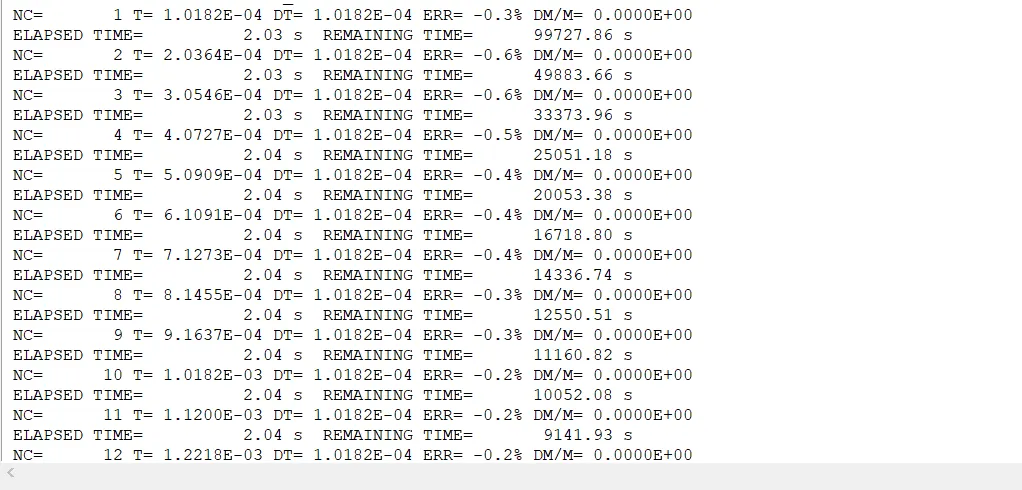
CASE:-6 Running the simulation with only LAW-1 (ELAST) material card.
CASE:-7 Running simulation with only LAW-27 (BRIT) material card.
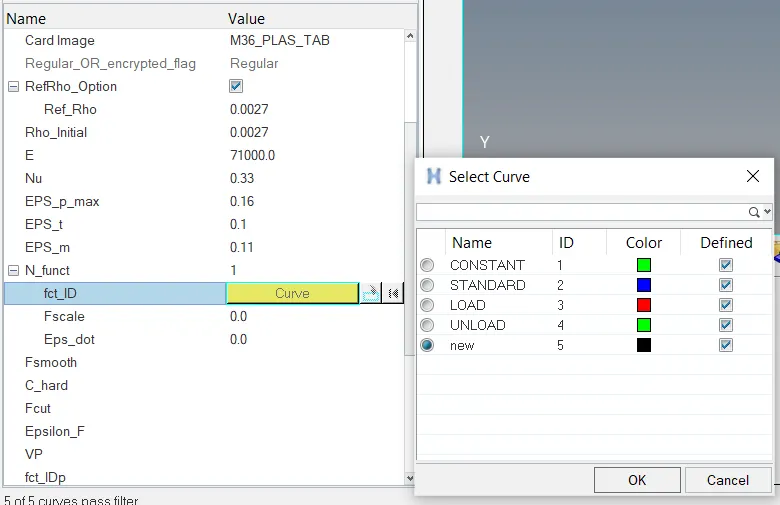
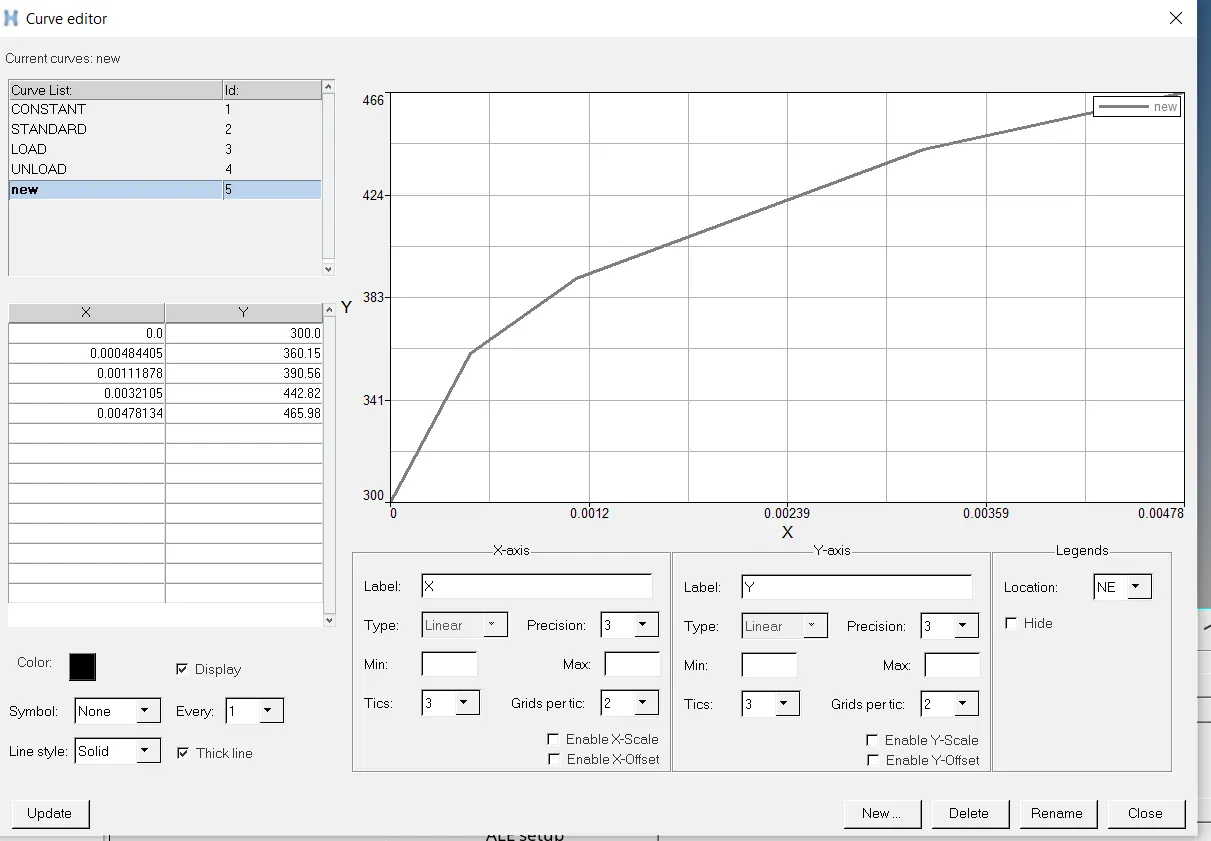
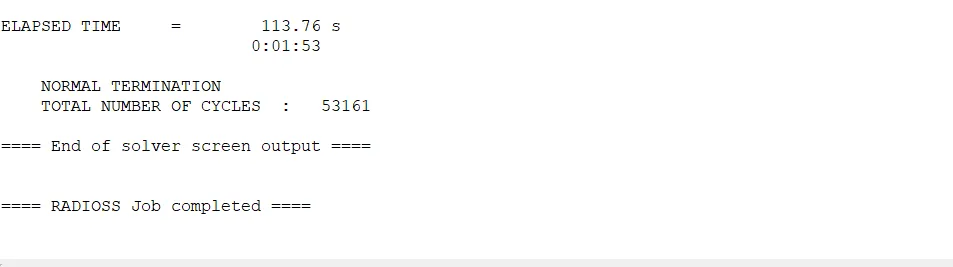
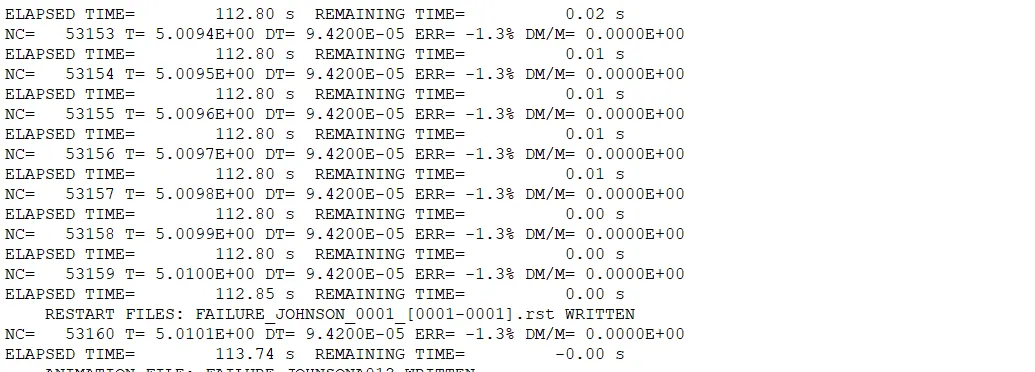
CASE:-8 Running the simulation with only LAW-36 material card.
CASE-1:- Running simulation with LAW-2 material card with no change in failure card with preassign values.
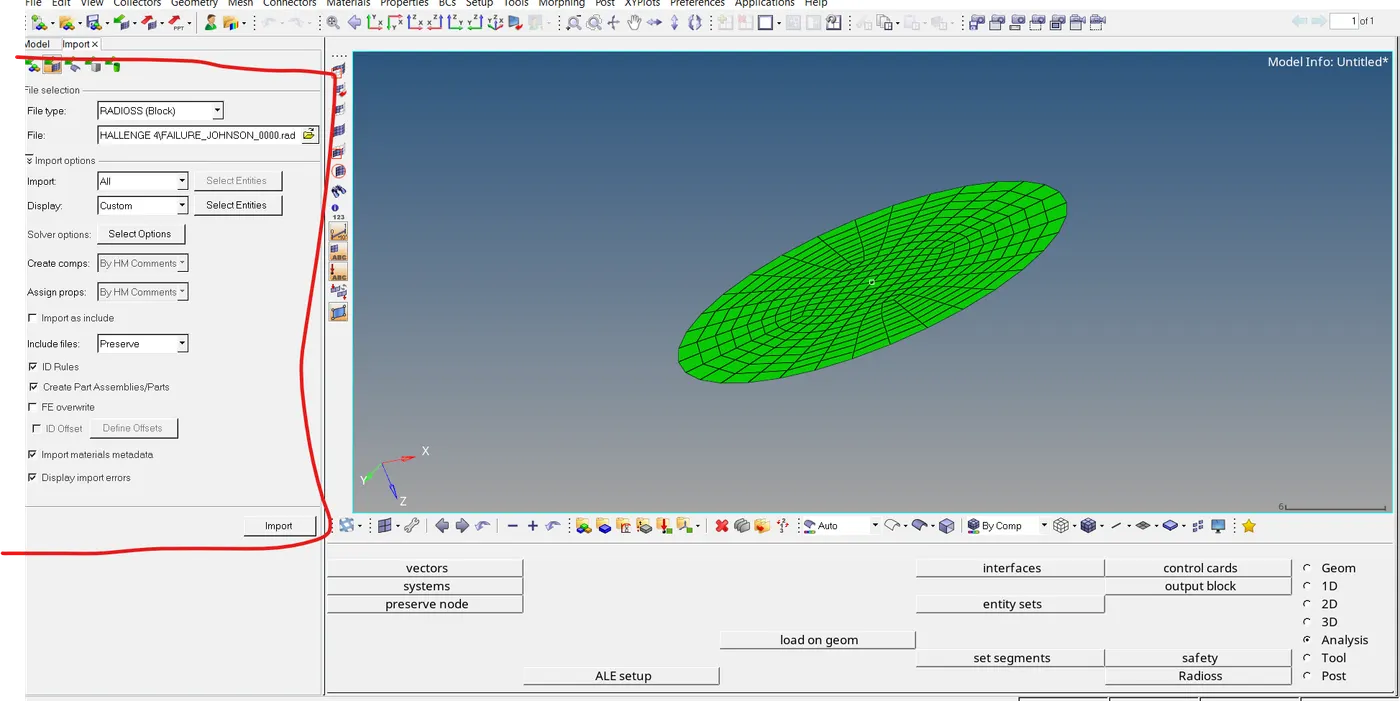
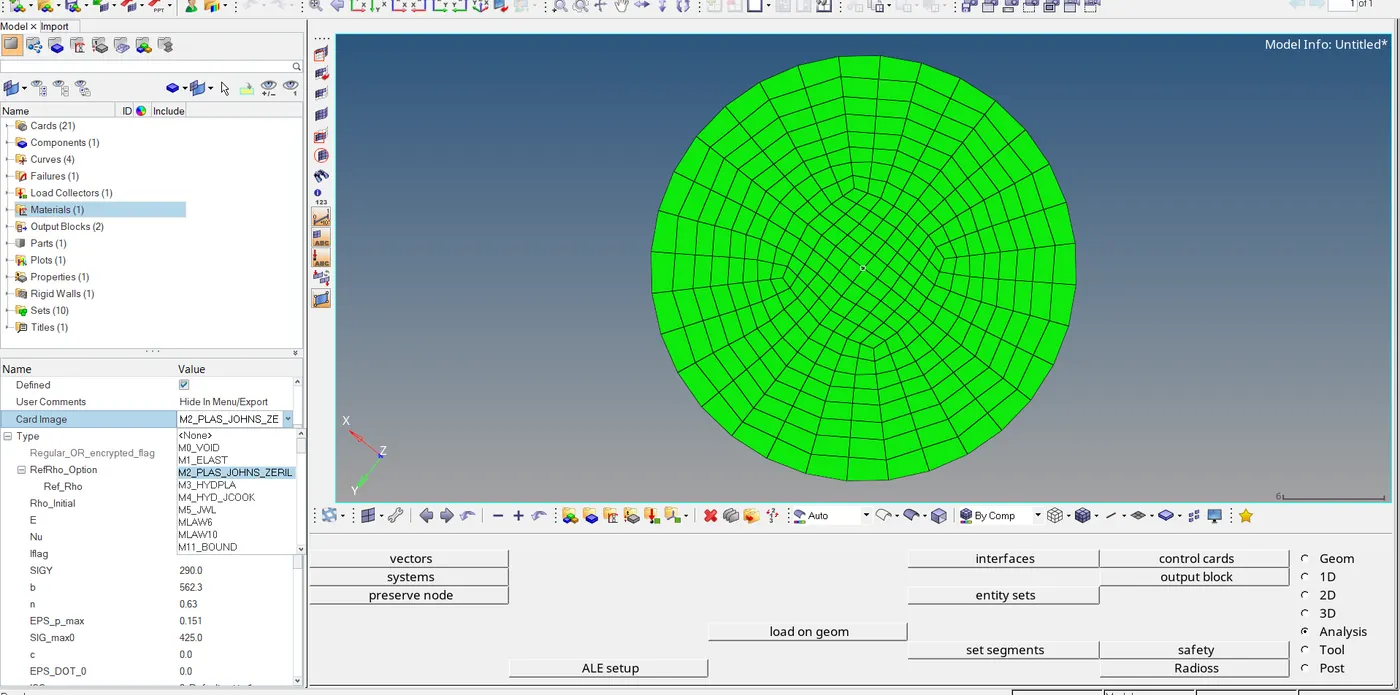
A- Importing the .rad file.
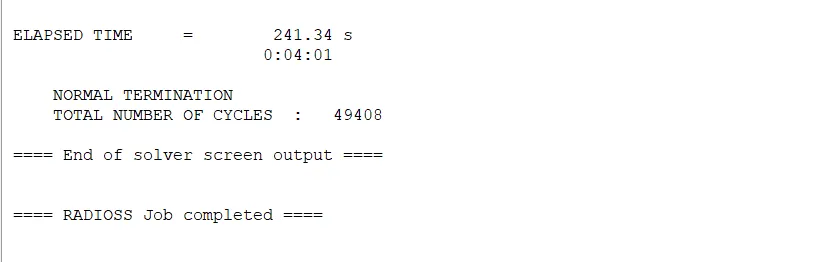
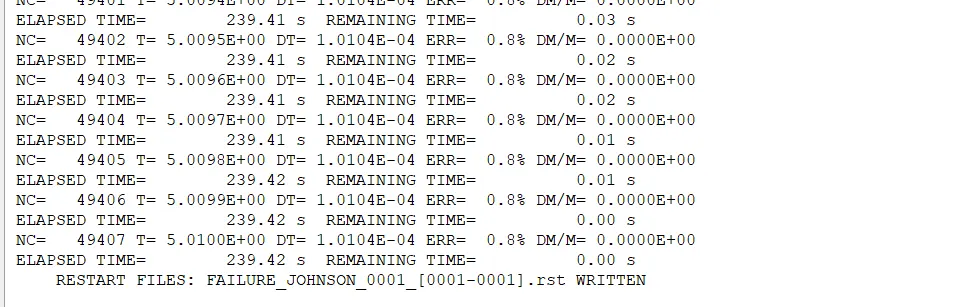
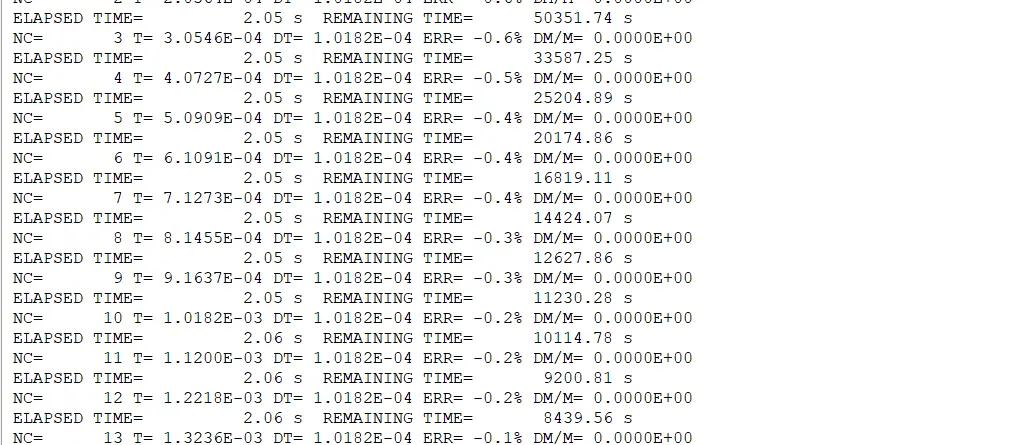
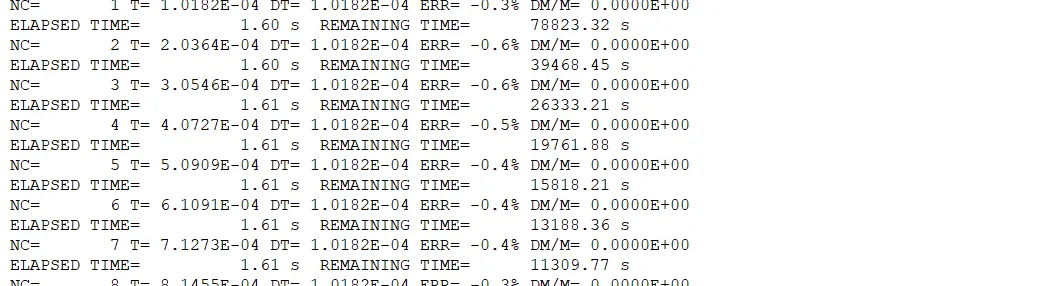
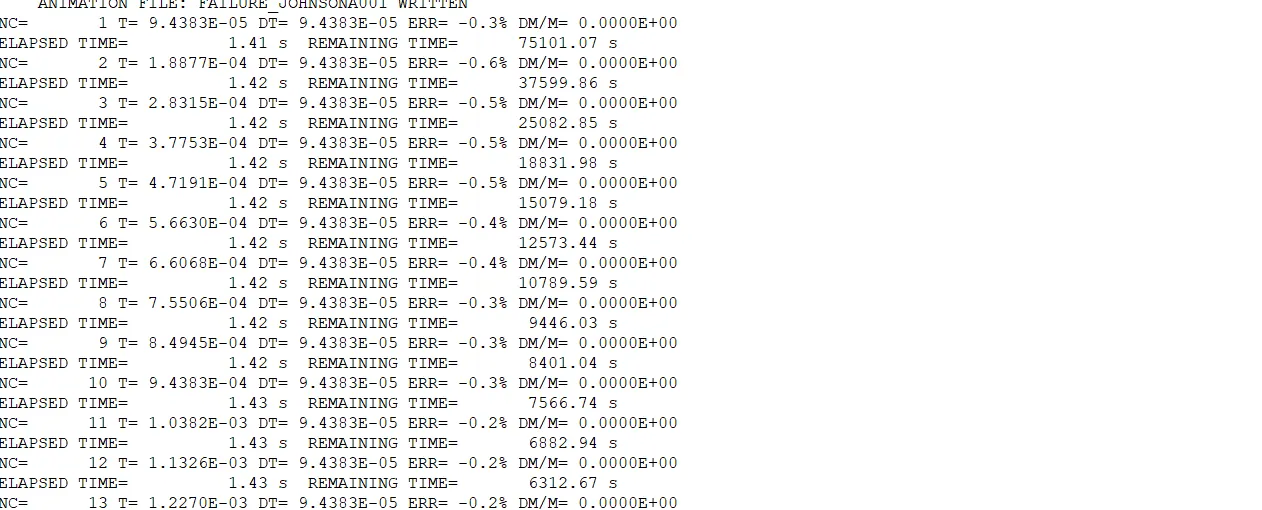
B- After running the simulation we got the radios file with energy error and time of simulation.
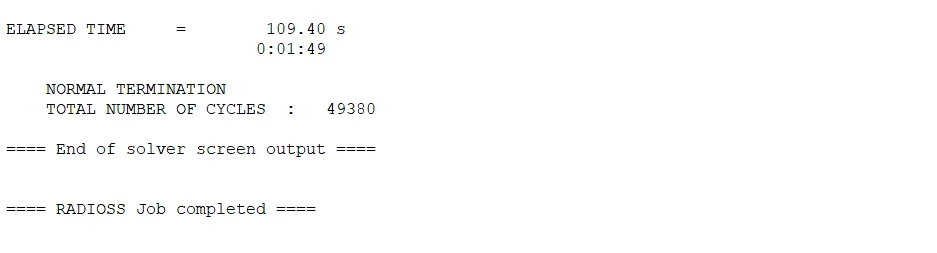
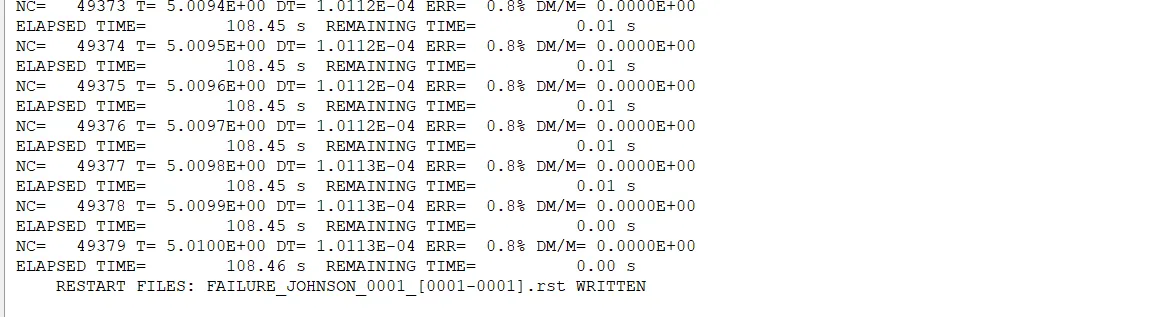
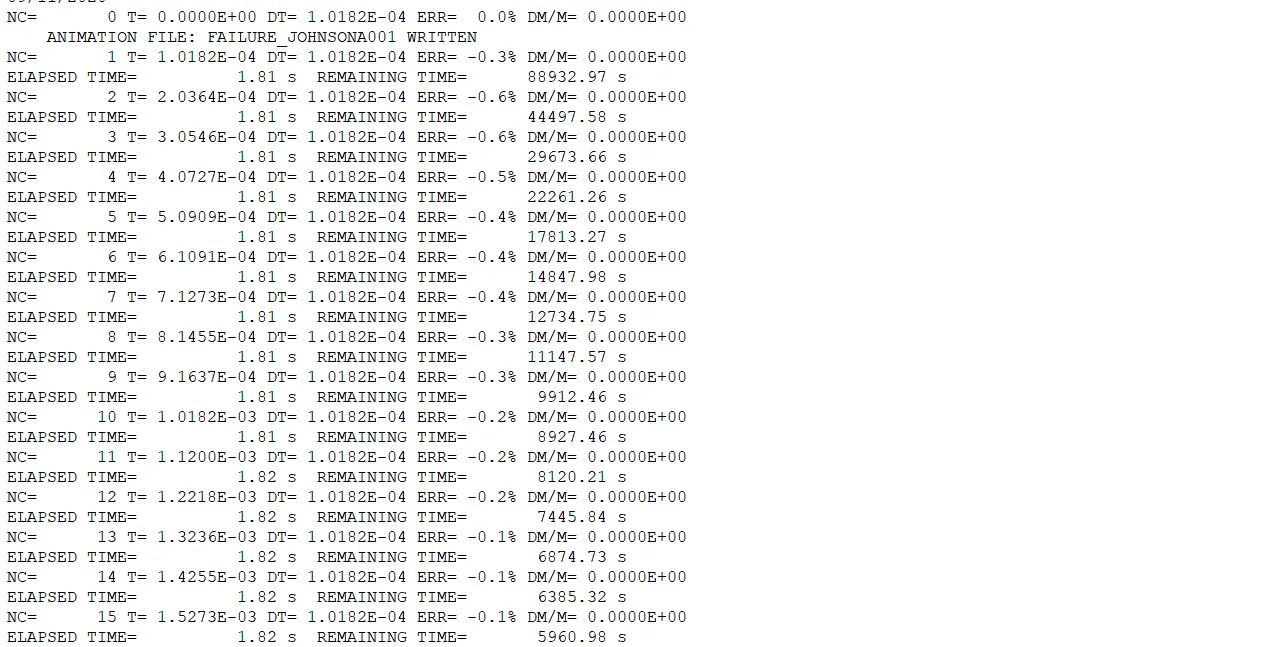
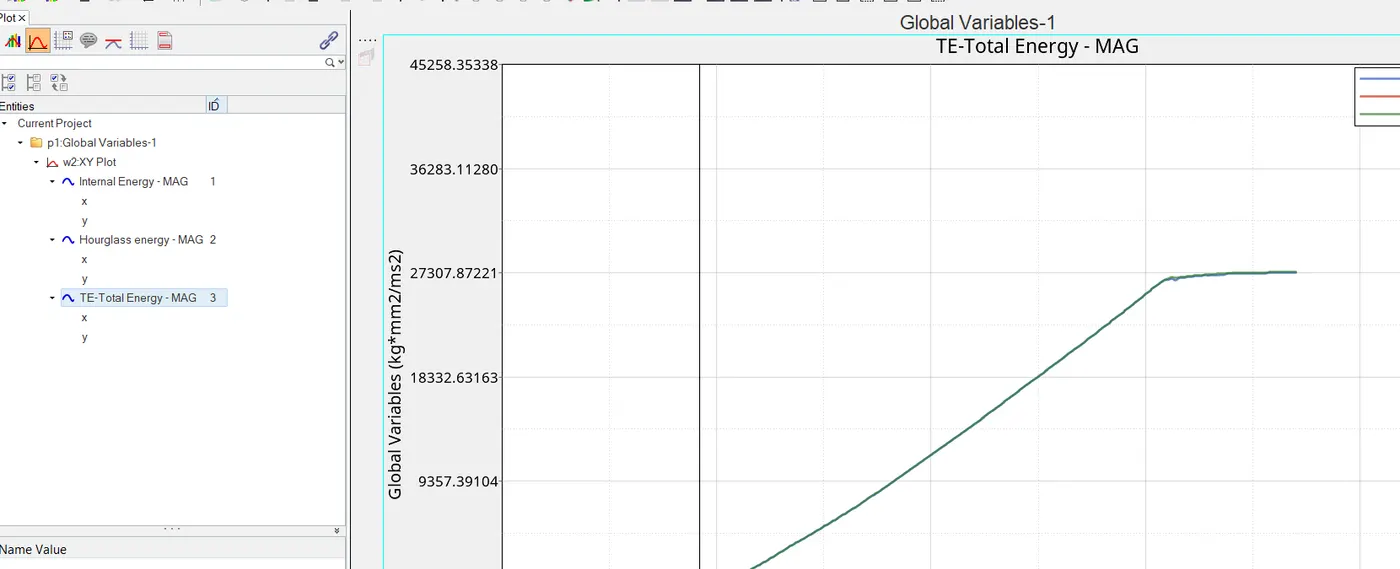
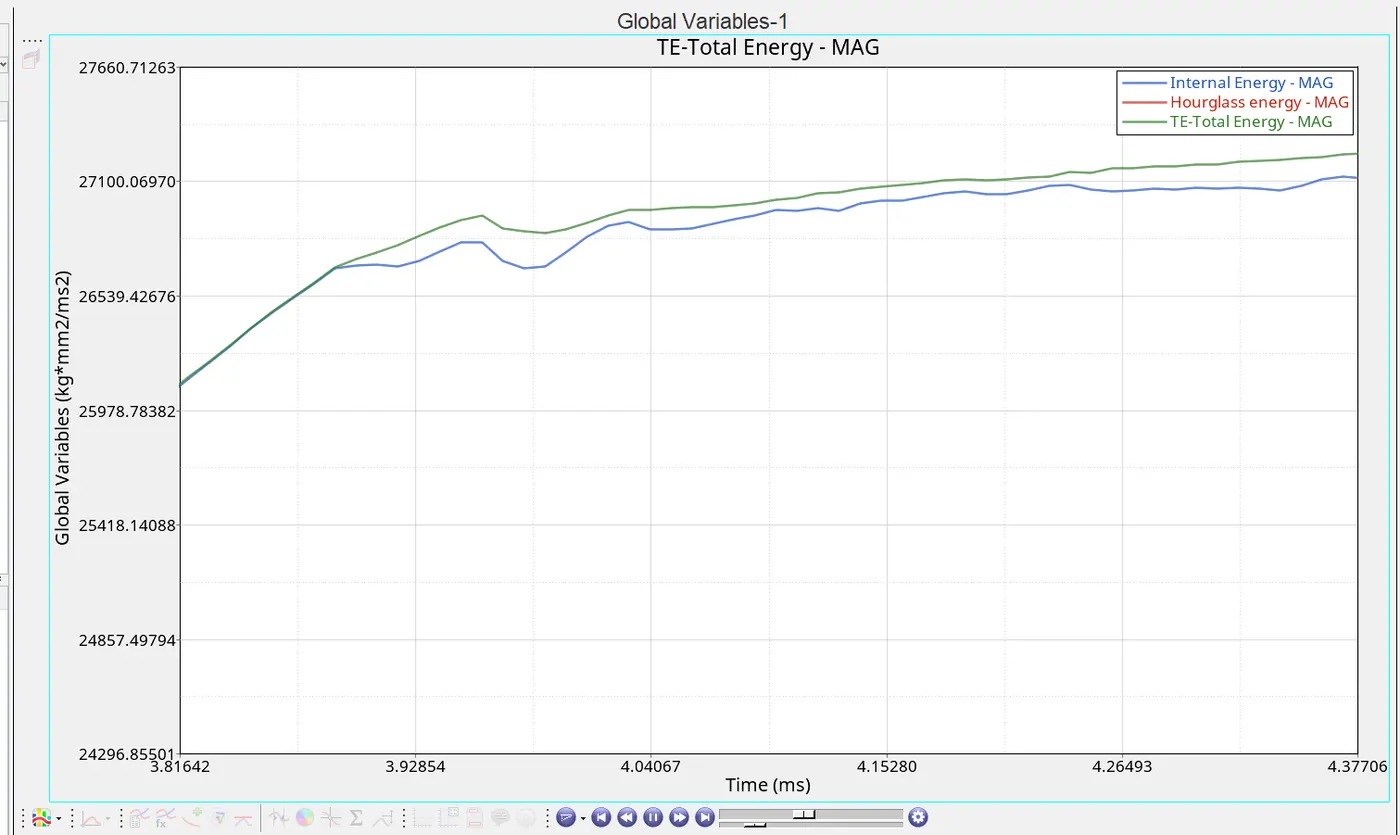
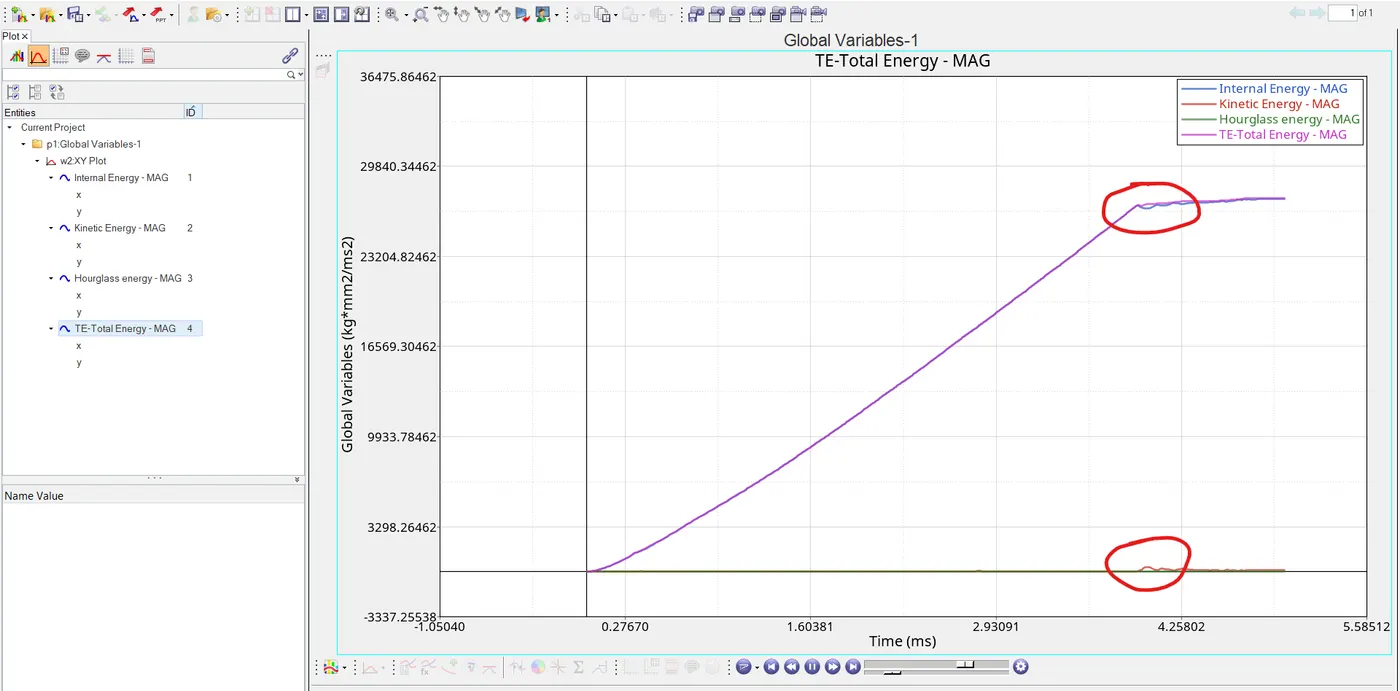
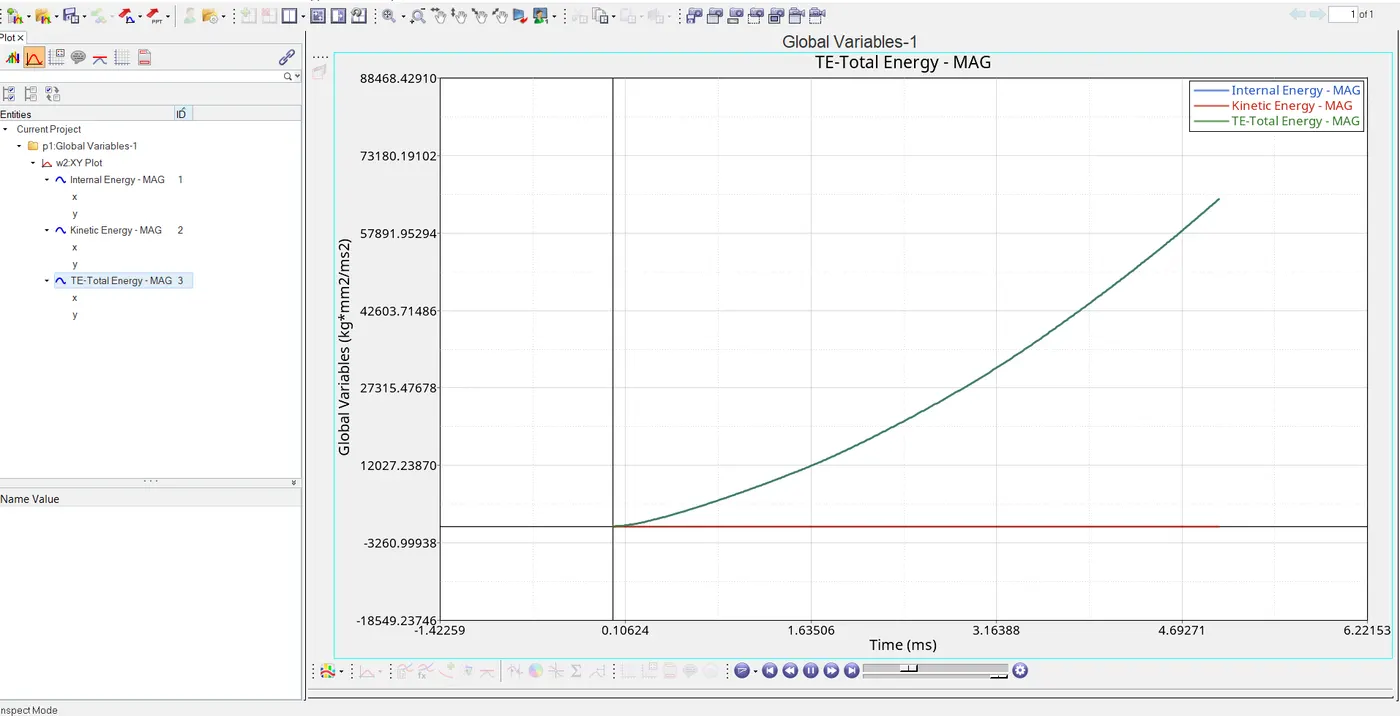
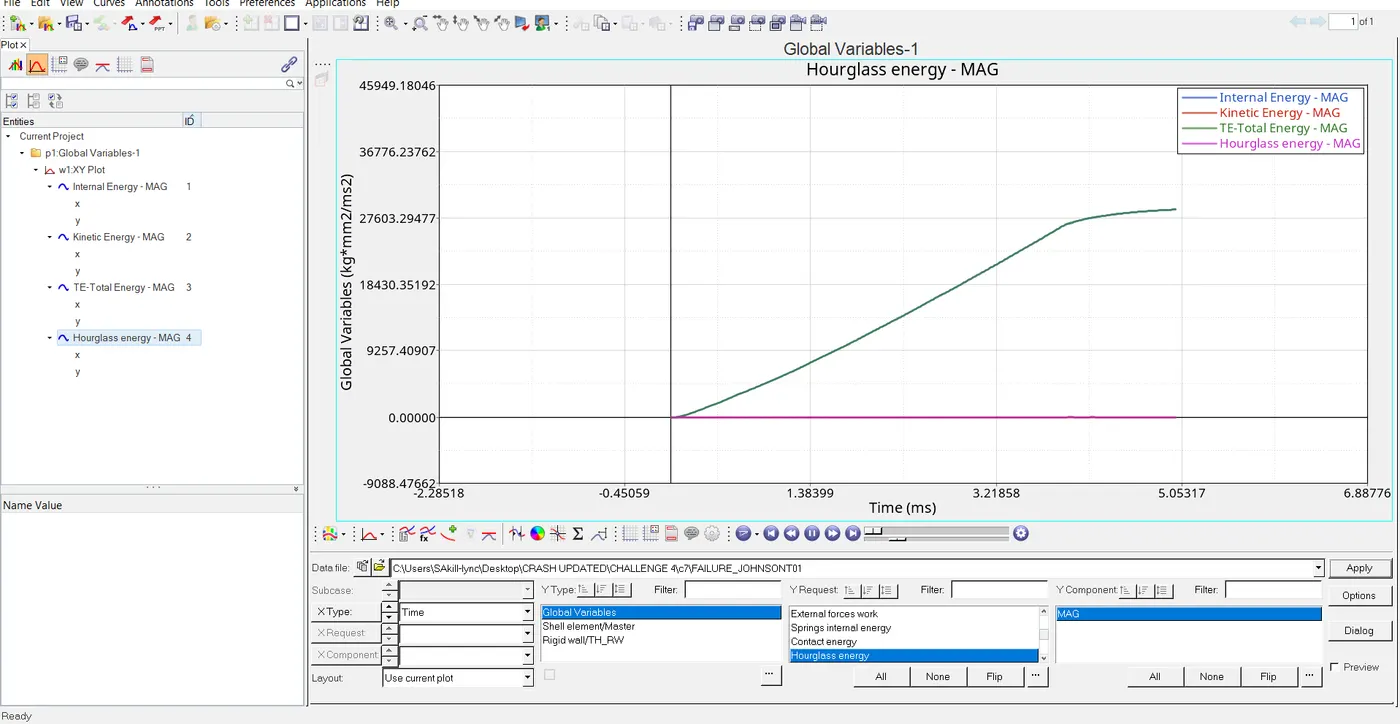
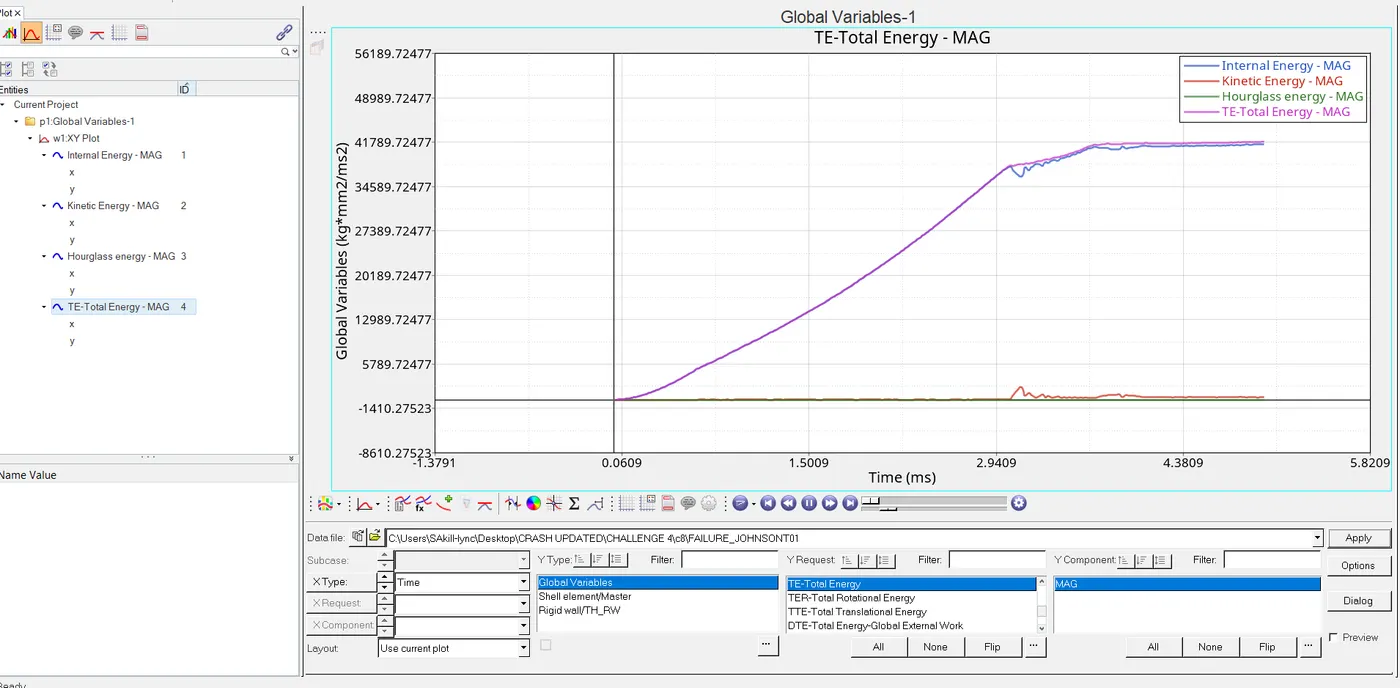
C- From the data we can see that internal energy increasing with time with no mass error.
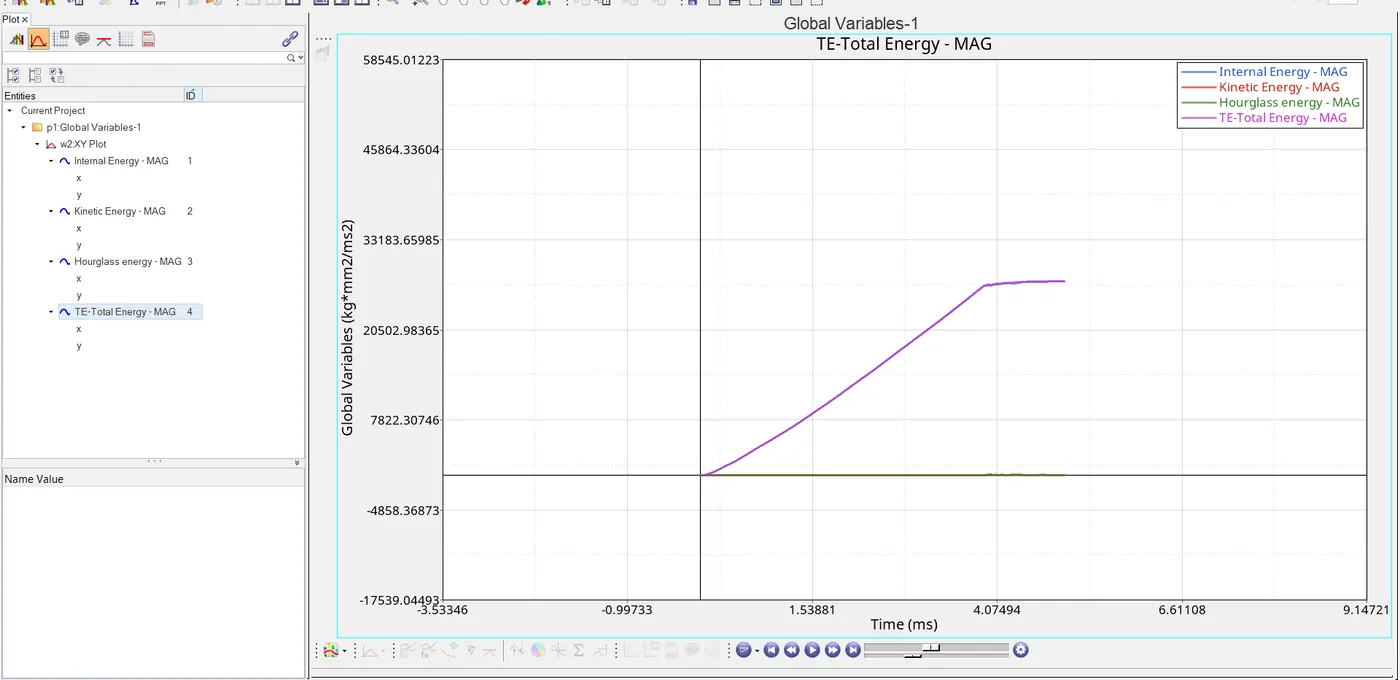
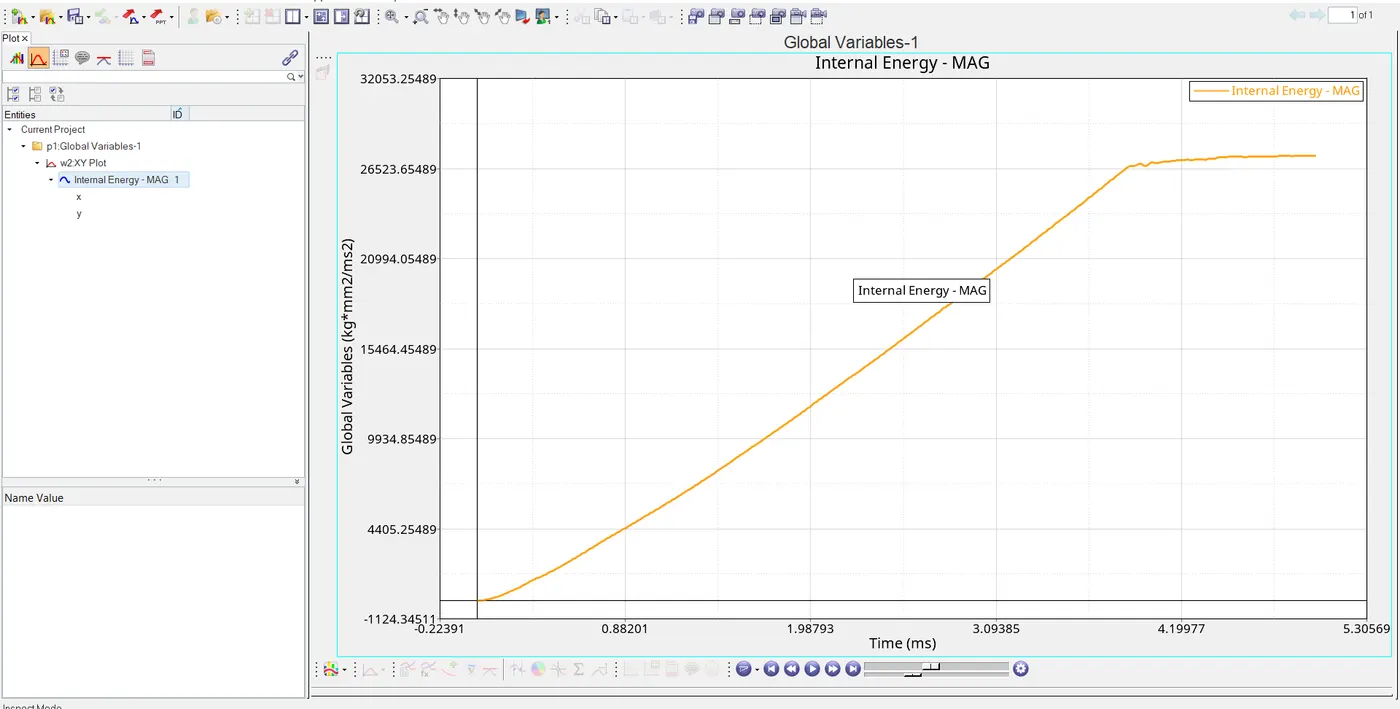
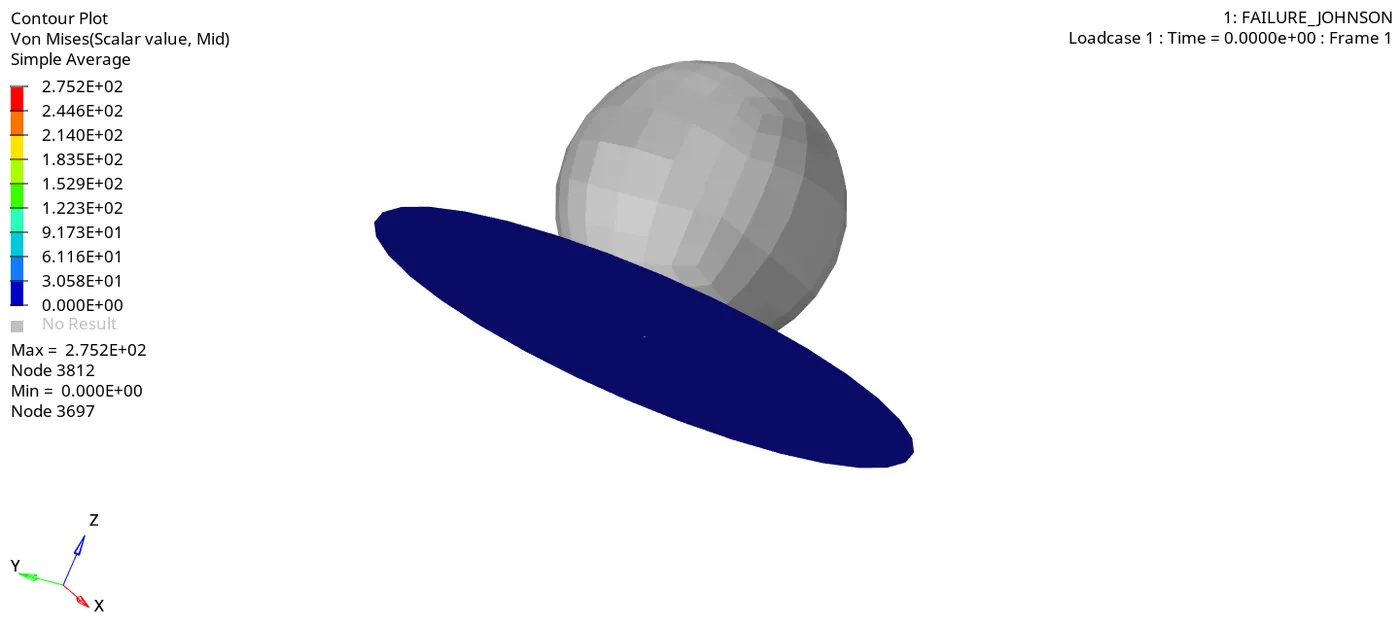
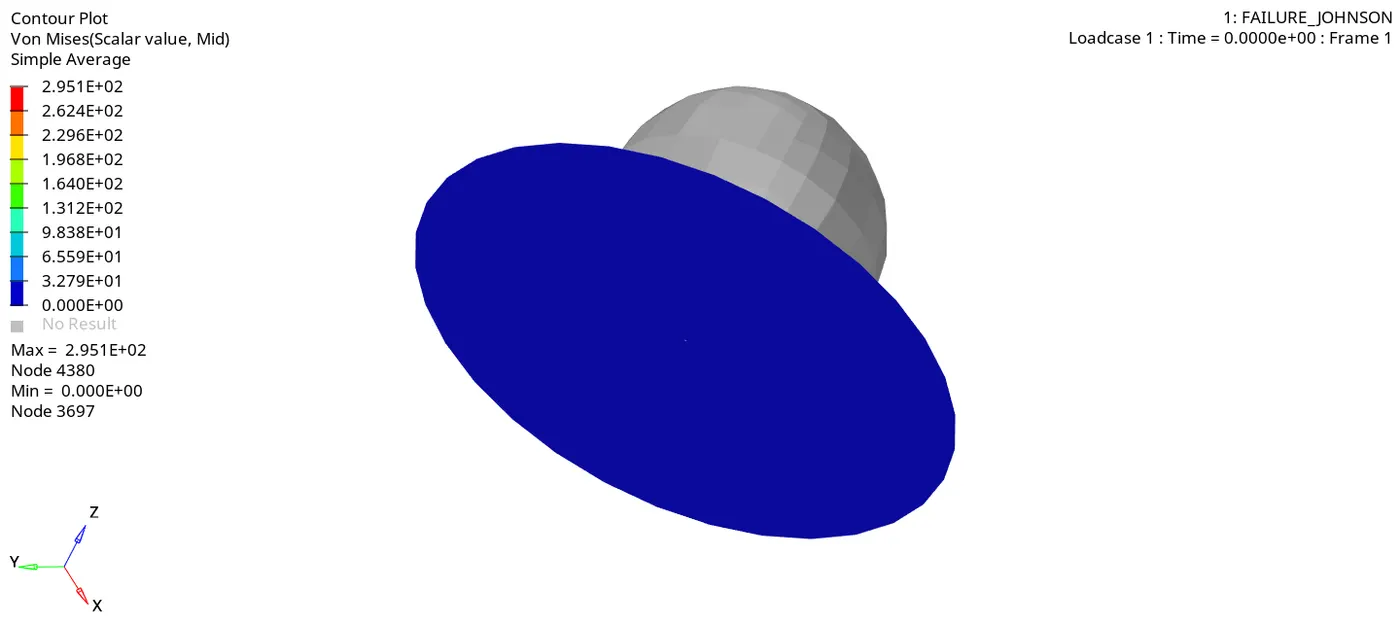
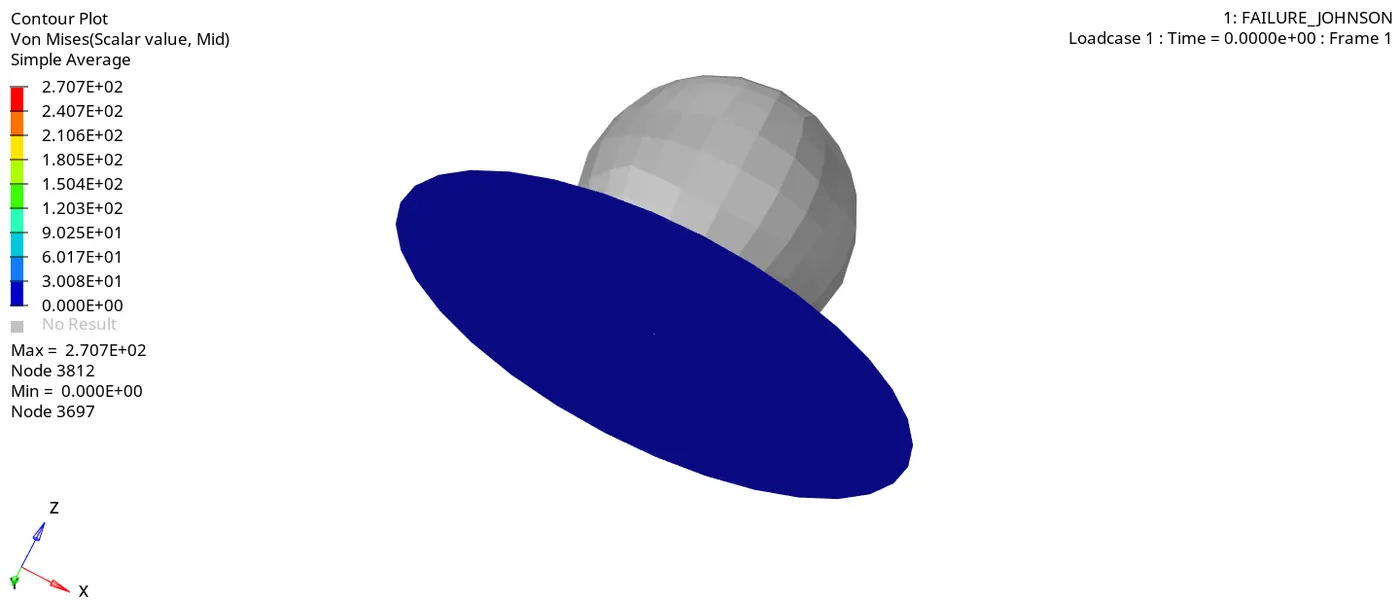
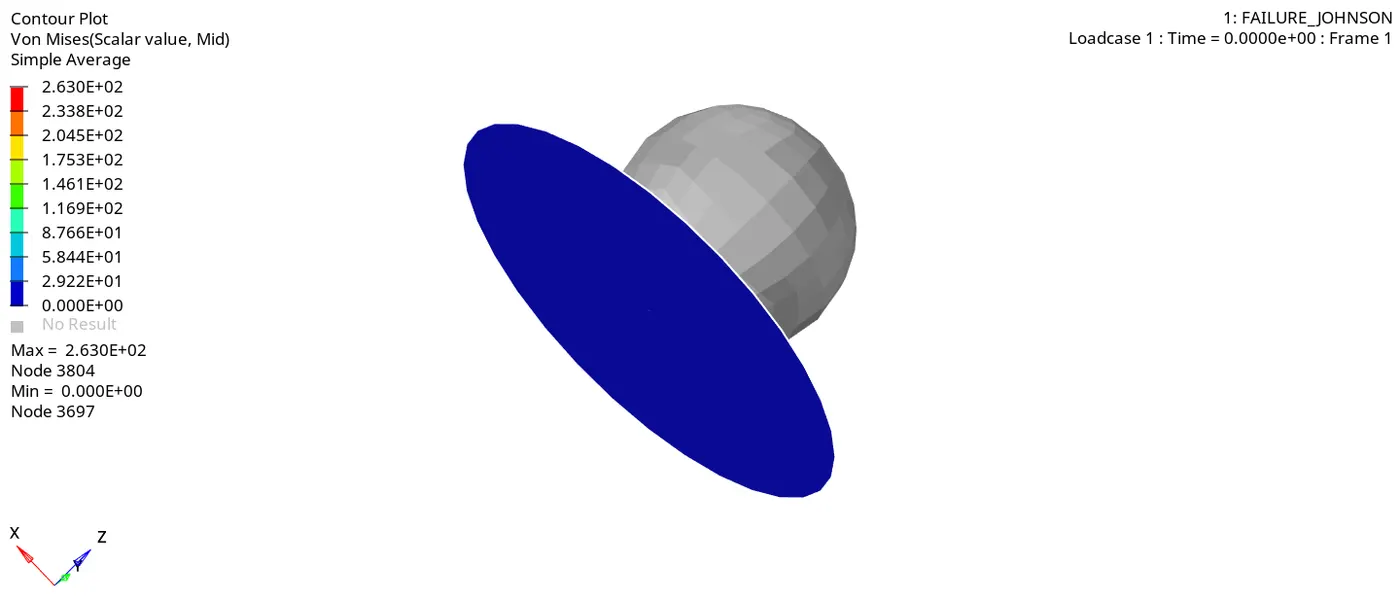
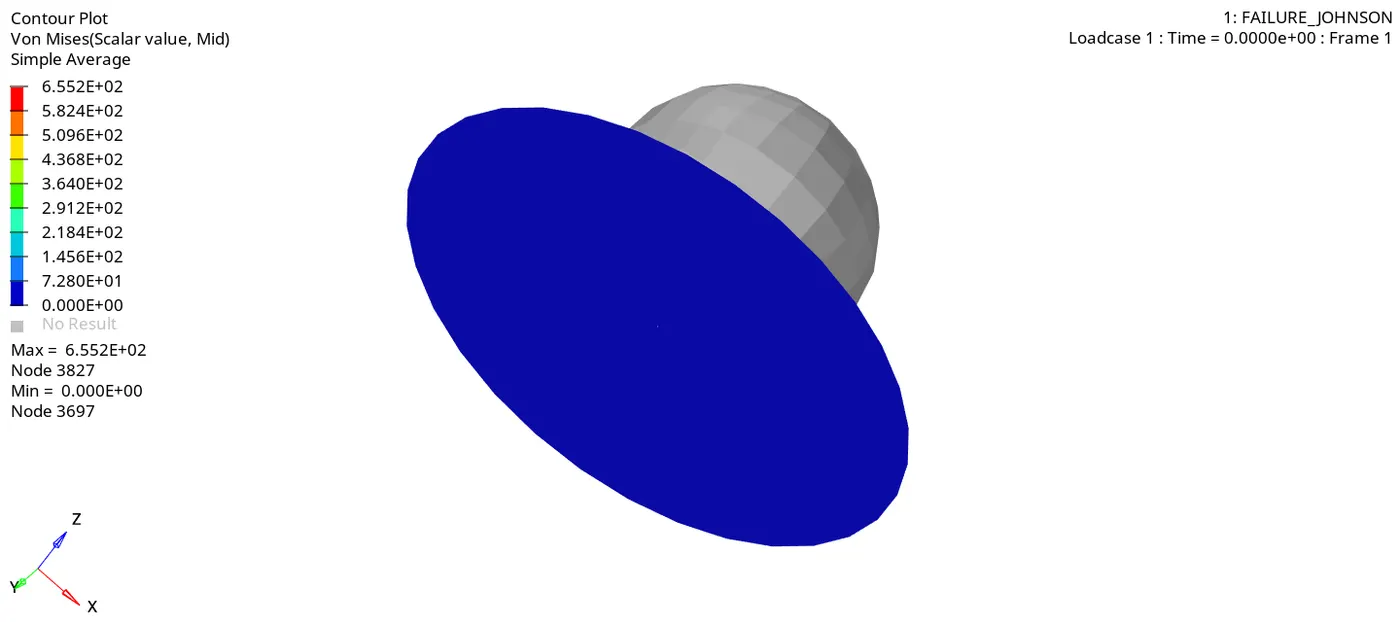
D- Here we can see in animation file of von misses stress formation. Animation window showing the max stress value of 275.2Mpa. Here we can say the plate is going to rapture with a huge rapture.The reseaon behind this rapture is the plate is failing for starin value.
CASE-2 Running the simulation with same LAW-2 material card with modification in Johnson failure card.
A- Editing in failure card.
B-Changing the value of lxfem and Davd, which represent the crack formation before deleting the elelemnt.
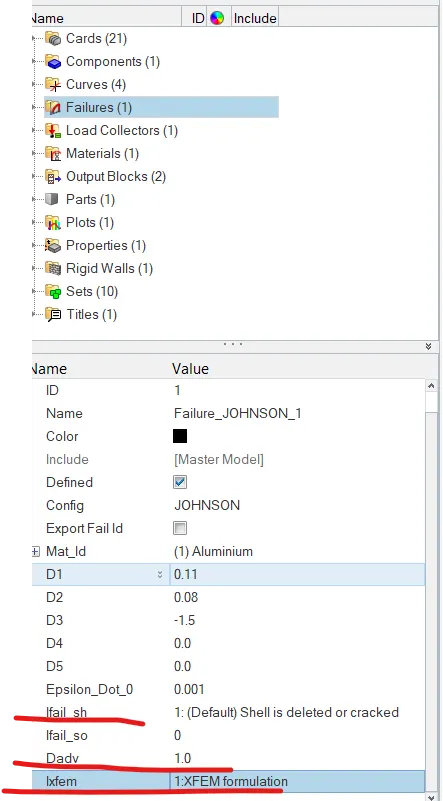
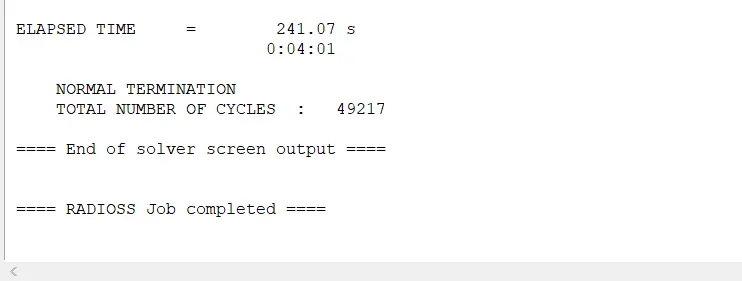

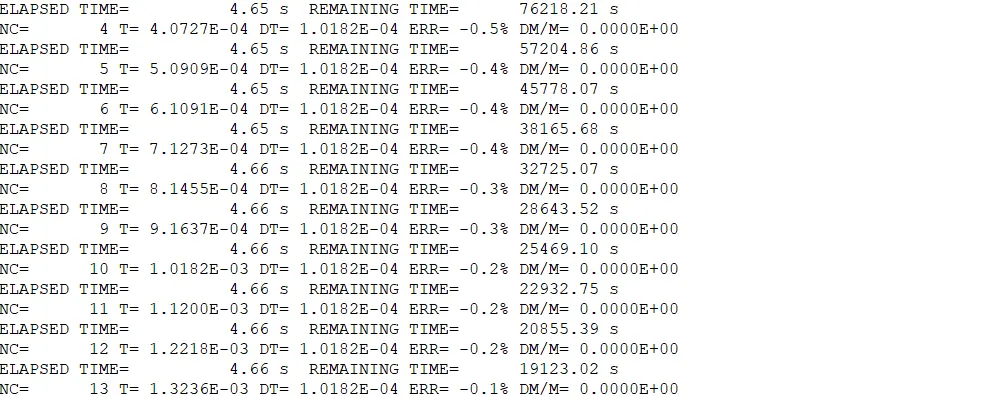
C-The result we got here is different from 1 case, in this case we got smoother and realistic than the previous one and we can see cracks before the element deleted.
D- There is no significant change in energy graph as compare to case-1
CASE-3:- Running the simulation with same LAW-2 material and deleting the failure card.
B- Here we can see the uneven rapture in the plate.
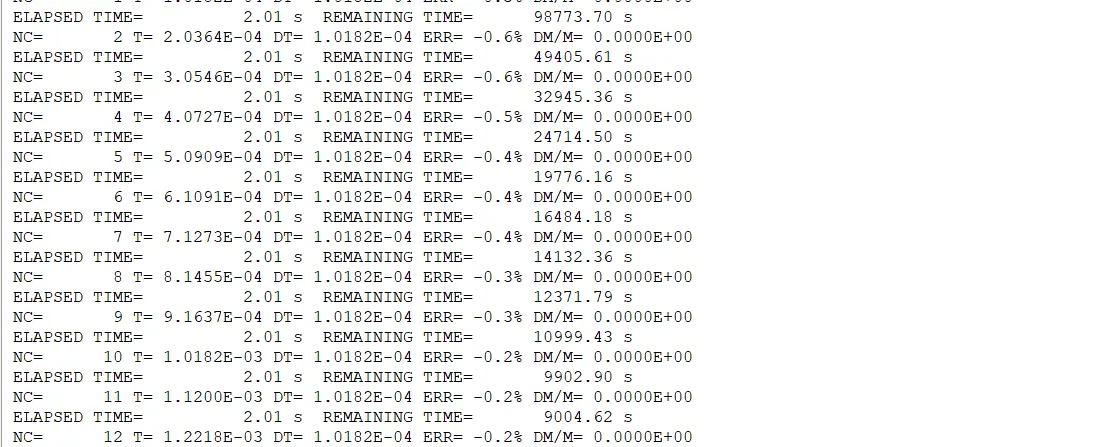
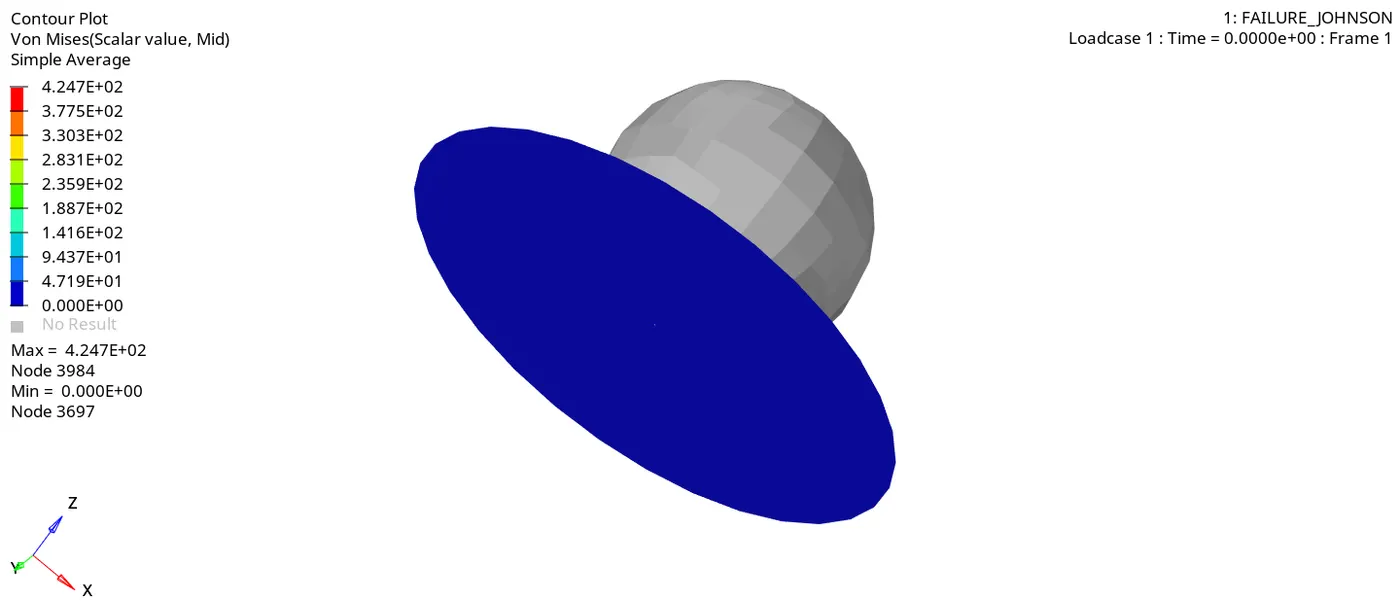
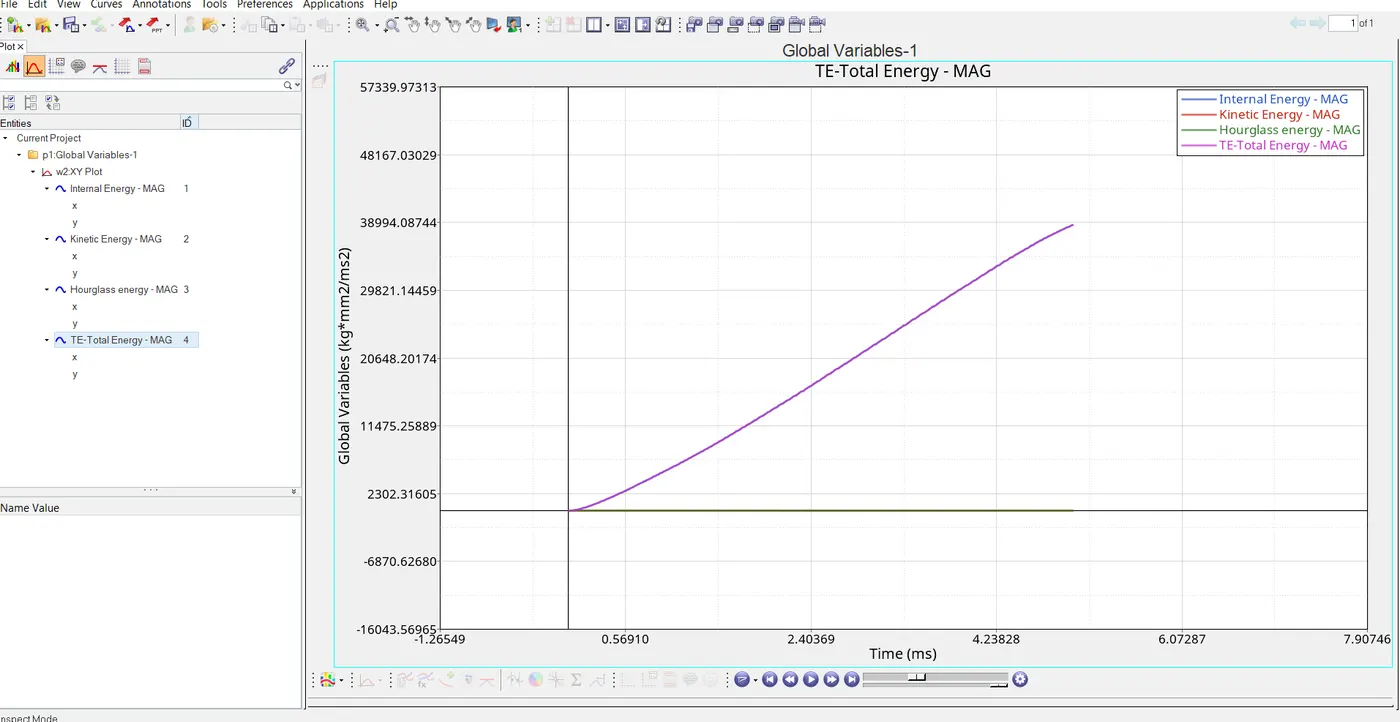
CASE:-4 Running the simulation with only LAW-2 material and set the Eps_max=0 with failure johnson card.
CASE:-5 Running the simulation with only LAW-2 material and set the Eps_max=0 without failure johnson card.
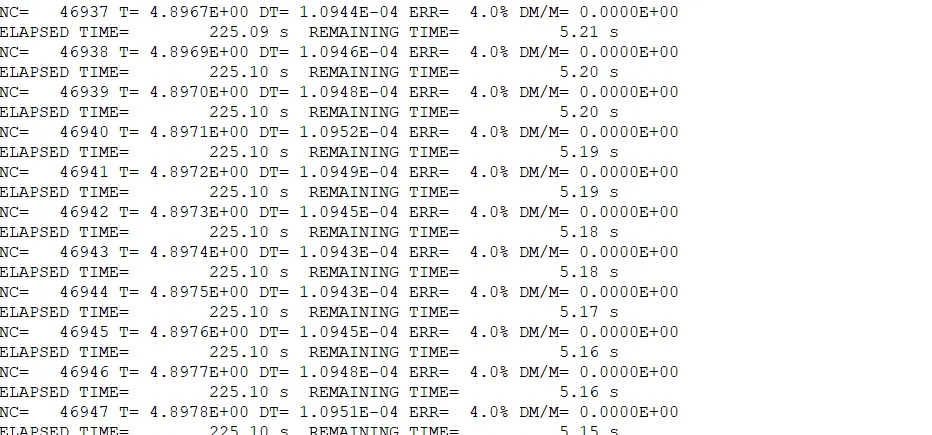
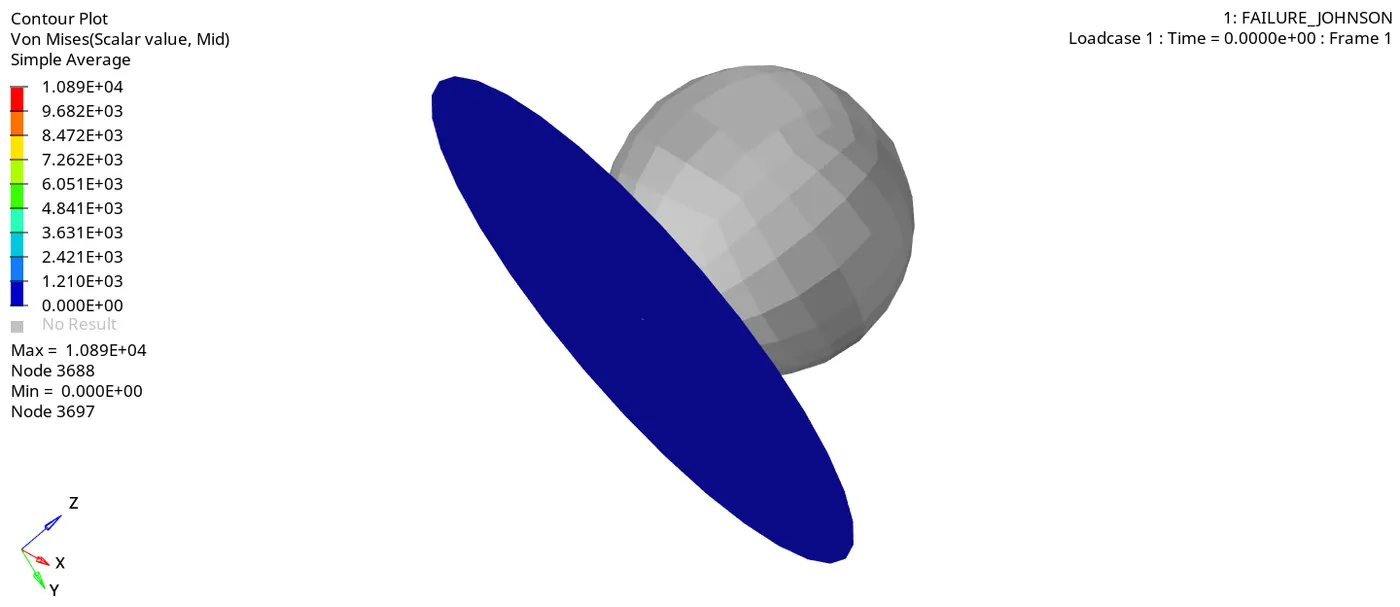
CASE:-6 Running the simulation with only LAW-1 (ELAST) material card.
CASE:-7 Running simulation with only LAW-27 (BRIT) material card.
CASE:-8 Running the simulation with only LAW-36 material card.
| CASES | SIMULATION TIME | NO. OF CYCLE | ENERGY ERROR | MASS ERROR |
| 1 | 4.02 | 49380 | -0.6 TO 1.3 | 0 |
| 2 | 2.13 | 49217 | -0.8 TO 4.5 | 0 |
| 3 | 4.1 | 49408 | -0.6 TO 1.2 | 0 |
| 4 | 2.4 | 49304 | -0.6 TO 1.2 | 0 |
| 5 | 1.4 | 48737 | -0.6 TO 3 | 0 |
| 6 | 3.5 | 47969 | -0.6 TO 4 | 0 |
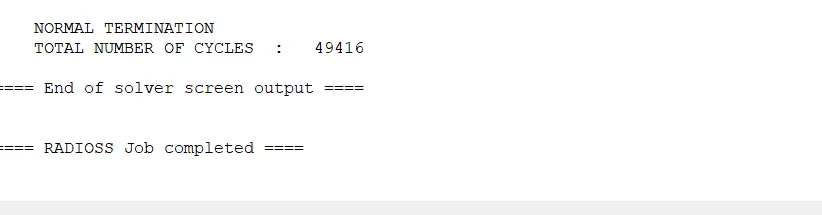
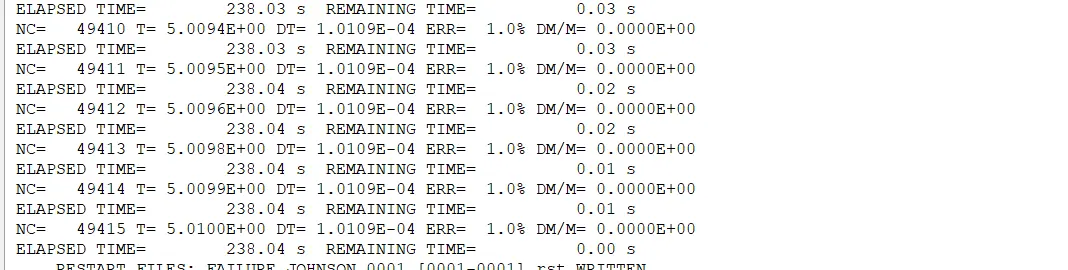
| 7 | 1.5 | 49416 | -0.6 TO 1.1 | 0 |
| 8 | 2.1 | 53161 | -1.3 TO -0.2 | 0 |
Conclusion-
1- The best result we can say is the representation of actual behavior of the force on the body.
2- LAW1 material can use on the material that gives deformation under it elastic limit.
3- LAW27 used only for Brittle material (shell element)
4- LAW36 is a good example for Elastic material which gives us more actual result. We cn also use failure card johnson with this model for crack based represantation.
5- Applying the wrong material will give a result but it may not gives us actual result.
6- Having a good knowledge of material card is very important to understand the physics behind the deformation of the componenet.