Assignment 4
Objective: To compare 7 different cases in the same material model by changing different aspects of the material model and observing the change in the result.
LAW2/JHONSON COOK
case 1: run the model as it is and change the name to Law2_espmax_failure.
we run the model as it is and only change the name of the model to law2_espmax_failure
in this case,
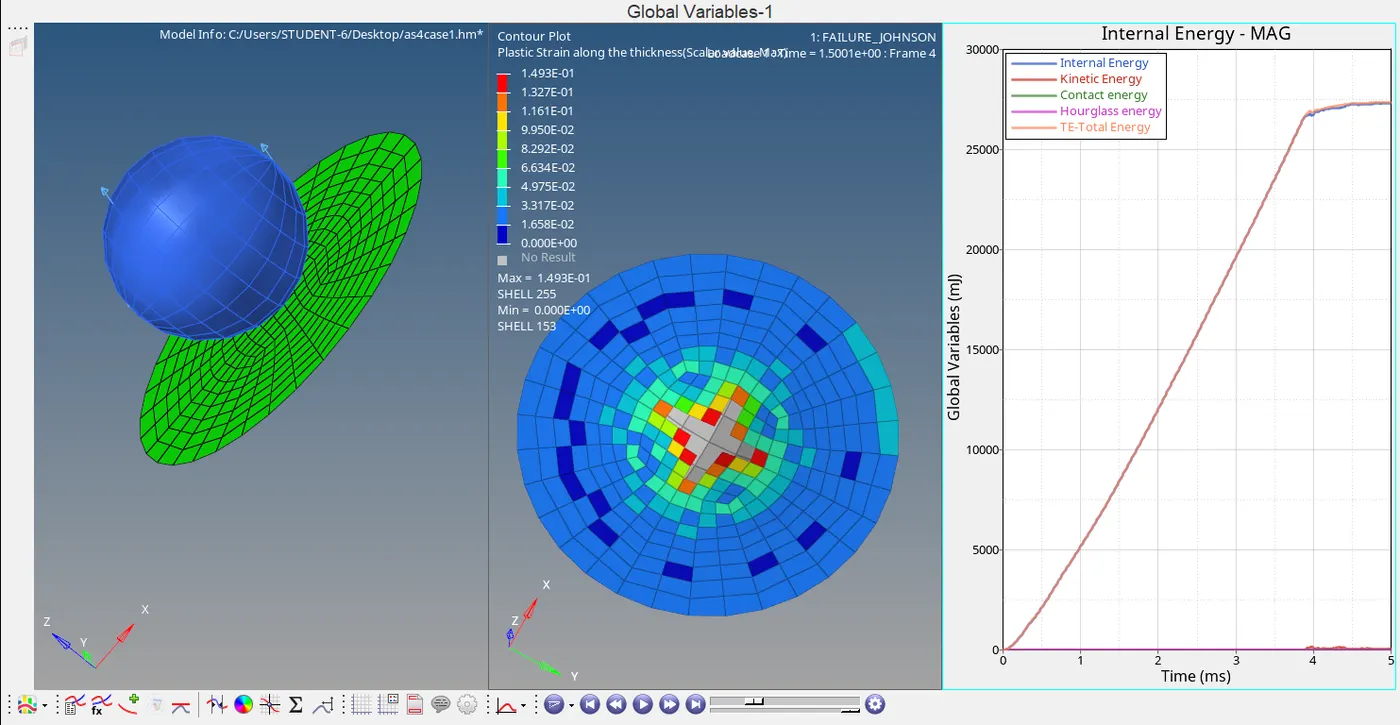
the maximum strain is 1.493E-01
all the energies plotted increase linearly with time till t=3 sec due to deformation and from t= 4 sec the energies become stable indicating the rigid body completely passing through the disc.
kinetic energy is very low and its close to 1 and K.E starts increasing only from t=4sec due to work done in deformation of the disc
the elements are getting eliminated and the deformation is not observed clearly
hourglass energy is 0
opening and checking the file ending with 0001.out we can check for energy and mass error
energy error, in this case, is 0.8%
mass error is 0%
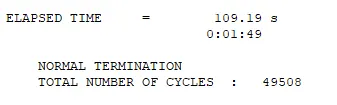
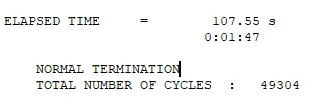
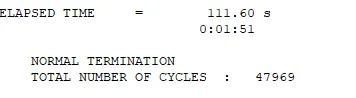
total number of cycle = 49380
time elapsed = 107.55 sec (0:01:47)
case 2 :
in case 2 we change the values of ifail_sh = 1,ixfem = 1and dadv=1 and run the model as Law2_espmax_crack
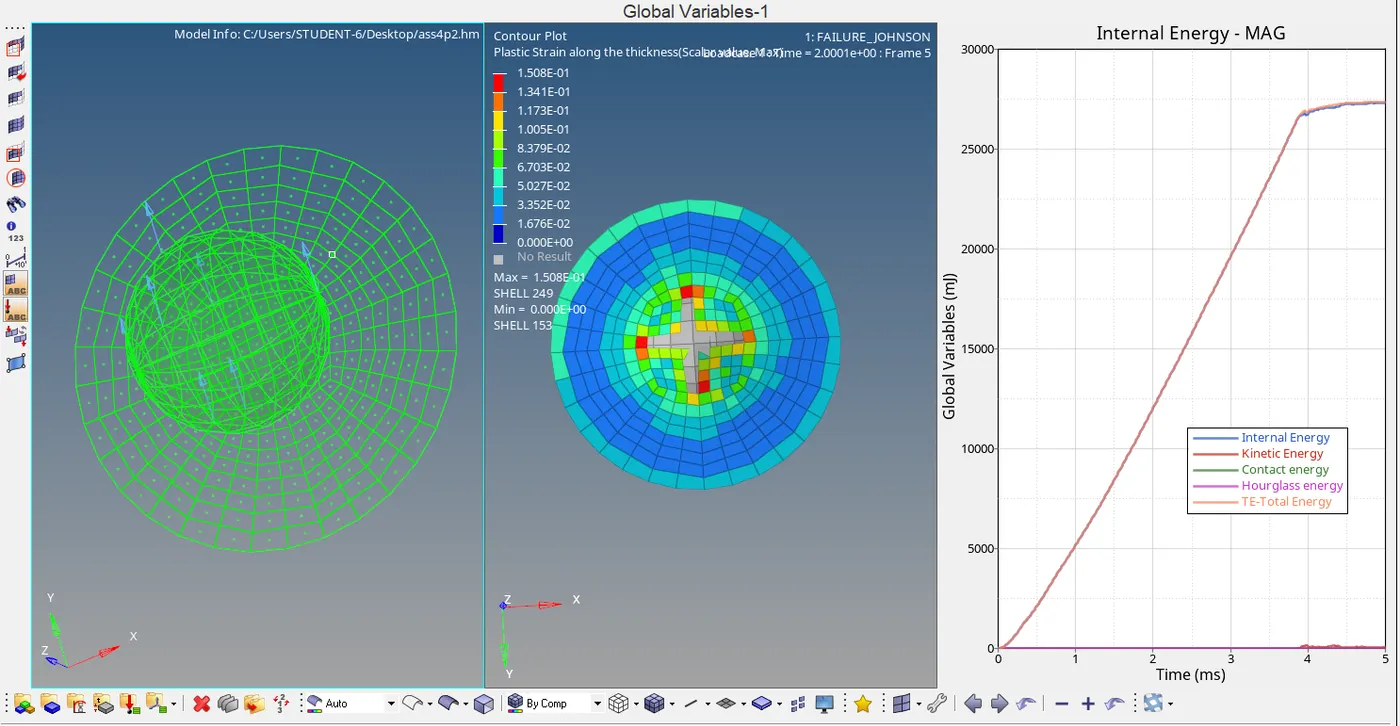
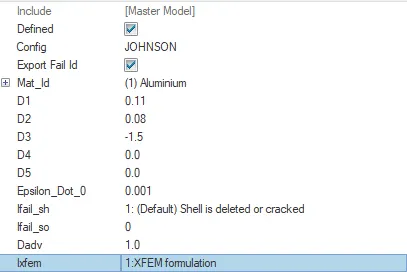
The maximum strain is 1.508E-01
the strain is higher compared to the failure model
from the graph, we can observe that all the energies plotted increase linearly with time till t=3 sec and from t= 4 sec the energies become almost stable indicating the rigid body completely passing through the disc
kinetic energy is very low and its close to 1 and K.E starts increasing only from t=4sec due to work done in deformation of the disc
in this, the deformation is almost like a crack and the deformation is much clearer and can be observed properly
hourglass energy is 0
opening and checking the file ending with 0001.out we can check for energy and mass error
energy error, in this case, is 1%
mass error is 0%
case 3 :
in this case we simply delete the failure card and run the simulation to observe the result
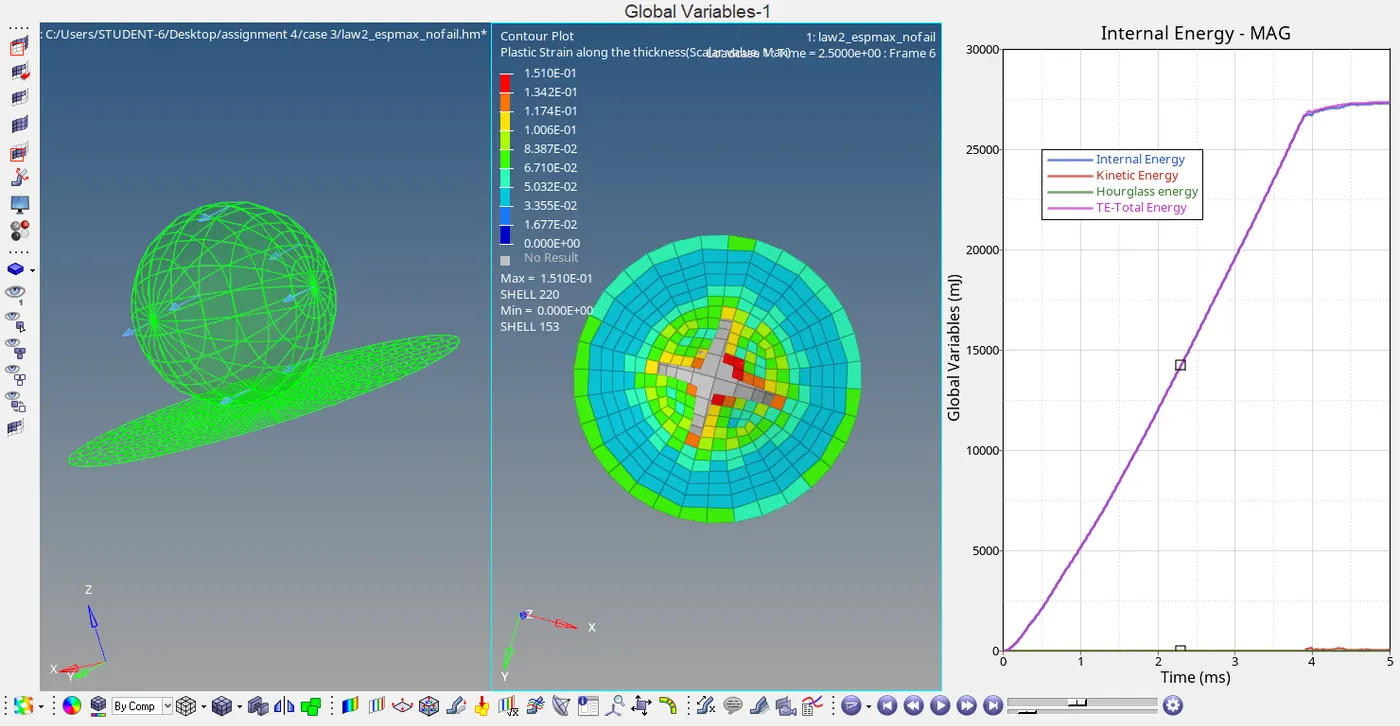
The maximum strain is 1.510E-01
the strain is higher compared to the previous cases
since we removed the failure card the deformation is very low and high strain points are less compared to previous cases
from the graph, we can observe that all the energies plotted increase linearly with time till t=3 sec and from t= 4 sec the energies become almost stable indicating the rigid body completely passing through the disc
kinetic energy is lower than 1 and K.E starts increasing only from t=4sec due to work done in the deformation of the disc
but the kinetic energy is low compared to the crack and failure models
hourglass energy is 0
opening and checking the file ending with 0001.out we can check for energy and mass error
energy error, in this case, is 1.2%
mass error is 0%
case 4 : law 2
in this case, we delete the value of EPS_p_max and run the simulation with a nonmodified johnson failure card
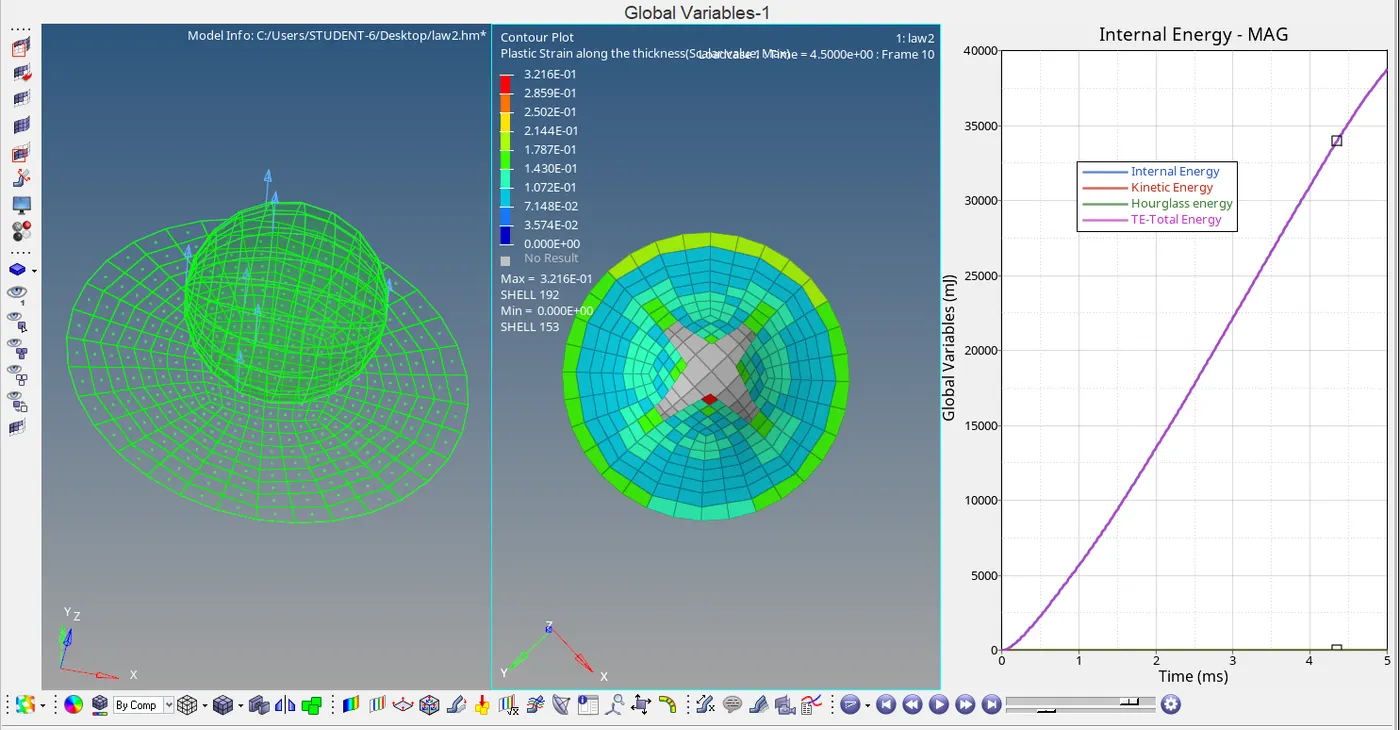

The maximum strain is 3.216E-01
the strain is way higher compared to the previous cases since the rigid body is stretching the disc
from the graph, we can observe that all the energies plotted increase linearly with time since the rigid body doesn't completely pass through the disc
kinetic energy is 0
in this, the deformation is very smooth and the disc is stretching
hourglass energy is 0
opening and checking the file ending with 0001.out we can check for energy and mass error
energy error, in this case, is .4%
mass error is 0%
case 5 : law1
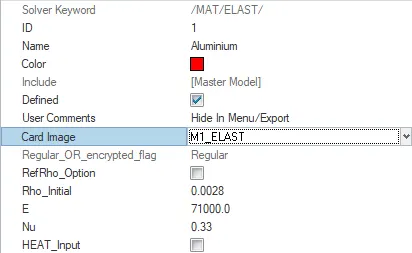
in this case, we convert the model to law 1 with the same density, E, and nu and run the simulation
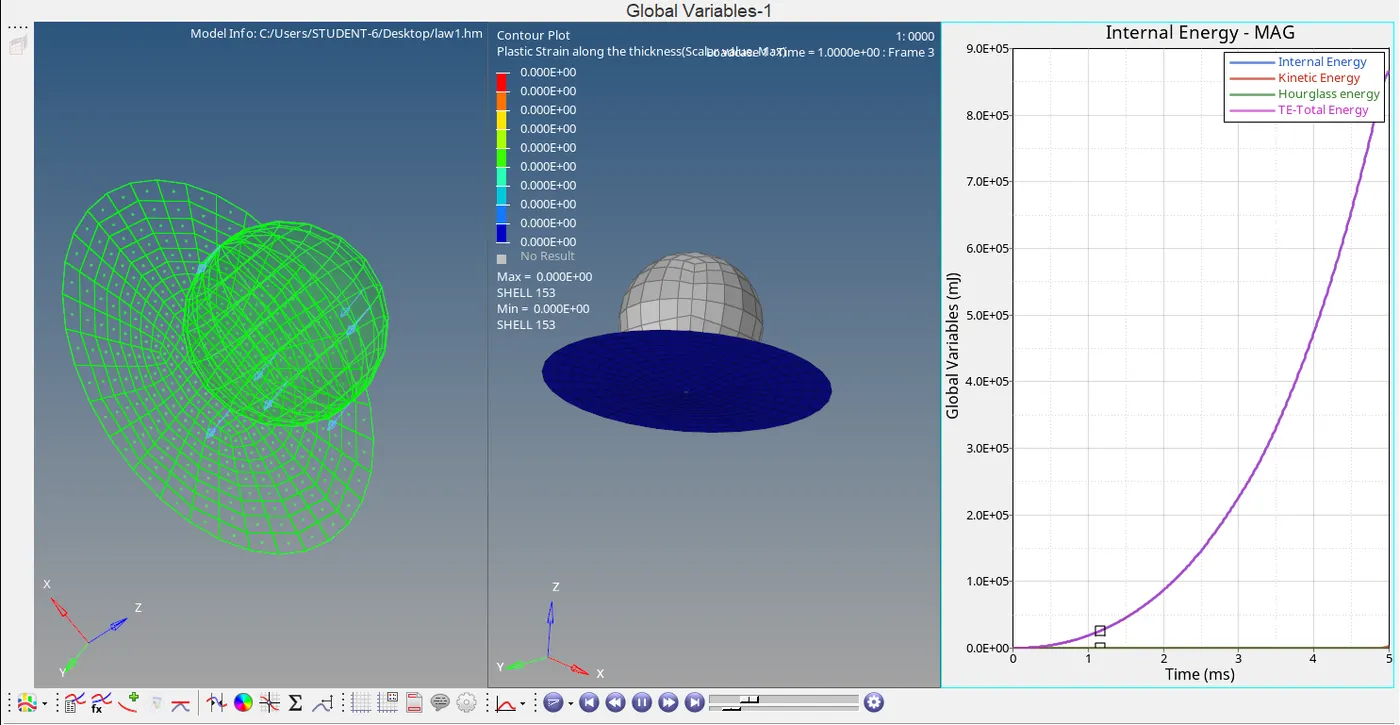
The plastic strain is 0 since law 1 perfectly plastic
from the graph, we can observe that all the energies plotted increase linearly with time since the rigid body doesn't pass through the disc
kinetic energy is 0
in this, the deformation is plastic and there is no deformation of elements
hourglass energy is 0
opening and checking the file ending with 0001.out we can check for energy and mass error
energy error, in this case, is .2%
mass error is 0%
case 6: law 36
in this case, we convert the model to law 36 by editing the material property card
and set the parameters as density = 71000, espe max = 0.16, espt = 0.1 and epsm = 0.11
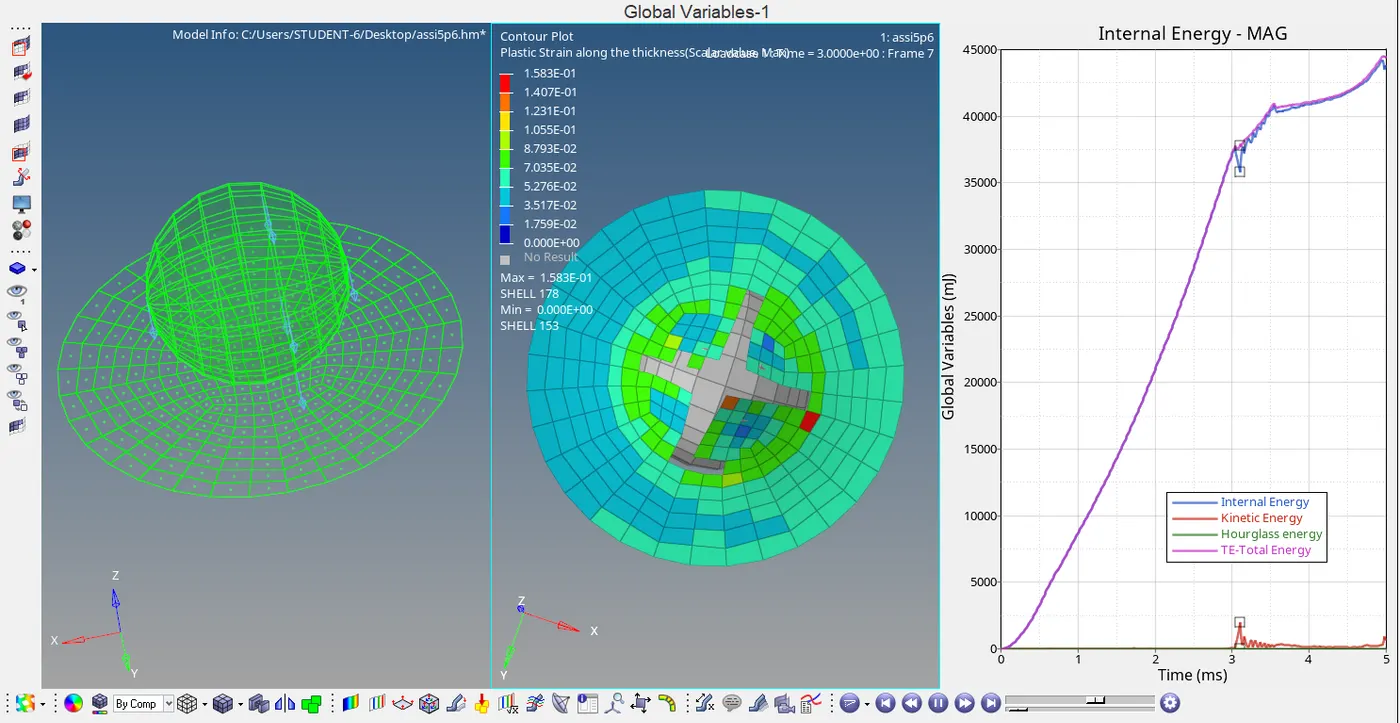
The maximum strain is 1.583E-01
the strain is way higher compared to the previous cases since the rigid body is stretching the disc

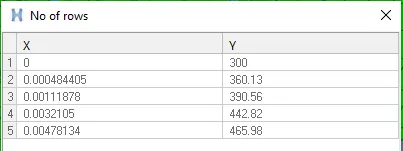
from the graph, we can observe that the points we inputted in the curve option have reflected when plotting the graph with the help of hypergraph
kinetic energy is at 2000 at t= 3sec when the rigid body starts to deform the disc
in this, the deformation is very smooth and the disc is stretching
hourglass energy is 0
opening and checking the file ending with 0001.out we can check for energy and mass error
energy error, in this case, is 1.6%
mass error is 0%
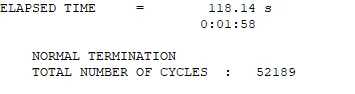
case 7: law 27
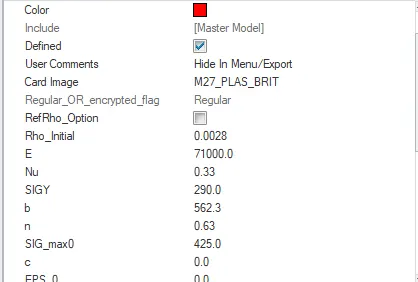
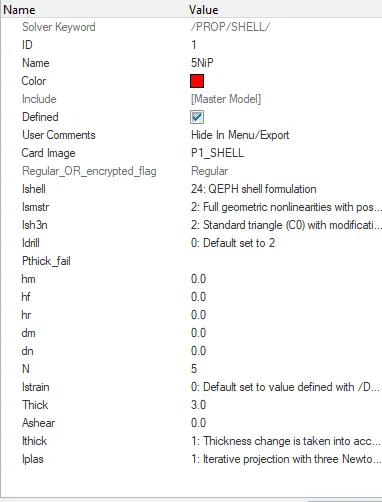
is this case we edit the material card and change it to law 27 and change the shell properties to recommended shell properties
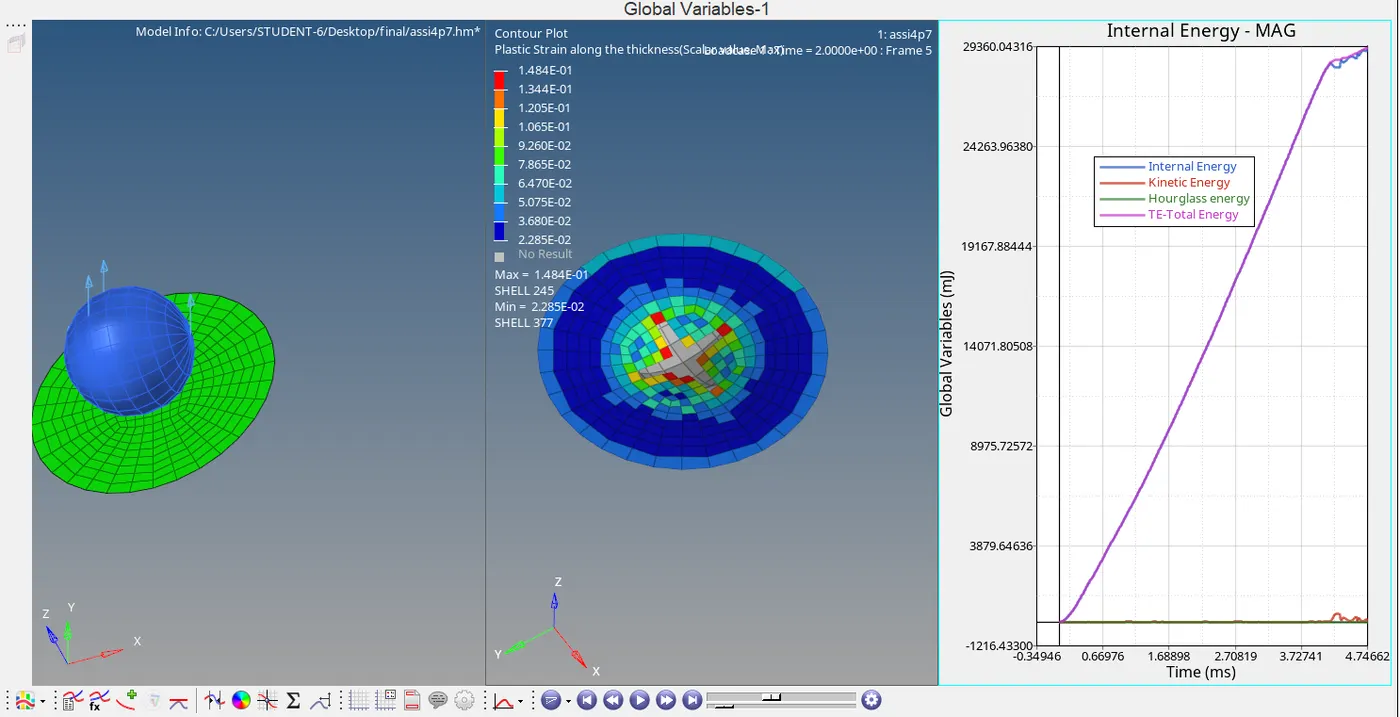
The maximum strain is 1.484E-01
the kinetic energy is low and it starts spiking from t=4 sec, that when the disc is completely deformed and many elements are removed
all the energies follow a curve linear to time but at t=4 sec when the deformation is taking place there is a spike in energy values
in this, the deformation is clear but huge chunks of elements are being removed at the end of deformation
hourglass energy is 0
opening and checking the file ending with 0001.out we can check for energy and mass error
energy error, in this case, is 2%
mass error is 0%