Assignment 3
To begin with, we import the given file as it is by going to file --->import--->solver deck--->select the file to be imported.
To note: no modification to the parameters is made at this point. once imported select shaded geometry to get a clear representation of the model.
run time : time step :
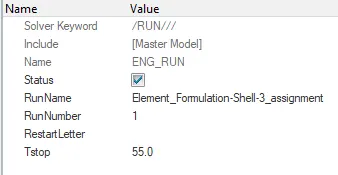
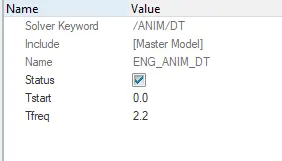

now, got to analysis--->radioss-->select the file and save it and hit radioss option.
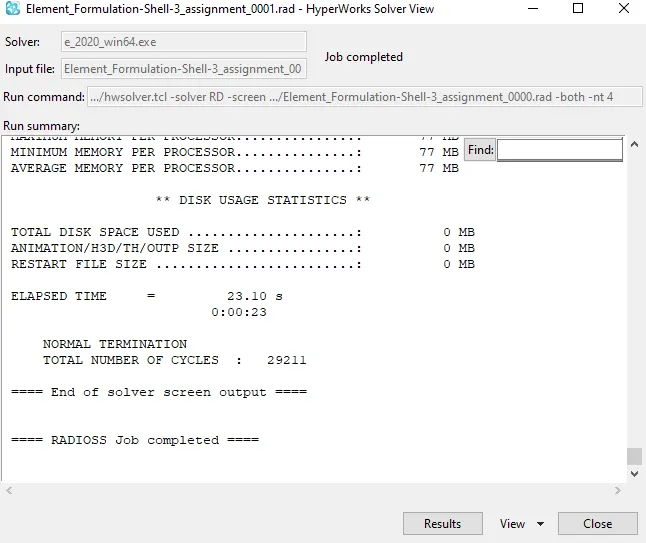
set export options to all and options to -nt 4 (this means 4 CPU's are being used to solve the model)

once the process of the radioss is completed you will get a confirmation message.
now go to the hyper view option and select the file ending with .h3d (eg. C:\Users\STUDENT-6\Downloads\Element_Formulation-Shell-3_assignment.h3d) and hit apply for the animation to be generated.Then, play the animation to observe the deformation.
now, we are going to plot the external and internal kinetic energy on a graph, to do that we are going to split the window and plot the graph on of the sides.
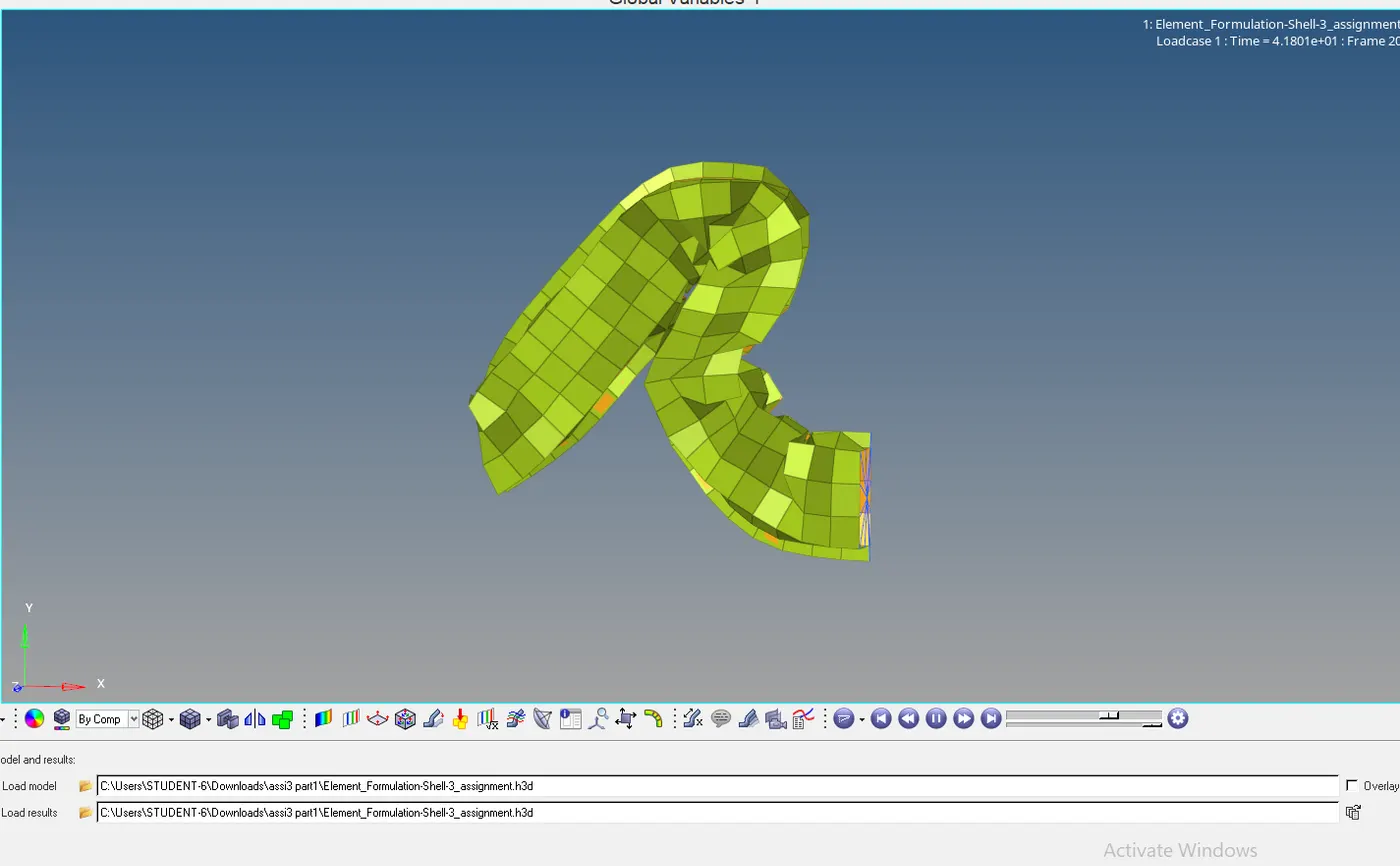
google drive file for the animation:https://drive.google.com/drive/folders/1ze-LeoRoqHmeLLu3w8iY4OohdpE76sNG
now to plot the graphs we use the hypergraph 2D option and load the file ending with T01 as it has all the time step variations.
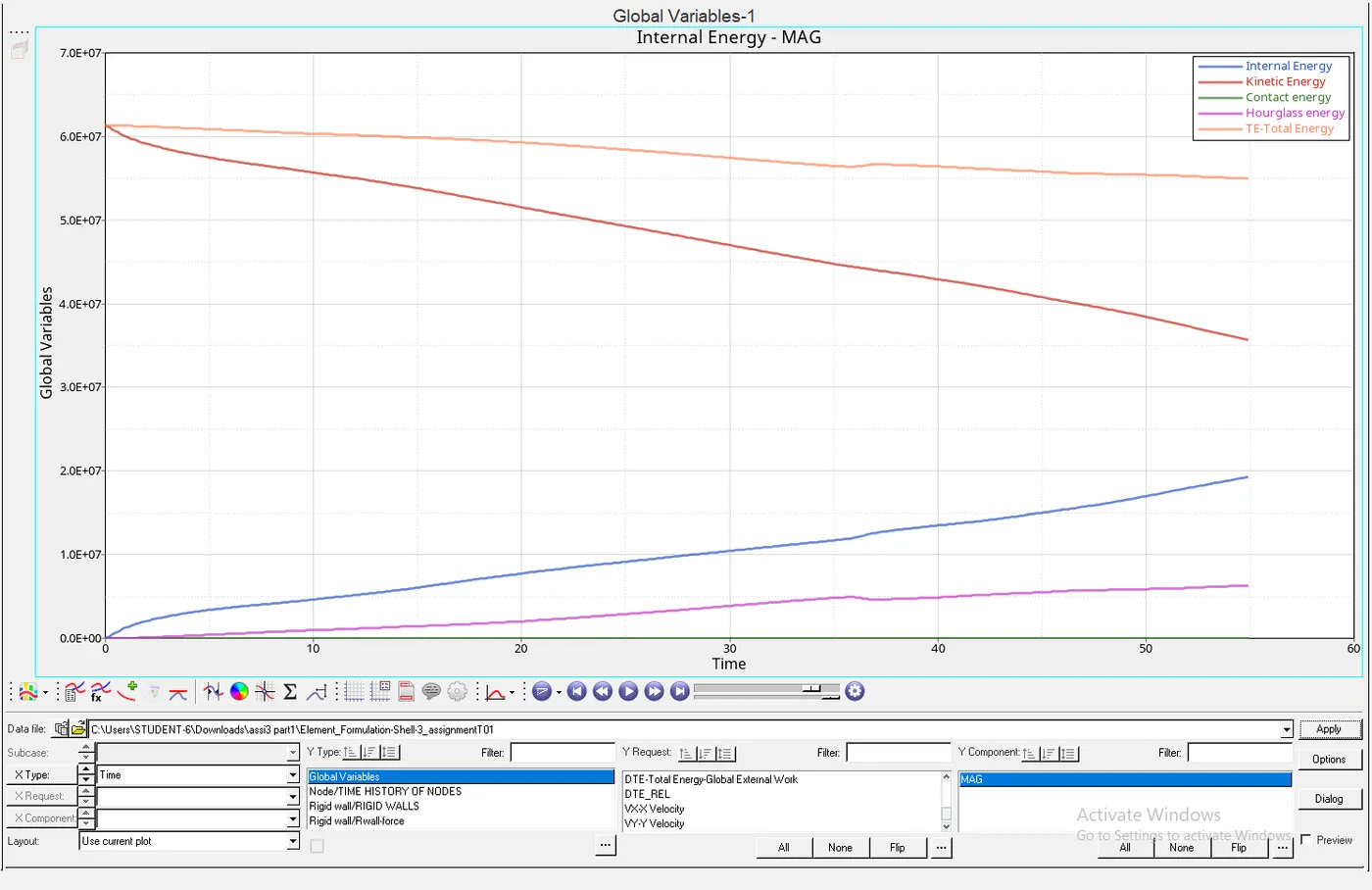
this plot consists of Internal energy, Kinetic energy, contact energy, Hourglass energy, and Total energy all with respect to time
the deformation is very inconsistent as we are able to observer flat faces
we can observe that kinetic energy starts at a very high value due to huge mass and energy and it drops to 0 over time
the total energy is also very high and it decreases at a slow pace
internal energy starts at 0 since there is no deformation at 0-sec
hourglass energy also starts at 0 but slowly and steadily increases with respect to time
contact energy maintains throughout as it's constant.
kinetic energy will eventually reach 0 and stay constant and internal energy will linearly increase and attain almost maximum energy.
then we also plot the rigid wall forces.
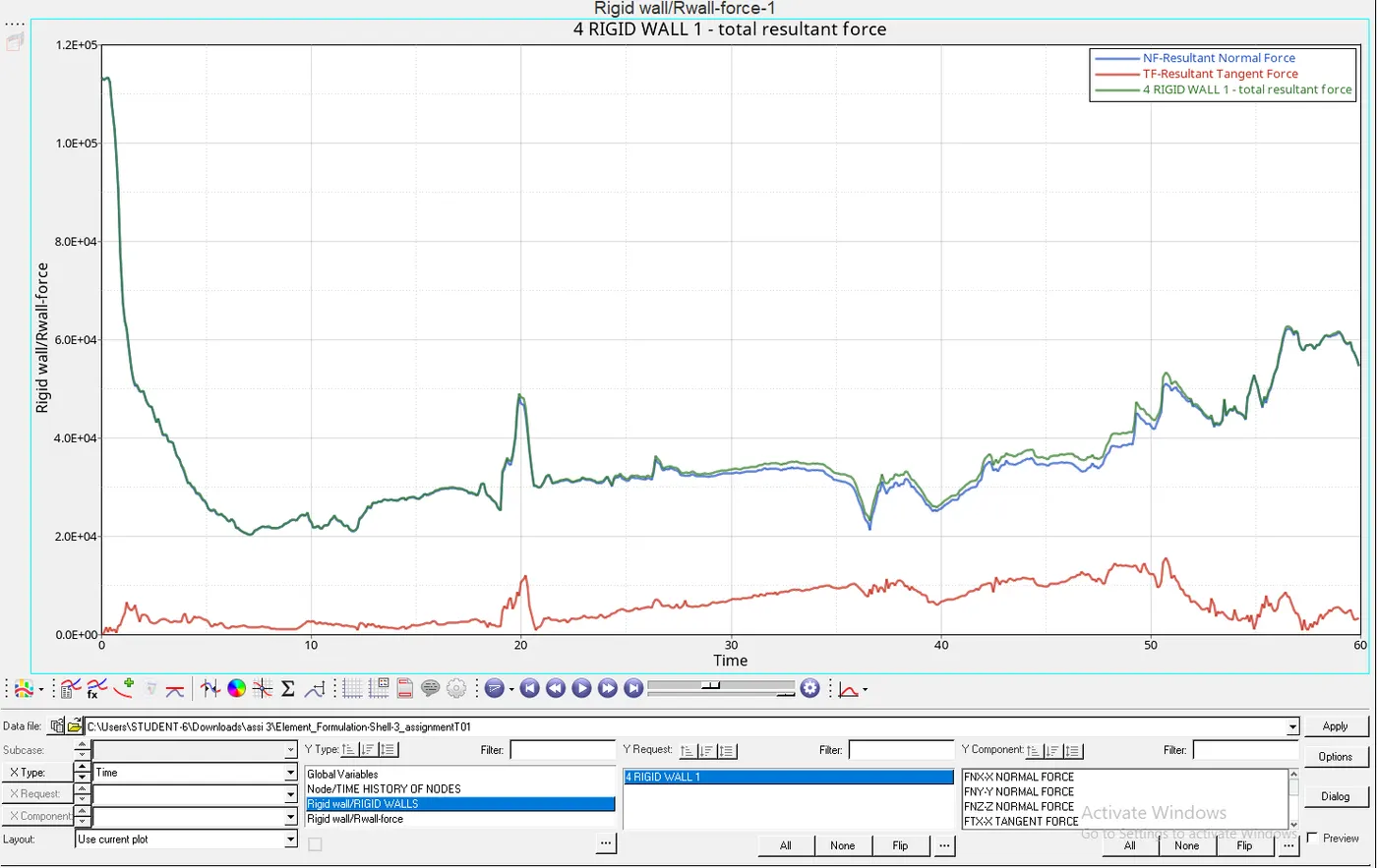
as we can see from the graph resultant normal and total resultant force starts at a high value and there is a quick drop of force, both the forces almost have similar values.
resultant tangential force starts from zero and there is a spike at 20 sec indicating the first major deformation and then deformation occurs again at 35 sec and 50 sec.
Comparison :
we change the parameters as :
| Parameters | Comment |
|
Ishell =24 |
QEPH 4 nodes shells are best combination of cost and accuracy. |
|
Ismstr=2 |
Full geometric nonlinearities (default)with possible small strain formulation activation in RADIOSS Engine. |
|
Ish3n=2 |
Standard 3 noded shell (C0)with modification for large rotation(default) |
| N=5 | Number of integration points set to 5 for accuracy bending. |
|
Ithick=1 |
Thickness change is taken into account for accuracy. |
|
Iplas=1 |
Iterative plasticity for good accuracy. |
modified values :
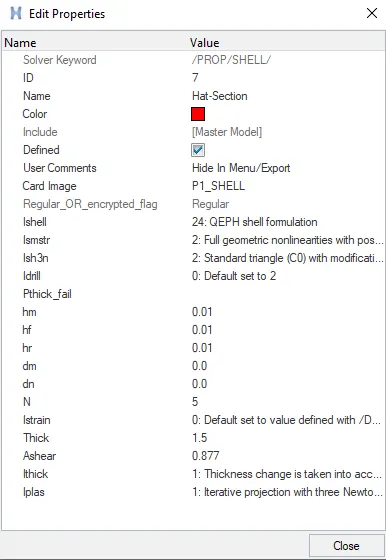
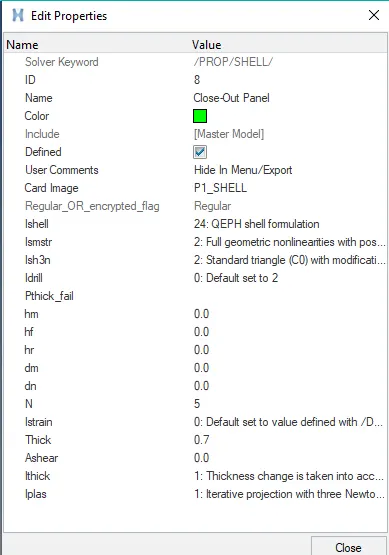
after following the above similar procedures we again use hyperview to animate the file.
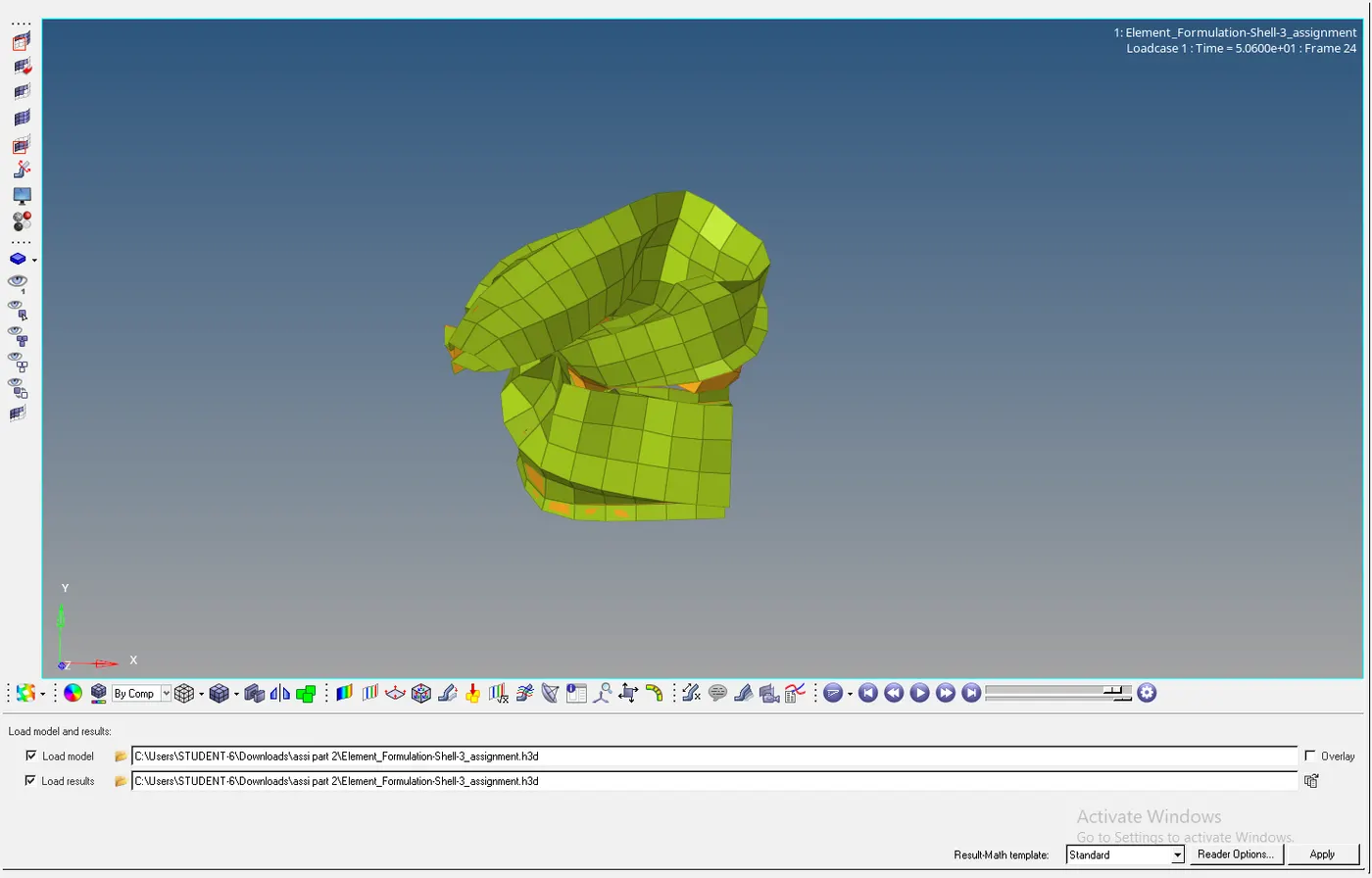
google drive file for the animation: https://drive.google.com/drive/folders/1t1Kn7wF20Rd9DN9N4BVQfjFtSi-berbW
once the animation is done we yet again plot
Internal energy, Kinetic energy, contact energy, Hourglass energy, and Total energy all with respect to time
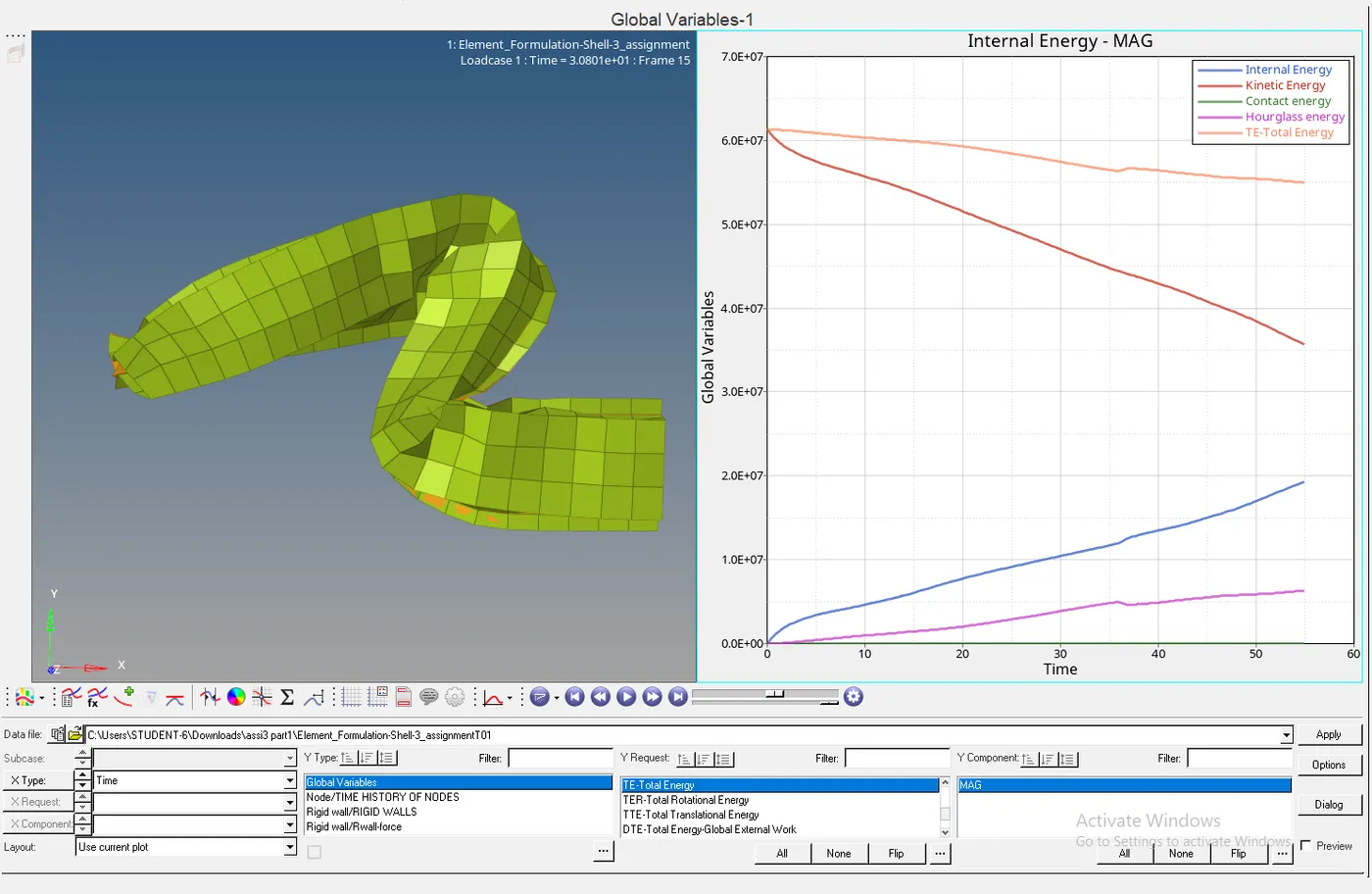
as we can observe and compare the 2 graphs we can tell that
the deformation is consistent compared to the no parameter animation and we are able to observe the clear deformations at the bends.
we can observe that kinetic energy starts at a very high value due to huge mass and energy and kinetic drop is much faster compared to the no parameter graph.
the total energy is also very high and it decreases at a slow pace and can be observed that there is a spike in energy at 35 sec indicating deformation.
internal energy starts at 0 since there is no deformation at 0-sec and it rises linearly and reaches almost peak energy.
hourglass energy also starts at 0 but slowly and steadily increases with respect to time and there is a drop in energy when deformation takes place.
contact energy maintains throughout as it's constant.