Single cylinder 4-stroke SI engine simulation for different speeds of 1800 rpm and 3600 rpm using GT-SUITE.
1.AIM: To perform the simulation for Single Cylinder 4-Stroke SI engine running at 1800 rpm and finding out the following parameters.
- Air flow rate
- Brake Mean effective pressure
- Brake Specific Fuel Consumption
- In-Cylinder pressure
Definitions:
Air Flow Rate : The amount of air entering into the engine cylinder per unit time.
Brake Mean Effective Pressure : The Brake Mean Pressure is the average pressure forcing the piston(s) down that provides the measured torque output. It is not an actual measurement of cylinder pressure during the power stroke but the average pressure. To put in simple terms, BMEP is the work per unit displacement per engine cycle which gives the units of pressure. We use it as it gives Work (proportional to Torque) per cycle independent of engine size thus one can compare engines of different engine sizes with same fuel and same type of aspiration of air.
Brake Specific Fuel Consumption : Brake Specific Fuel Consumption is a measure of the fuel efficiency of any engine that burns fuel and produces rotational power output. The BSFC value indicates how efficiently the engine converts the fuel supplied to useful work.
In-Cylinder Pressure : The maximum pressure obtained inside the engine cylinder.
Single cylinder SI Engine Template is used from the tutorials for the simulation.
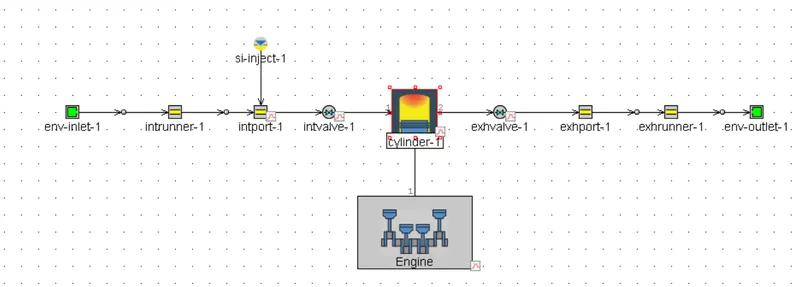
The below default engine conditions are used for the simluation.
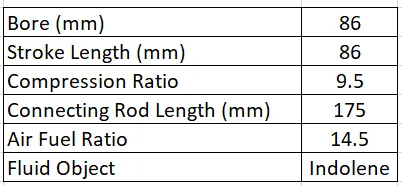
Setting the RPM parameter which is the engine speed to the given value as 1800 rpm.

The following required results are obtained after running the simulation for single cylinder 4-stroke SI engine running at 1800 rpm.
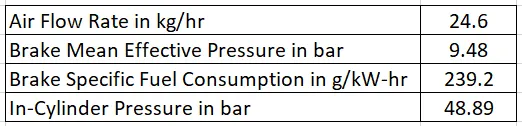
2. AIM : To increase the power output of single cylinder 4-Stroke SI engine running at 3600 by 10%.
Now finding the Brake Power by setting engine speed to 3600 rpm.

The Brake Power is found to be 16.7 kW.

In order to increase the Brake Power by 10% for the single cylinder 4-stroke SI engine running at 3600 rpm the following are the different ways tried.
a. Increasing the Bore size
Setting up following 3 different cases of bore sizes.

The following are the results obtained for each case respectively after performing simulation.

In the case 3 which is for a Bore Size of 90mm, the Brake Power is obtained as 18.4 kW and there is a increase of 10.17% in the Brake Power when the Bore Size is changed from 86 mm to 90 mm.
b. Changing the Air-Fuel Ratio
Here the Air-fuel ratio is changed from 15 to 12 with a change in interval of 0.5

The following are the results obtained for each case respectively after running the simulation.

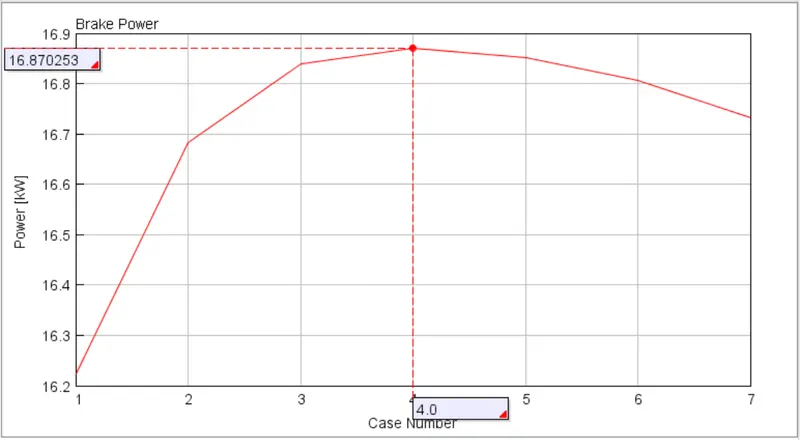
Brake Power started increasing as we decrease the air-fuel ratio and reached to a maximum and then further decrease in air-fuel ratio effected in decrease in Brake Power. The maximum brake power is obtained as 16.87 kW for Air-fuel ratio of 13.5. The increase in Brake Power is 1.017% when the air fuel ratio is decreased from 14.5 to 13.5
Besides looking for increase in Brake Power with change in air-fuel ratio, it has few more following other effects.
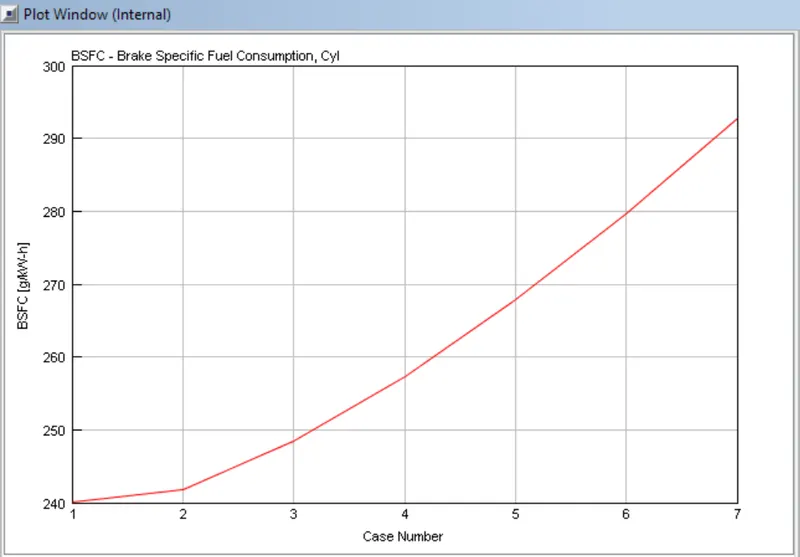
- Brake Specific Fuel Consumption got increased as the mixture becomes richer and richer which is an undesirable effect
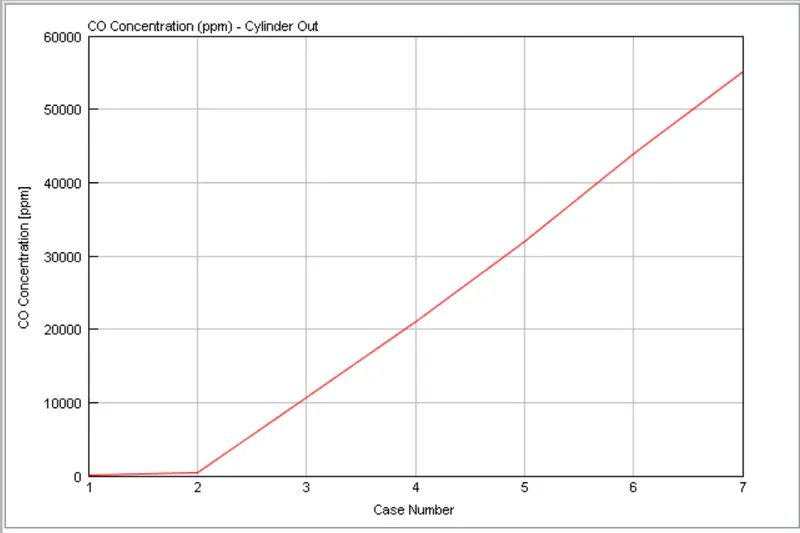
- CO emissions increased when mixture becomes richer which is an undesirable effect.
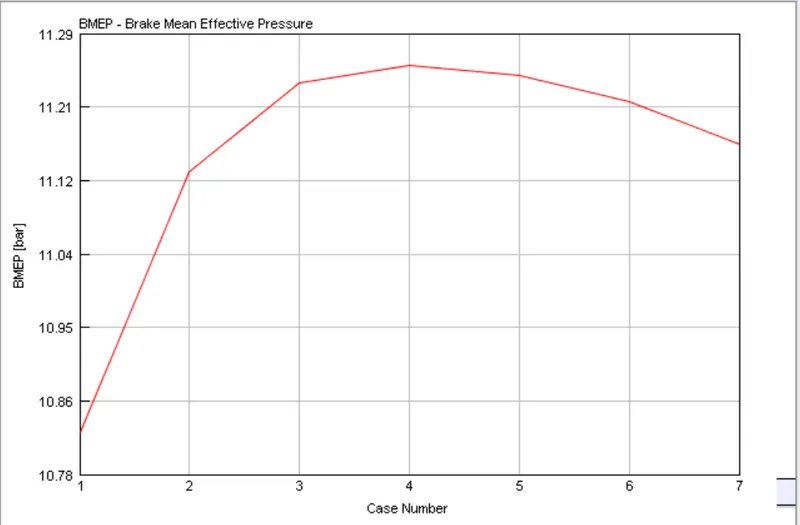
- Brake Mean Effective Pressure got increased as the mixture becomes richer upto a maximum value of 11.25 bar at an Air-fuel ratio of 13.5 which is the case number 4 and then it keeps decreasing with further decrease in air fuel ratio.
- NOx emissions are reduced with decrease in air-fuel ratio because as the mixture becomes rich combustion efficiency becomes low and therefore NOx emissions are reduced. Below are the NOx values in ppm for the respective 7 cases of air-fuel ratios.

c. Changing the Anchor angle:
Anchor angle: The Anchor Angle is the number of crank angle degrees between top dead centre (TDC) and the 540% combustion point of the weibe curve. Typical values for anchor angles in SI engines are 5 to 12 degrees after TDC. The following is the image showing weibe curve for reference.
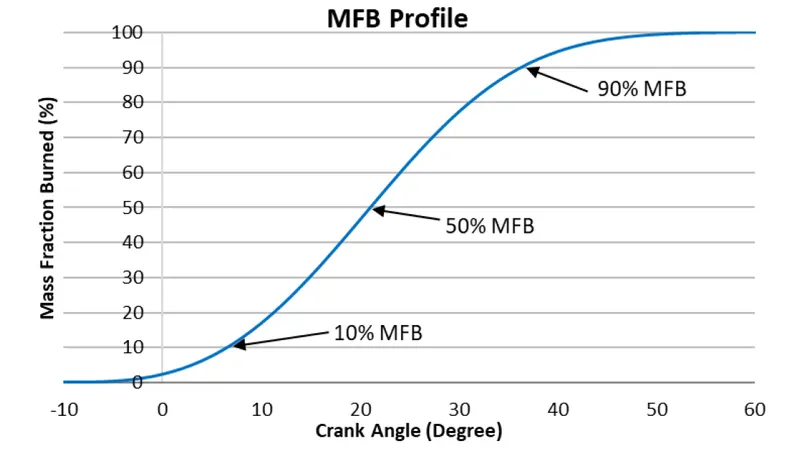
Mass fraction Burnt (MFB) is a common combustion phasing indicator to determine the amount of fuel and air mixture that has been burnt for a given crank angle.
MFB50 is the mid point of combustion which is used to position the heat release curve and can give good indication of the efficiency of combustion by comparing it to the TDC of the engine. MFB50 is used as an anchor point to analyze the peak pressure during combustion as it allows for the combustion profiel to be moved via a single reference point.
Setting up following 4 cases of MFB50 values.
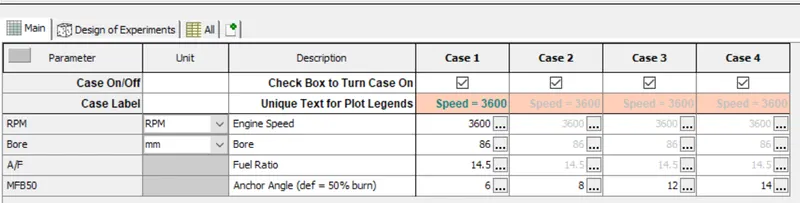

We can see from the above values Brake Power is getting reduced with increase in Anchor angle.
d. Changing the combustion duration:
Combustion duration: It is angle excluding the first 10% and last 10% of the total combustion duration. Typical values of combustion duration are 25 to 35.
Setting up below 3 cases of combustion duration.
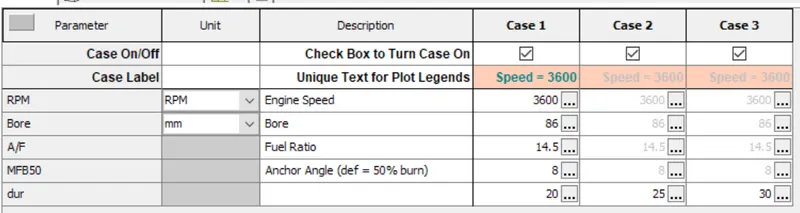

From the above results it is evident that the Brake Power decreases with increase in the combustion duration.
e. Changing the compression Ratio:
Setting up 4 below cases for compression ratio.
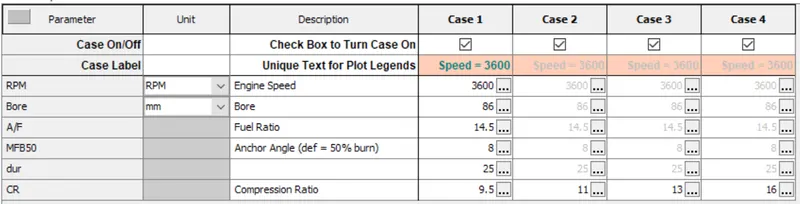
The following are the results obtained for the above 4 respective cases.

The Brake Power has increased by 10.17% when the compression ratio is increased from 9.5 to 16.
The following are the other effects caused when the compression ratio is increased.
- The pressure rise with respect to change in crank angle increased with increase in compression ratio which leads to knocking in SI engines.

f. Changing the Stroke Length:
Setting up 3 below cases for stroke length
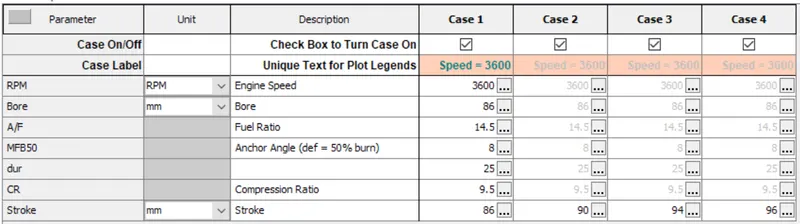
The following are the results obtained for the above 3 cases respectively.

The Brake Power is increased by 11.37% when the stroke length is changed from 86 mm to 96 mm.
CONCLUSIONS:
- Brake Power of the Single Cylinder 4-Stroke SI engine running at 3600 rpm is found to be 16.7 kW
- Brake Power is observed to be increased by 10.17% when the Bore Size is increased from 86 mm to 90 mm for the Single Cylinder 4-Stroke SI engine running at 3600 rpm.
- Brake Power is observed to be increased by 11.37% when the stroke length is increased from 86 mm to 90mm for the Single Cylinder 4-Stroke SI engine running at 3600 rpm.
- Brake Power is observed to be increased by 1.017% when the air fuel ratio is decreased from 14.5 to 13.5 for the Single Cylinder 4-Stroke SI engine running at 3600 rpm.
- Brake Power is observed to be increased by 10.17% when the compression ratio is changed from 9.5 to 16 for the Single Cylinder 4-Stroke SI engine running at 3600 rpm but the compression ratio of 16 leads to Knocking. This can be observed by high ratios of change in pressure rise with respect to change in crank angle.