Assignment 2
Assignment 2
- Run the case at 1800 rpm and list down important parameters
Procedure:
Open Tutorial from a given path and save it in a different folder.
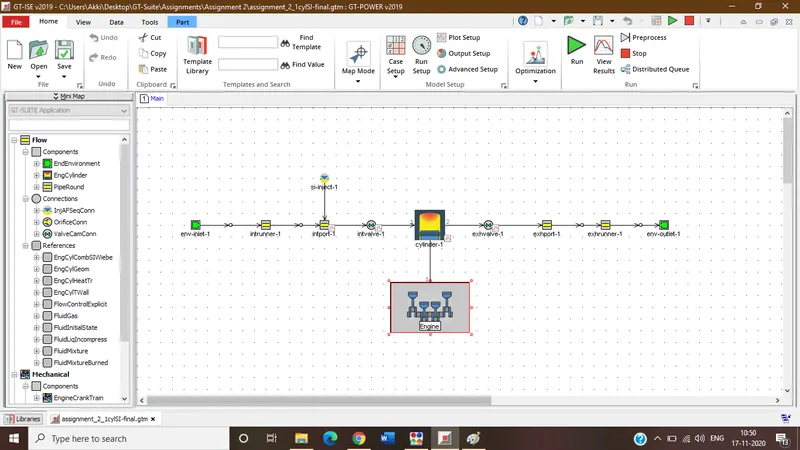
Double tap on Engine and change the RPM to 1800
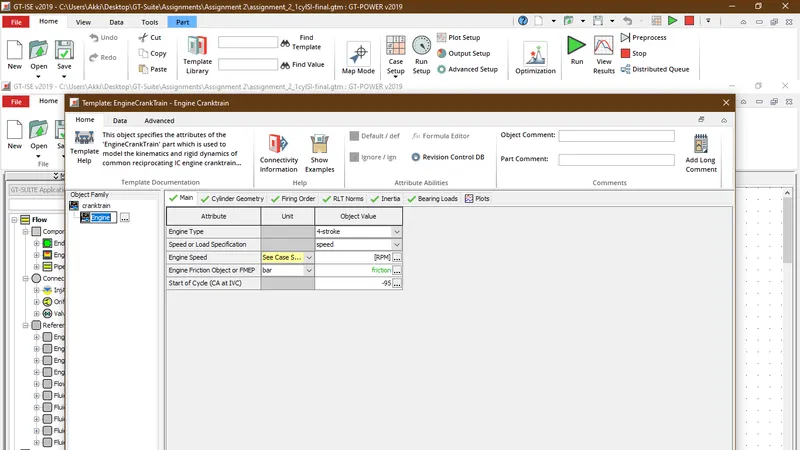
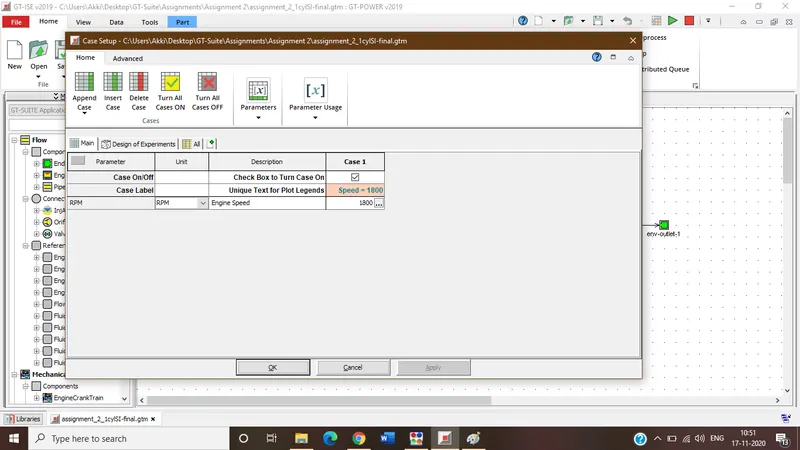
Run the simulation
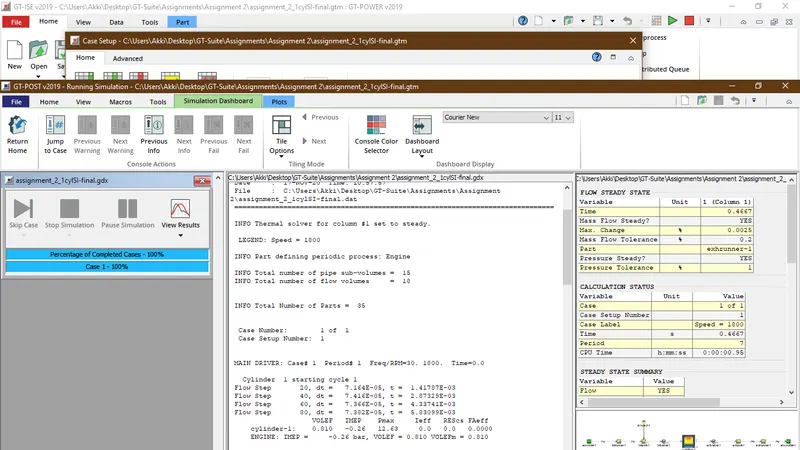
Results
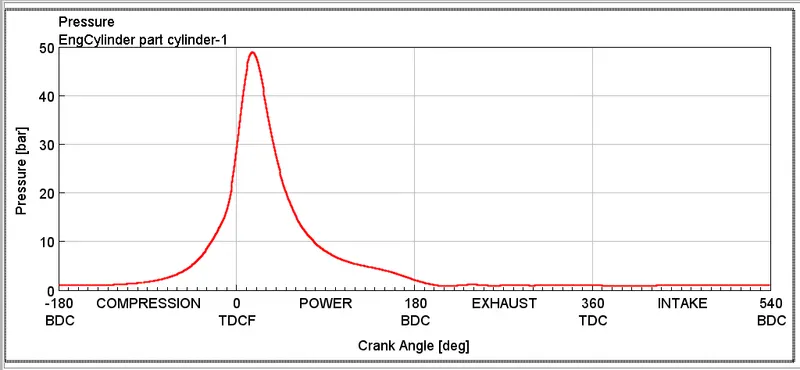
In-cylinder Pressure
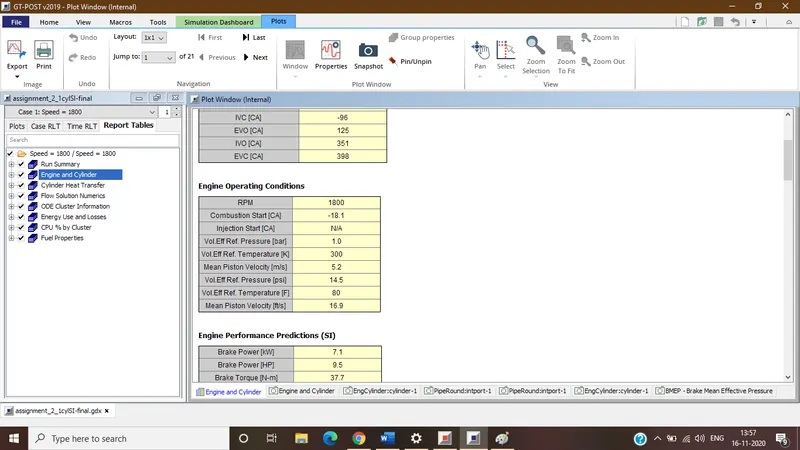
RPM
Air flow Rate, BME, BSFC
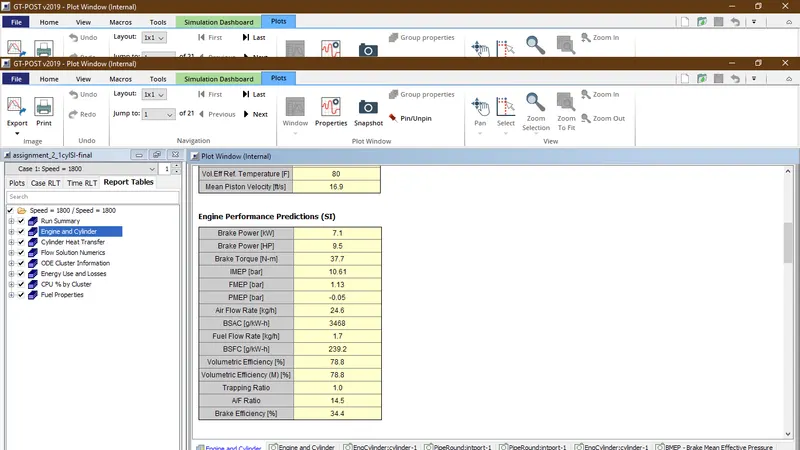
Air flow rate = 24.6 Kg/h
BME = IMEP - FMEP = 10.61 bar - 1.31 bar = 9.48 bar
BSFC = 239.2 g/kW-h
In-cylinder pressure = 48.89 bar
- Increase the power output at 3600 rpm by 10%
Run the case at 3600 rpm using same procedure used above. The obtained output Brake power = 16.7 kW (Default case) which is to be increased by 10%
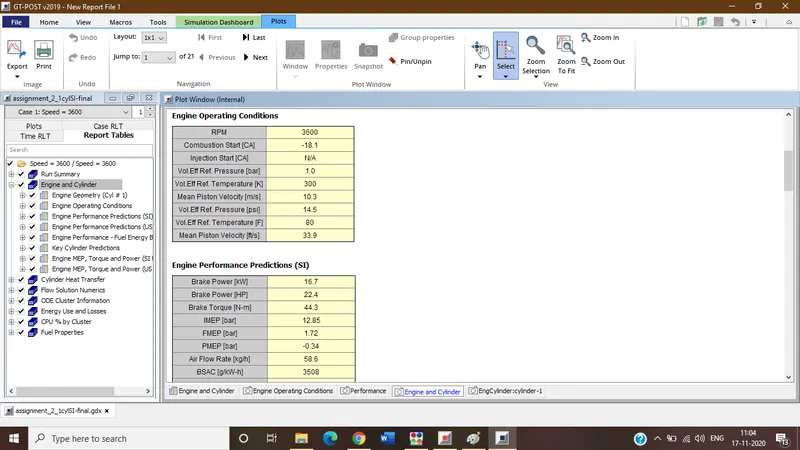
Engine Power or Horsepower is the maximum power that an engine can gives out. The Power output depends on the size and design of the engine, but also on the speed at which it is running and the load or torque. Maximum power is achieved at relatively high speeds and at high loads.
Power = (Engine Torque x Engine Speed) / 5252
There are following ways by which increasing the power output can be archive
Increasing stroke length
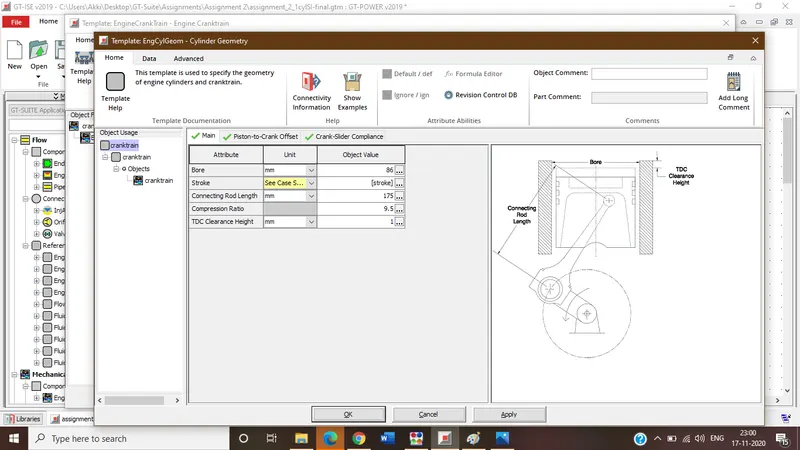
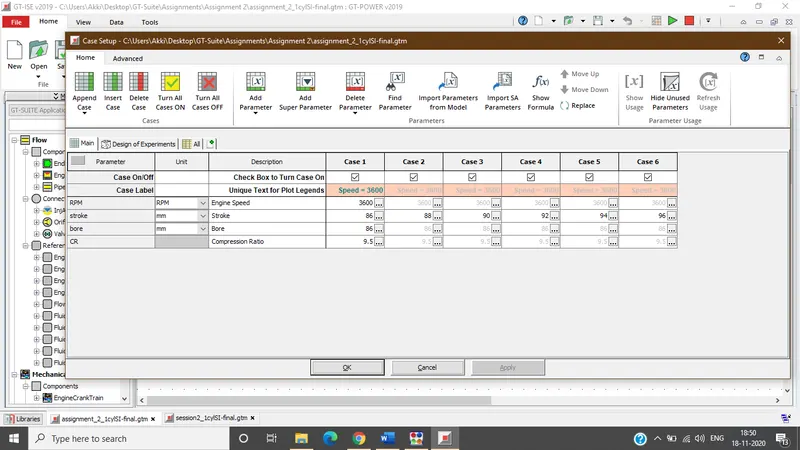
Check stroke size
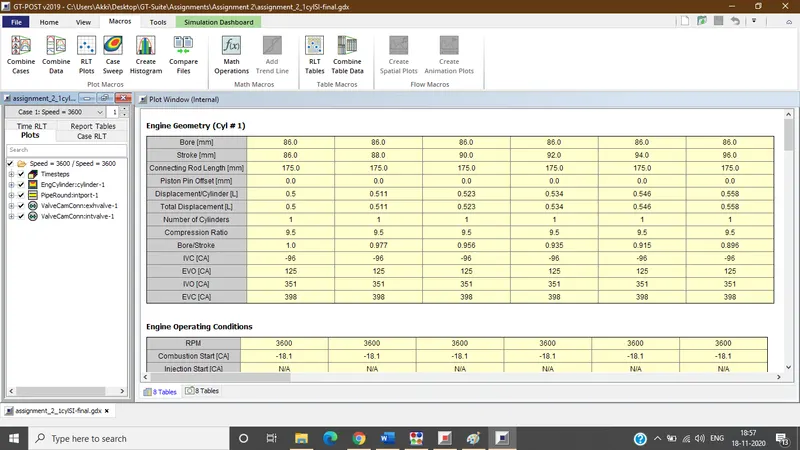
Power
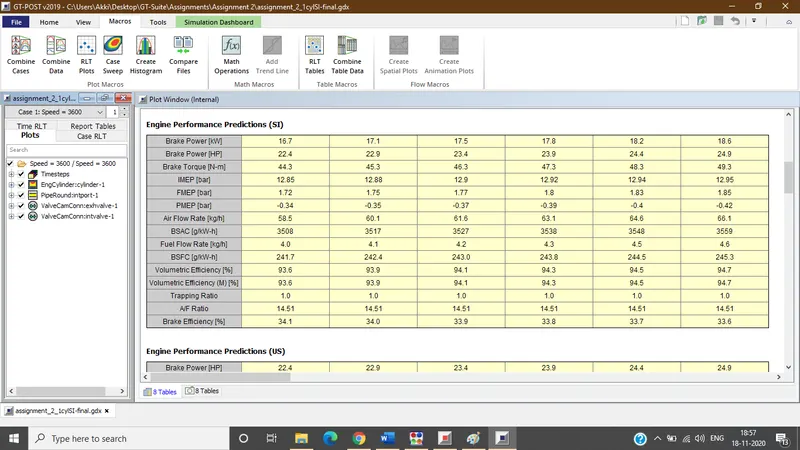
In the above simulation stroke length is increase from 86 to 94 mm in a Vorder of 2 just to see the variation in break power output. Therefore case 1 is a default case whose power output is 16.7 kW and if we take a look at above table at every change in stroke length the power output is changes. So, at case no 6 we get power output 18.2 kW and if we find out percentage increase in power.
% increase in Power output = ((18.6-16.7)/16.7) *100 = 11.37 %
Thus, increasing stroke length by 10mm i.e. from 86 mm to 96 mm we get above 10% increase in Brake power output.
Increasing bore diameter
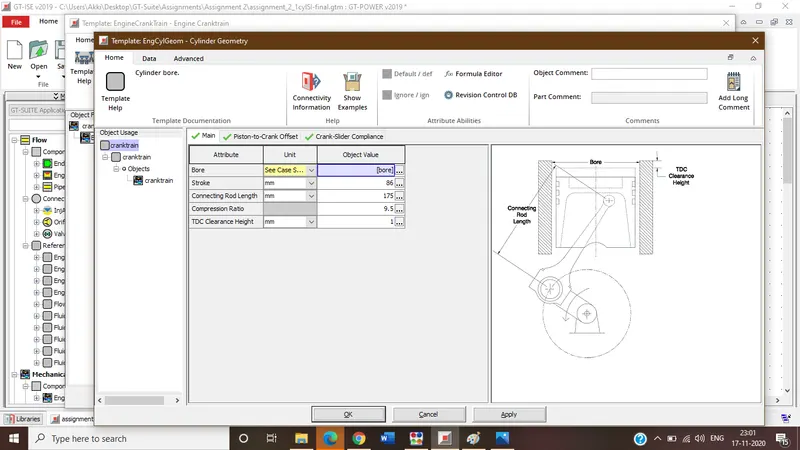
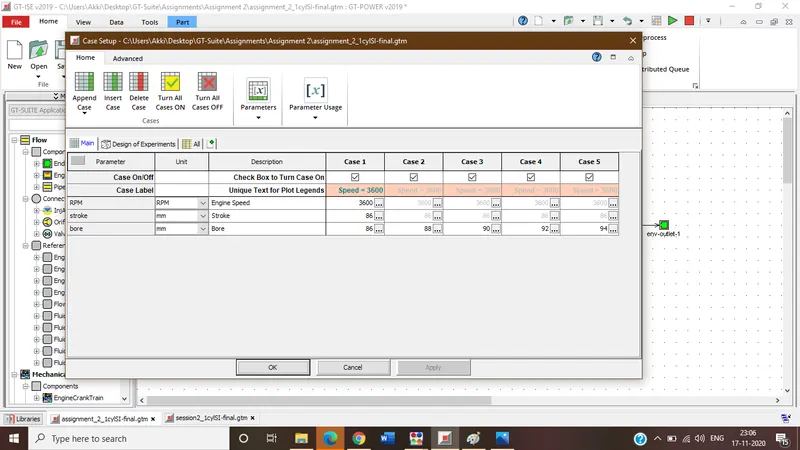
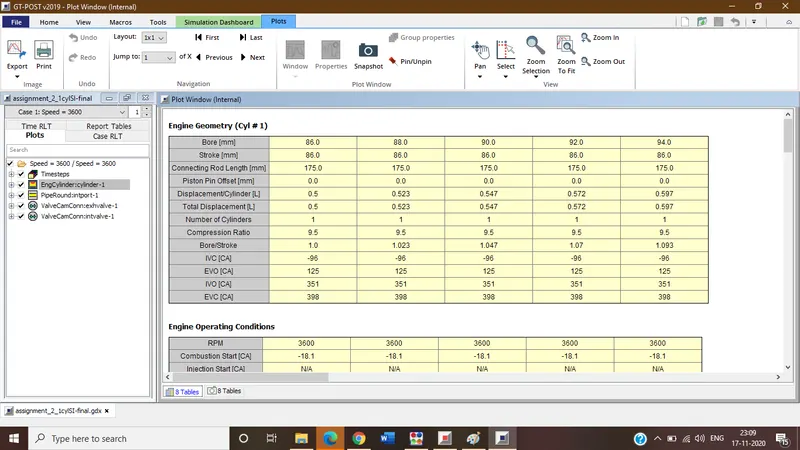
Check Bore size
Power
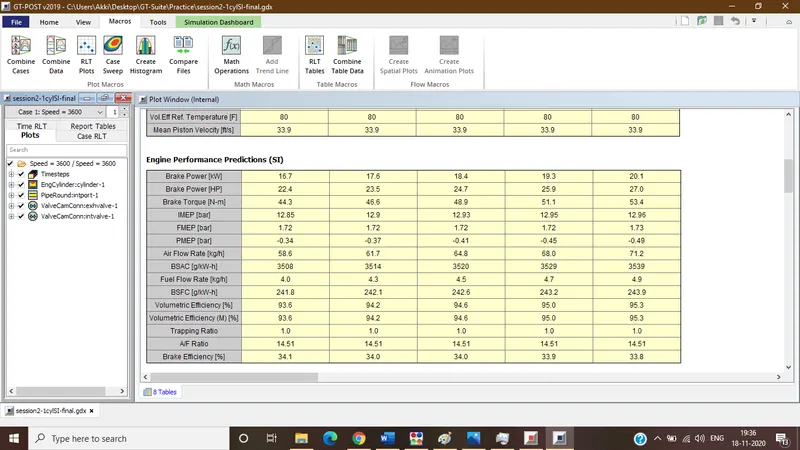
From the above results we can see that the bore diameter affects the power output a lot. 2 mm change in bore diameter give higher variation in power output. So, if we take case no 3, we get brake power = 18.4 so % increase is
% increase in Power output = ((18.4-16.7)/16.7) *100 = 10.17 %
Just increase in bore diameter by 4 mm we get 10 % Increase in Power output.
Changing compression Ratio
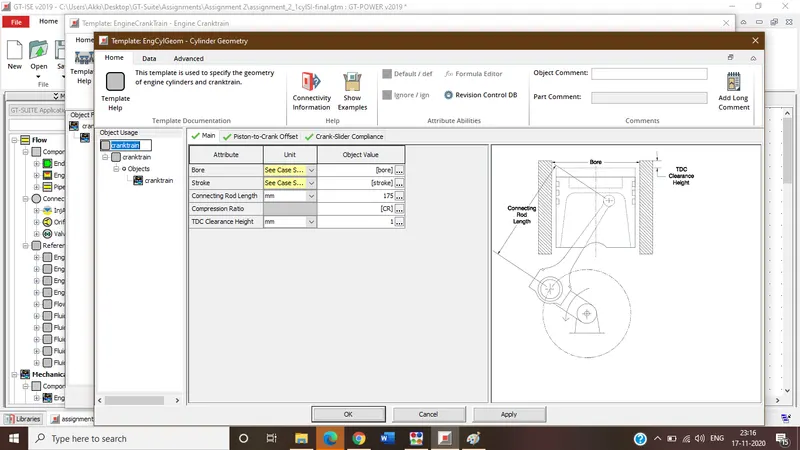
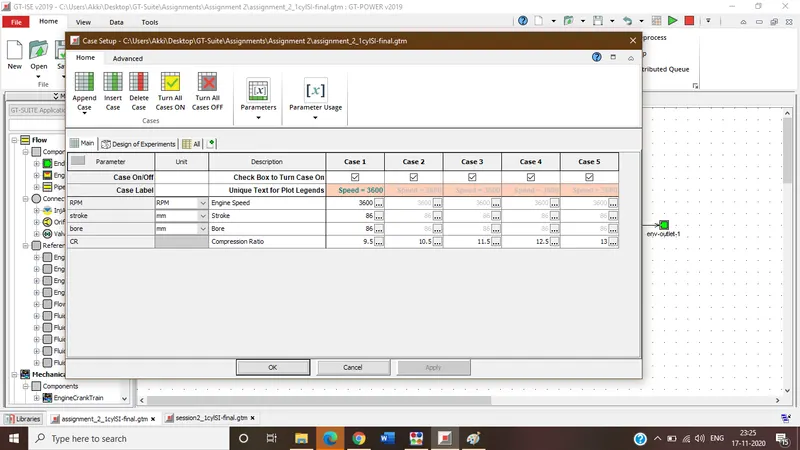
Check Different CR
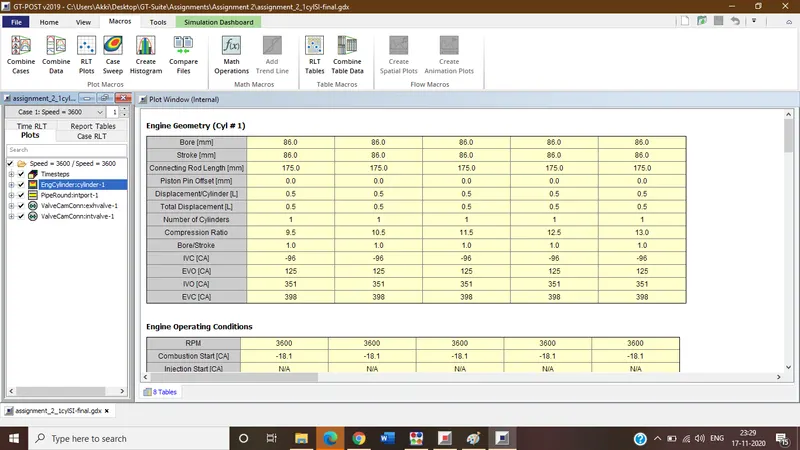
Power
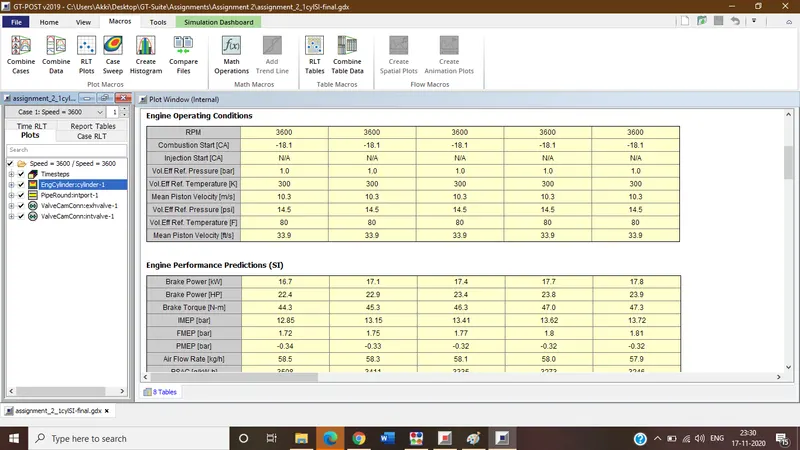
from the above results we can see that there is a increase in power output due to increase in compression ratio but in SI engines generally we use gasoline as a fuel which has less compression ratio and due to compacity of cylinder if we increase compression ratio then the problem of knocking arises which is not desirable for a SI engines. Thus, increasing Compression ratio to get a higher power output is not practical.
There are other ways of Increasing the power output giving rich A/F mixture to engine cylinder for combustion but again it depends on the time require to burn entire given mixture and if mixture is not burn completely then there is an increase in the formation of exhaust gas which is not environment friendly. Also, this method of increasing power leads us to the high fuel consumption.
Then again there is another way to increase power output by increasing no. of cylinders into engine. but again that comes up with space, fuel consumption and engine block weight(which makes vehicle heavier one) issues also if we are looking for 10% power output then increasing no of cylinder is not desirable.
Increase the temperature of the combustion process or change in fuel type also gives us increase in power.