Assignment 1
Aim
To explore the GUI of the GT Suite and perform an simulation on an Intercooler
GUI of the GT Suite
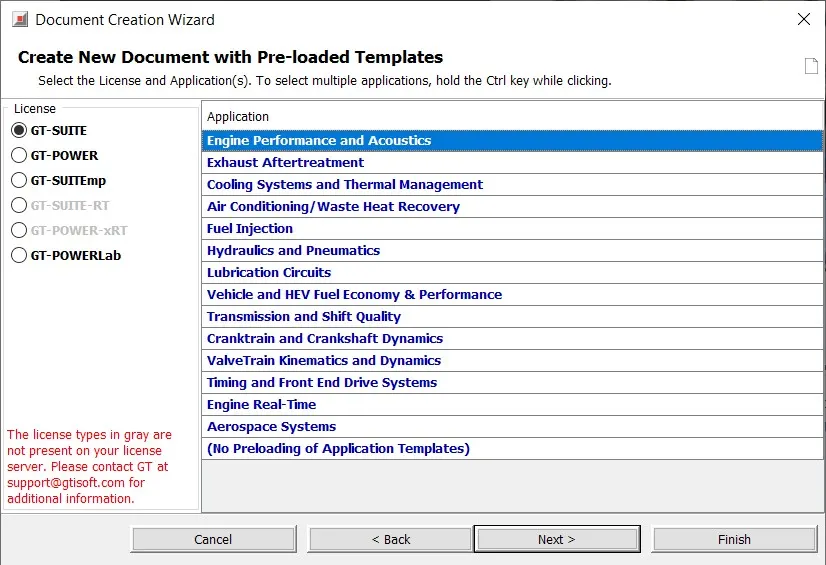
Some of the modules in the GTSuite are as follows
- Engine Performance and Acoustics - The engine performance and acoustics library is designed for steady-state and transient simulations and can be used for analyses of engine and powertrain control. It is applicable to all types of internal combustion engines and provides the user with many components to model almost any advanced concept.
- Exhaust Aftertreatment - GT-SUITE includes the capability to model numerous exhaust aftertreatment components and complete aftertreatment systems. The methodology is highly flexible and gives the user complete control over the reaction kinetics being used. The modeling possibilities include, but are not limited to:
• Single stand-alone exhaust aftertreatment component
• Multiple exhaust aftertreatment components in series or parallel
• Integration of controls with exhaust aftertreatment
• Full model integration of engine model + exhaust aftertreatment model + driveline model + more - Cooling Systems and Thermal Management - GT-SUITE can be used to integrate all of the activities related to heat management to meet design objectives such as engine durability, emissions, fast warm-up, passenger cabin heating, component sizing and specification, and system control.It is an one-dimensional fluid dynamics, representing the flow and heat transfer in the piping and in the other components of a cooling system.
- Air Conditioning / Waste Heat Recovery - In modern vehicle design in order to ensure passenger comfort (Air Conditioning or Heat Pump) or harnessing the power present in the high temperature exhaust gas from the engine (Waste Heat Recovery Rankine Cycle). GT-SUITE is a multi-disciplinary tool that can aid in the development of such systems by accurately predicting the behavior of such system in different stages of design.These circuits interact through heat exchangers, transferring heat from one circuit to another, which allows the calculation of the overall heat balance in the system. In addition to the fluid flow and heat transfer capabilities, the code contains many other specialized models required for system analysis.
- Fuel Injection - This will focus on the application of GT-SUITE for modeling fuel injection and general hydraulic components and systems. It is capable of modeling the coupled behavior of hydraulic and mechanical components. In the context of fuel systems, it is applicable to any diesel or gasoline system, including both common rail and unit pump systems. Alternative fuels can also be handled. GT-SUITE has been designed to study steady-state and transient system response.
- Lubrication Circuits - All major components of a lubrication system can be modeled in GT-SUITE, including predictive models for bearings, heat exchangers, HLA's, chain tensioners, piston cooling jets, cam phasers, and relief valves. Flow losses can also be easily imposed to model components such as an oil filter. Minor losses are also accounted for including losses from pipe friction, bends, sudden contractions/expansions, and flowsplits. The primary purpose of modeling a lubrication system is to predict flow rate and pressure distribution throughout the system (i.e. ensuring adequate flow to bearings). Other studies can be performed as well, including priming, studying resonance, and pump dynamics.
- Valve Train Kinematics and Dynamics - A library of "valvetrain" components, internally built from (mostly 2-D, i.e. planar) multi-body dynamics primitives. This is the core GT-SUITE library for building multi-body dynamic (MBD) models of single valvetrain "branches" or entire valvetrain systems and camshafts, in which rigid- and/or flexible-body parts are connected by contact, joint, spring and damper. Valvetrain library components also automate certain modeling options by automatically and internally generating (e.g. rigid, torsional or fully flexible) variants of components.
- Transmission and Shift Quality
- CrankTrain and Crankshaft Dynamics
- Vehicle and HEV fuel Economy and Performance
- Hydraulics and Pneumatics
- Timing and Front End Driving Systems
- Aerospace Systems
- Engine Real-Time
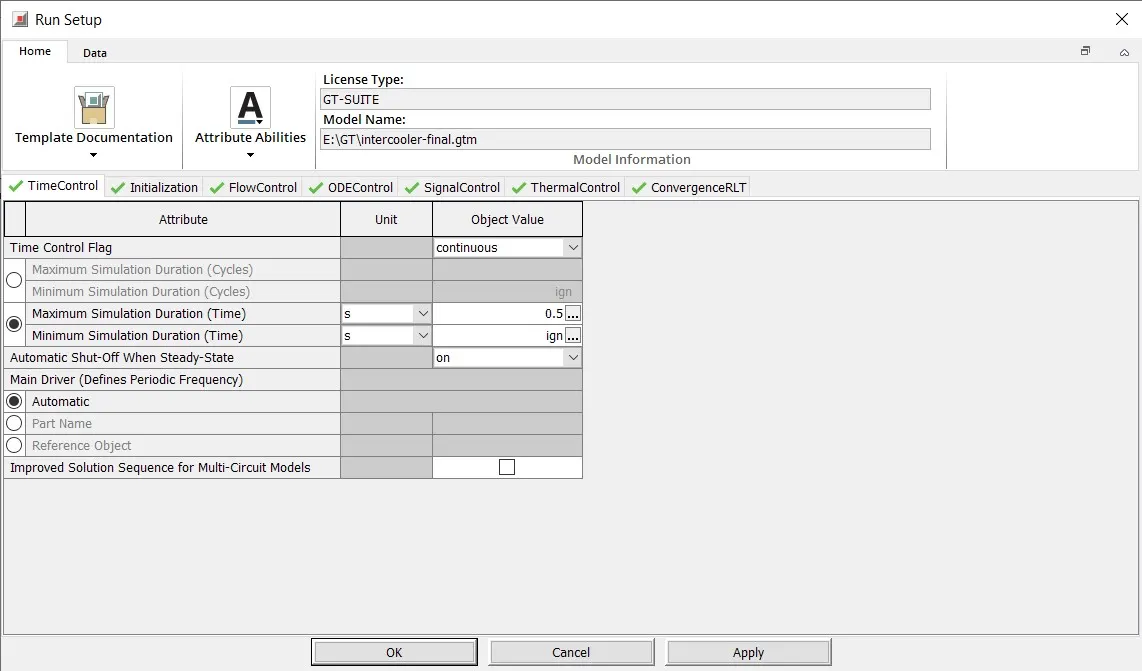
Time Control - Defines the global simulation type with regard to time. Either in Periodic or Continues.
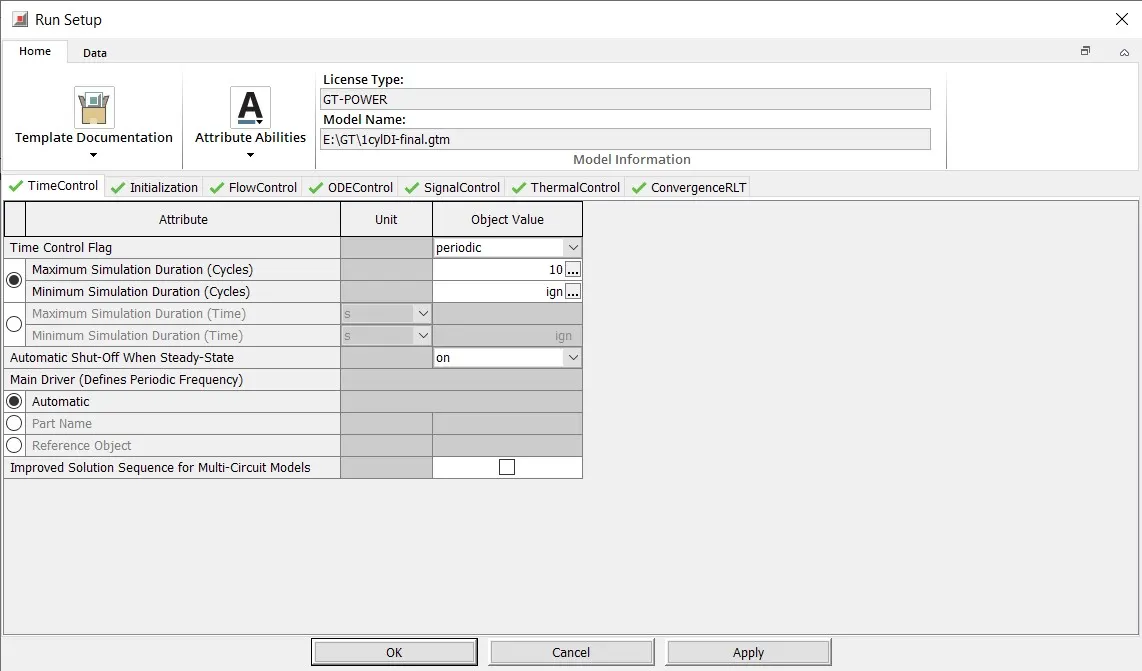
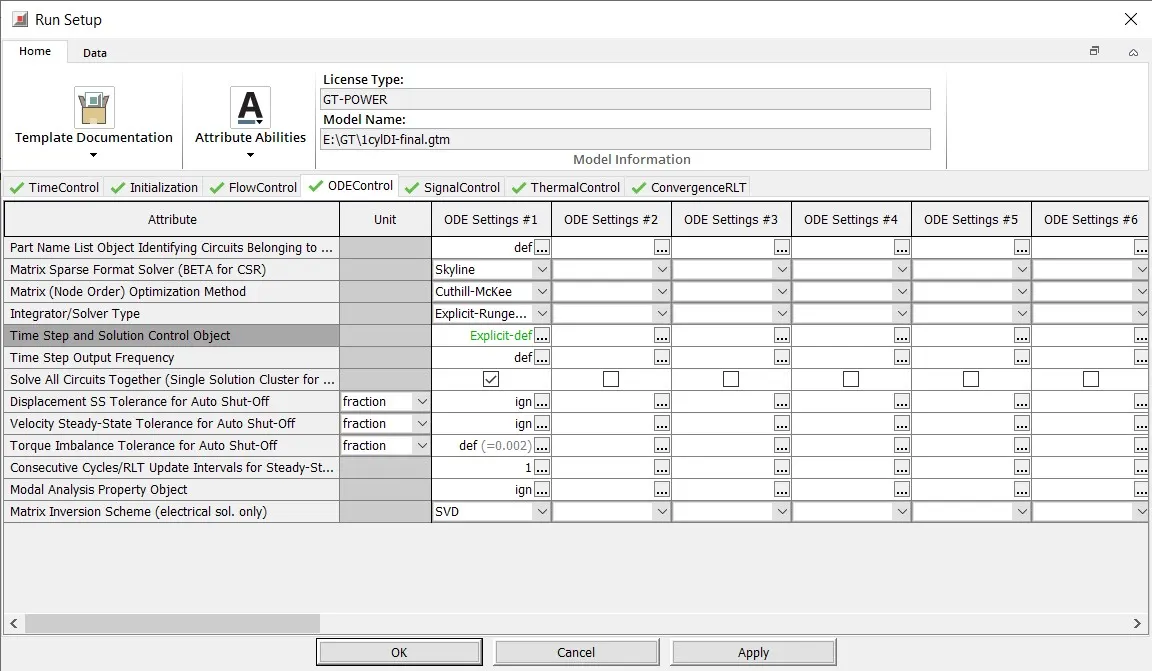
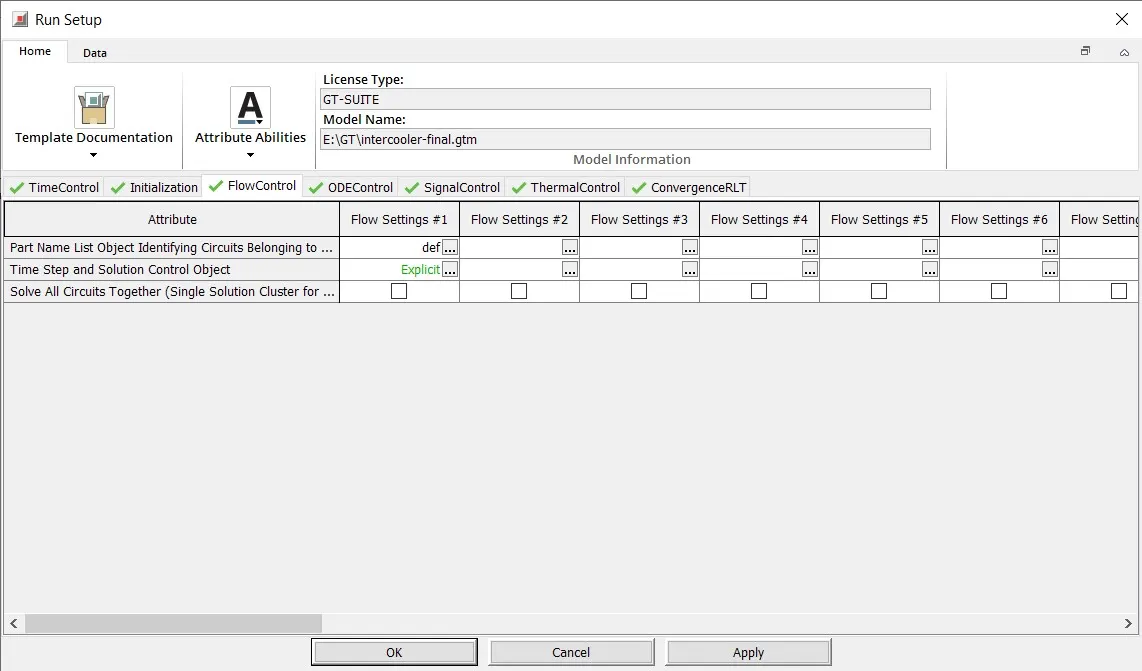
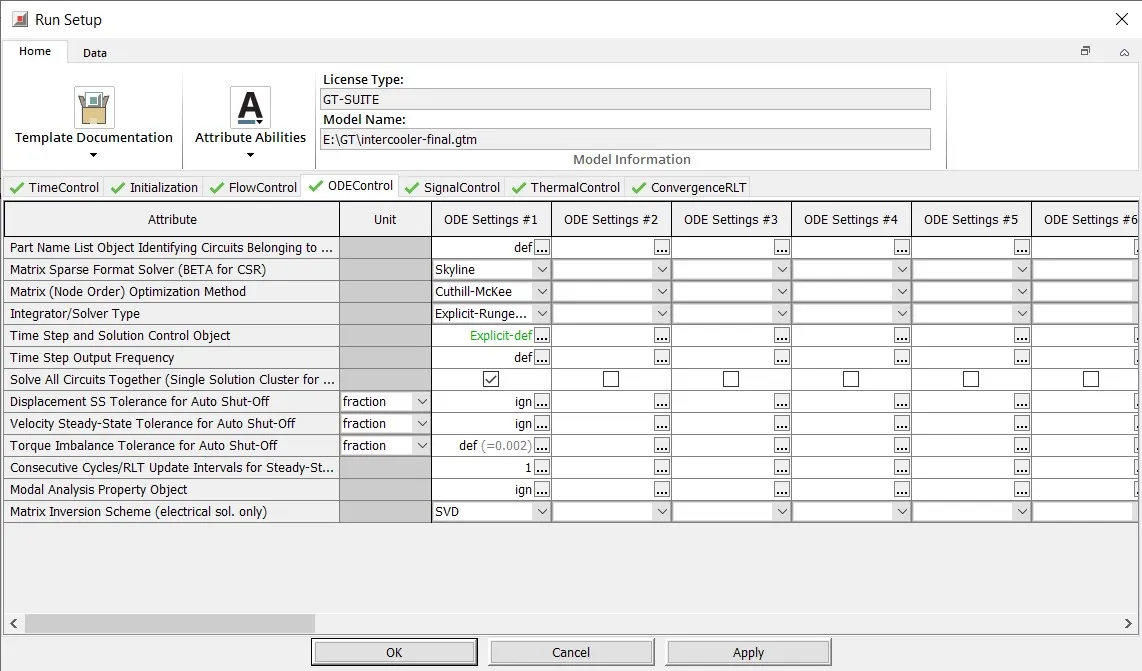
Time step and Solution Control - Name of the ' ODEControlExplicit' or ' ODEControlImplicit' reference object that can be used to define the numerical parameters for the explicit or implicit ODE solver, respectively. For the static solution of mechanical systems, this attribute should refer to the ' StaticSolnControl' reference object. In most cases, it is not necessary to define a reference object. Instead, the pre-created objects available in the GT-SUITE Library can be used, and the solver will use pre-defined default values that have been found to work well for a majority of simulations. Using a pre-created object for this attribute is equivalent to defining either of the above reference objects with all its attributes set to their "def" values.
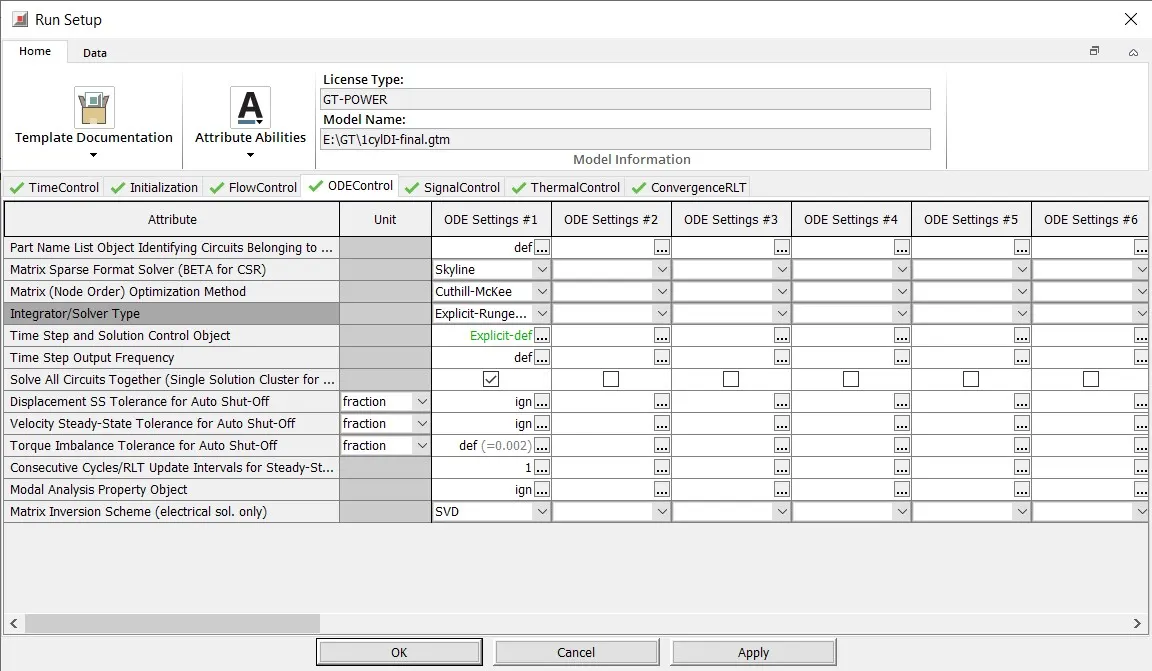
Integrator/Solver type - It is used in the time-marching of all ODEs including mechanical, electrical and magnetic libraries.
InterCooler
Run Setup
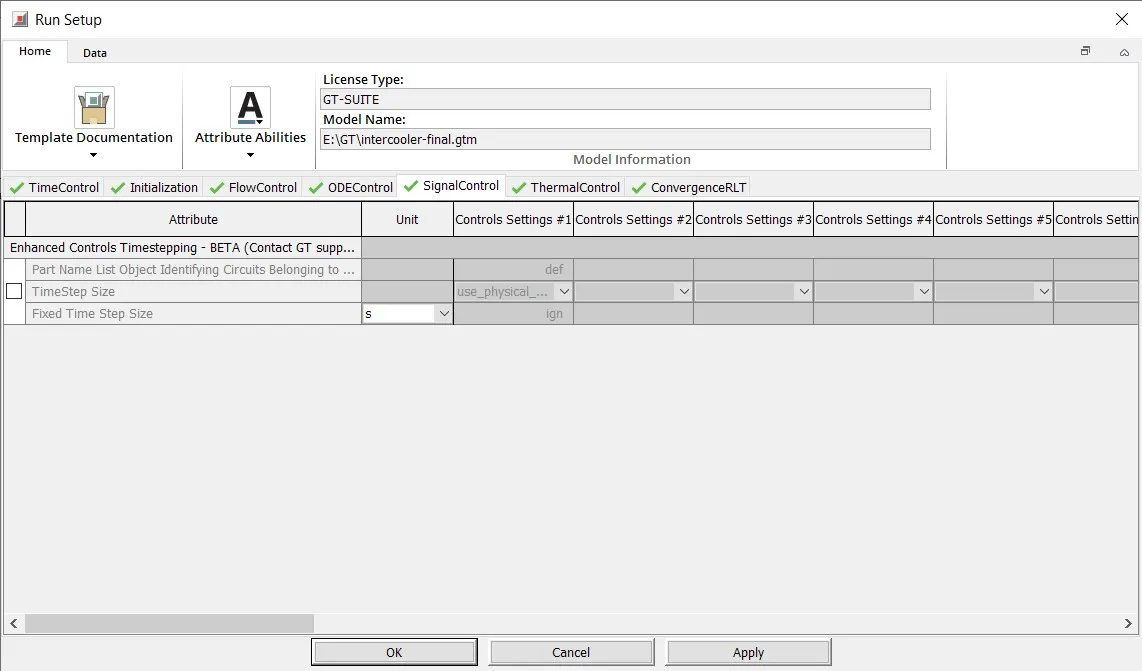
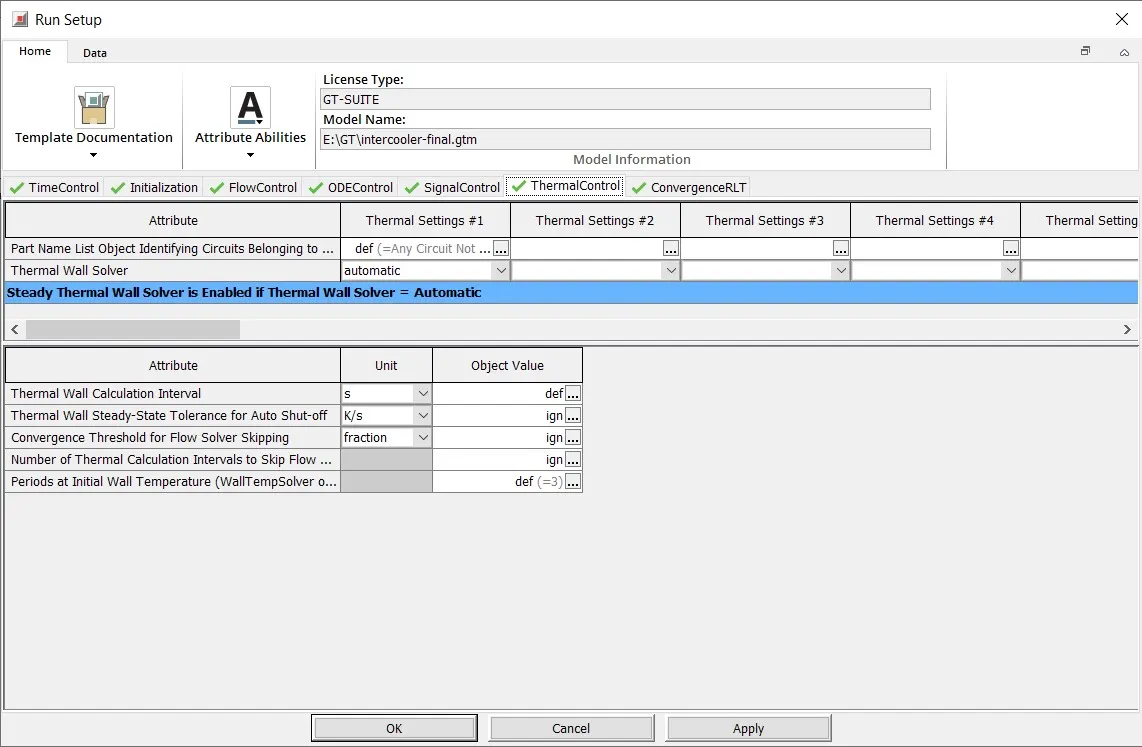
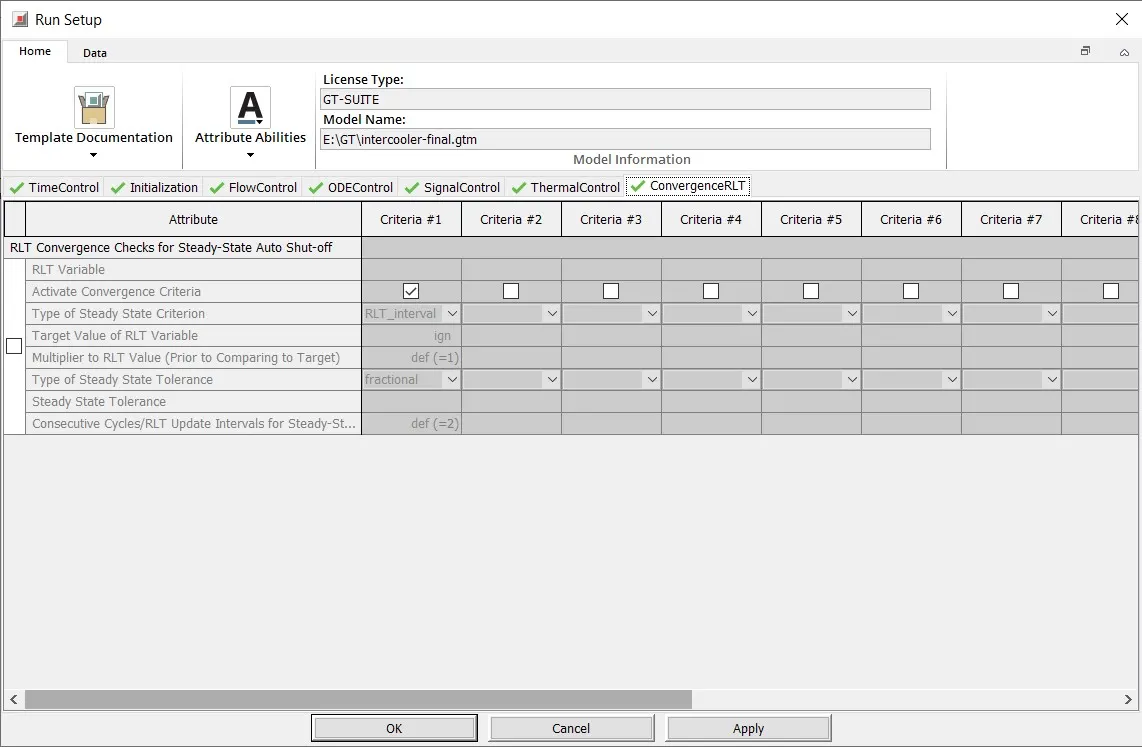
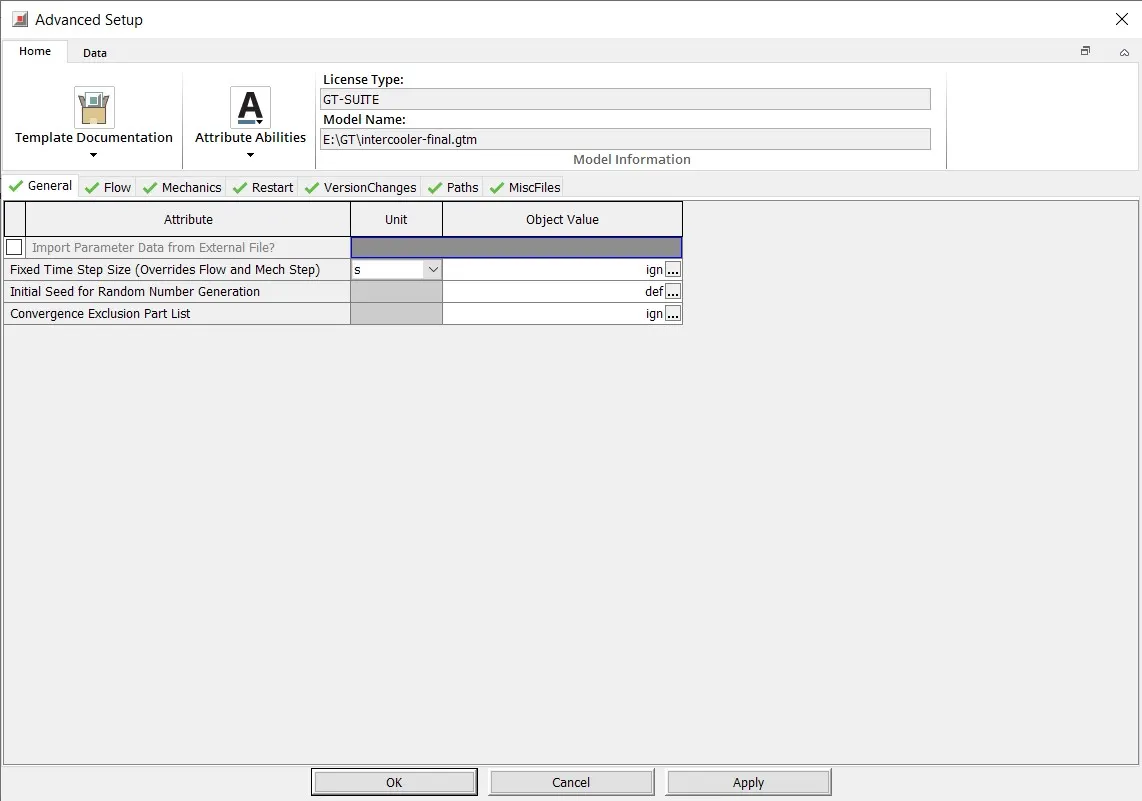
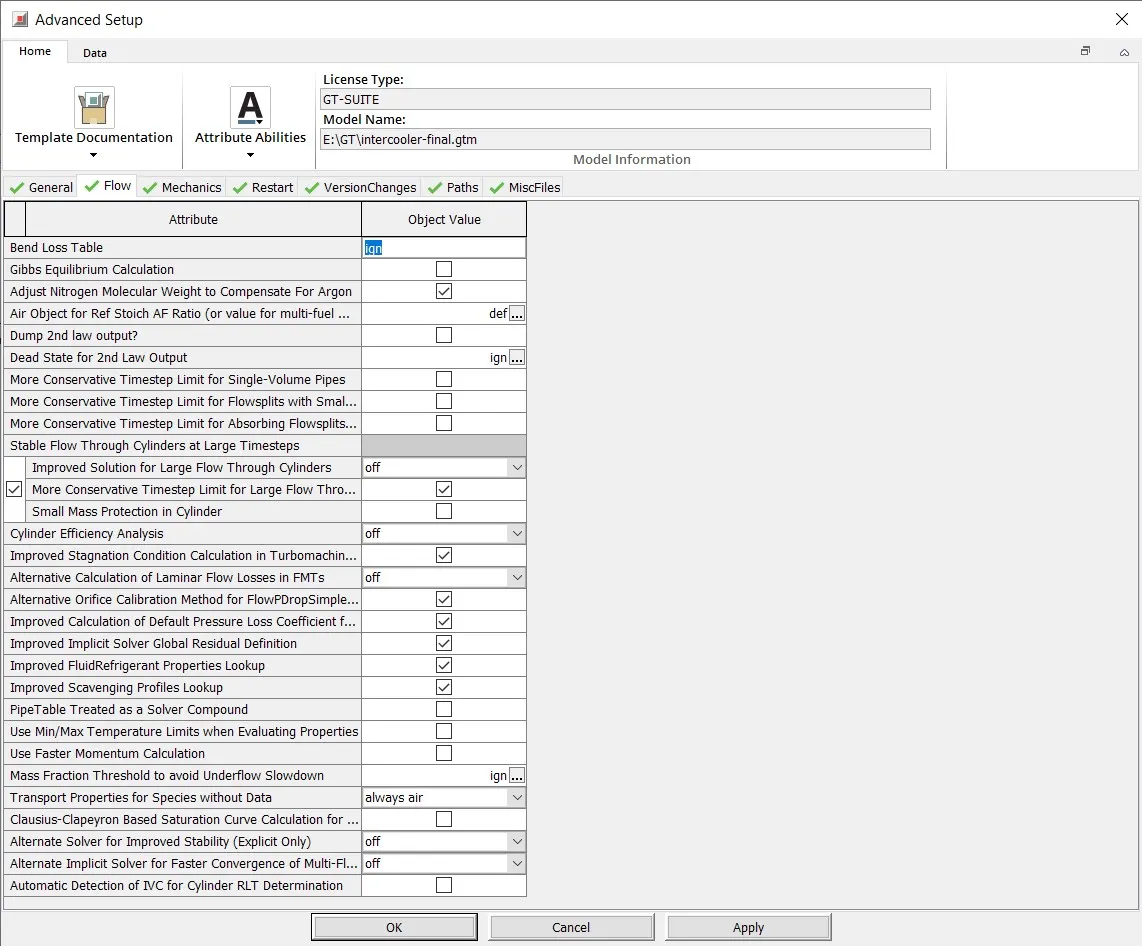
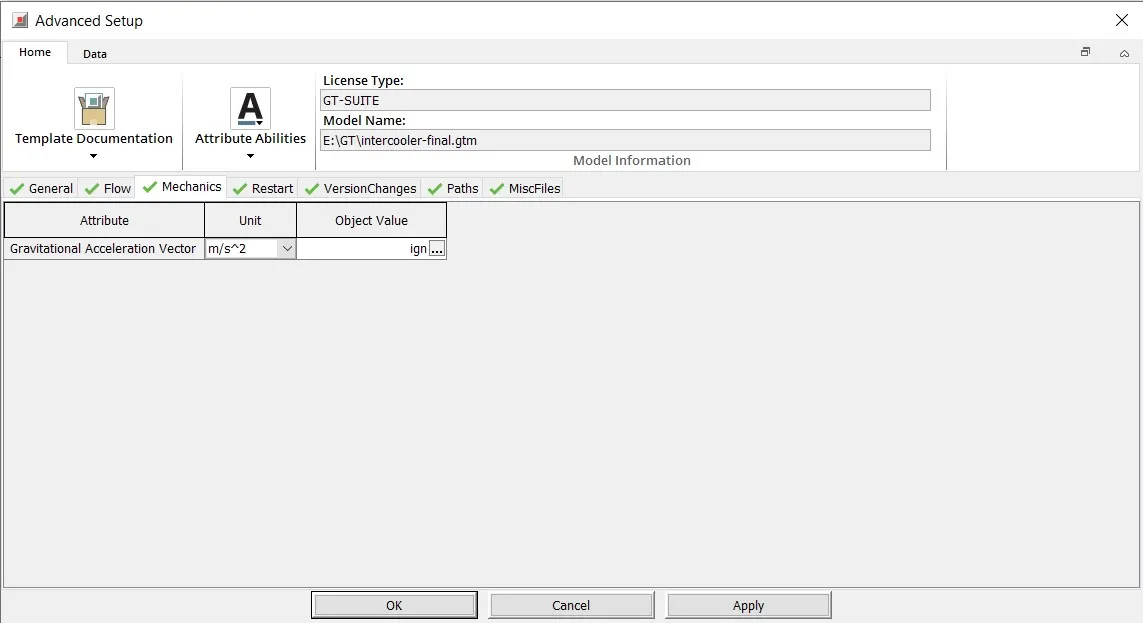
Advanced Setup
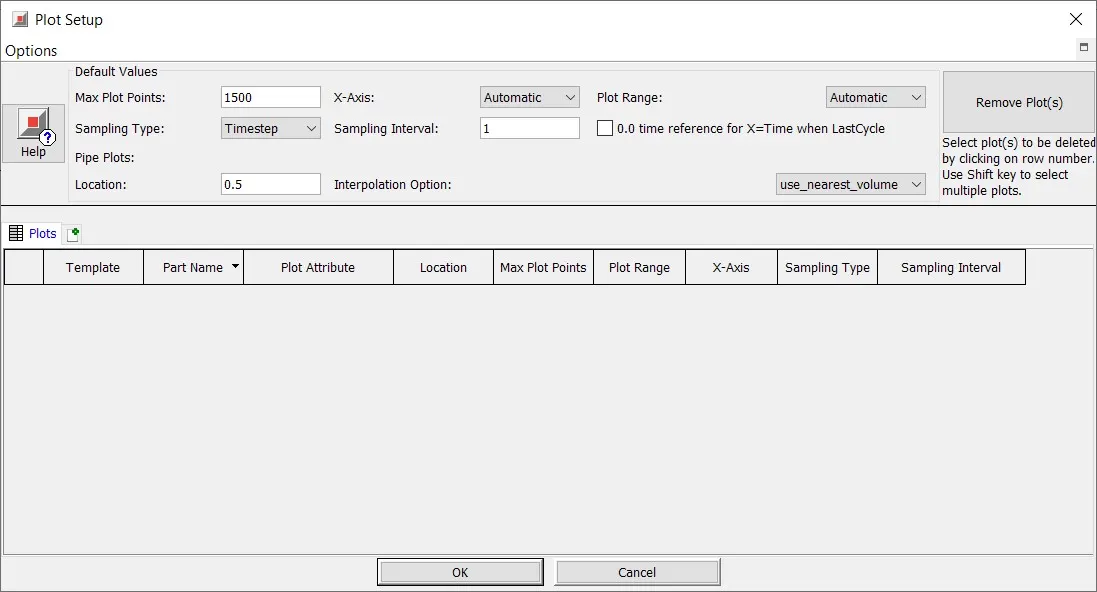
Plot Setup
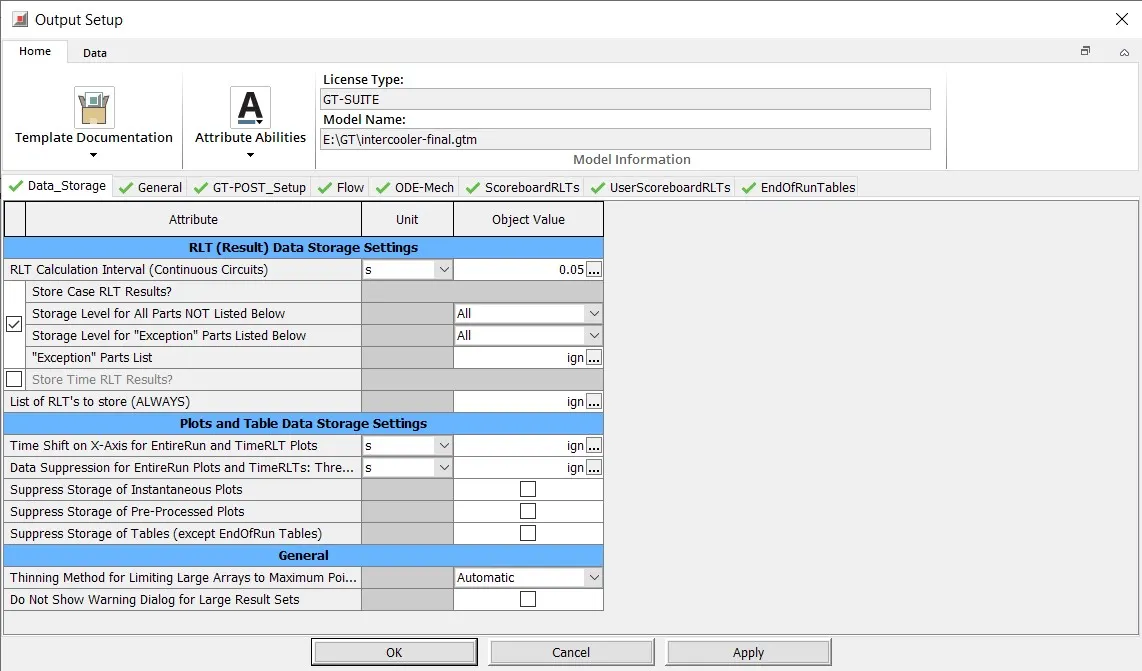
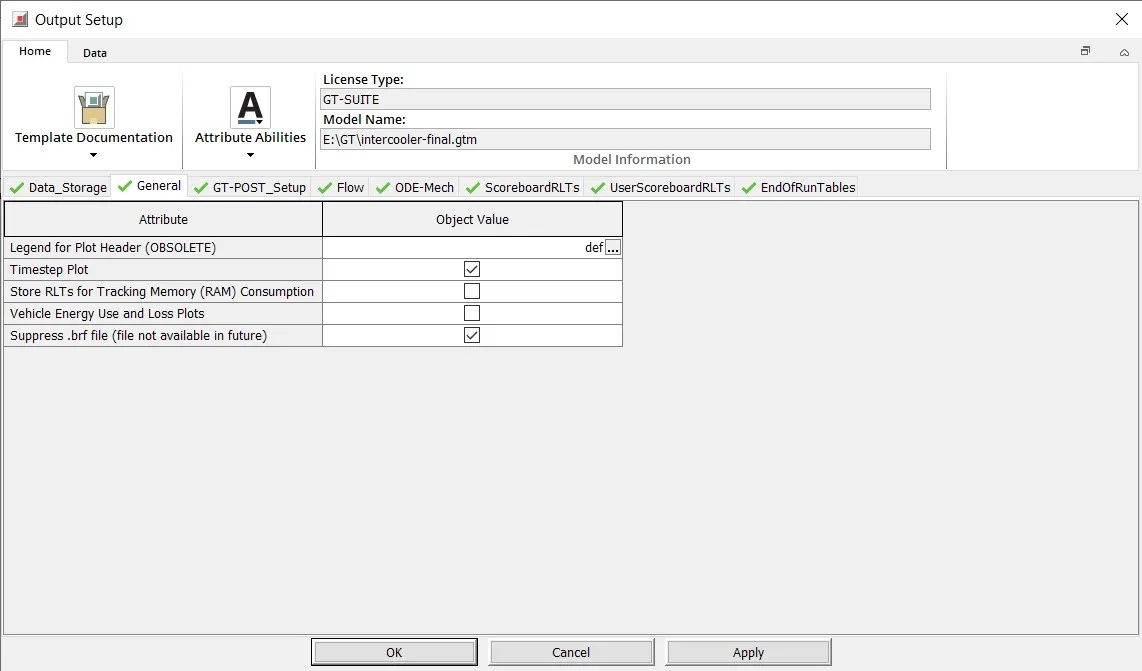
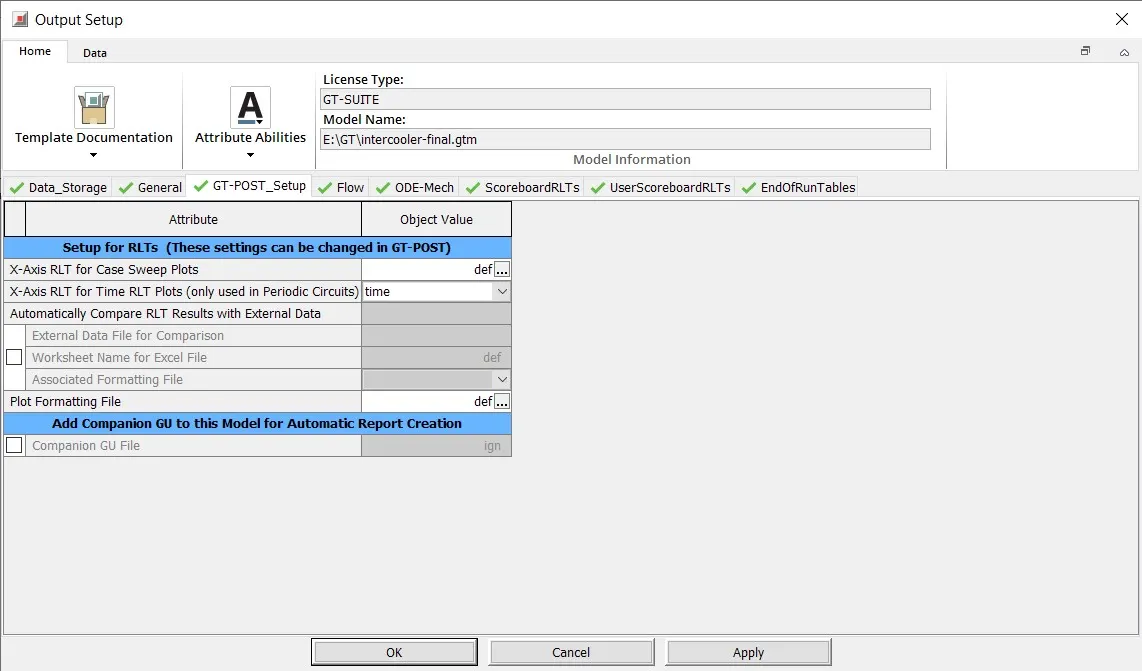
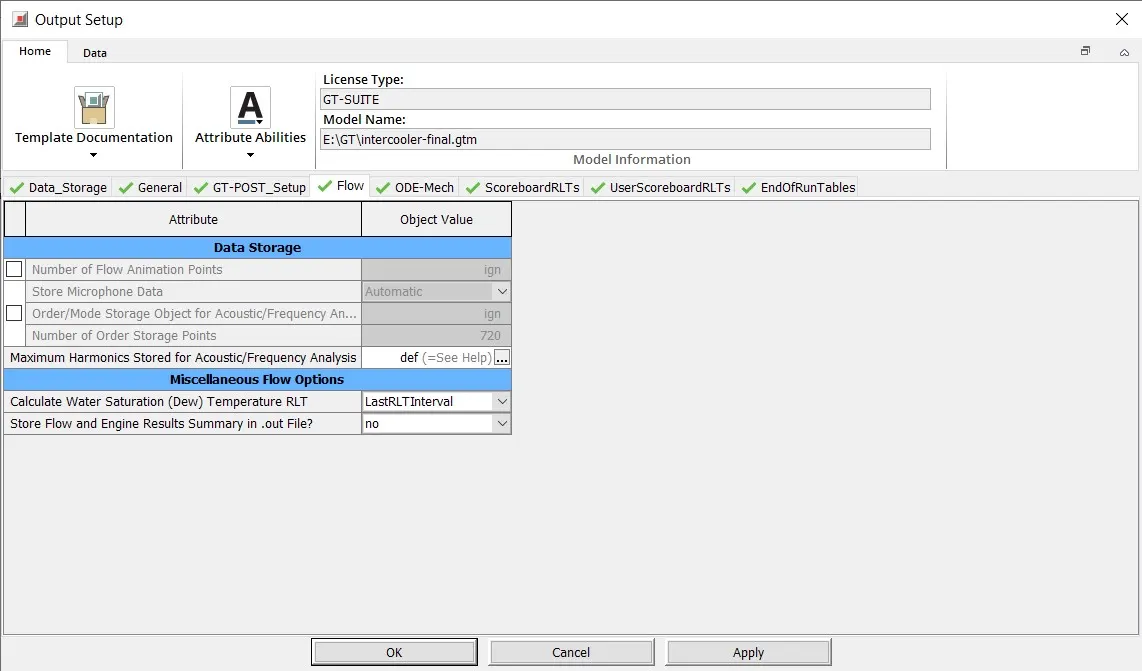
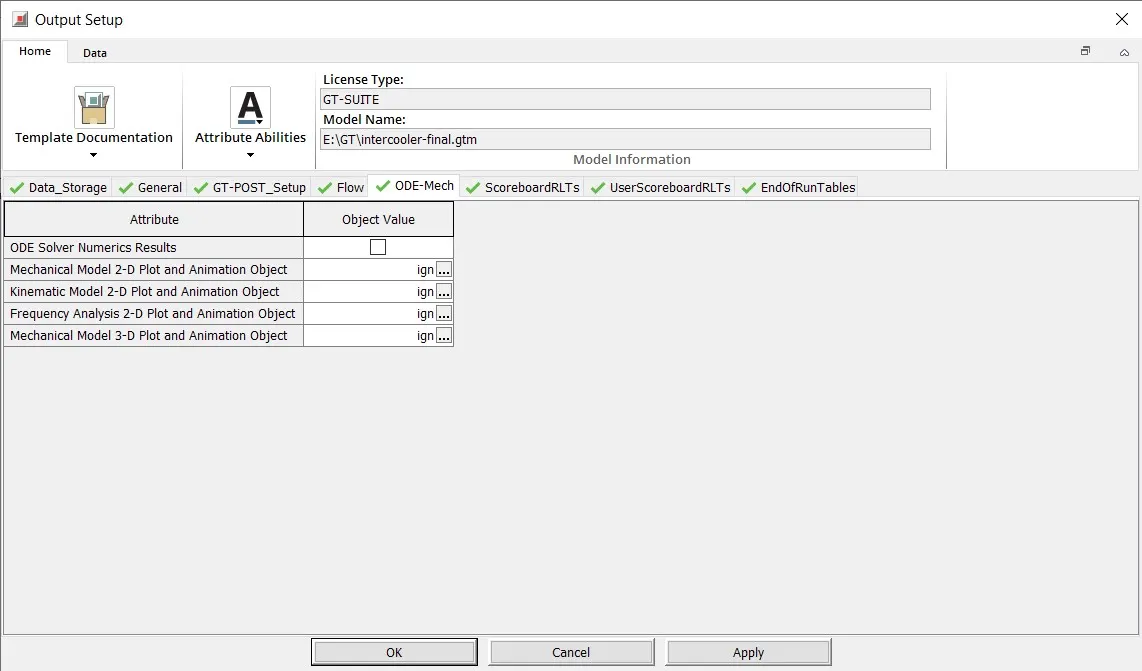
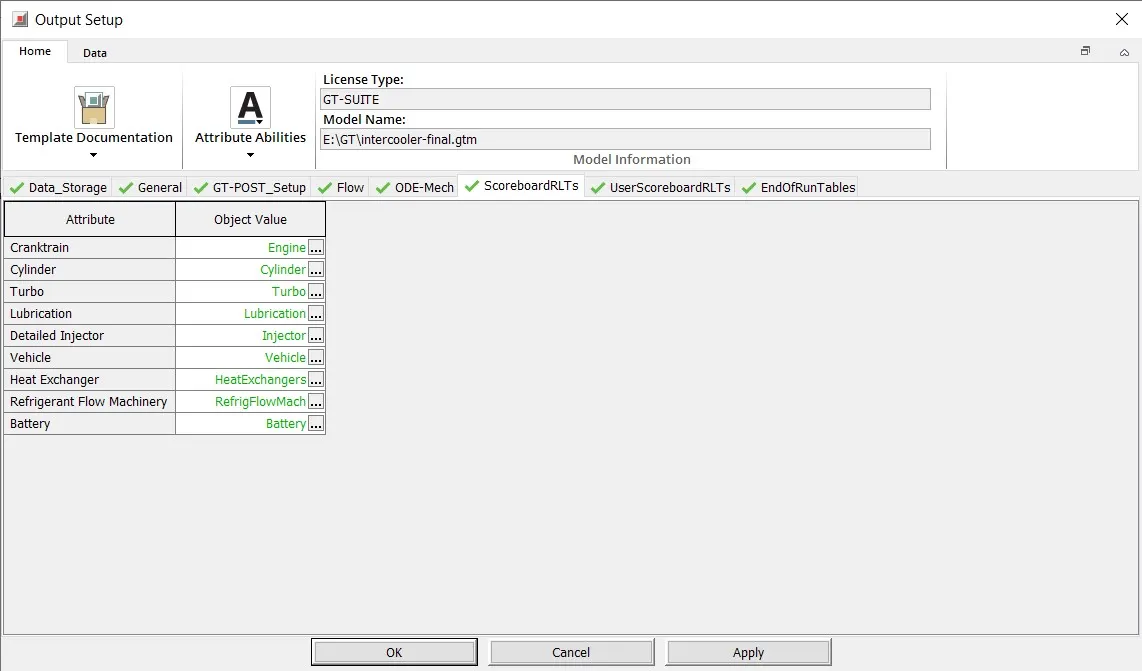
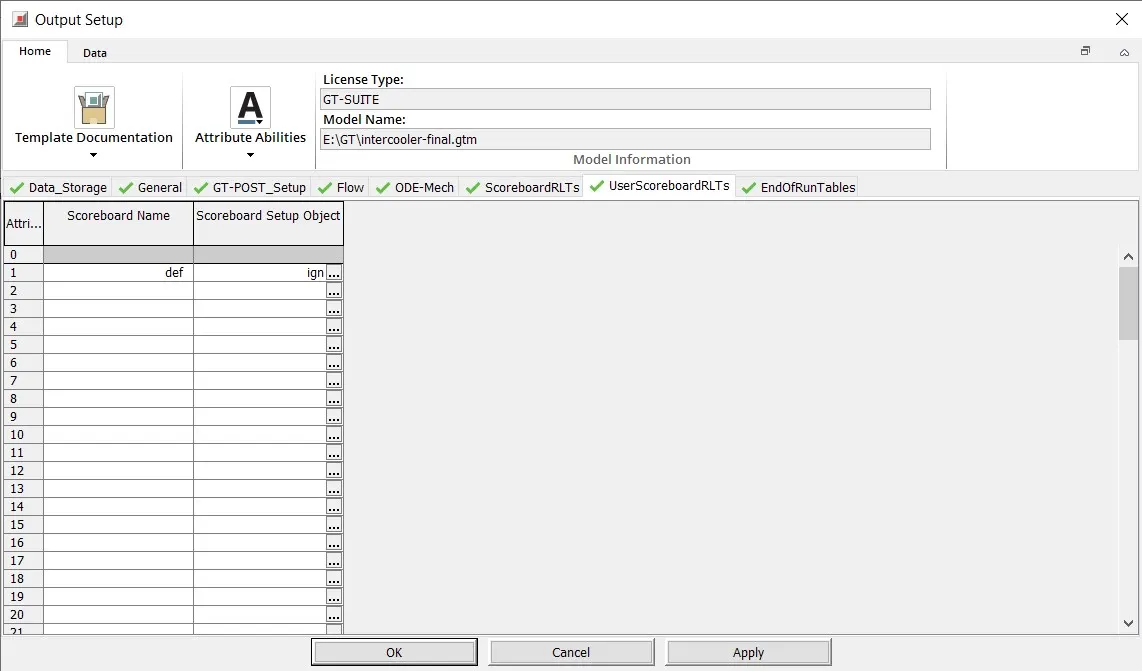
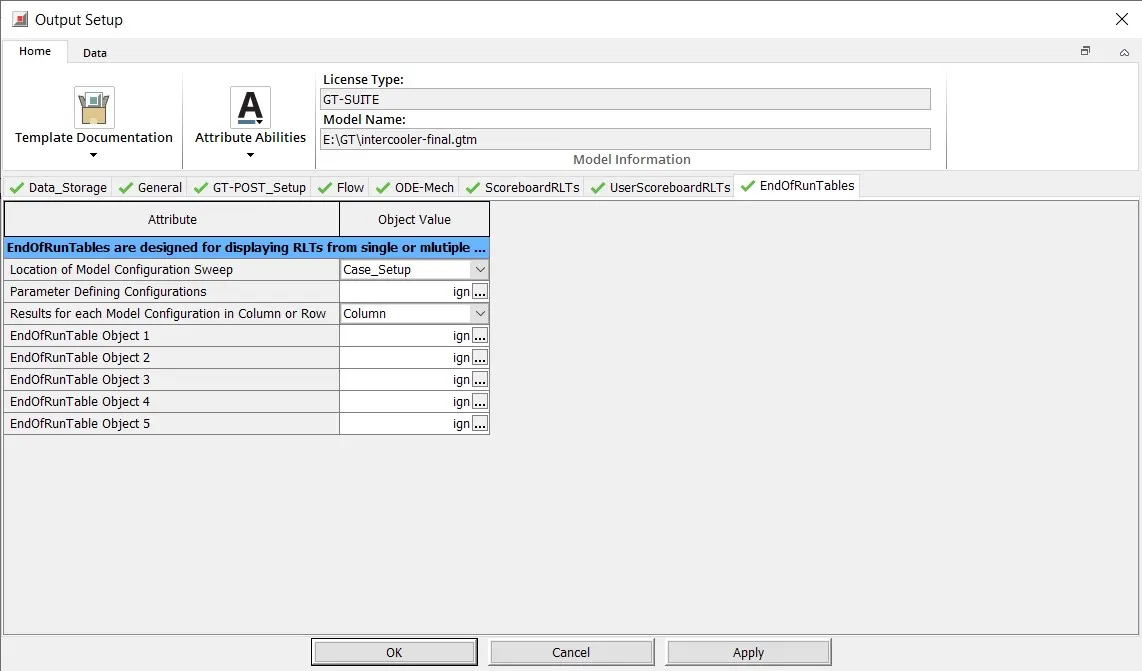
Output Setup
Results
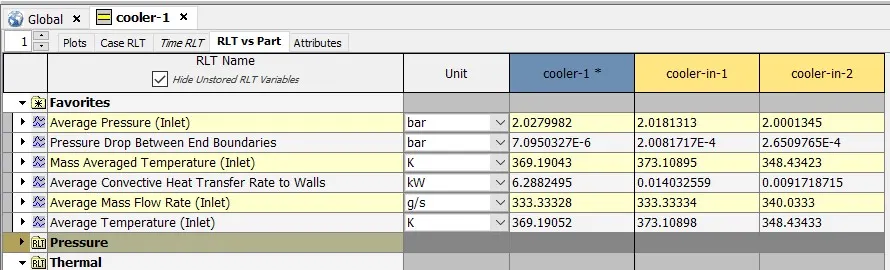
Pressure drop = 7.095e-6 bar
Total Heat Transfer = m*Cp*`DeltaT`
= (1200/3600)*1.01*19.72717
Total Heat Transfer = 6.641 KW