ANSYS FLUENT - Combustion
Aim
To perform a combustion simulation on the combustor model and plot the variation of the mass fraction of the different species’ in the simulation using line probes at different locations of the combustor and to observe the results when water content is in the fuel from 5% to 30%.
Theory
A gas burner is a device that produces a controlled flame by mixing a fuel gas such as acetylene, natural gas, or propane with an oxidizer such as the ambient air or supplied oxygen, and allowing for ignition and combustion.The flame is generally used for the heat, infrared radiation, or visible light it produces. Some burners, such as gas flares, dispose of unwanted or uncontainable flammable gases. Some burners are operated to produce carbon black.
The gas burner has many applications such as soldering, brazing, and welding, the latter using oxygen instead of air for producing a hotter flame, which is required for melting steel. Chemistry laboratories use natural-gas fueled Bunsen burners. In domestic and commercial settings gas burners are commonly used in gas stoves and cooktops. For melting metals with melting points of up to 1100 °C (such as copper, silver, and gold), a propane burner with a natural drag of air can be used. For higher temperatures, acetylene is commonly used in combination with oxygen.
Fuel
Methane is used as a fuel for ovens, homes, water heaters, kilns, automobiles,[23][24] turbines, and other things. Activated carbon is used to store methane. Refined liquid methane is used as a rocket fuel,[25] when combined with liquid oxygen, as in the BE-4 and Raptor engines.[26]
As the major constituent of natural gas, methane is important for electricity generation by burning it as a fuel in a gas turbine or steam generator. Compared to other hydrocarbon fuels, methane produces less carbon dioxide for each unit of heat released. At about 891 kJ/mol, methane's heat of combustion is lower than that of any other hydrocarbon. However, it produces more heat per mass (55.7 kJ/g) than any other organic molecule due to its relatively large content of hydrogen, which accounts for 55% of the heat of combustion[27] but contributes only 25% of the molecular mass of methane. In many cities, methane is piped into homes for domestic heating and cooking. In this context it is usually known as natural gas, which is considered to have an energy content of 39 megajoules per cubic meter, or 1,000 BTU per standard cubic foot. Liquefied natural gas (LNG) is predominantly methane (CH4) converted into liquid form for ease of storage or transport.
As a rocket fuel, methane offers the advantage over kerosene of producing small exhaust molecules. This deposits less soot on the internal parts of rocket motors, reducing the difficulty of booster re-use. The lower molecular weight of the exhaust also increases the fraction of the heat energy which is in the form of kinetic energy available for propulsion, increasing the specific impulse of the rocket. Liquid methane also has a temperature range (91–112 K) nearly compatible with liquid oxygen (54–90 K).
Equation
CH4 + 2(O2+3.76N2) --> CO2 + 2H2O + CN2
Solving & Modelling
Models used for the simualtions are
Time
Steady state
Solver
Type - Pressure based
Velocity Formulation - Absolute
2D Space
Axisymmetric
Viscous
K-epsilon - Standard - Standard wall function
Species
Species transport - Volumetric - Inlet diffusion & Diffusion energy source - Eddy dissipation
Mixture Material - Methane-Air-2step(It is selected because we can add water to the fuel to see the Nox & Soot formation)
Nox
Thermal Nox & Prompt Nox
Fuel species - CH4 & H2O
(These models are selected because Thermal NOx is formed when nitrogen and oxygen in the combustion air combine with one another at the high temperatures in a flame. Thermal NOx makes up the majority of NOx formed during the combustion of gases and light oils. The rate of NOx formation generally increases significantly above 2,800°F flame temperature.
Fuel NOx is formed by the reaction of nitrogen bound in the fuel with oxygen in the combustion air. It is rarely a problem with gaseous fuels. But in oils containing significant amounts of fuel-bound nitrogen, fuel NOx can account for up to 50% of the total NOx emissions.
A third and generally less important source of NOx formation is Prompt NOx which forms from the rapid reaction of atmospheric nitrogen with hydrocarbon radicals. Prompt NOx is generally minor compared to the overall quantity of NOx generated from combustion. However, as NOx emissions are reduced to extremely low limits, the contribution of this source becomes more important.)
Soot
1Step
Fuel - CH4
Oxidant - O2
Preprocessing and solver setting
Model
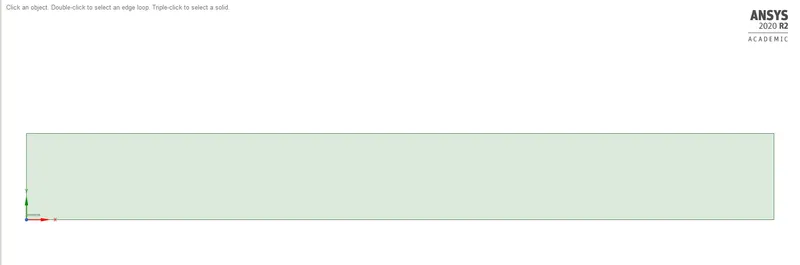
Named selections
Fuel Inlet

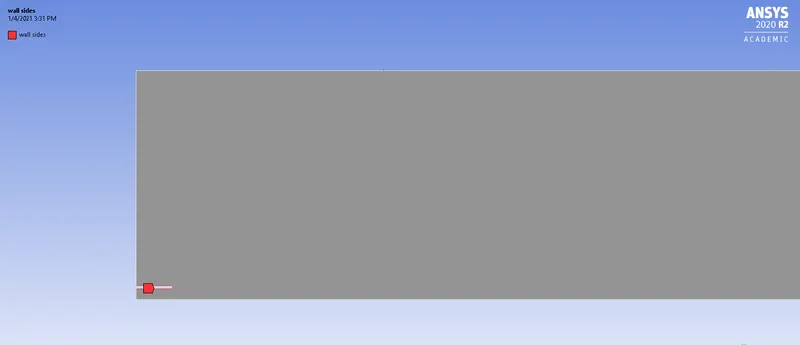
Wall side(near fuel inlet)
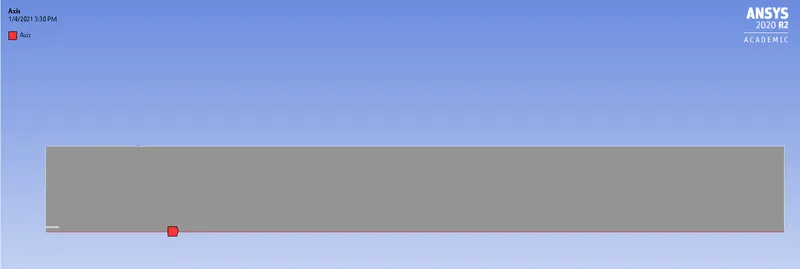
Axis
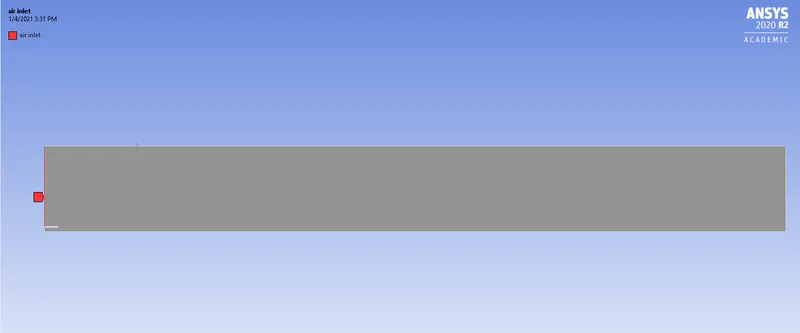
Air Inlet
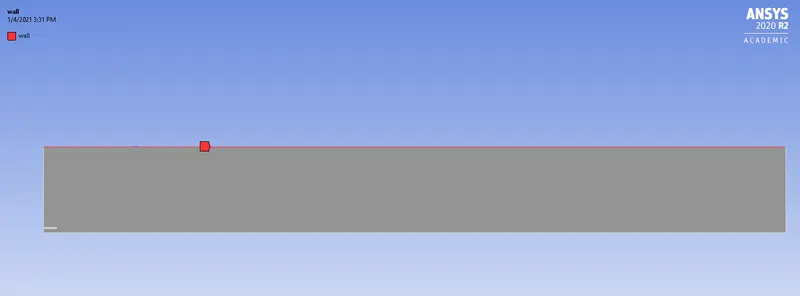
Wall
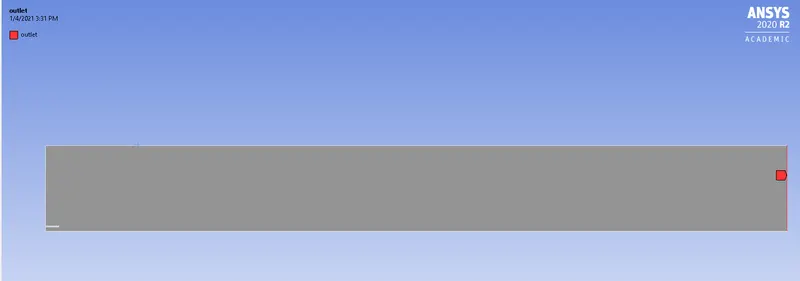
Outlet
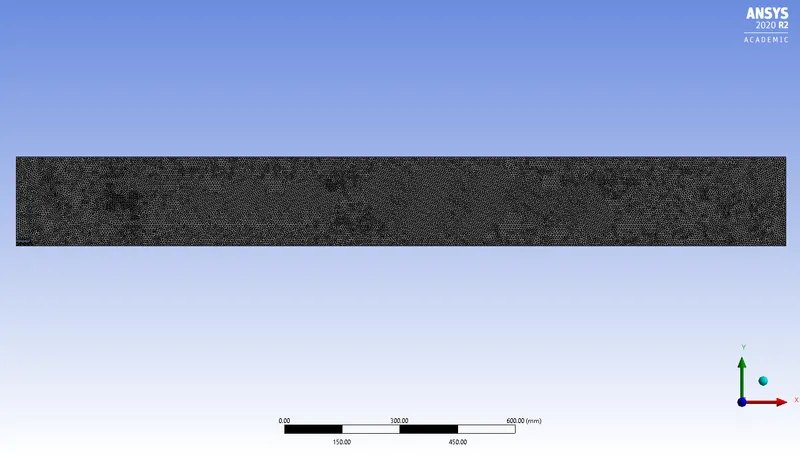
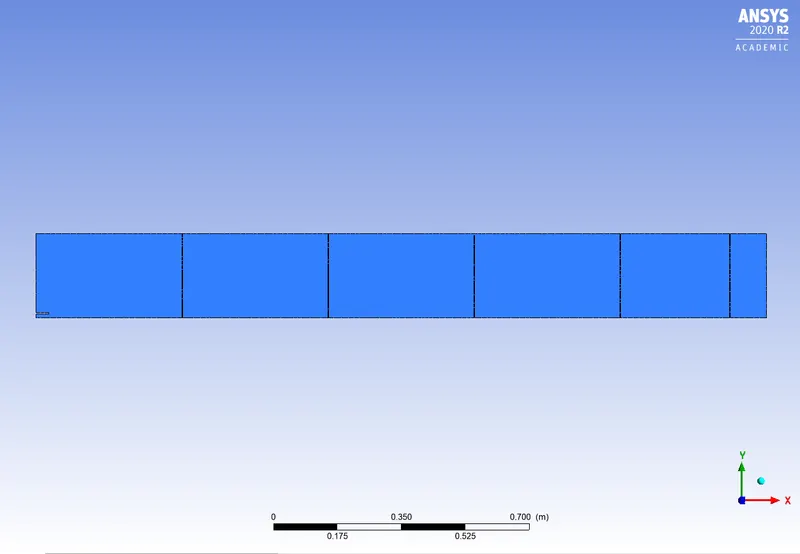
Mesh
Base size 5 mm
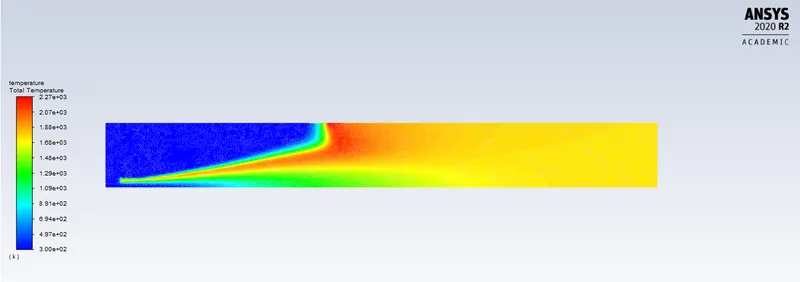
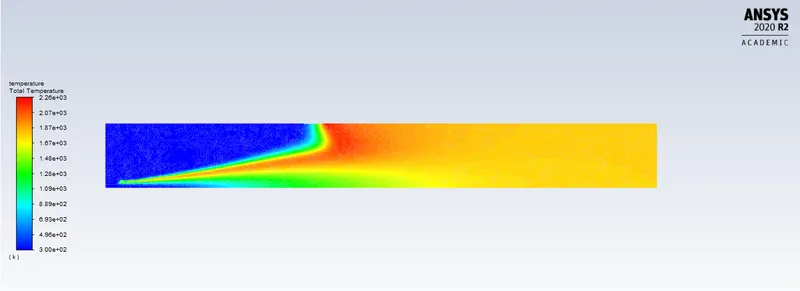
Temperature Contour plot
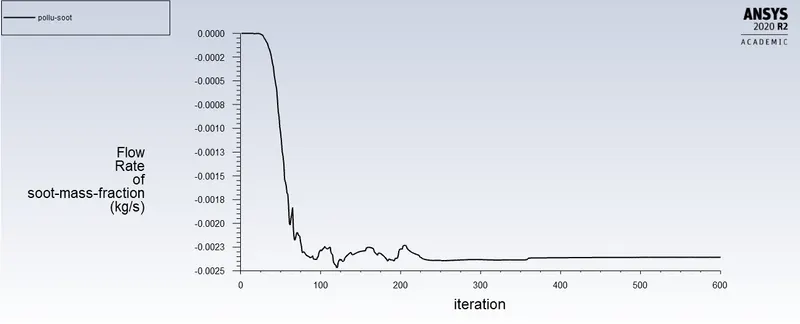
Residual
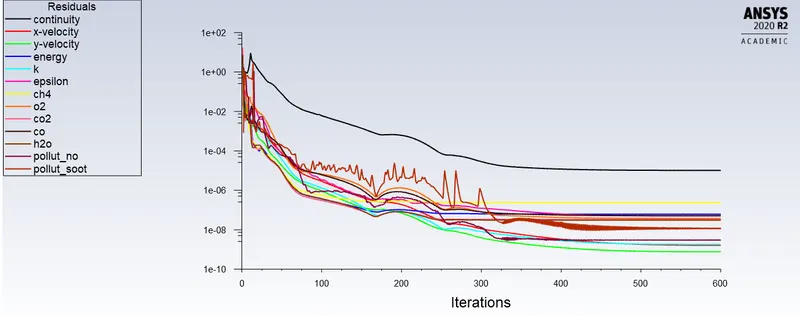
Results
line probe locations
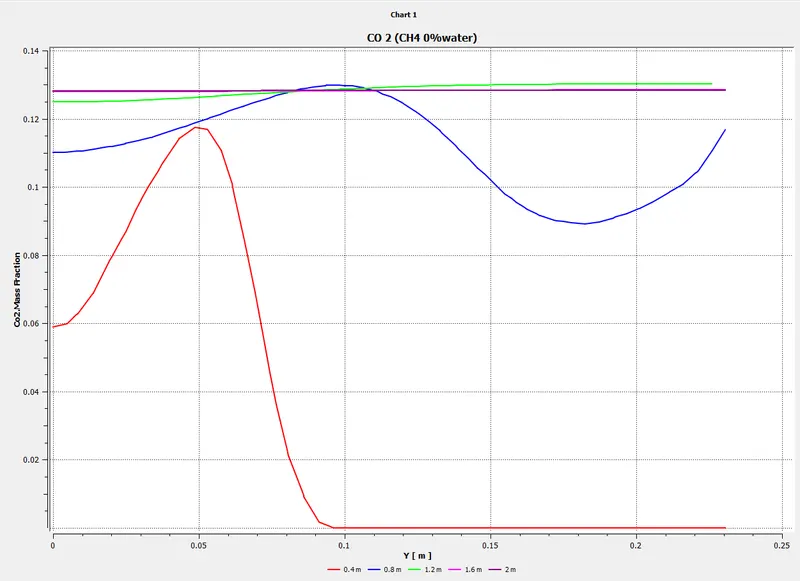
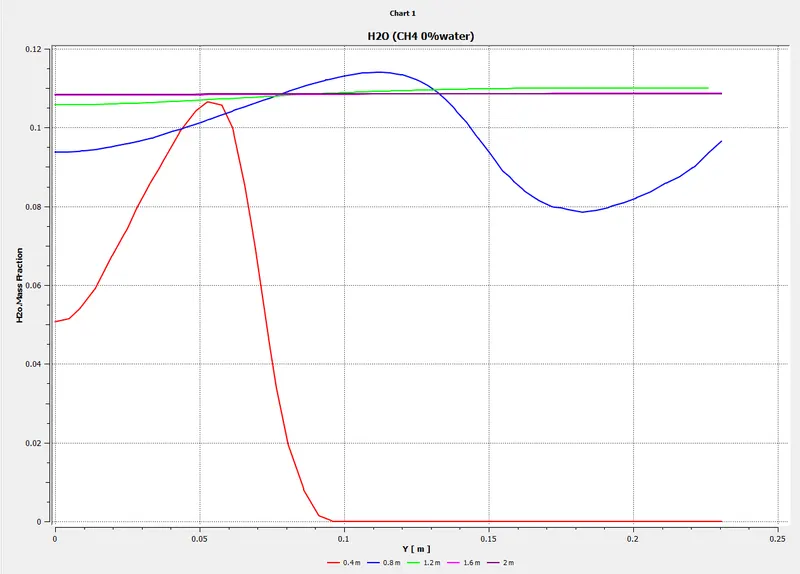
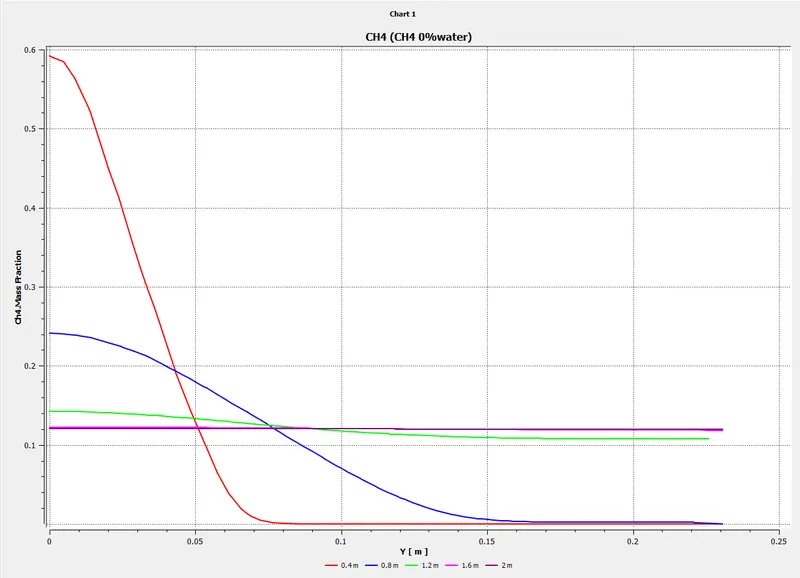
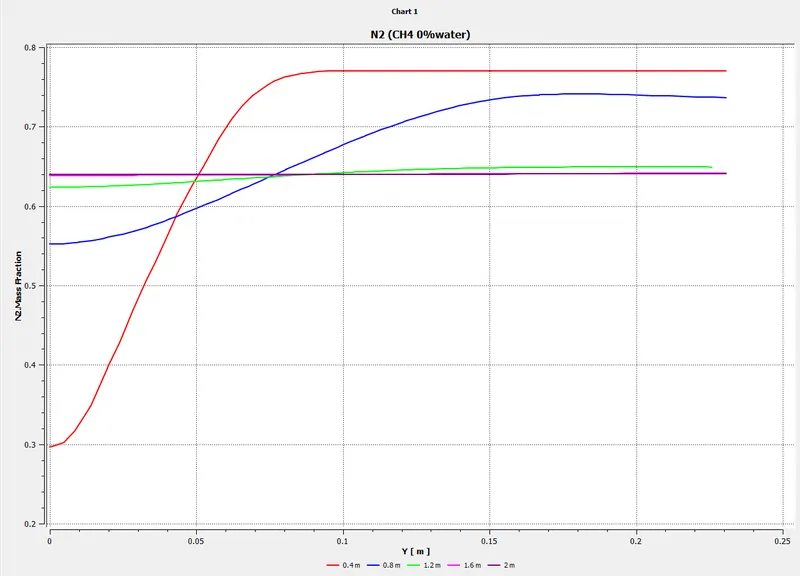
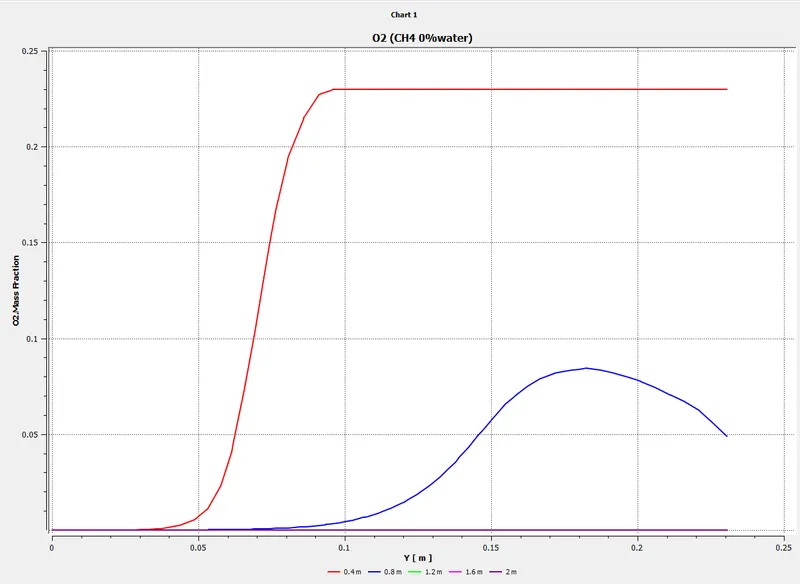
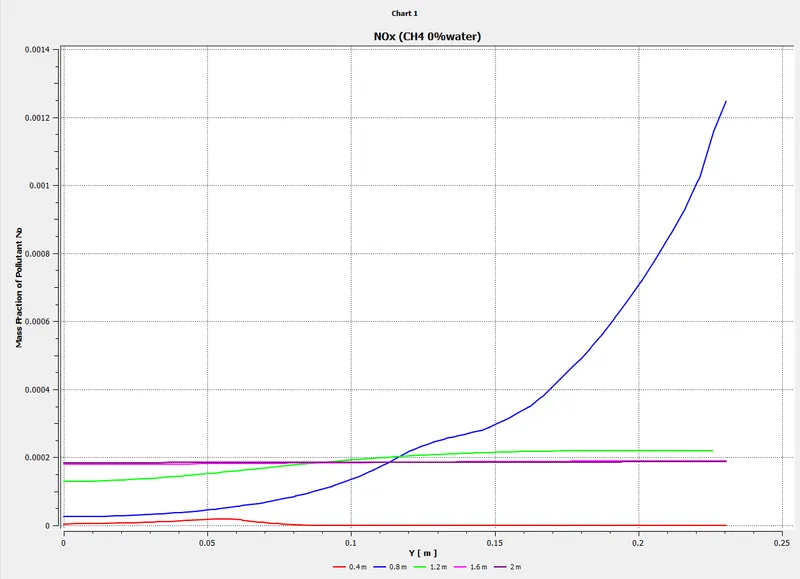
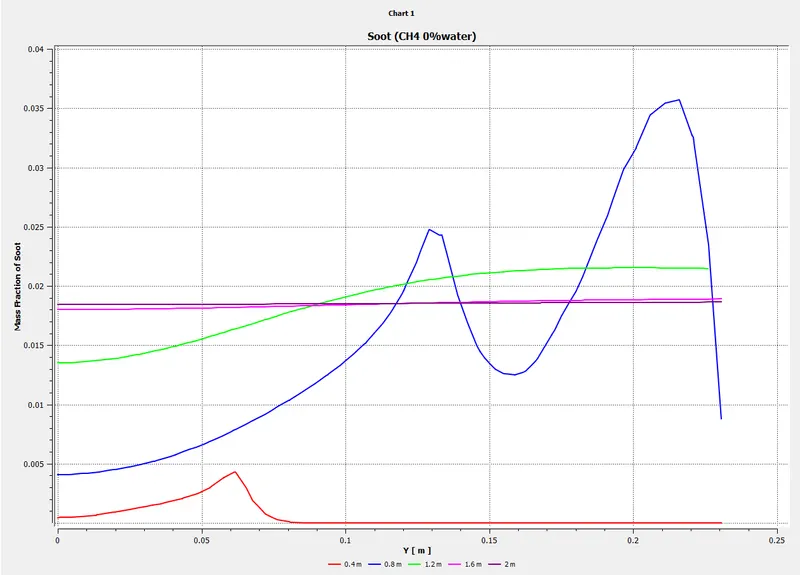
Case 2 CH4 with 5% H2O
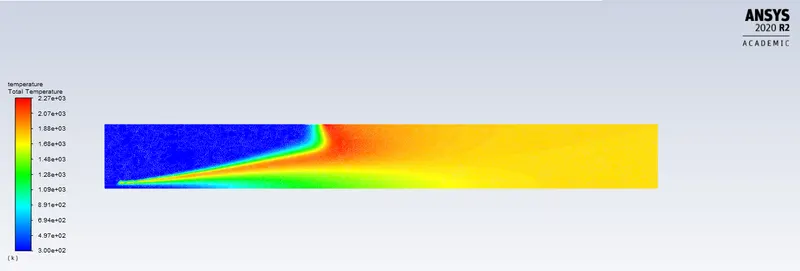
Temperature Contour plot
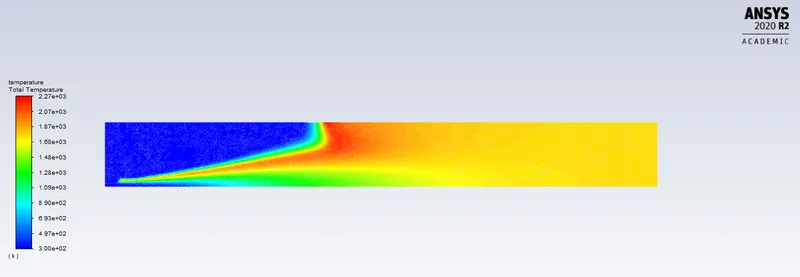
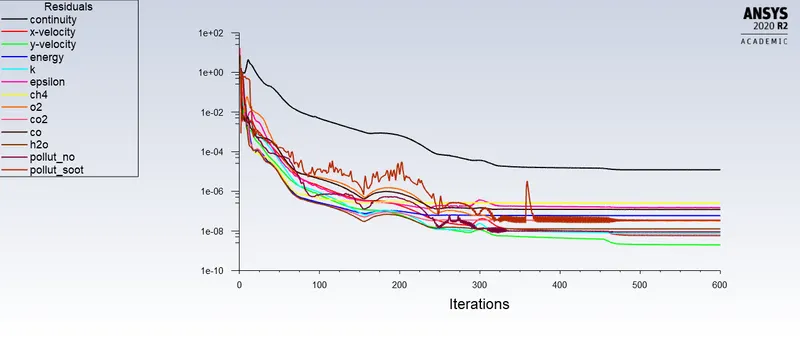
Residual
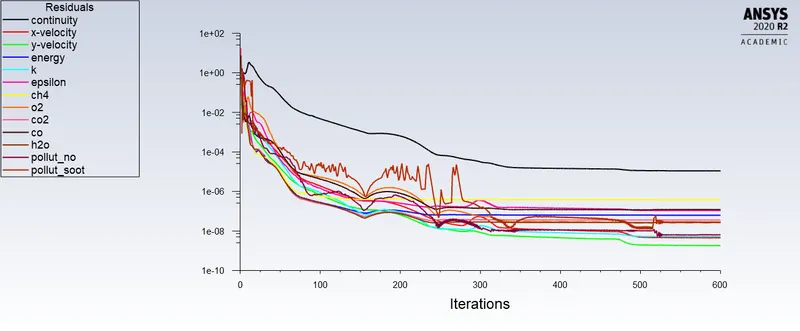
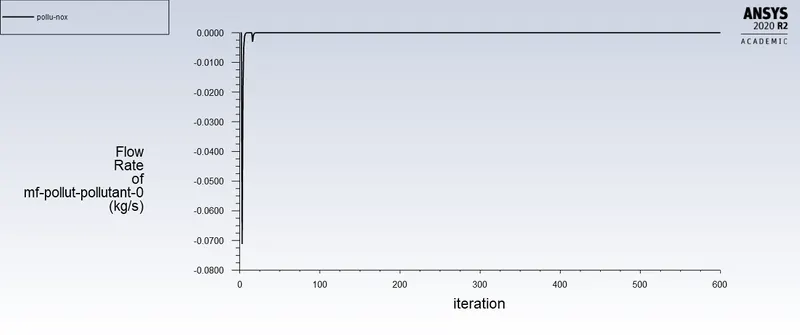
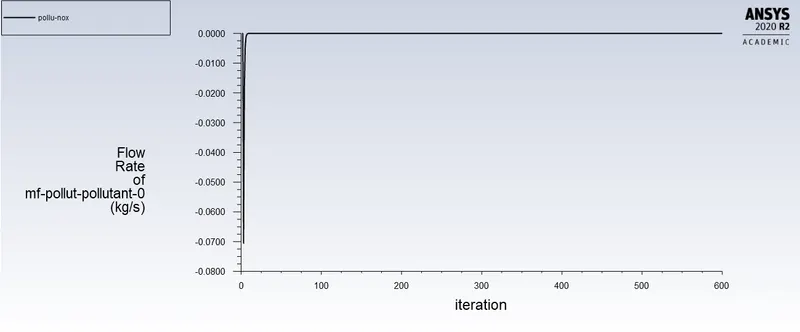
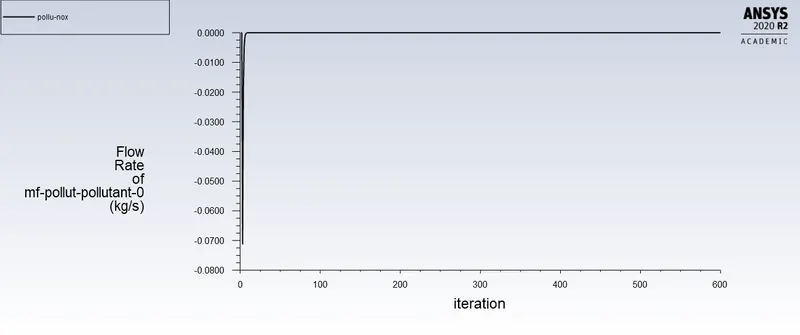
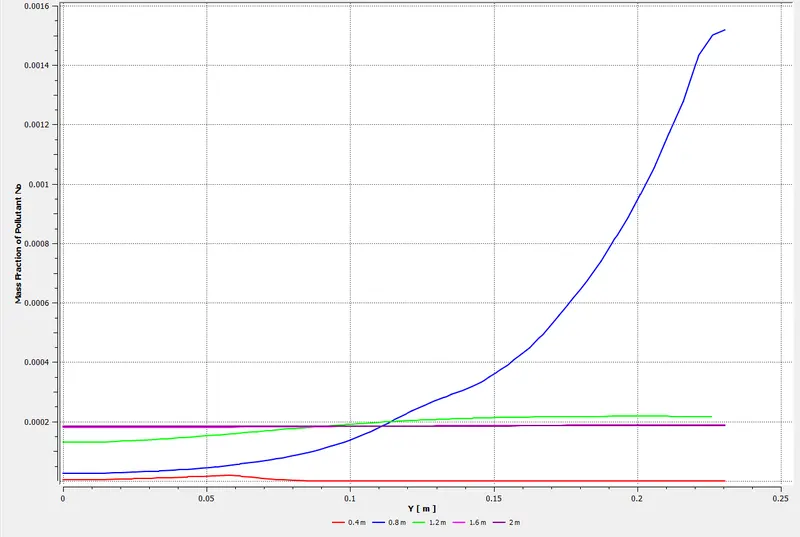
Nox
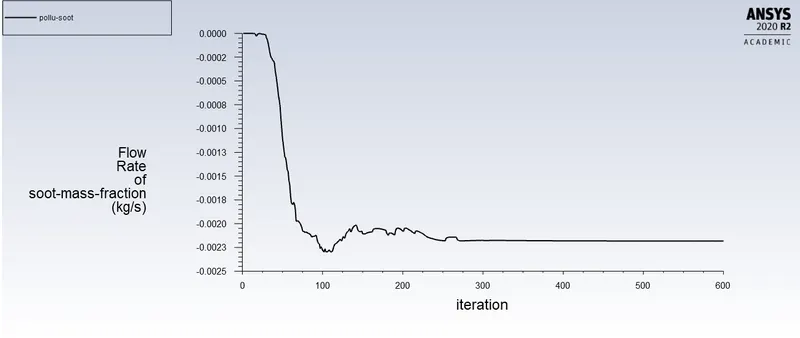
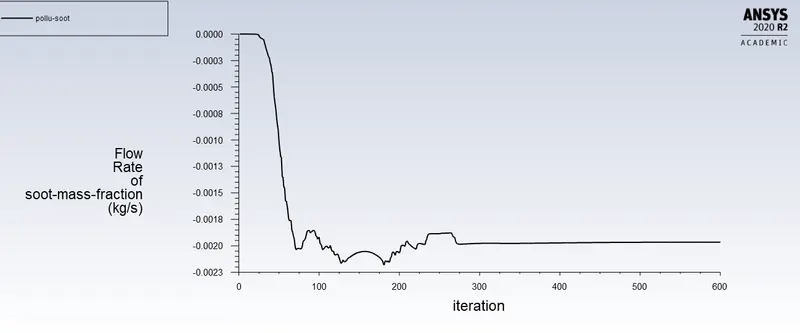
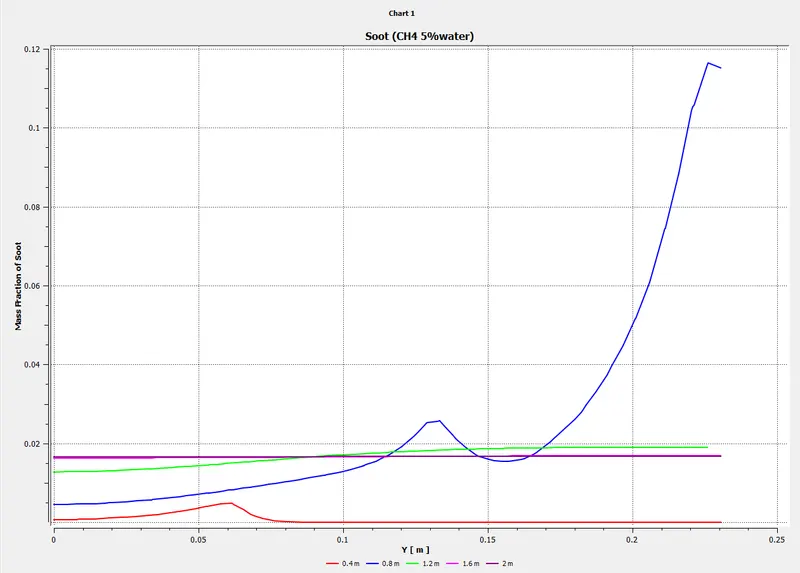
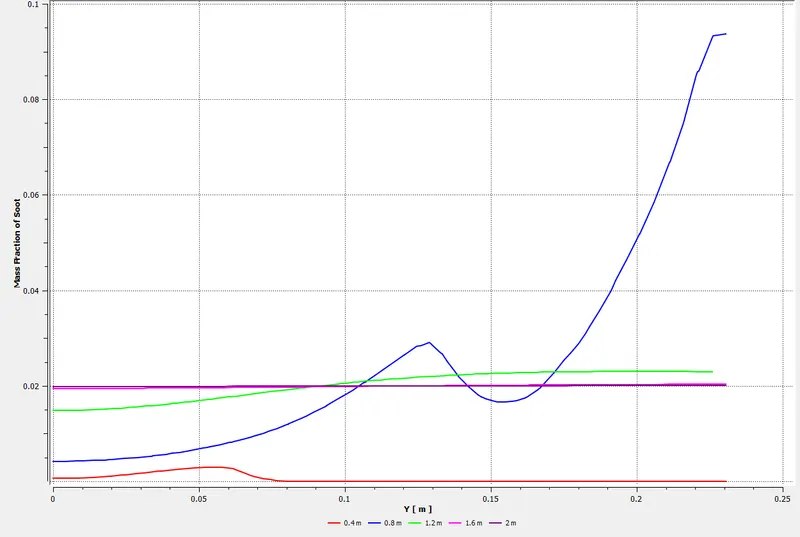
Soot
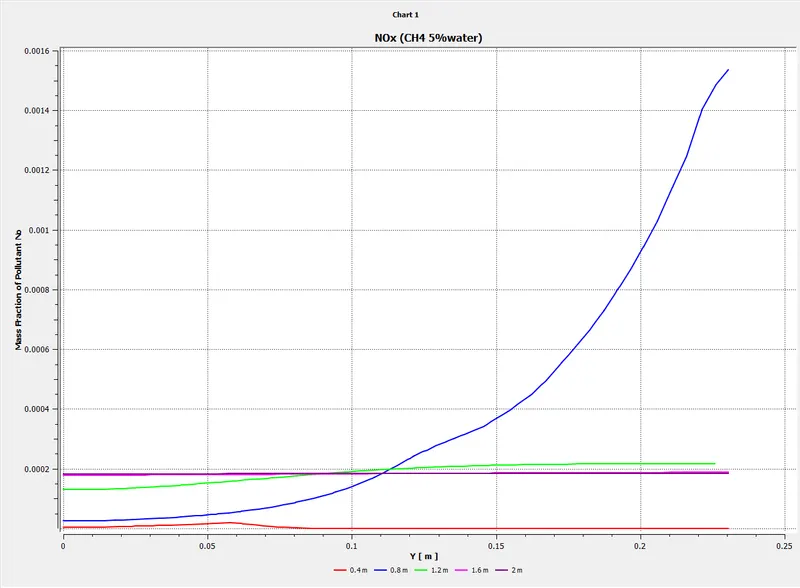
Case 2 CH4 with 10% H2O
Temperature Contour plot
Residual
Nox
Soot
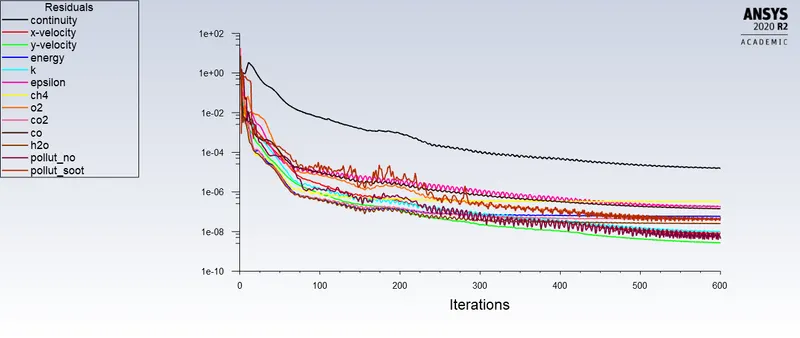
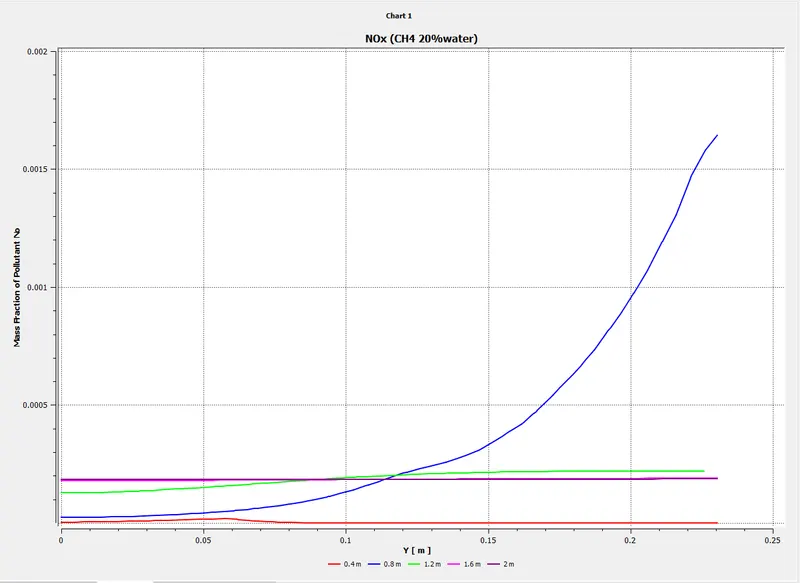
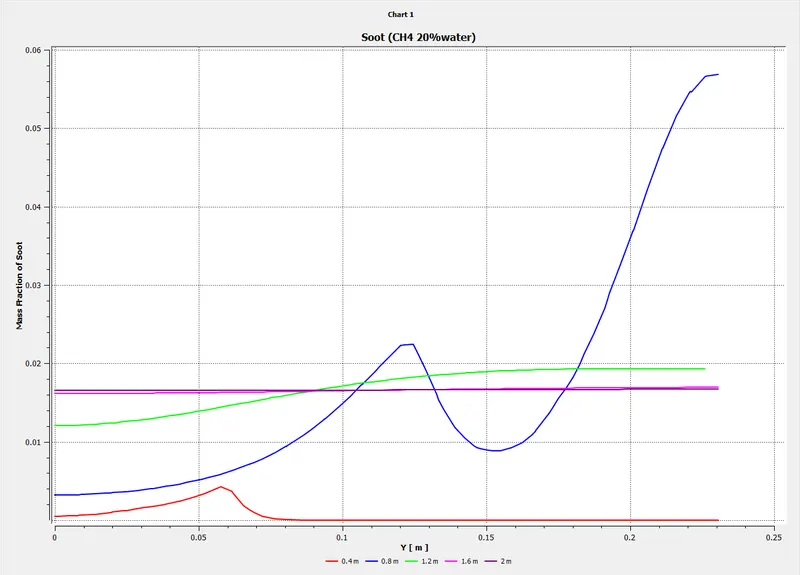
Case 2 CH4 with 20% H2O
Temperature Contour plot
Residual
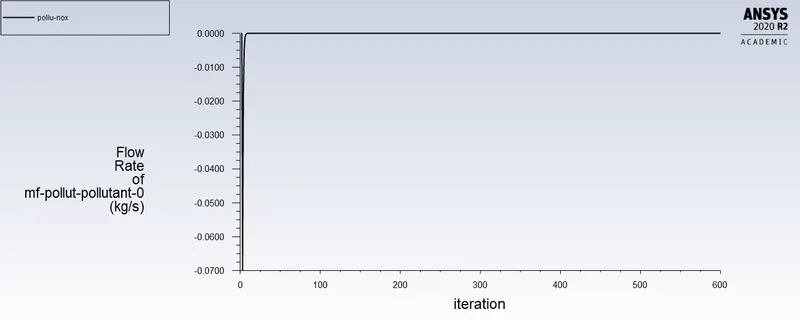
Nox
Soot
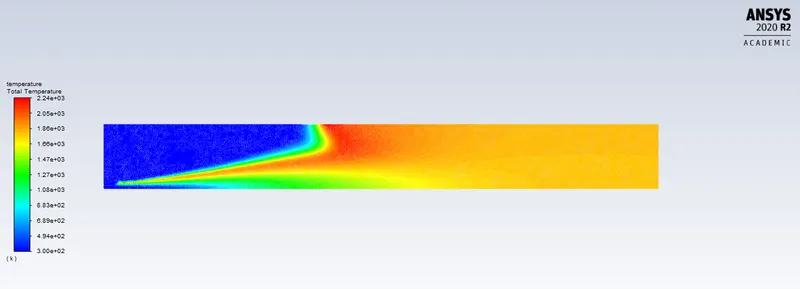
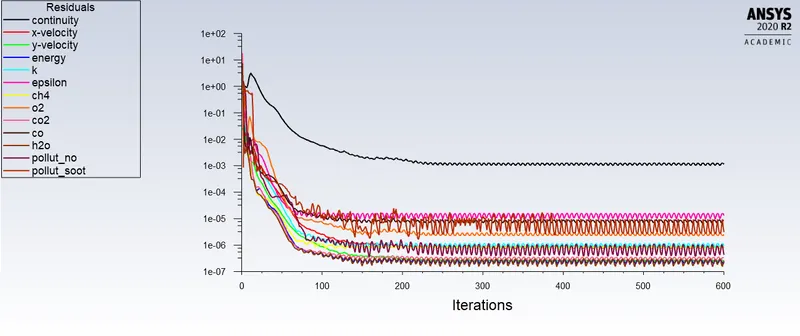
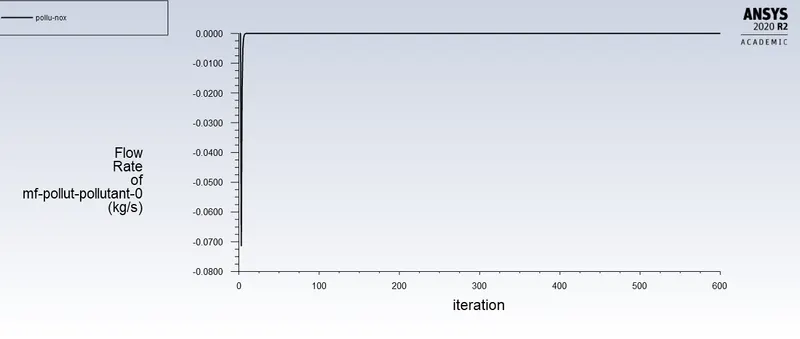
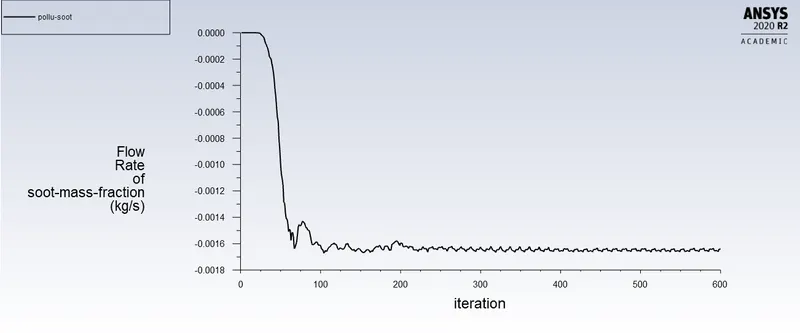
Case 2 CH4 with 30% H2O
Temperature Contour plot
Residual
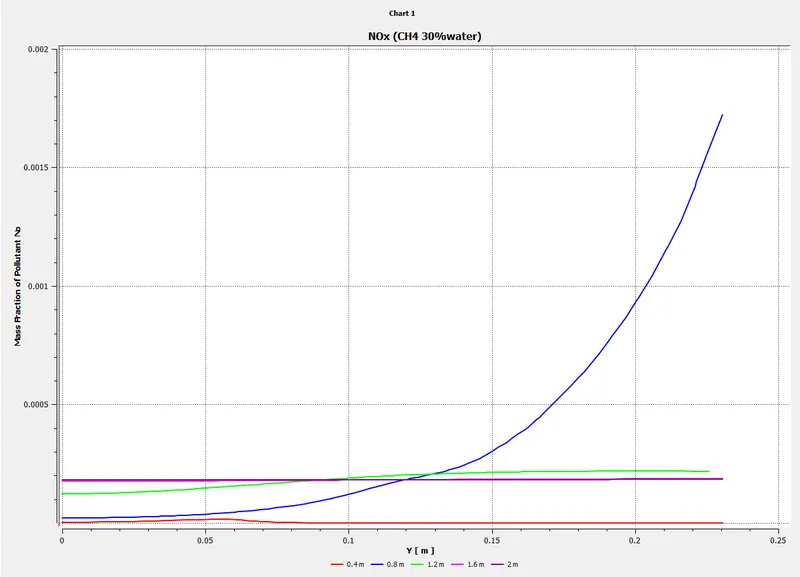
Nox
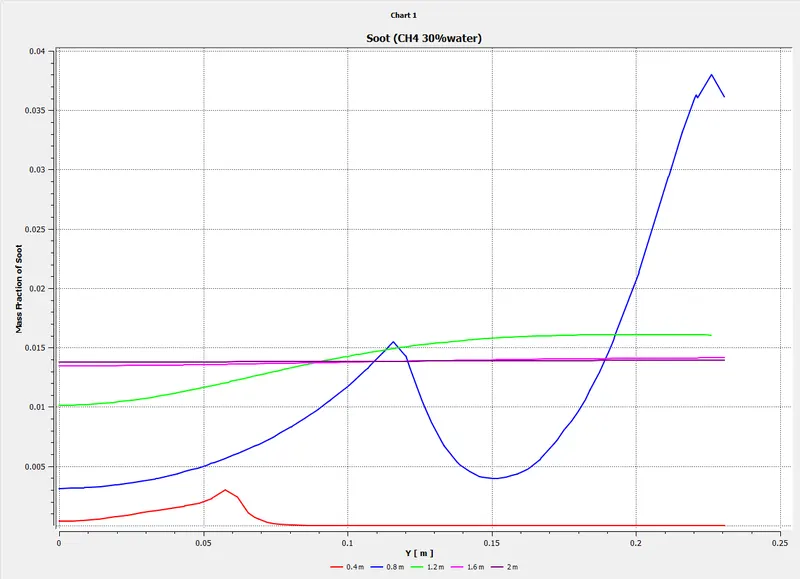
Soot
Conclusion
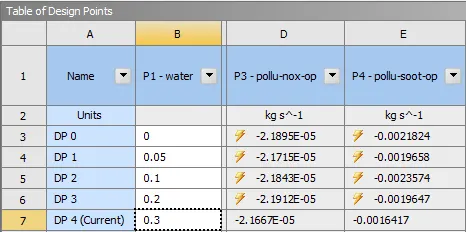
As we see the above table and compare the values of Nox and soot. The values for nox & soot when there is 0% of water is high when compared to 30% of water. So as we know Nox & soot formation are having harmful effects on the environment and humans. The stringent government norms also demand the least formation of Nox and soot and to satisfy those requirements we can add 30% of water to fuel & by the above simulation we have compared few proportions and found the mixture which has 30% water forms less nox & soot.