Aerodynamic analysis of Ahmed's body
AIM: Computational Aerodynamics analysis of Wake flow, Lift, Drag, and Vortex formation on the surface of Ahmed's body
INTRODUCTION:
Ahmed Body and its importance:
Ahmed's body is a generic form of the car body that resembles all the essential flow features around a vehicle. This generic form was first defined and characterized in the experimental work of Ahmed. This body allows us to capture all the characteristics features that are relevant to bodies in the vehicle industry. A lot of studies can be performed using this generic geometry like calculating drag and lift forces on the vehicle, Studying the presence of vortices, and wake region behavior at different slant angles at the back of the vehicle. separation in airflow at the automobile surface. Ahmed's body can be useful for developing simulation models and validating it experimentally since this body is a generic form and is easy to model in real life rather than modeling an actual car model and making changes at every iteration.
Reason for the negative pressure in the wake region:
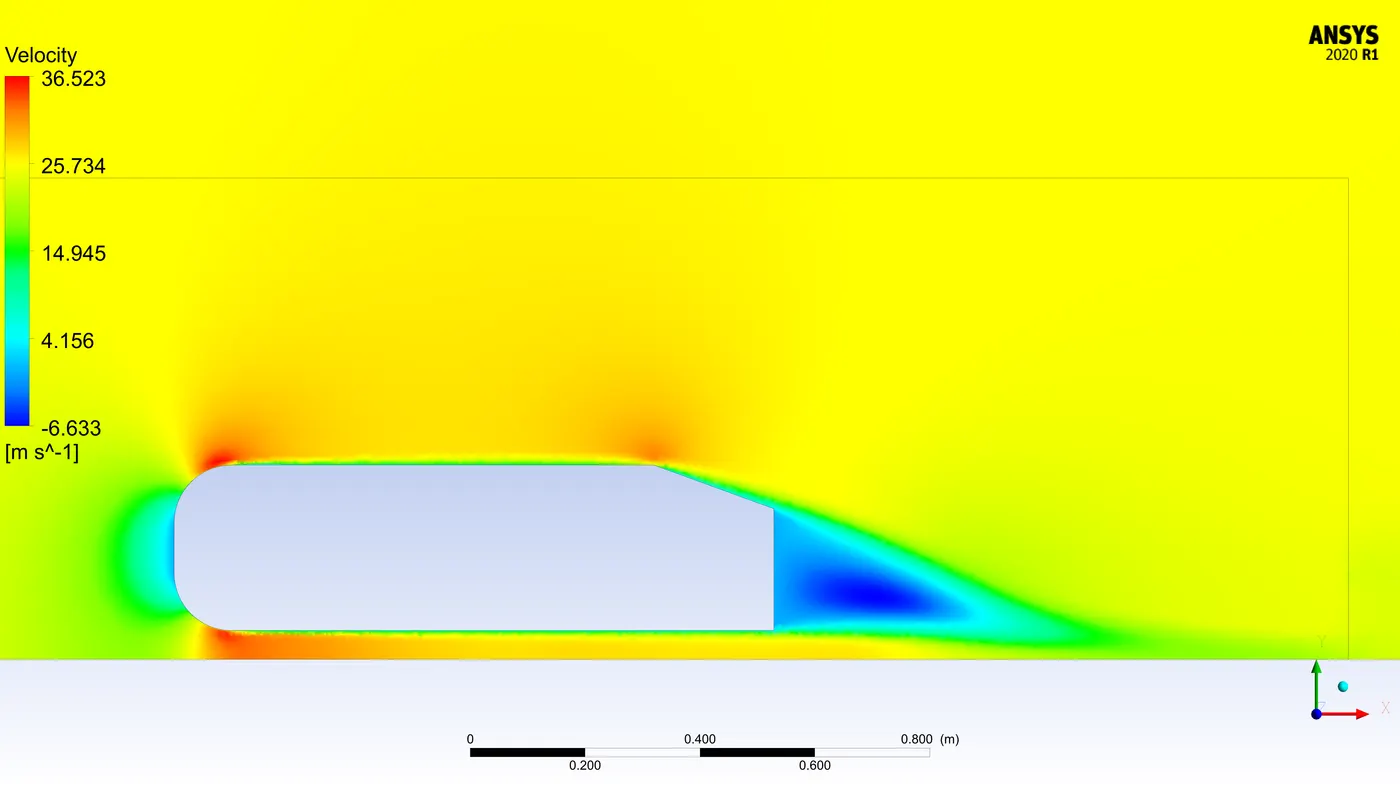
The wake region is a disturbed flow region (usually turbulent flow) around a solid body moving through a fluid. This phenomenon is mostly caused due to the boundary layer separation which creates a high turbulent flow zone. This separation is caused because of the adverse pressure gradient (High-pressure drops) giving a net pressure force. The velocity and pressure in this region are low and increases the drag force on the body. Since the drag forces also depend on the wake region, the Formation of the wake region is one of the important characteristics to consider while designing an automobile.
Significance of the point of separation:
The point of separation is a point where the fluid flow no longer follows the contour of the body and gets detached from the surface of the body. When there is a fluid flow over a solid body there a retarding effect on the fluid flow because of shear stress between fluid and solid body. This gives rise to the negative pressure gradient and the fluid flow detaches from the surface giving rise to vortices and Eddie forces. Once the fluid is detached it exerts constant pressure on the surface instead of exerting a continually increasing pressure.
Y+ :
Y+ is a non-dimensional number from the surface of the wall to the first node. Y+ is calculated to use a wall function approach with more accurate result for a turbulence model
`Density = rho = 1.225`
`Velocity = U = 25 m/s`
`L = 1.044 meters`
`Viscosity = mu = 1.79*10^-5 Pa.S`
Reynold's number = `Re = (rho*U*L)/mu`
Reynolds number at 25m/s = 1.7862e+06
Coefficient of friction = `C_f = 0.058/(Re^0.2)`
Wall shear stress = `tau_w = 0.5*C_f*rho* U^2`
`u_t = (tau_w/(rho))^0.5`
Mach number = `U/340`
dY = First layer thickness
Total thickness = `dY * 1.2^(n-1)`
where,
1.2 = growth rate
n = number of layers
Below code can be use to calculate the first layer thickness directly without the need of calculation.
The code takes input in the form of `rho, U, L, Y+, mu`
% Matlab code for calculating Y+ value
%For K-epsilon
% Viscous sublayer =< 5 | log layer = 30 - 100 | Buffer layer = 5 < Y+ < 30
Y_plus = 50;
rho = 1.225; %Density in kg/m3
U = 25; %velocity in m/s
L = 1.044;  % Dia in meters
mu = 1.79*1e-5; %viscosity in Pa.S
Re = (rho*U*L)/mu ; %Reynolds Number
Cf = 0.058/(Re^0.2); %Coefficient of friction
Tw = 0.5*Cf*rho*(U^2);  %Wall shear stress
ut = (Tw/rho)^0.5; % friction velocity
Mach_number = U/340 ;
dY = ((Y_plus*mu)/(ut*rho))*1000 %first cell height in mm
Matlab script to calculate first layer thickness using Y+ value for K-epsilon solver.
Inputs for the script are Y+ range, Density of fluid, Velocity
SETUP:
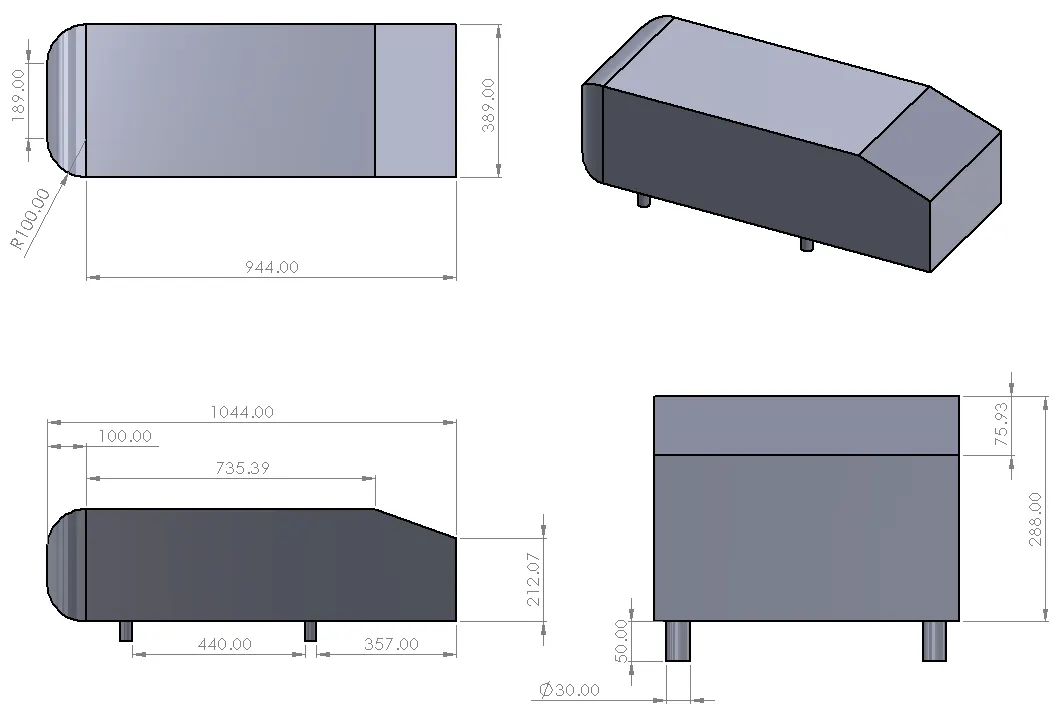
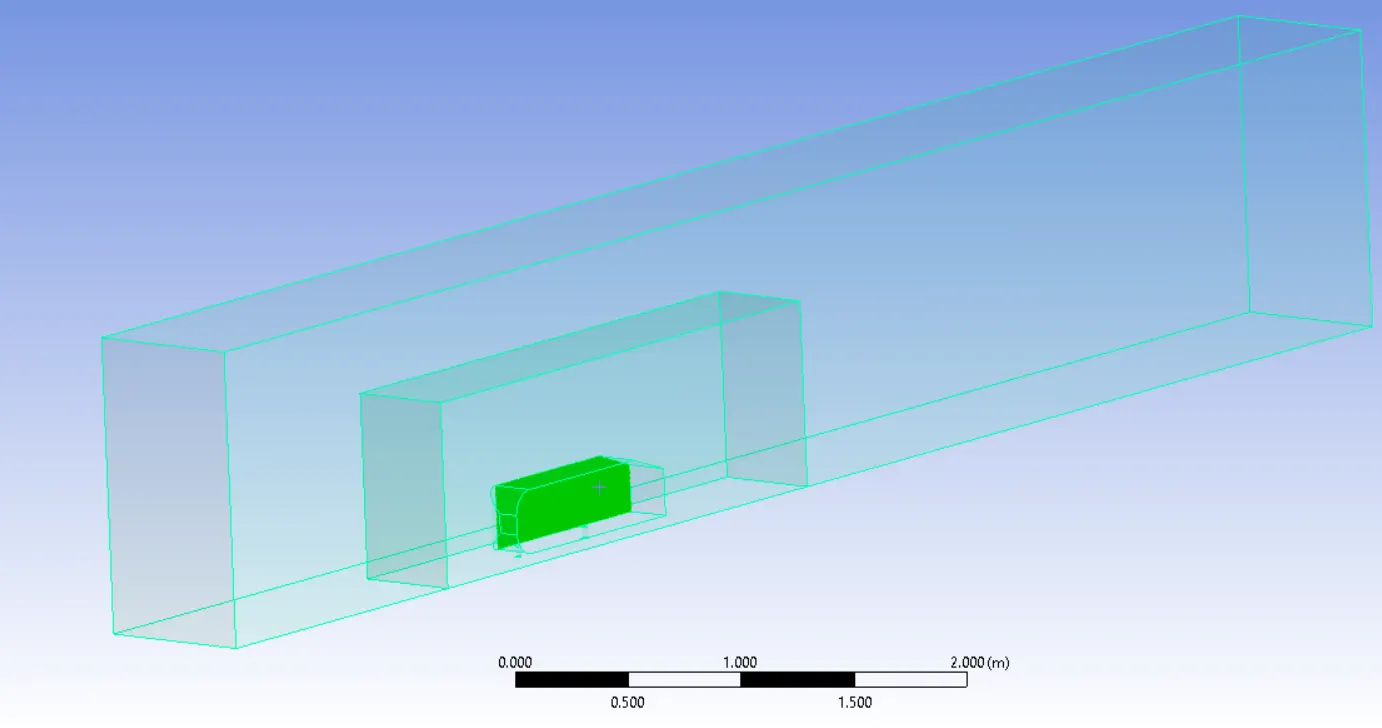
Geometry:
Dimensions:
Mesh:
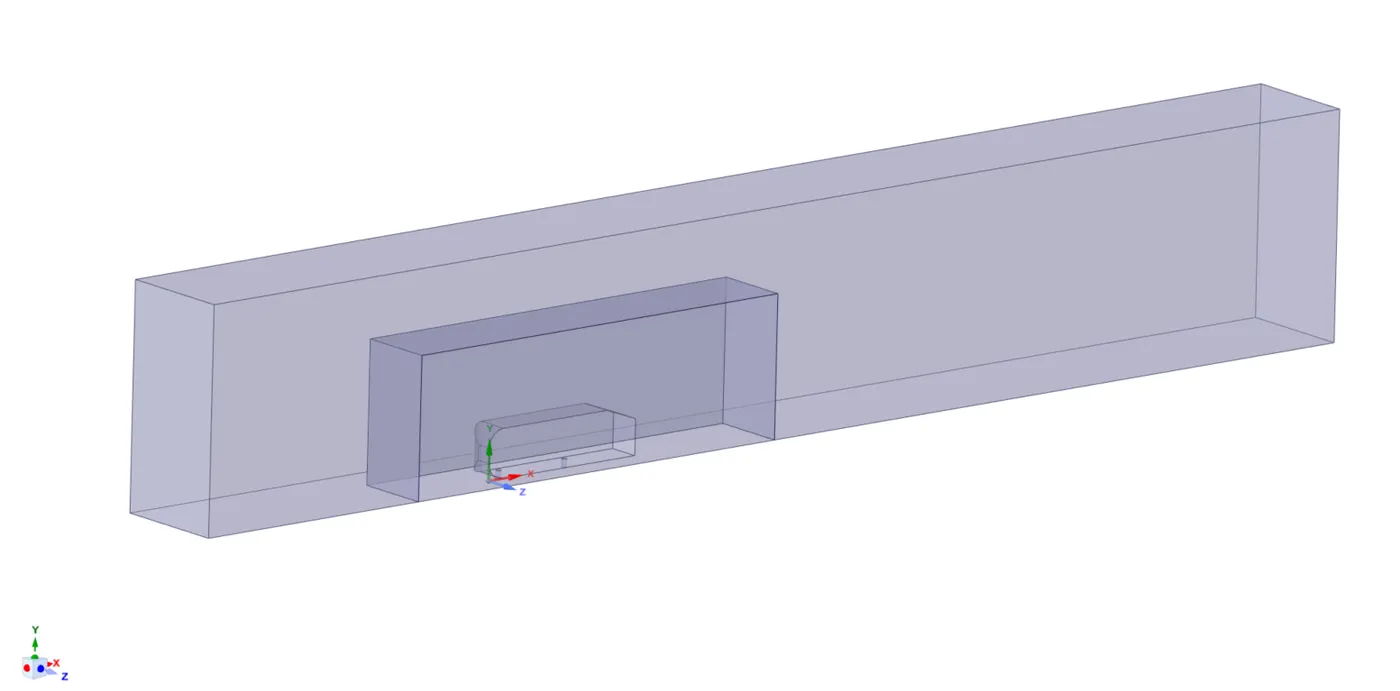
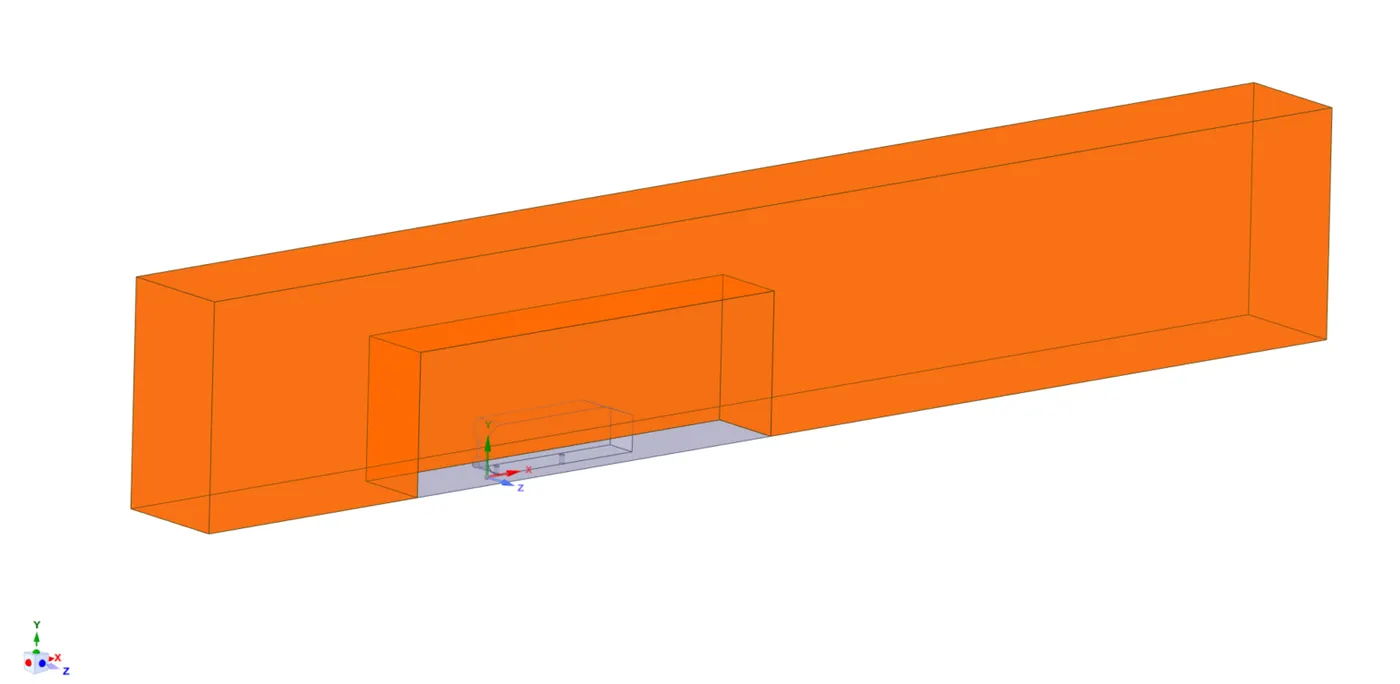
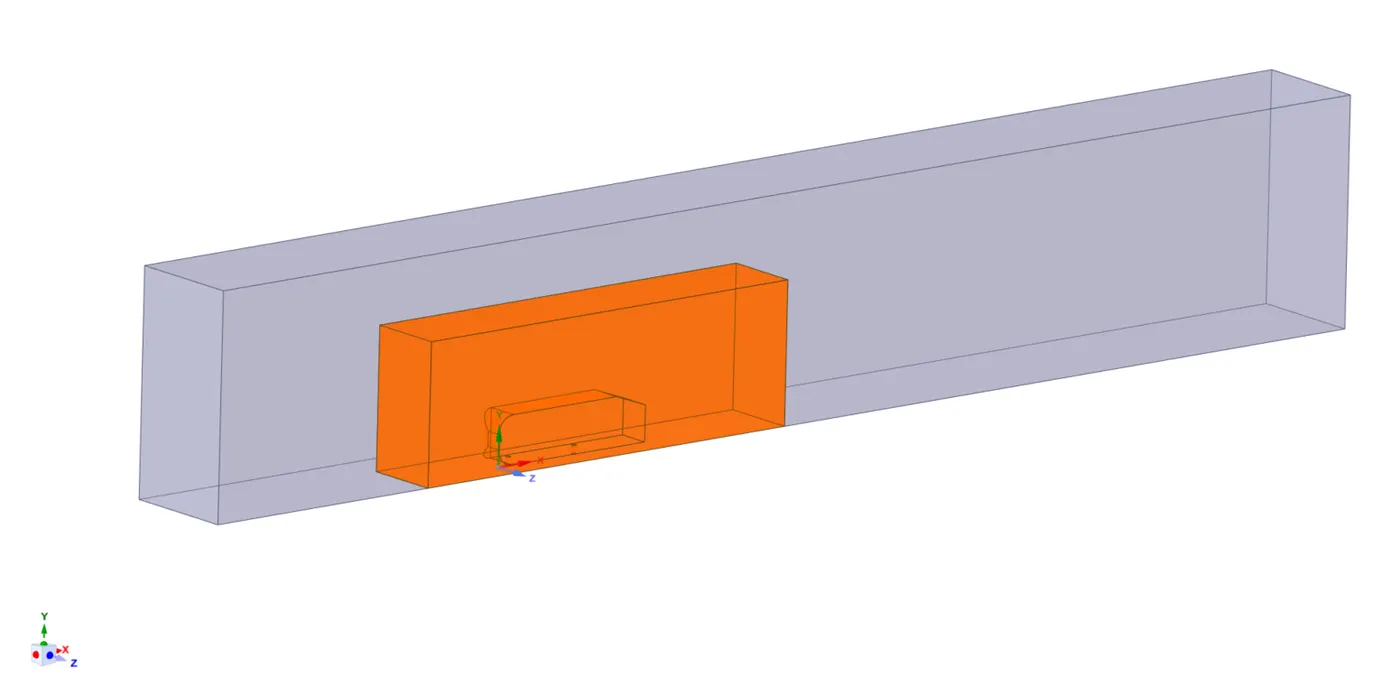
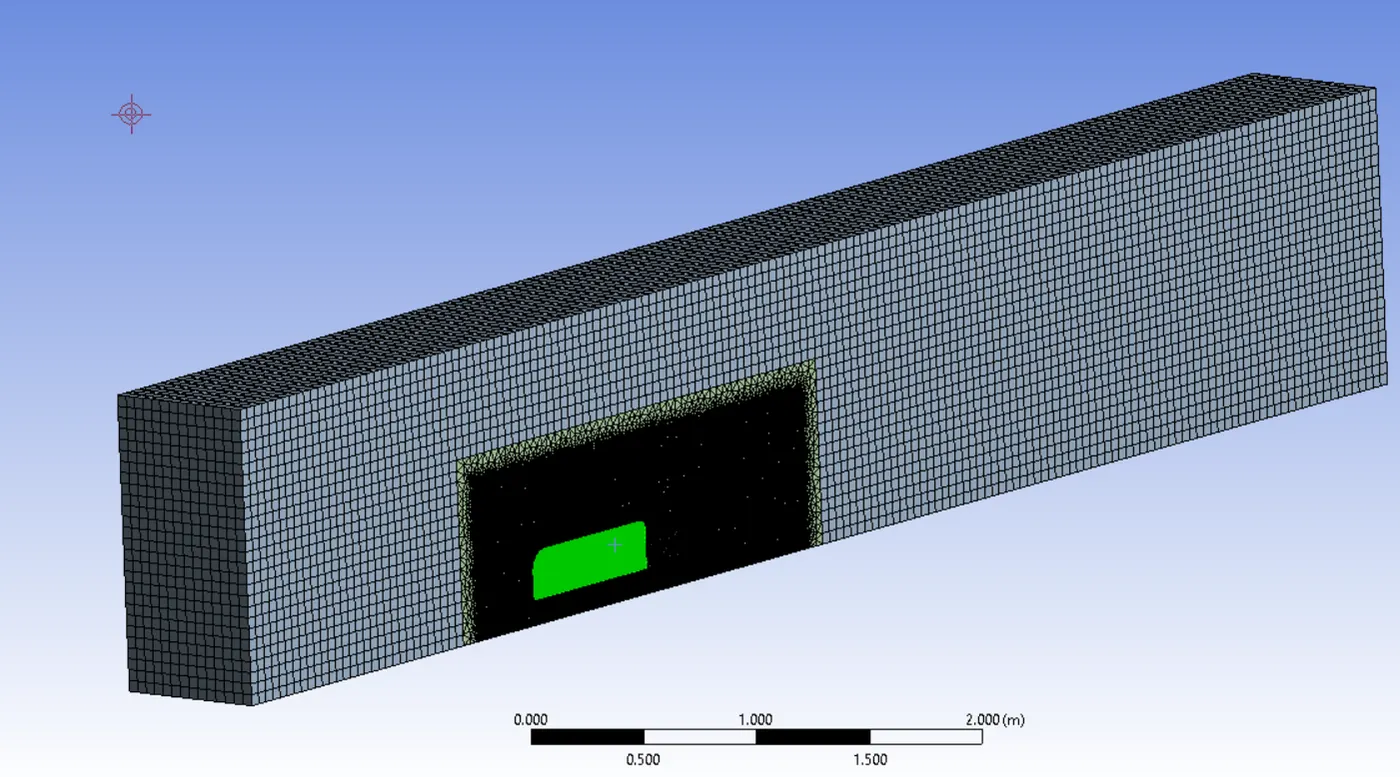
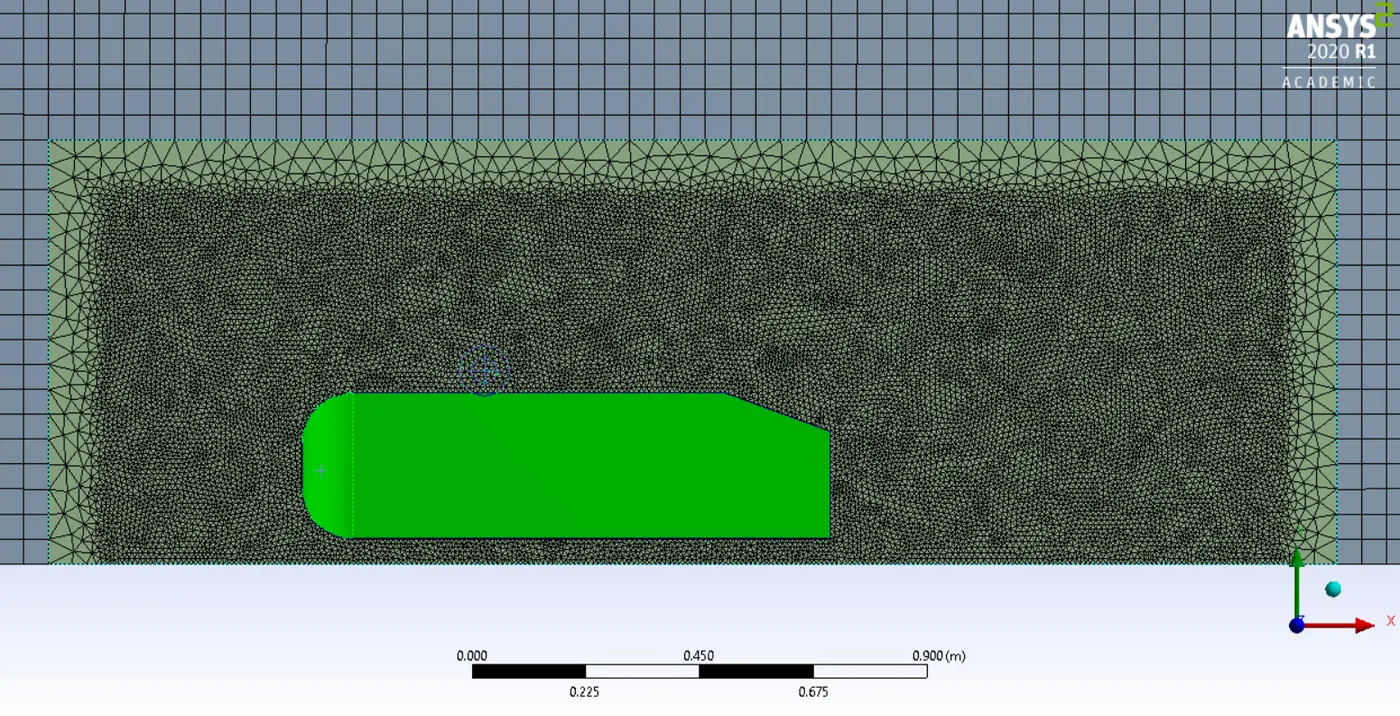
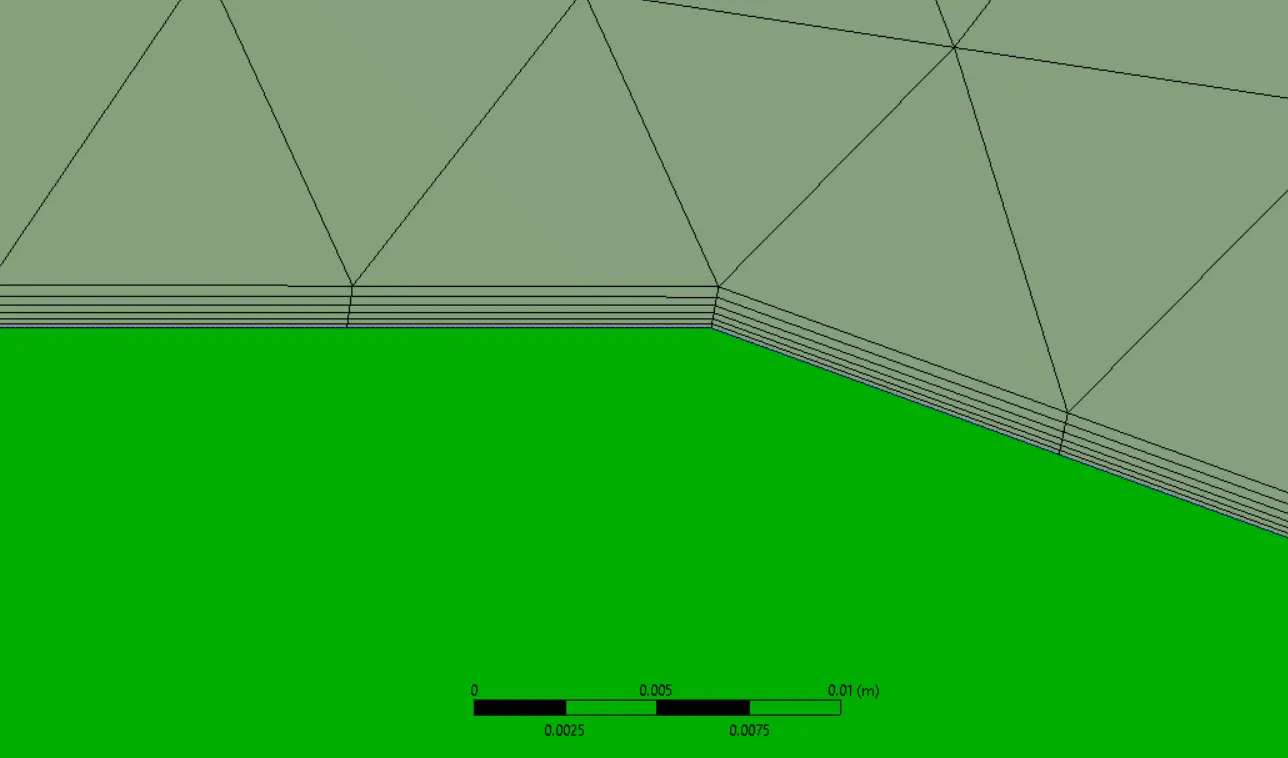
Geometry was distributed in two parts for better optimization of mesh. The outer enclosure has coarse mesh and the inner enclosure has finer mesh. Inflation layers were used near the surface of Ahmed's body to get the correct values of drag. The size of the inflation layer was calculated using the above given Y+ calculation.
Section view of Coarse and Fine mesh Enclosure for Ahmed body:
Section view of Coarse mesh enclosure for Ahmed body:
Section view of Fine mesh enclosure for Ahmed body:
Section view without mesh:
Meshed view of both enclosures and car wall:
Closer view of Fine mesh enclosure and car wall:
Inflation layer with 6 layers and a total thickness as calculated in Y+ section:
Mesh statistics:
Nodes: 1418059
Elements: 7496135
RESULTS:
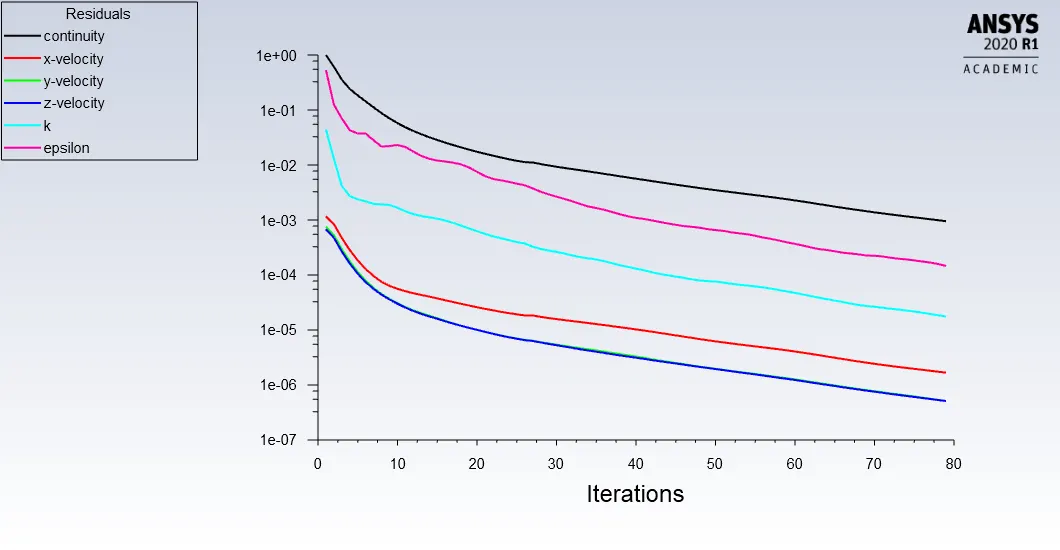
Residual plot auto converged at all residuals = 1e-3:
Drag Coefficient plot:
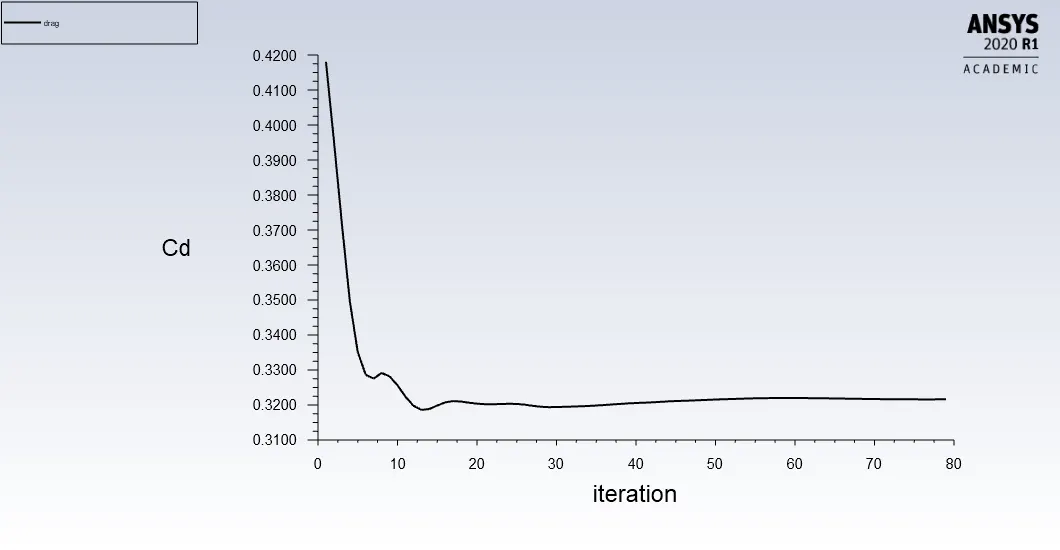
Drag coefficient = 0.3216
Lift coefficient plot:
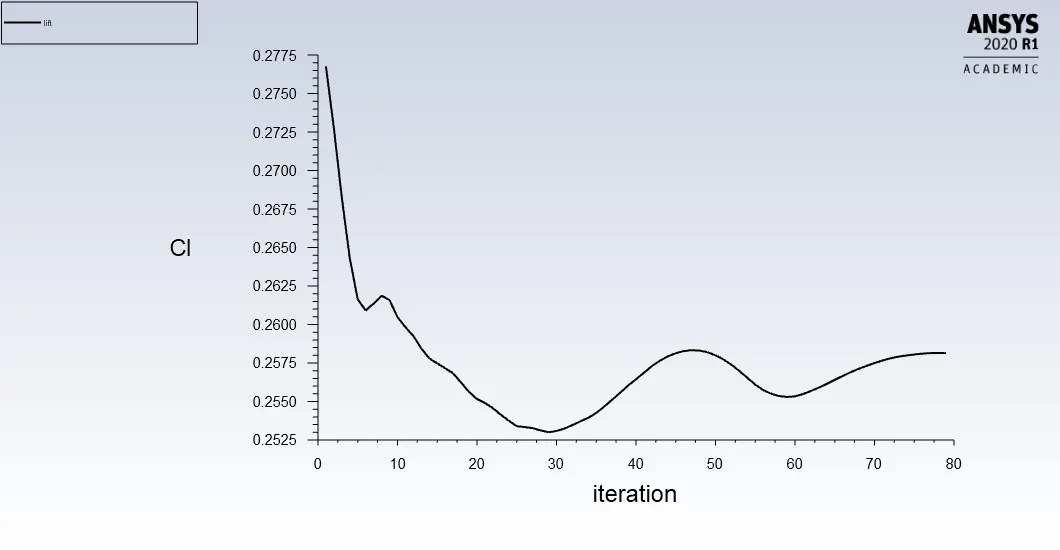
Lift coefficient = 0.2581
Velocity vector Full body
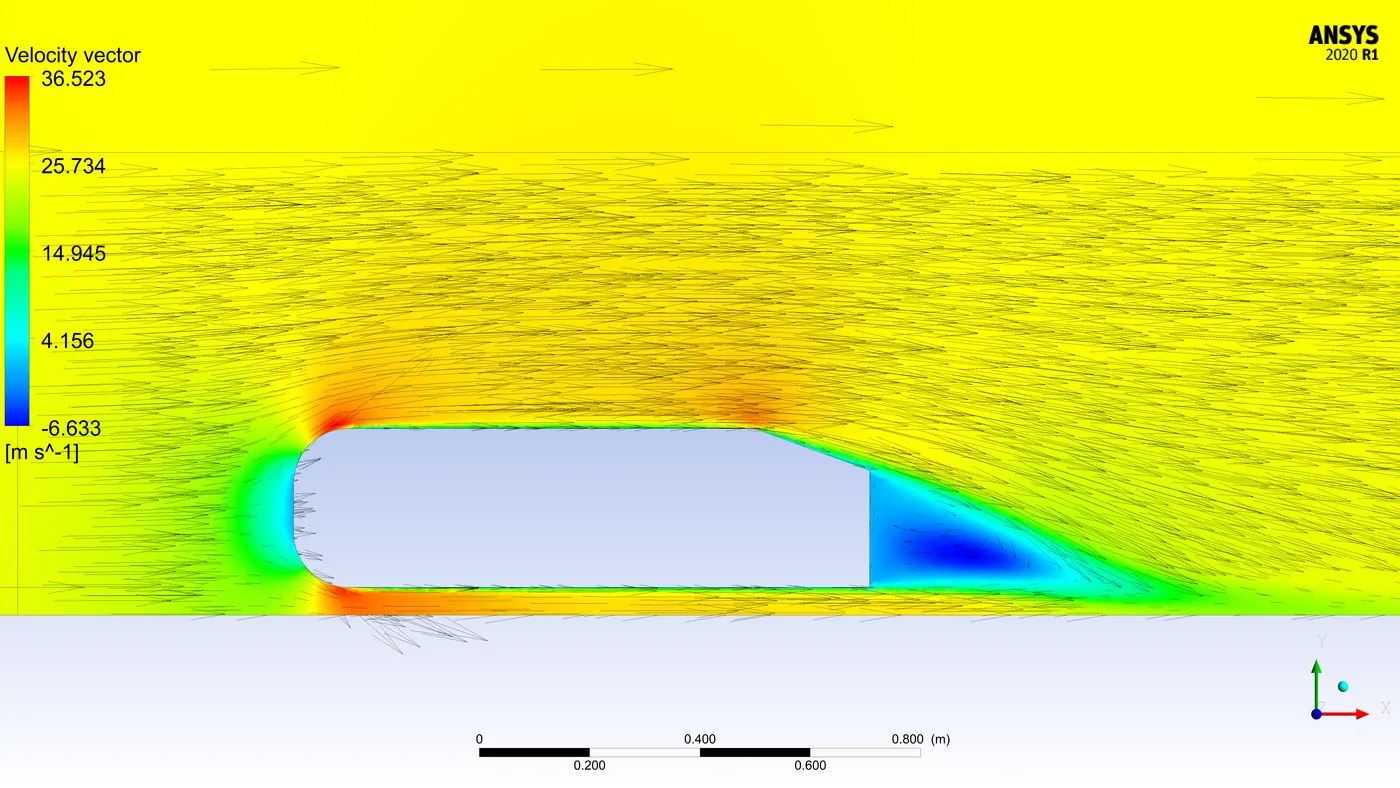
Velocity vector Back (Near wake region)
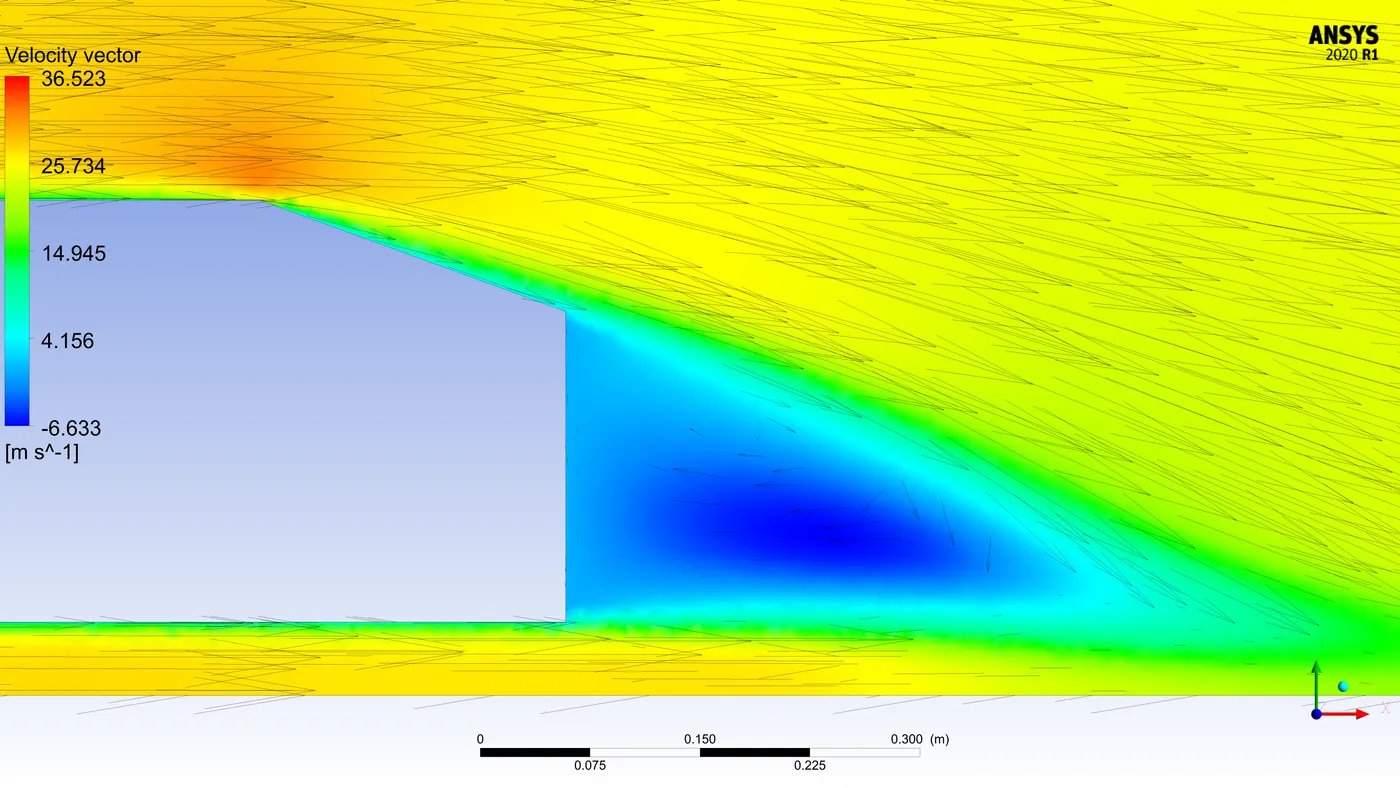
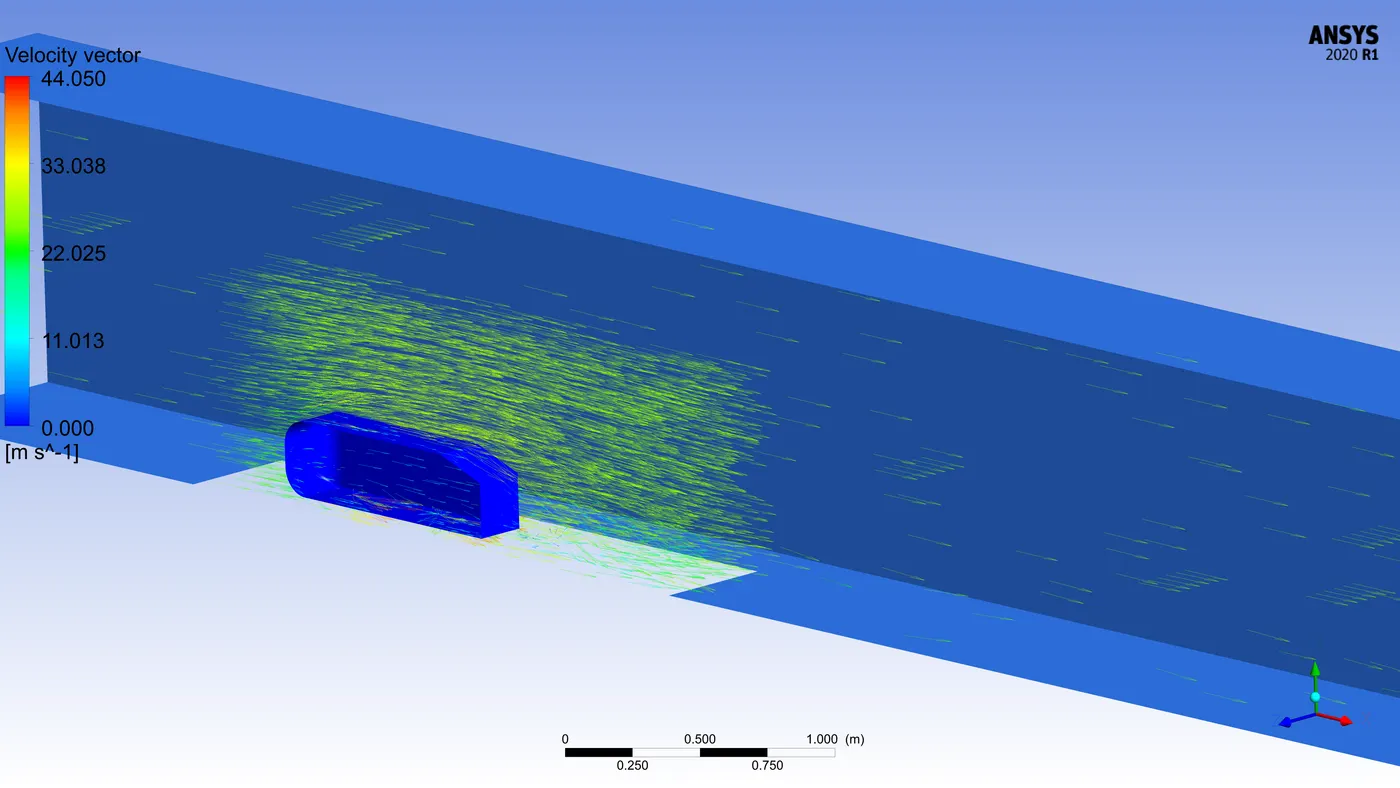
Velocity vector (3D)
Velocity Contour
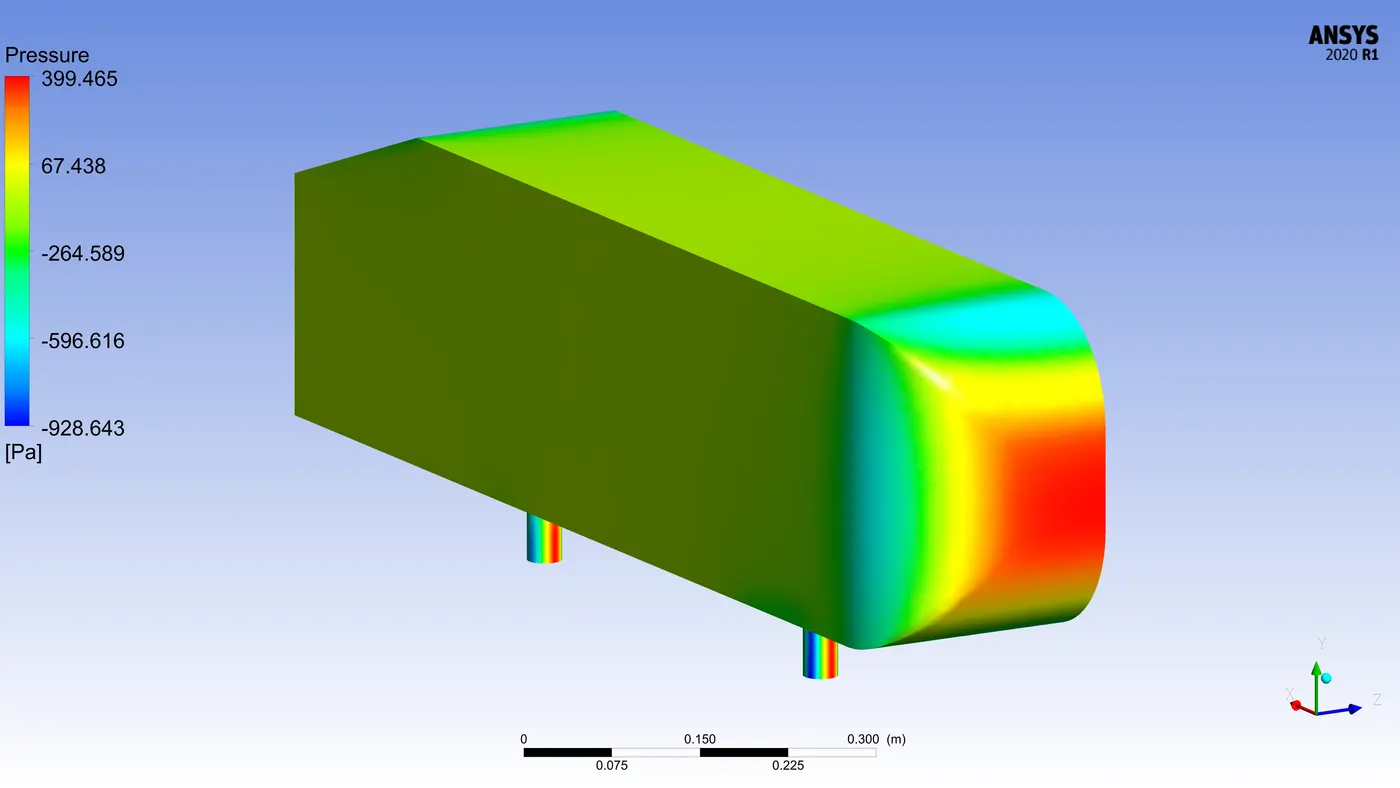
Pressure contour
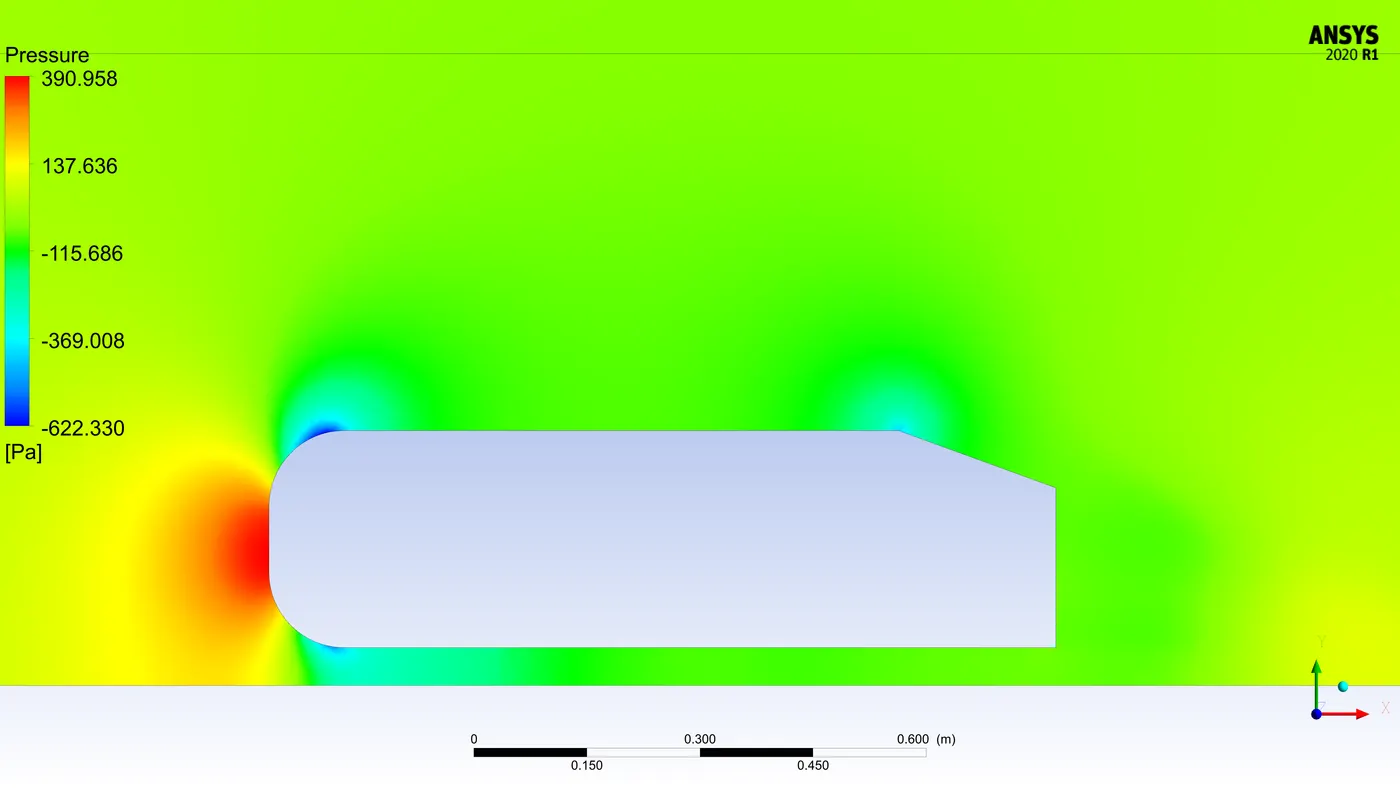
Pressure contour (3D)
Drag and lift values for mesh independent test:
| Case Number | Number of nodes | Number of elements | Drag coefficient | Lift coefficient |
| Auto Mesh | 8560 | 42346 | 16.162067 | 9.3927098 |
| Basic refinement | 157319 | 558187 | 0.33834263 | 0.24637363 |
| High refinement | 1418059 | 7496135 | 0.32161705 | 0.25813831 |