ADVISOR TOOL
AIM:
STIMULATION OF HEV AND EV USING ADVISOR TOOL
OBJECTIVE:
1) Stimulate EV_defaults_in file, if cargo mass is 500 kg with all other default conditions, can the vehicle travel 4 km with FTP drive cycle? Conclude with observations.
2) For the same case, change the battery capacity and repeat the stimulation
3) To perform gradeability test with PRIUS_Jpn_defaults_in file. Compare results in a table and conclude.
INTRODUCTION:
ADVISOR (ADVANCE VEHICLE STIMULATOR) TOOL was developed by the US Department of Energy (DOE) and National Renewable Energy Laboratory for the rapid analysis of sophisticated systems of different vehicle components (motor, battery, alternate fuels, etc) and its designs.
The tool allows users to understand the modification to improve the fuel economy, vehicle performance and emission control. It is a set of model, data and script text files to use with MATLAB and Simulink.
Starting the Tool -
- Open MATLAB and set default location folder to advisor file.
- Enter ‘advisor’ in the command window to open the tool.
- It will launch in a new window.
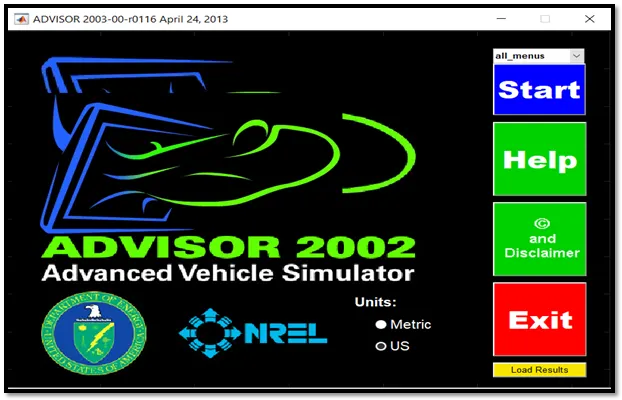
It has three windows for Vehicle Input, Stimulation parameters and Result.
STUDY-1: STIMULATE EV defaults in FILE, IF CARGO MASS IS 500 KG WITH ALL OTHER DEFAULT CONDITIONS, CAN THE VEHICLE TRAVEL 4 KM WITH FTP DRIVE CYCLE?
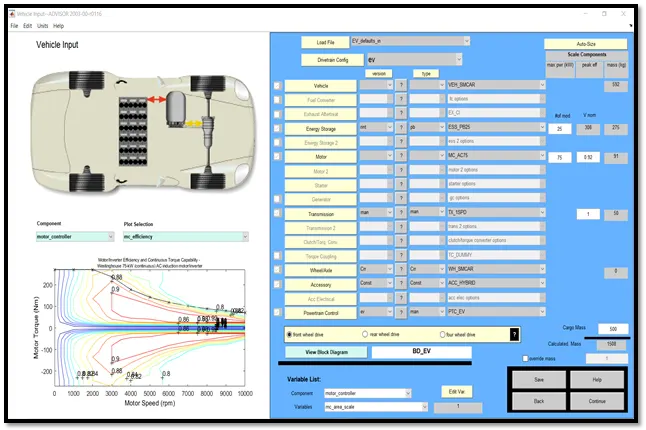
In the first vehicle input window,
- Change Parallel_defaults_in file to EV_defaults_in file
- Change the input of the cargo mass to 500kg.
In the second Stimulation Parameter window,
- Change the drive cycle to CYC_FTP (FEDERAL TEST PROCEDURE)
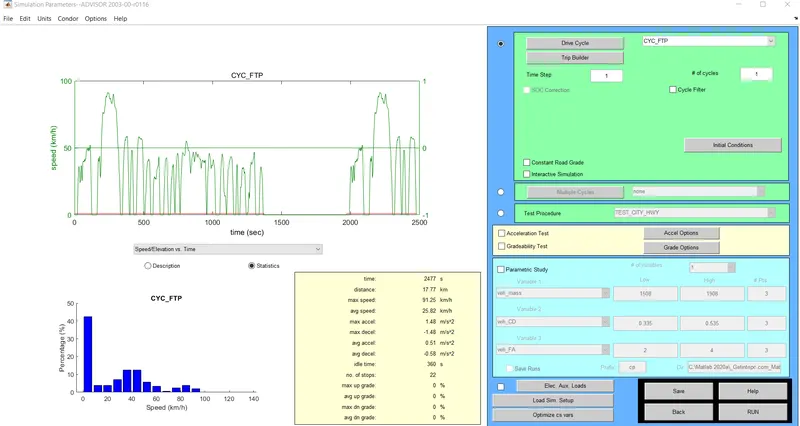
The distance travelled by the vehicle in one FTP drive cycle is 17.8 km.
Now, for achieving the 45 km range
The no. of FTP drive cycle needed = 45/17.8 = 2.53 = 3 (approx.)
In the third Result window,
- All the graphs for different parameters of vehicle are plotted.
- For the given case the car could run only 41.4 km.
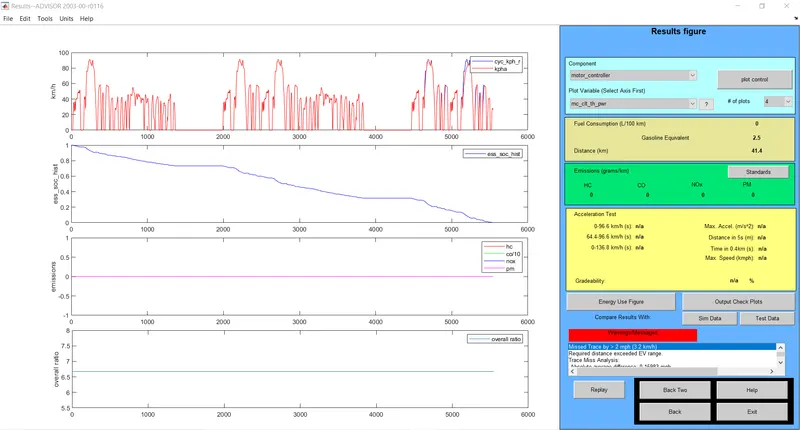
Conclusion: The graphs in result window shows that the EV could not complete the range of 45km as the battery runs out at 41.4 km.
In order to achieve the range, we need to increase the battery capacity of vehicle.
STUDY-2: REPEATING THE STIMULATION BY CHANGING THE BATTERY CAPACITY
With the same default conditions, change the battery capacity to 30kW under the battery module for attaining the 45 km range.
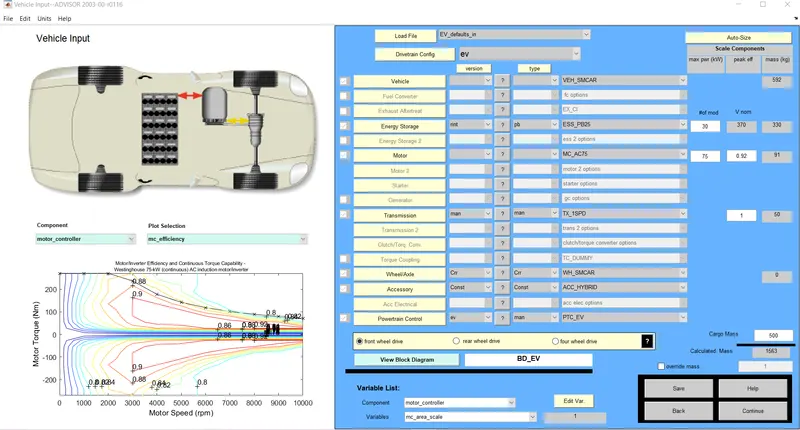
After increasing the battery capacity, the EV was able to complete the 45km range.
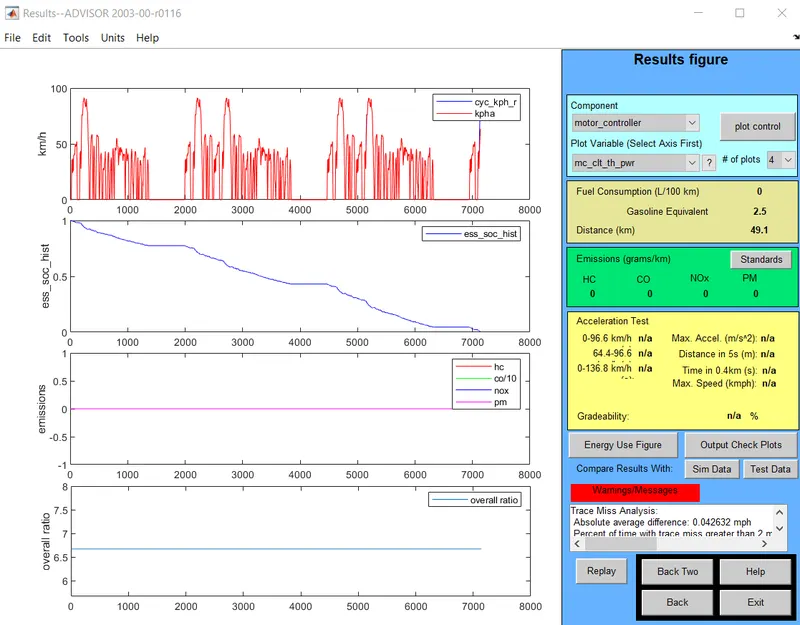
Conclusion: The above graphs show that after increasing the battery capacity from 25 kW to 30 kW, gives the vehicle an extra range covering 49.1 km for the same 3 FTP drive cycle. The extra power is achieved by increasing the battery module.
STUDY-3: GRADEABILITY TEST FOR TOYOTA PRIUS JAPAN
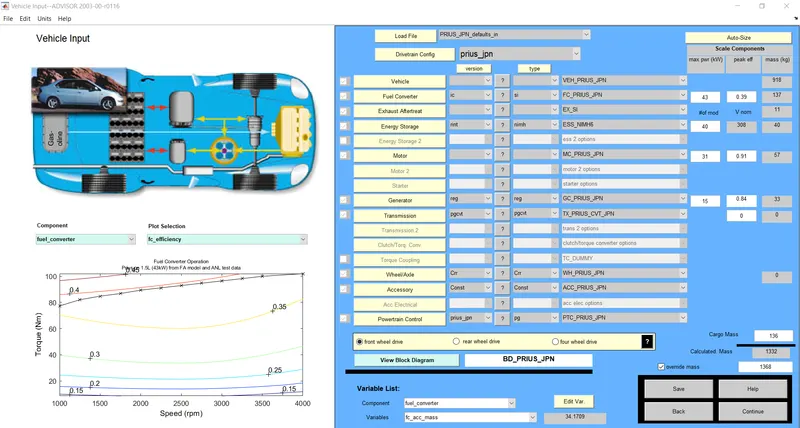
- In the vehicle input window, change the file to prius_jpn_default model file
- Continue to second stimulation parameter window
- Select the gradeability test and open its options to change the parameters.
- Gradeability test is performed by increasing the speed of the vehicle for a constant duration of time 10 secs.
Speed change,
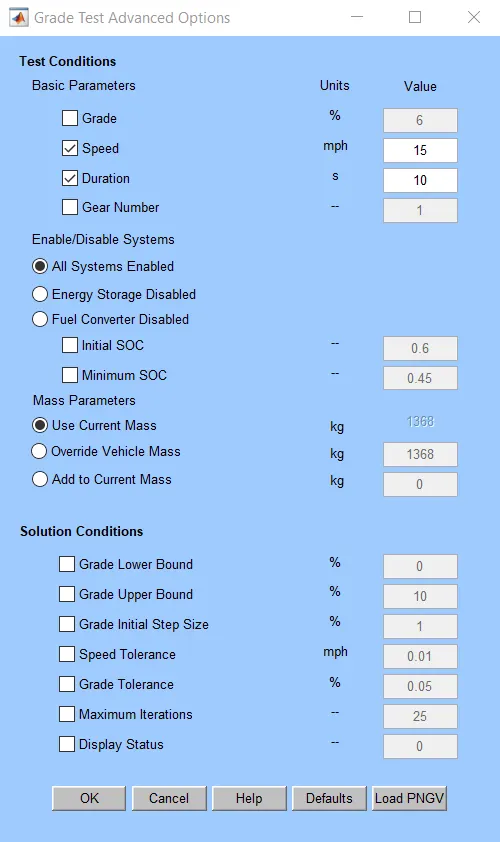
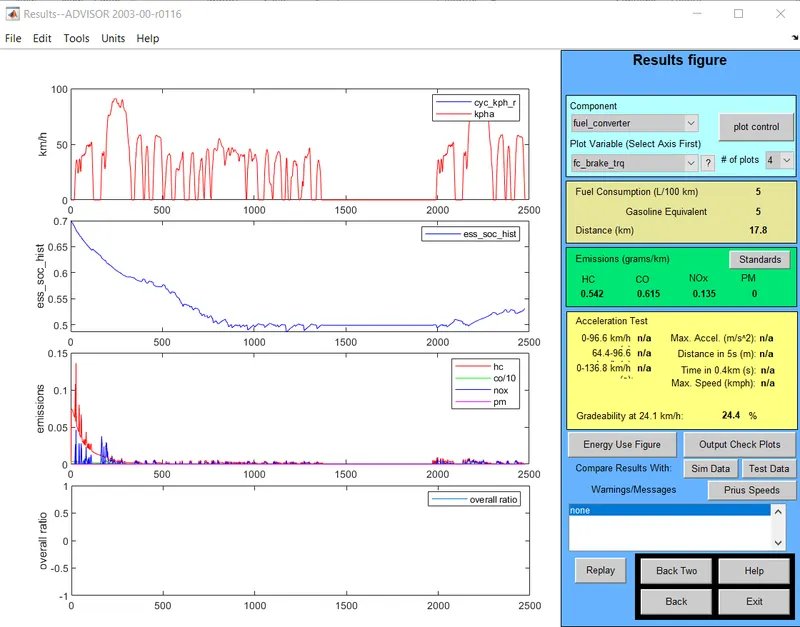
For 15 mph or 24.15 kmph,
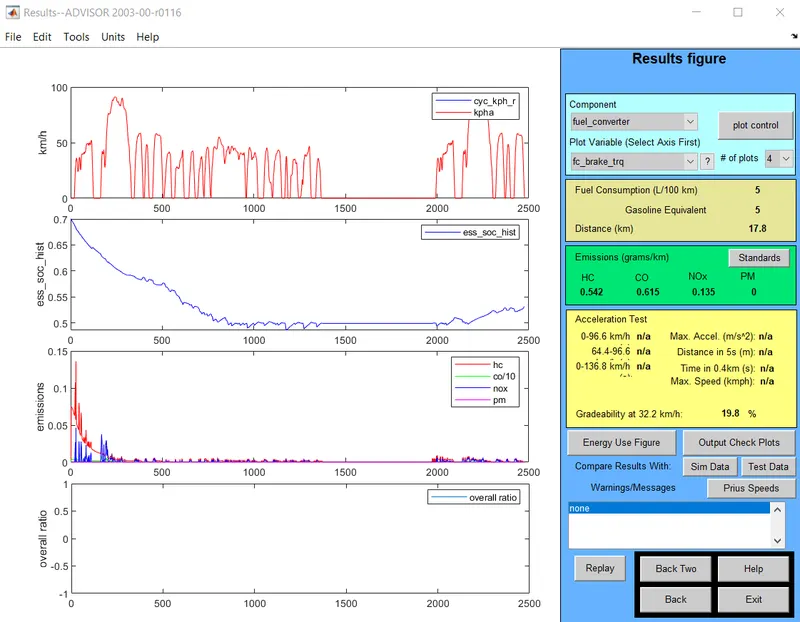
For 20 mph or 32.18 kmph,
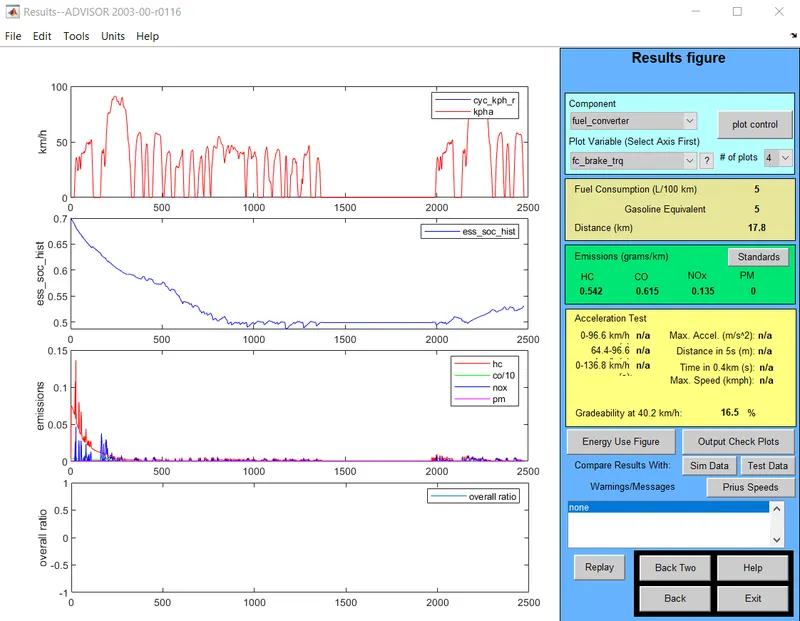
For 25 mph tor 40.25 kmph,
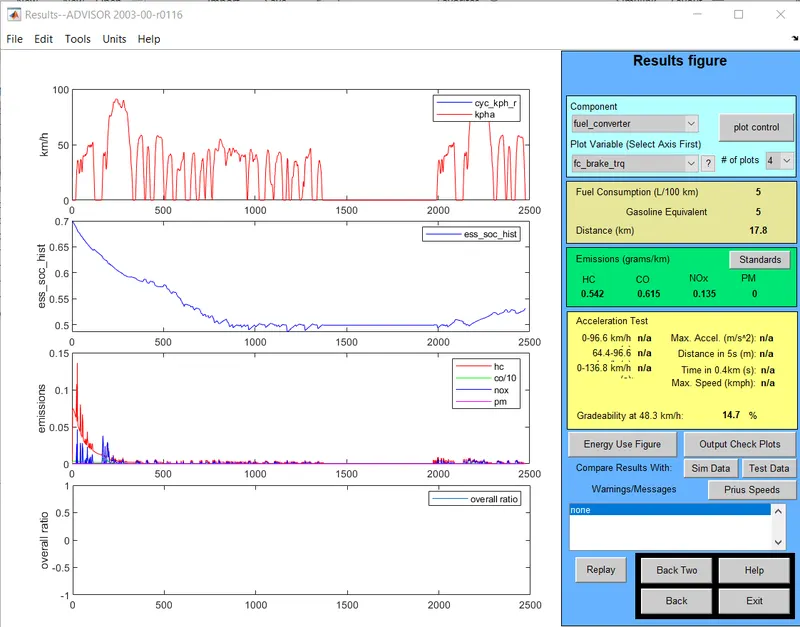
For 30 mph or 48.28 kmph,
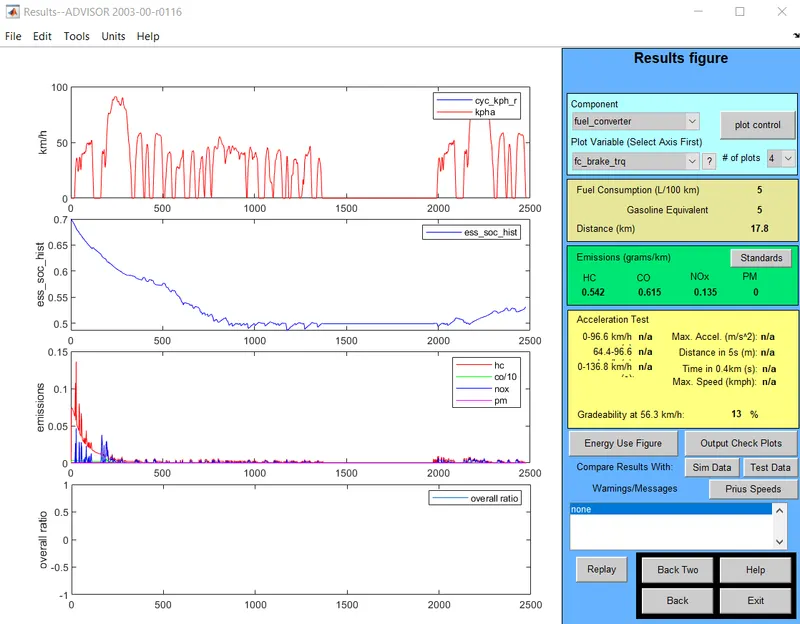
For 35 mph or 56.32 kmph,
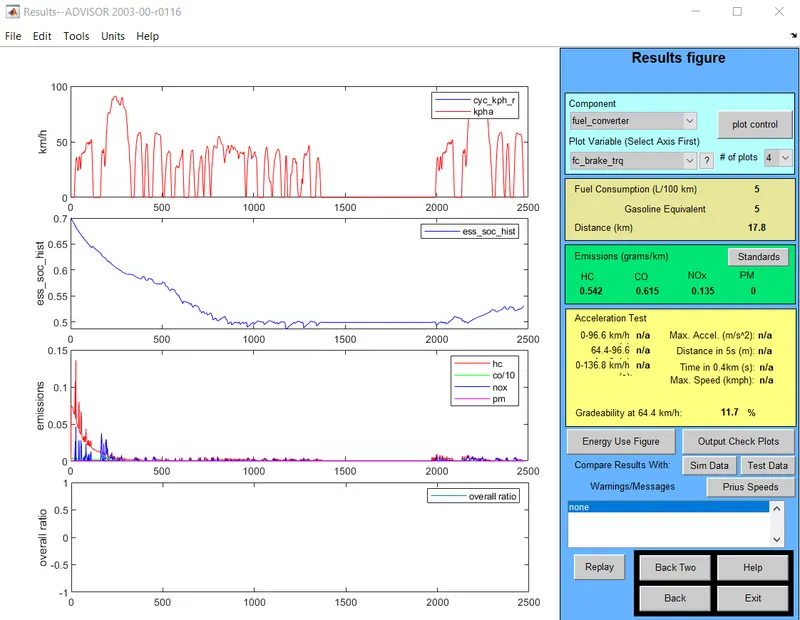
For 40 mph or 64.38 kmph,
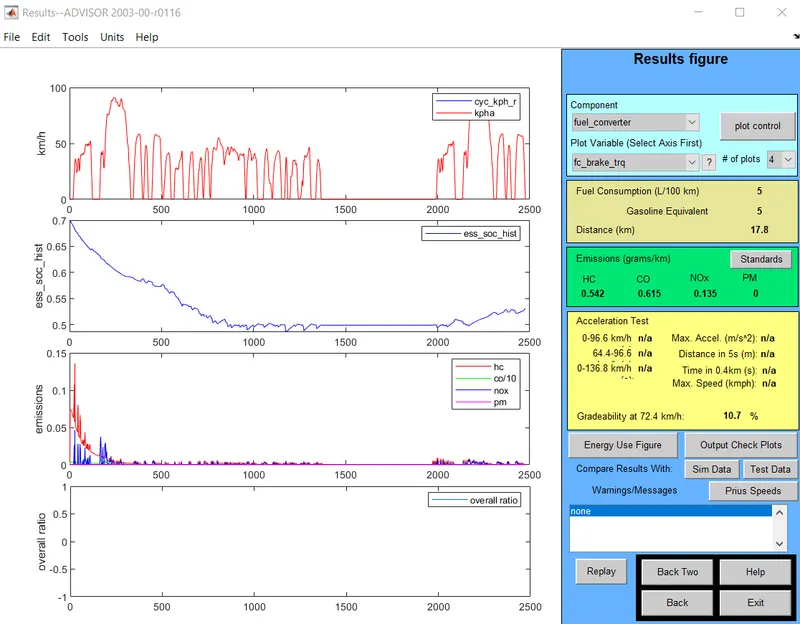
For 45mph or 72.42 kmph,
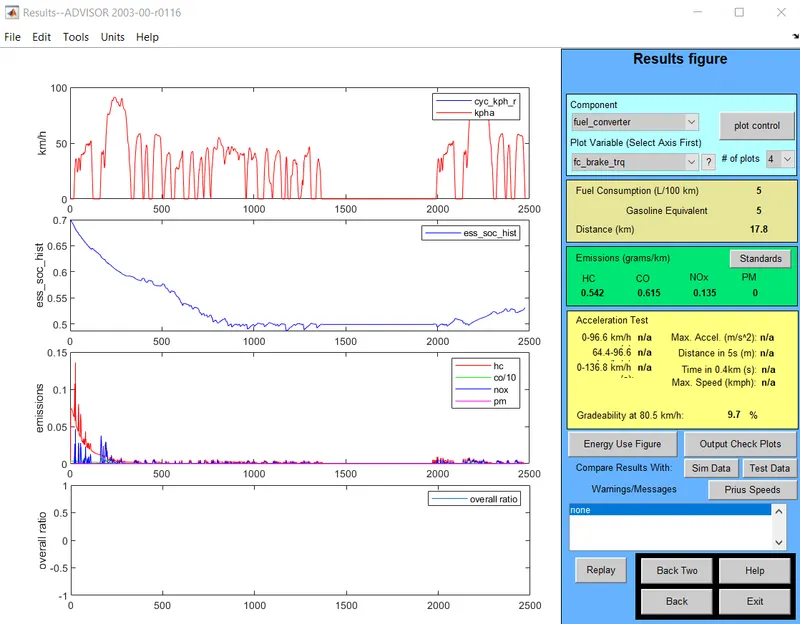
For 50 mph or 80.467 kmph,
| Speed (mph) | Speed (kmph) | Gradability (%) |
| 15 | 24.15 | 24.4 |
| 20 | 32.18 | 19.8 |
| 25 | 40.25 | 16.5 |
| 30 | 48.28 | 14.7 |
| 35 | 56.32 | 13 |
| 40 | 64.38 | 11.7 |
| 45 | 72.42 | 10.7 |
| 50 | 80.46 | 9.7 |
Table.1. Gradability Test
Conclusion: From the above table, we can observe that the gradability decreases as the speed of the car is increased. High speed can not be obtained at the slope with a greater gradient angle. Here the EV gradability decreases as we increase the speed.