Adams Assignments – Problem 5 – Compliance
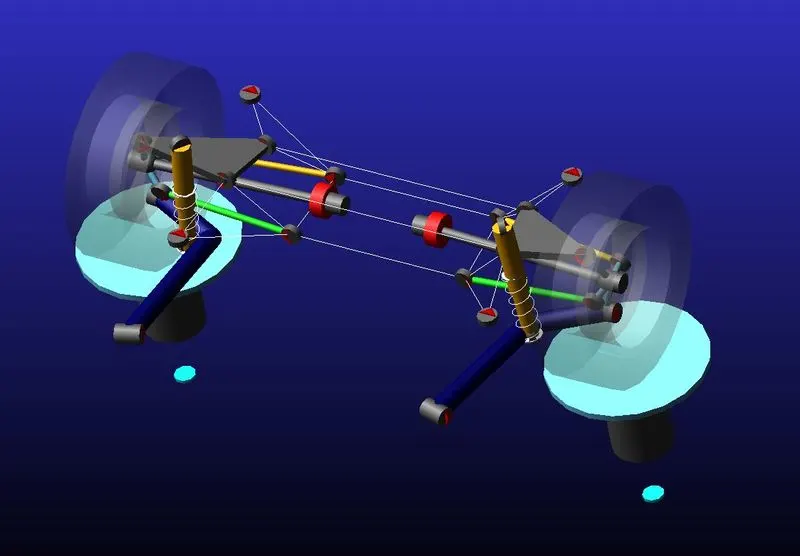
1) Open multi link suspension
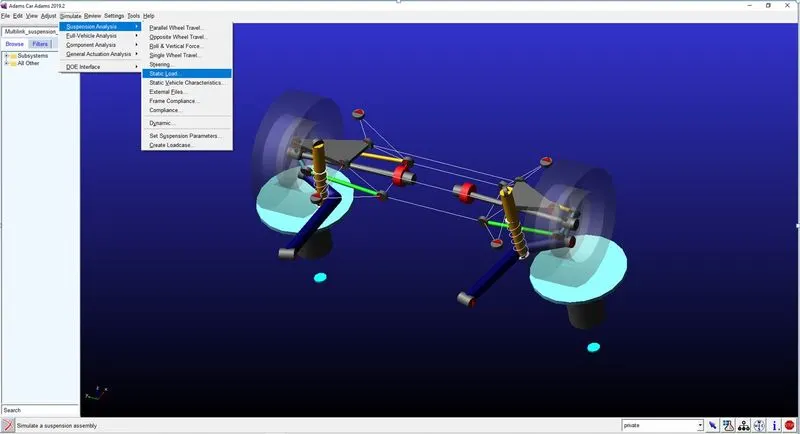
2) Run Static load simulation
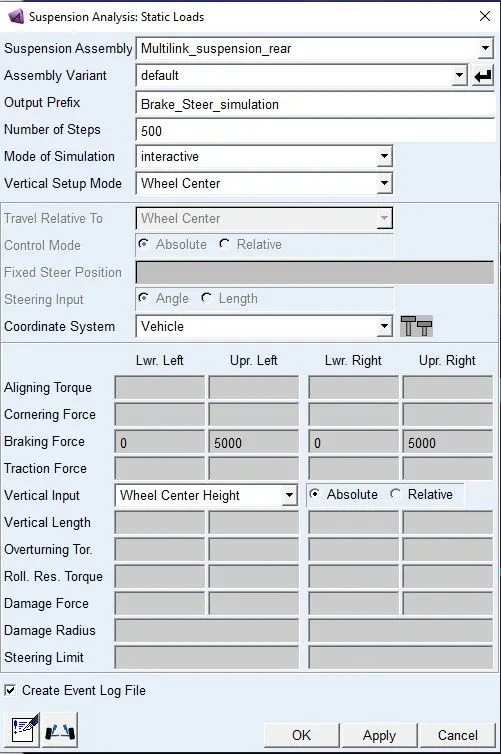
3) Part 1: Baseline analysis:-
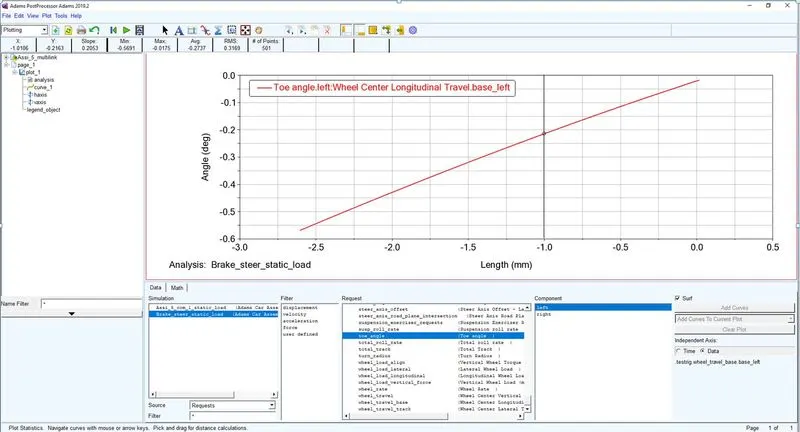
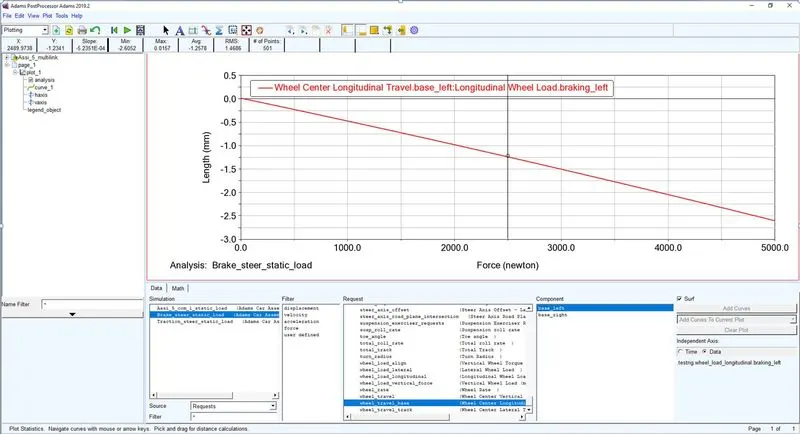
a) Braking load
From postprocessor plot, brake steer is 205 deg/m, & rear wheel toe out during braking.
c)Traction steer simulation
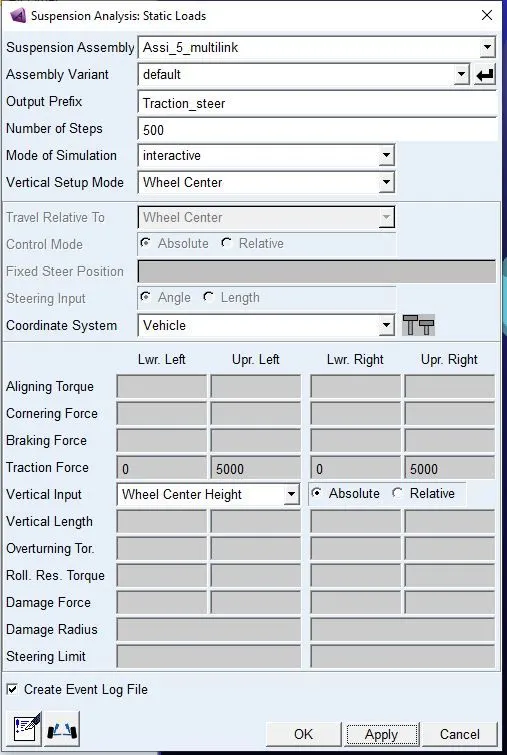
From postprocessor plot, Traction steer is 19.6deg/m, & rear wheel toe out during braking.
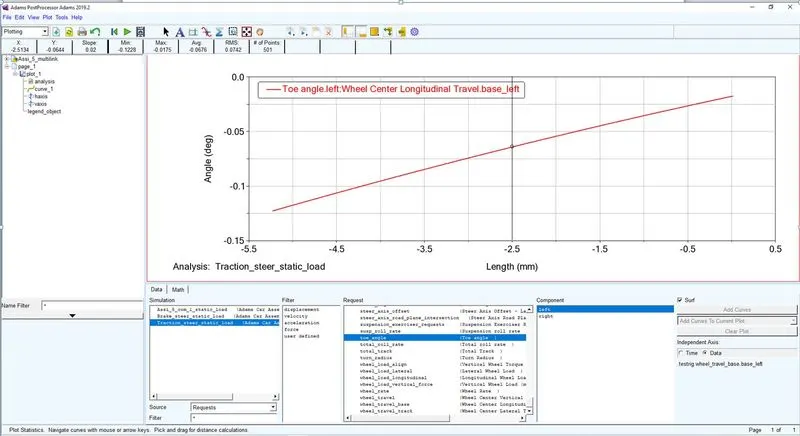
c)Longitudinal wheel center recession under traction
During Traction wheel recession plot is 1mm/kN
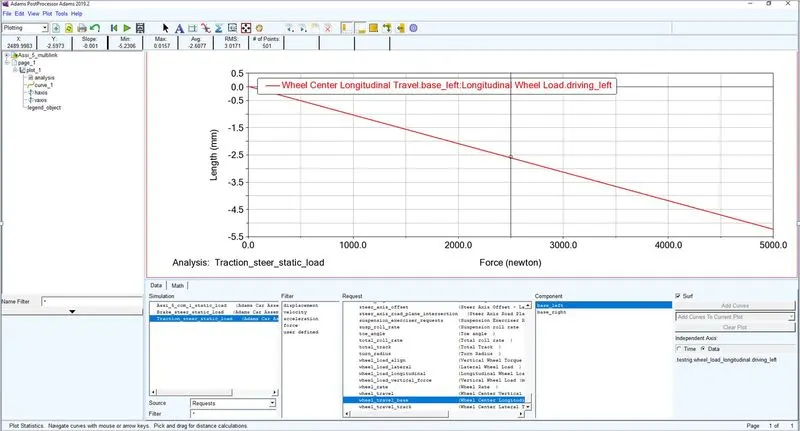
During Braking wheel recession plot is 0.523mm/kN
Difference shows for wheel recession for traction & braking because of the point of application.
Traction force applied at wheel center & for braking force it applied at the contact patch.
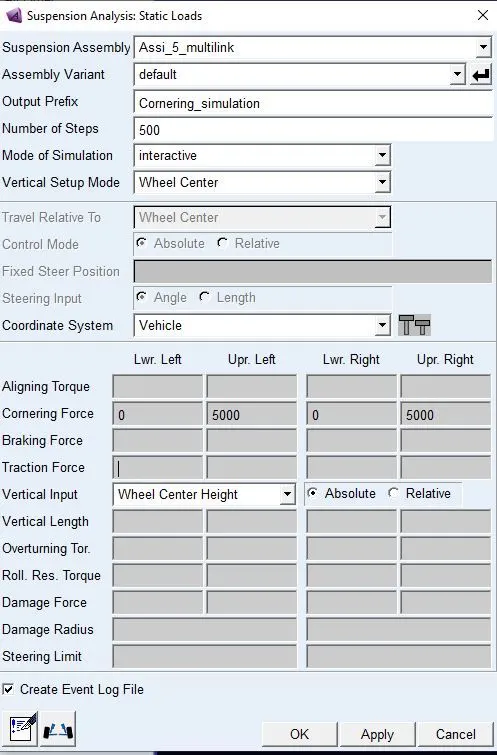
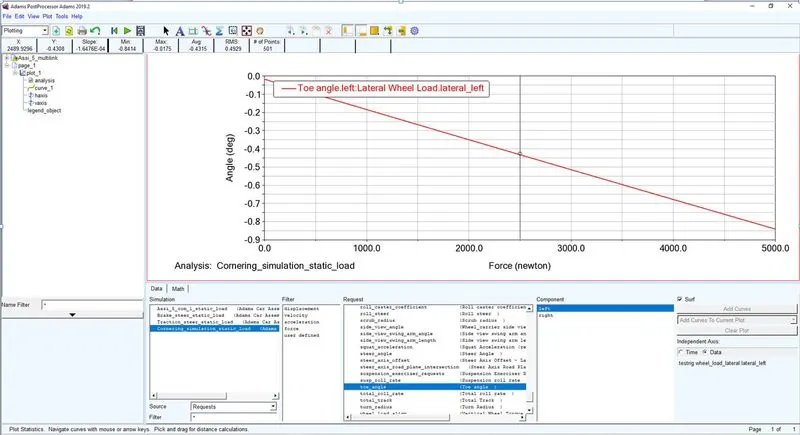
d) Lateral force compliance steer, cornering force simulation needs to run
As per plot the Lateral force compliance steer is 0.1647 deg/kN, it caused toe out.
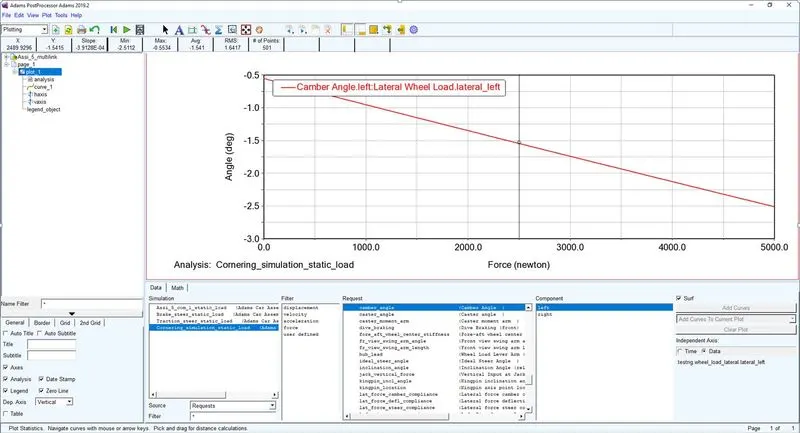
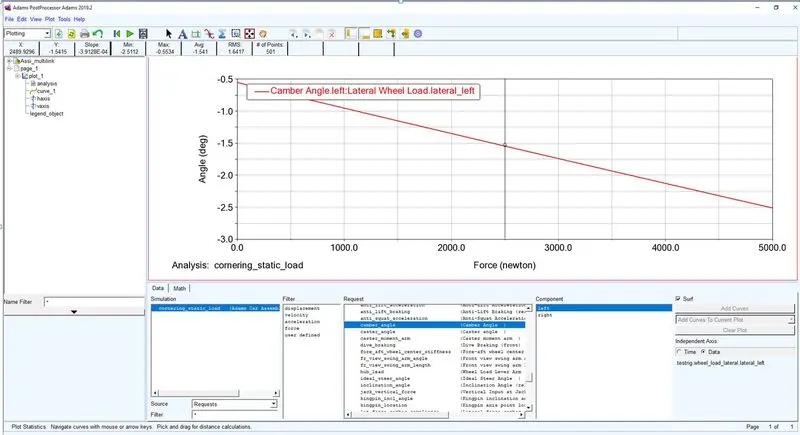
e) Lateral force compliance camber from plot is 3.9 deg/kN, its negative camber will cause negative camber
f) bump steer, run parallel wheel simulation
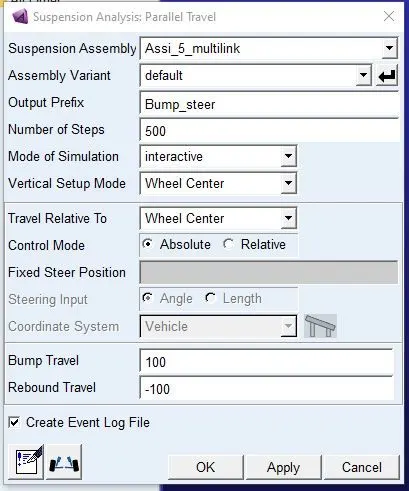
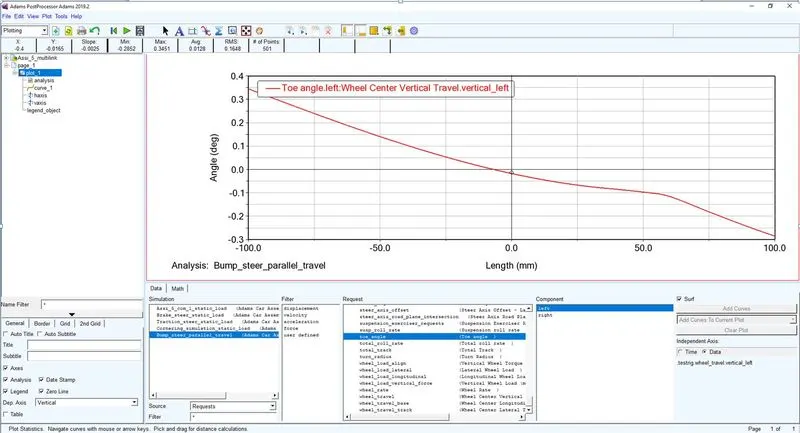
From plot bump steer is 0.25 deg/m & it cause toe out result oversteer.
Part 2: Tuning
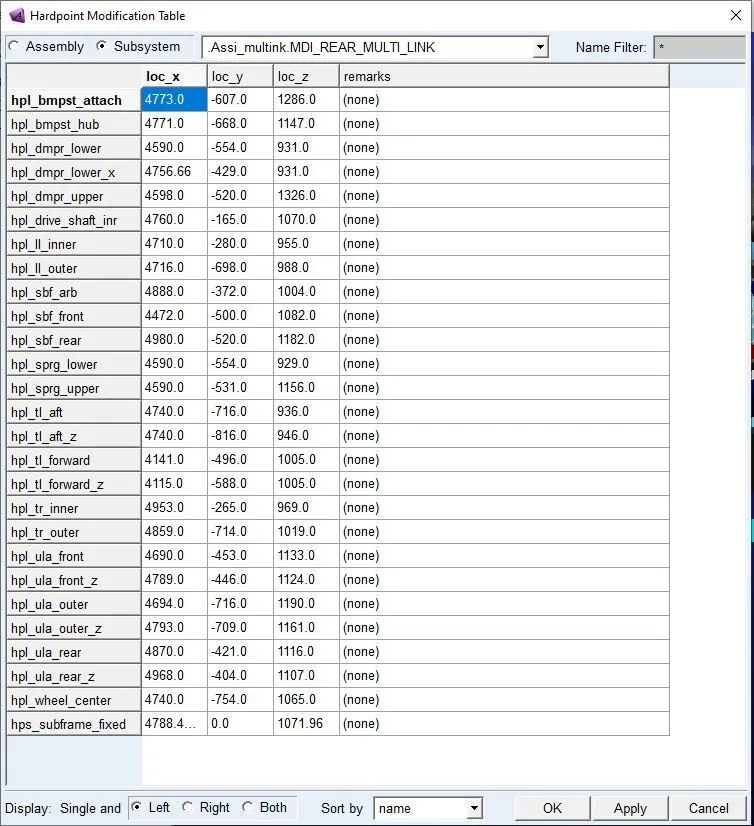
4)To achive the target toe in of 2.6 deg/m, hardpoint need to be modified
a)default hard point
b)modified hard point
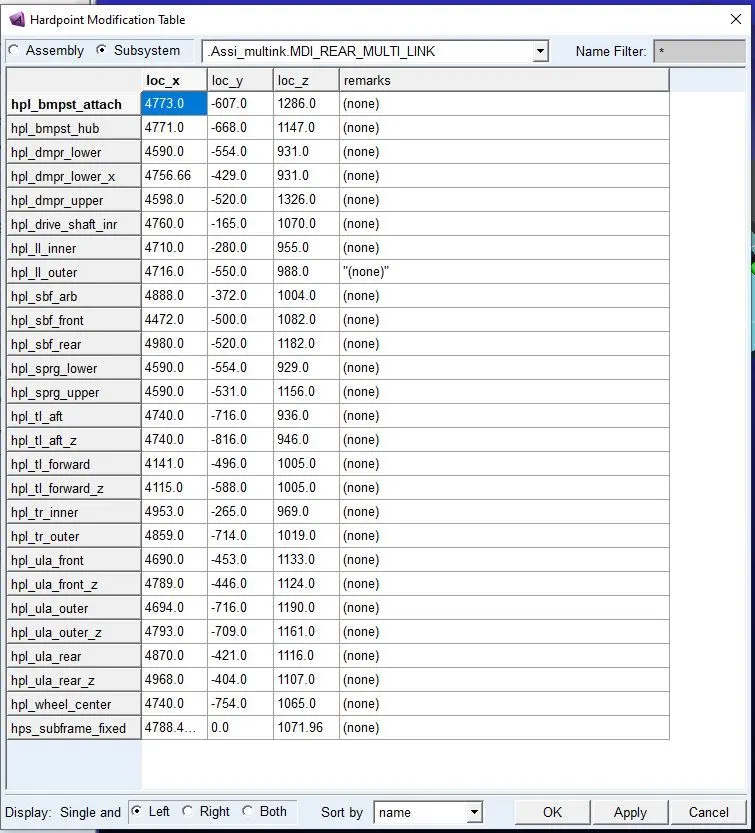
c) After modified the hard point parallel wheel travel run
compare the both plot of default hard point & modified hard point
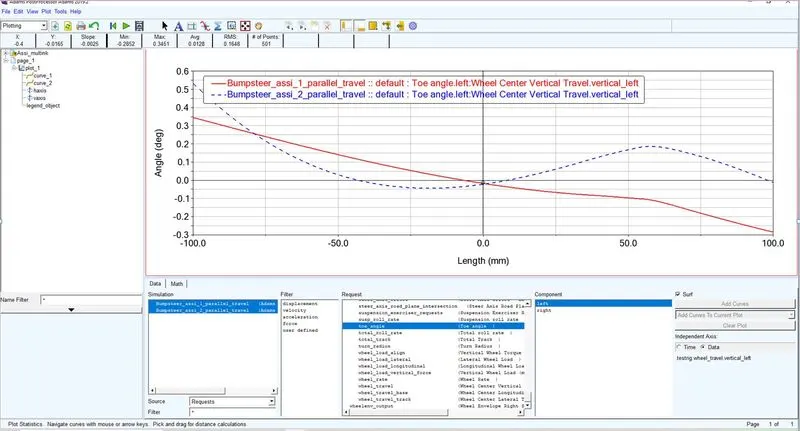
Modified polt shown the toe in of 2.6 def/m.
Now set the hard point table to default mode.
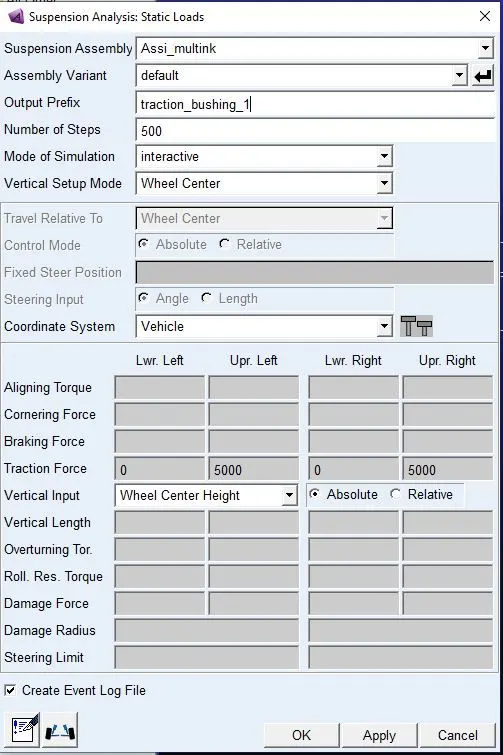
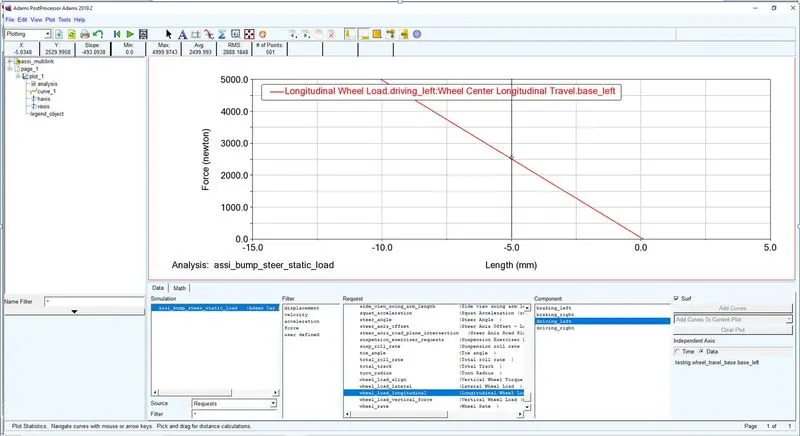
5)Traction wheel center recession – stiffness of ~500 N/mm, to achive this trailing arm bushing need to be modify because the this is connected to chassis, while any dynamic event this contribute most as compare to other
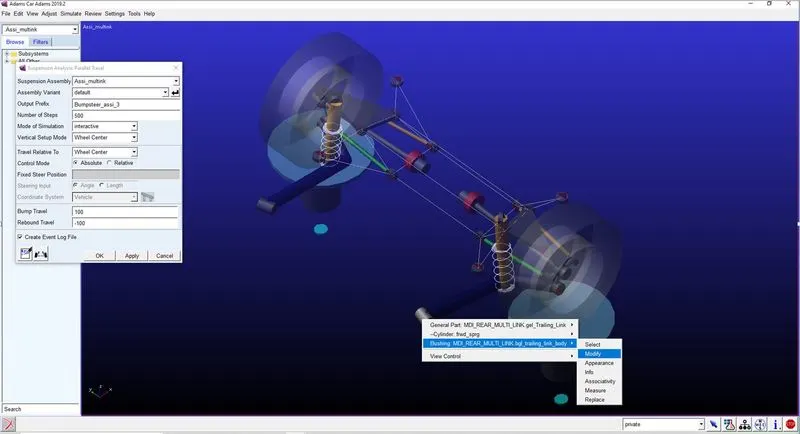
Run static losd simulation
Default bushing curve
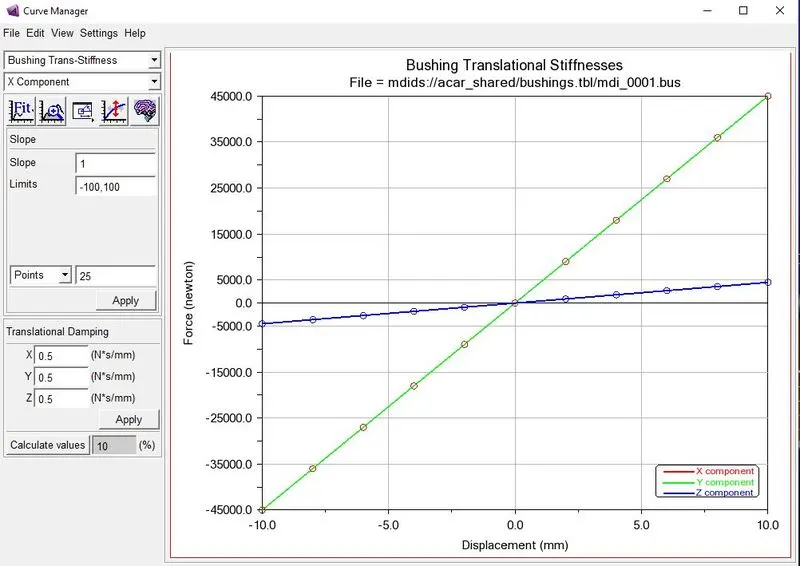
modified bushing curve to achive the target
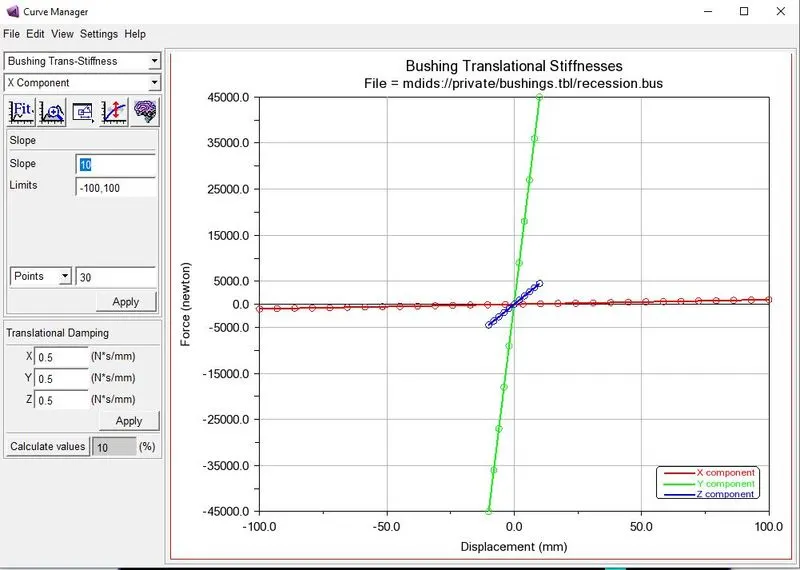
Postprocessor plot, its shows its 500 N/mm
6) Camber compliance of 0.45 deg/kN.
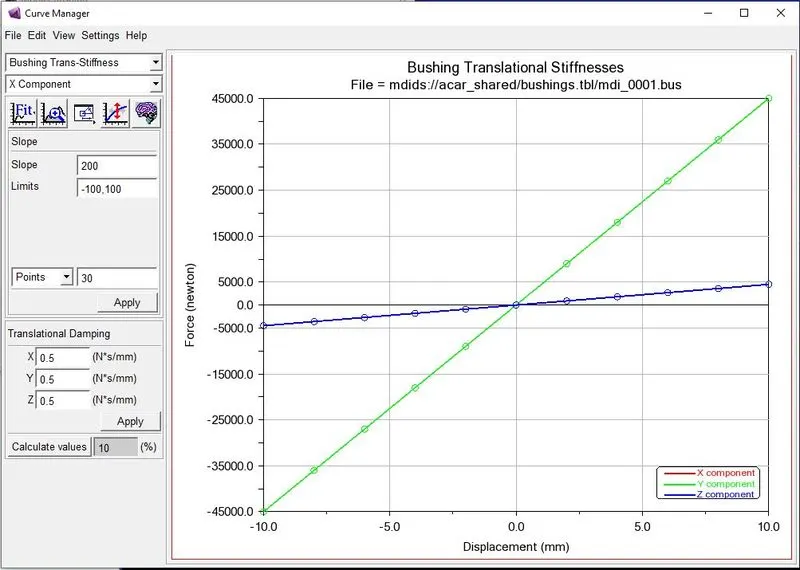
To achive the camber compliance modified the upper control bushing
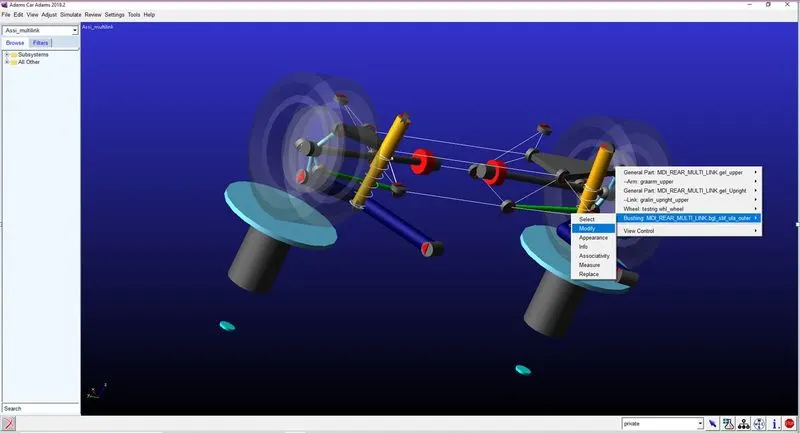
Default bushing curve
run the cornering static load simulation
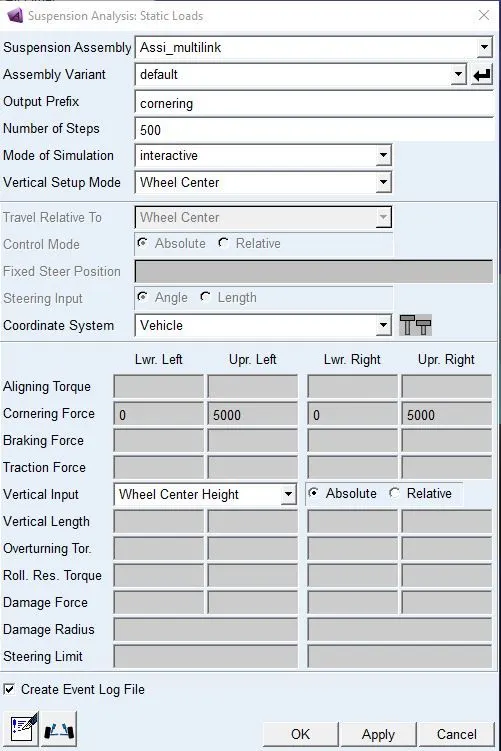
postprocessor plot
now modified the bush
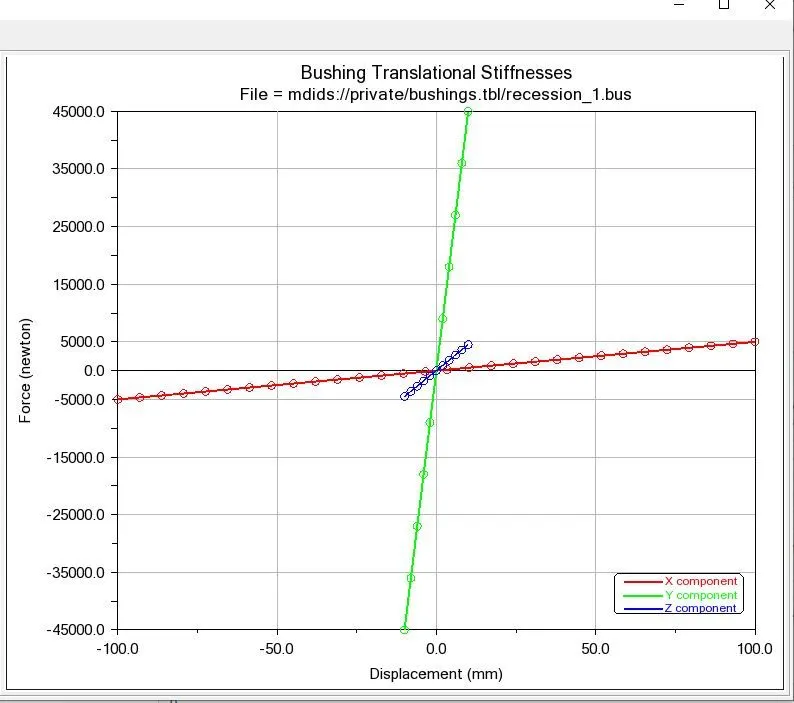
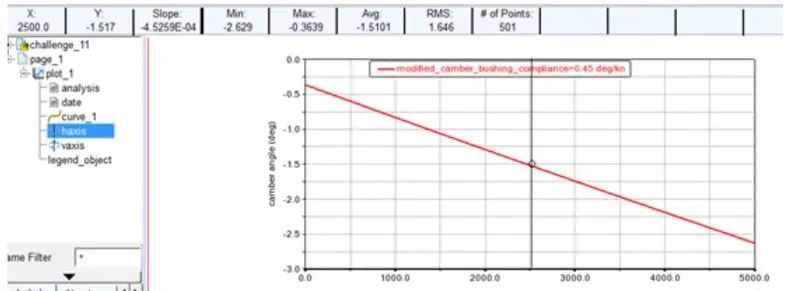
Postprocessor plot it shows that Camber compliance of 0.45 deg/kN.