 Free · 3 lessons · no payment
Medical Instrumentation and Biomedical Signals: 3 free lessons
Free lessons from Skill-Lync's Medical Instrumentation and Biomedical Signals course. The first three sessions define biomedical instrumentation and classify instruments, describe the sources and typical ranges of biopotential signals such as ECG and EEG, and walk through a biomedical data acquisition system: sensors, preprocessing, display, alarm limits and instrument characteristics.
Last updated 16 Nov 2026 · 3 free lessons (1 h 6 min) · full course: 48 lessons (18 h 38 min), paid · ₹40,000
 Free lesson 1 · 24 minBiomedical Instrumentation Basics and Instrument Classification
What will you learn in the free Medical Instrumentation and Biomedical Signals lessons?
- Direct and indirect measurement and the functional elements of an instrument
- Bioelectric, biomagnetic, bio-optic and biochemical signal sources
- Typical amplitude and frequency ranges of ECG, EEG and blood pressure
- Active vs passive sensors, sensor selection and alarm limits
Free lessons you can watch now
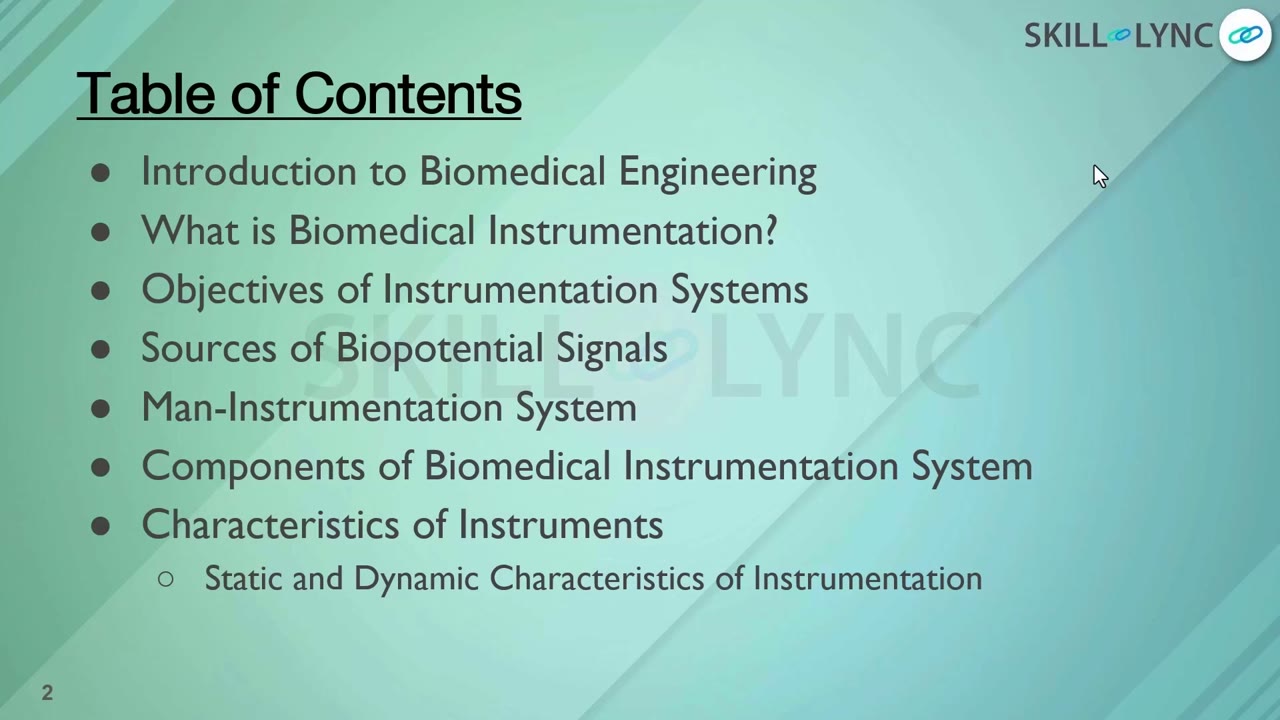
- Lesson 1 · 24 minBiomedical Instrumentation Basics and Instrument ClassificationThe instructor introduces biomedical engineering and defines instrumentation as measurement and control, using car sensors as an everyday example. It covers direct and indirect measurement, the functional elements of an instrument, the parts of a biomedical instrumentation system and its purposes, then classifies medical instruments by function and body system.
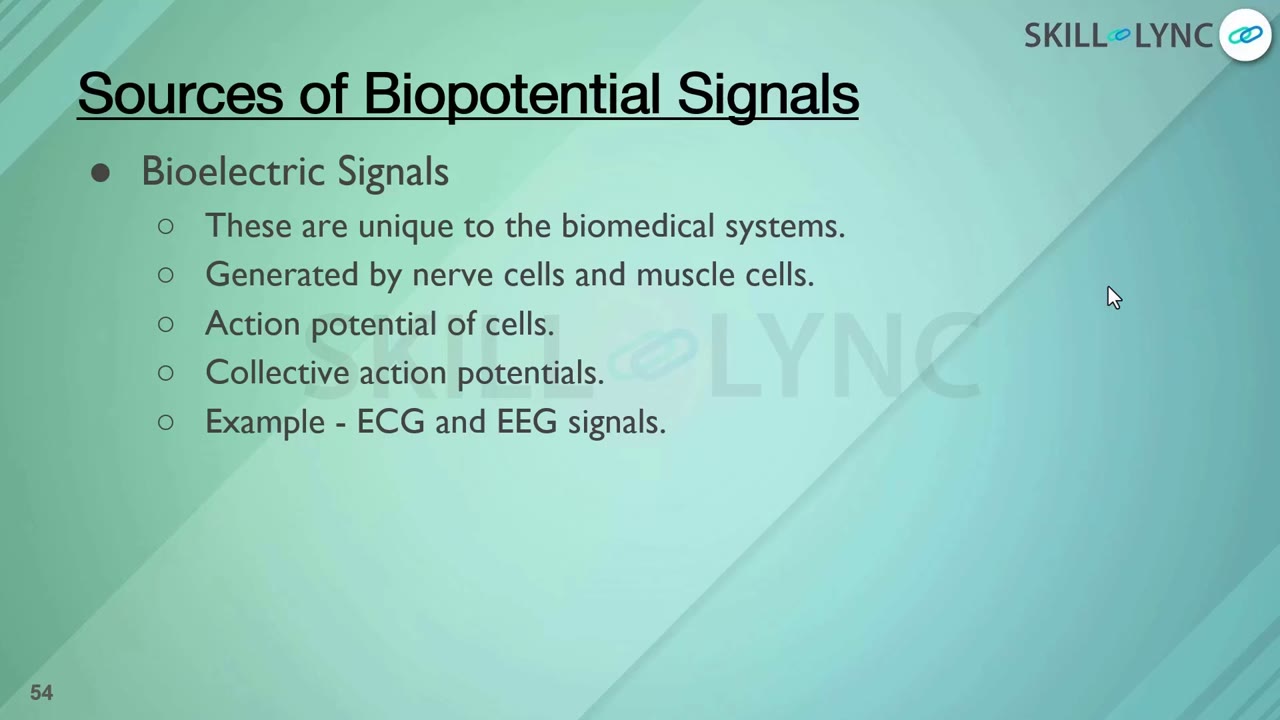 Lesson 2 · 17 minSources of Biopotential Signals and Man-Instrumentation System ComponentsThis part describes bioelectric signals from nerve and muscle cells, plus biomagnetic, bio-optic and biochemical sources, with pulse oximetry as an example. It lists typical amplitude and frequency ranges for ECG, EEG, blood pressure and temperature. It then covers the man-instrumentation system: subject, stimulus, transducer, signal conditioning, display, storage and control.
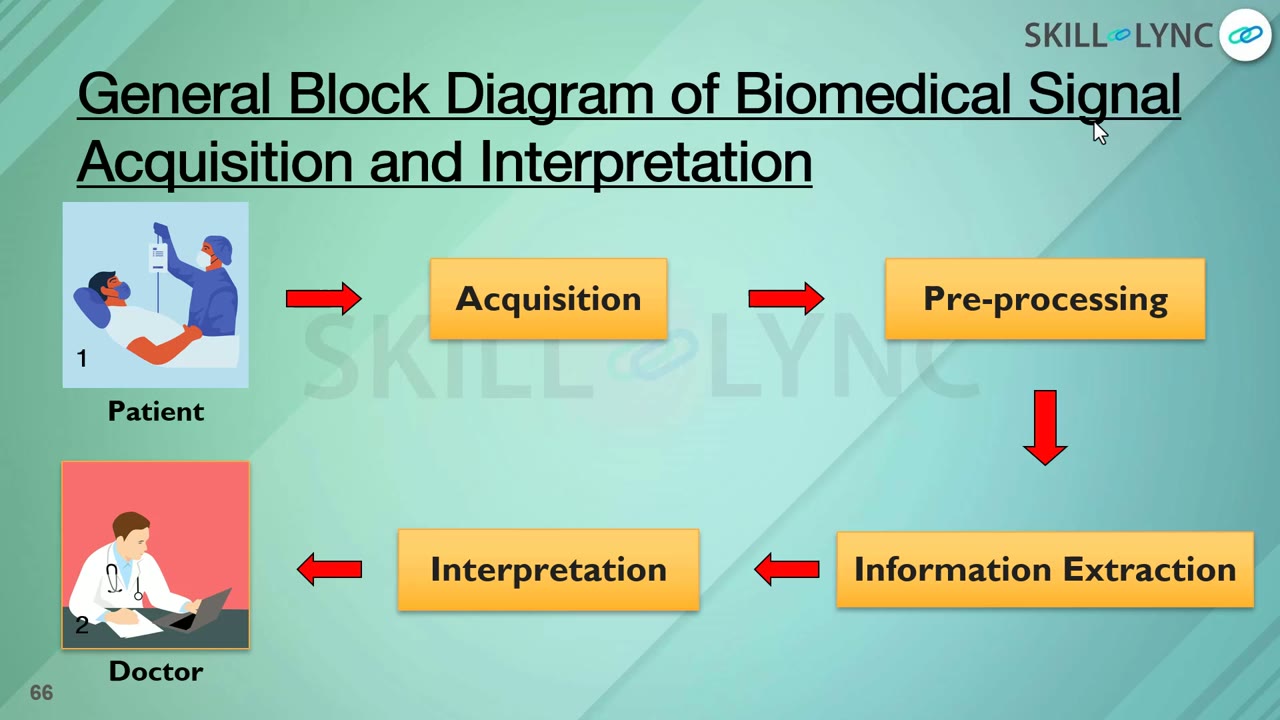 Lesson 3 · 24 minData Acquisition Blocks, Sensor Selection and Instrument CharacteristicsThe instructor walks through the generic biomedical acquisition block diagram, from sensors and preprocessing to signal processing, pattern recognition and display. It covers active and passive sensors, factors for choosing sensors, displays and alarm limits such as heart rate above 140 or below 40 beats per minute, and static versus dynamic characteristics.
Which lessons of Medical Instrumentation and Biomedical Signals are free?
The first 3 lessons are free on Grow by Skill-Lync: 1 h 6 min of video from Skill-Lync's Medical Instrumentation and Biomedical Signals course that you can watch here at no cost: leave your name and phone number once and they play (as of 16 Nov 2026). The full course is paid (₹40,000); its other 45 lessons are listed in the outline below so you can see what each one covers.
How long is the Medical Instrumentation and Biomedical Signals course?
The full course has 48 lessons and 18 h 38 min of recorded video, plus the projects and assignments that come with enrolment. The free lessons alone take about 1 h 6 min, so you can finish them in an evening and decide whether to continue.
What comes after the free lessons?
Lesson 4 onwards is in the paid Medical Instrumentation and Biomedical Signals course on Skill-Lync, with mentor support and a certificate. A counsellor can tell you which course or program fits your goal.