 Free · 3 lessons · no payment
Medical Embedded Systems: 3 free lessons
Three free lessons from Skill-Lync's Medical Embedded Systems course. They define an embedded system and compare it with a general purpose computer, then cover system-on-chip and multi-processor designs, peripherals, software architectures such as interrupt-driven and RTOS-based, and the classification of embedded systems, with CT, MRI and ventilators as real-time examples. The last lesson covers system architecture and the skills of an embedded engineer.
Last updated 16 Nov 2026 · 3 free lessons (1 h 16 min) · full course: 17 lessons (8 h 32 min), paid · ₹40,000
 Free lesson 1 · 37 minEmbedded System Basics, Constraints, SoC and Multi-Processor Designs
What will you learn in the free Medical Embedded Systems lessons?
- Embedded versus general purpose computing systems
- Hard and soft real-time system classification
- Interrupt-driven, cooperative and preemptive software architectures
- Embedded hardware: sensors, ADC, DAC, actuators, memory
Free lessons you can watch now
- Lesson 1 · 37 minEmbedded System Basics, Constraints, SoC and Multi-Processor DesignsThe instructor defines a system and an embedded system, then contrasts embedded systems with general purpose computers on real-time behaviour, priorities, latency and limits on memory, speed and power. It goes on to system-on-chip versus chips on a board, single and distributed processors, and peripherals such as I2C, SPI and CAN.
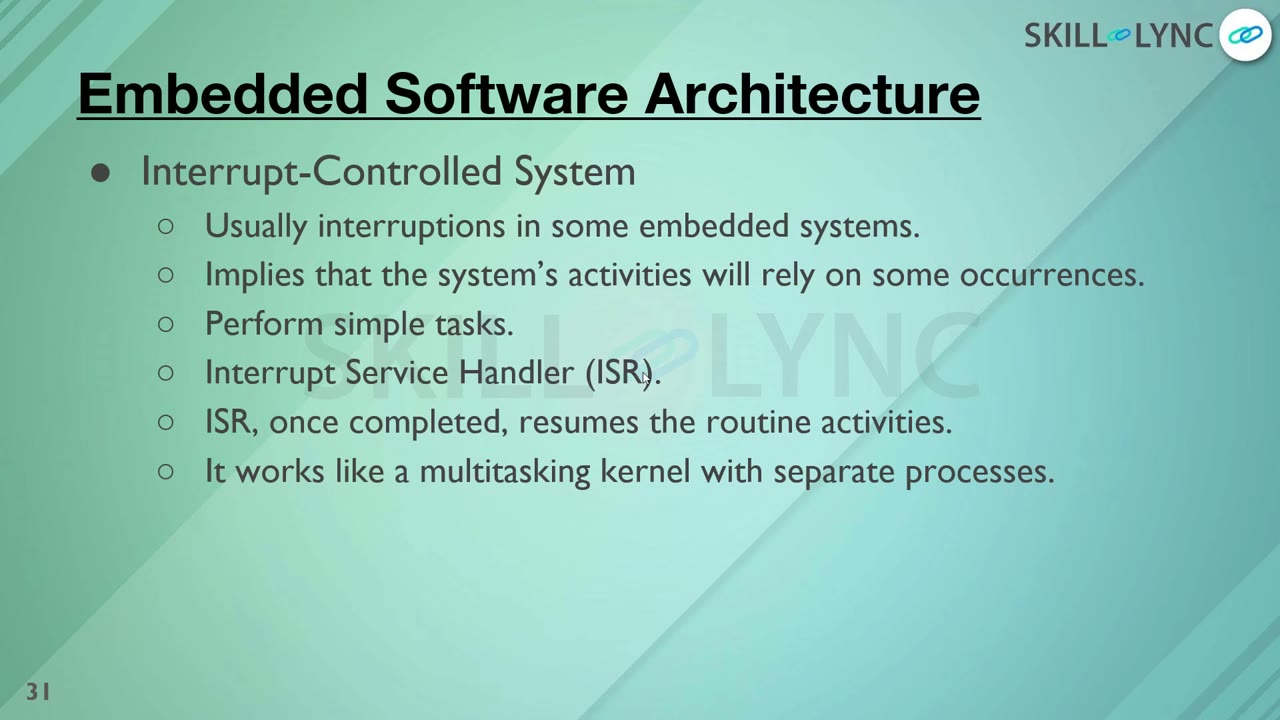 Lesson 2 · 19 minEmbedded Software Architectures and Classification of Embedded SystemsThe instructor compares software architectures: interrupt-controlled, cooperative multitasking, preemptive multitasking with an RTOS, microkernel and monolithic kernels. It then classifies embedded systems as small, medium or high scale, and as real-time, standalone, networked or mobile, naming medical examples such as CT, MRI, defibrillators and ventilators.
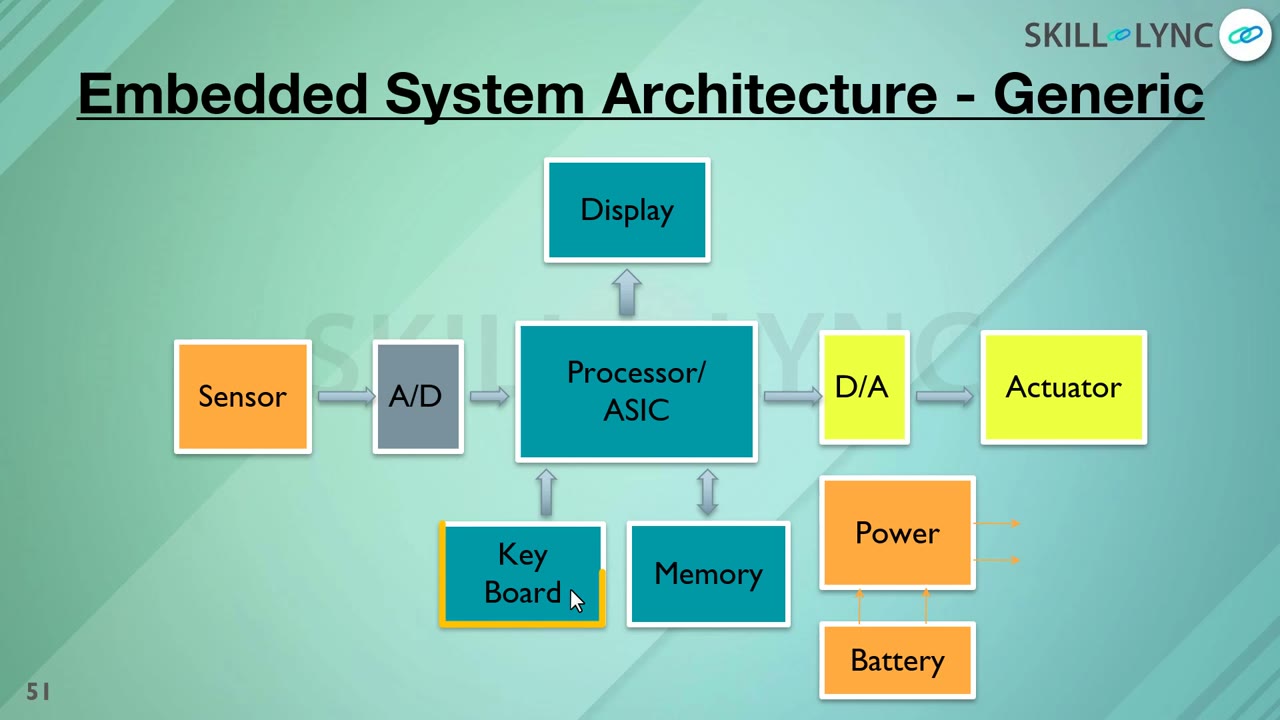 Lesson 3 · 20 minEmbedded System Architecture, Designer Skills and ApplicationsThe lesson walks through a generic embedded architecture: processor, sensors, analog to digital and digital to analog converters, actuators, memory, display and power. It then describes what a designer considers, the role and skills of an embedded engineer including typical interview topics, and application areas such as medical, military and consumer devices.
Which lessons of Medical Embedded Systems are free?
The first 3 lessons are free on Grow by Skill-Lync: 1 h 16 min of video from Skill-Lync's Medical Embedded Systems course that you can watch here at no cost: leave your name and phone number once and they play (as of 16 Nov 2026). The full course is paid (₹40,000); its other 14 lessons are listed in the outline below so you can see what each one covers.
How long is the Medical Embedded Systems course?
The full course has 17 lessons and 8 h 32 min of recorded video, plus the projects and assignments that come with enrolment. The free lessons alone take about 1 h 16 min, so you can finish them in an evening and decide whether to continue.
What comes after the free lessons?
Lesson 4 onwards is in the paid Medical Embedded Systems course on Skill-Lync, with mentor support and a certificate. For a career in Embedded & electronics, the PG Program in Embedded Systems for EV Applications goes further with industry projects and placement support.