 Free · 3 lessons · no payment
Linux System Programming: 3 free lessons
Three free lessons from Skill-Lync's Linux System Programming course. They cover the Linux operating system architecture, device files, kernel and user mode, libraries and shells. They then show how a shell uses fork and execve, how system calls work through the trap instruction, and how CPU registers, caches, paging, the TLB and BIOS fit together.
Last updated 16 Nov 2026 · 3 free lessons (1 h 18 min) · full course: 21 lessons (7 h 25 min), paid · ₹40,000
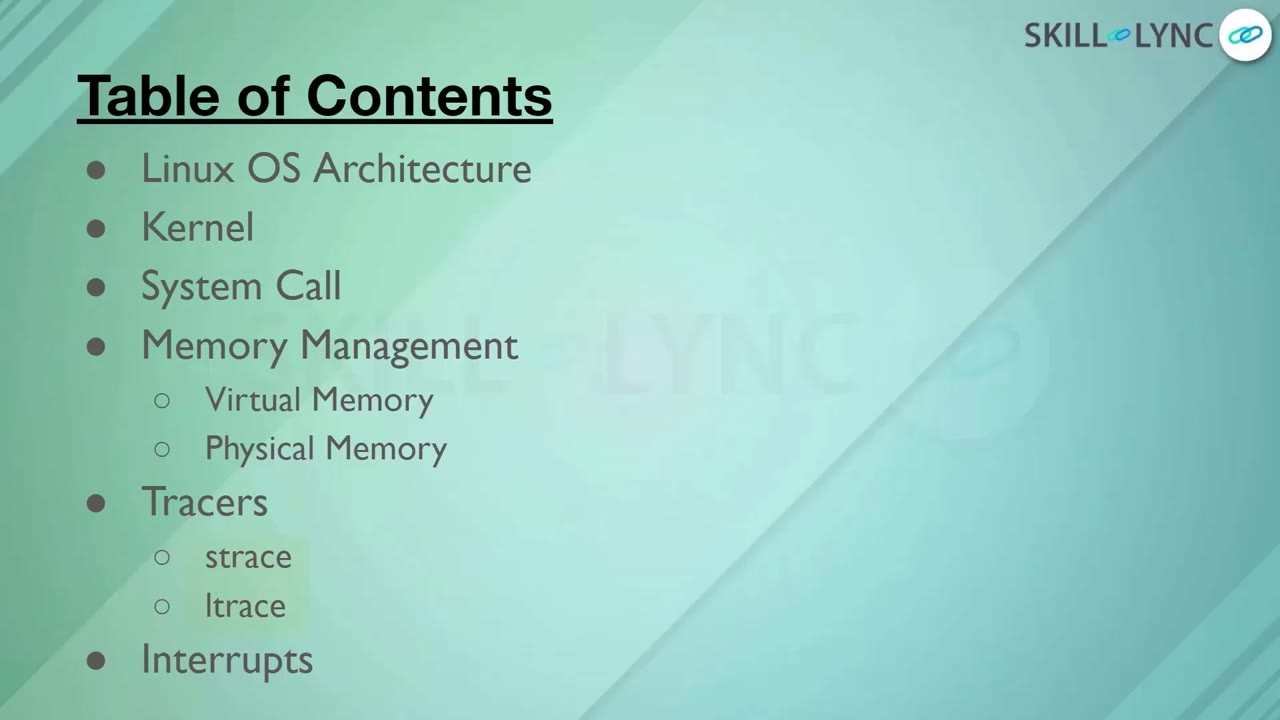 Free lesson 1 · 27 minLinux OS Architecture, Device Files, Libraries and Shells
What will you learn in the free Linux System Programming lessons?
- Linux architecture, device files and kernel services
- Static and dynamic libraries in Linux
- How system calls reach the kernel
- Virtual memory, page tables and the TLB
Free lessons you can watch now
- Lesson 1 · 27 minLinux OS Architecture, Device Files, Libraries and ShellsThe instructor describes the Linux architecture, device files in /dev, and character, block and network drivers, then the kernel's tasks and kernel versus user mode. It compares polling, interrupt-driven and DMA input and output, builds a static library with a small sum function, and compares bash, ksh and csh shells and chroot.
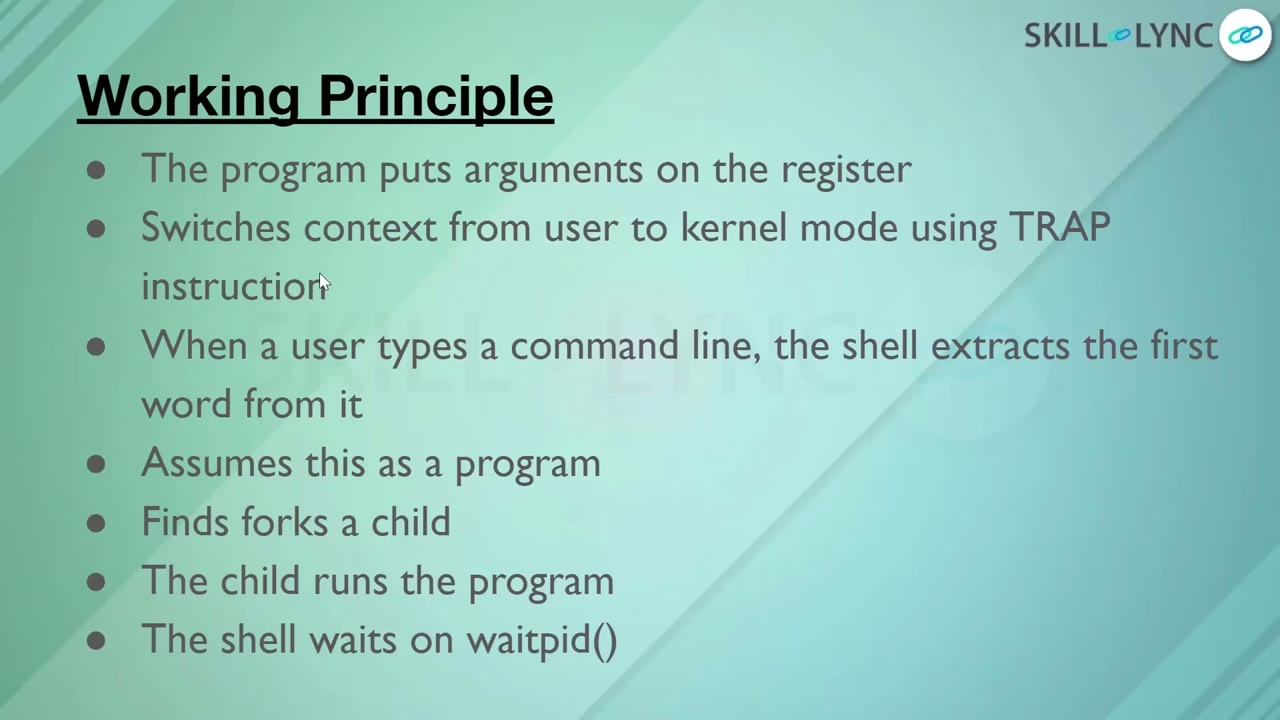 Lesson 2 · 23 minHow Shells and System Calls Work: fork, execve, Trap and openThe lesson explains how a shell runs a command using fork, execve and waitpid, with a page table and the trap instruction as background. It then compares normal calls with system calls, steps through a read call using register RAX and the interrupt service routine, mentions DPDK, and runs an open system call example.
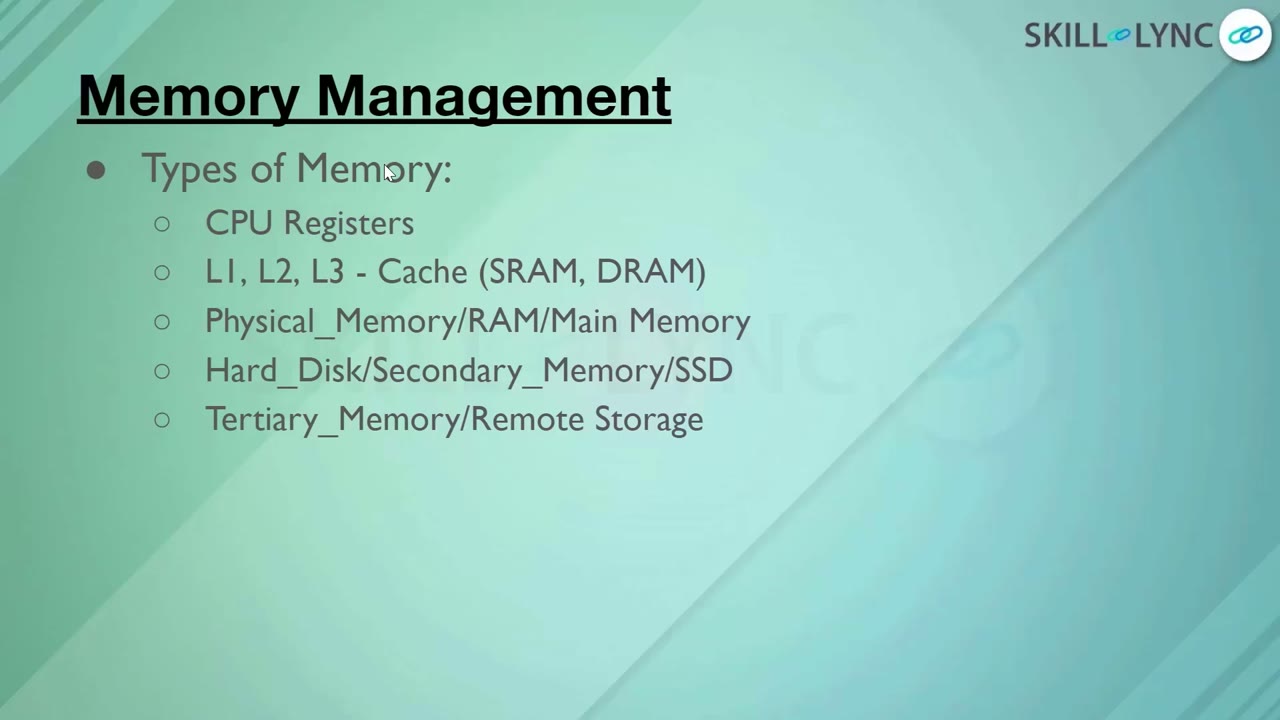 Lesson 3 · 29 minMemory Hierarchy, CPU Registers, Paging, TLB and BIOSThe instructor covers the memory hierarchy from registers and caches to disk and cloud, x86-64 general purpose, segment and flag registers, and why virtual memory is used. It works through a page table and MMU example with 4 KB pages, explains the TLB, and describes BIOS, UEFI and POST.
Which lessons of Linux System Programming are free?
The first 3 lessons are free on Grow by Skill-Lync: 1 h 18 min of video from Skill-Lync's Linux System Programming course that you can watch here at no cost: leave your name and phone number once and they play (as of 16 Nov 2026). The full course is paid (₹40,000); its other 18 lessons are listed in the outline below so you can see what each one covers.
How long is the Linux System Programming course?
The full course has 21 lessons and 7 h 25 min of recorded video, plus the projects and assignments that come with enrolment. The free lessons alone take about 1 h 18 min, so you can finish them in an evening and decide whether to continue.
What comes after the free lessons?
Lesson 4 onwards is in the paid Linux System Programming course on Skill-Lync, with mentor support and a certificate. For a career in Embedded & electronics, the PG Program in Embedded Systems for EV Applications goes further with industry projects and placement support.