Computer Science · PG program

Post Graduate Program inData Science and Machine Learning

Expert curated, our online data science course helps you develop fundamental skill sets in machine learning and data science. Work on industry-relevant data sets and develop domain expertise in machine learning, artificial intelligence, and deep learning.

Duration
24 weeks
Content
151 hours
Courses
6
Projects
12
Mode
Online
Overview

What you'll
be able to do.

  • Understanding the Mathematics behind different Machine Learning Algorithms
  • Exploring SQL from basics to advanced level to utilize its powers for the Data Science domain
  • Understanding Machine Learning and its implementation in Python
  • Hands-on experience in Python Programming
  • Understanding Advanced Machine Learning Algorithms and Implementation of Tensorflow

Why this program

  • The students will have a thorough knowledge of Data Science and Machine Learning.
  • They can specialize in the domain and gain complete in-depth knowledge of it.
  • The students are exposed to the modern trends & the standard practices followed in the industry right now.
  • After completing this course, the students will gain a better understanding of the concepts of Machine Learning, Artificial Intelligence, and Deep Learning.
  • The software used in this course such as Python and SQL will help the students to gain a better understanding of what is being taught to them and make them industry-ready.
  • Job Opportunities
    • Data Scientist
    • Machine Learning Engineer
    • Data Analyst
    • Business Analyst
    • Data Engineer
  • Certifications
    • Masters in Data Science
    • Masters in Artificial Intelligence
    • Masters in Data Science with Specialization in Machine Learning
Tools you'll use
PythonMySQLAnacondaSQLiteJupyter Notebook
Curriculum

6 courses,
70 modules.

Get the full syllabus ↓
  1. 01Core and Advanced Python Programming12 modules
    1. Introduction to Python, Python BasicsW01
      • Features and uses of Python
      • Program execution
      • Installation of IDE
      • Identifiers and keywords
      • Types of comments
      • Data types
      • Variables
      • Arithmetic operators
      • Assignment operators
      • Input and print statements
    2. Strings, Decision Control StatementsW02
      • Definition of string
      • Operations accessing string elements
      • Relational operators
      • Logical operators
      • Conditional expressions
      • If, If..else, If..elif
    3. Repetition Statements and Console Input-OutputW03
      • Use of while and for
      • Break and continue
      • Pass and else statements
      • Formatted input and output
    4. Lists, Tuples, Sets, DictionaryW04
      • Use of while and for
      • Break and continue
      • Pass and else statements
      • Formatted input and output
    5. Functions and Recursion, Functional Programming and Lambda FunctionsW05
      • Defining a function
      • Types of arguments
      • Global and local variables
      • Functions as arguments
      • Implementing Lambda functions
      • Map, Reduce, and Filter functions
    6. File Input-Output and ModulesW06
      • Read-write operations
        • With the keyword
        • File opening modes
        • Moving within a file
      • Serialization
        • File and directory operations
      • Importing a module
        • Variations of import
        • Third-party packages
    7. Classes and ObjectsW07
      • Class variables
      • Methods
      • Operator overloading
      • Reuse
      • Containership
      • Inheritance
    8. Exception Handling, Iterators and GeneratorsW08
      • Iterables and iterators
      • Syntax errors and exceptions for:
        • try-except
        • else
        • finally blocks
    9. Data Analysis with PandasW09
      • Installing Pandas
      • Loading files
        • CSV files
        • JSON files
      • Dataframes
    10. Numeric and Scientific Computing using NumPyW10
      • NumPy: Introduction
      • OpenCV
      • Images and NumPy Arrays
    11. Graphical User Interfaces with TkinterW11
      • Introduction to Tkinter
      • Setting up a GUI with widgets
      • Connecting GUI widgets with callback functions
    12. Interacting with DatabasesW12
      • SQLite: Introduction
      • Connecting and inserting data to SQLite via Python
      • Selecting, deleting, and updating SQLite records
  2. 02Statistics and Probability for Data Sciences10 modules
    1. Introduction to Machine LearningW01
      • This week we will learn about
        • Introduction to Artificial Intelligence
        • Introduction to Machine Learning
        • Supervised, Unsupervised, and Reinforced Learning
        • Introduction to Deep Learning
        • Modules needed to implement a Machine Learning model
    2. Set TheoryW02
      • This week we will learn about
        • Set Theory
        • Algebra of Sets
        • Venn Diagrams
    3. ProbabilityW03
      • This week we will learn about
        • Introduction to Probability
        • Axioms of Probability
        • Independent events
        • Mutually exclusive events
        • Conditional Probability
        • Bayes Theorem
    4. StatisticsW04
      • This week we will learn about
        • Measures of Central Tendence
        • Measures of Dispersion
        • Measures of Symmetry
    5. Probability Distribution W05
      • This week we will learn about
        • Concept of Random variable
        • Bernoulli distribution
        • Binomial distribution
        • Negative Binomial distribution
        • Geometric distribution
        • Hypergeometric distribution
        • Poisson distribution
        • Uniform distribution
        • Probability mass function and cumulative distribution function
        • Brief intro to Gamma exponential and normal distribution
    6. Continuous Probability DistributionW06
      • In this week, we will learn
        • Continuous distributions
        • Normal Distribution
        • Gamma Distribution
        • Exponential Distribution
        • Lognormal Distribution
        • Weibull Distribution
        • F Distribution
        • T Distribution
        • chi square Distribution
        • Probabiltiy Density Function
        • Cumulative Distribution Function
    7. Inferential StatisticsW07
      • This week we will learn about
        • Sampling
        • Probabilistic and Nonprobabilistic methods of Sampling Estimation
        • Estimation
        • Sample size estimation
    8. Hypothesis TestingW08
      • This week we will learn about
        • Introduction to hypothesis testing
        • Rejection region
        • Critical value
        • p-value
    9. Hypothesis TestingW09
      • This week we will learn about,
        • z - test
        • f - test
        • t - test
        • Anova - test
    10. Non-Parametric TestsW10
      • This week we will learn about
        • Chi square test
        • Mann Whitney U test
        • Kruskal Wallis test
        • Sign test
        • Correlation
        • Chi square
        • Karl Pearson
        • Spearman Coefficient
        • Regression between variables
        • Implementation of statistical functions in Jupyter notebook
  3. 03Introduction to Machine Learning Algorithms and their Implementation in Python12 modules
    1. Introduction to Data Science and Programming Languages (Tools) for Data ScienceW01

      This week will cover

      • Data Science and Big Data: Introduction
      • Importance of Data Science and Big Data
      • Introduction to Different Programming Languages (Tools) for Data Science
    2. Basics of ProgrammingW02

      This week will cover

      • Variables
      • Operators
      • Data Types
      • Data Structures
      • Control Structures in Python
      • Function File in Python
    3. Essential Python LibrariesW03

      This week will cover

      • NumPy
      • SciPy
      • Pandas
      • Matplotlib
      • Seaborn
    4. Introduction to Machine Learning Cross-Validation, Bias-Variance TradeoffW04

      This week will cover

      • Basics of Machine Learning
      • Classification
      • Fitting of Model with Cross-Validation
      • Bias Variance Tradeoff
    5. Evaluation MetricsW05

      This week will cover

      • Evaluation Metrics for Model Validation
    6. Importing Data and Hands-On Imported DataW06

      This week will cover

      • Exploratory Data Analysis (EDA)
      • Correlation
      • Feature Extraction
      • Hyper Parameters
    7. Univariate and Multivariate Linear RegressionW07

      This week will cover

      • Univariate Linear Regression
      • Multivariate Linear Regression
      • Implementation in Python
    8. Principal Component AnalysisW08

      This week will cover

      • Eigen Values
      • Eigen Vectors
      • Singular Value Decomposition
      • Principal Component Analysis (PCA)
    9. Logistic Regression and k-nearest NeighborW09

      This week will cover

      • Explanation and Implementation of Logistic Regression and k-nearest Neighbor in Python
    10. Decision Tree and Random ForestW10

      This week will cover

      • Explanation and Implementation in Python
        • Decision Tree
        • Random Forest
    11. K-Mean and Hierarchical ClusteringW11

      This week will cover

      • K-Mean
      • Hierarchical Clustering
    12. Neural NetworksW12

      This week will cover

      • Logistic Regression with Neural Network Mindset
  4. 04Machine Learning Fundamentals In Depth12 modules
    1. Basics of Probability and StatisticsW01

      This week, you will learn about

      • Basics of Probability
      • Basics of Statistics
      • What ML & AI is
    2. Basics of Machine Learning (ML) & Artificial intelligence (AI)W02

      This week, you will learn about

      • Normal Distribution & Standard Normal Distribution: Introduction
      • Business Moments: Introduction
      • Artificial Intelligence
    3. Supervised Learning - PredictionW03

      This week, you will learn about

      • Supervised learning: Introduction
      • What linear regression is
      • One hot encoding
      • Cost function and gradient descent
    4. Supervised Learning - ClassificationW04

      This week, you will learn about

      • Classification problems: Introduction
      • What logistic regression is
      • Cost function and gradient descent
    5. Supervised Learning - ClassificationW05

      This week, you will learn about

      • Decision tree
      • Entropy
      • Information gain
    6. Random Forest & Model EvaluationW06

      This week, you will learn about

      • Random forest
      • Bootstrapping and majority rule
      • Evaluation of classifiers
    7. Supervised Learning - ClassificationW07

      This week, you will learn about

      • Support Vector Machines (SVM)
      • Mathematical intuition behind SVM
      • How SVM is different from other classifiers
    8. Supervised Learning - ClassificationW08

      This week, you will learn about

      • K-Nearest Neighbor
      • Lazy Algorithm
      • Single-layer Neural Network
    9. Unsupervised Learning - K-MeansW09

      This week, you will learn about

      • What clustering is
      • Why clustering is important
      • K Means and elbow curve
    10. Unsupervised Learning - HierarchicalW10

      This week, you will learn about

      • Hierarchical Clustering
      • Dendrogram
      • Evaluation of clustering algorithms
    11. Unsupervised Learning - PCAW11

      This week, you will learn about

      • Feature Selection
      • Principal Component Analysis (PCA)
      • Mathematical intuition behind PCA
    12. Supervised Learning - ClassificationW12

      This week, you will learn about

      • Artificial Neural Networks
      • Deep learning
      • Different activation functions
      • Understanding back propagation
  5. 05Advanced Deep Learning using Python12 modules
    1. Artificial Neural Network (Feed Forward Neural Network)W01

      This week will cover

      • Neural networks
      • Different architectures of Neural Networks
      • Importance of Neural Networks
      • Hyperparameters in Neural Networks
      • Different types of Gradient descent methods
    2. Activation Functions in Neural NetworksW02

      This week will cover

      • Conic sections
      • Hyperbolic trigonometric functions
      • Sigmoid activation function
      • Tanhx activation function
      • Relu activation function
      • Softmax activation function
    3. Deep LearningW03

      This week will cover

      • Deep learning terminologies
      • Nomenclature
      • Order of vectorized forms
      • Forward propagation derivation with 1 layer
      • Back propagation derivation with 1 layer
      • Batch size, iteration and epoch
    4. Evaluation of ModelsW04

      This week will cover

      • Underfitting
      • Overfitting
      • Lasso regularization
      • Ridge regularization
      • Elastic Net regularization
    5. Improvising the ModelW05

      This week will cover

      • Ensemble methods
      • Sparse and convex functions
      • Bagging to avoid overfitting
      • Boosting to avoid underfitting
      • Stacking to avoid underfitting
    6. OptimizersW06

      This week will cover

      • Frobenius norm regularization
      • Data augmentation
      • Early stopping
      • Adam optimizer
      • Tensorflow 2.0
    7. Convolutional Neural Network (CNN) - Part 1W07

      This week will cover

      • Basics of CNN
      • Edge detection
      • Padding
      • Stride
      • Simple CNN
      • Difference between CNN & ANN
    8. Convolutional Neural Network (CNN)- Part 2W08

      This week will cover

      • Pooling layers
      • Transfer learning
      • Examples of CNN architecture
      • Combination of different Neural network architecture
      • CNN in Python
    9. Recurrent Neural Network (RNN) - Part 1W09

      This week will cover

      • RNN Model
      • Different types of RNN
      • Gradients in RNN
      • Back propagation
      • Difference between RNN & ANN
    10. Recurrent Neural Network (RNN) - Part 2W10

      This week will cover

      • Gated Recurrent Unit (RNN)
      • Long short term memory (LSTM)
      • Bidirectional RNN
      • RNN Implementation in Python
    11. Basics of Natural Language Processing (NLP)W11

      This week will cover

      • Stop words
      • Stemming
      • Lemmatization
      • Word2vec
      • Implementation of word2vec in Python
    12. End-to-End ML Project StepsW12

      This week will cover

      • Descriptive Analytics
      • Diagnostic Analytics
      • Predictive Analytics
      • Prescriptive Analytics
  6. 06SQL for Data Science12 modules
    1. IntroductionW01

      In this week, students will learn about

      • Data Science: Introduction
      • Data Science Applications
      • Why SQL is required for Data Science
      • Database Management System (DBMS)
      • Relational Database Management System (RDBMS)
      • Basic terminology in RDBMS
      • Data Constraints
      • Entity Relationship Model
      • What SQL is
      • Categories of SQL Commands
      • Hands-on execution of simple SQL statements on RDBMS tool
    2. Database Creation and ManipulationW02

      In this week, students will learn about

      • Detailed SQL Data types
      • Creating databases
      • Create Tables
      • Using Constraints
      • Inserting Table
      • Altering Table structure
      • Dropping Database and Table
      • Deleting and Updating
      • Hands-on importing of sample database schema
    3. Database SelectionW03

      In this week, you will learn about

      • Select statements
      • Removing Duplicate use of Alias
      • Use of Where
      • Use of Wildcards
      • Limit clause
      • Arithmetic Operators
      • Mathematical Functions
      • Hands-on creating of backups and restore for large database
    4. Database SelectionW04

      In this week, students will learn about

      • Generating Strings
      • String Functions
      • Date Functions
      • Conversion Functions
    5. Database SelectionW05

      In this week, students will learn about

      • Comparison Operators
      • Logical Operators
      • Order By
      • Group By
      • Aggregate Functions
      • Using aggregate functions with Group by clause
      • Union Operator
      • Sub-query
    6. Querying Multiple TablesW06

      In this week, students will learn about

      • The need to Join Multiple Tables
      • Cartesian Product
      • Inner Join
      • Left Join
      • Right Join
      • Self Join
      • Delete Join
      • Update Join
      • Hands-on demonstration of joining more than two tables in a sample database
    7. Data ExplorationW07

      In this week, students will learn about

      • What Data Exploration is
      • Structure of Data
      • Understanding the E-R Diagram
      • How to Use SQL for Data Exploration
      • Significance of
        • Joins
        • Sub queries
        • Inbuilt functions
      • Other important capabilities of SQL for data exploration
      • Hands on demonstration
      • Working with NULL values
      • Making trends in Data
      • Identifying Outliers
      • Creating Data Summary
    8. Index, View, TransactionW08

      In this week, students will learn about

      • Creating Index
      • Use of Index
      • Type of Index and Ine
      • X Strategies
      • Views
      • Views for Data Analysis
      • Multi-user database
      • What is Transaction
      • Save points
      • Hands-on working on Multi user database environment
    9. Querying with ConditionsW09

      In this week, students will learn about

      • Querying with Conditions
      • The Searched Case Expression
      • The Simple Case Expression
      • Applications of Case Expression
      • Common Error Codes
      • Hands-on working with Json type data
    10. Stored ProceduresW10

      In this week, students will learn about

      • Stored Procedures for Data Analysis
      • Creating Stored Procedures
      • Removing Stored Procedures
      • Altering Stored Procedures
      • Conditional Statements
      • Loops
      • Hands-on working with cursors
    11. Integrating SQL with ExcelW11

      In this week, you will get a hands-on understanding of the following

      • Accessing MySQL data with MS Excel
      • Running SQL statements with Excel
      • Combining Excel and SQL statements for data representation
    12. Integrating SQL with PythonW12

      In this week, you will get a hands-on understanding of the following

      • Working with Python
      • Accessing SQL data with Python
      • Running basic SQL statements with Python
      • Running inbuilt python functions on SQL data
Industry projects

12 projects
you'll ship.

Our projects are designed by experts in the industry to reflect industry standards. By working through our projects, Learners will gain a practical understanding of what they will take on at a larger-scale in the industry. In total, there are 12 Projects that are available in this program.

English Dictionary App
Core and Advanced Python Programming

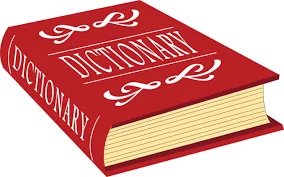
English Dictionary App

You will have to create an English Dictionary App that responds with definitions of English words according to the given input.
Library Book Management System
Core and Advanced Python Programming

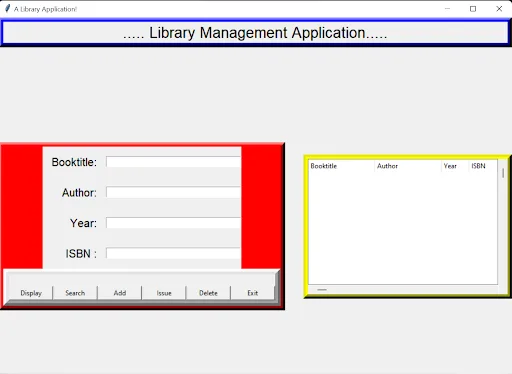
Library Book Management System

You have to develop a Library Book Management System based on given inputs. The Management System will be implemented with the front-end GUI developed using Tkinter and the backend…

Analysis of Medical Insurance Data
Statistics and Probability for Data Sciences

Analysis of Medical Insurance Data

For this project, learners are to do the following: The objective is to find the insurance premium and give the patients' details. The data, which contains various parameters such …

Analysis of Fermented Drink Data
Statistics and Probability for Data Sciences

Analysis of Fermented Drink Data

For this project, learners are to do the following: Analyze the quality of two types of fermented drinks. The student will perform descriptive and inferential statistics on the dat…
Stock Market Data Analysis and Visualization
Introduction to Machine Learning Algorithms and their Implementation in Python

Stock Market Data Analysis and Visualization

You will be given a scenario in which you will work as a data scientist for a stock forecasting company. With this data, you will have to perform data visualization and analysis on…
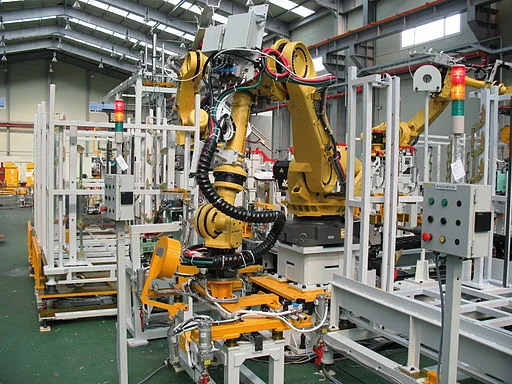
Developing an Early Warning System with Given Data
Introduction to Machine Learning Algorithms and their Implementation in Python

Developing an Early Warning System with Given Data

In this project, you are expected to develop an Early Warning System (EWS) to predict the likely rejection of products manufactured by a company using the given data.
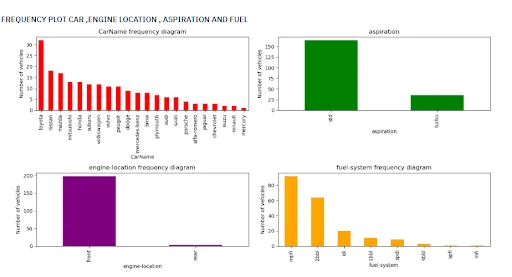
Descriptive Analysis and Regression Analysis
Machine Learning Fundamentals In Depth

Descriptive Analysis and Regression Analysis

In this project, you will perform descriptive analysis on given data regarding cars. Using the data, you will have to classify cars based on various parameters and analyze the pric…
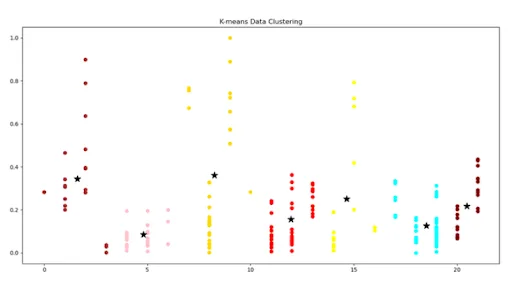
K-Means Clustering
Machine Learning Fundamentals In Depth

K-Means Clustering

In this project, you will have to clean a data set regarding cars and implement the clustering algorithm using K-Means. You will then have to explain the results and find the optim…
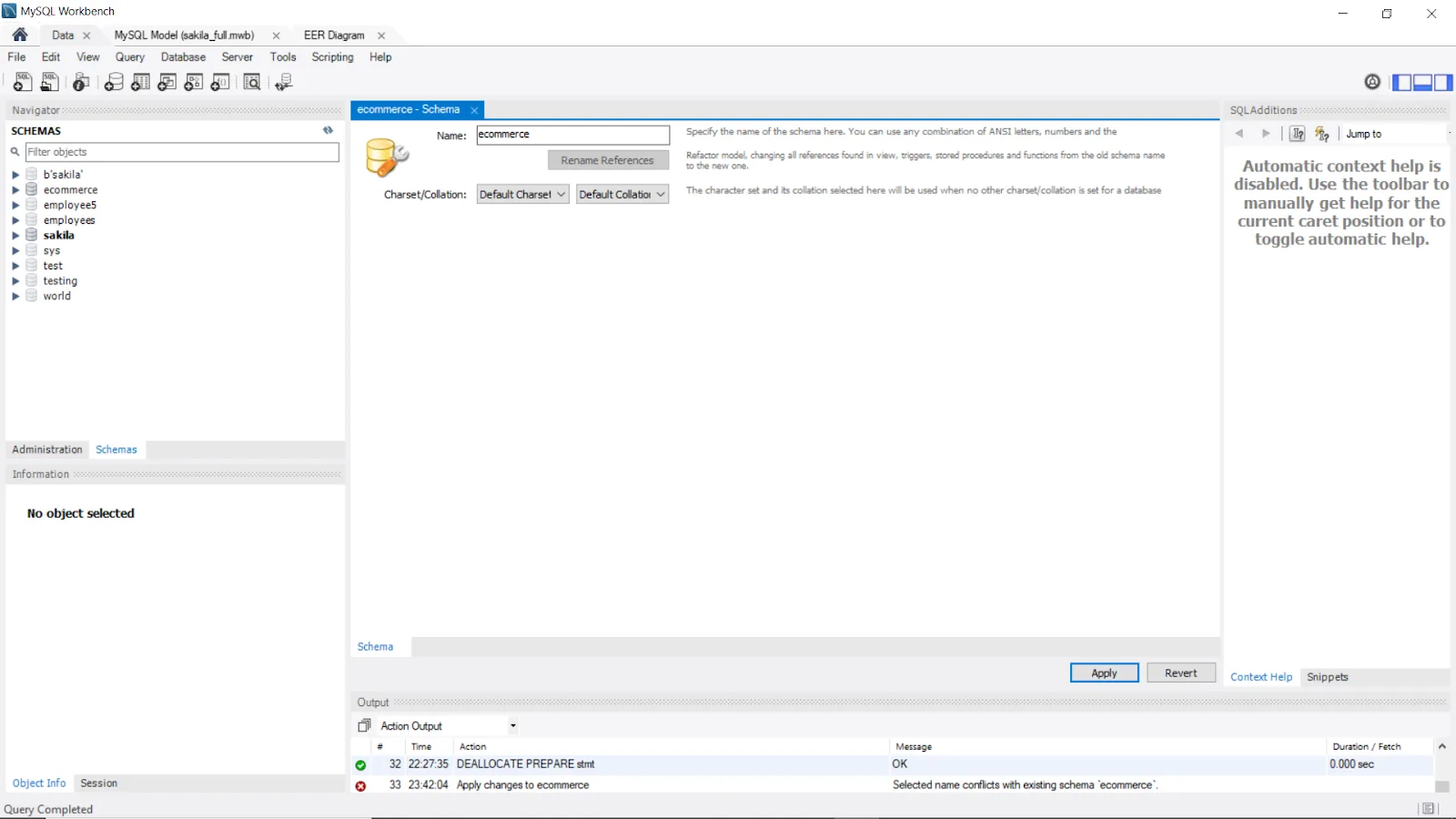
C2C E-Commerce User’s Behaviour Analysis
SQL for Data Science

C2C E-Commerce User’s Behaviour Analysis

In this project, students are expected to analyze user behavior in a C2C E-Commerce business. Analyzing the user’s database will help understand the business perspective. The…
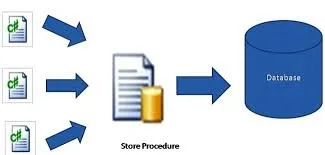
Analyzing the choice of career for the Alumni of Engineering College.
SQL for Data Science

Analyzing the choice of career for the Alumni of Engineering College.

In this project, students are expected to analyze the career choices of alumni from an institution based on given data.
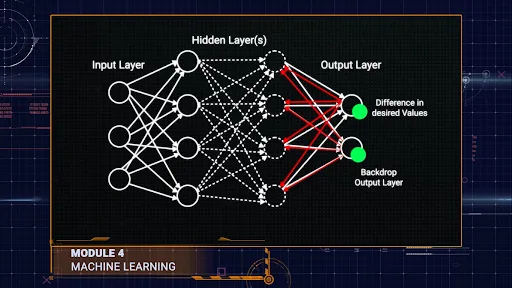
Logistic Regression and Gradient Descent
Advanced Deep Learning using Python

Logistic Regression and Gradient Descent

In this project, you will perform logistic regression and gradient descent on a given dataset using Python.

ANN, CNN and RNN
Advanced Deep Learning using Python

ANN, CNN and RNN

In this project, you will have to work on prediction of machine failure for a given dataset using ANN (Hyperparameters is completely dependent on individuals to come up with the be…

Placements

4 learners placed
from this program.

Companies
4
Median CTC
4.78 LPA
20235 LPA
Actualise
Trainee Data Analytics

Ganesh Kumar
20232.18 LPA
Computech Business Solutions Pvt Ltd
Jr. Data Enngineer

Ashfaq Ali
20223.5 LPA
CRG Solutions
Tableau Developer

Roshin Ajith
20224.78 LPA
Renault Nissan Technology & Business Centre India Pvt ltd
Data Analyst

Raj Vishaal
Fee

One fee.
Everything included.

Become job ready with our comprehensive industry focused curriculum for freshers & early career professionals

Premium
₹2,75,000
Inclusive of all chargesEMI from ₹14,375/month
  • Career Service Assurance
  • Personalized Career Services Mentorship
  • 1 Year Access
  • Personalized Page
  • Live Individual & Group Sessions
  • Personalized & Hands-On
  • Job-Oriented Industry Relevant Curriculum
Check eligibility →
FAQ

Questions,
answered.

What is a data science course?

The best data science course must teach you all the basics of machine learning algorithms and would entail project work. Skill-Lync’s data science and machine learning course in India included industry projects to provide you with a hands-on experience with the tools.

Is this course industry-oriented?

Yes, Skill-Lync’s data science and machine learning course in India will teach you to code and process data based on the tools used by organisations.

What are the prerequisites needed regarding mathematics in this course?

There are no specific prerequisites for pursuing this course. However, you must have basic knowledge of mathematics. 

How many projects will we work on in this course?

A total of 11 projects are included in this data science with machine learning course based on real-time scenarios. We also have projects included after each topic so that it helps you understand all the subjects correctly.

Do you teach to implement Machine Learning algorithms from scratch?

Yes, all the coding taught about any topic will be from scratch.

Can I land a job as a data scientist with this course?

Skill-Lync’s course is one of the best data science courses that covers all the information one needs, from basics to advanced, you can crack any interview and land a job that you desire.

How many hours a week do I need to allocate for my studies?

40 -50 hours a week should be enough. It also depends on how fast you can grasp the topics. If you find it difficult, you need to allocate more time for your studies.

Can you tell me more about Skill-Lync?

Skill-Lync is among India's leading EdTech platforms dedicated to transforming engineering education. We equip young engineers with the latest skill sets and cutting-edge tools in new-age technologies.

The brainchild of two engineers from Chennai, Skill-Lync, is on a mission to bridge the skill gap between aspiring professionals and the industry's demands through job-oriented courses.

Next step

Not sure it's
the right fit?

A counsellor will walk you through the syllabus, projects and fee options — and tell you honestly if another course suits you better.

Get the syllabus + a call back

We'll email the full syllabus and call within one working day.

By submitting you agree to our Terms and Privacy Policy.

Call usEnquire

Talk to a career counsellor

Free 20-minute call. We'll map the right course to where you want to work.

By submitting you agree to our Terms and Privacy Policy.