Tension and Torsion test on a specimen using Explicit Dynamics Module
Aim:
We need to perform the tension and torsion test on the specimen provided in the challenge.
For the tension test, displace one end of the specimen to 18mm while keeping the other fixed. we need to find out the total deformation, equivalent stress, and temperature of the specimen.
For the torsion test, we need to displace one end of the specimen to an angle of 1200 degrees. we need to find out the total deformation, equivalent stress, and temperature of the specimen.
Tension test:
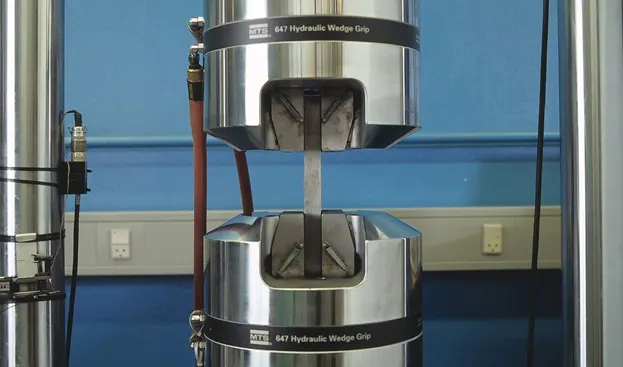
Tensile testing, also known as tension testing is a fundamental material science and engineering test in which a sample is subjected to a controlled tension until failure. Properties that are directly-measured via a tensile test are ultimate tensile strength, breaking strength, maximum elongation, and reduction in area.
From these measurements, the following properties can also be determined:
- Young's modulus
- Poissons ratio
- Yield strength characteristics.
Uniaxial tensile testing is the most commonly used for obtaining the mechanical characteristics of isotropic materials. Some materials use biaxial tensile testing. The main difference between these testing machines being how the load is applied to the materials.
Geometry:
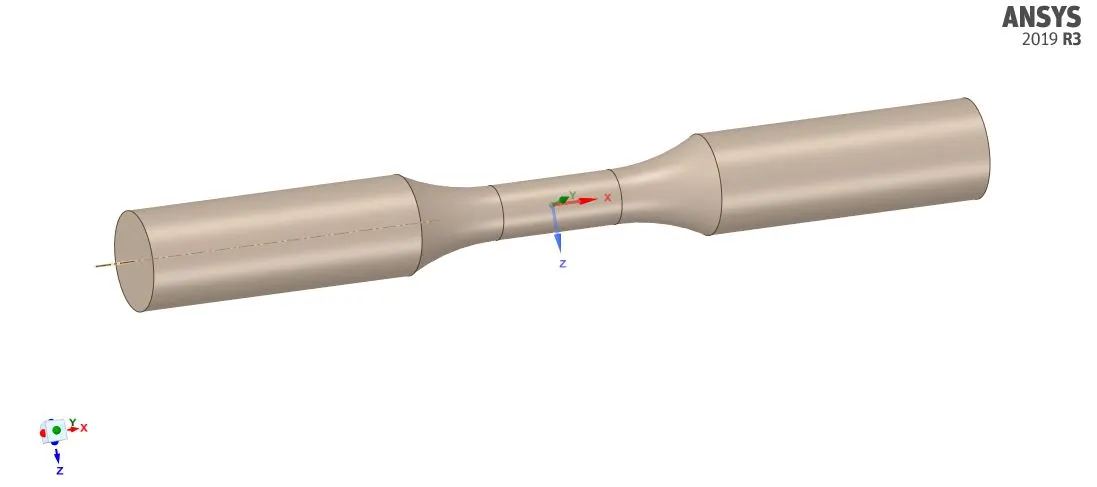
Then we have to import into ansys, import the model, and open it in space claim so that ansys will read it and checked for any errors.
Material:
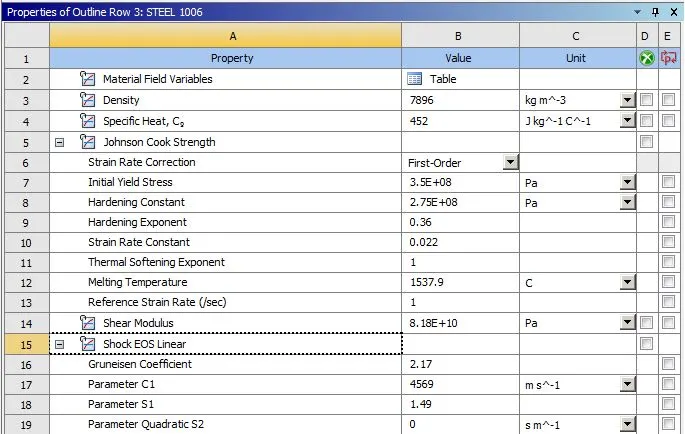
Steel 1006 is used as material for the specimen and its properties are defined above.
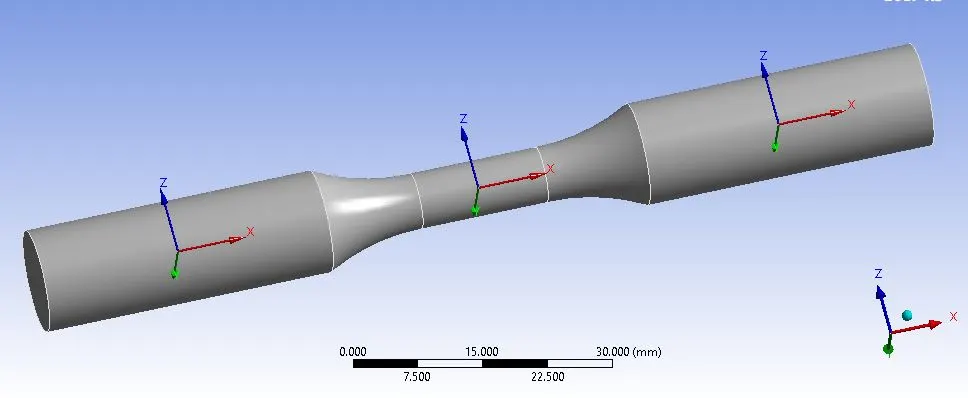
Coordinates
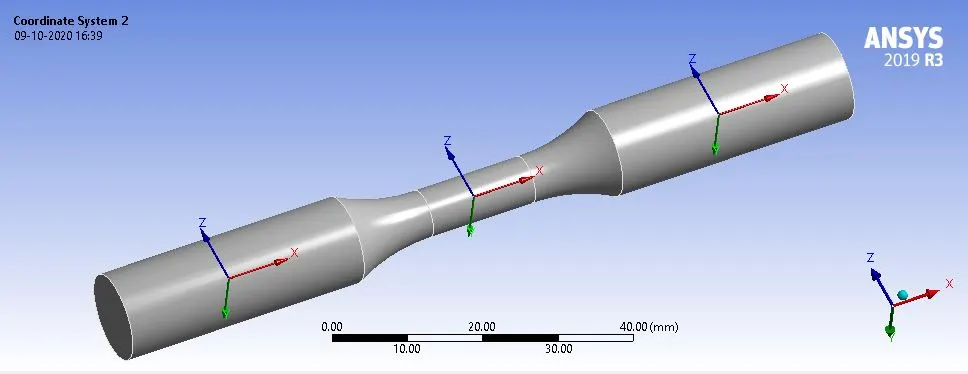
Different cartesian coordinates systems are defined for refining the mesh and also to apply the load at precise locations.
Meshing
At certain locations, the mesh should be refined so we have used the sphere of influence and element size as shown below.
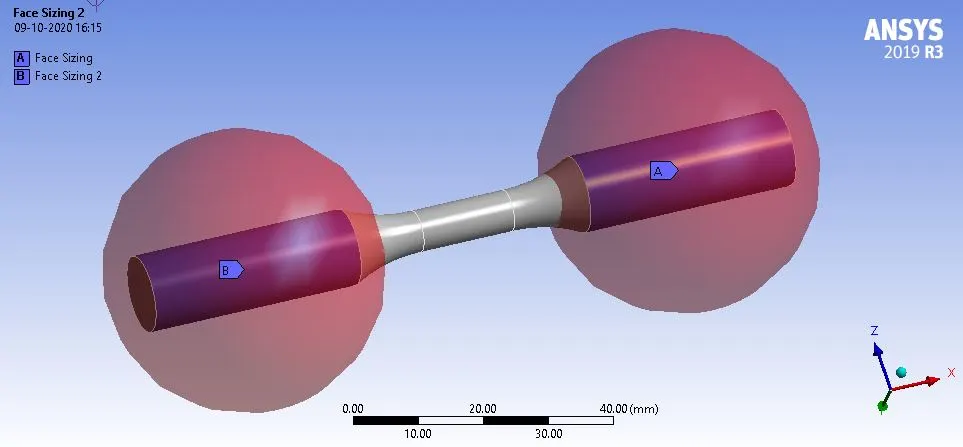
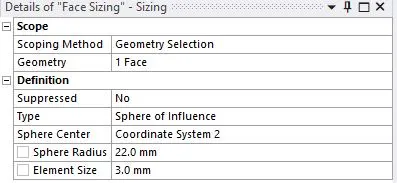
However, regions of a particular surface for the specimen are meshed using face sizing with a mesh element size as required.
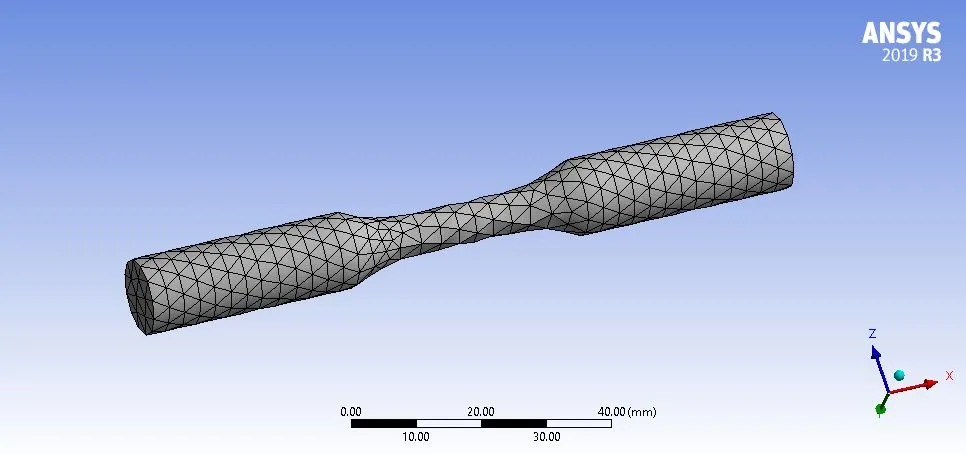
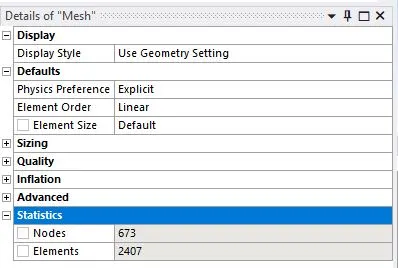
The meshed model image and mesh metric graph can be seen below:
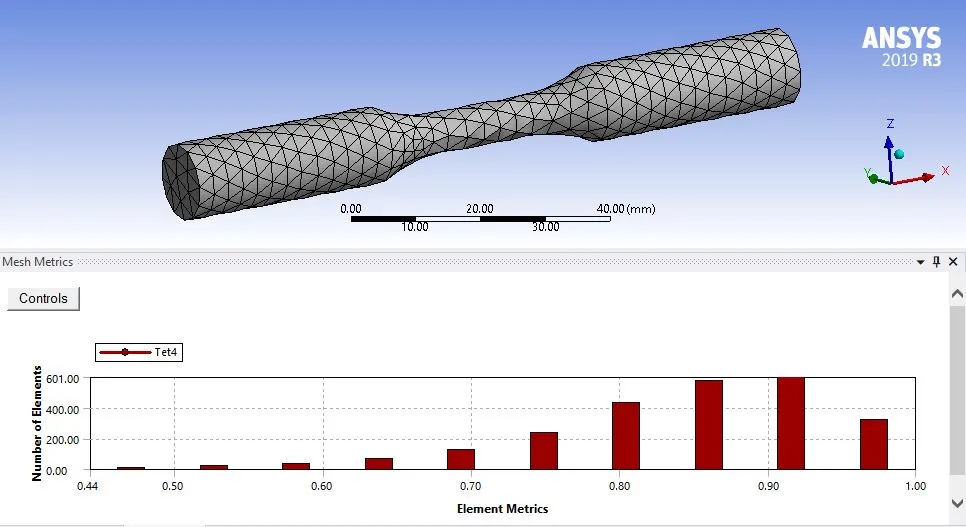
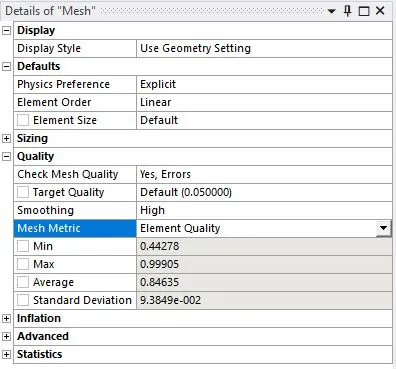
The mesh metric is utilized to identify the elements according to their quality using skewness. The quality of the mesh is acceptable as most of the elements lie within a high-quality range.
Analytical settings:
The analysis settings were used as per the requirement in the simulation.
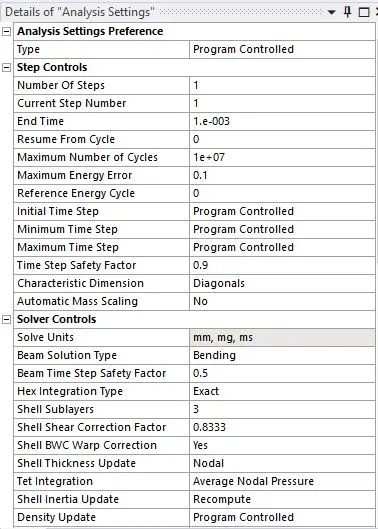
Explicit Analysis:
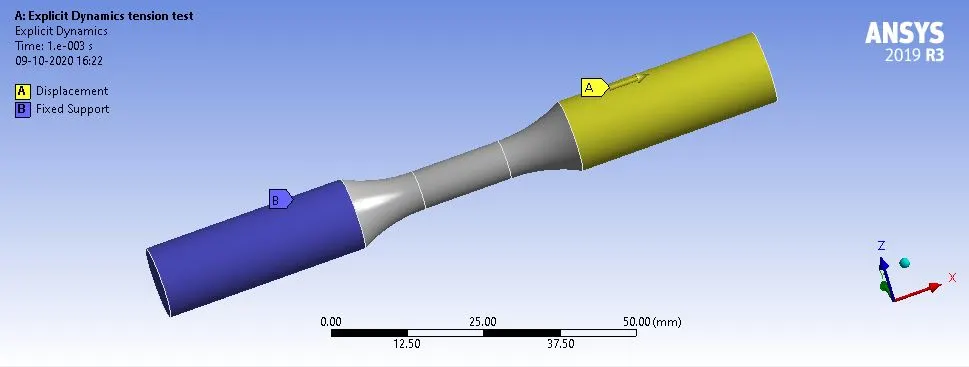
Both fixed and displacement support applied to the specimen.
Fixed support:
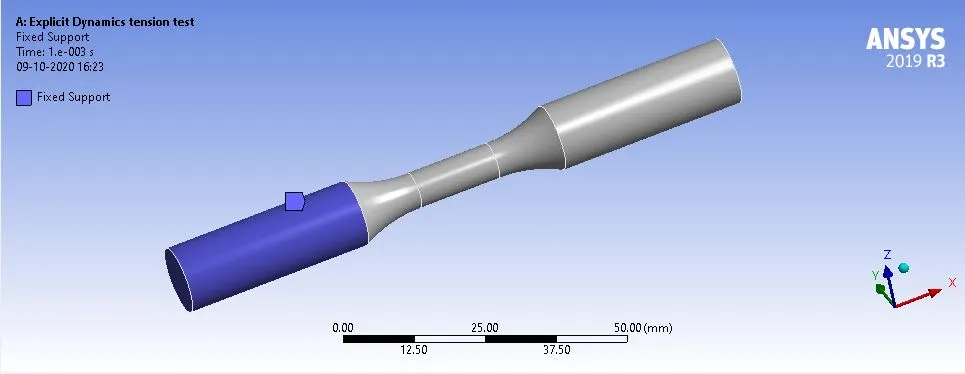
The one end of the specimen is been applied with fixed support as shown below.
Displacement support:
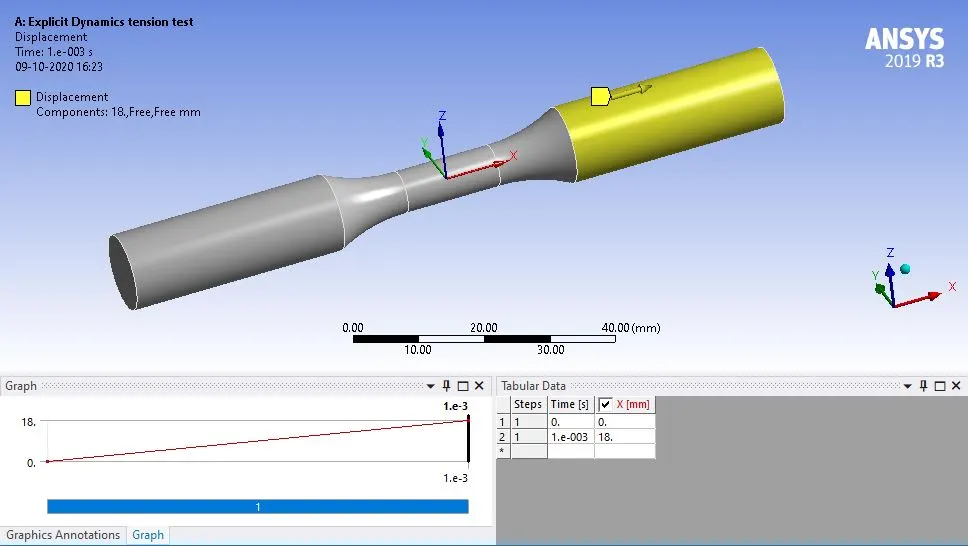
A displacement load of 18mm is applied at another end of the specimen.
Result for the Tension test:
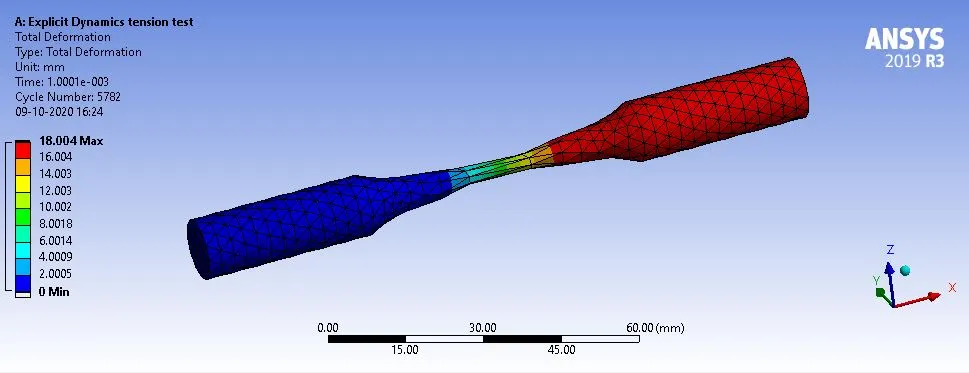
Total deformation:
The specimen reaches a maximum deformation of 18mm as shown below.
Animation for the total deformation:
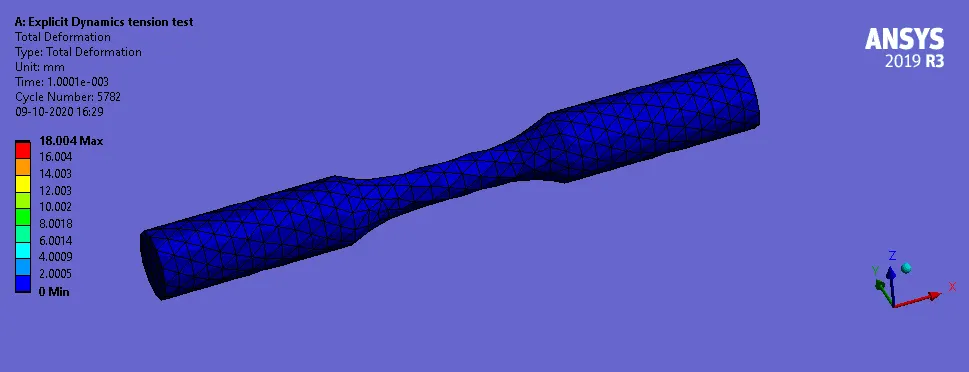
The animation on the specimen for the Total deformation is shown above.
Equivalent stress:
The specimen has reached the Equivalent stress of 610 Mpa as shown below.
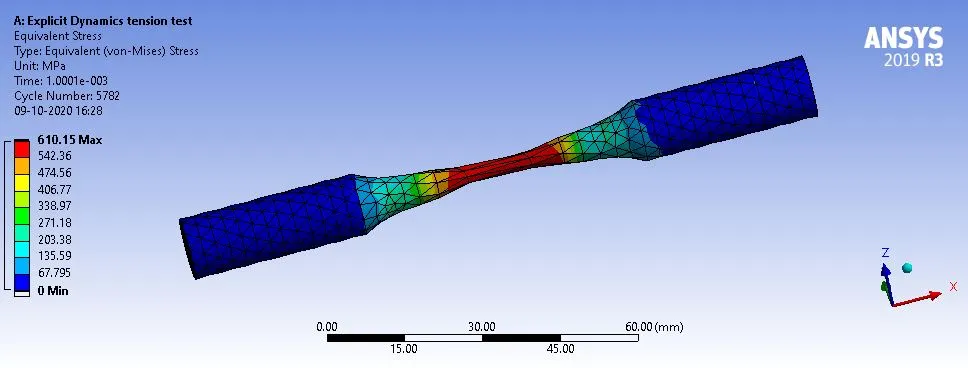
Animation for the Equivalent stress:
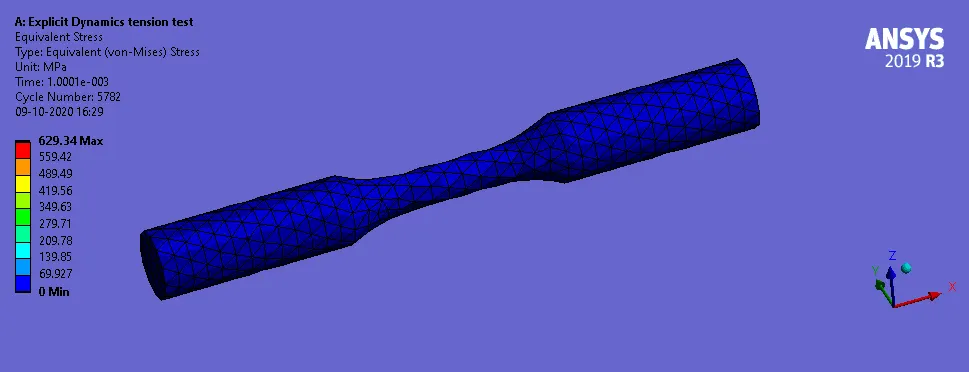
The animation on the specimen for the Equivalent stress is shown above.
The temperature generated during the Tension test:
The specimen has reached the Maximum temperature of 266 as shown below.
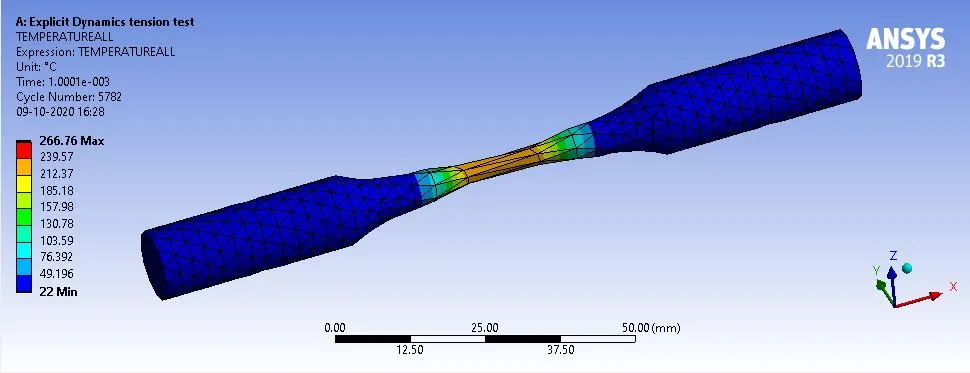
Animation for the temperature generated during the Tension test:
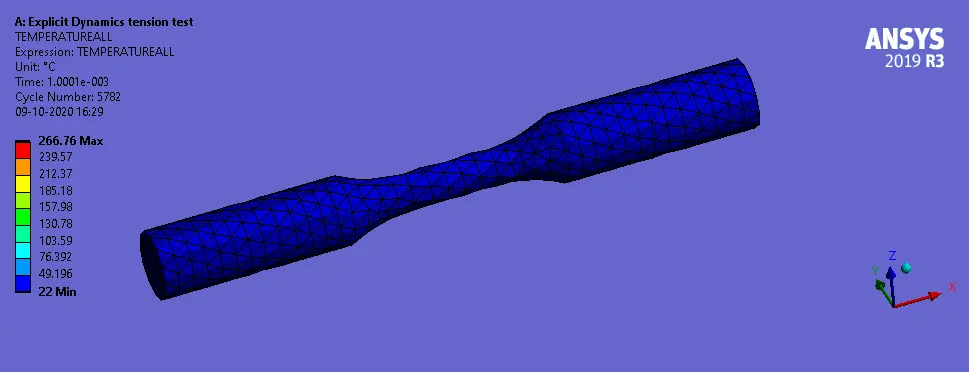
The animation on the specimen for the Maximum temperature is shown above.
Torsion test:
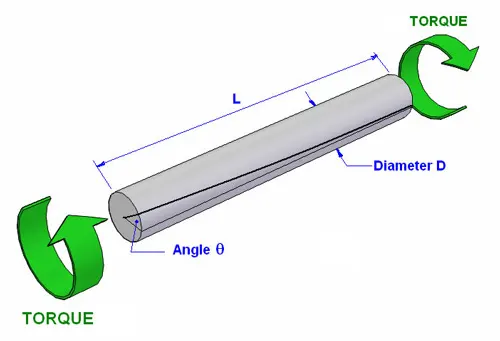
Torsion testing is a type of mechanical testing that evaluates the properties of materials or devices while under stress from angular displacement. Torsion testing can be split into two distinct categories: testing raw materials like metal wires or plastic tubing to determine properties such as shear strength and modulus, or functional testing of finished products subjected to torsions, such as screws, pharmaceutical bottles, and sheathed cables. The most common mechanical properties measured by torsion testing are:
- Modulus of elasticity in shear
- Yield shear strength
- Ultimate shear strength
- Modulus of rupture in shear
- Ductility
Torsion tests can be performed by applying only a rotational motion or by applying both axial (tension or compression) and torsional forces. Types of torsion testing vary from product to product but can usually be classified as failure, proof, or product operation testing.
- Torsion Only: Applying only torsional loads to the test specimen.
- Axial-Torsion: Applying both axial (tension or compression) and torsional forces to the test specimen.
- Failure Testing: Twisting the product, component, or specimen until failure. Failure can be classified as either a physical break or a kink/defect in the specimen.
- Proof Testing: Applying a torsional load and holding this torque load for a fixed amount of time.
- Operational Testing: Testing complete assemblies or products such as bottle caps, switches, dial pens, or steering columns to verify that the product performs as expected under torsion loads.
Geometry:
Then we have to import into ansys, import the model, and open it in space claim so that ansys will read it and checked for any errors.
Material:
Steel 1006 is used as material for the specimen and its properties are defined above.
Co-ordinates:
Different cartesian coordinates systems are defined for refining the mesh and also to apply the load at precise locations.
Cylinderical Co-Ordiantes:
A cylindrical coordinate was used to provide an axial rotation to be generated on the specimen
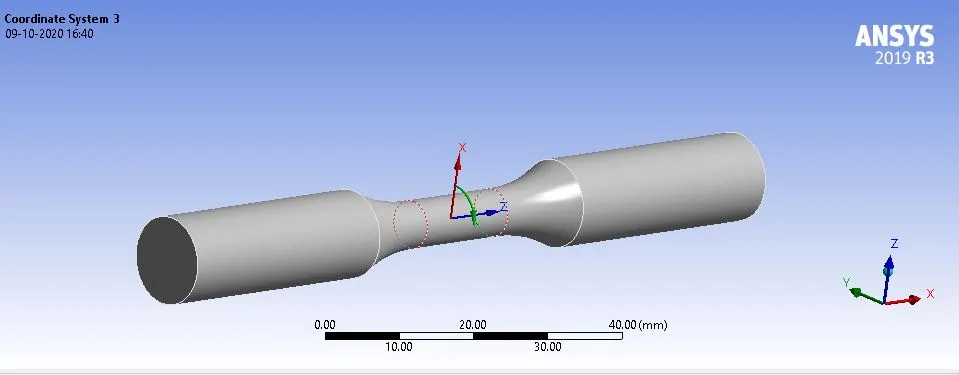
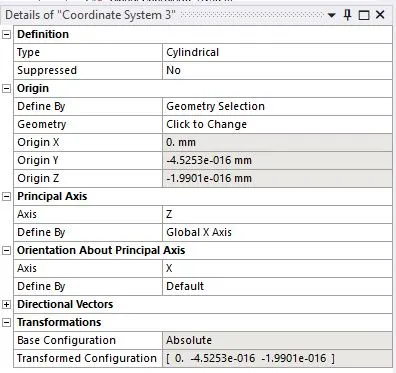
Details regarding the coordinates are shown above.
Meshing:
At certain locations, the mesh should be refined so we have used the sphere of influence and element size as shown below.
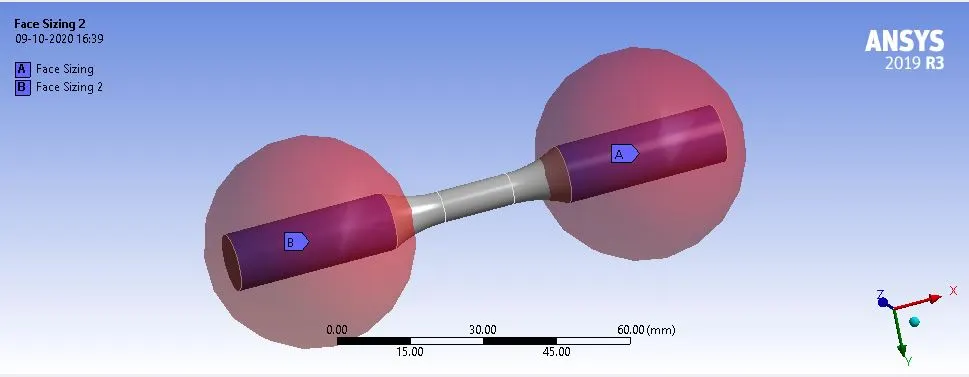
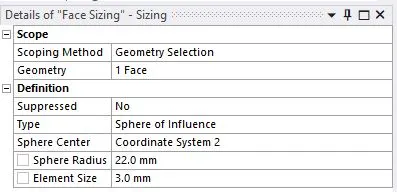
At certain locations, the mesh should be refined so we have used the face meshing and element size as shown below.
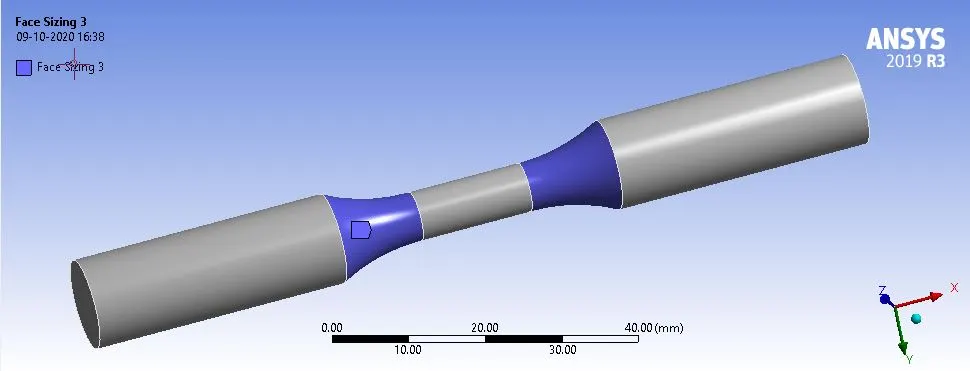
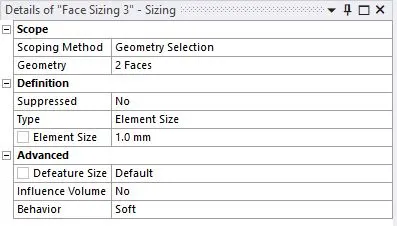
At certain locations, the mesh should be refined so we have used the sphere of influence and element size as shown below.
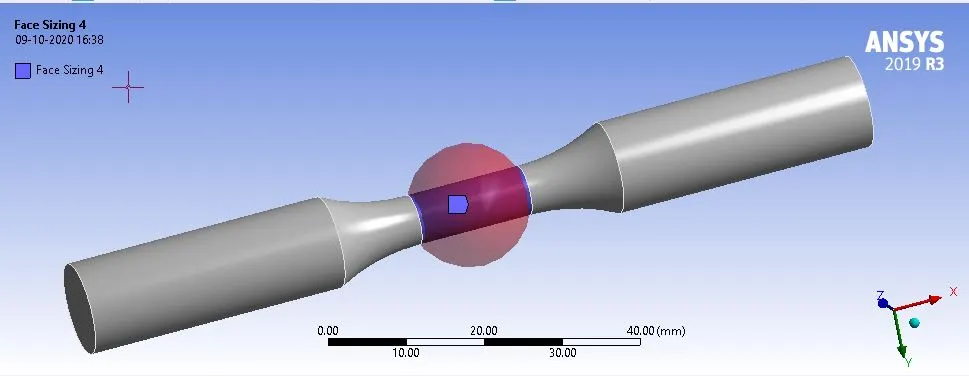
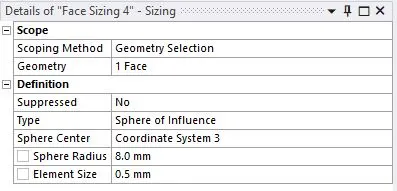
However, regions of particular interest for the specimen are meshed using face sizing with a mesh element size as required.
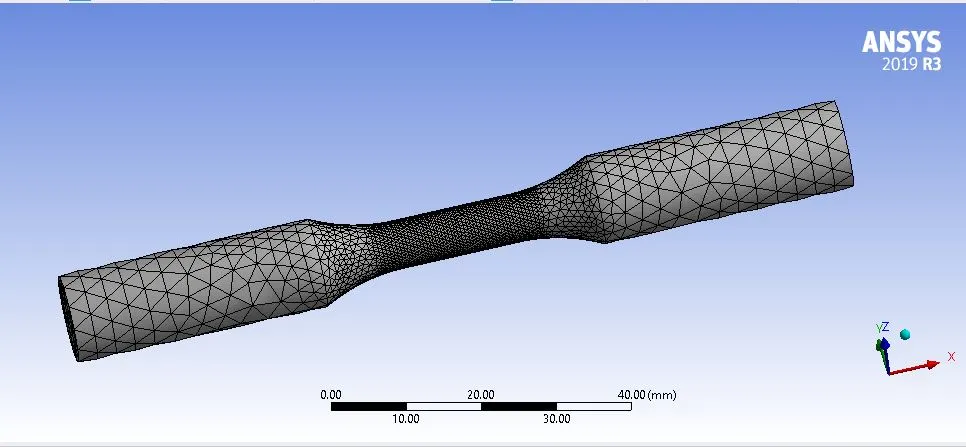
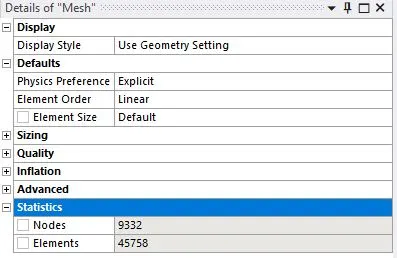
The meshed model image and mesh metric graph can be seen below:
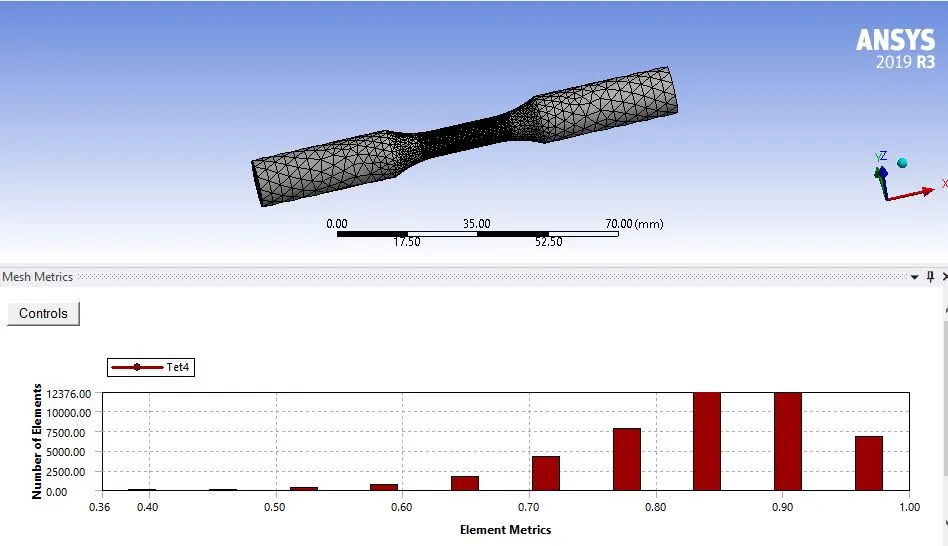
The mesh metric is utilized to identify the elements according to their quality using skewness. The quality of the mesh is acceptable as most of the elements lie within a high-quality range.
Analytical settings:
The analysis settings were used as per the requirement in the simulation.
Explicit Analysis:
Both fixed and displacement support applied to the specimen.
Fixed support:
The one end of the specimen is been applied with fixed support as shown below.
Displacement support:
A displacement load of 1200 degrees is applied at another end of the specimen.
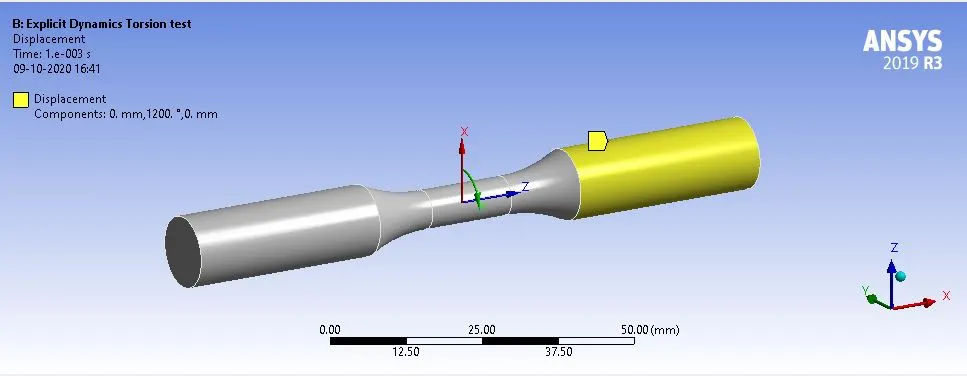
Rotation for the displacement end:
A rotation angle was provided for the specimen as shown.
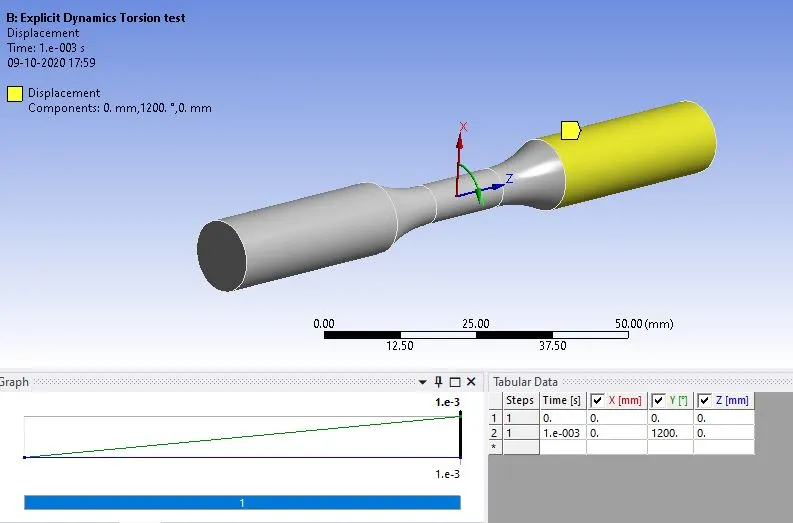
Result for the Torsion test:
Total deformation:
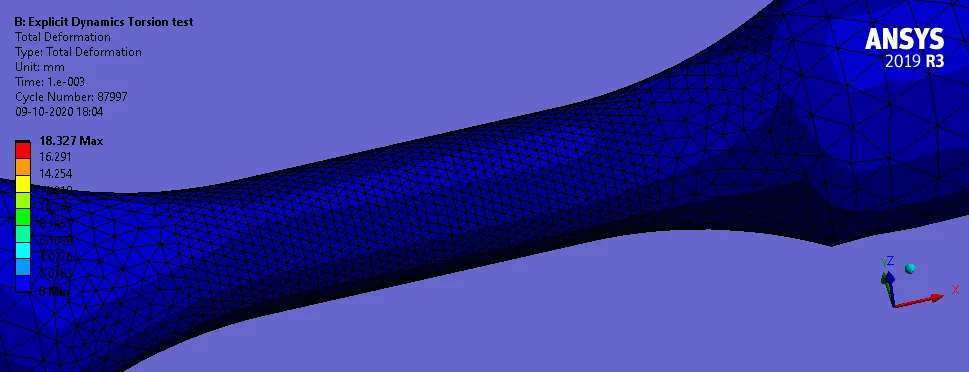
The specimen reaches a maximum deformation of 18.32 mm as shown below.
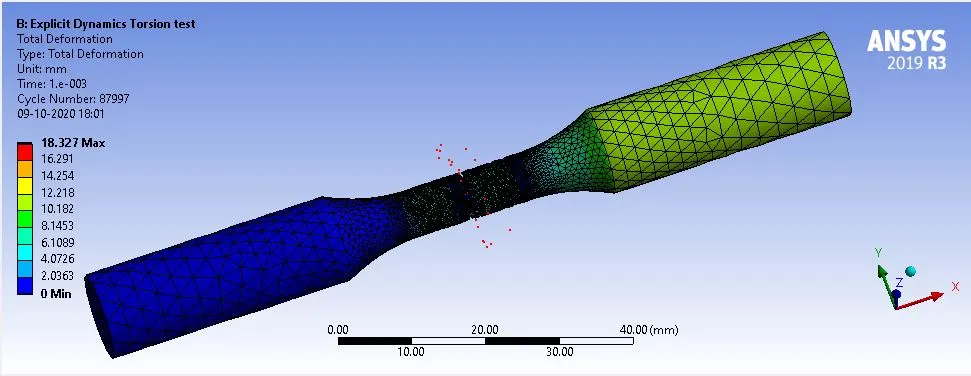
Animation for the total deformation:
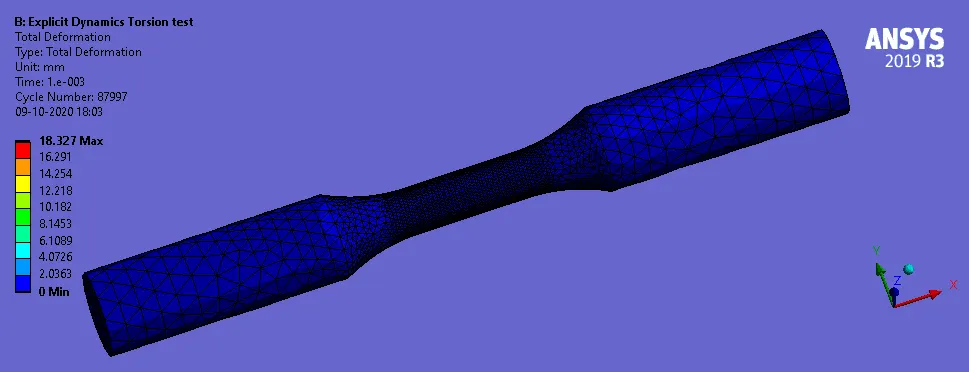
The animation on the specimen for the Total deformation is shown above.
Equivalent stresses:
The specimen has reached the Equivalent stress of 587.73 Mpa as shown below.
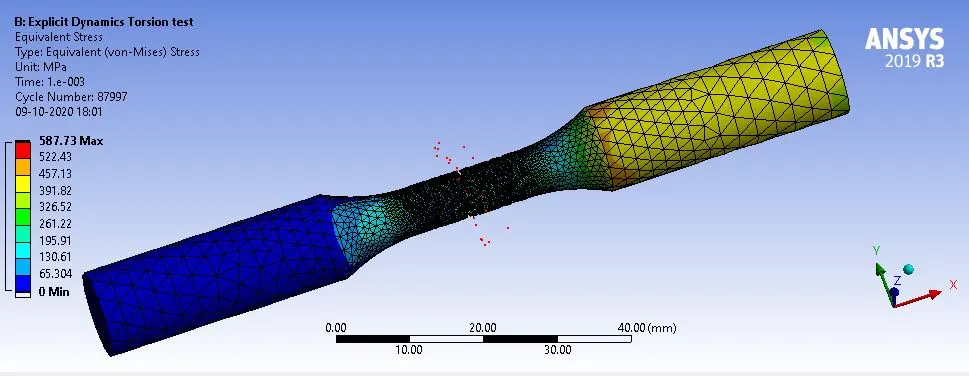
Animation for the Equivalent stresses:
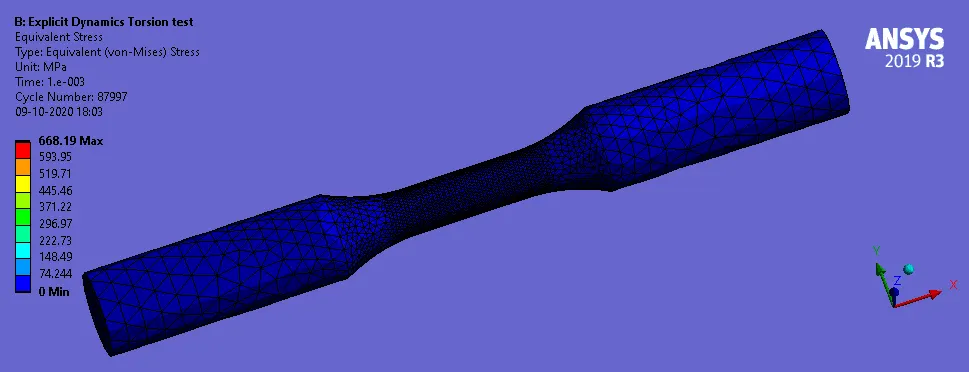
The animation on the specimen for the Equivalent stress is shown above.
The temperature generated during the Torsion test:
The specimen has reached the Maximum temperature of 450.5 as shown below.
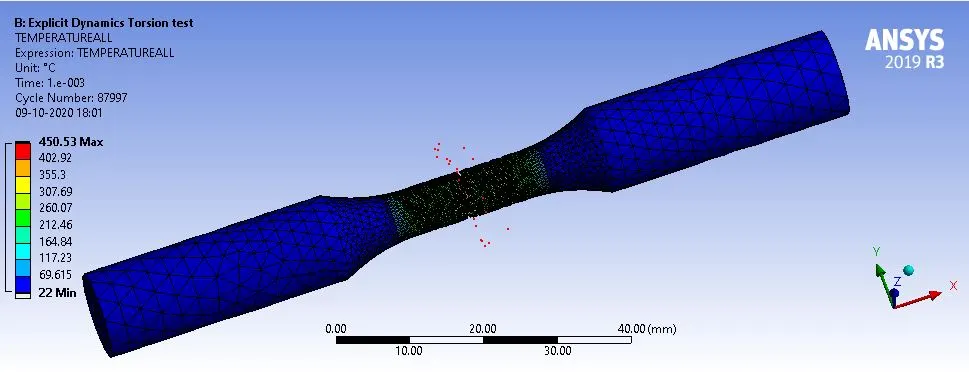
Animation for temperature generated during the Torsion test:
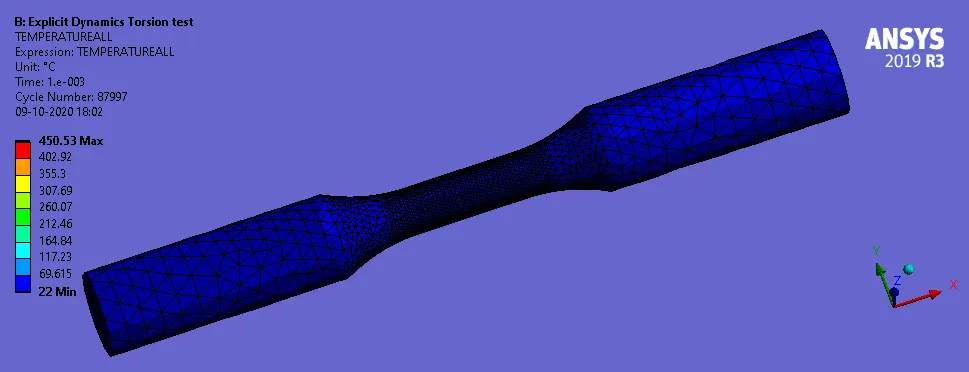
The animation on the specimen for the Maximum temperature is shown above.
Conclusion:
| S.No | Total deformation(mm) | Equivalent stress(Mpa) | Temperature Generated by the body(Deg Celsius) |
|
Case-1 |
18 | 610 | 266.70 |
| Case-2 | 18.32 | 668 {this can be seen in animation} | 450.53 |
From the above Table comparison, it is seen that the Total-deformation, Equivalent stress, Temperature of the body is raised in the case-2 as compared with the case-1.
Animation for the Fracture occurred on the torsion test: