Week 9 - Challenge 2 - Switch Bezel Design
Aim :- To Create the Switch Bezel Plastic component through the given Class-A surface. To begin with, the tooling axis for the given Class-A Surface should be created meeting the requirements of the draft angle and at the end perform the Draft analysis on the model.
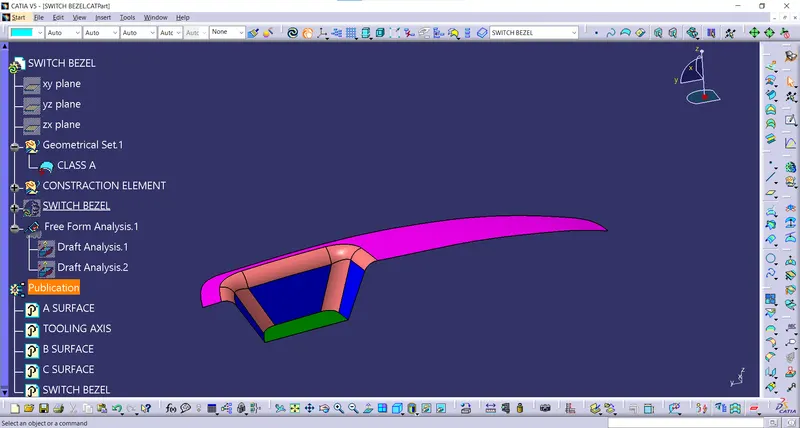
Objective:
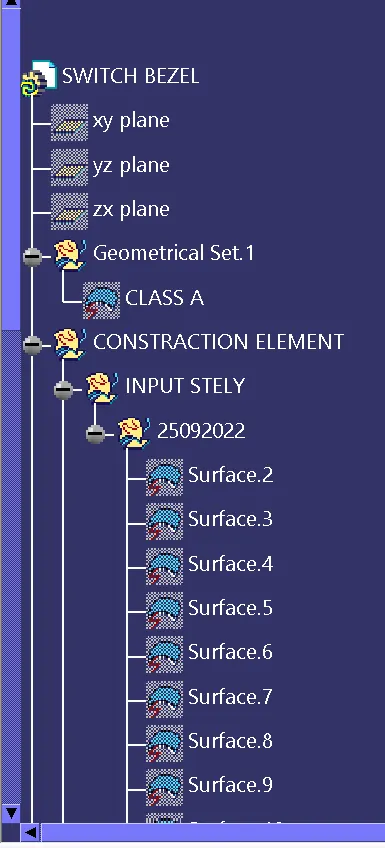
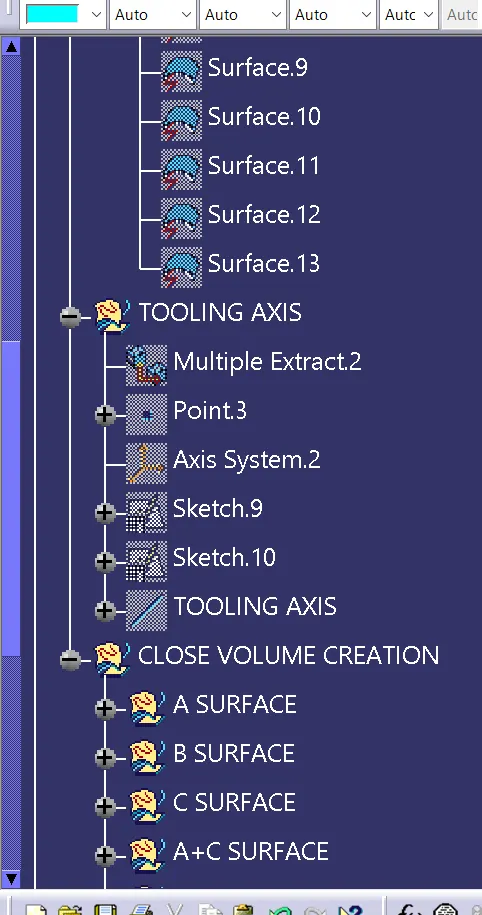
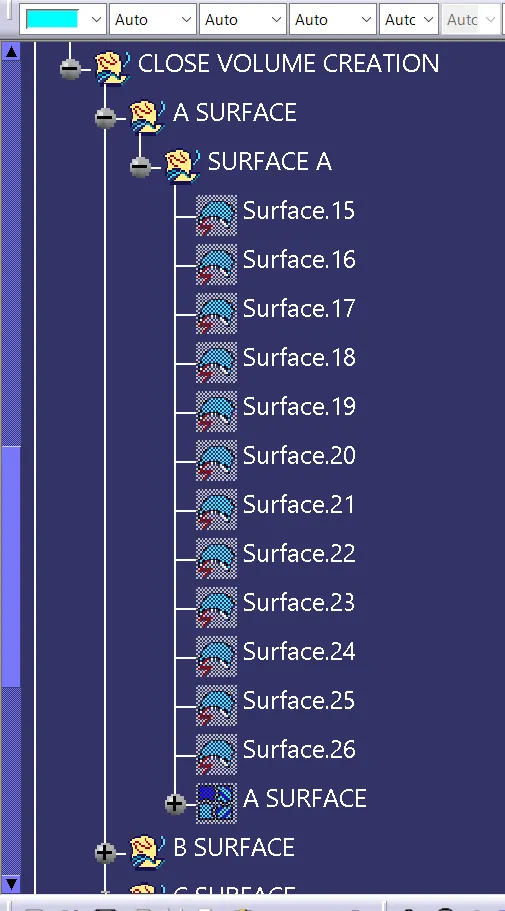
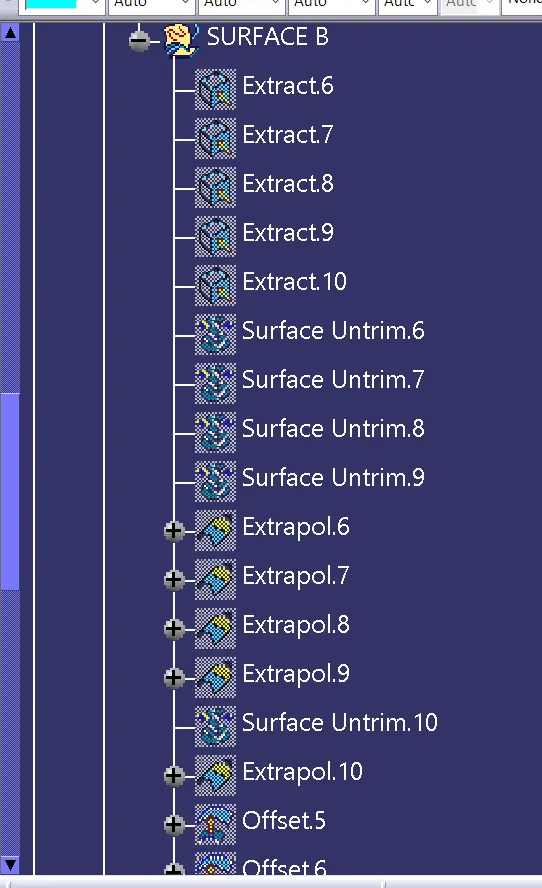
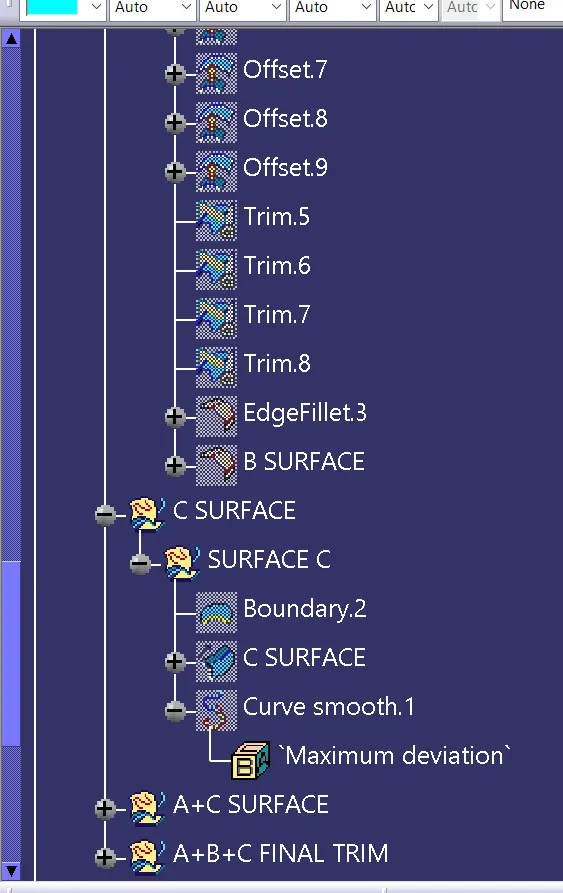
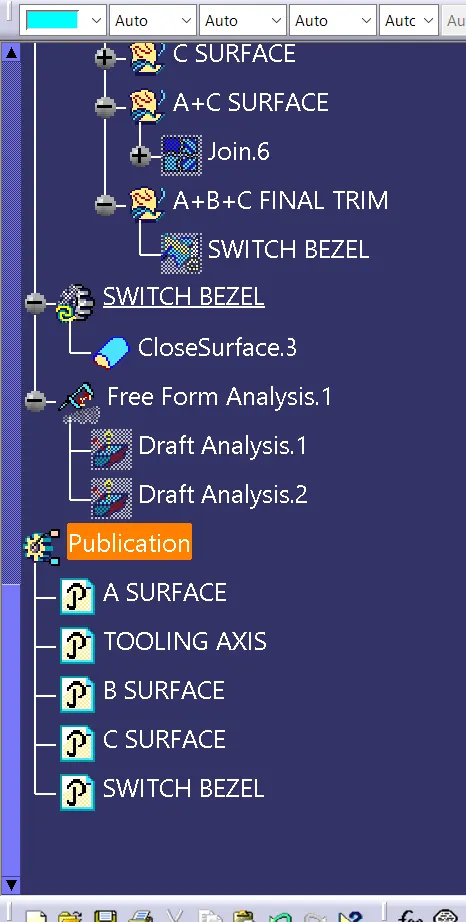
- Ensure Proper Tree Structure.
- Geometrical sets should have a proper name based on the sketches present inside them.
- All the sketches should be created under the Geometrical set.
- Use the Close Surface feature to make a solid body from the surface.
- To publish the Tooling Axis, Class A, B, and C surface.
Introduction:
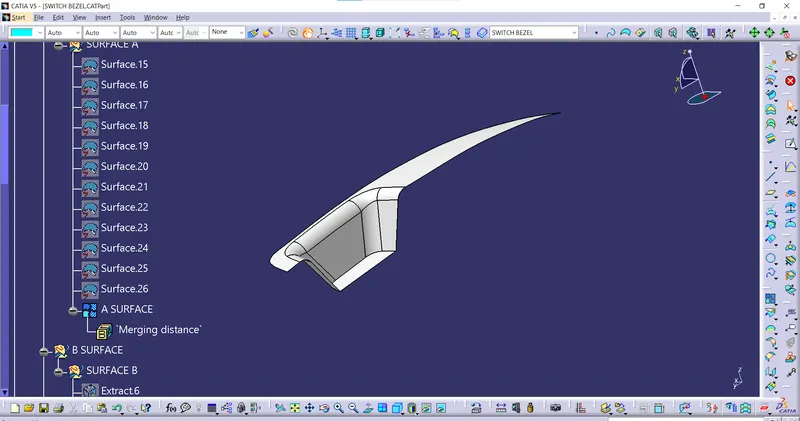
CLASS-A SURFACE: the class-A surface is used in the automotive design industry. it describes the final production surface data for the aesthetic parts.
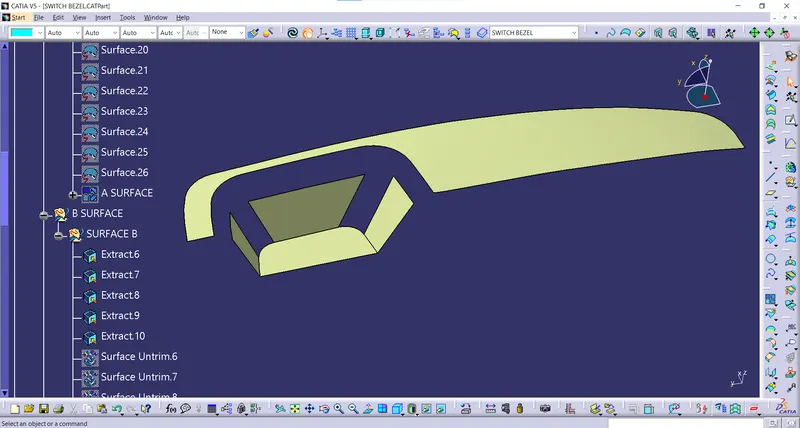
CLASS-B SURFACE: the class-B surface is the second surface that has a certain thickness from the class-A surface. this surface contains engineering aspects of a model. These must be smooth and "error-free" as well but are not held to the standards that class A surfaces are.
CLASS-C SURFACE: The Class C finish allows more imperfections than Class A or B. Class C is often specified for interior surfaces not readily visible, surfaces that will be covered by another part when assembled, or surfaces.
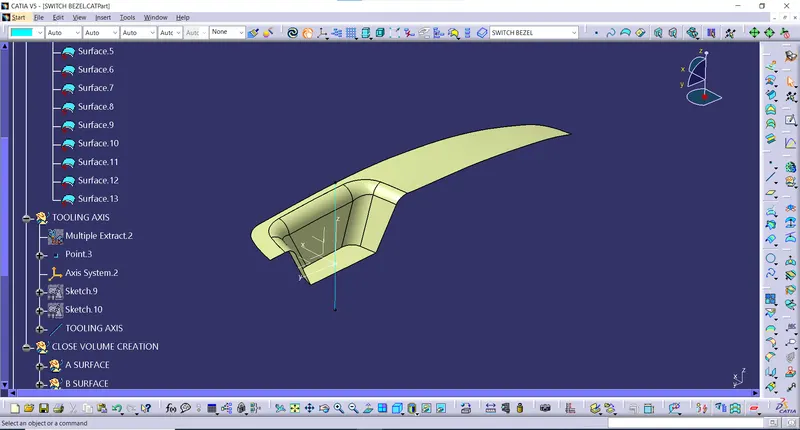
Tooling Axis :-
Surface A :-
Surface B
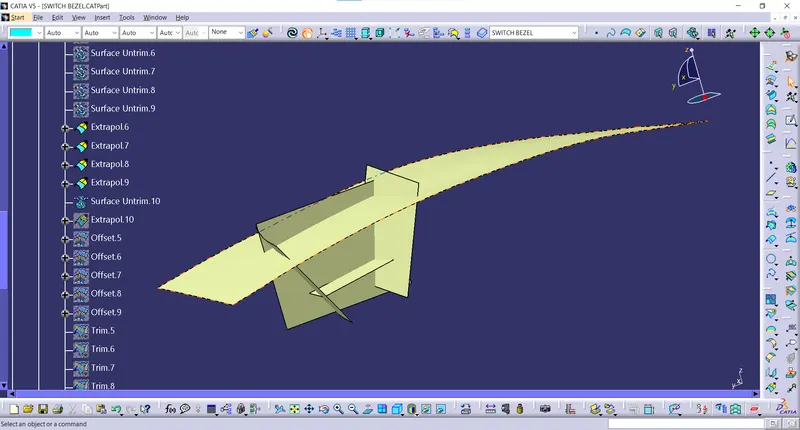
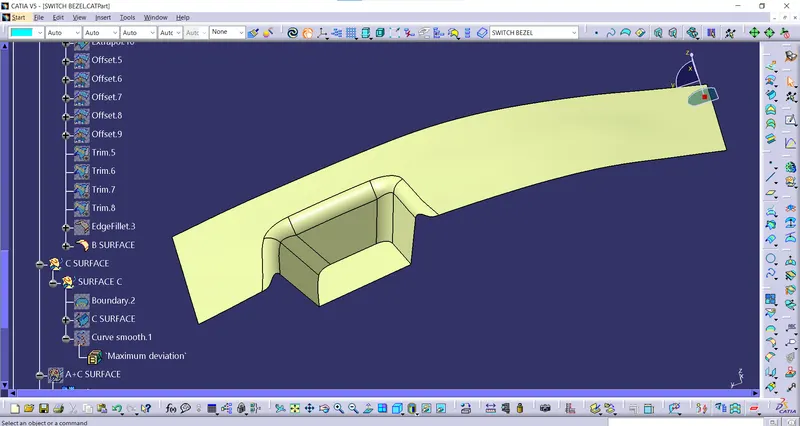
Surface C :-
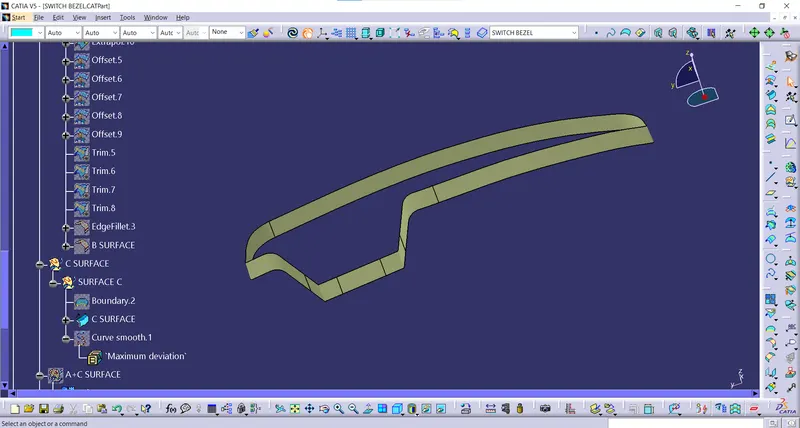
Surface A + Surface C
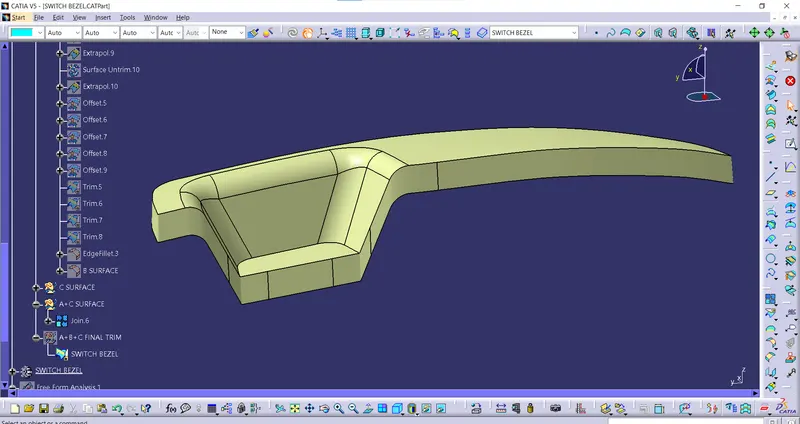
Surface A + Surface B + Surface C :-
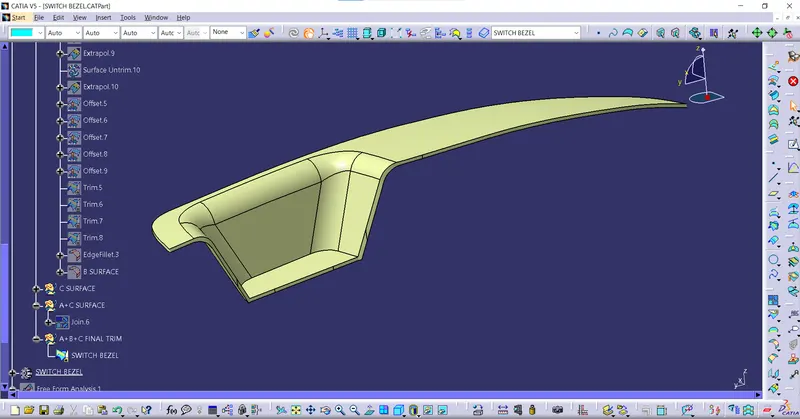
Closed Surface :-
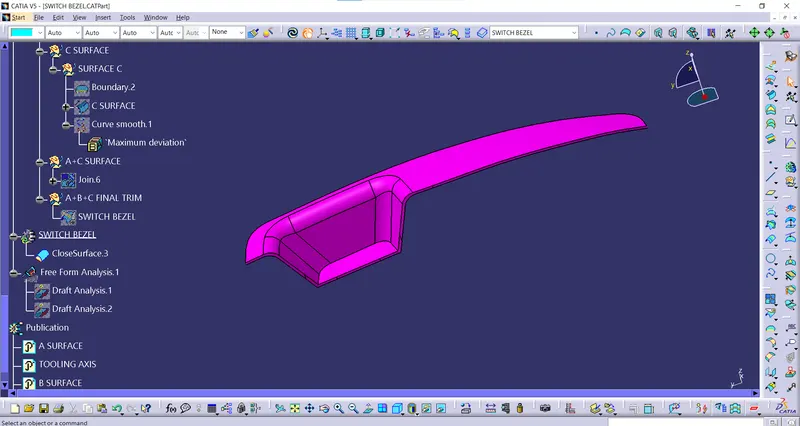
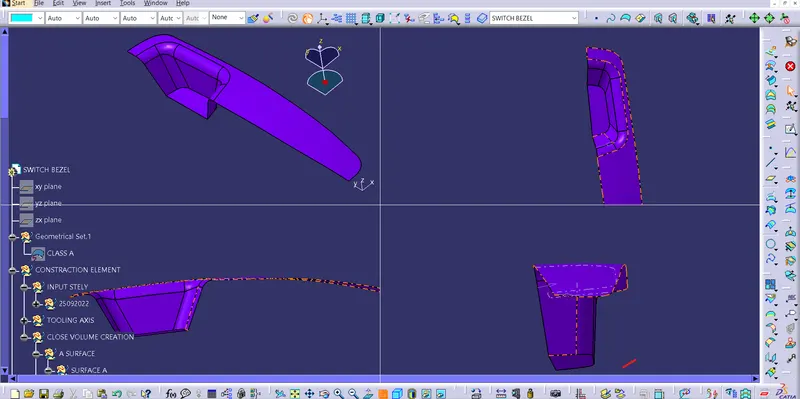
RESULT:
Switch Bezel plastic component using class-A surface successfully created and performed the draft analysis on the class-A surface and final plastic component.