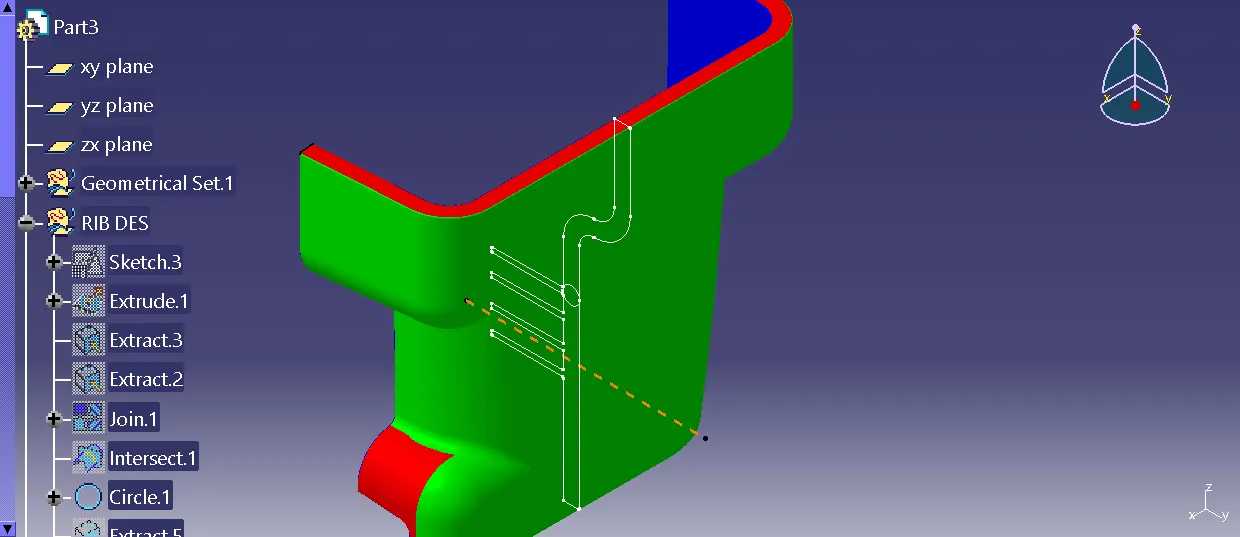
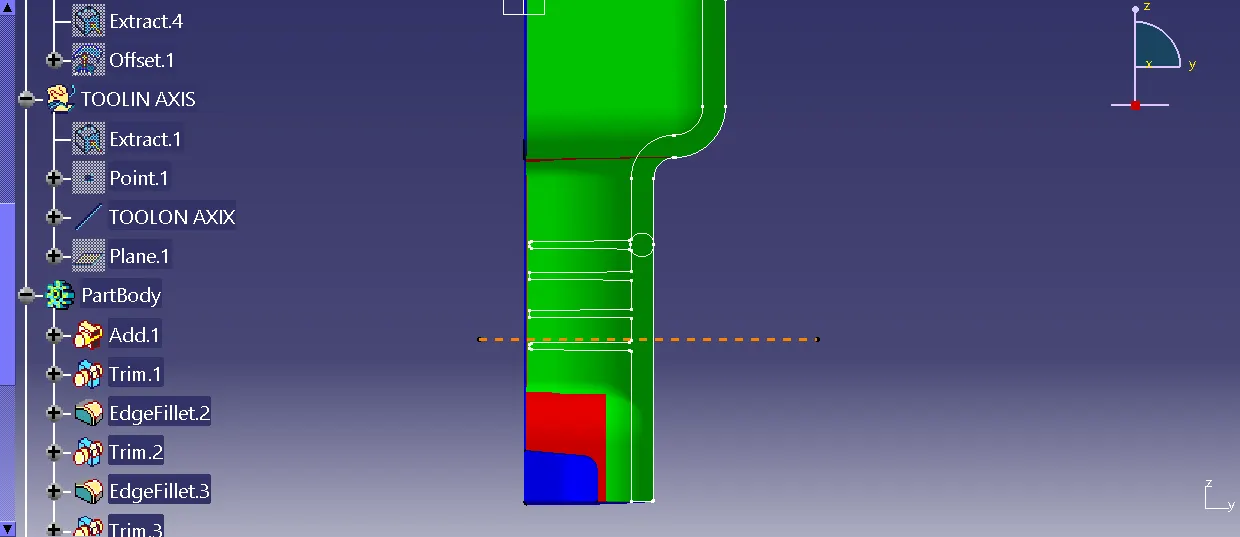
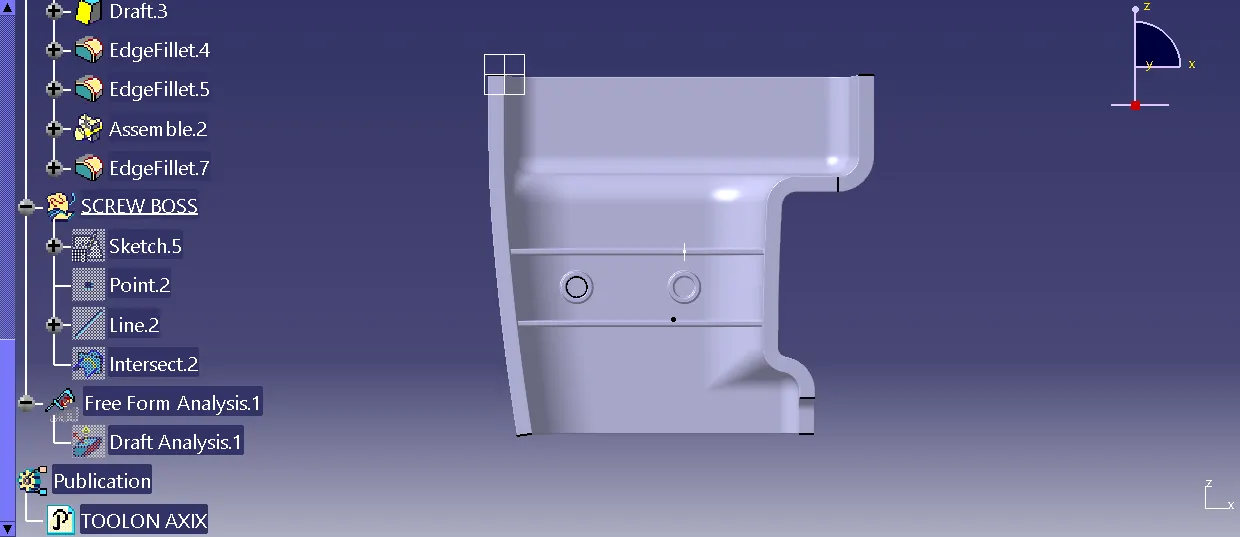
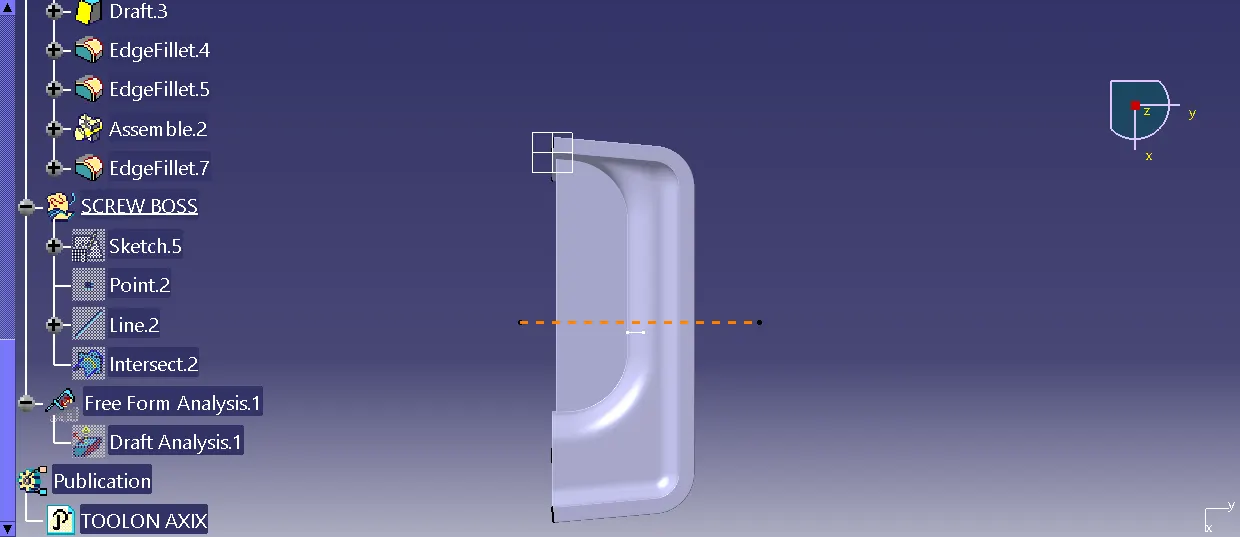
Week 9 - Attachment Feature Creation (Ribs & Screw Boss) - Challenge 1
INTRODUCTION:
Ribs & Bosses. Both ribs and bosses are functional features in many plastic part designs. Ribs offer stability to side walls and standoffs such as bosses. Bosses are used for screws or locators in assemblies.
Ribs:
Ribs are a feature in plastic injection molded parts. They are thin extensions that run perpendicular from a wall or plane. They are commonly used to provide additional support and strength to a part. Thickness and location are essential to rib design.
Designers commonly try to increase the strength of a part by making its walls thicker. Unfortunately, walls that are too thick are subject to warpage, sinking, and other defects. The advantage of using ribs is that they increase the strength of a part without increasing the thickness of its walls.
They are called "ribs" because they resemble the human rib. The ship's outer planking and inner sheathing are attached to the ribs.
Rib thickness at the base should be between 50-70% of the nominal wall thickness. Rib height should be 2.5 – 3X the nominal wall thickness. Ribs should have 0.5 – 1.5 degrees of draft (for ejection). Rib base radii should be 0.25 – 0.4X the nominal wall thickness.
SCREW BOSS:
In plastic parts, bosses are typically used to assist in assembly, as a receptacle for a screw or threaded insert or as the locator for a mating pin on another part. Because of its function, a boss must have sufficient strength to do its job. This dictates a minimum size for the feature.
Bosses are the happy medium, reinforcing fracture prone features like screw holes, penetrations or mounting slots without impacting the cost or looks of a design. The secondary use of bosses is to create points at which your assembled product can be fastened together.
The diameter of the hole in the boss should be equal to at least 0.7 X diameter of the screw. The boss radius should be a minimum of 0.25 X Thickness.