Week 8 - Universal Joint
Universal Joint Simulation in Ansys
Objective:
Simulate a Universal Joint and infer the results by changing the spring materials.
Briefing
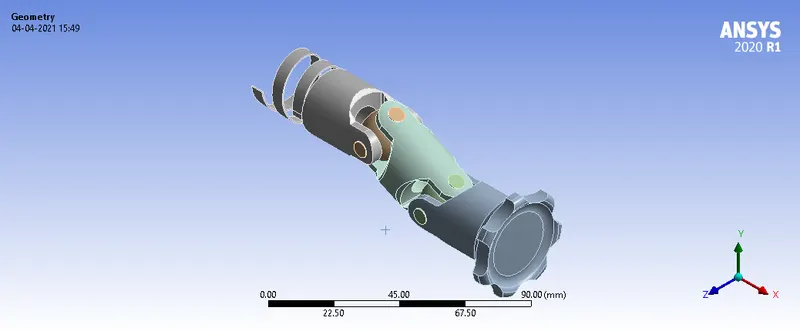
The model consists of 5 parts :
- Spring
- Fork
- 2 balls
- intermediate
Joints are created between the parts and materials ( Structural Steel, Stainless Steel, and Titanium alloy ) are changed for the spring and a case study is performed.
Procedure and Setup
- Materials
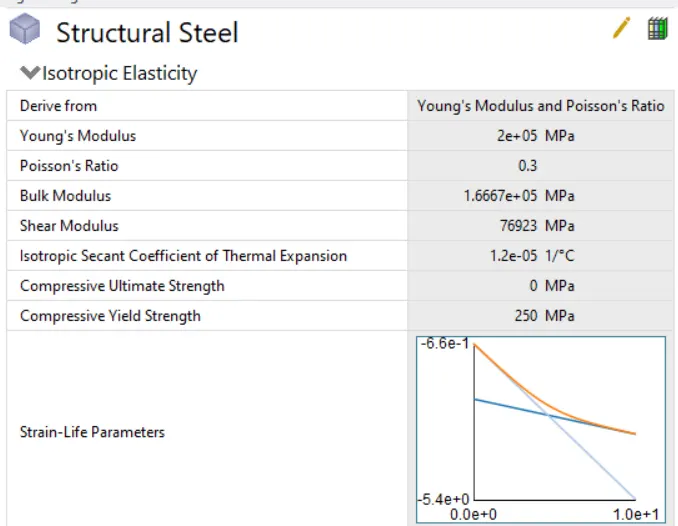
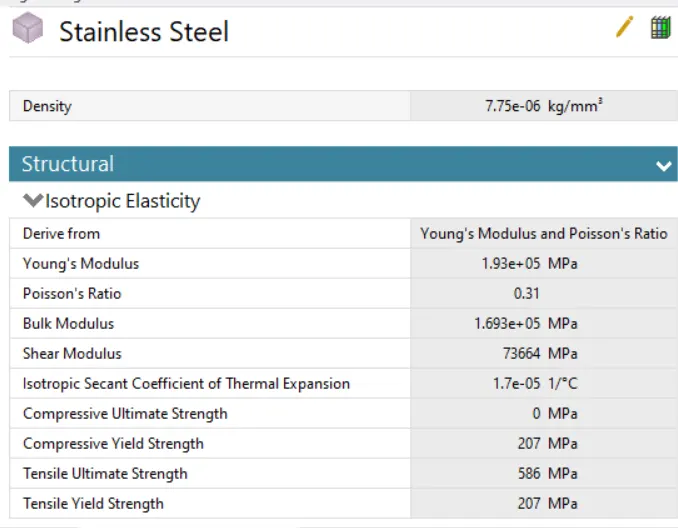
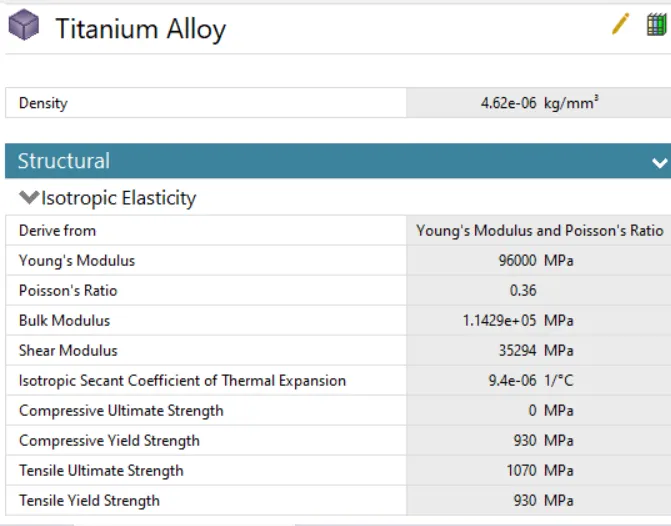
For case 1 structural steel material used for all the parts, for case 2 only spring is given Stainless Steel and Titanium alloy is given.
Joints:
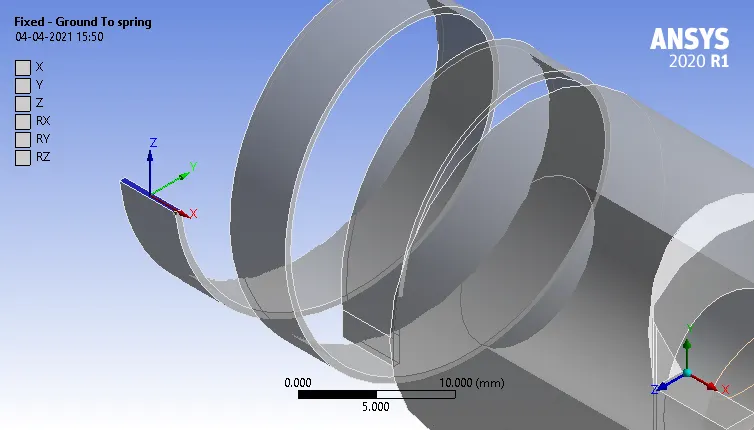
- A fixed joint ( ground to body ) is used to fix a spring face
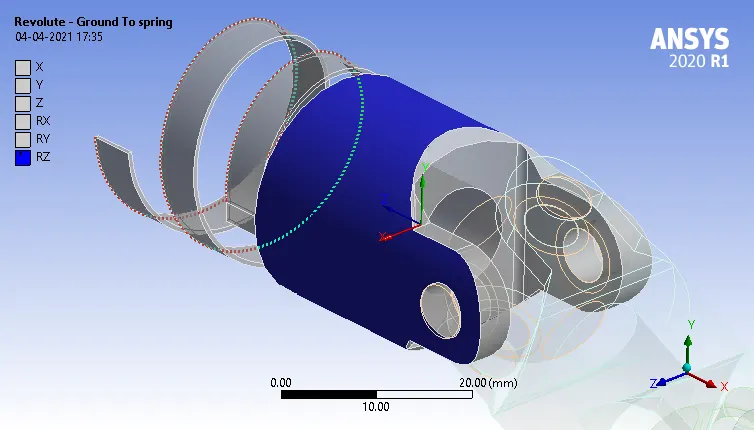
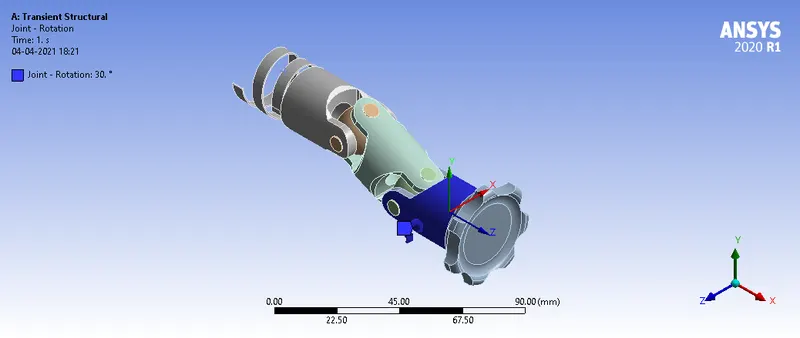
- A revolute ground joint is created for the spring outer surface and the other fork end
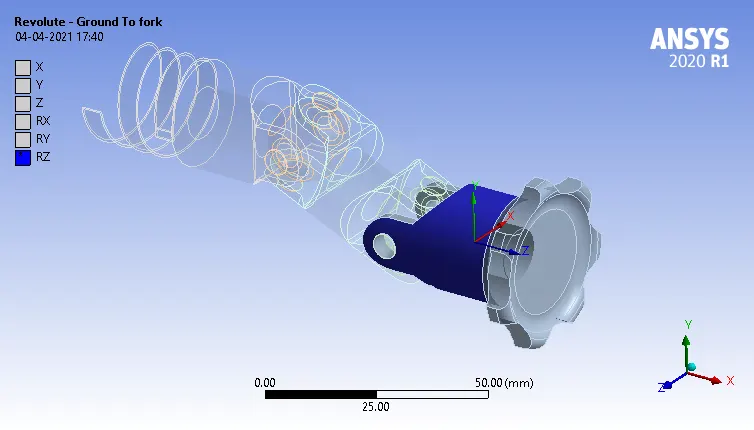
Body to Body revolute joints are defined between the ball, the forks, and the intermediate part.
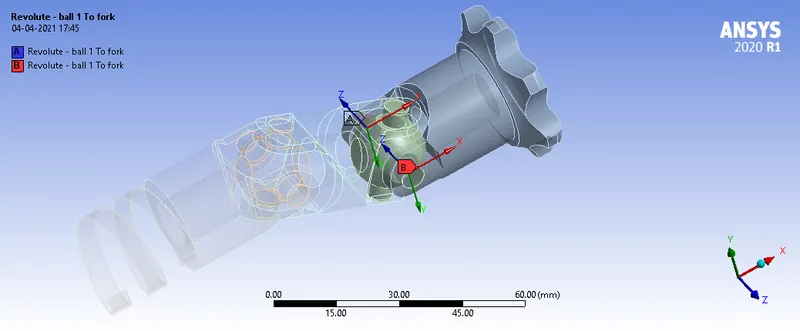
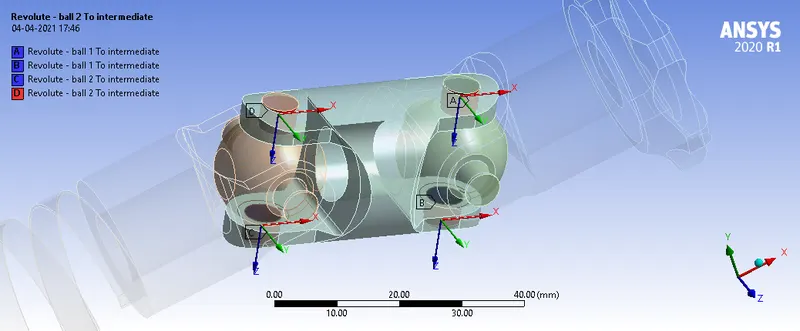
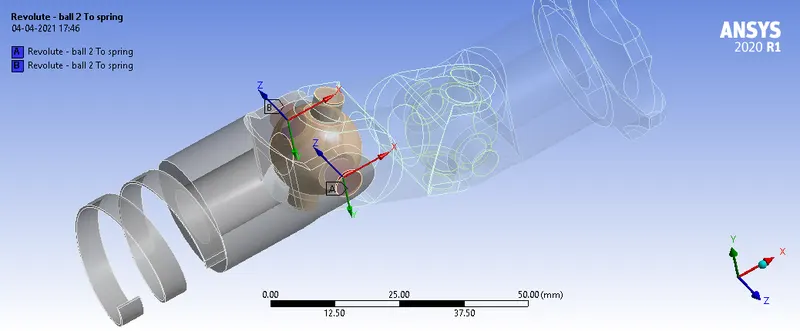
Meshing: Default mesh parameters are used with mesh size 4mm
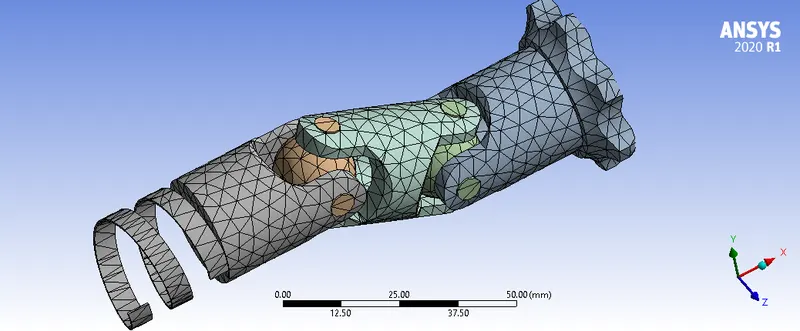
Boundary Conditions: Revolute joint body to ground (fork) is given rotation movement.
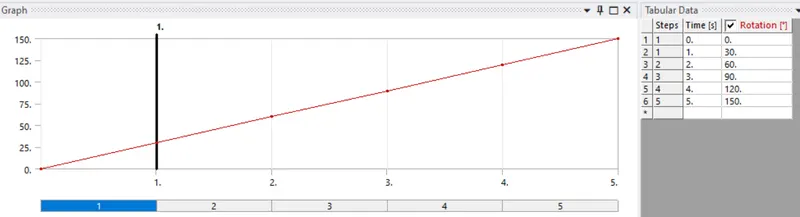
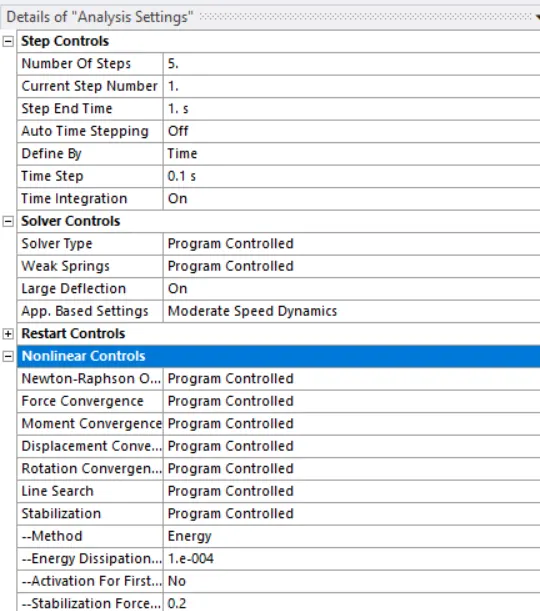
Analysis Settings: 5 load steps are provided to simulate this model with solver type set to program controlled
Results and Case Study:
| Cases / Parameters | Equivalent stress Max in the spring | Total deformation in the spring |
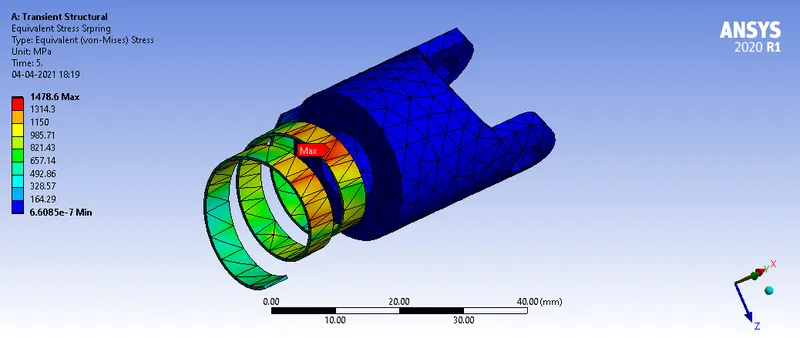
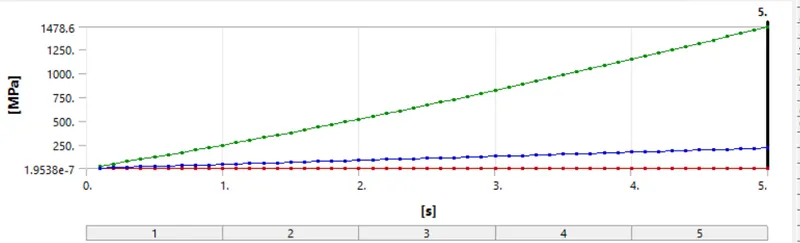
| Structural Steel | 1478.6 MPa | 23.858 mm |
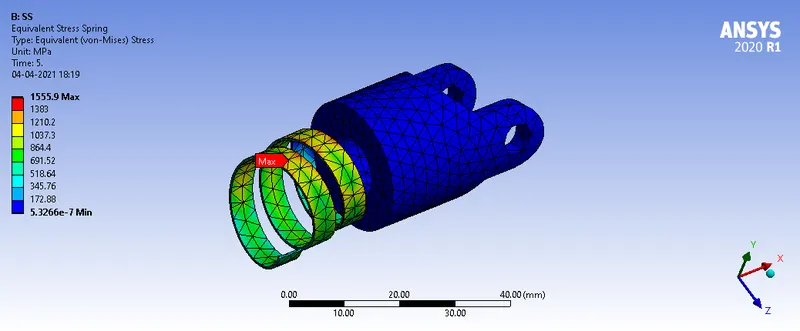
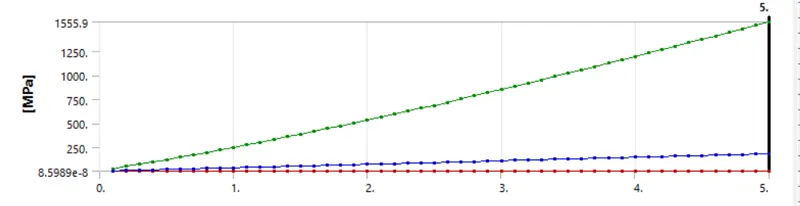
| Stainless Steel | 1555.9 MPa | 23.858 mm |
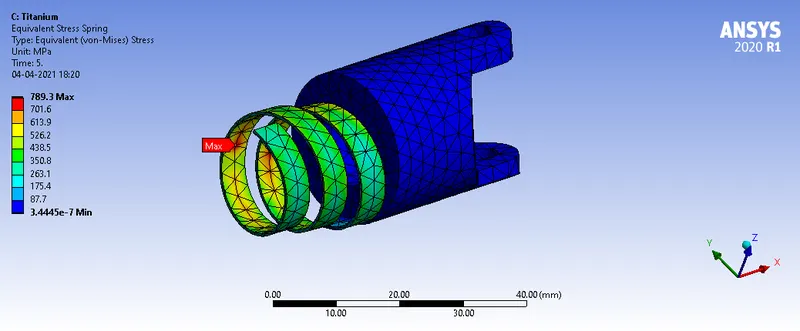
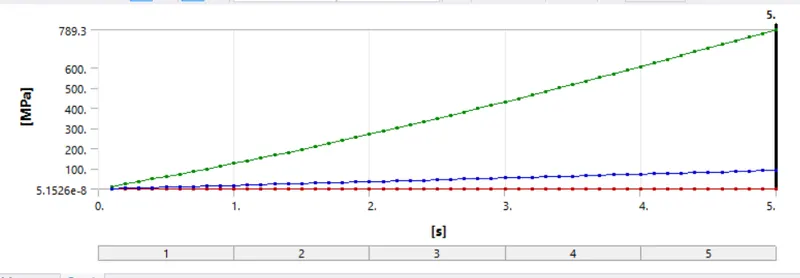
| Titanium alloy | 789.3 MPa | 23.858 mm |
- Titanium alloy had not undergone plastic deformation (yield point = 930 MPa ), while the other 2 spring materials have undergone plastic deformation.
- Spring has undergone similar deformation in the model.
Case 1 Stress generation in the spring:
Case 2 Stress generation in the spring:
Case 3 Stress generation in the spring: