Universal Joint
Objectives: To perform a Stress analysis of Double Universal Joint
- Geometrical Design:
We have 3D Geometry of Double Universal joined here which is connected with a Helical Spring.
This is how geometry looks like;
- Material Properties:
For this project we will use 3 different materials such as Structural Steel, Stainless Steel and Titanium Alloys, each material having different mechanical properties which are shown below;
- Problem Statement:
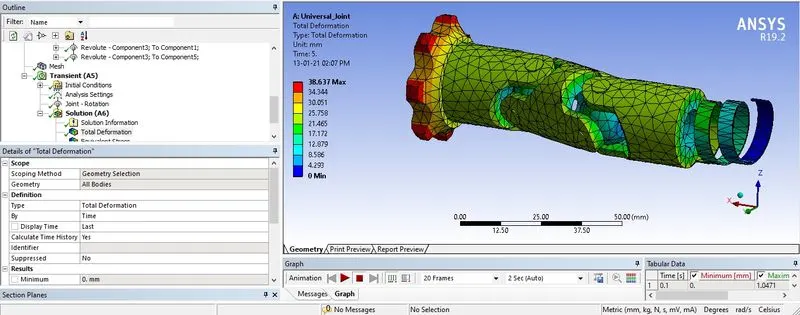
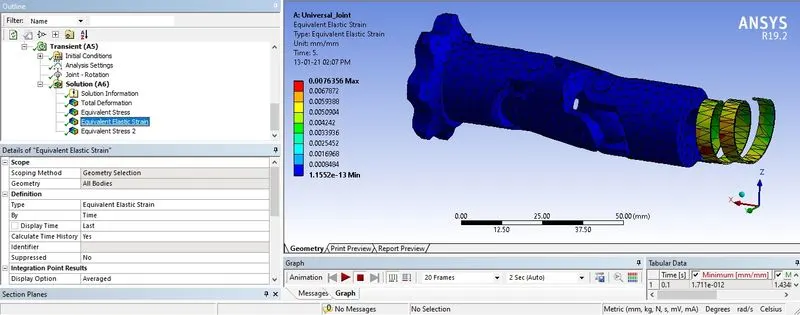
A Double Universal joint is taken in consideration for this analysis, One Helical Spring is attached with Universal Joint which is kept fixed and one joint is applied with rotary motion. At the end we will capture various aspects of stress analysis such as Total Deformation, Equivalent Elastic Stress and Equivalent Strain.
- Mesh Criterion:
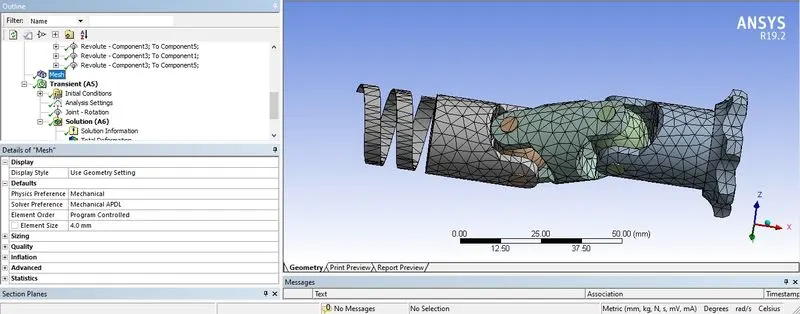
Type of Element: Automatic Method (Tet & Hex Mesh)
Size of Element: 4 mm
This is how model looks like after meshing done;
1) Mesh Model
- Boundary Conditions:
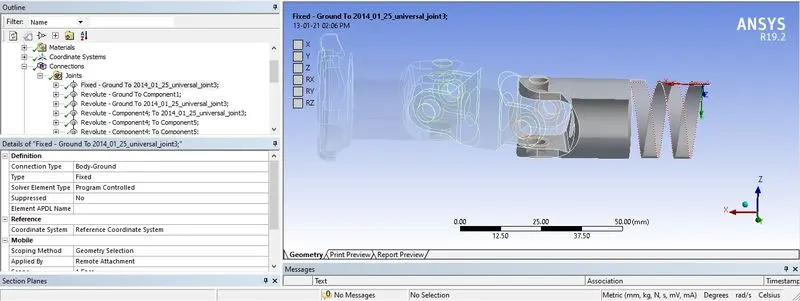
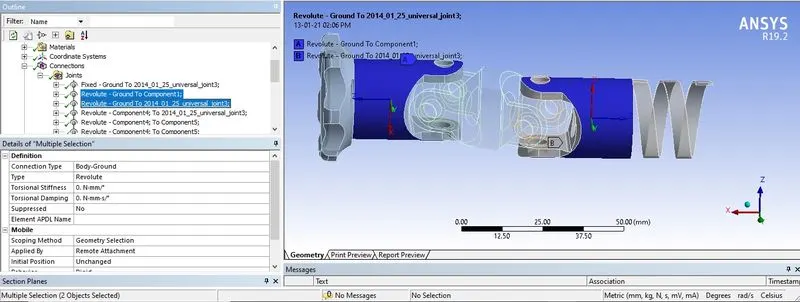
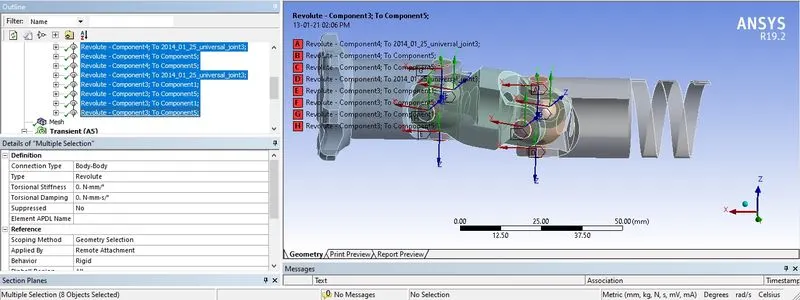
Various 3 kinds of Joints (In Contact) will be applied to this model. In First Helical Spring one end is kept Fixed in second joint; both yokes are applied with rotation and in third joint Spider is applied with revolute joint.
This is how model looks like when joints are applied to it,
- Fixed Joint (Spring)
- Revolute Joint (Yoke)
- Revolute Joint (Spider)
- Loading & Analysis Settings:
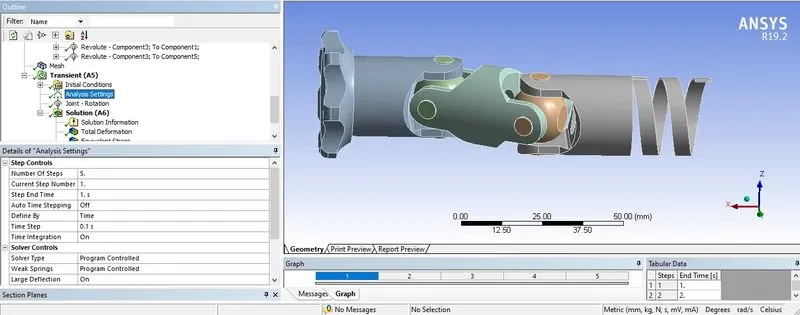
Whole analysis is carried out in 5 Steps; Large Deflection is kept ON for this analysis.
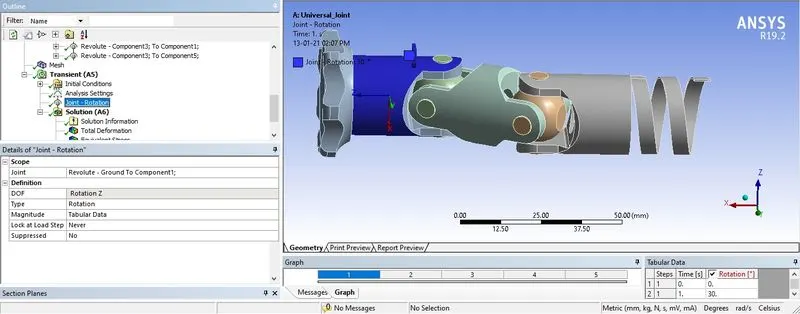
Universal Joint Yoke which is connected to Engine Output is applied with Rotational Velocity in 5 different steps.
- Analysis Settings:
- Loading:
- Post - Processing:
We have 3 Different Materials for this analysis so we will carry out this project with these materials and will compare outputs at the end.
Case 1: (Material - Structural Steel)
- Total Deformation
- Equivalent Elastic Strain
- Equivalent Stress
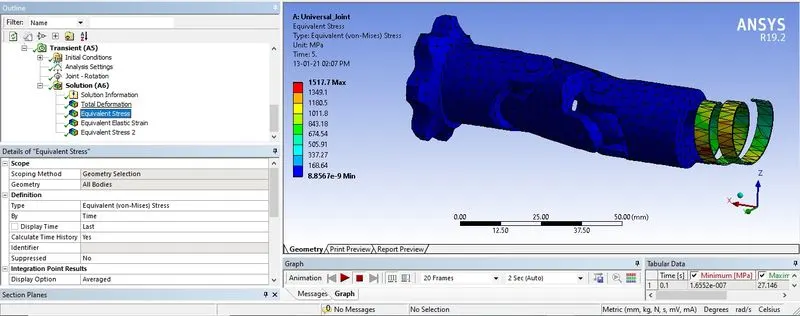
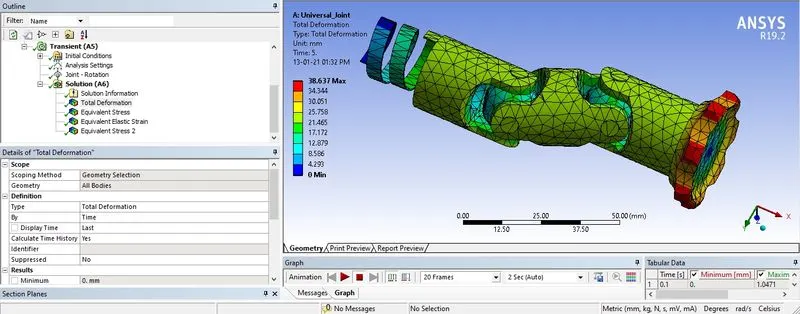
Case 2: (Material - Stainless Steel)
- Total Deformation
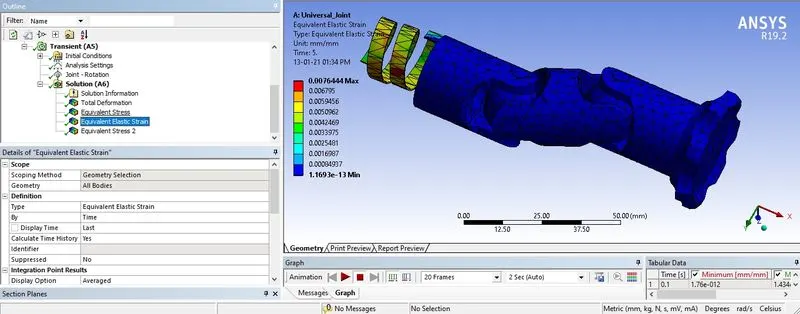
- Equivalent Elastic Strain
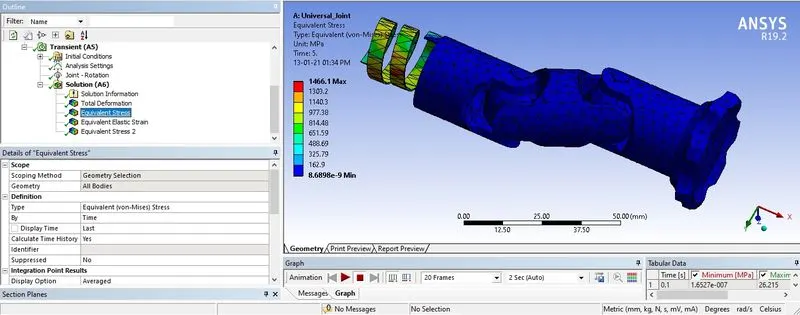
- Equivalent Stress
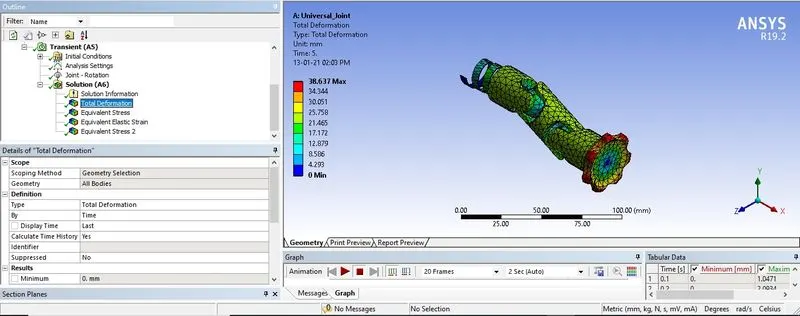
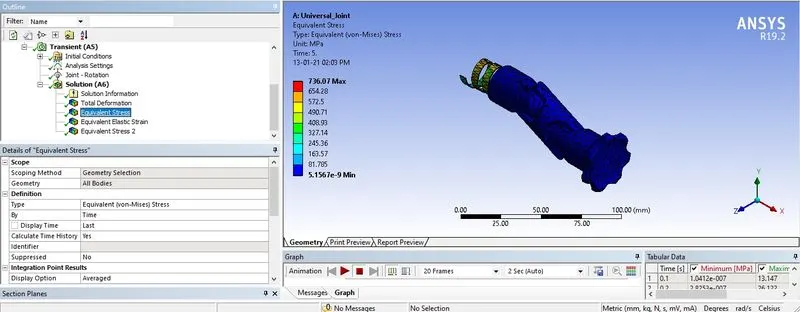
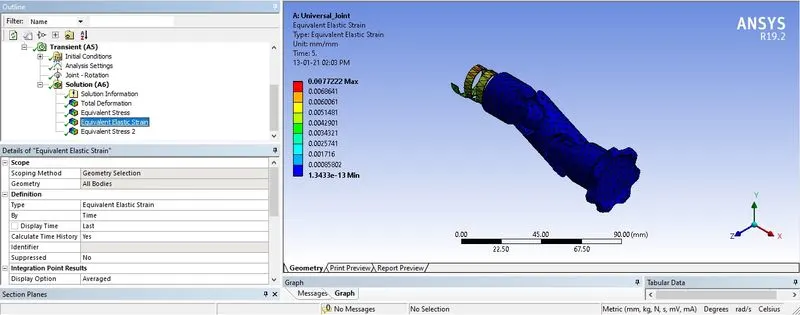
Case 3: (Material –Titanium Alloy )
- Total Deformation
- Equivalent Stress
- Equivalent Elastic Strain
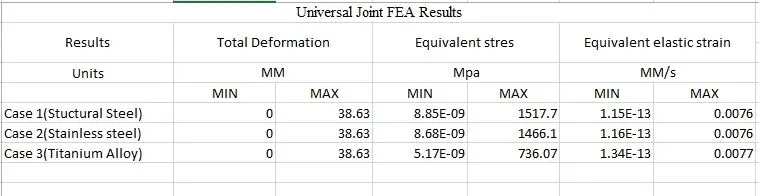
Post Process Results Summary;
- Results and Conclusion:
1) Total Deformmation is almost same in all cases.
2) Equivalent Elastic Strain values also similar in all cases, a slight variation can be seen.
3) The value of Equivalent Stress is higher in Structural Steel (Max 1517.70 Mpa)