Week 8 - Universal Joint
Aim: To conduct a simulation of a universal joint for three different types of spring materials namely structural steel alloy, stainless steel alloy, and titanium alloy.
Procedure:
Materials: Go to engineering data and import structural steel alloy, stainless steel alloy, and titanium alloy depending on the case.
Geometry: Drag and drop the geometry in space claim to upload it.
Setup:
Components: Assign the appropriate material according to the case.
Connections:
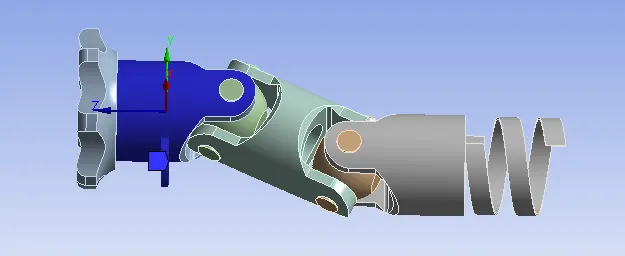
- Create a body to ground fixed joint at the tip of the spring.
- Create a body to ground revolute joint for both the spring and the other side.
- Create a body to body revolute joint at all the holes and other connections.
Ensure that the axis of rotation is correct.
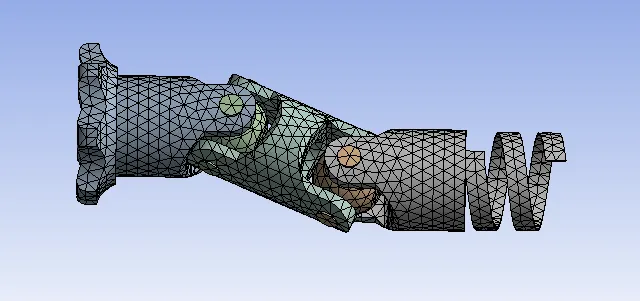
Mesh: Generate a mesh of 3mm at all the bodies.
Analysis Settings:
- Set the number of steps as 5.
- Turn off the auto time step and set the time step as 0.1
- Ensure that large deflections in turned on.
Load Settings:
- Add a rotational joint load with 30 degrees rotation increment at every second.
Solution: Equivalent stress and total deformation for the three materials is recorded and compared.
Results & Discussion:
Case 1: Structural Steel
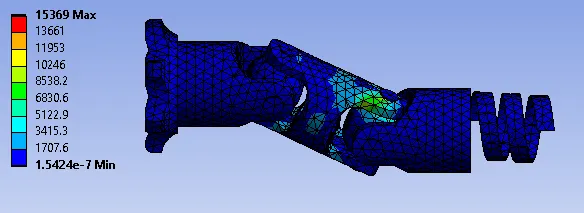
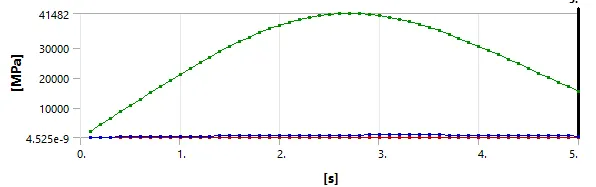
The maximum equivalent stress experienced is at the spring joint and it is 15369MPa at the end of the simulation. Over time the maximum value is 41482 MPa.
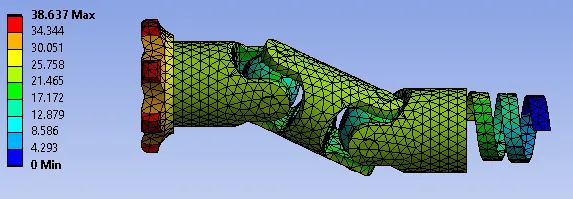
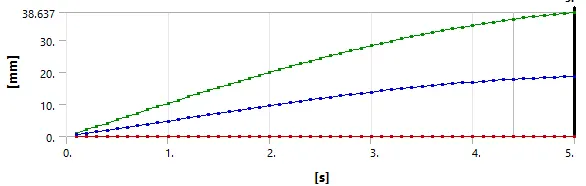
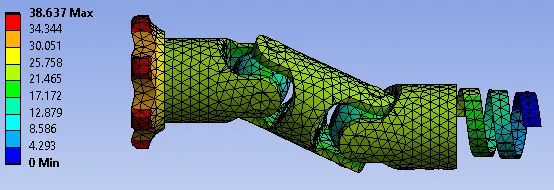
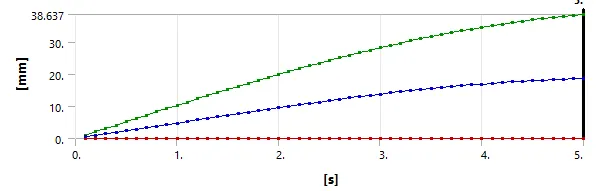
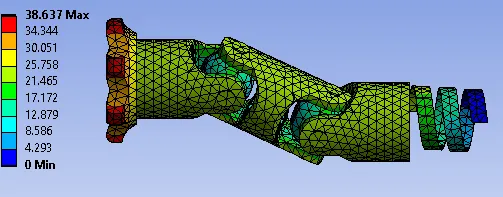
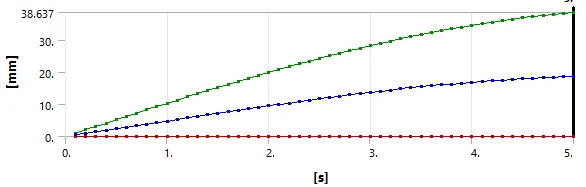
The maximum deformation is 38.637 mm at the end of the rotating joint and 0 at the fixed end.
Case 2: Stainless Steel
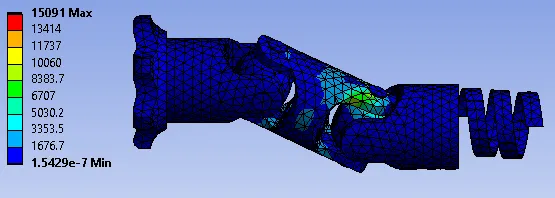
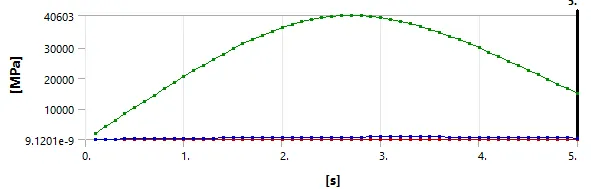
The maximum equivalent stress experienced is at the spring joint and it is 15091MPa at the end of the simulation. Over time the maximum value is 40603 MPa. Here the stress experienced by the joint is less compared to the structural steel.
The deformation over time is the same.
Case 3: Titanium Alloy
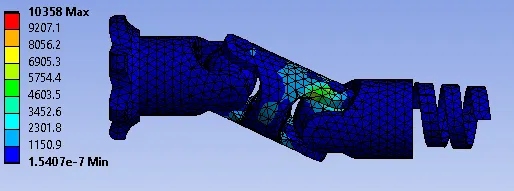
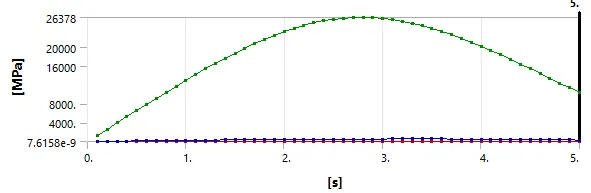
The maximum equivalent stress experienced is at the spring joint and it is 10358MPa at the end of the simulation. Over time the maximum value is 26378 MPa. Here the stress experienced by the joint is less compared to the stainless steel.
The deformation is the same.
Conclusion: The simulation of a universal joint made with three different materials was done successfully. With structural steel experiencing the maximum stress and titanium experiencing the minimum stress.