Perform Mass Scaling to reduce the Runtime and ensuring stability of mass scaling factor using LS-Dyna
AIM: To reduce the runtime of a model and ensure the stability of mass scaling.
ABSTRACT: In this assignment, we are going to perform the mass scaling by adjusting the parameter in TIMESTEP card mainly DT2MS and TSSFAC value so as to reduce the estimated runtime. The hard limit for mass-scaling is 8%. So to achieve the optimized value of DT2ms and TSSFAC we will do trials and check for the estimated time. Also, we need to run the same model using the implicit solver and compare the run results.
THEORY:
Mass Scaling
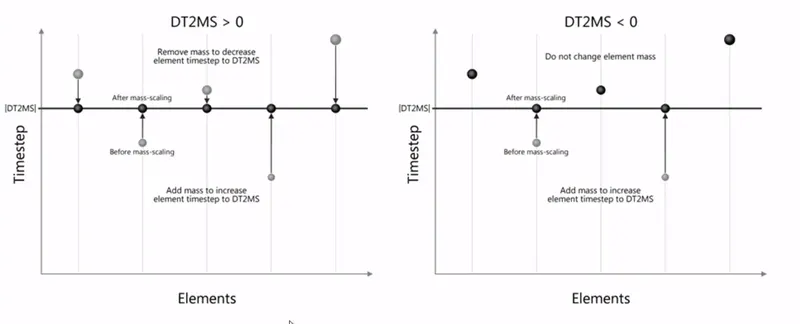
Mass scaling refers to the technique whereby nonphysical mass is added to a structure in order to achieve a larger explicit time step.
Anytime you add nonphysical mass to increase the timestep in a dynamic analysis, you affect the results (think of f=m.a). Sometimes the effect is insignificant and in those cases adding nonphysical mass is justifiable. Examples of such cases may include the addition of mass to just a few small elements in a noncritical area or quasi-static simulations where the velocity is low and the kinetic energy is very small relative to the peak internal energy.
`trianglet_c=l/c=l/(root2(E/rho)` so if mass added then density (`rho`) increases therefore the time step also increases.
This is up to the analyst to set the limit for the % of mass scaling effect that is acceptable.
DT2MS- It is the time step for a mass scaled solution.
TSSFAC- It is the scale factor to determine the computed time step.[0.9-0.8]
`|DT2MS*TSSFAC= CONSTANT|`
When DT2MS is input as a negative value, mass is added only to those elements whose timestep would otherwise be less than DT2MS. By adding mass to these elements, their timestep becomes equal to DT2MS. An infinite number of combinations of TSSFAC and DT2MS will give the same product, i.e., timestep but the added mass will be different for each of those combinations.
PROCEDURE:
1) Once we import the file we can directly go to the keyword manager >control card>timestep
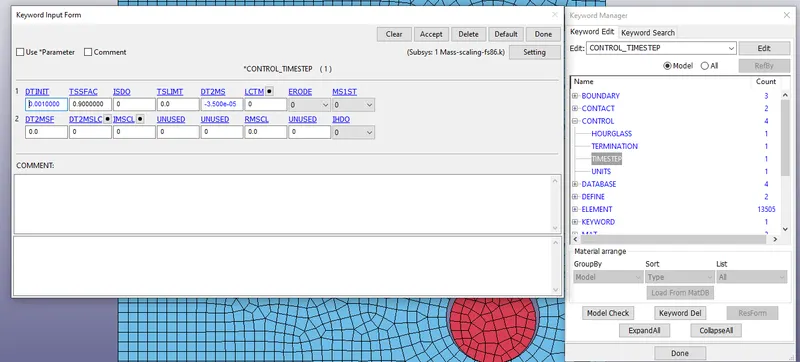
Without mass scaling
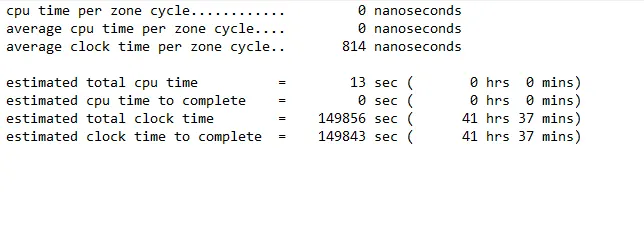
Msg file:
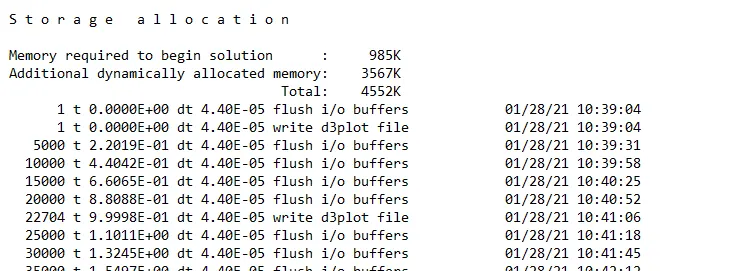
as we can see the default time step value is 4.40E-05 which is taking 41 hr 37min
Case1: Explicit Approach
2) Now we will set the TSSFAC value as 0.9 and try to change the DT2MS value as shown in the table below. (Ensuring the mass added % is below 8%)
As without any timestep card, the default dt value was 4.4E-05 but here 1st we will start from 3.5E-05 then we will see the runtime which is definitely going to increase.
DT2MS= -3.5000E-5
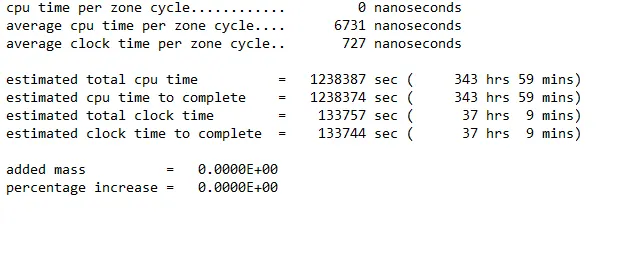
DT2MS= -4.000E-5
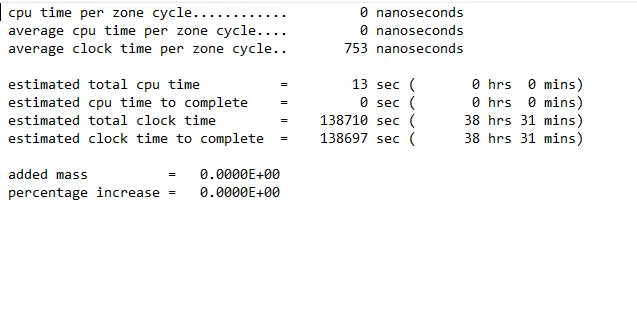
DT2MS= -5.0000E-5
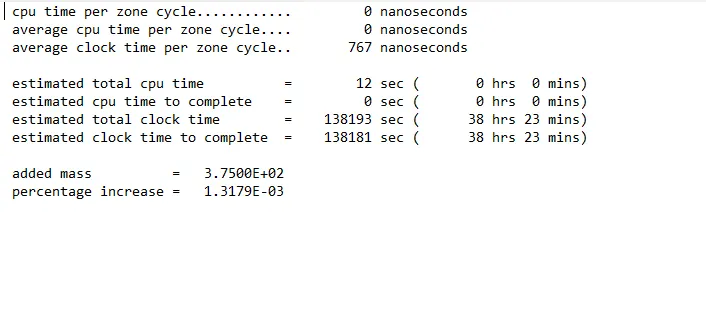
DT2MS= -6.0000E-5
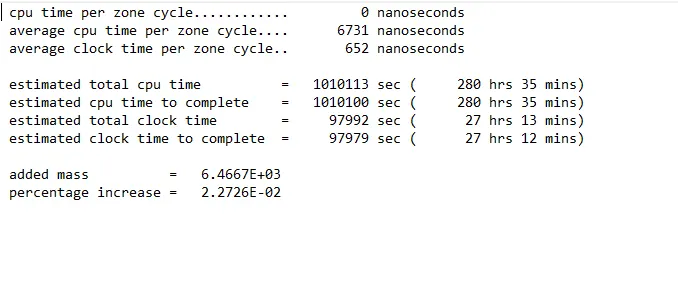
DT2MS= -7.0000E-5
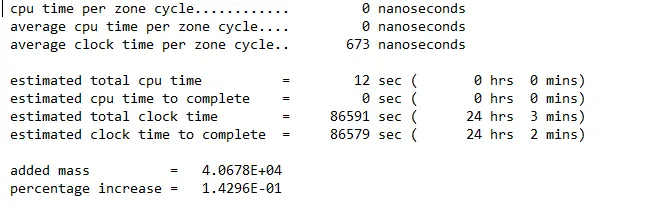
DT2MS=-8.0000E-5
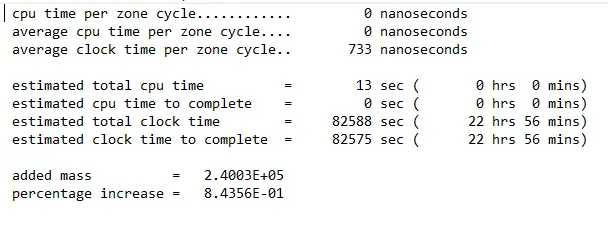
DT2MS=1.0000E-4
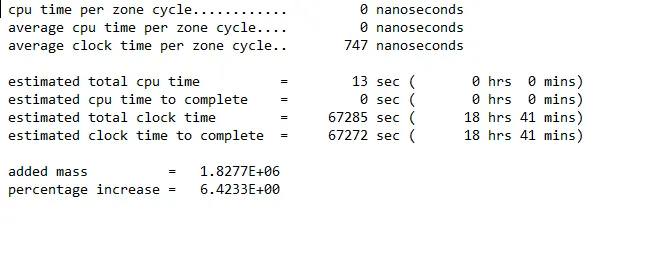
DT2MS=-1.0250E-4
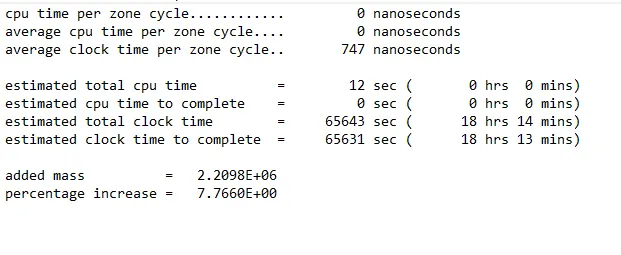
3) Now we will set the TSSFAC value as 0.8 and try to change the DT2MS value as shown in the table below. (Ensuring the mass added % is below 8%)
DT2MS= -3.5000E-5
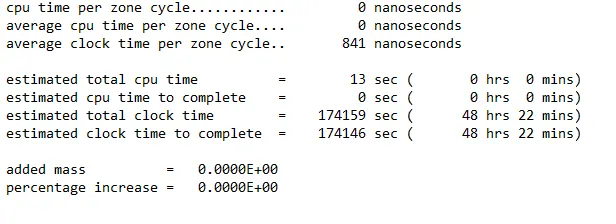
DT2MS= -4.000E-5
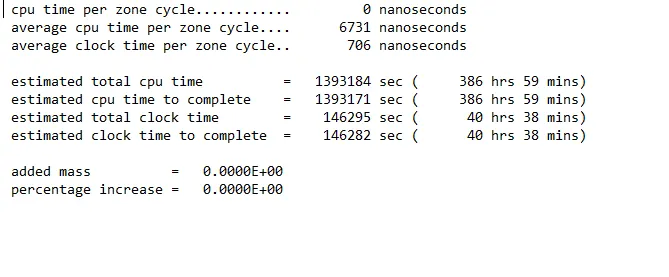
DT2MS= -5.0000E-5
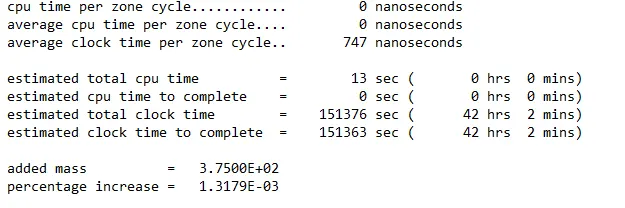
DT2MS= -6.0000E-5
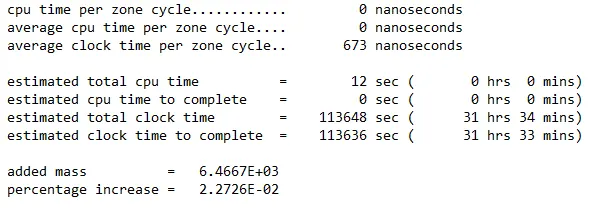
DT2MS= -7.0000E-5
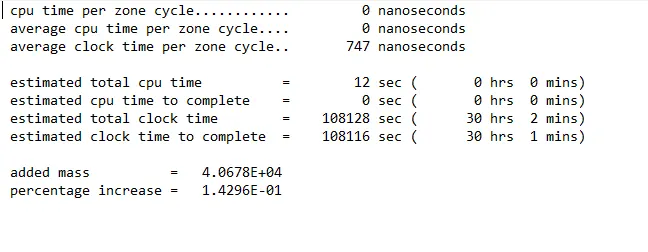
DT2MS=-8.0000E-5
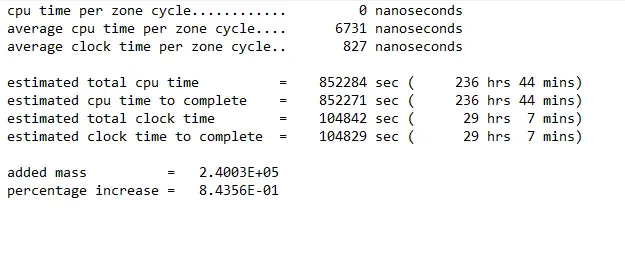
DT2MS=1.0000E-4
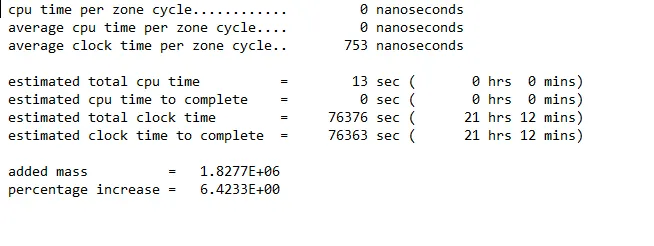
DT2MS=-1.0250E-4
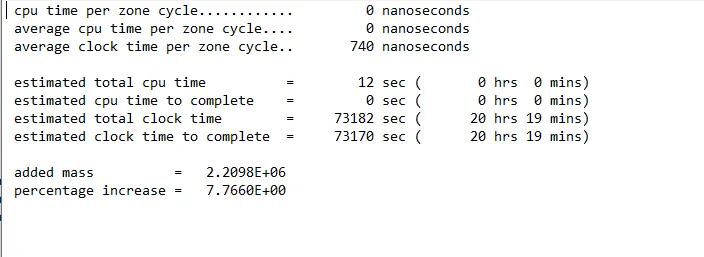
RESULTS:
Comparison Table
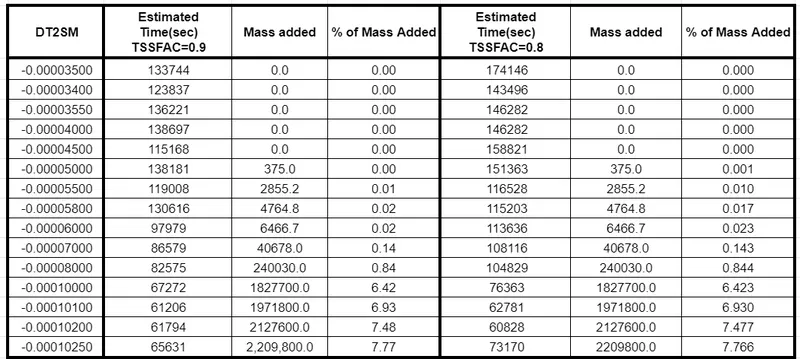
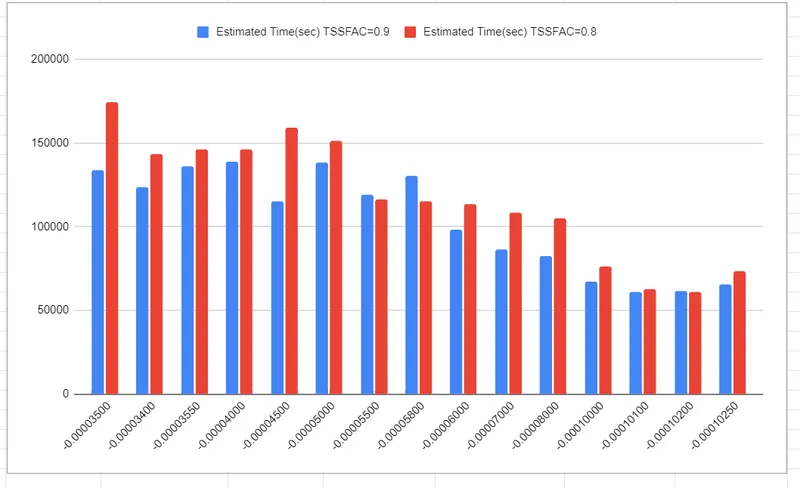
As we can see that TSSFAC does not affect the mass scaling amount but the DT2MS affects thus we can say that at DT2MS = -1.01E-04 and TFFFAC 0.9 we get the least runtime estimated i.e 61206 sec(17.001 hr) with % of mass added as 6.93% while with TSSFAC =0.8 the DT2MS =-1.02E-04 the estimated runtime is equal to 60828sec (16.8 hr).
Comparison chart Estimated Runtime for TSSFAC(0.9)and TSSFAC(0.8) with varying DT2MS values.
Case2: Implicit Approach
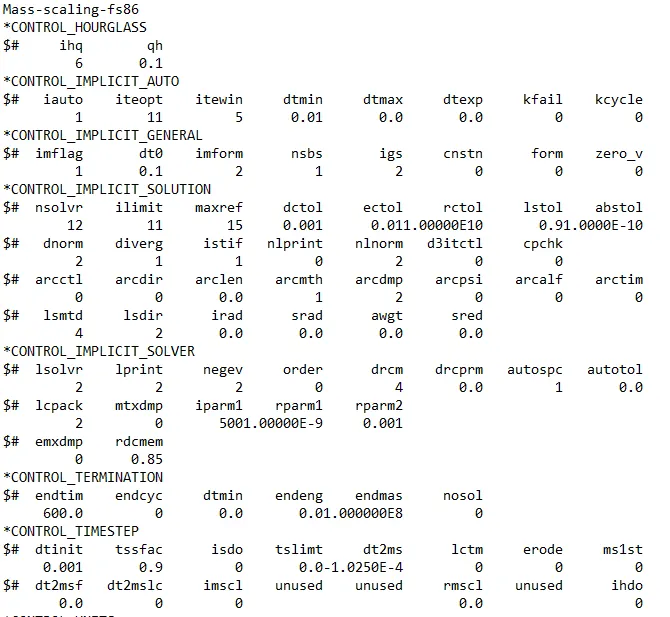
1) DT2MS=-3.5000E-5 , TSSFAC=0.9 & DT0= 0.1
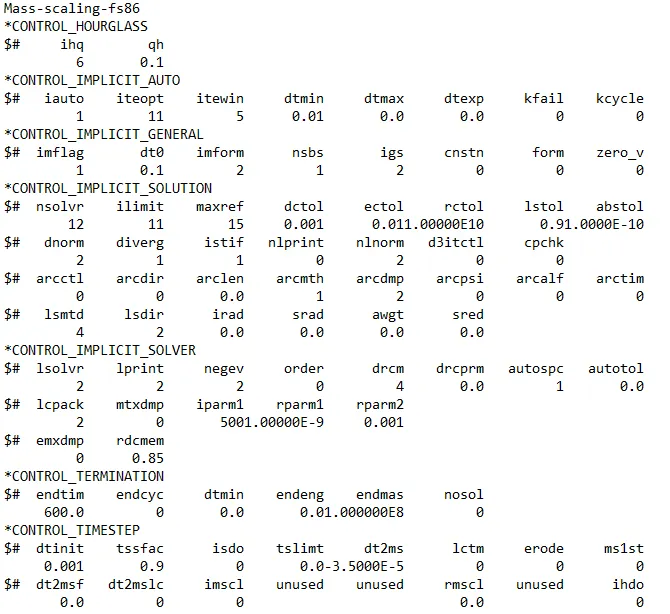
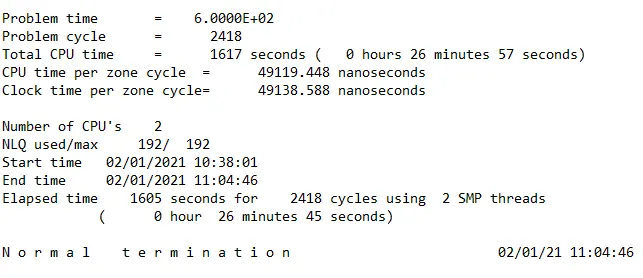
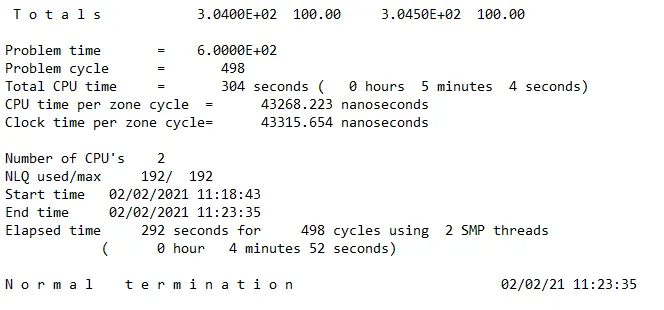
RUNTIME= 26Min 45 Sec
2) DT2MS=-1.025E-04 , TSSFAC= 0.9 & DT0= 0.1
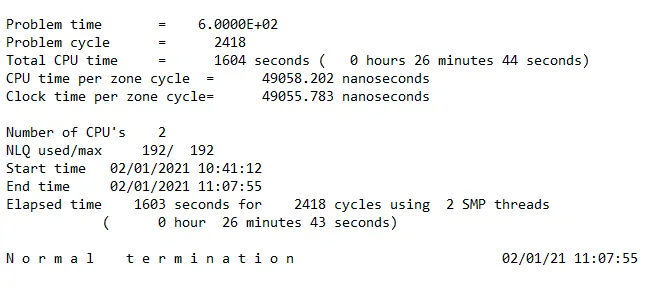
RUNTIME= 26Min 43 Sec
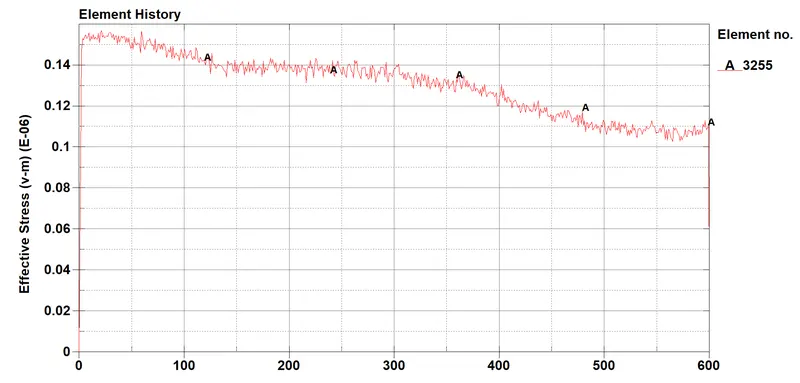
V-M stress plot for dt= 0.1
As we can see through both the case of implicit approach the run time is the same. As the implicit approach is independent of timestep and is unconditionally stable. We can further reduce the runtime by increasing the dt value but while making this we need to see the effect(post results) of this is insignificant.
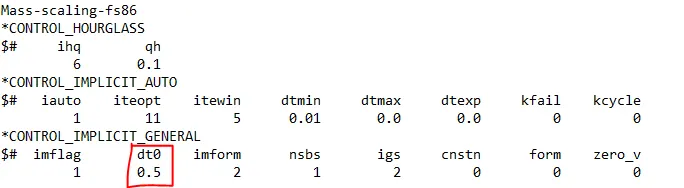
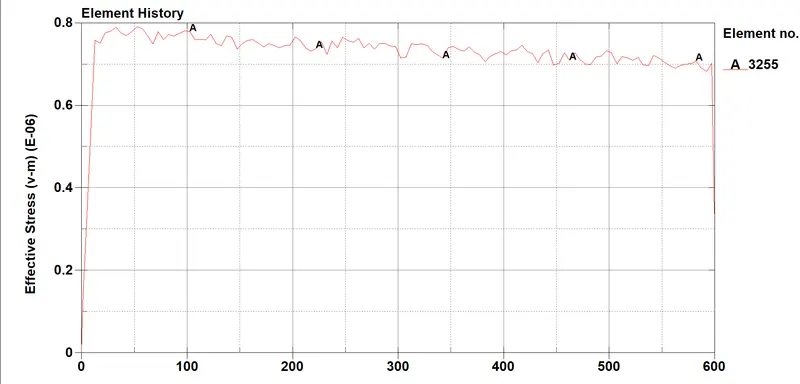
V-M stress plot for dt= 0.5
As we can see that for element no. 3255 the V-M stress value for dt 0.5 and 0.1 there is much significant change, so it is advisable to check the post results effect while changing the time step value. The solution will converge but results may be misleading.
CONCLUSION:
- For explicit approach, Timestep card parameters that affecting are DT2MS and TSSFAC to reduce the run time.
- TSSFAC is a scale factor that has no effect on the mass addition value.
- For implicit analysis, the time step card parameter has no effect on the run time. i.e time step independent.
- During the implicit analysis, the Timestep should be changed in such a way that it shown an insignificant change in the post results.