Week - 8 Mass Scaling
Aim:
1)To use mass scaling to reduce the runtime of a model and ensure the stability of model.
2)To observe the effect of DT2MS on CPU solving time also limiting the mass scaling to only 8%.
3)To observe the effect of TSSFAC on CPU solving time for solution.
4)To run the model with implicit solver and compare the results with explicit one.
Mass scaling:
In explicit method, the time step usually is very small to maintain numerical stability. However, small step size prevents this method from being useful for routine analysis work. To reduce the CPU cost and improve the performance, mass scaling is often used to increase the time step size in each cycle.
Procedure:
(I)Problem Setup and solution:
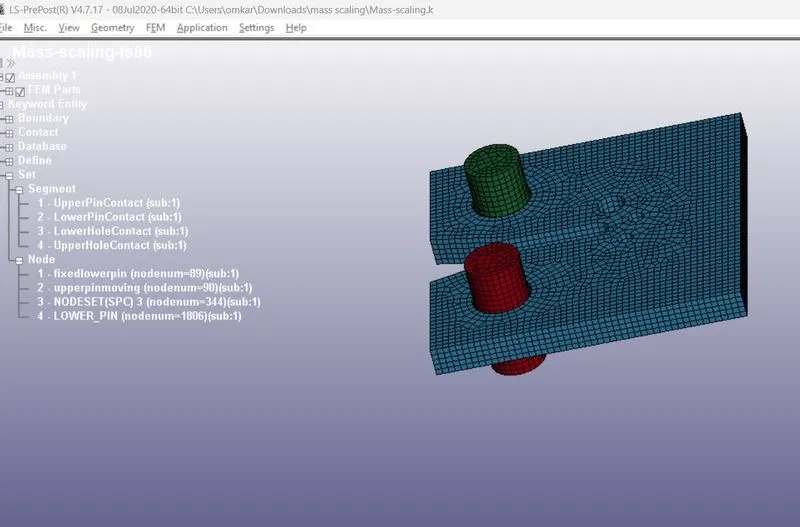
Open the given model in LS-Dyna as shown above.
1)Observe the initial starting timestep for the model.
For the given model the timestep is seen as 4.40e-05 sec.Initially no mass scaling is there for the first run.The percentage increase in mass will be zero.
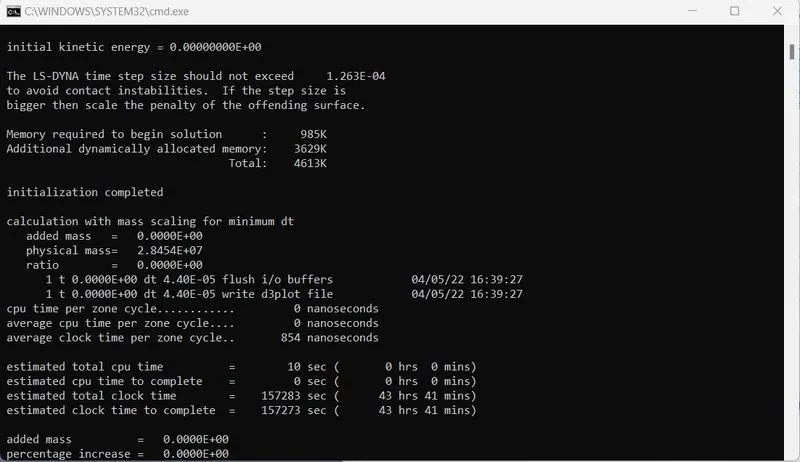
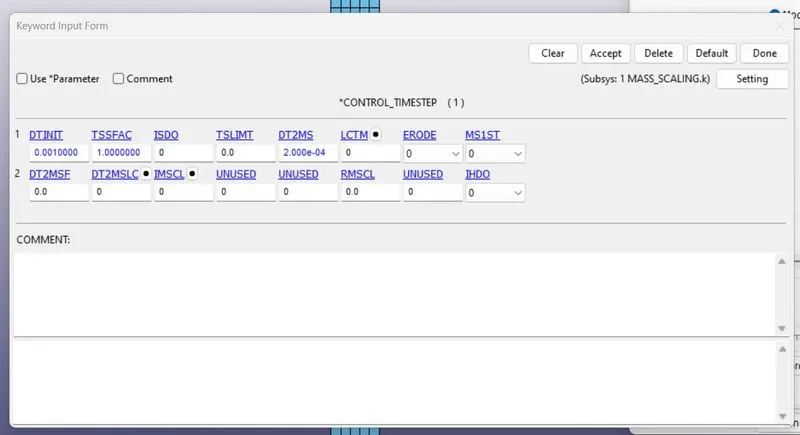
2)Mass scaling with CONTROL_TIMESTEP
Open the CONTROL_TIMESTEP card under CONTROL option.Change the DT2MS value to 2e-04 sec also enter 1 as TSSFAC value and rerun the case.
3)Trial and error methodology to achieve optimization in mass scaling and reduced solving time.
The percentage increase in mass during second run seen 37.5% which is out of limit prescribed 8% for the solution.
This percentage increase in the mass can be controlled by changing the DT2MS value but not less than the initial time step i.e.4.40e-05.Continue the reducing process until the mass gets bellow the targeted value of 8%.Hence the CPU solving time will get reduced automatically copmared to that without mass scaling.
(II)Effect of TSSFAC i.e. Time step scale factor
After achieving the reduction in mass under 8% the DT2MS value kept constant.Now change the TSSFAC value to see the effect on CPU time.
(III)Running the model with implicit solver
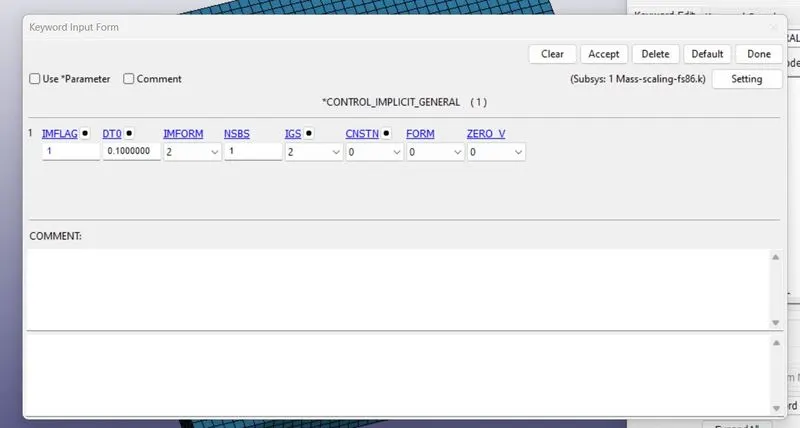
1)Implicit general card
After increasing the timestep to start the implicit analysis implicit general card is added.
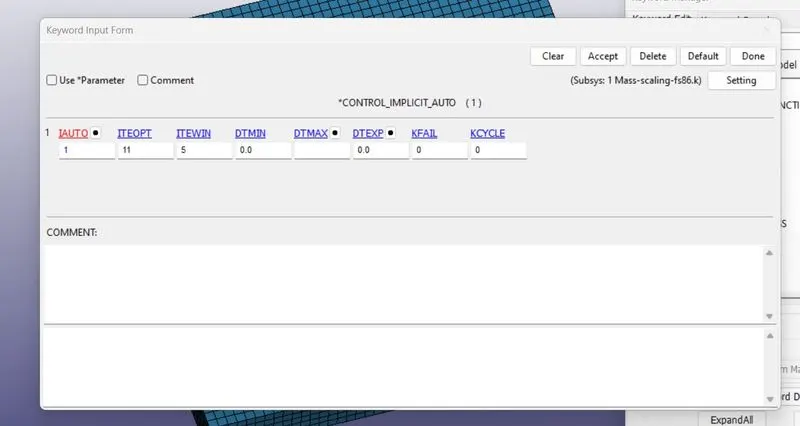
2)Add Implicit Auto card
It does the automatic adjustment of timestep.
 ..
..
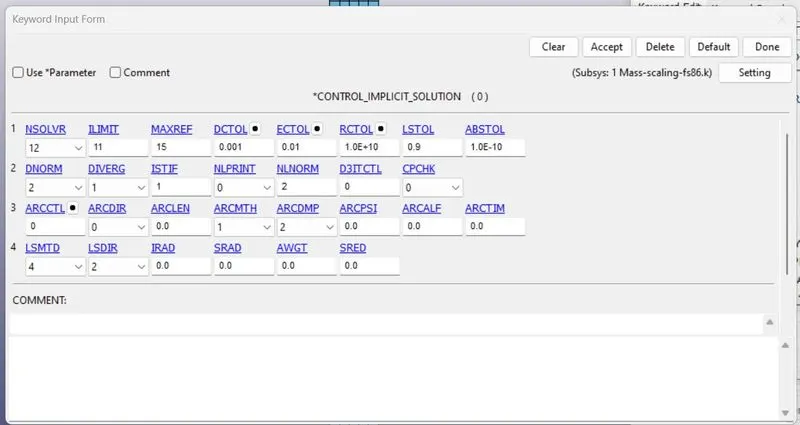
3)Implicit solution card
It controls the no of iterations for timesteps also can be defined the tolerance limit for diplacement convergence.
IV)Assign the boundary conditions
1)SPC set for lower pin-set to all DOF constrained.
2)SPC set for upper pin-except translation in z direction.
3)Create prescribed motion set to define translation in z direction.
V)All the other cards are kept unchaged.
Results:
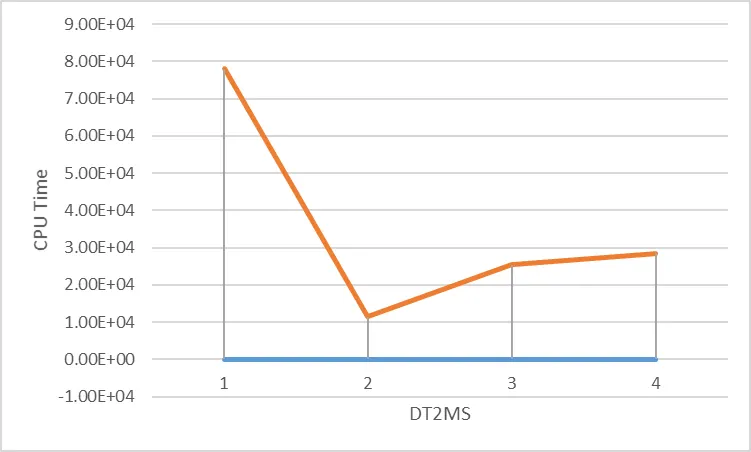
1)CPU time vs DT2MS
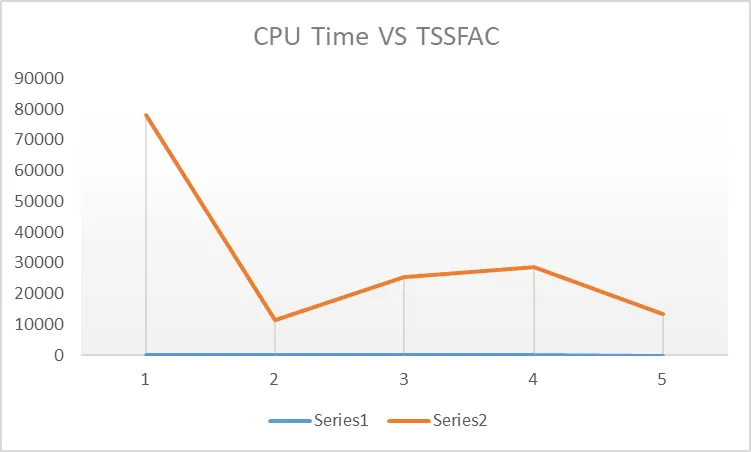
2)CPU time Vs TSSFAC
Conclusion:
1)DT2MS value of 0.9 and TSSFAC of -2.5e-04 will give the best optimized solution in terms of CPU timestep.
2)At this value the mass scaling of 8% also achieved.
3)The time step analysis done for both implicit and explicit analysis and comparison study done.