Week 8: Literature review - RANS derivation and analysis
Week 8:
RANS Derivation and Analysis
Aim:
Apply Reynold's decomposition to the NS equations and come up with the expression for Reynold's stress.
Introduction:
Reynold’s stress:
The Reynolds stress is the component of the Total stress tensor in a fluid obtained from the averaging operation over the Navier strokes equation to account for turbulent fluctuations in fluid momentum.
Reynold’s decomposition:
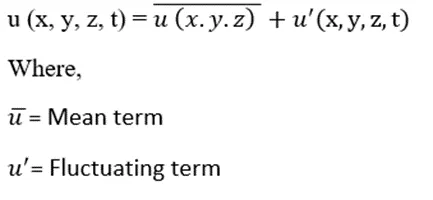
Reynold’s decomposition decomposes flow variables into mean and fluctuating terms where mean term is function of space and fluctuating term is function of space and time.
What is turbulent viscosity? How is it different from molecular viscosity?
Turbulent viscosity:
Turbulent viscosity or eddy viscosity is the turbulent transfer of momentum by eddies giving rise to an internal fluid friction, in a manner analogous to the action of molecular viscosity in laminar flow, but taking place on a much larger scale.
In laminar flow the mechanism of momentum transport is diffusion due to molecular motion and the resulting molecular collisions, the same as for mass transport and for heat conduction. In a turbulent flow, the mechanism of transverse momentum transport is dominated by bulk mixing at scales mostly well above the mean free path. So the effective viscosity in a region such as a turbulent boundary layer is much higher than in laminar flow. The more effective momentum transport due to the mixing in the turbulent boundary layer results in a thinner boundary layer between any wall in contact with the fluid and the free stream outside the boundary layer where the flow obeys potential flow laws.
Expression for Reynold's stress:
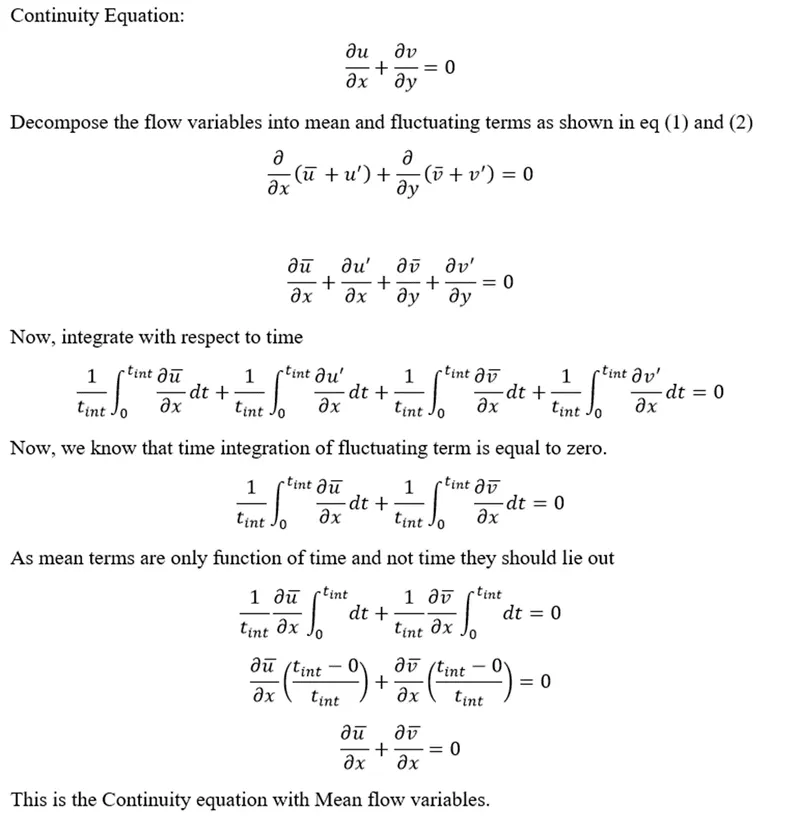
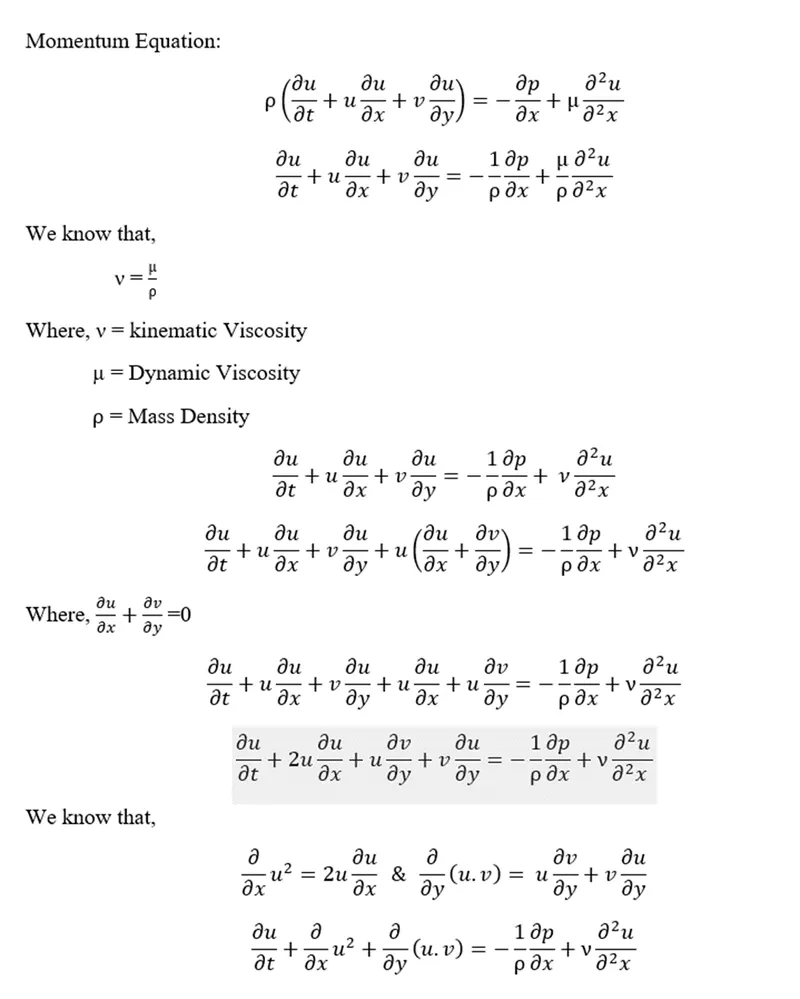
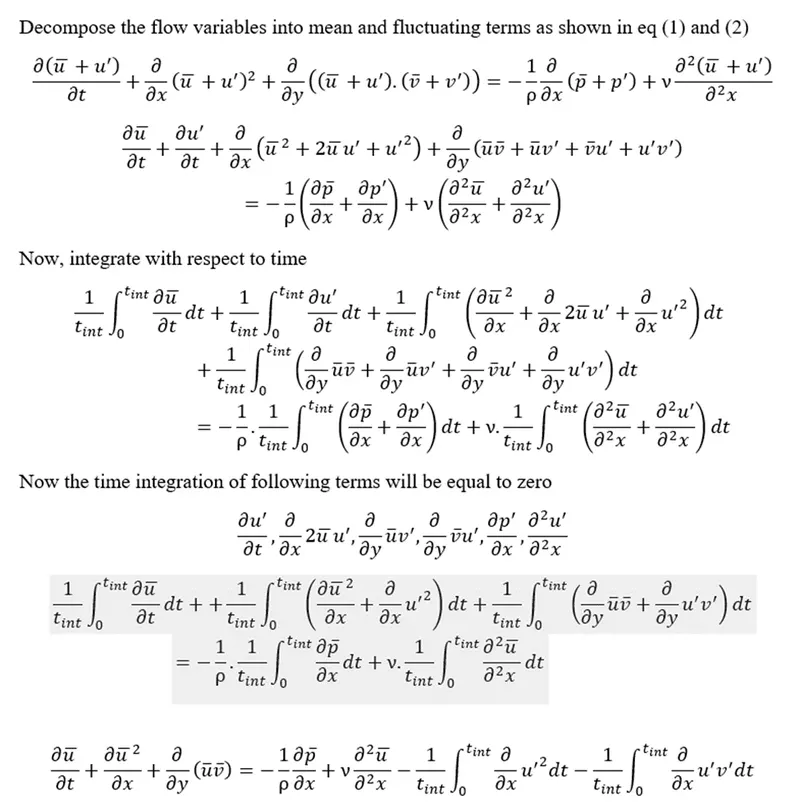
Now we know that time integration of fluctuating term is zero but square of fluctuating term is not. But the thickness of boundary layer is very small as compared to length of plate and gradient of velocity is strong in y direction and weak in x direction so we can neglect the term
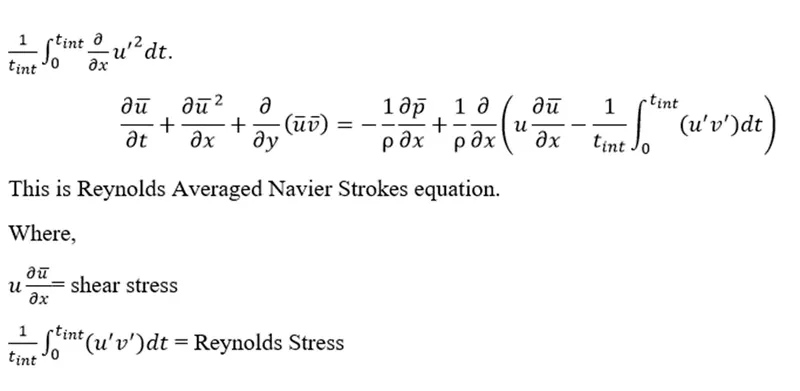
Reynolds Stress:
Reynolds stress results from the turbulent transport of momentum. It can be defined as the component of the total stress tensor in a fluid obtained from the averaging operation over the Navier-Stokes equations to account for turbulent fluctuations in fluid momentum.
Turbulence and Molecular viscosity:
Turbulent viscosity is also known as eddy viscosity. It is due to the velocity fluctuations in a turbulent flow at high Reynolds number. It depends on the flow it is not a fluid property. However, molecular viscosity is a fluid property. Molecular viscosity is the same as dynamic viscosity. Molecular viscosity depends on the type of fluid and the ambient pressure and temperature conditions.