ans
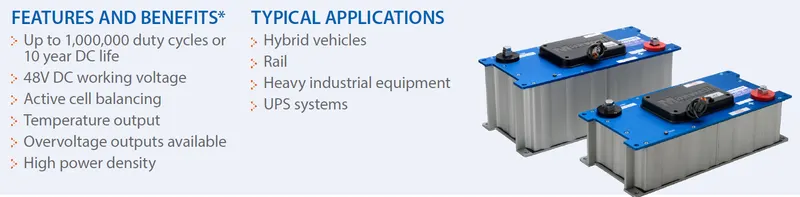
An ultracapacitor is also called a Supercapacitor with a capacitance value that is higher than the normal capacitor. It ranges from Milli farads to Farads. It charges and discharges faster when compared with batteries. It stores 10 to 100 times more energy when compared with electrolytic capacitors.

These are the Electrostatic Double layered Capacitors. Mainly used in the energy storage applications like Automobiles, elevators, cranes etcl., for Regenerative braking.
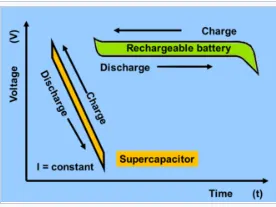
Fig indicates voltage the behavior of Supercapacitors and batteries with respect to time.
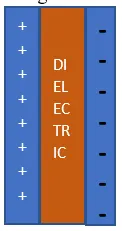
Ultracapacitor has two charged plates which are separated with a dielectric. The two charged plates are positive and negative.
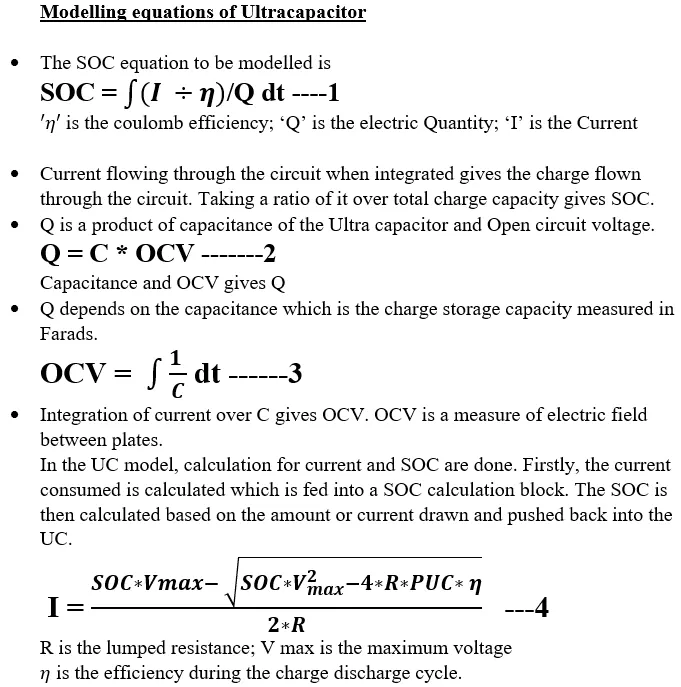
Modeling of Ultracapacitor:
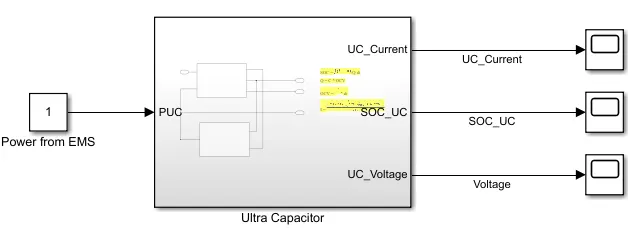
Ultracapacitor block is created with the above-defined equations.

Current and Voltage block, SOC block is created with the set of equations.
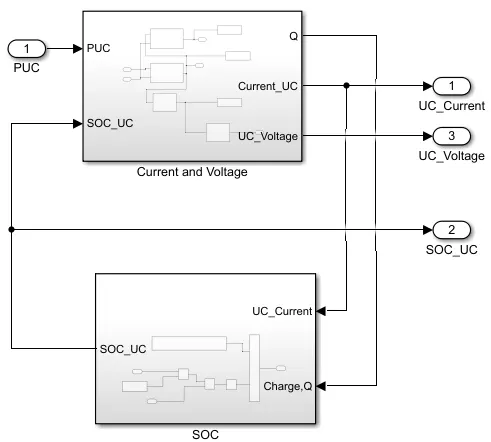
Current and Voltage Block:
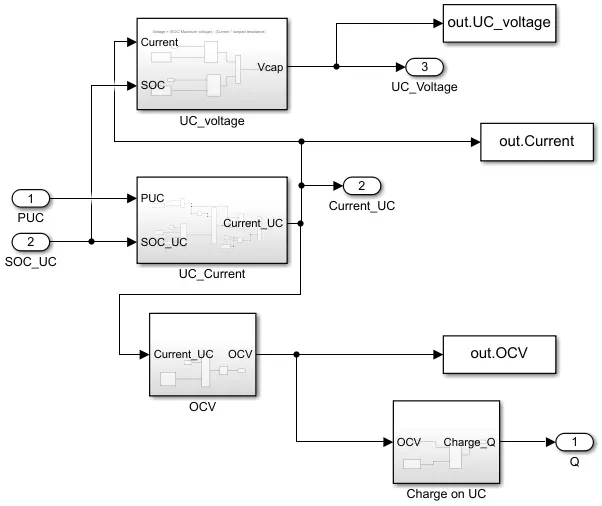
This block is consisting of the subsystems related to voltage, current of Ultracapacitor, Open Circuit Voltage, and Charge on Ultracapacitor subsystems.

Ultracapacitor subsystem:
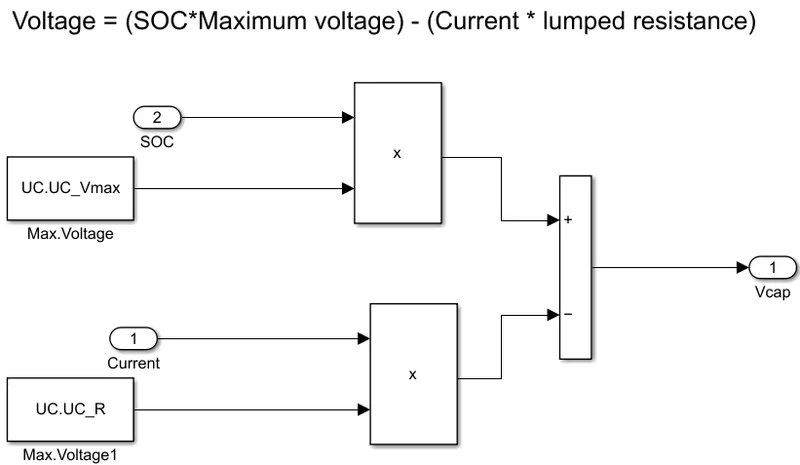
The voltage equation given is implemented in the above subsystem with a Voltage maximum value of Ultracapacitor and lumped resistance.

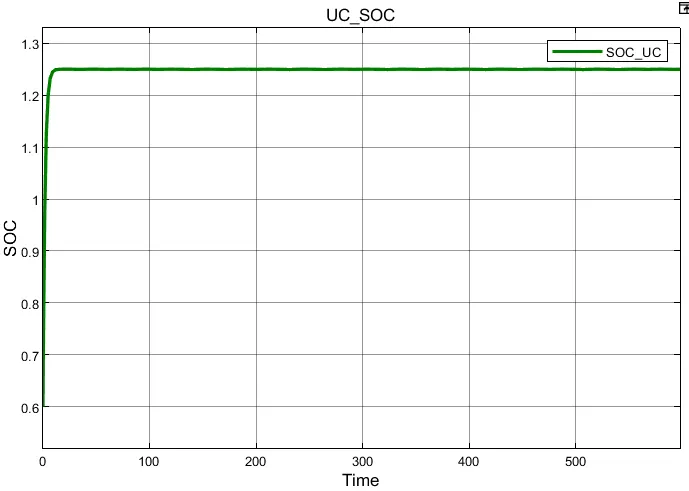
SOC and Currents are carried forward from the other subsystems.

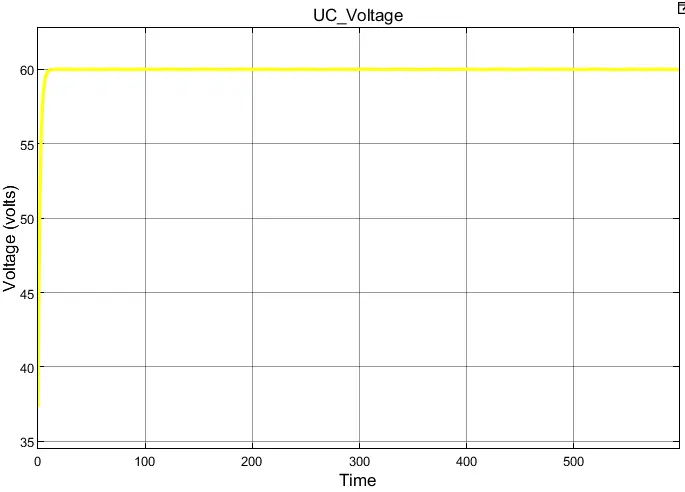
Constants of the maximum voltage of the ultracapacitor and lumped resistance values are taken as 48V and 0.01 ohms respectively.

The capacitor voltage is captured in the workspace.

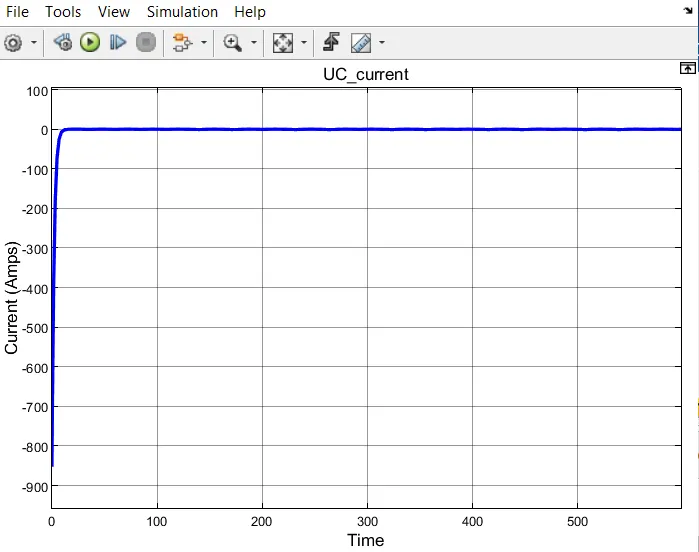
Ultracapacitor Current:
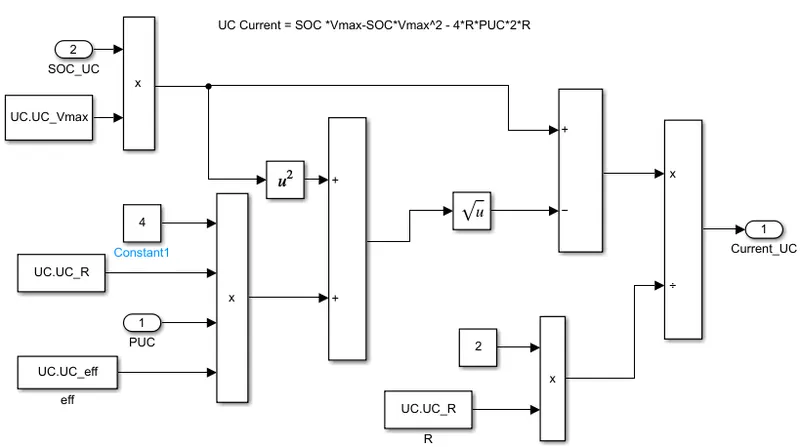
Reference constants of efficiency, R, and Vmax are considered as 90%, 0.01 ohms, and 48v respectively.

Open circuit Voltage Subsystem:
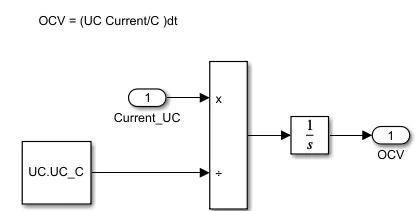
Open Circuit voltage of Ultracapacitor is the integral of (ultracapacitor current/Capacitance).

Ultracapacitance is the constant value considered as 83 Farads. Ultracapacitor current is the value collected from the ultracapacitor current subsystem.

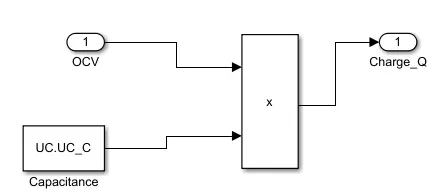
Charge on Ultracapacitor:

The charge is the product of max voltage and Ultracapacitor Capacitance.