Week 7 State of charge estimation
AIM:-
State of charge estimation.
OBJECTIVES:=-
1.Simulate the 3 test cases from harness dashboard and write a detailed report on the results
2.What is coulomb counting? Refer to the above model and explain how BMS implements coulomb counting for SOC estimation ?
Hint :(Download the file from the link and go to SOC estimation model-ECU block)
OBJECTIVE 1:-
Simulate the 3 test cases from harness dashboard and write a detailed report on the results
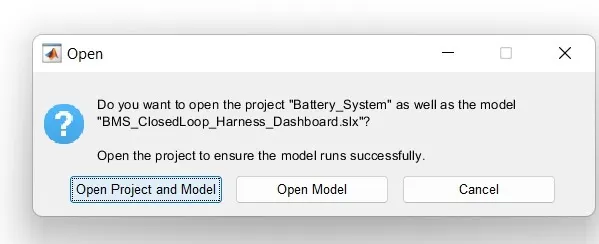
Now first we have to simulate the 3 test causes from the harness dashboard from the project filr which we diwnload with the referance link.
the file hasbeed located in the above sequence
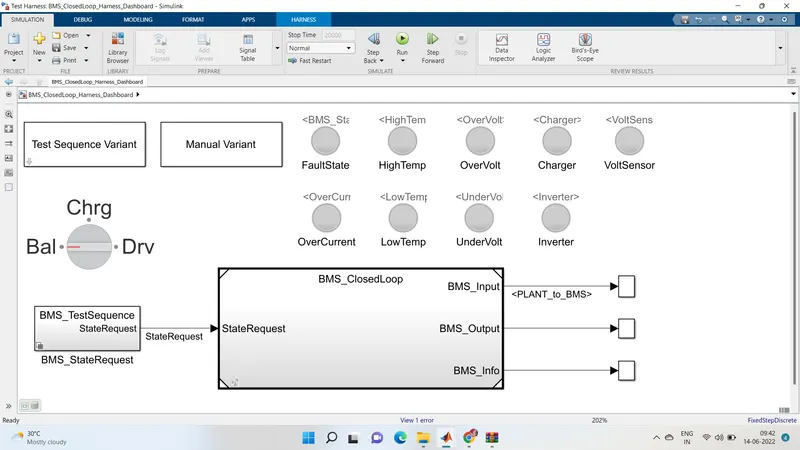
The battery model harness dashboard is represented below
1)first sequence module:-
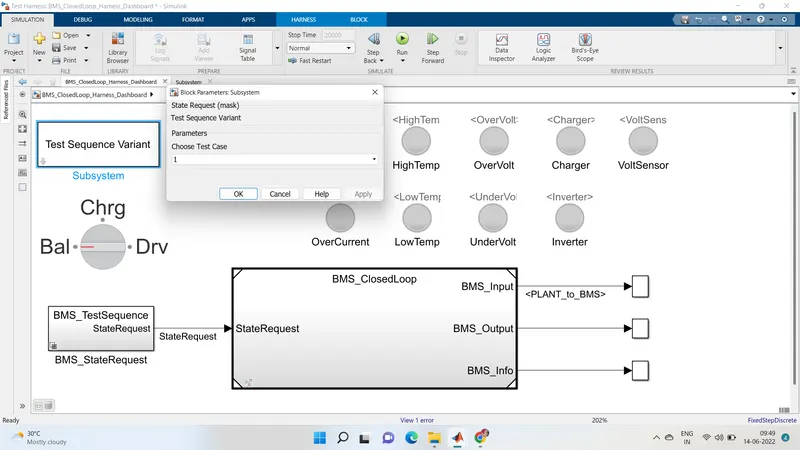
select the test sequence number from the susystem block.
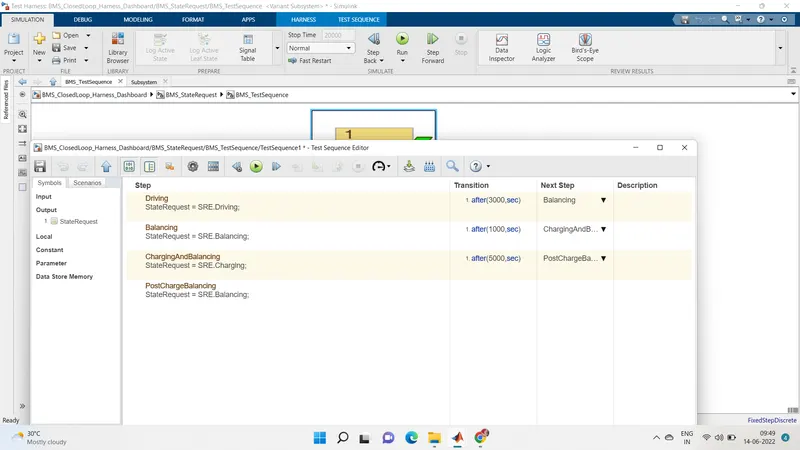
When simulation will start ,the model will be in driveng condition.after 3000 seconds it will be in standby mode and after 1000 seconds it will be in charging mode.now by running the simulation..
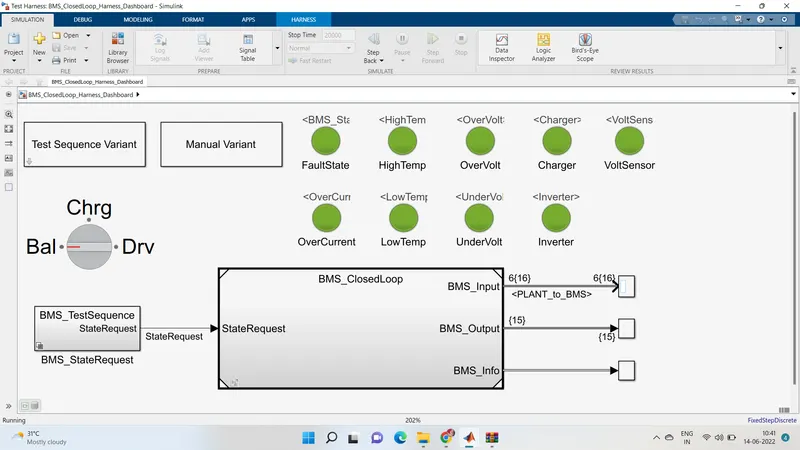
RESULTS:-
Here all the indicators are green.so we can see no errors in the model and we need to check the plot for this model and is shown below.
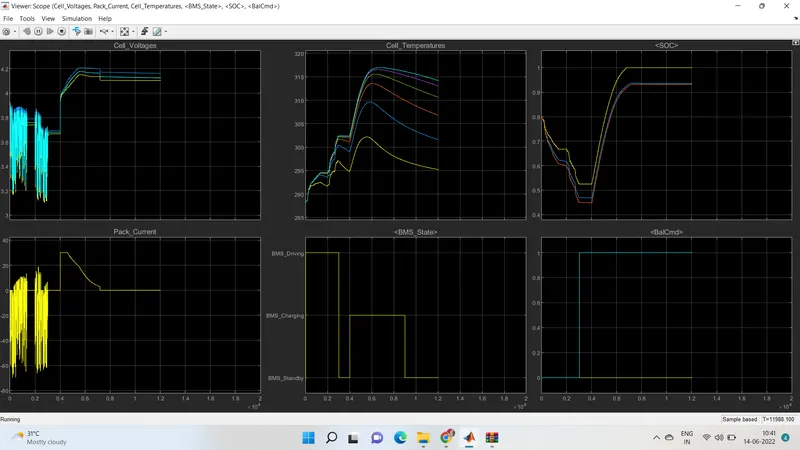
From the plot ,we can see the vehicle is intiall in a driving state,and changing was done to 90% after charging it reaches stand by mode.it can seen in the BMS state plot. battery voltage was increased to 4.2v while charging .the current plot shows the value of current suppiled to the vehicle while driving.SOC decresed upto 50% in driving condition and it was increased while charging.
2)second test sequence module:-
now change the sequence number from the subsystem to 2.
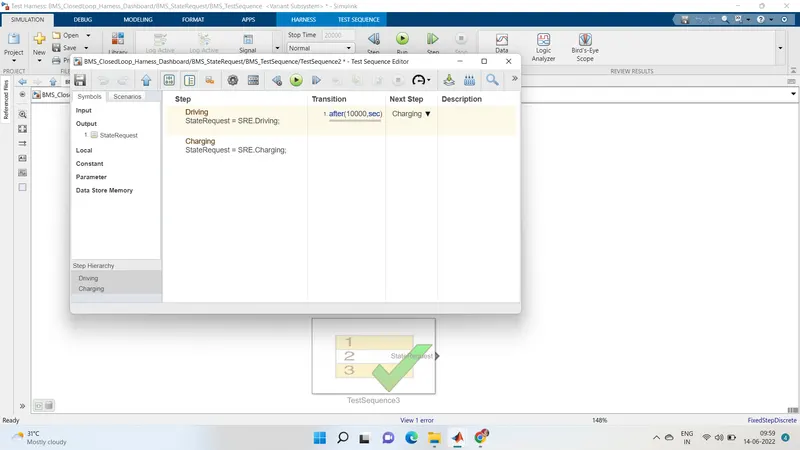
here the details of the test that will be performed in the simulation.the driving stage if from 0-5000 seconds and then charging.
RESULTS:-
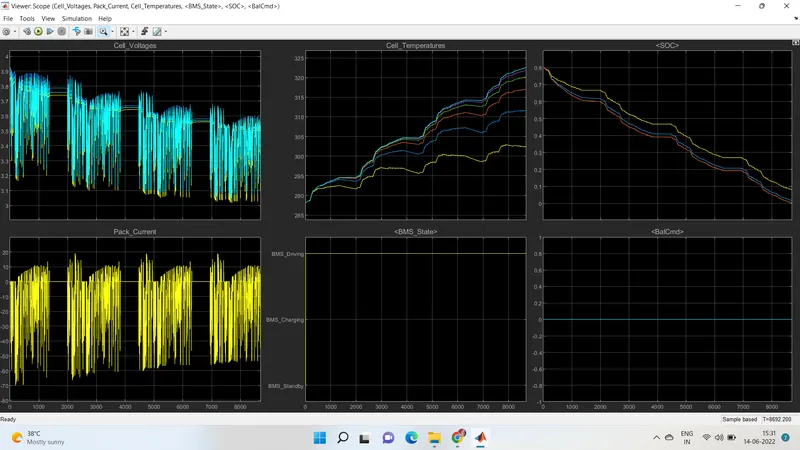
As the system is having faults the red light is coming up .the fault of the state and the high temperature have occured in the system.
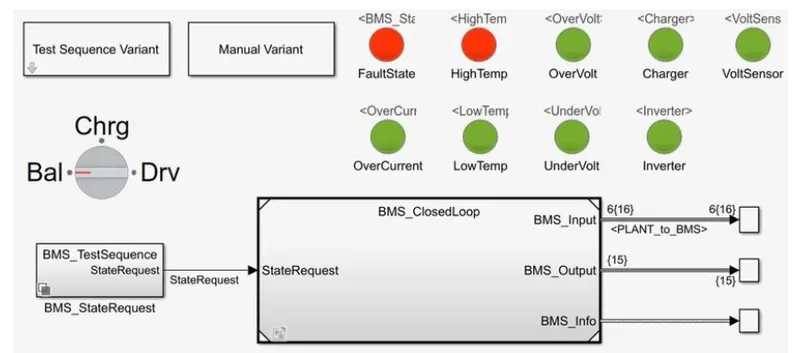
from the above graph ,a fault condition occured in the second case. from the model,we can see what type of faults are occured in the graoh, the system is not working since the faults arise.the SOC has stopped and the BMS state is showing a fault signal.
3)third test sequence:-
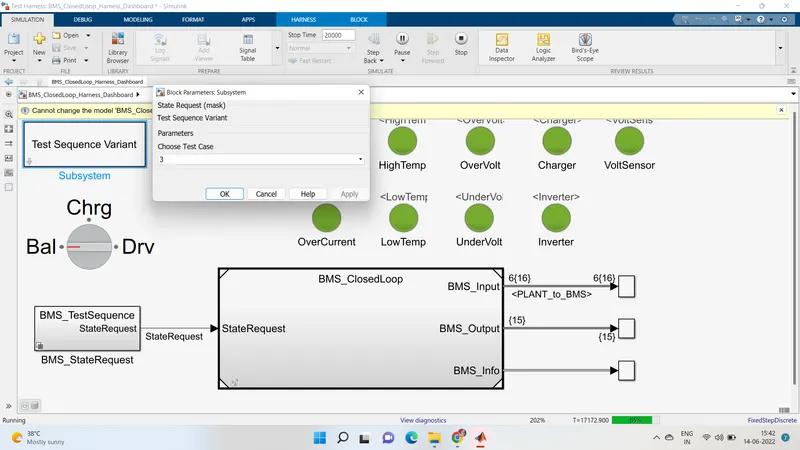
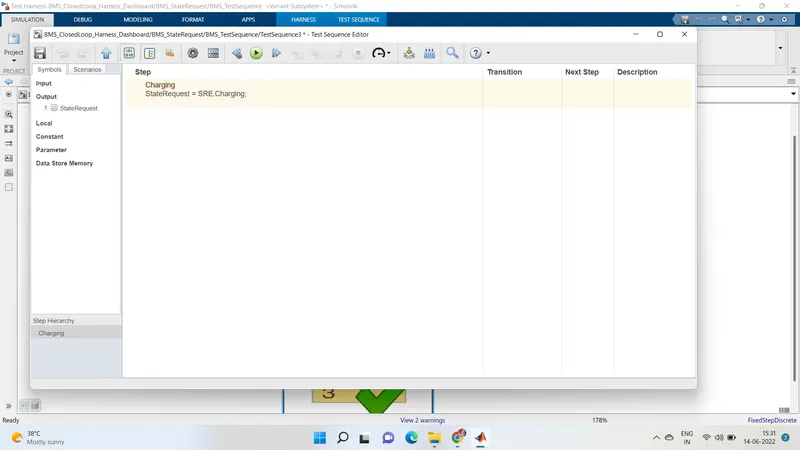
this test sequence had on;y one phase that is the charging phase for complete 20000 seconds.
RESULT:-
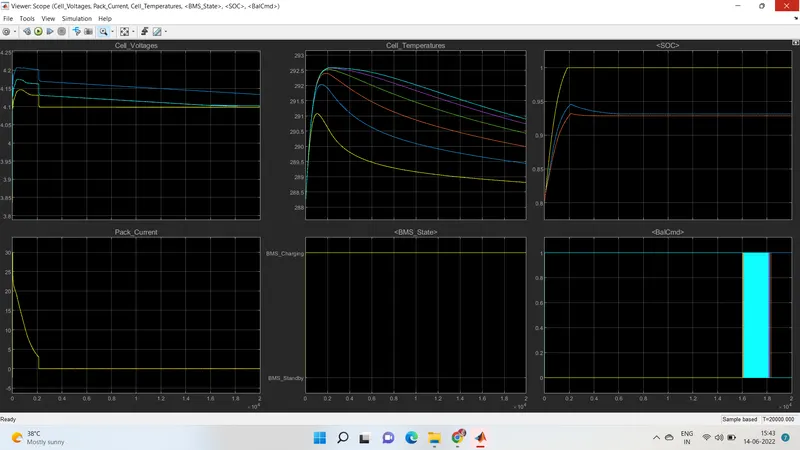
here we can see that the SOC had reached 100% when in the charing state and reamin same state for rest of the other time .So the temperature of the battery pack aslo reduced in the standing by mode
OBJECTIVE2:-
Aim : What is coulomb counting? Refer to the above model and explain how BMS implements coulomb counting for SOC estimation ?
coulomb counting:-
It is a method which measures the discharging current of a battery and integrates the discharging current over time in order to estimate SOC. So Coulomb counting method is done to estimate the which is
estimated from the discharging current and previously estimated SOC values.
SOC is calculated by the following equation
SCO(t) = SOC(t-1)+I(t)/Qn deltaT
But here there are several factors which affect the accuracy of the Colomb counting method including temperature battery history discharge current and cycle life.
Modified Coulomb Counting Method:-
So To improve the Coulomb counting method a new technique called the modified Coulomb counting method is proposed. This modified Coulomb counting method uses the corrected current to improve the accuracy of estimation.
The corrected current is the function of discharging current. There is a quadratic relationship between the corrected current and discharging current of the battery. So By the practice of experimental data the corrected current is calculated by the following form:-
Ic(t) = k2I(t)2 + k1I(t)+ ko
Where
k1& k2 ko are constant values
Here the experimental results shows the that the accuracy of the modified coulomb counting method including temperature battery history and discharge current and life cycle Now we can see that the project file donwloaded from the BMS system in the file shown below
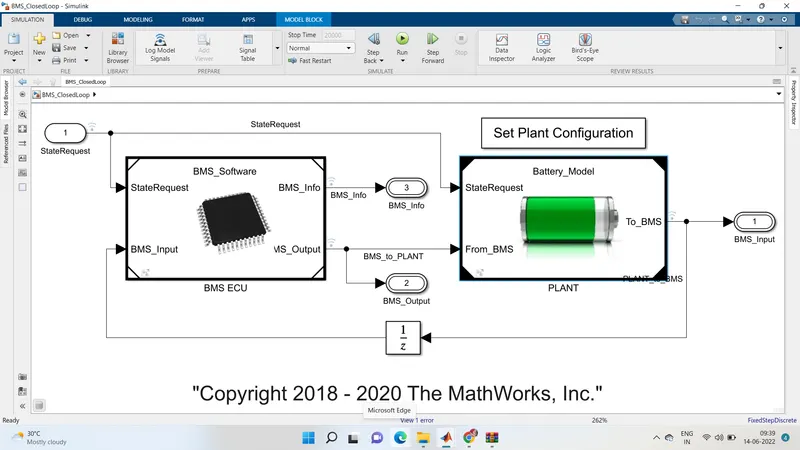
This block protects the reports the measurement from a battery pack
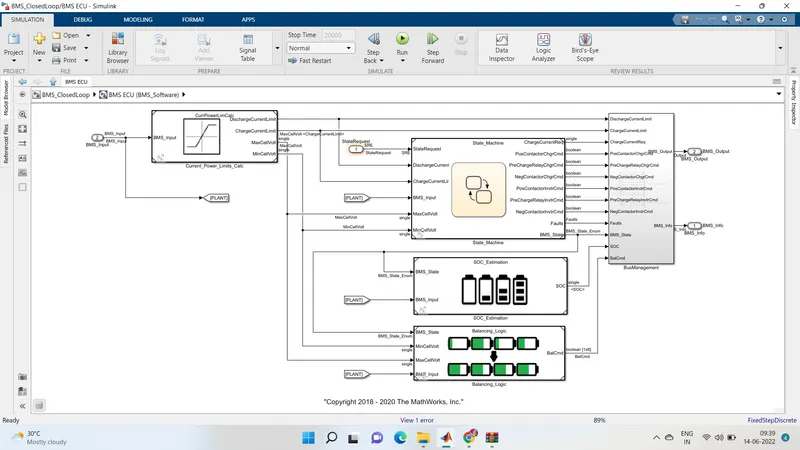
By clicking on the BMS ECU we get the subsystem
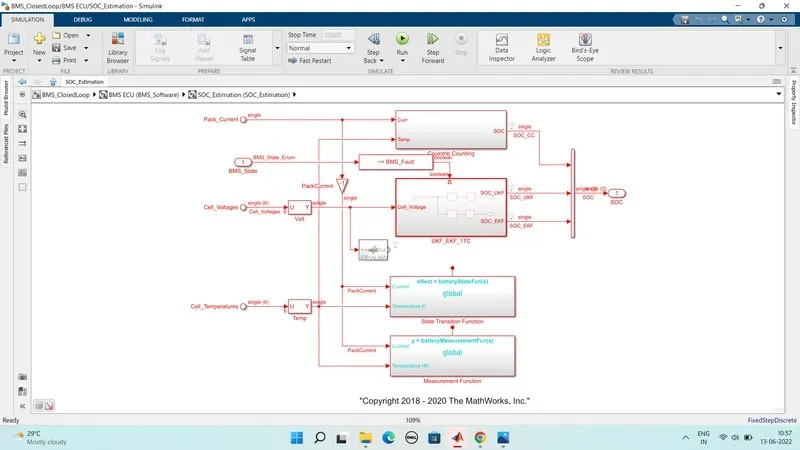
by cliccking on the SOC estimation block we get other subsyetm
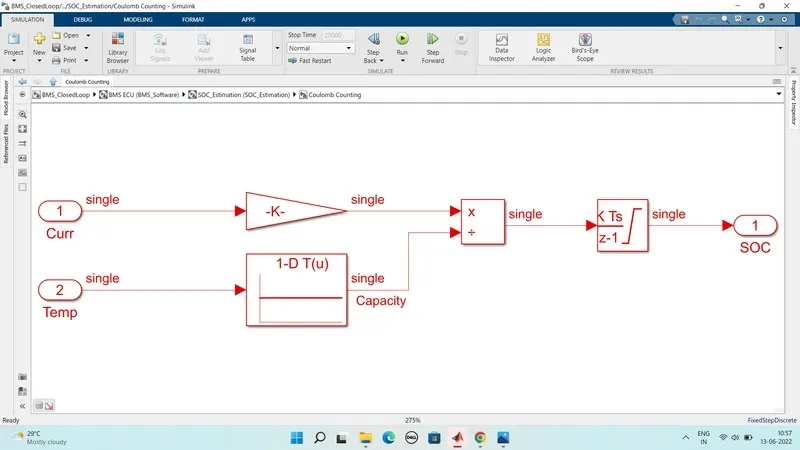
• On opening the coulomb control block we can see the calculation block.
• The advantage of the coulomb
counting method is its simplicity and low computational cost. Temperature and current from the
battery are given as inputs.
• The current signal is given to a gain block and temperature is given to capacity since it varies according to temperature.
• These inputs are given for integration where the current will be integrated with respect to time.
• This output is given to another block where it is divided by capacity.
• Hence the SOC is estimated
CONCLUSION
Here we have studied the complete battery management system and state of charge estimation. by the 3 test causes from the harness dashboard and its resukts has been verified, and the coulomb counting of BMS implement coulomb counting for SOC estimations has been verified.