PEDESTRAIN HEAD IMPACT TEST
AIM : To perform HEAD IMPACT simulation as a part of safety test using LS-DYNA.
OBJECTIVE :
- Case-1 : Normal meshed head impact on Rigid wall simulation.
- Case-2 : Pedestrain Head impact on Rigid wall simulation.
- Case-3 : Pedesrain Head impact on Meshed CAR HOOD.
INTRODUCTION :
As a part of safety features in the car, this PEDESTRAIN HEAD test is taken. the main purpose of this test is to reduce the Pedestrain head injury in case of accident by following the test result data.Usually the test is performed by considering the scenario of the accidental damage happens after the brakes apply, so the velocity is low in range 20-40 KMPH. HIC (Head Injury Criteria) is used to quote the impact of crash accident on the Pedestrain Head.
PROCEDURE :
the Unit system followed here is kg/mm/ms .
Case- 1 : Simple head impact on the rigid wall
A simple meshed head model provided as test body for impact test. the purpose of these test is to check for the simulation is properly happening or not.
the head file comes with shell elements, the test simulation is to be done with impact of meshed head with rigid wall.
the rigid wall is created using tool create entity> Rigidwall > planar. selecting the bottom node and top node for vector direction normal to Z- axis and placed in 20mm away in negative Z direction.
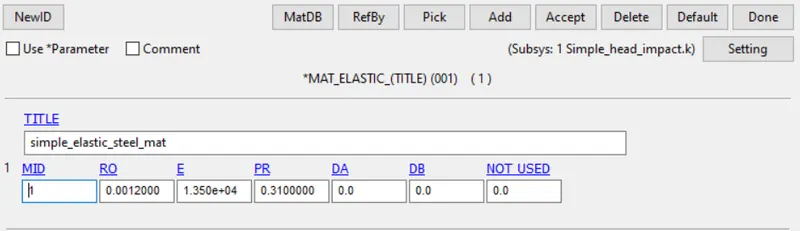
MATERIAL : simple elastic material card is used for this test, steel material properties are taken as input values.
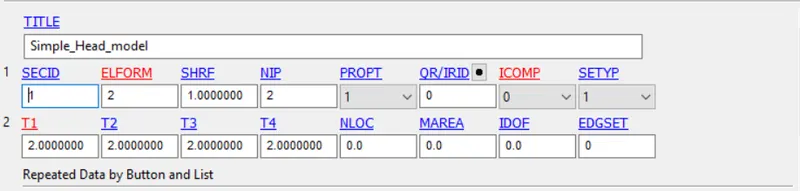
SECTION : as we already seen that the test model contains the shell elements, so the shell section is assigned to the model with the thickness of 2mm.
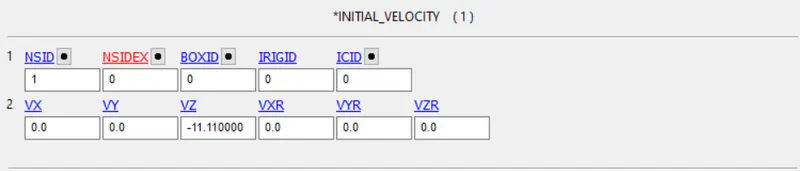
VELOCITY : we already discussed that the test is run under low velocity range, so here we are taking 40KMPH as our velocity, but as our units are taken in mm & ms the velocity is taken as 11.11mm/ms.
the model has to travel in negative Z direction to get impact with rigid wall so the velocity is assigned with negative value in Z direction, Z= -11.11mm/ms.
CONTROL_TERMINATION : the termination time is the time spam of the test in which the whole test is done.here the time spam of 10ms is assigned to the test.

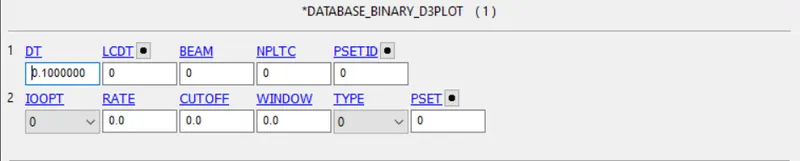
DATABASE_BINARY_D3PLOT : these card is used to store the test run data at a particular interval of time.here the time step given to write the data is 0.1ms.
Case 2 : Head form Impact on the Rigid wall
PEDESTRAIN HEAD model was provided for the test, the inputs in the given file are perfect for the impact test and it is advised not to change the data of the default file.
A new file is created with .DYN extension and in that file we call the data of default PEDESTRAIN HEAD file by using INCLUDE card.
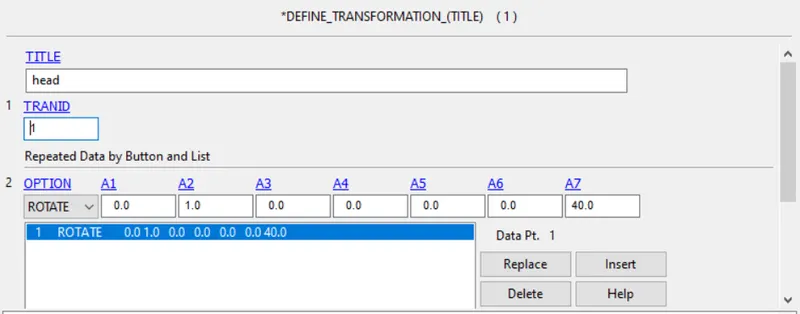
First we have to change the position of PEDESTRAIN HEAD model in the newly created file, we rotate the PEDESTRAIN HEAD with 40 degree along Y axis.so it looks like real time impact situation.
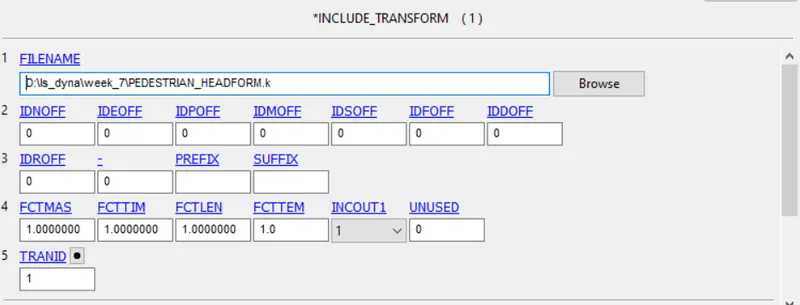
DEFINE > TRANSFORMATION card is used to rotate the model and after that to include the PEDESTRAIN HEAD file in the newly created file with the transformation made we use INCLUDE_TRANSFORMATION card, by providing the path to the file and transformation card id.
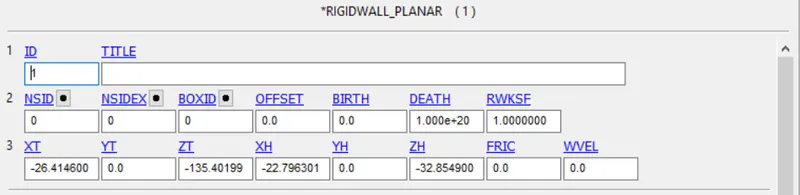
In this case we are creating the rigid wall similar to the first case, by selecting two nodes to define vector and normal to Z axis and placed 20mm in negative Z direction to the PEDESTRAIN HEAD
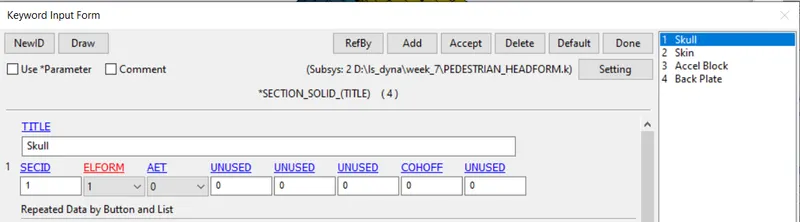
In this case the sections used to define the different parts of the PEDESTRAIN HEAD are SOLID.
In this case the skin part is defined with the hyper elastic material, so the card used to define the material properties is MAT_OGDEN_RUBBER.
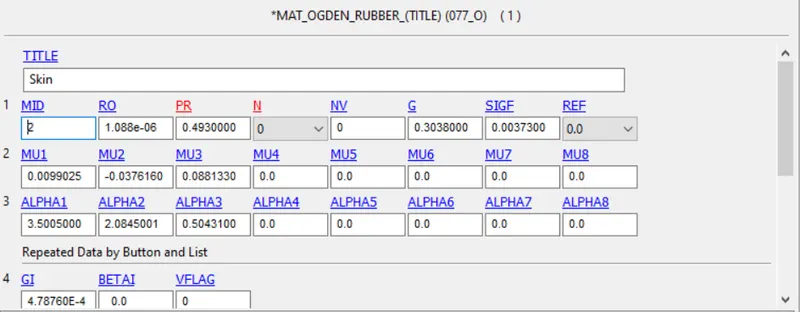
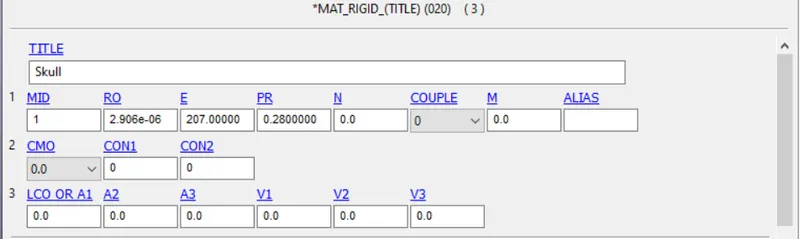
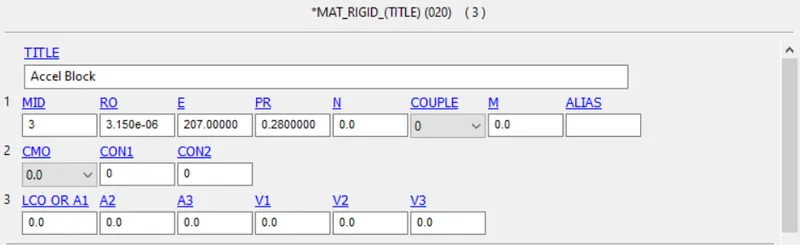
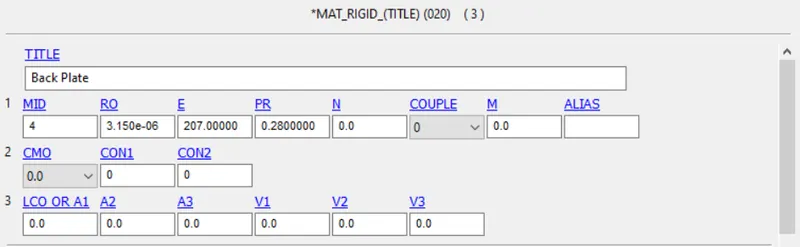
RIGID material cards are used to define the rest of the parts of the PEDESTRAIN HEAD.
Initial velocity, as we already discussed that the test is considered under low velocity range so that the velocity taken here is 11.11mm/ms.But as you can see the model has to travel in negative Z direction to get impact with the RIGID WALL so the value is taken as -11.11mm/ms in Z direction assuming with the motion of pedestrain head in negative X-axis direction with same velocity.

Similarly as in the case 1 the termination time is given as 10ms. the D3plot data write time is given in step of every 0.1ms.
To get better understanding of the IMPACT some other data are also stored like GLSTAT, NODOUT.
CASE- 3 HEAD FORM IMPACT ON HOOD
In this case of test, we have to perform test while PEDESTRAIN HEAD get impact when strikes the HOOD of a car.
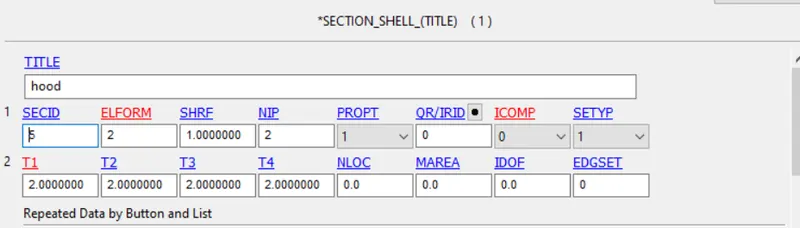
the hood file provided with the shell elements, SECTION > SHELL is assigned with the thickness of 2mm.
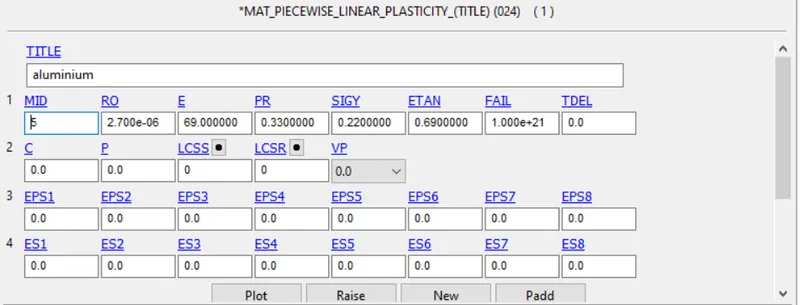
MAT_PIECEWISE_LINEAR_PLASTICITY card is used to deifne the material properties for hood by assigning the ALUMINIUM material properties.
After that similarly like in CASE 2 we include the PEDESTRAIN HEAD file with following TRANSAFORMATION.
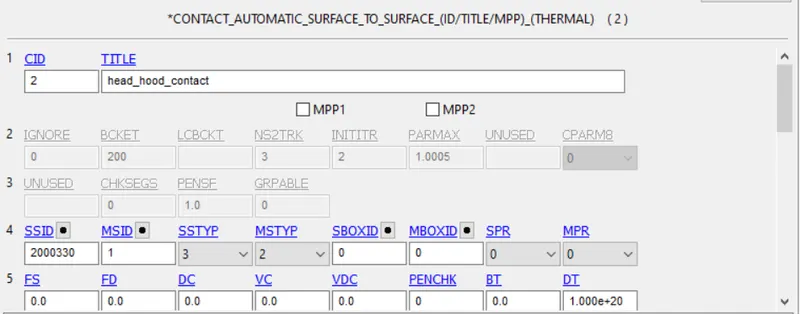
Contact card of AUTOMATIC_SURFACE_TO_SURFACE is assigned by assigning slave part as hood and the master part as HEAD.
the BOUNDARY_SPC_SET is used to control the HOOD movement after getting strike, so the edge nodes of the hood is restricted in all direction.

RESULT AND CONCLUSION :
In 1st case we are practising the simulation process of the IMPACT TEST. the simulation is shared with the link below
simulation for 2nd and 3rd case :
For the 2nd and 3rd case various output result parameters are taken in consider for the comparison.
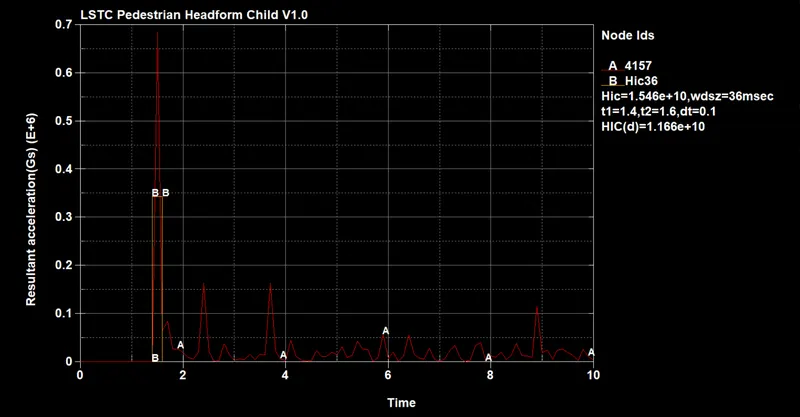
STRESS DATA, STRAIN DATA, ACCELERATION DATA, ENERGIES DATA and HIC values are taken in consider, the following comparison are done below.
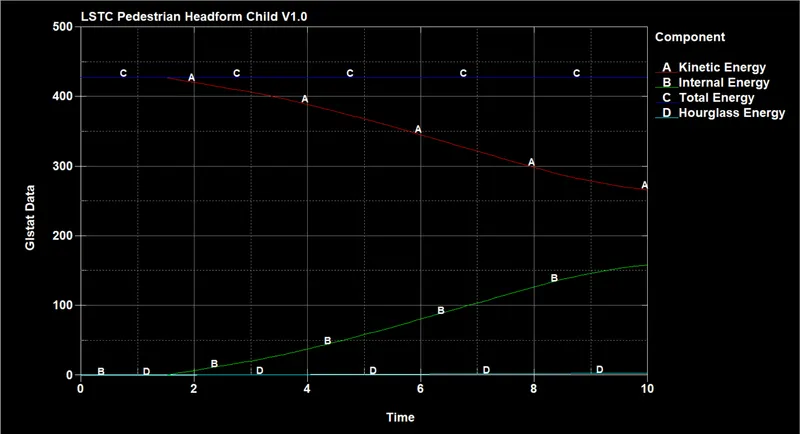
GLSTAT of ENERGIES
IMPACT WITH RIGID WALL
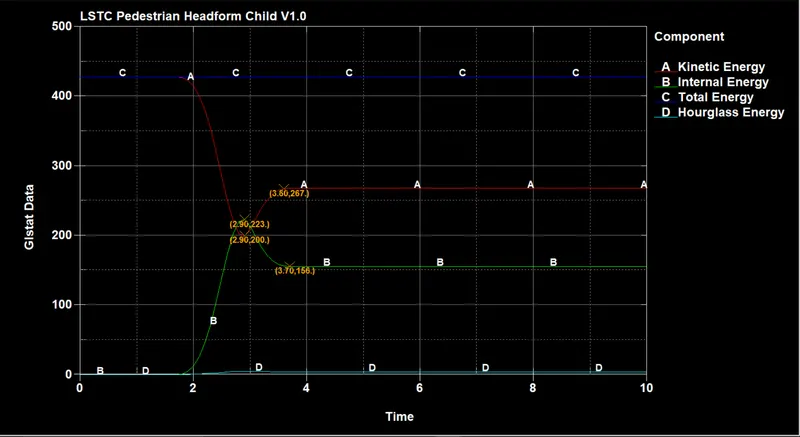
IMPACT WITH HOOD OF CAR
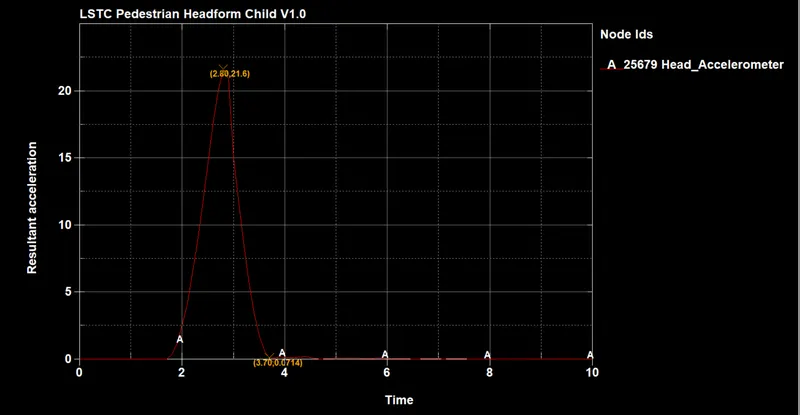
RESULTANT ACCELERATION
IMPACT WITH RIGID WALL
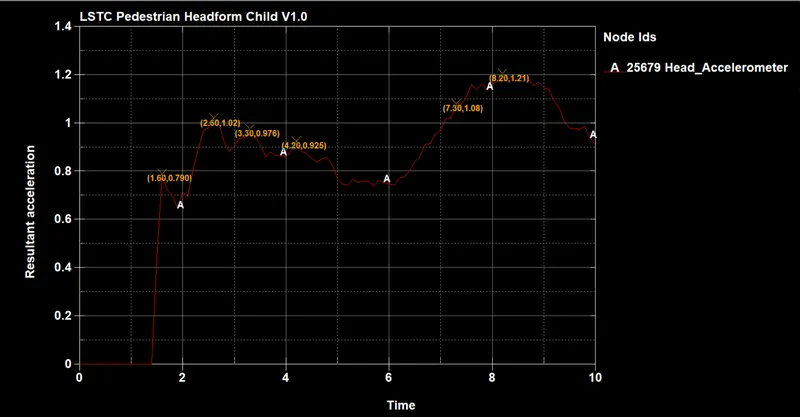
IMPACT WITH HOOD OF CAR
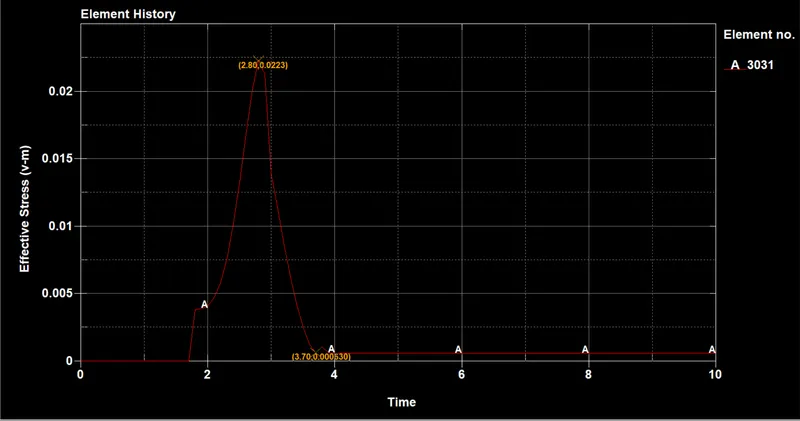
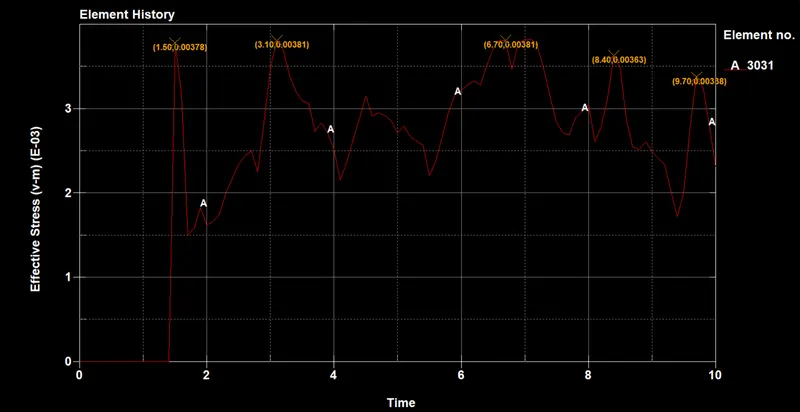
VON-MISES STRESS
IMPACT WITH RIGID WALL
IMPACT WITH HOOD OF CAR
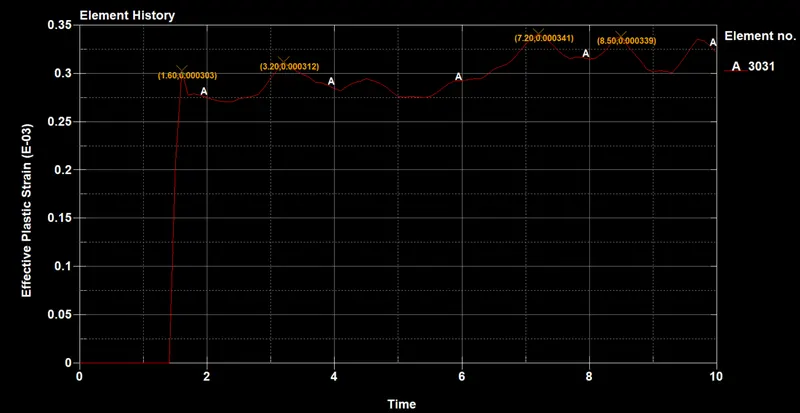
EFFECTIVE PLASTIC STRAIN
IMPACT WITH RIGID WALL
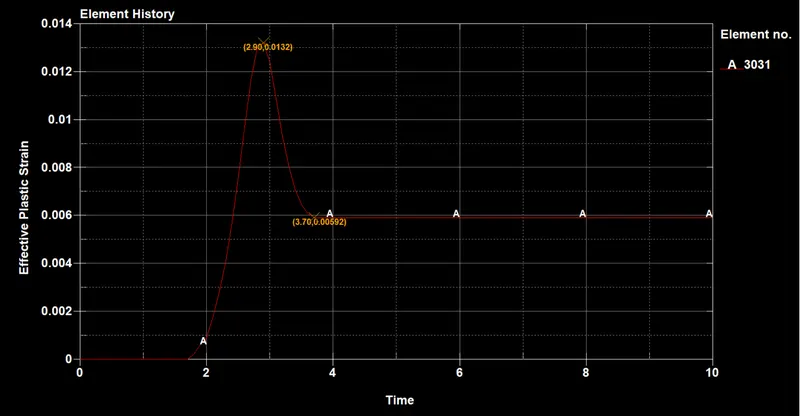
IMPACT WITH HOOD OF CAR
HIC VALUE
IMPACT WITH RIGID WALL
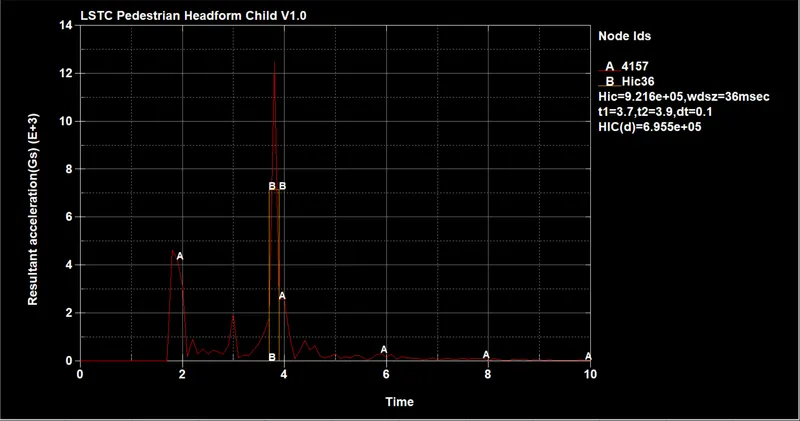
IMPACT WITH HOOD OF CAR
CONCLUSION :
- Based on the following data of GLSTAT we can clearly see that the sudden change in Decreasing kinetic energy and Increasing Internal energy due to sudden impact of PEDESTRAIN HEAD on the RIGID WALL, because of its rigidity structure it doesnt go under any deformation. but in case of HOOD the change in energy is uniform or say gradually due to the deformation in the hood part helps the PEDESTRAIN HEAD to get sudden impact.
- Based on the VON-MISES STRESS data it is cleared that the stress induced in the PEDESTRAIN HEAD while impact with the RIGID wall is more as compare to the HOOD of car, due to the sudden impact the stress induced is high in case of RIGID WALL but in the HOOD case the stress induced with time interval impact so the stress induced in HOOD case is low.
- Based on the EFFECTIVE PLASTIC STRAIN values it is cleared that the due to high stress impact on the PEDESTRAIN HEAD while get impact with RIGID wall it undergo high deformation, but in case of HOOD the hood part is acting like a shock reducer so it reduced the sudden impact as the stress induced is low on the elements of the PEDESTRAIN HEAD so it undergo minimal defromation.
- HIC value in RIGID WALL CASE is 9.216e+05 is less as compare to the HIC value in HOOD case is 1.546e+10 due to increase and decrease in the resultant acceleration and it is not mandotory tha higher value of HIC means the higher Impact on the PEDESTRAIN HEAD.