Week-7 Head Impact
PROJECT 1
TITLE: PEDESTRIAN PROTECTION ANALYSIS FROM CRASH PRESPECTIVE
OBJECTIVE: To perform the pedestrian head protection test using simple head model,Pedestrain head dummy and hood.Calculate the HIC(head injury coefficient) and calculate the risk of haed injury when a pedestrian is hitted by a car.These tests are usually done at a lower velocity from 20-40 kmph as accidents tend to result in more severe circumstances above these velocities and braking in case of an accident often results in collision at low velocities.
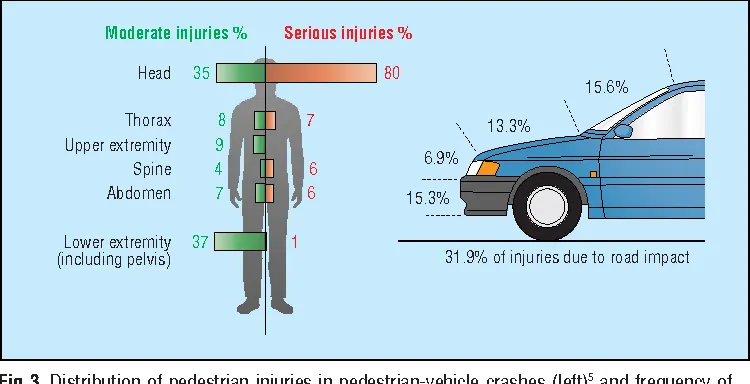
The model showm above is a model of pedestrian crashed by vechicle and damages that can be happen after crash.
CASE1: SIMPLE HEAD MODEL.
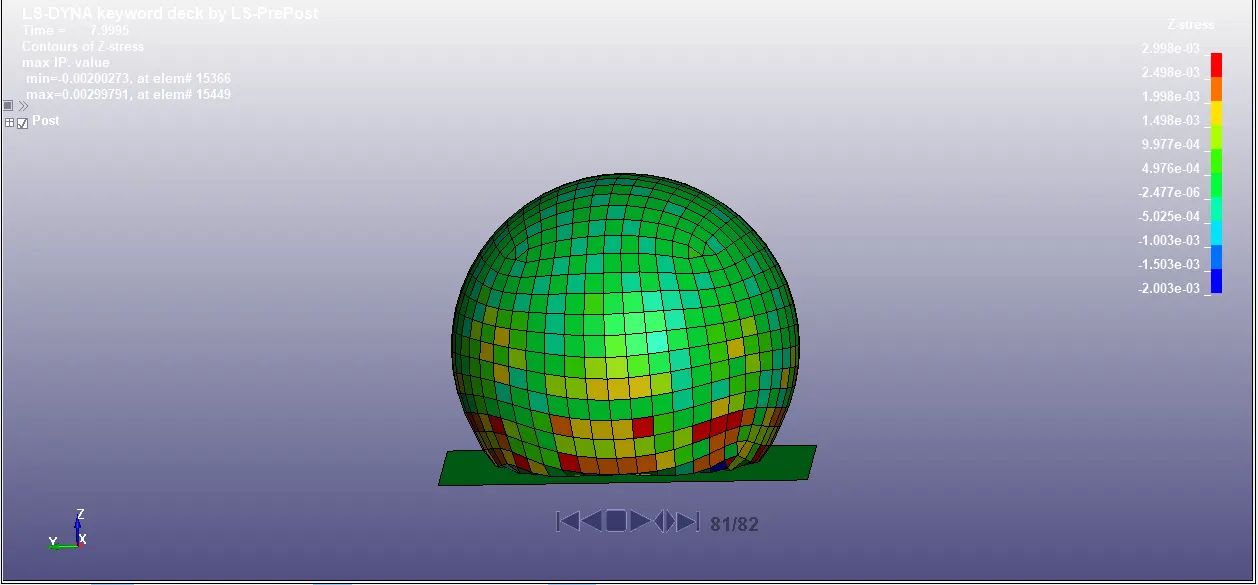
- In this case a simple head model is taken and a rigid wall is built up with the help of LS prepost and then velocity is imposed as results are checked out.This model is just for practice purpose.
- Material and section is assigned to the head model using MAT and SECTION card.
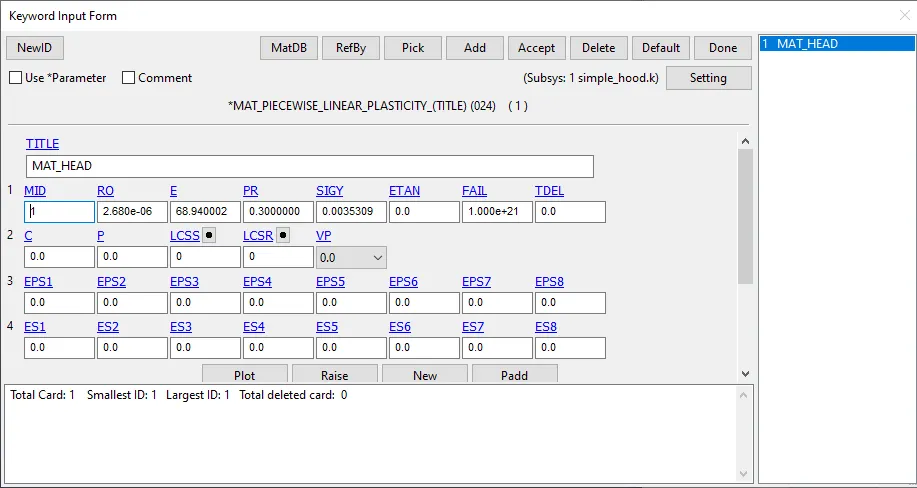
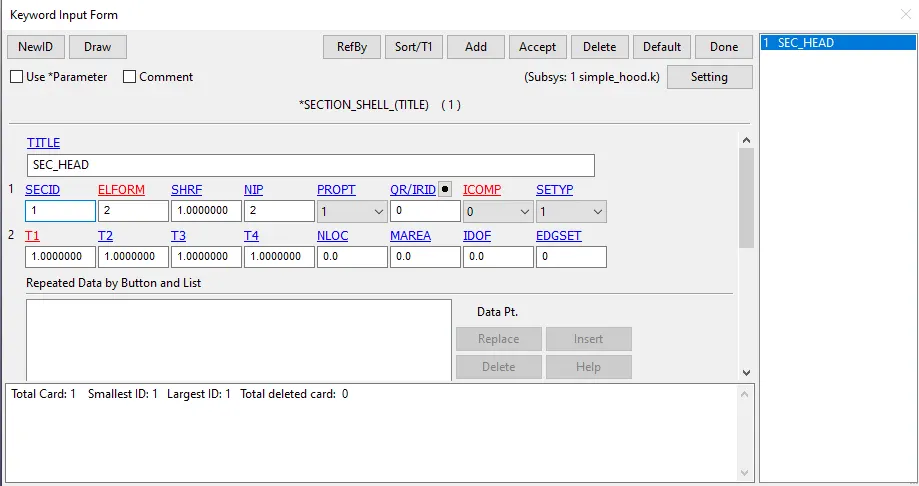
- Assigned the section and materials to the part id.
- Created rigid wall planer using create and rigid option.
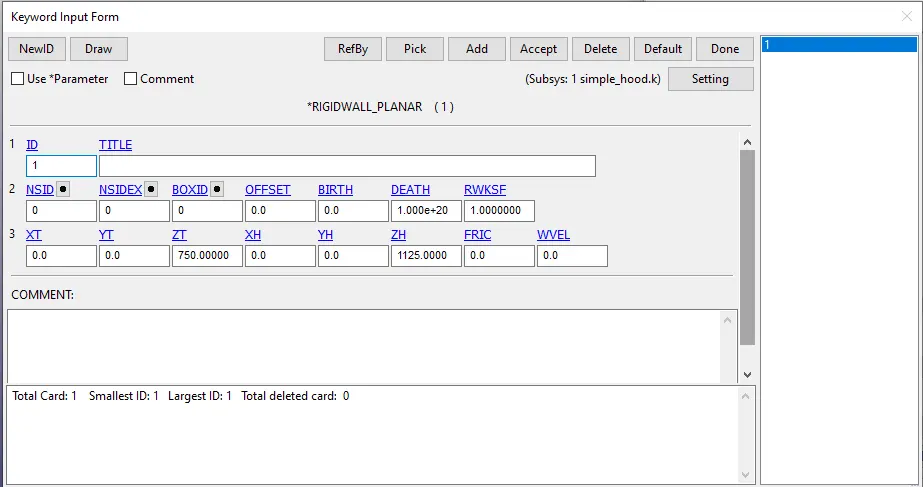
- Defined the contact as automatic single surface contact.
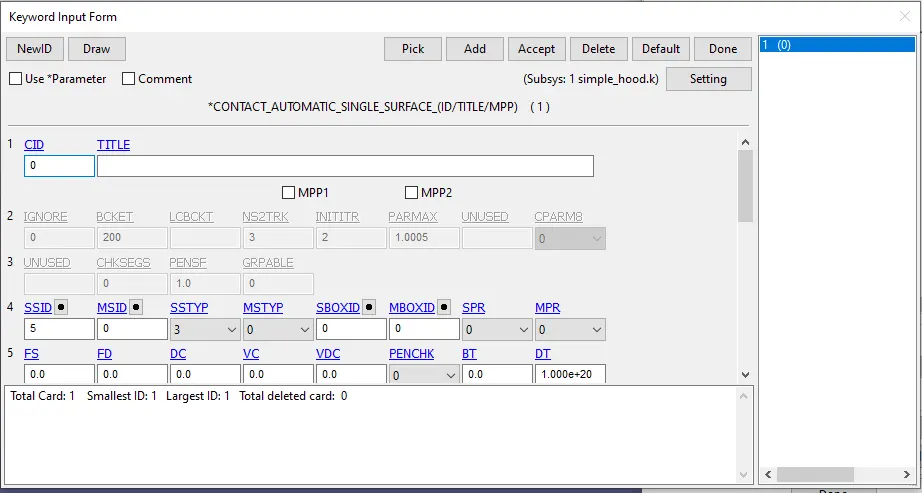
- Termination time is setup using control termination card.
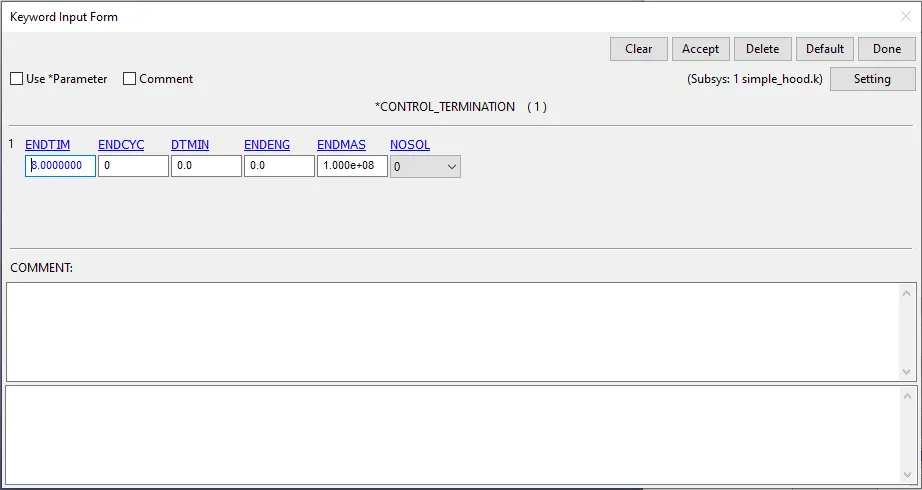
- Termination time is given as 10ms.
- Data base binaray d3plot is defined for extracting the results and plots.
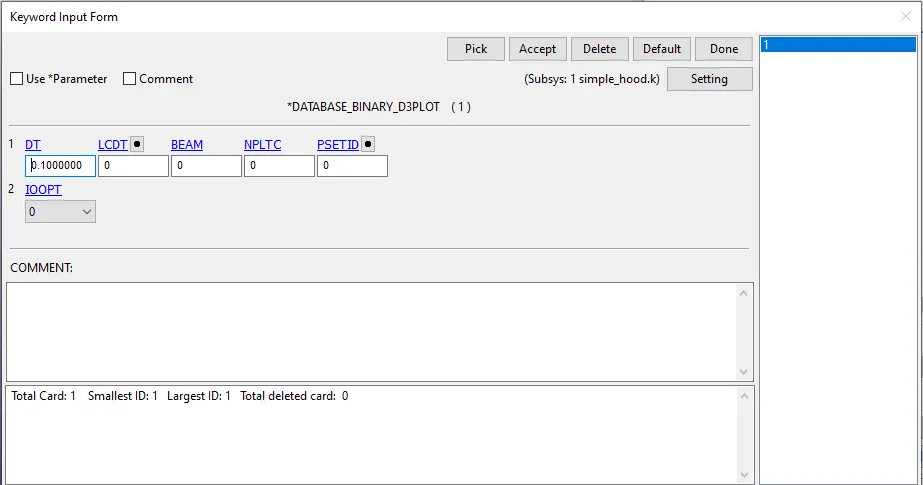
- On every 0.1ms it will write the results for d3plot.
- In boundary condition,velocity card is defined as 30kmph which is converted to kg mm ms format.
CONTOUR FIGURE
CASE 2: PADESTRIAN HEAD IMPACT ON RIGID WALL
- In this case a padestrian head model is tranformed to an angle so that an actual case is setup against a rigid wall,Here a rigid wall is created so that head crashes the wall and we can measure the HIC and plot the stress and stress curve to determine the damage caused by the crash.
- Define transformation card is used to rotate the padestrian head model by some angle such that it matches with the actual senerio of a crash.
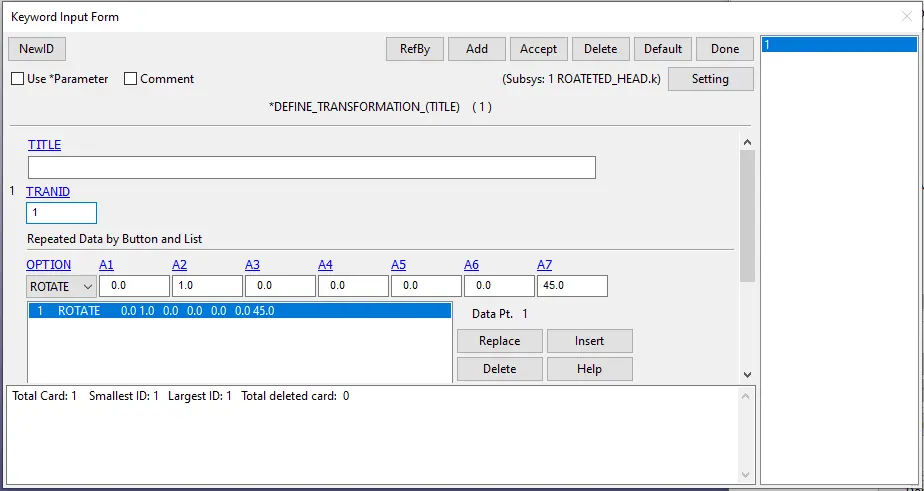
- Here the tranformation is given towards Y axis at an angle of 45 Degrees.
- As trandormation is defined.Transformation is included using include transformation card.
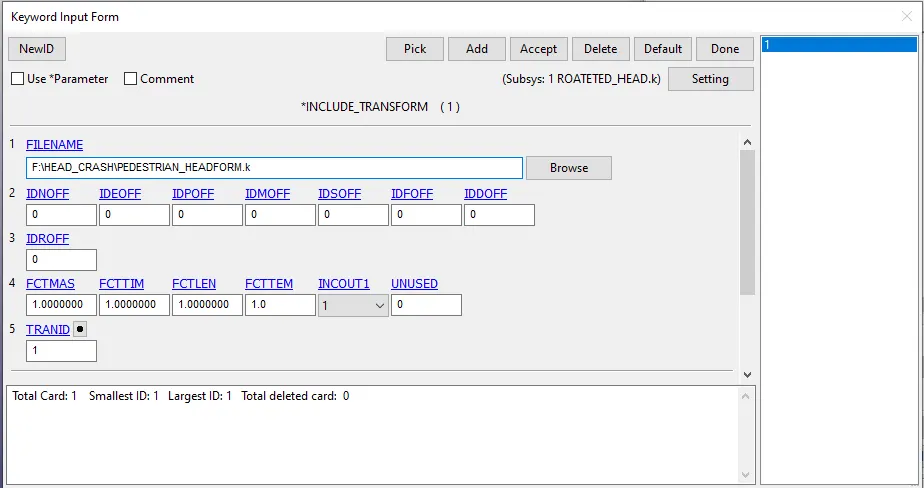
- In this card I call the pedestrian head model using browse command and provide the tranid which is our define trainformation card.
- Then save the model with new name in .k format.
- Intial velocity is given to the pedestrain head in Negative X and Z directions.velocity of 30kmph is implemented to the head model.
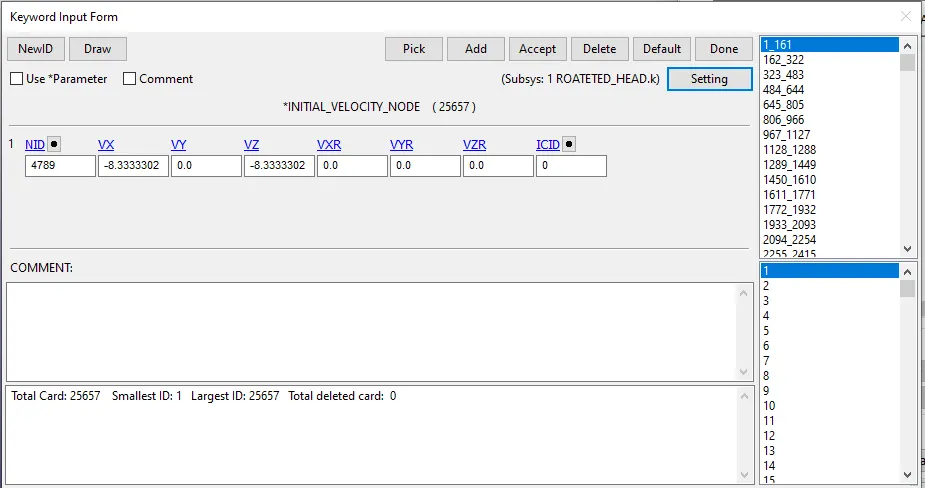
- Defined automatic single surface contact such that head doesnot penetrates the wall.
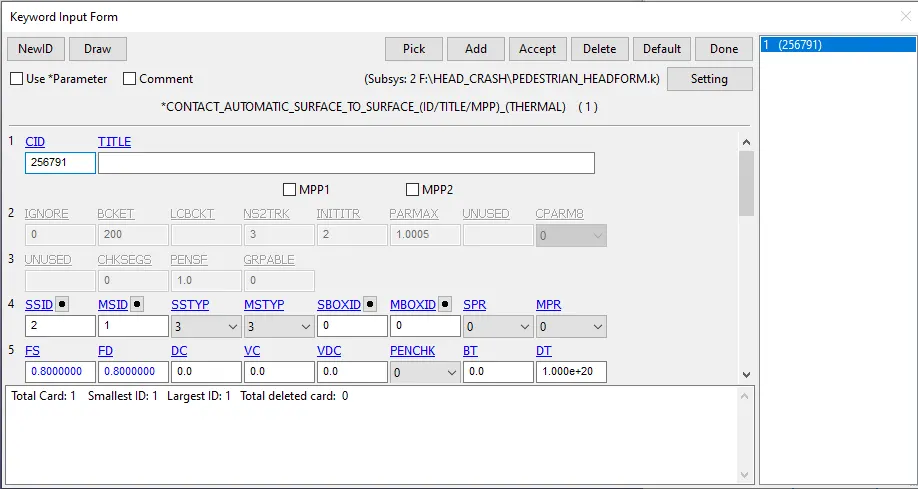
- Rigid wall is created with X-Y plane.
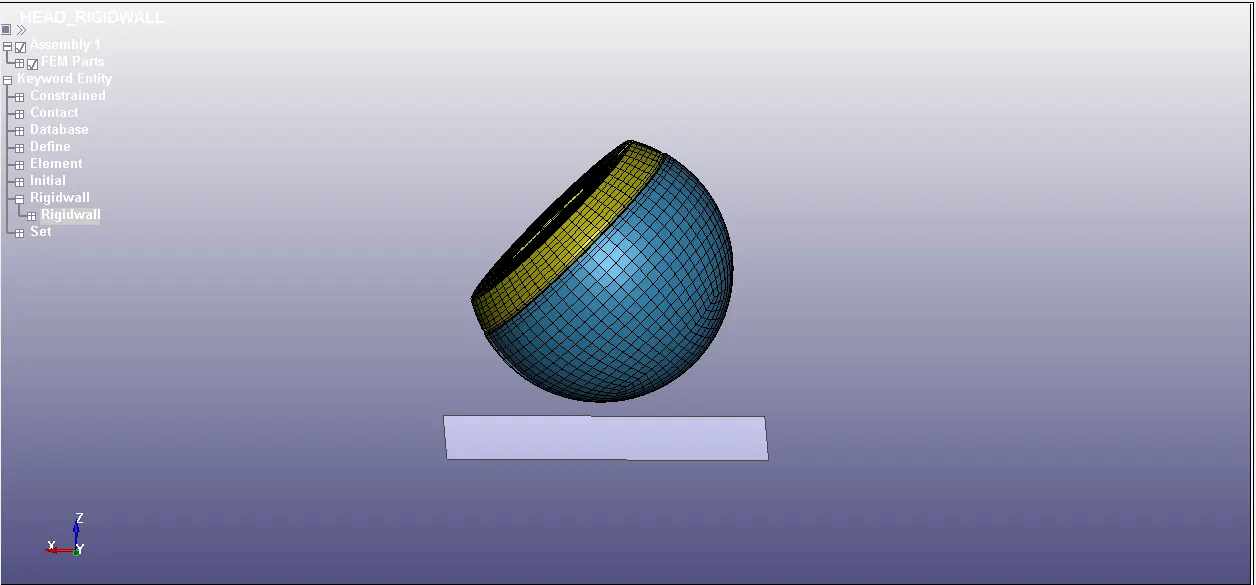
- Control termination card is used to define the end time as 10ms.
- Database d3plot is used to define the output results.
RESULTS:
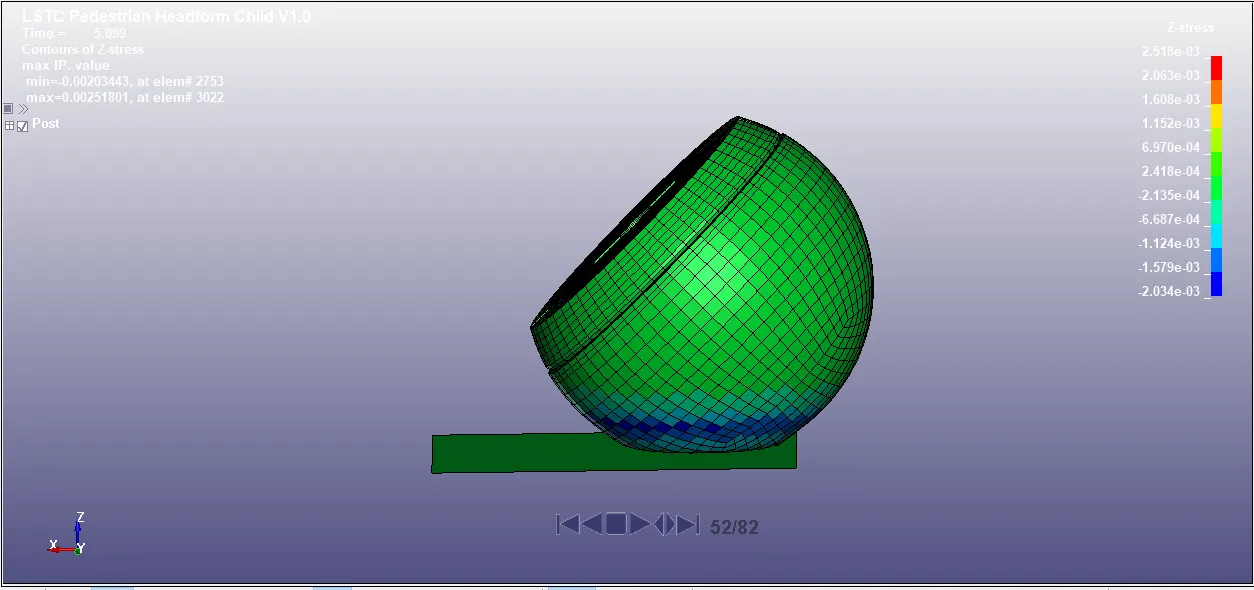
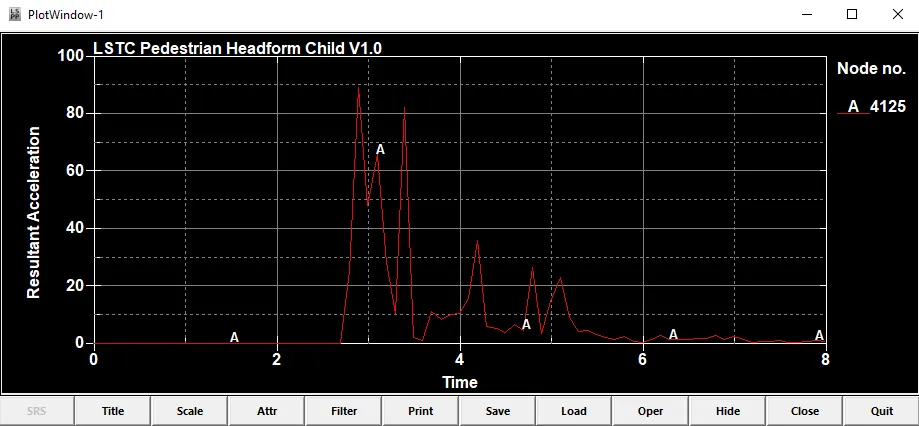
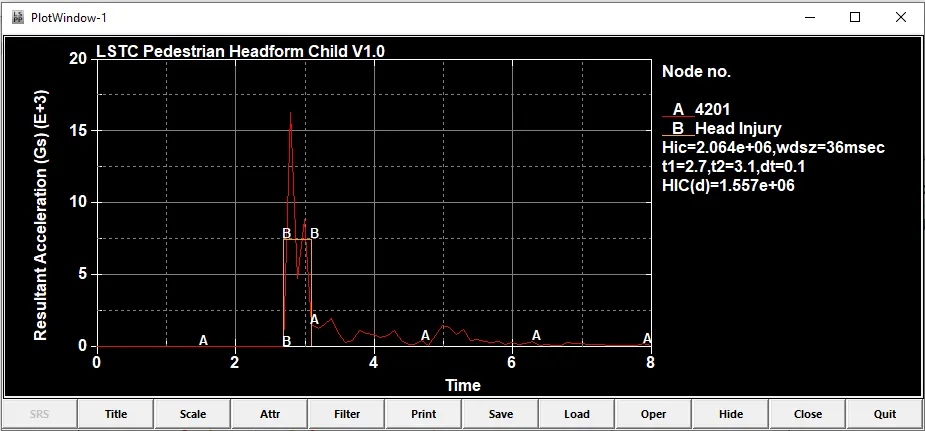
- Resultant acceleration:
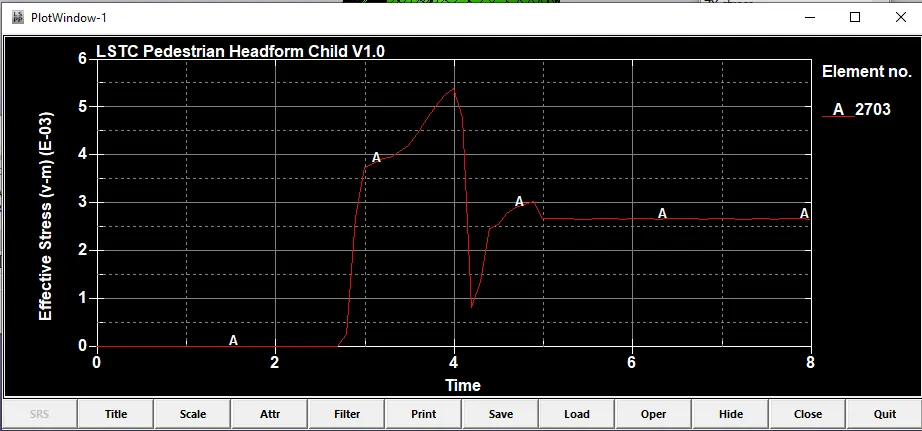
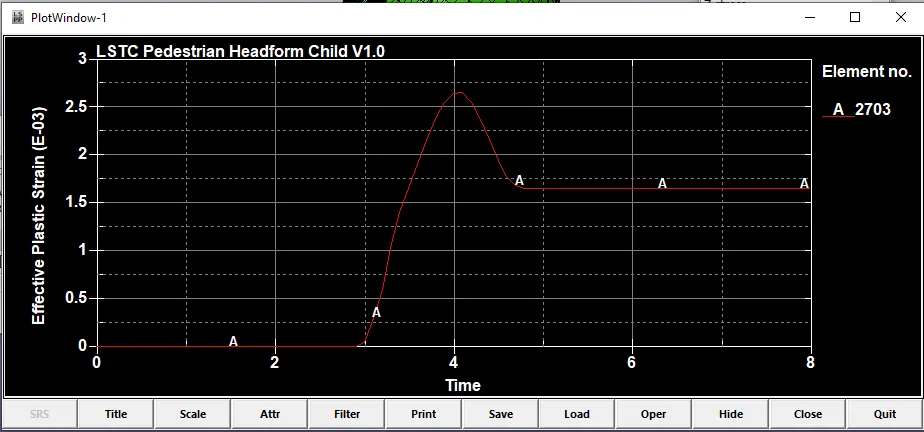
- Effective stress
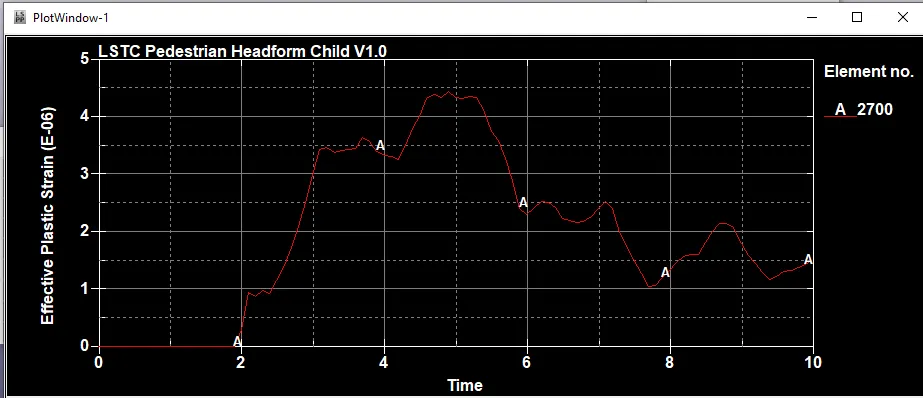
- Effective strain
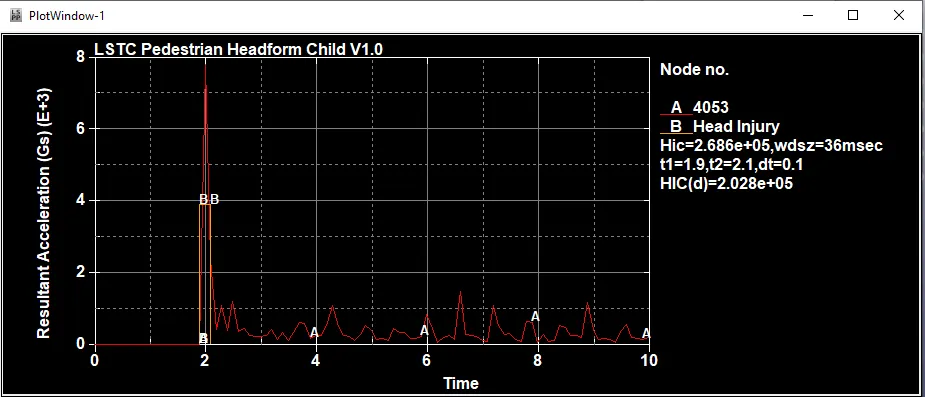
- HIC(Head injury coeeficient)
CASE3: PADESTRIAN HEAD IMPACT ON HOOD.
- In this case a padestrian head model is tranformed to an angle so that an actual case is setup against a hood,Here a hood is included with the head model so that head crashes the hood and we can measure the HIC and plot the stress and stress curve to determine the damage caused by the crash.
- Define transformation card is used to rotate the padestrian head model by some angle such that it matches with the actual senerio of a crash.
- Here the tranformation is given towards Y axis at an angle of 45 Degrees.
- As trandormation is defined.Transformation is included using include transformation card.
- In this card I call the pedestrian head model using browse command and provide the tranid which is our define trainformation card.
- Then save the model with new name in .k format.
- Intial velocity is given to the pedestrain head in Negative X and Z directions.velocity of 30kmph is implemented to the head model.
- Saved the model in different name using .k extension.
- Now open the hood file and iclude the roated head model where iclude tranformation is defined.
- Saved the model by the name HOOD_IMPACT_HEAD.
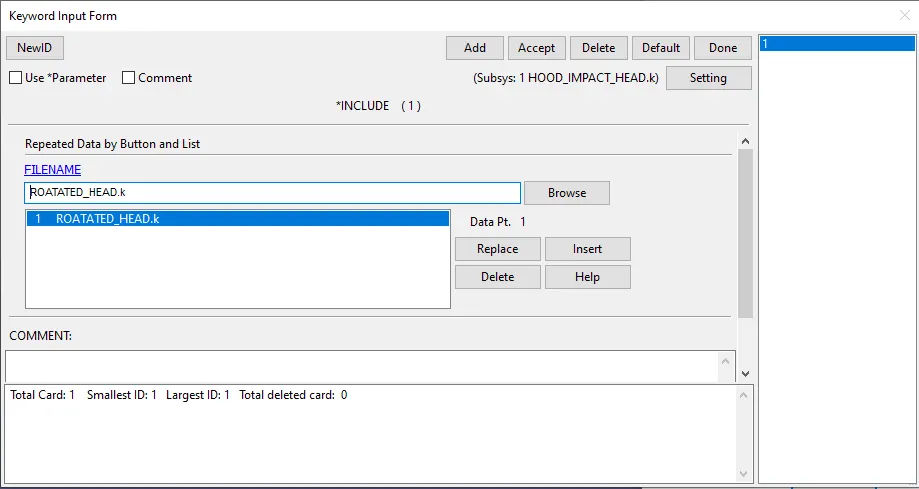
- Defined the material and section acrd to the hood model by adding subsystem as HOOD_IMPACT_HEAD.k file.
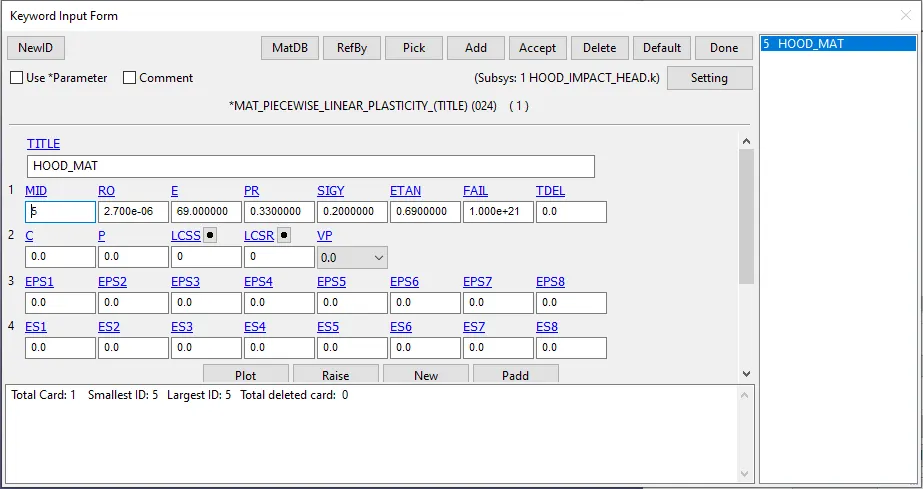
- Material used here is aluminium.
- Defined the contact as automatic surface to surface contact.
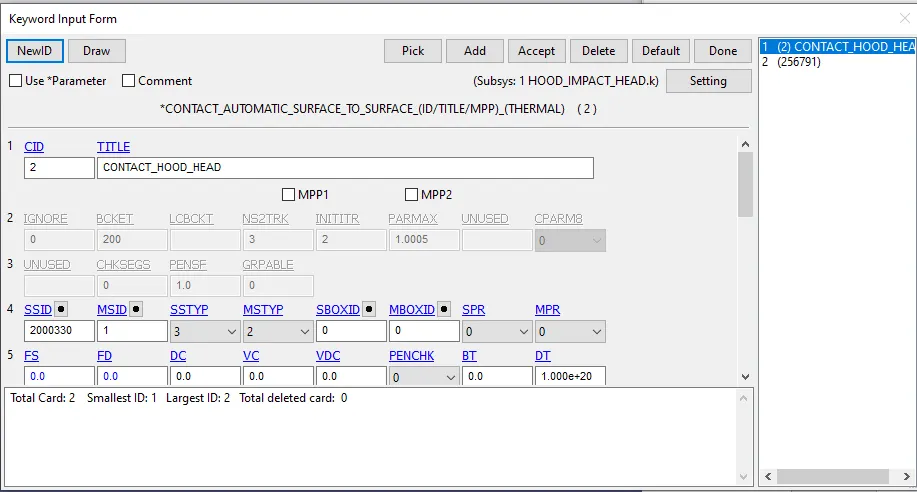
- Here salve set is defined as head part and master set is defined as hood part.
- Control termination and database D3PLOT is used similar to case 2.
- Here termination time used is 10ms.
RESULTS:
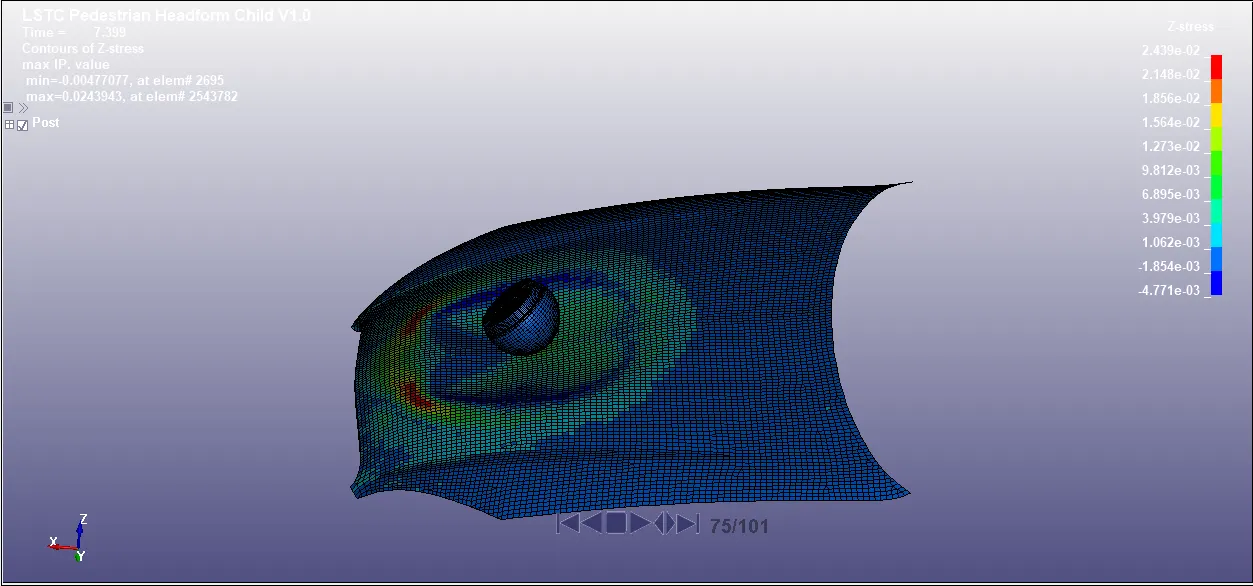
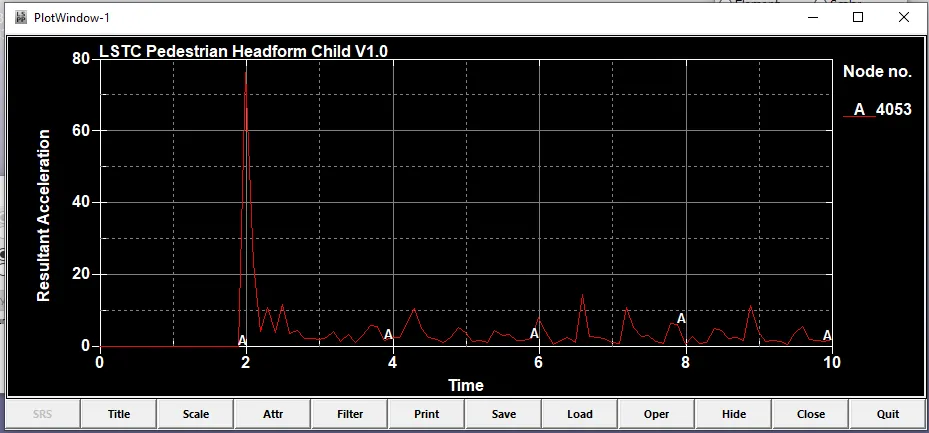
- Resultant acceleration:
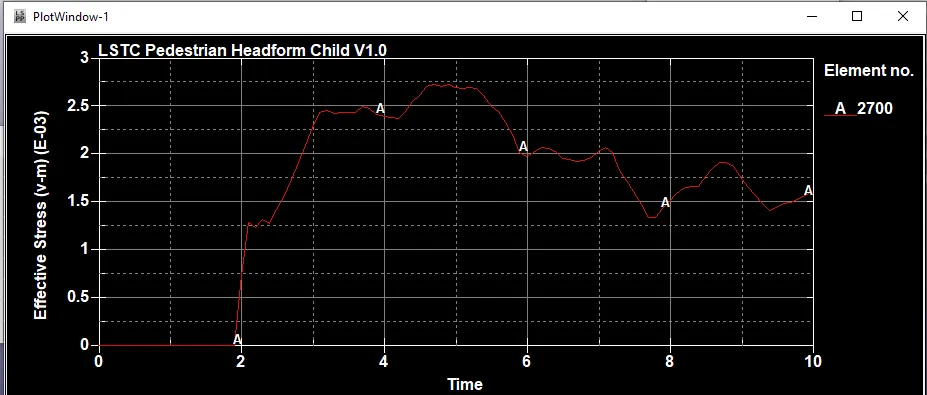
- Effective stress
- Effective strain
- HIC(Head injury coeeficient)
ANIMATION:
ACCELERATION(mm/ms2) STRESS(e-03) STRAIN(e-06) HIC
CASE 2 85 5.4 4.3 1.557e+06
CASE 3 79 2.55 2.54 2.028e+05
CONCLUSION:
- Here HIC value of hood impact is lower then the HIC value of rigid wall impact.
- Maximum Stress and Strain values are also higher for the case 2 i.e for hood impact the damage to the pedestrian is lower as compare to rigid wall.
- A HIC-15 (meaning a measure of impact over 15 milliseconds) of 700 is estimated to represent a 5 percent risk of a severe injury (Mertz et al., 1997). A "severe" injury is one with a score of 4+ on the Abbreviated Injury Scale (AIS) (Association for the Advancement of Automotive Medicine, 1990).