Week-7 : Converting a detailed engine model to a FRM model
Objective:
FAST RUNNING MODEL IN GT-POWER
FRMs execute much more rapidly than the typical detailed GT-POWER engine model and are ideal for integrating with other vehicle systems where an accurate and predictive engine plant model is desired and where computational speed is critical.
FRMs adapt to changing conditions (e.g. valve timing, spark/injection timing, turbo lag, external temperature, altitude, cooling system conditions, etc.) without the need to apply non-physical correction factors. Whether studying changes to ambient conditions or simulating events that are heavily transient in nature, FRMs will maintain the predictive capabilities of a detailed engine model while allowing for the fast computational speeds that are expected when performing drive cycle analysis and other transient-focused simulations.
FRM models are :
- Fully physical (Able to capture in-cylinder pressure P v/s θθ). FRM is input-based and can capture using predictive-combustion model
- Dynamic &
- Design to run fast (increasing simulation time step size and decreasing number of calculations per time step).
FRM MODEL BUILDER (Using FRM builder approach):
Following steps are done for building the FRM model using building techniques:
- Go to Tools- FRM model builder icon

- Select the CI engine model
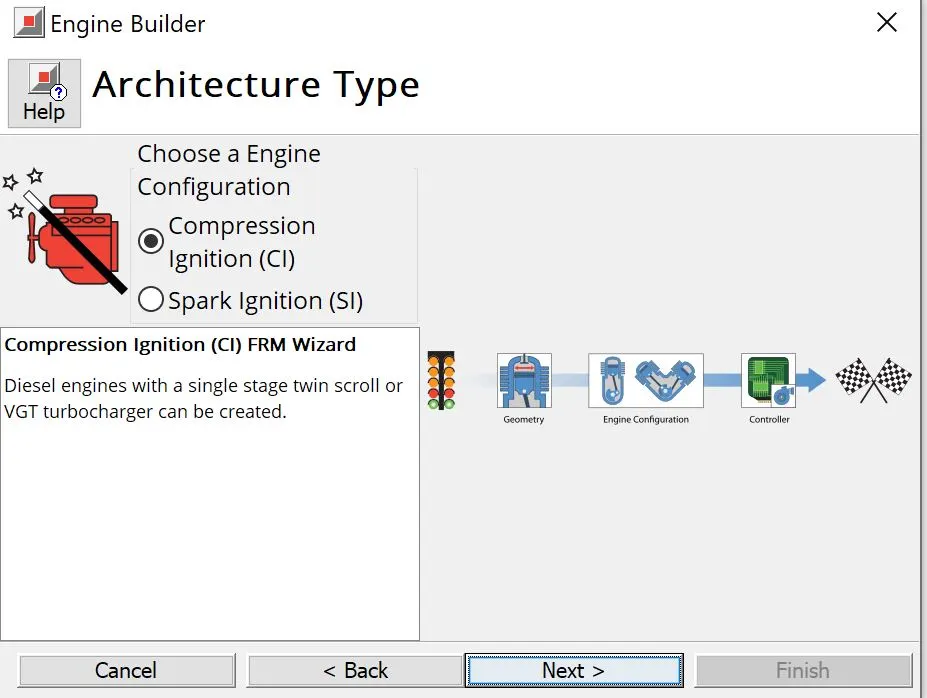
- Select the 6-cylinder engine configuration
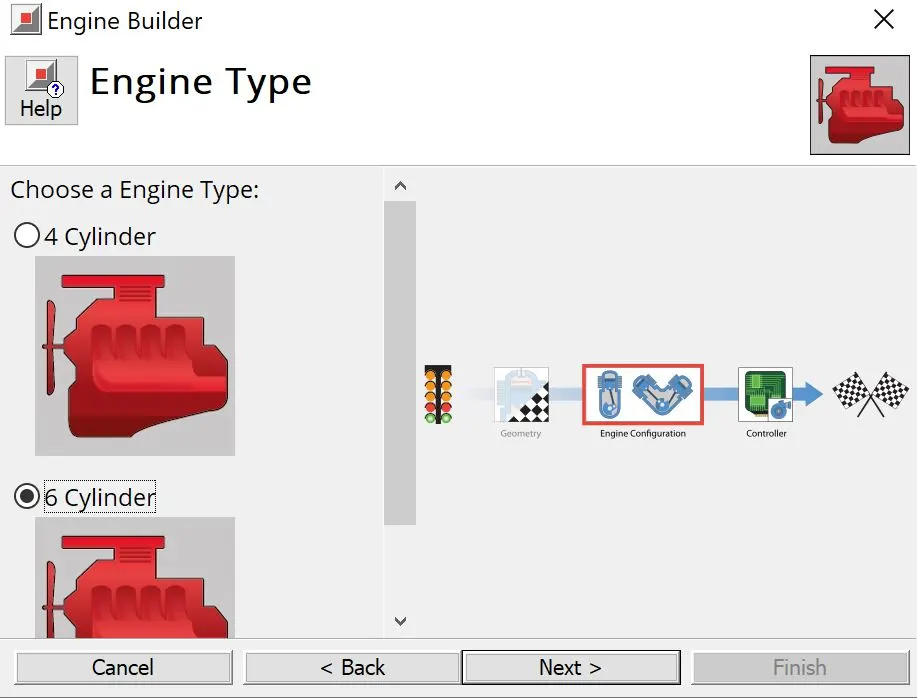
- Give the cylinder geometry details as below :
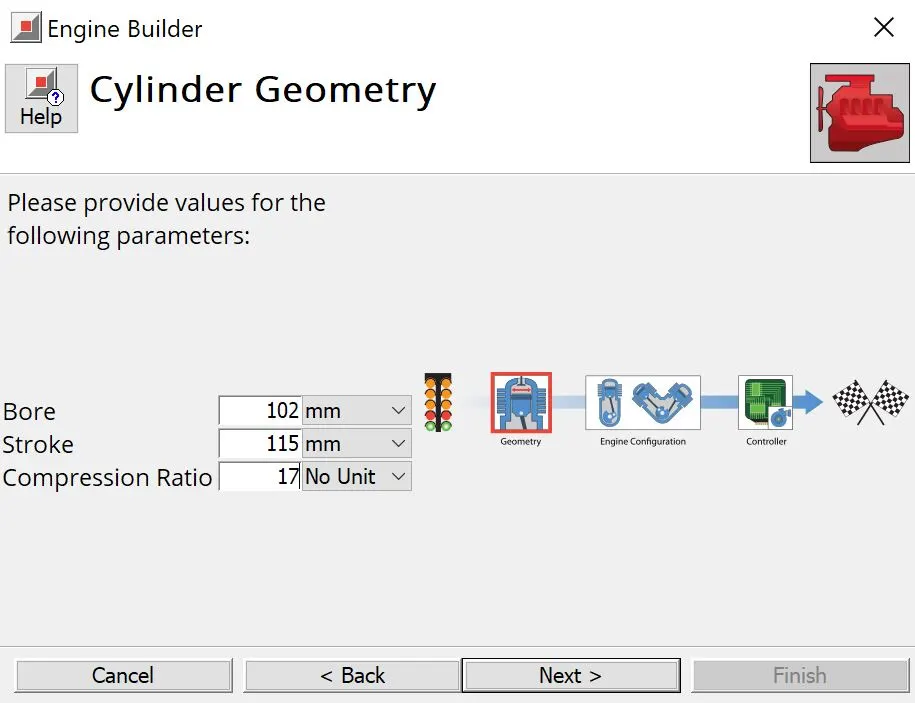
- Select the twin-scroll turbine
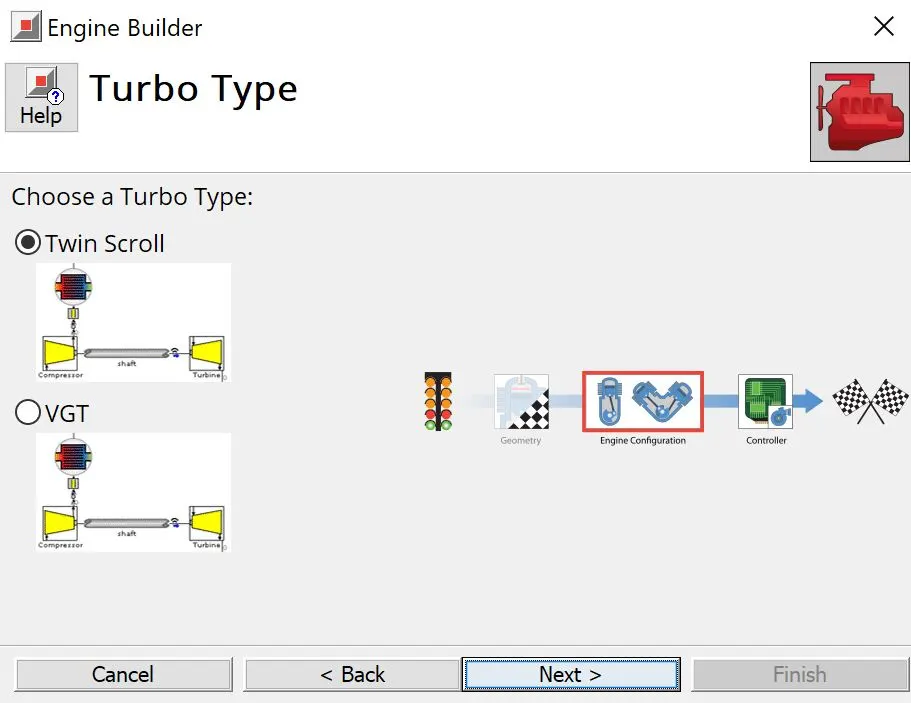
- Select GT- suite controller for control-logic type
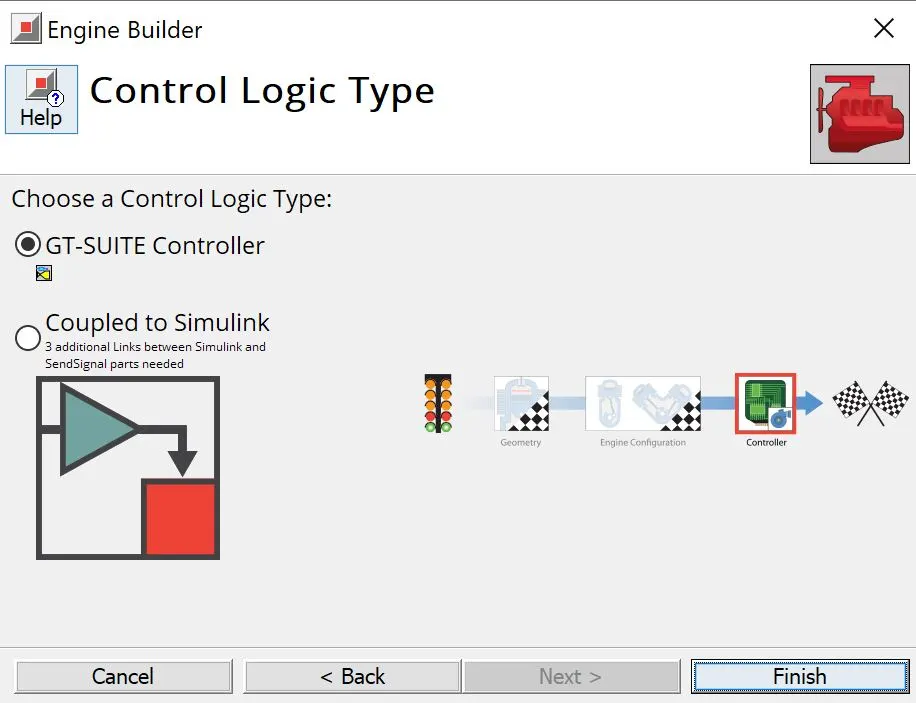
- Select finish and the following model is created
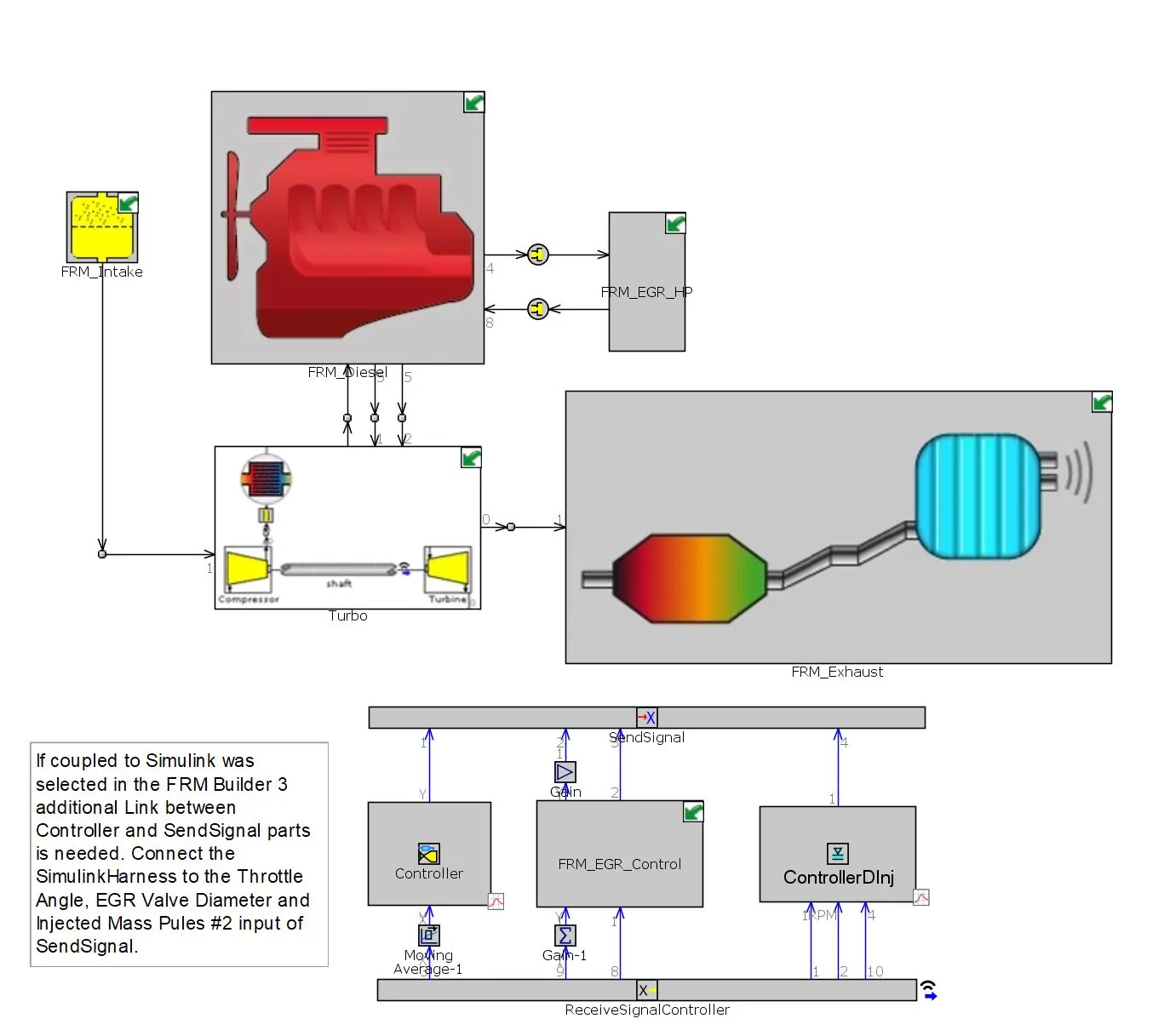
Case setup :
By default, GT creates 25 cases, where the RPM is varied gradually from 4000 RPM to 2000 RPM, BMEP is varied from 4 bar to 17 bar and target boost pressure is varied from 2 bar to 2.8 bar. A sample of the case setup is shown:
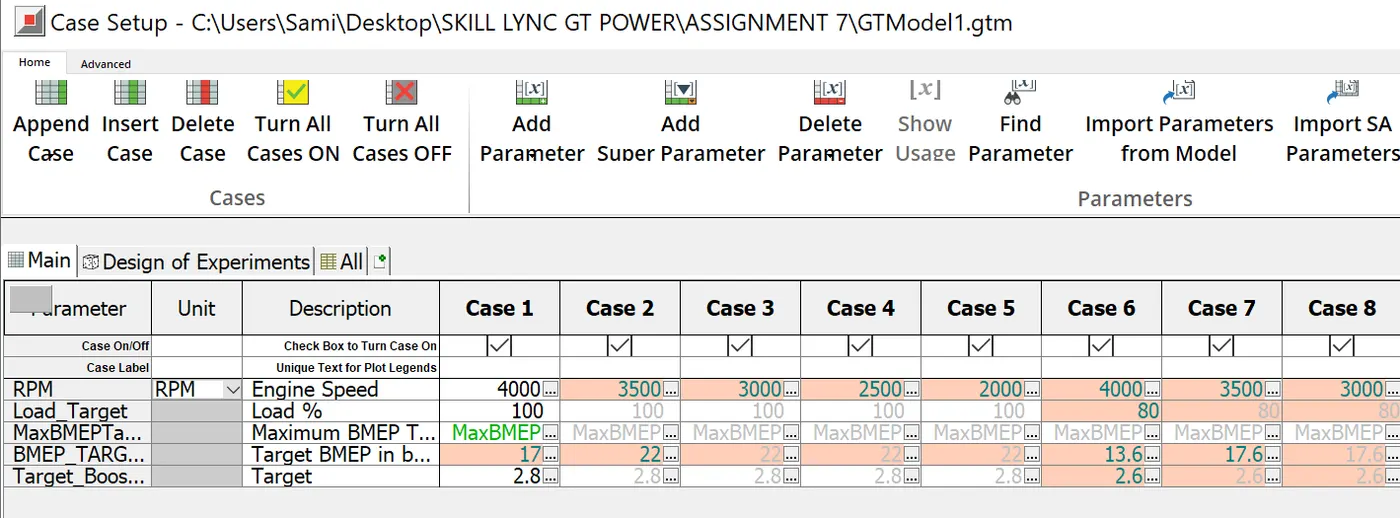
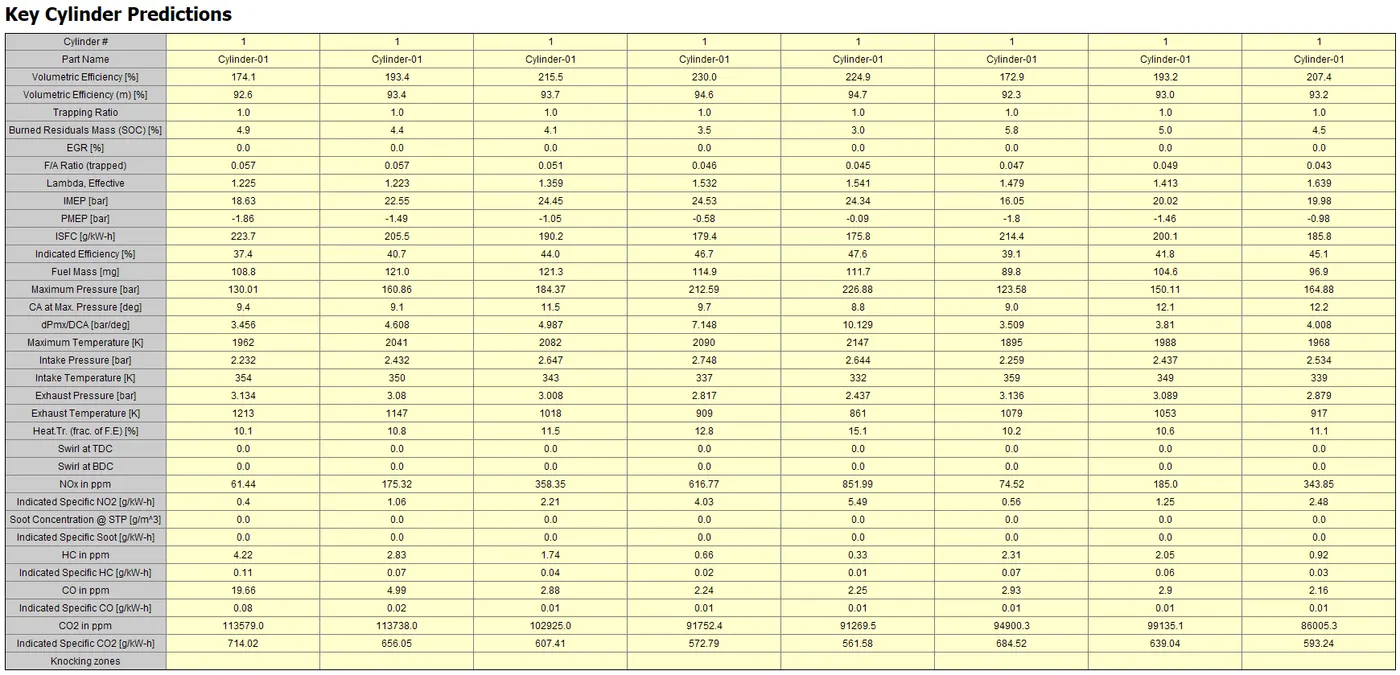
CASES (9-17) :
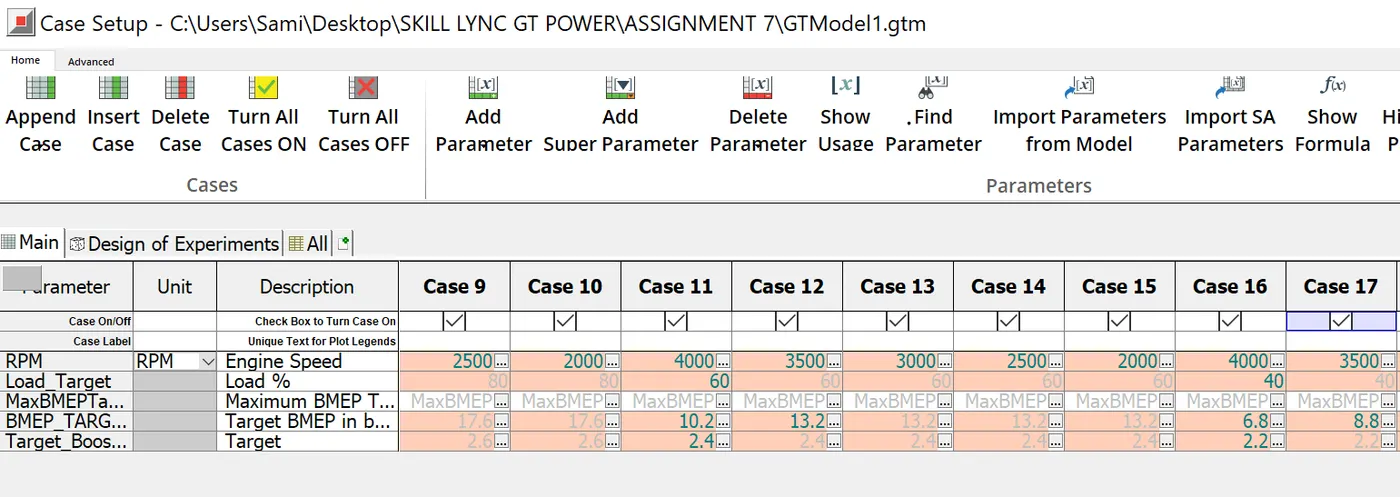
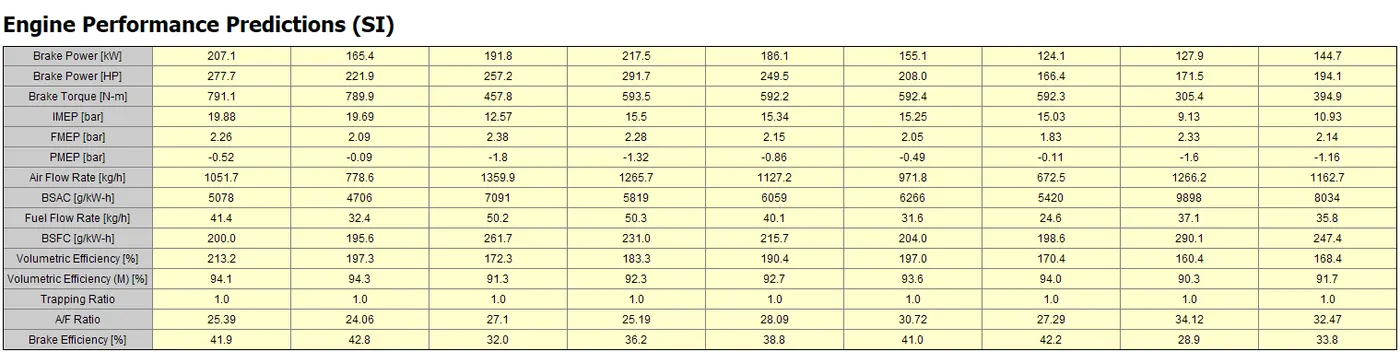
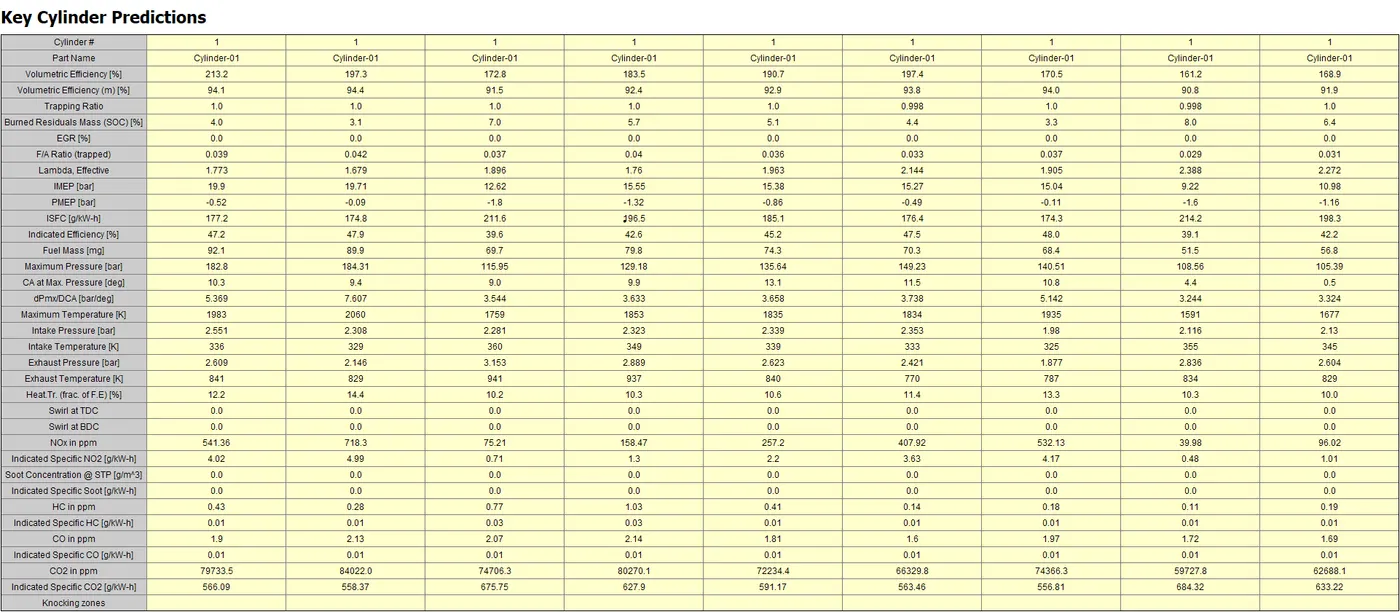
CASES (18-25) :
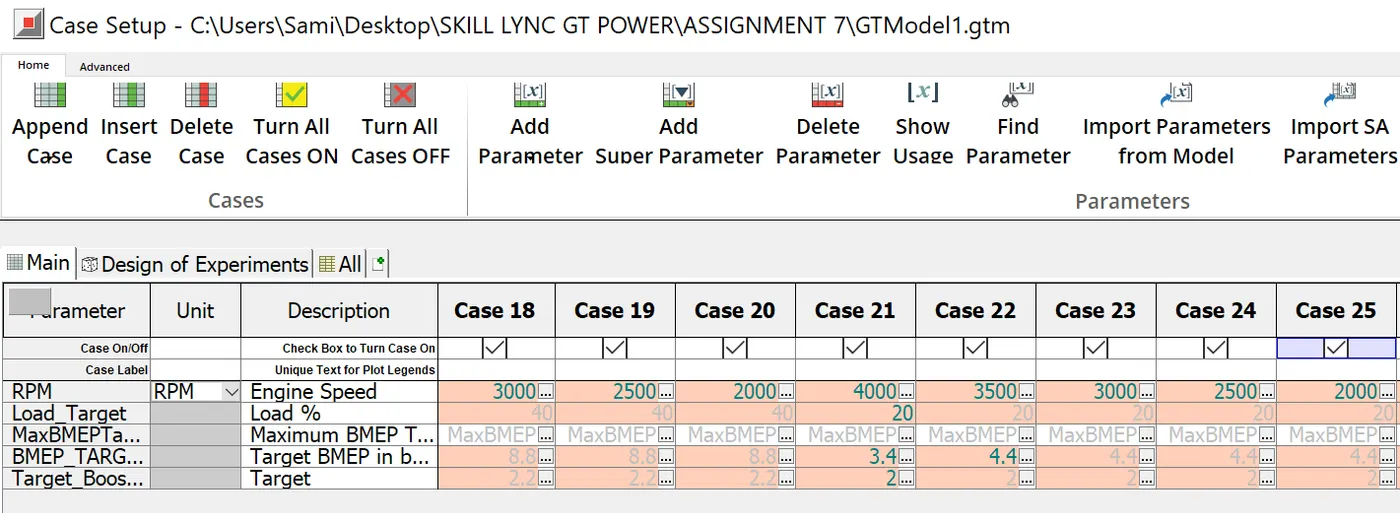
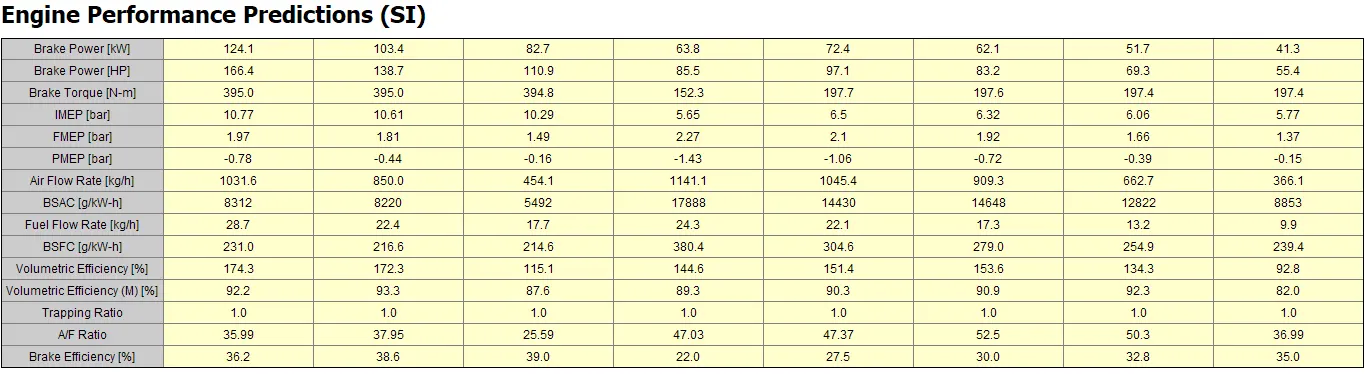
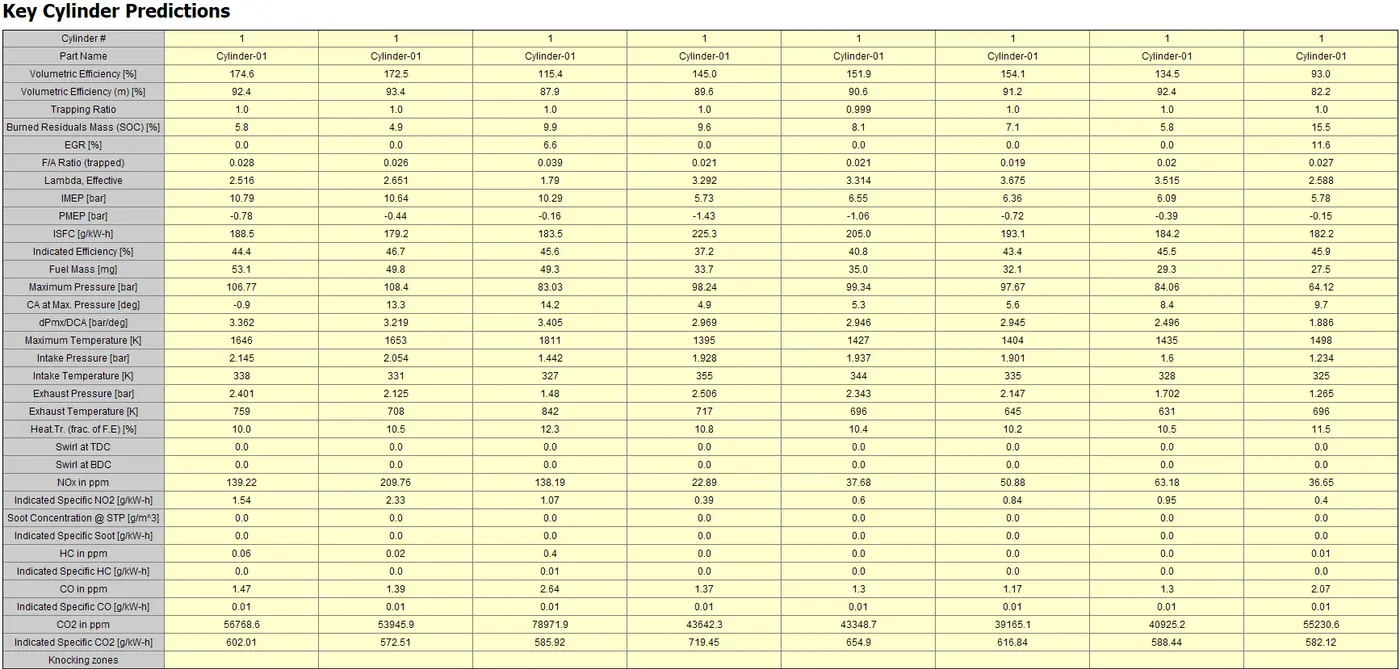
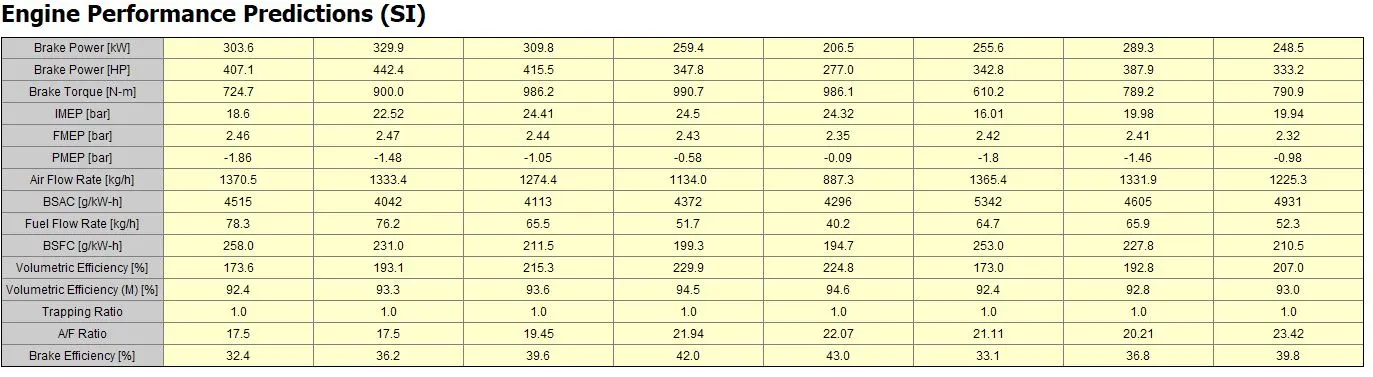
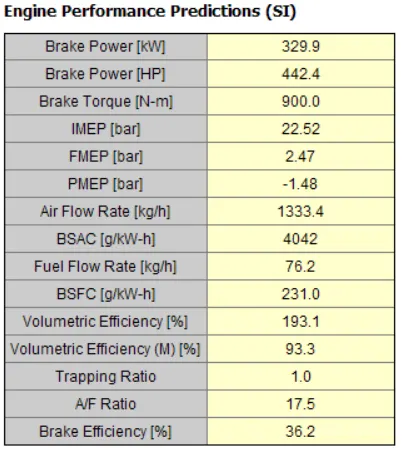
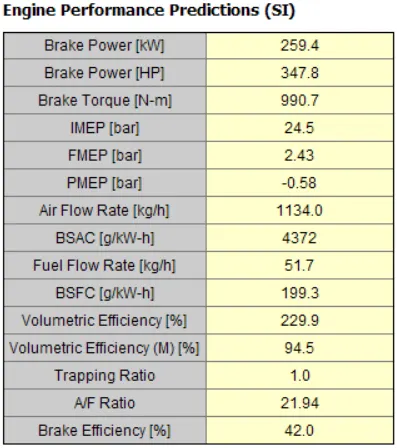
The performance at the Rated speed (3500 RPM) and Intermediate speed (2500 RPM) at full load conditions are shown below. The target BMEP that is set as a parameter in the wastegate controller is 22 bar and the target boost pressure to be maintained in the compressor is 2.8 bar:
The engine gives a max power of ~330kW at 3500 RPM (Bottom Left) and ~990 Nm of torque at 2500 RPM (Bottom Right) full load condition. The other cases have part loads which
Time calculation:
The time is taken for simulation at the rated speed and intermediate speed are shown below:
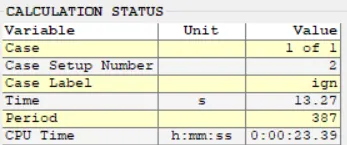
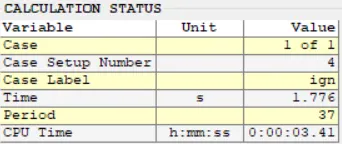
- The time ratio at the rated speed is 23.39/13.27 = 1.76 and at the intermediate speed is 3.41/1.776 = 1.92
Conclusion:
FRM was studied in detail.