Week-7 Challenge: DC Motor Control
CHALLENGE 1:
-To run a MATLAB demo on "speed control of DC motor using BJT H-bridge.
Solution:
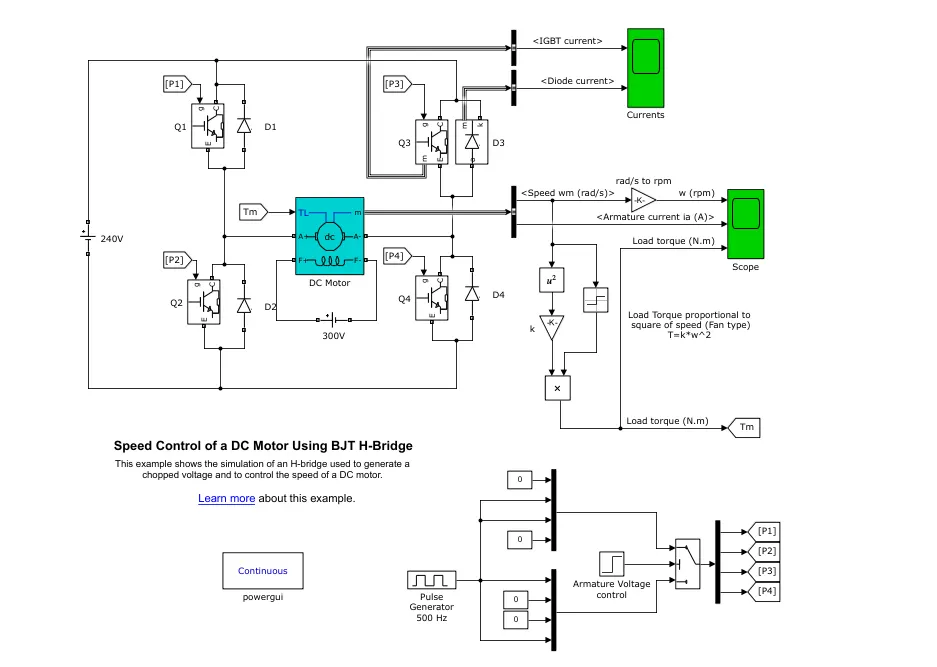
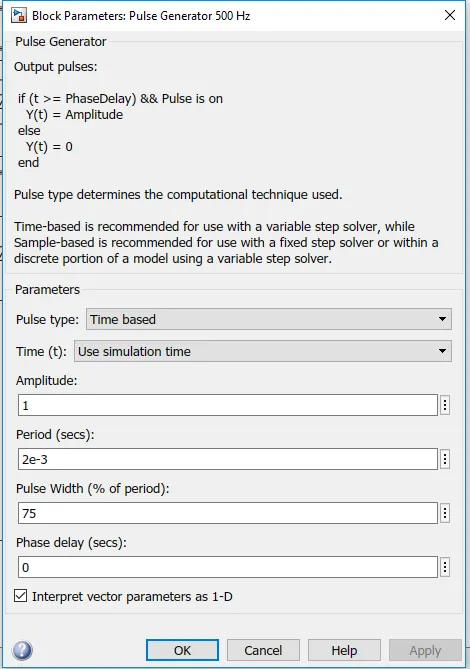
-The above model was taken from the MATLAB file document,where we can see that the model is already a readymade one ,the only thing which we need to alter here is the "pulse width percent"and to note the output from load torque,motor and armature current.
-Here in the above system we will be running the model for 1 seconds.Now we can see that the motor speed is increasing for 0.5 seconds which half of total time of speed at the same time current value also gets changed.
-Even when speed gets reversed we can see that the value remain same which means that the motor is still running at rated speed but only dierection has changed.
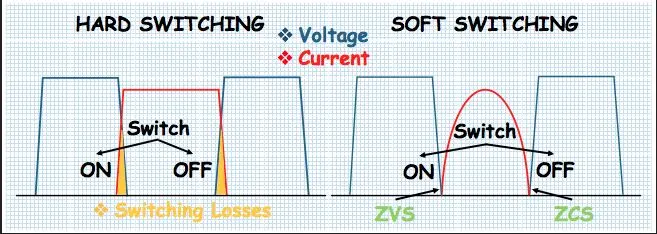
-In case of armature current the current remains smooth but during switching process there was a trouble shoot in the middle due to switching loss.There are basically twpo types of switching losses and they are the following:1)hard switching 2)soft switching.Here in our case it hard switching because of switching loss.
Output:
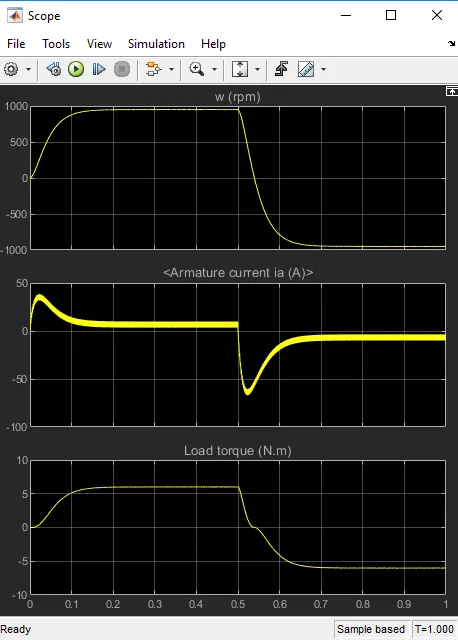
-From the above graph we can see that when the pulse width% was around 75,the switches were getting disturbed.Now to rectify this we need to reduce the pulse width perecentage
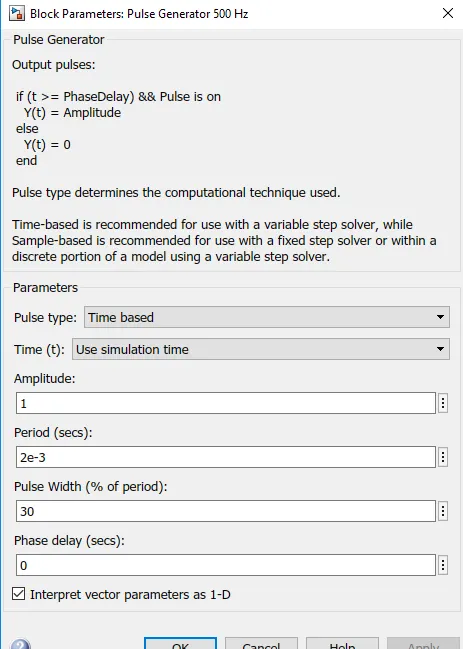
Now when we change the pulse width % from 75 to 30: we get the output as below:
The output from the scope was obtained as below:
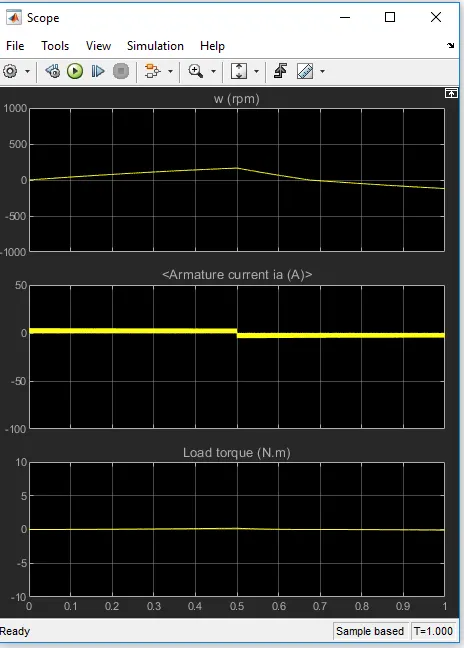
-From the above graph we can note thatthe switching operations are smooth and the armature current does not have any overshoot.
CHALLENGE 2:
AIM:
To compare 4 quadrant chopper DC Drive (DC7) block with H bridge model.
Solution:
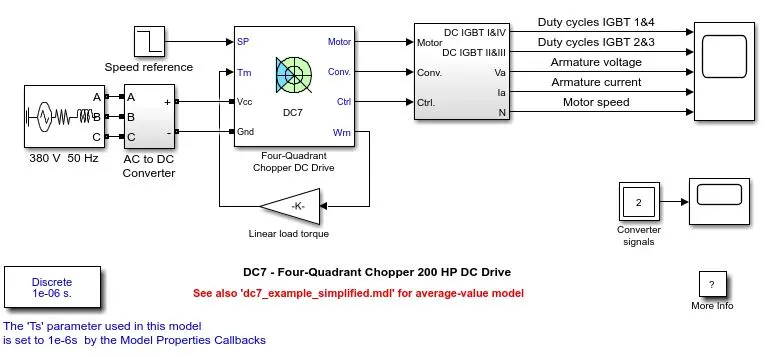
-The above daigram shows us the simulink model of Four quadrant chopper.
Four Quadrant Chopper:
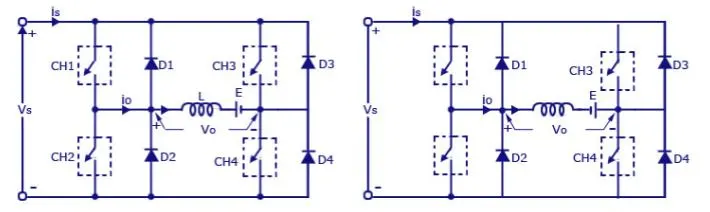
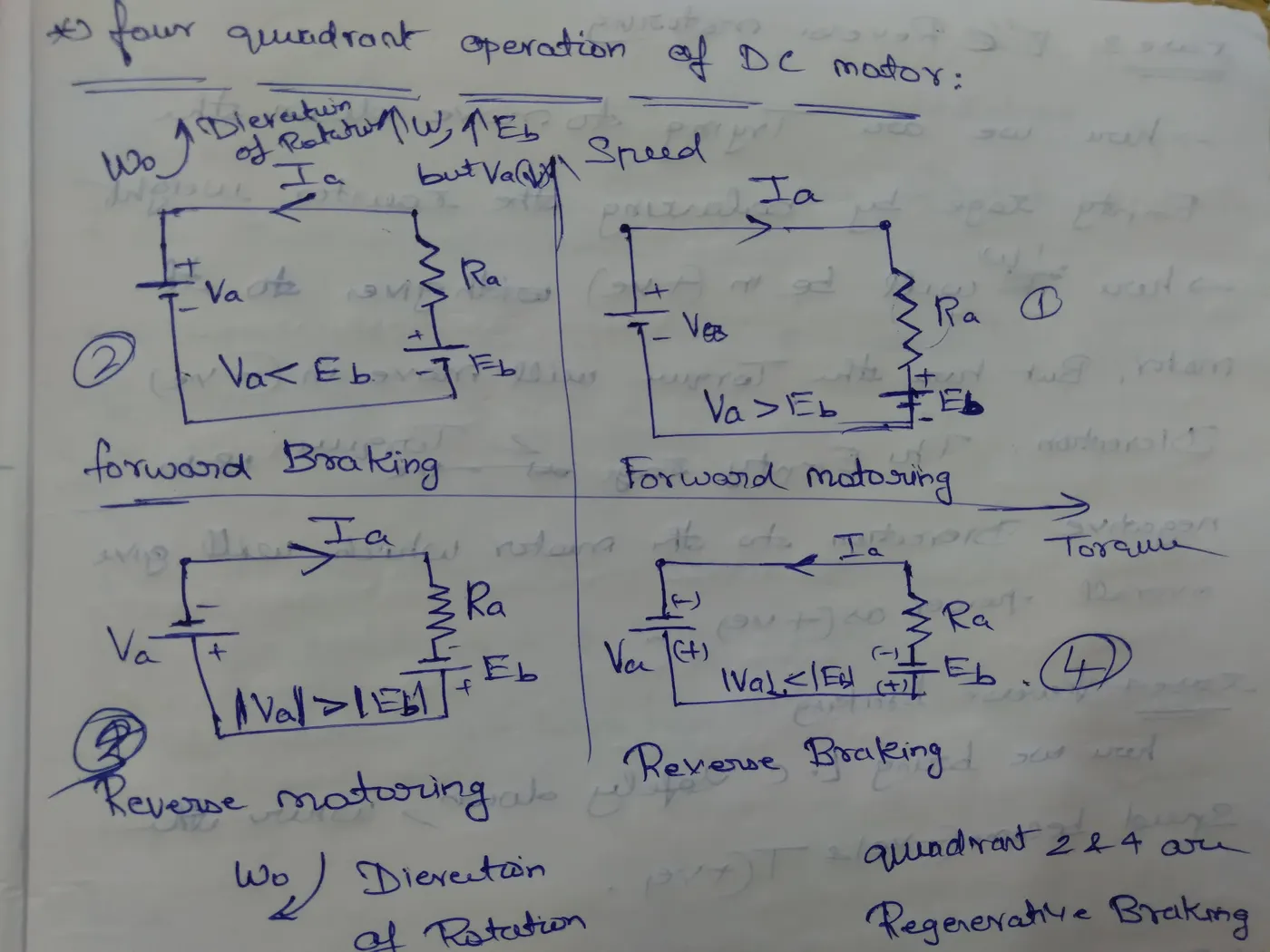
-So generally four quadrant chooper consist of 4 semiconductor switches and 4 diode switches which are arranged in antiparallel manner.
-They can be operated in all the 4 quadrants.Here the power can flow either from source to load or load to source.
-This type of quadrant are also called as E-type chopper.
Theory part:
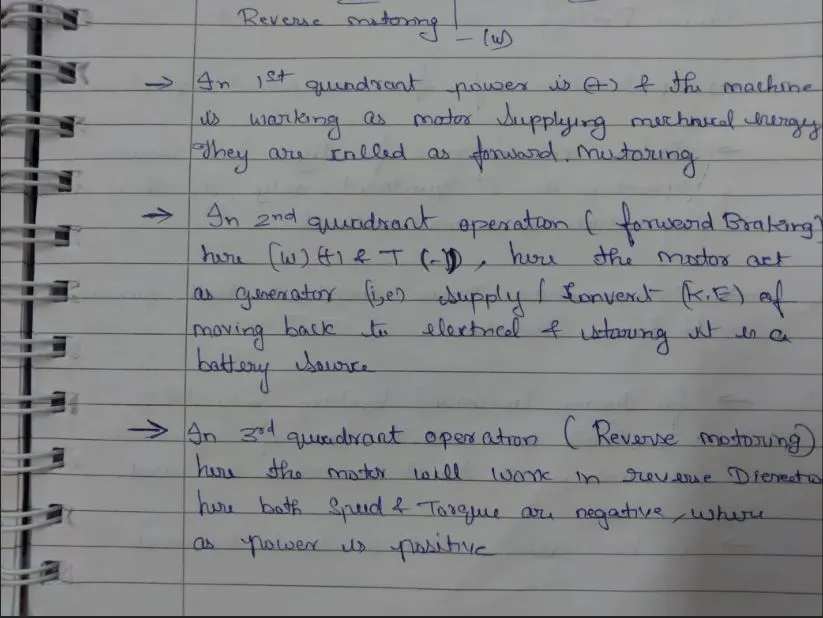
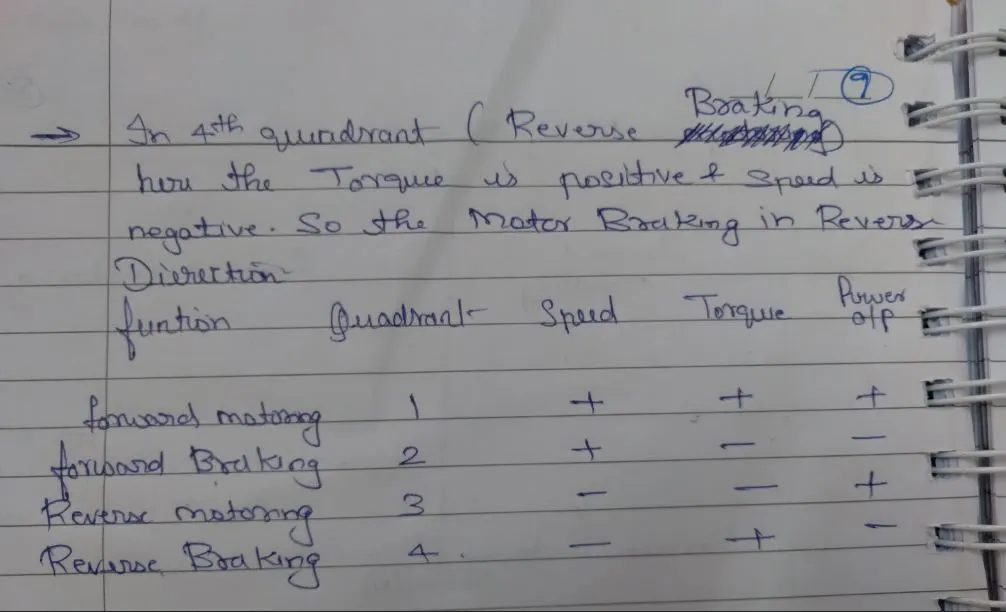
-The main advantage of this four quadrant choper is that it can control all 4 quadrants operation with H bridge operations.Due to high switching frequency DC-DC convertors,a lower armature current ripple is obtained and for this four switching devices are requiredn which increaese the complexity of the set up and also consumes some extra space.
H-Bridge model:
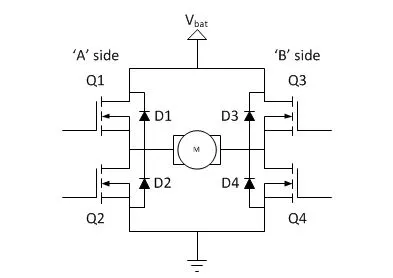
-H bridge is an electronic device that switches the polarity of a voltage applied to a load.Most DC to AC converters,AC to DC converters,motor controllers etc .. uses H bridge.Theses circuits are often used in robotics,automotive industry where DC motor is made to run forward and backward.
-In H bridge the switches will only in 2 quadrant.The switching q1 and q4 are usually bipolar or FET transistor in some high voltage application IGBTs are used.Q1 and Q2 will not be connected together as it may create short circuit with input supply,similarly Q3 and Q4 will not be connected together.
-Advantage is that it has higher efficiency,low losses and is also small iin size while comparing with 4 quadrant chopper.
Result:
-The difference between H-bridge block and 4 quadrant block was explained properly.
CHALLENGE 3:
To make a suitable ev model using DC7 block and to make report on it.
Solution:
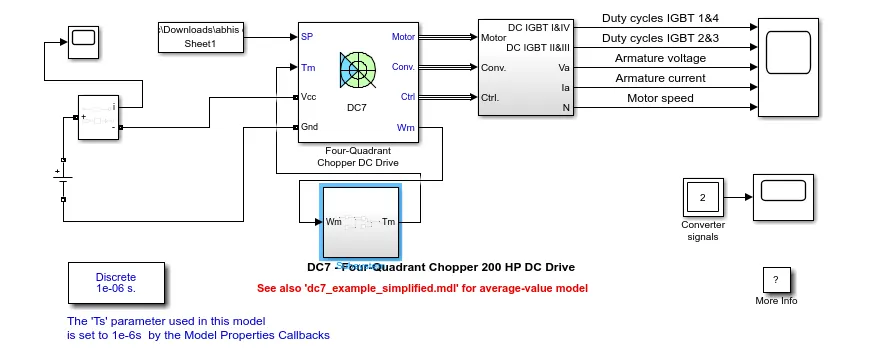
-The above ready made model was taken from MATLAB documetation DC7-four quadrant chopper200 HP DC Drive where we need to only modify some block parameters as per our need.
-Here I have replaced the AC voltage source and AC to DC convertor with DC voltage source of 100 volts.
-Here the SP input is replaced by work space duty cycle where we enter the values of time and velocity in spread sheet and save it,and retrive it back to run the system.
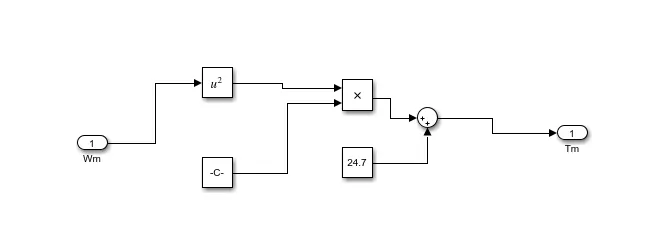
-The linear load torque block is replaced by a subsytem according to load characterstics (T=24.7+0.0051*w_m) and it is shown below,
-Drive cycle link is given below:
https://docs.google.com/spreadsheets/d/1L0d_uQTlRiCCHiwLyOXg6M3oqKrXt1iwssNfe7zl6Is/edit#gid=0
-Output is obtained as below:
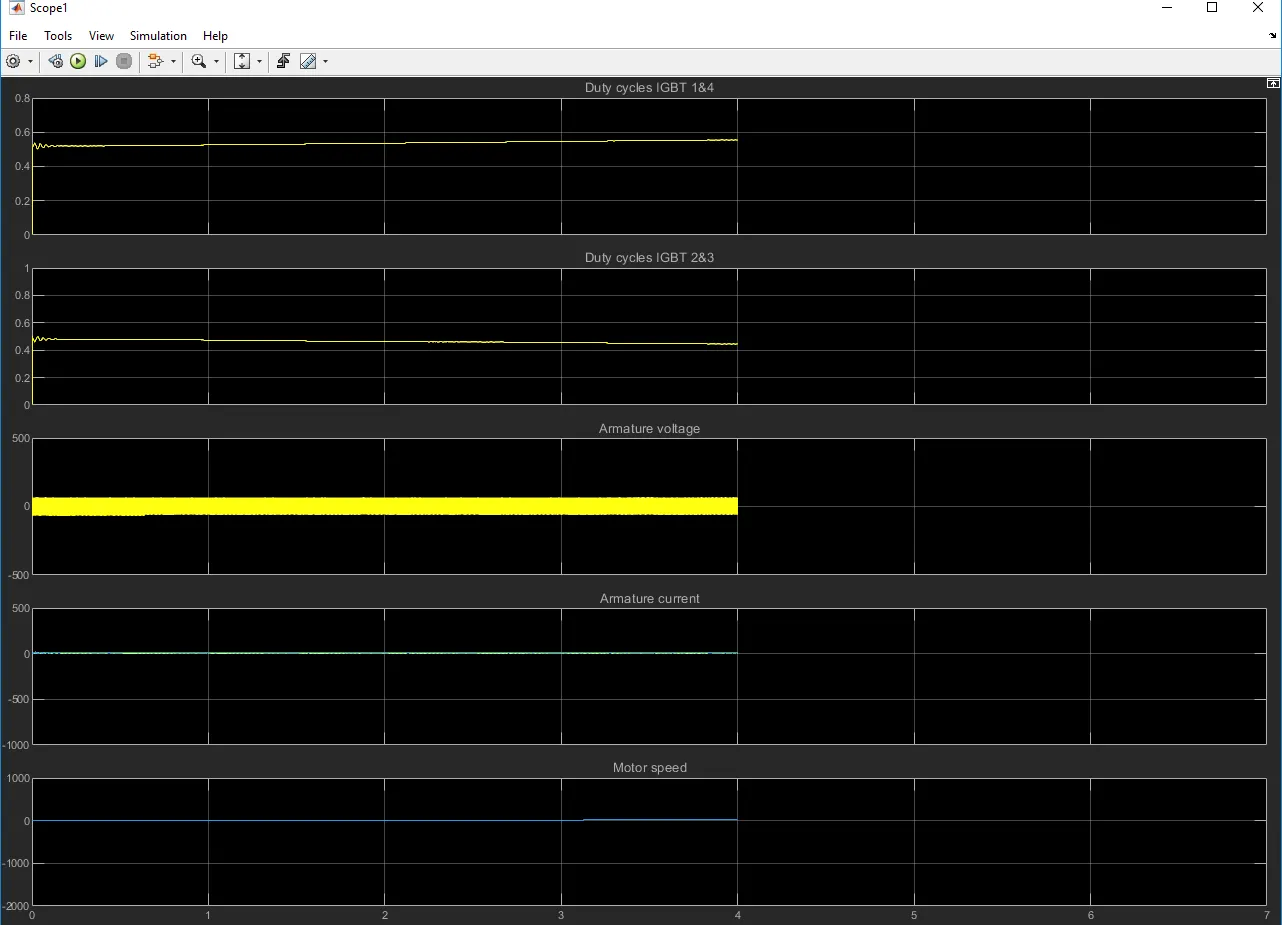
-we can see that non-linear load is matching motor load .