Week 7 Challenge - Assembly Workbench
Objective:
To create quick return mechanism and CV joint parts in part workbench or generative work bench and assemble them
following guidelines
CV JOINT
2. CV JOINT
Constant-velocity joints (also known as homokinetic or CV joints) allow a drive shaft to transmit power through a variable angle, at
constant rotational speed, without an appreciable increase in friction or play.
They are mainly used in front wheel drive vehicles. Modern rear wheel drive cars with independent rear suspension typically use CV joints at the ends of the rear axle halfshafts and
increasingly use them on the drive shaft.
Function
Besides just holding the drive shaft in place, the CV joints also transfer power to the wheels from the transmission.
Basically, they ensure that when you press on the gas, your wheels will turn. If the CV joint is not working properly, it may affect the way your vehicle
handles.
Often you will hear a popping or a clunk sound when shifting, which indicates something is wrong.
If the joint breaks, it can stop the car from moving and can cause severe damage, making it essential component in your vehicle that needs to be kept in
good condition.
Procedure of creating parts:
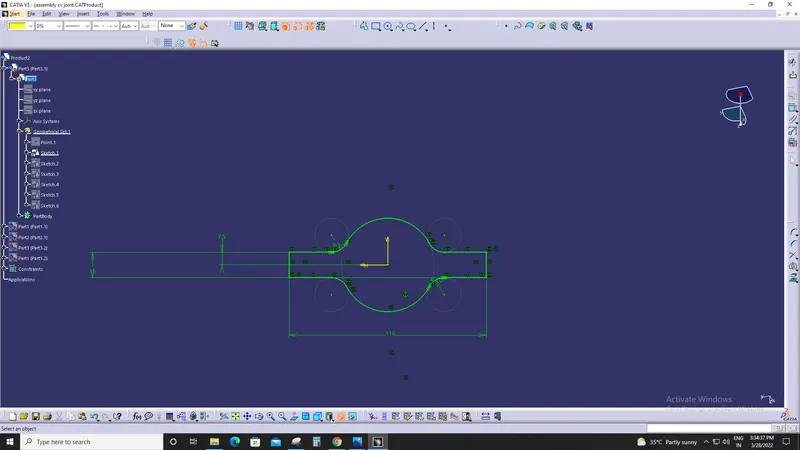
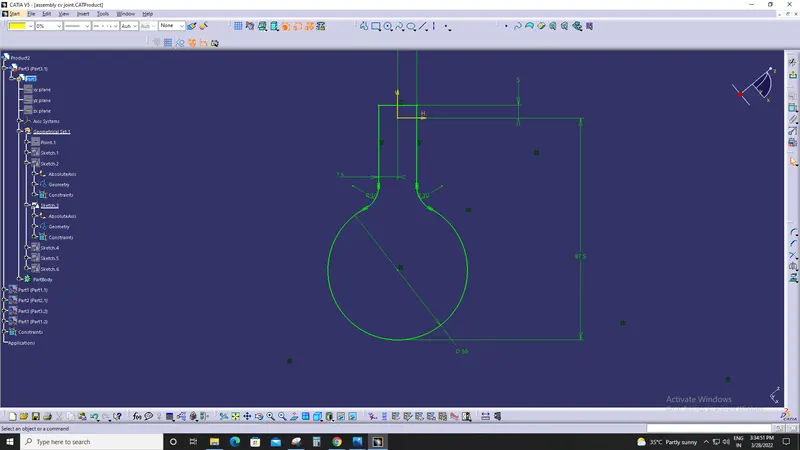
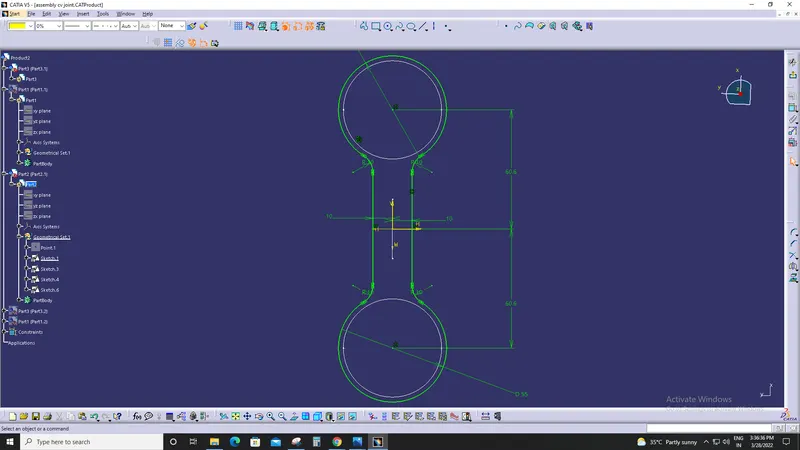
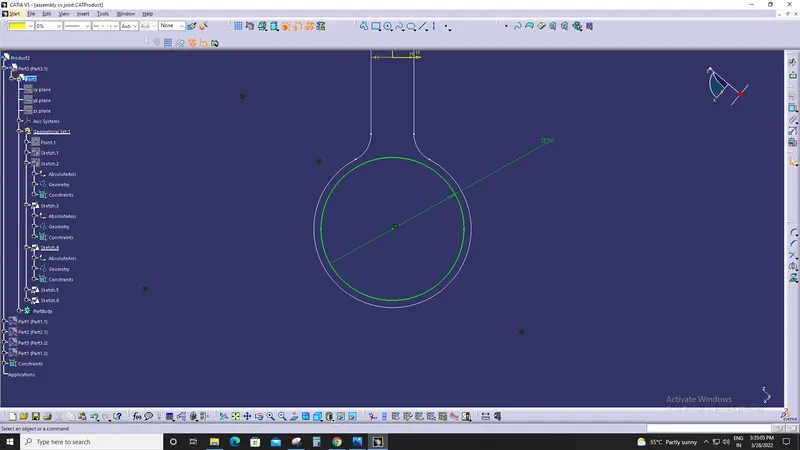
1. First create all parts of CV joints and QRM with help of drawings provided
2. All parts to be created separately in part work bench
3. After creating all parts individualy we assemble them together in single product in assembly workbench
4. Using constriants we assemble all parts together and create CV joint and QRM.
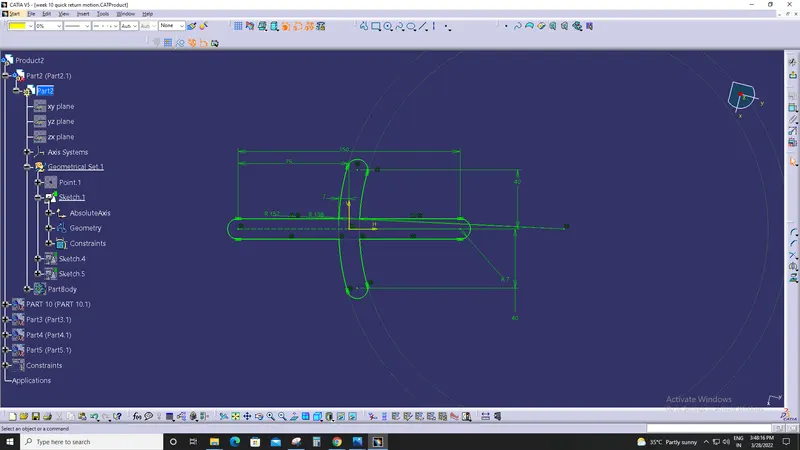
2D SKETCH
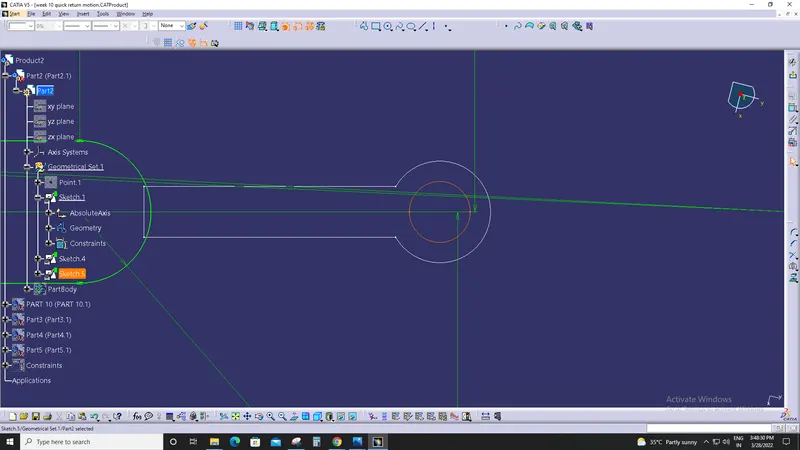
PART
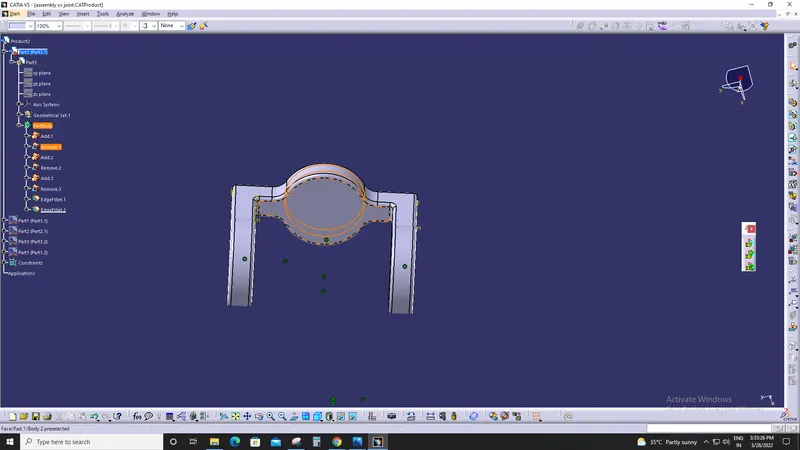
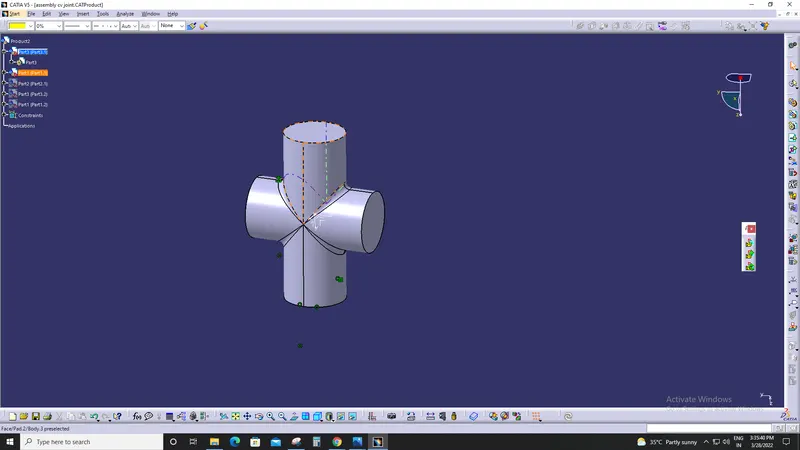
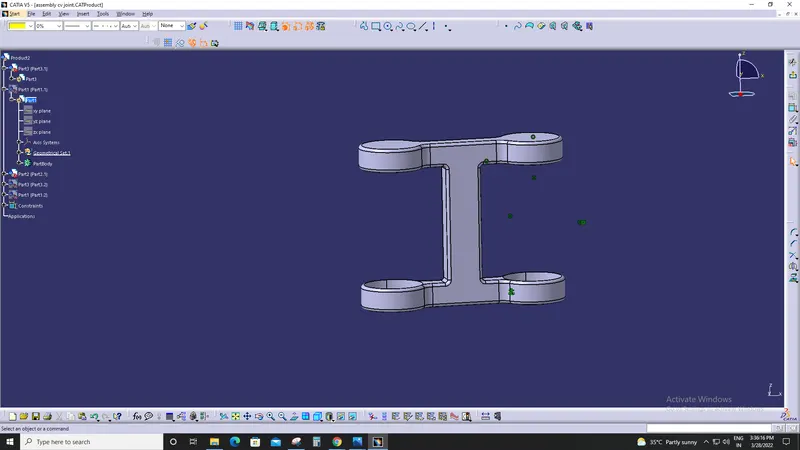
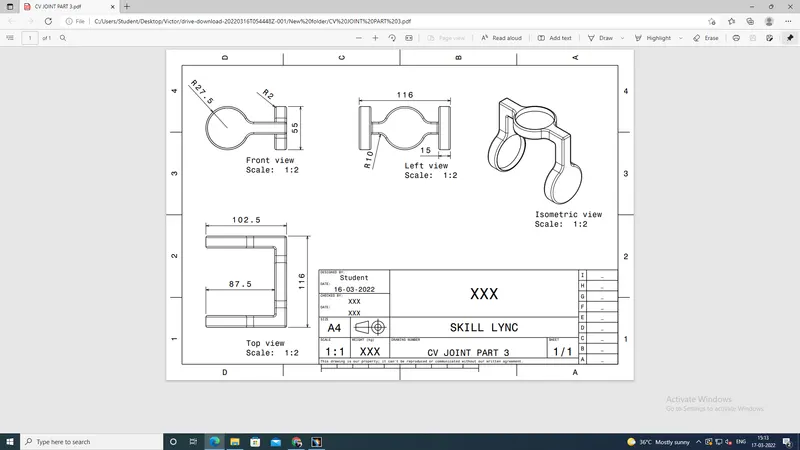
DRAFTING
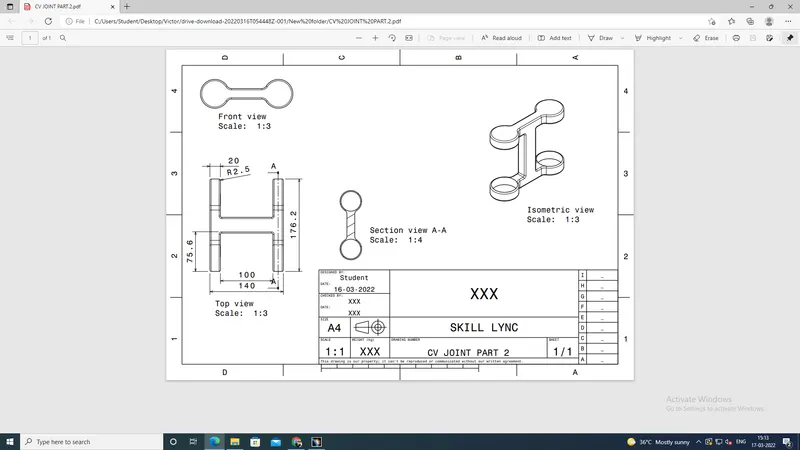
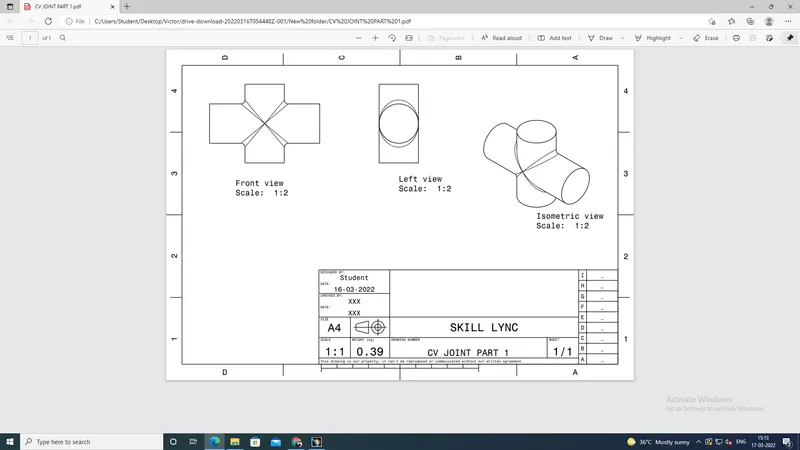
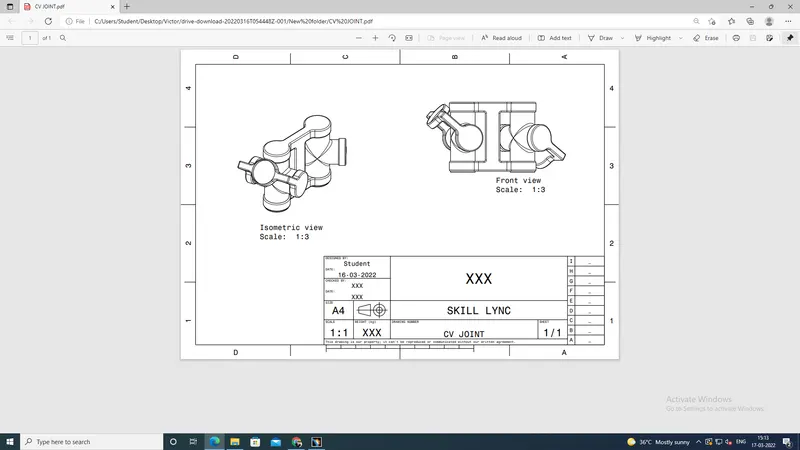
ASSEMBLY
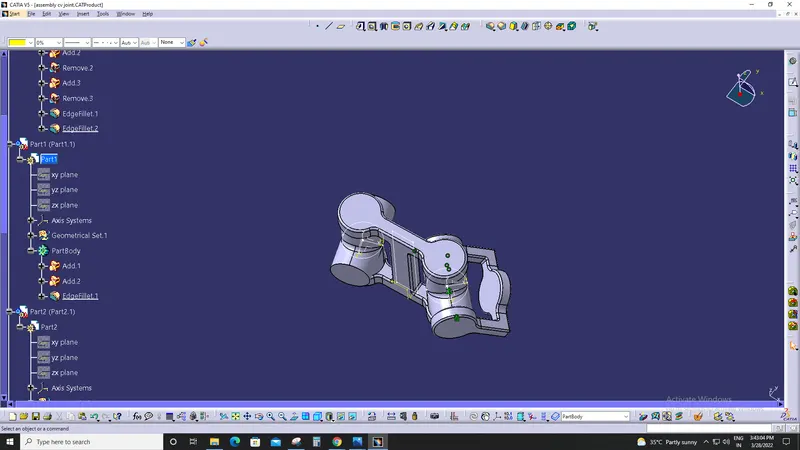
1. QUICK RETURN MECHANISM
A quick return mechanism is an apparatus to produce a reciprocating motion in which the time taken for travel in return stroke is less
than in the forward stroke.
It is driven by a circular motion source (typically a motor of some sort) and uses a system of links with three turning pairs and a sliding pair.
There are three types of Quick return mechanism:
Whitworth Quick Return mechanism.
Crank and Slotted Link Mechanism and.
Hydraulic Drive.
Procedure of creating parts:
1. First create all parts of CV joints and QRM with help of drawings provided
2. All parts to be created separately in part work bench
3. After creating all parts individualy we assemble them together in single product in assembly workbench
4. Using constriants we assemble all parts together and create CV joint and QRM.
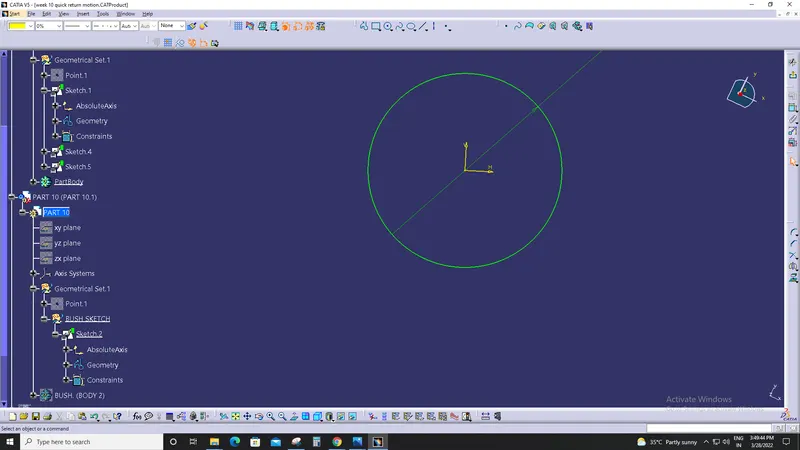
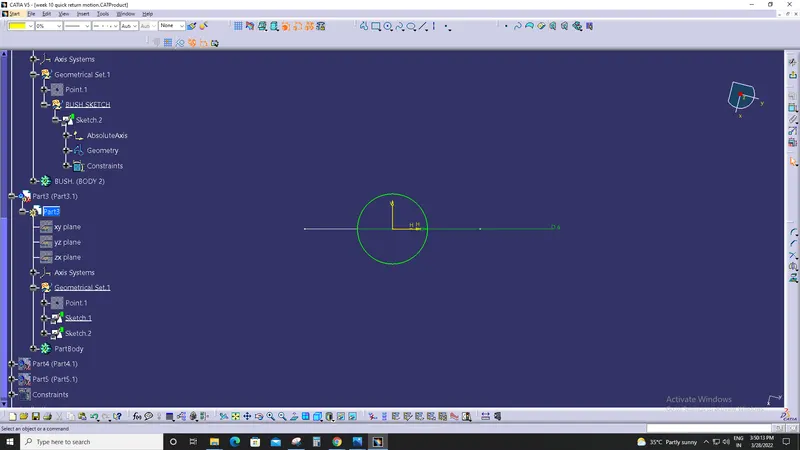
2D DRAWING
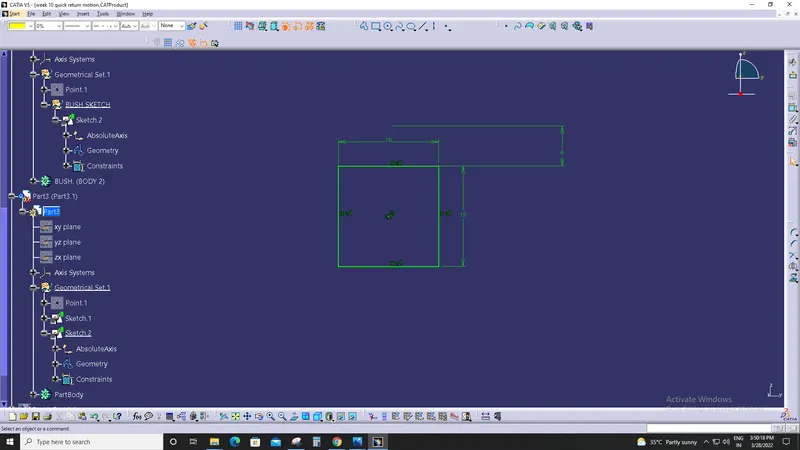
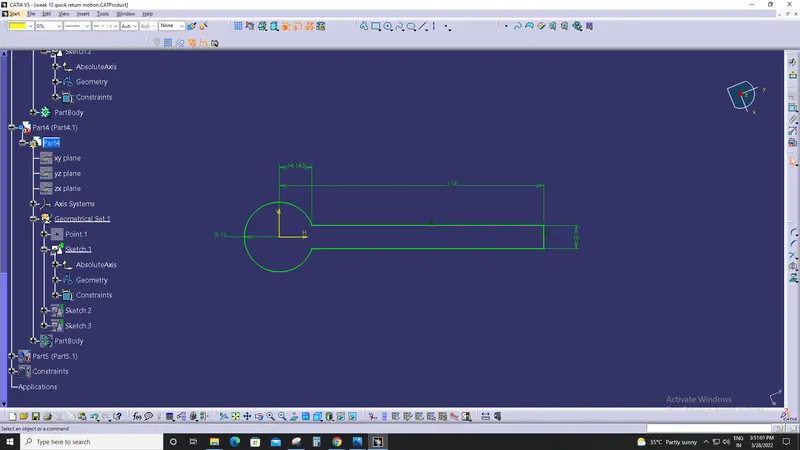
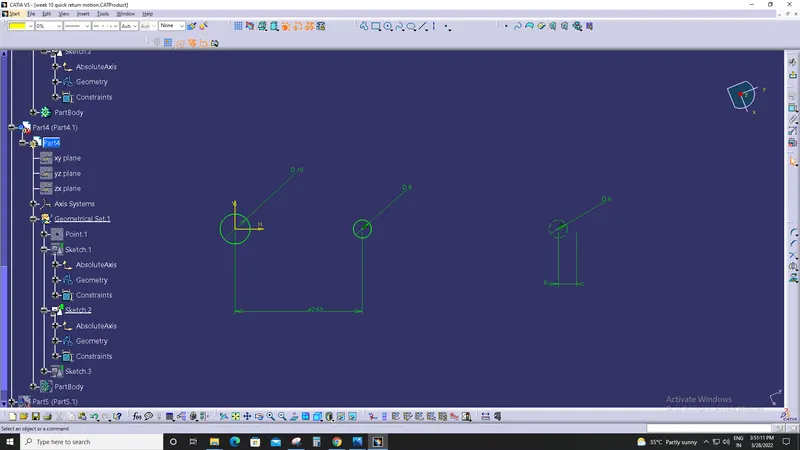
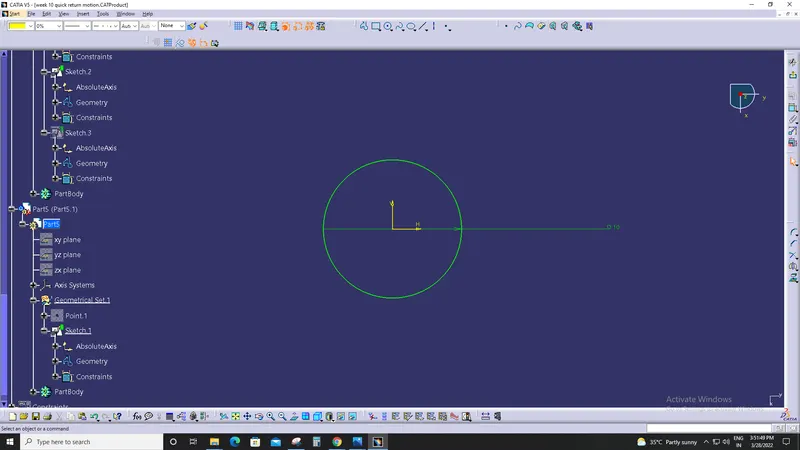
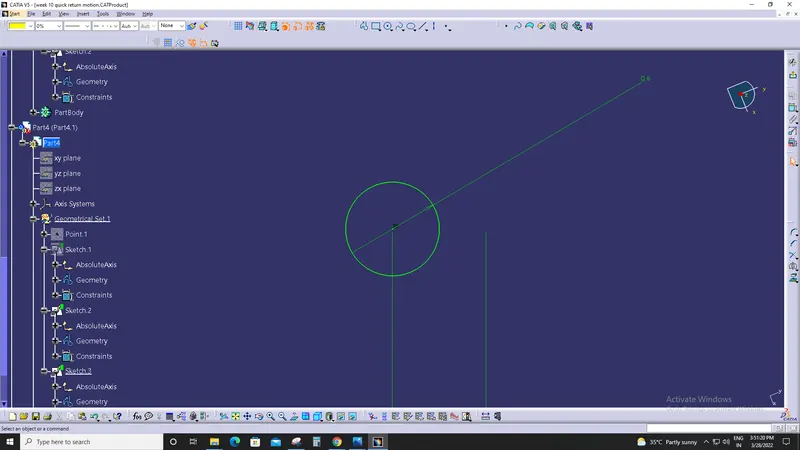
PART DESIGN
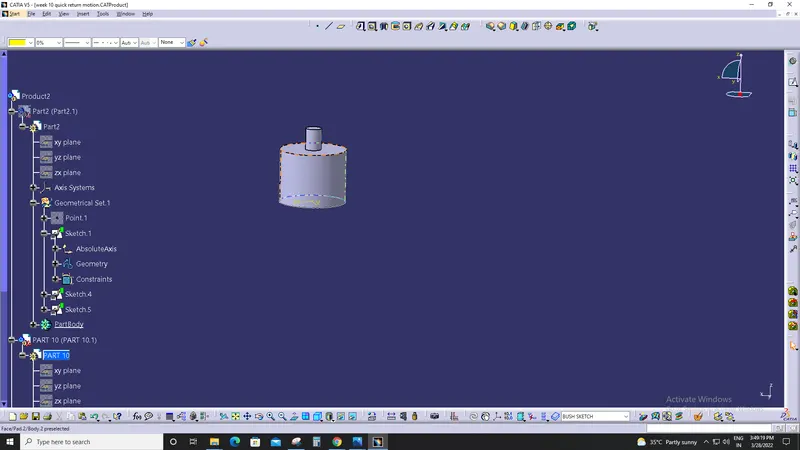
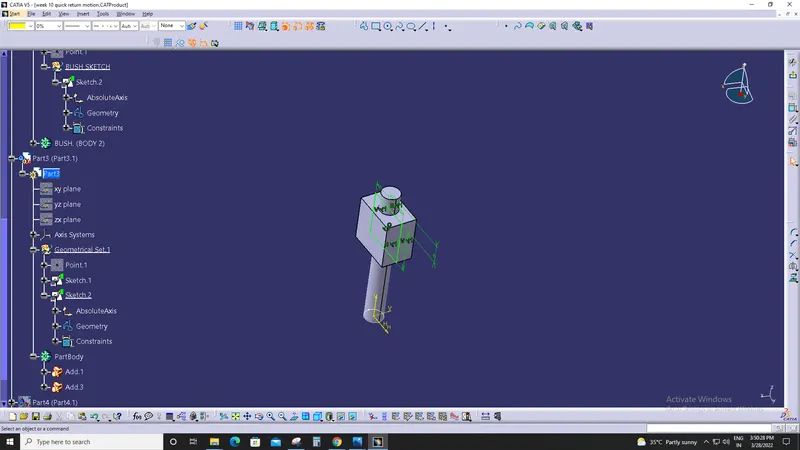
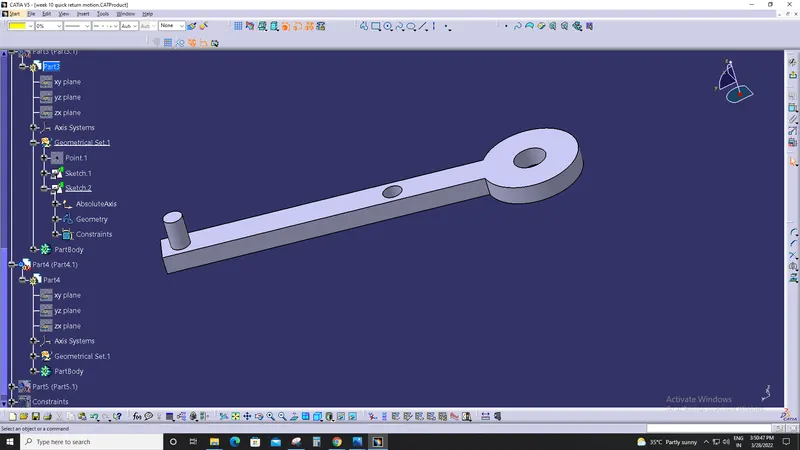
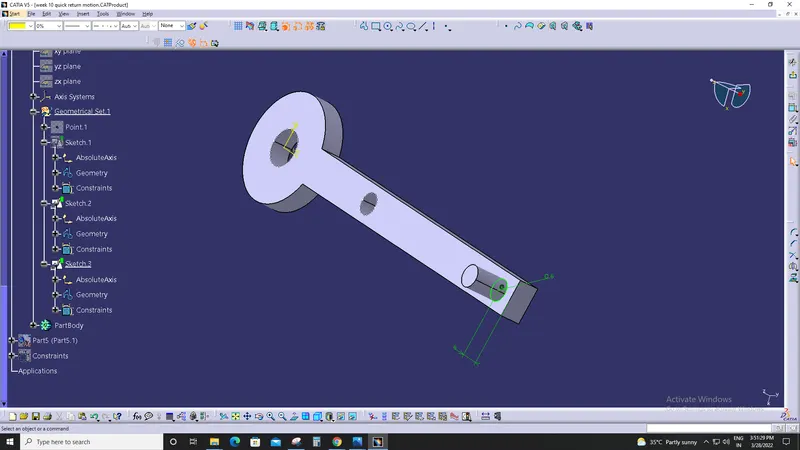
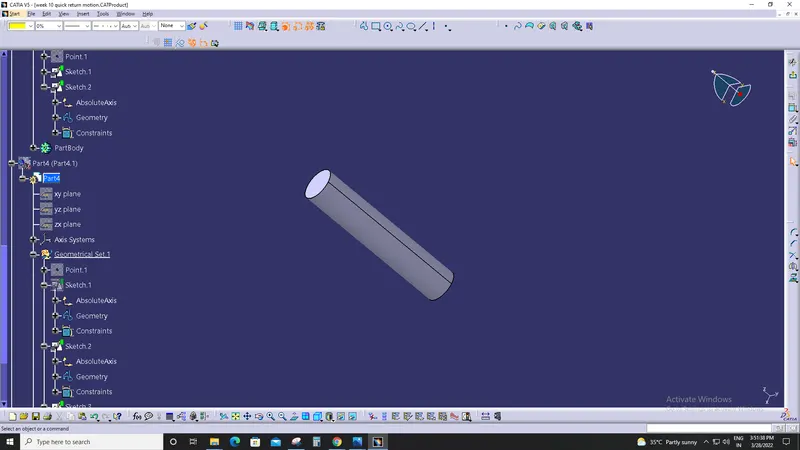
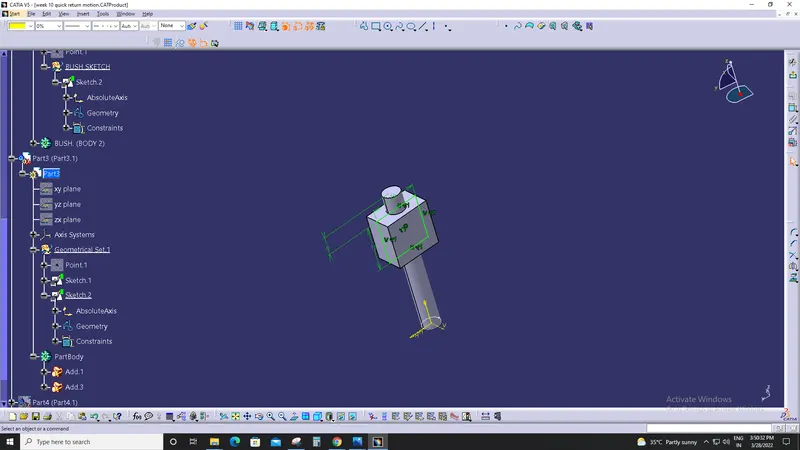
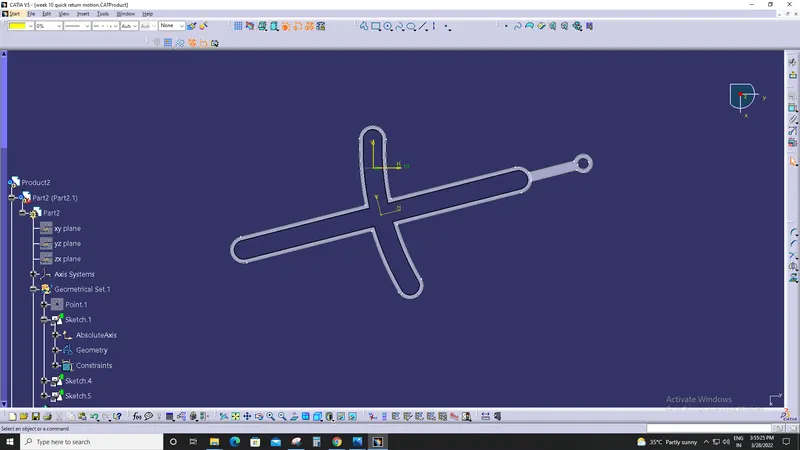
DRAFTING
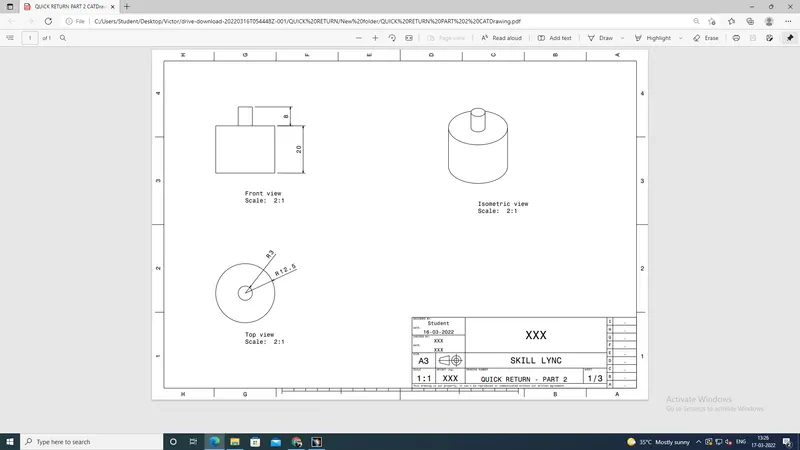
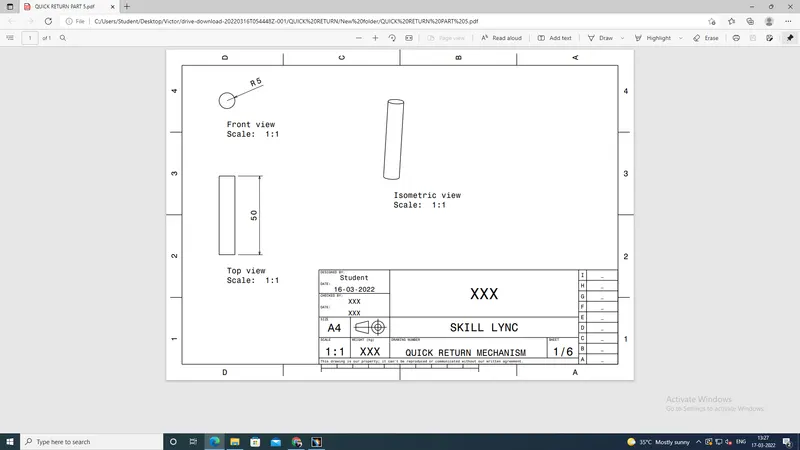
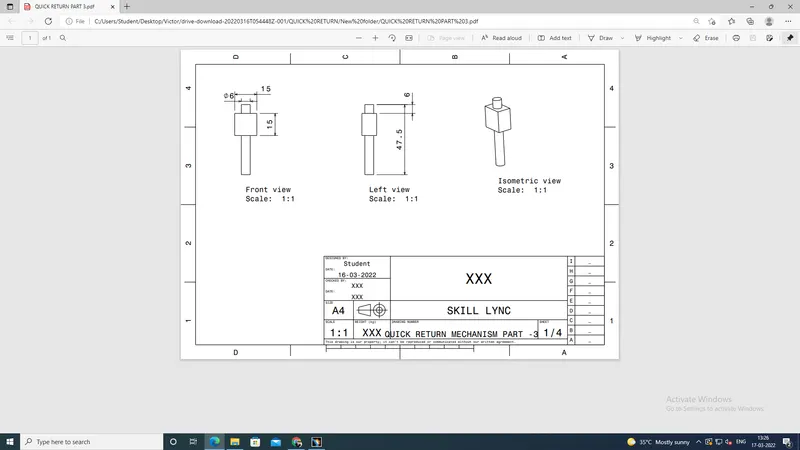
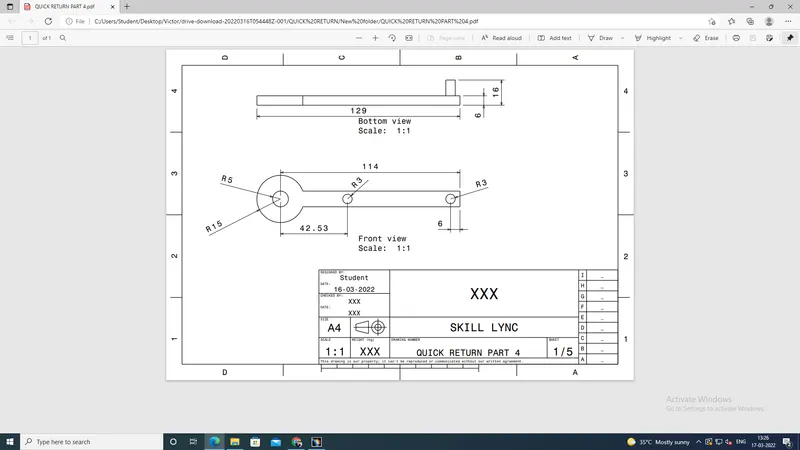
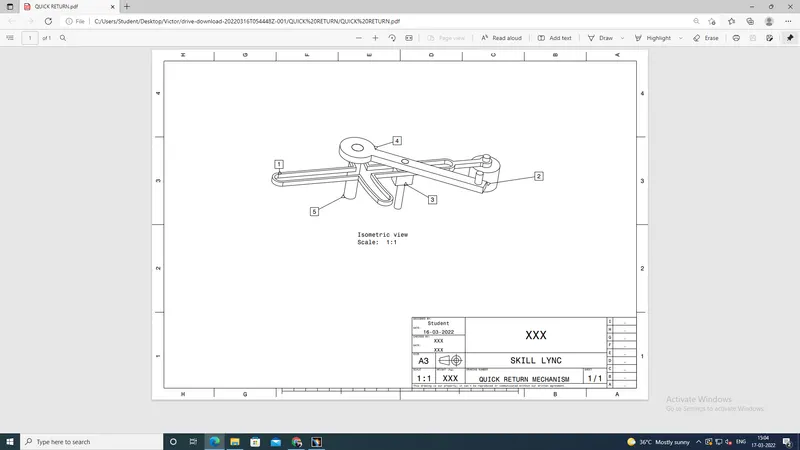
ASSEMBLY
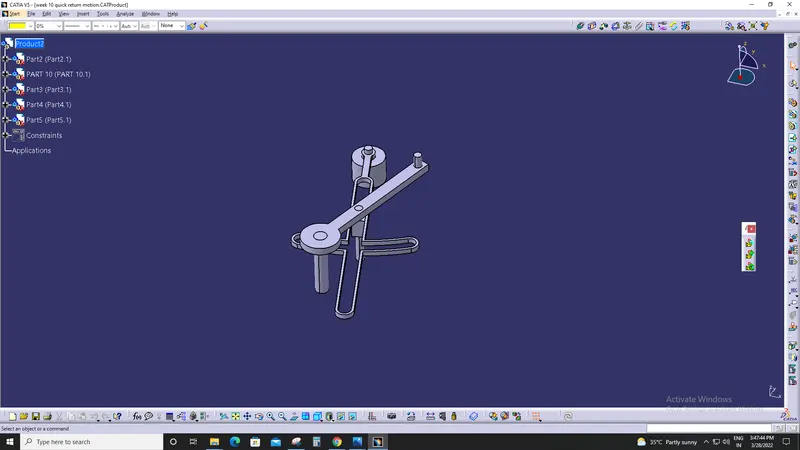
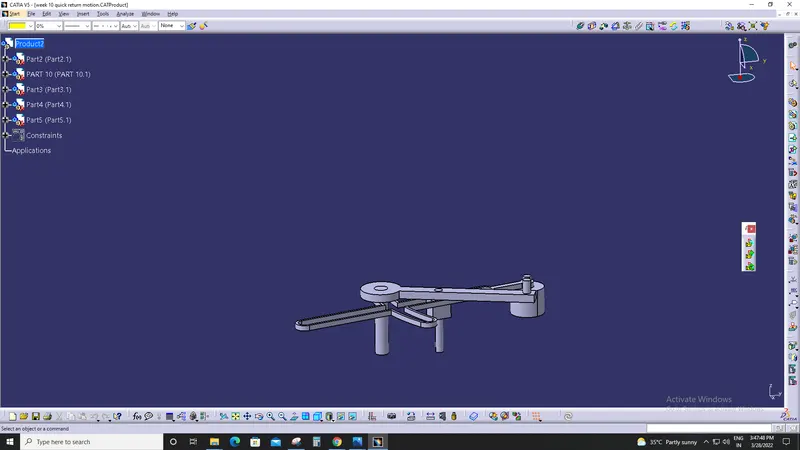
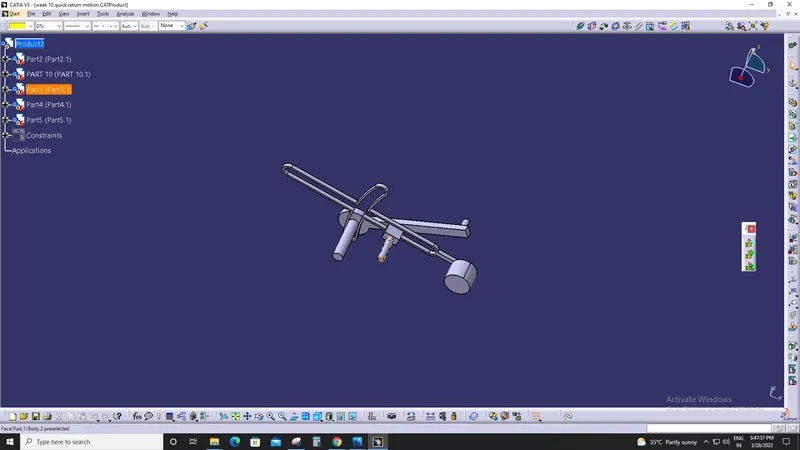
Proceure of creating parts:
1. First create all parts of CV joints and QRM with help of drawings provided
2. All parts to be created separately in part work bench
3. After creating all parts individualy we assemble them together in single product in assembly workbench
4. Using constriants we assemble all parts together and create CV joint and QRM.