Week 6: Conjugate Heat Transfer Simulation
OBJECTIVE:
1. To perform conjugate heat transfer simulation problem by setting up flow through a pipe having certain internal and outer diameter.
2. To Record the simulation for the temperature plots and also verify the result by making a grid dependance test and adding a Y+ Plot.
SOFTWARE USED: Converge studio V3.0
PROCEDURE:
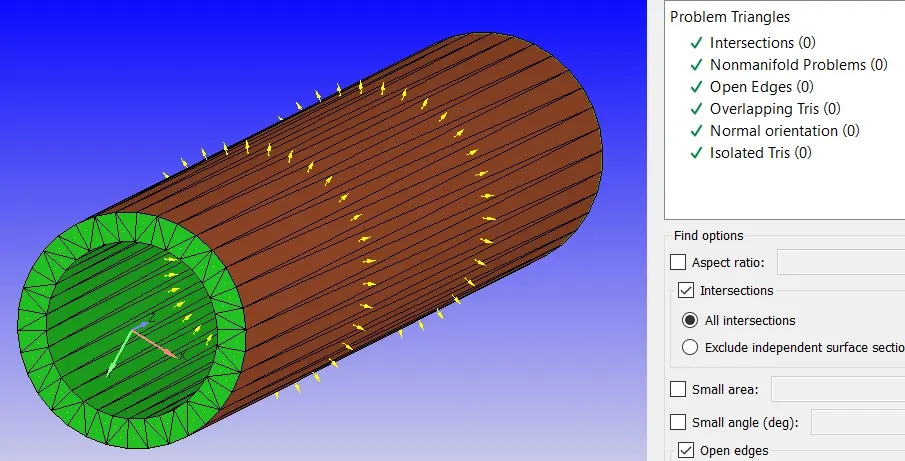
1. For this simulation we will make a geometry with 0.2m inner diameter and a 0.25 m outer diameter. WWe also need to patch the cylinder area in between for making a boundry type layer for the inlet and outlet boundry.
After we create a boundary we need to check for any errors. We have intersections errors in the geometry. For those we need to delete and patch the area using selection by angle.
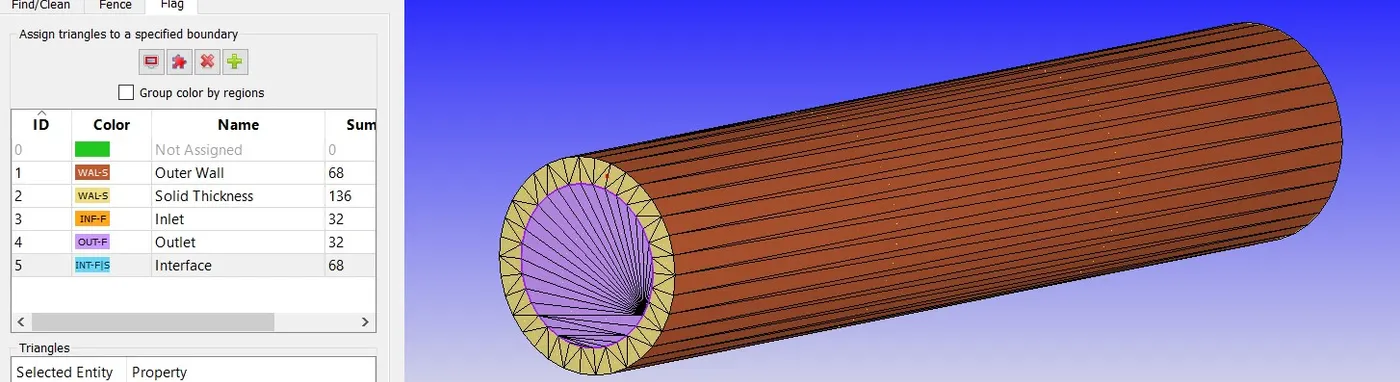
2. Now we need to flag boundaries for this case.
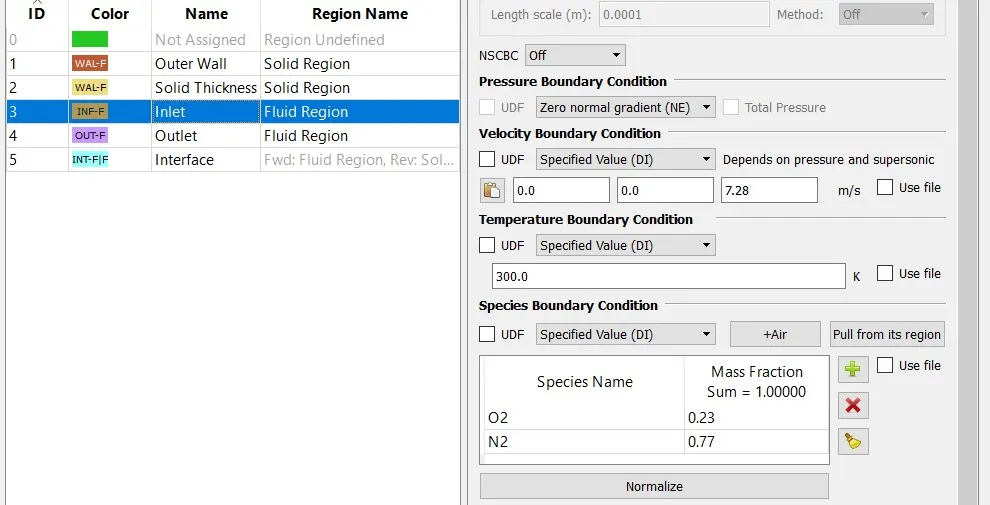
3. Now we select Boundary Conditions for the case setup. For inlet Boundary consition we need to specify the value of the Velocity which we use for this supercycling Condition.
For the given value of Reynolds number at 7000 and the temperature to be at 300 k (25 degs.)
We use the formula
Re = (rho*V*D)/(Dynamic viscosity)
At 300 K, Rho = 1.184 kg/m3, D = 0.015, Dynamic Viscosity = 1.849e-5 kg/m-s
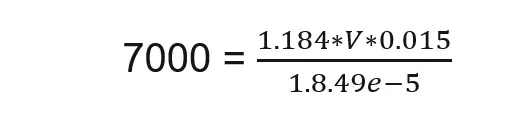
By solving the above Equation, we find that the value of the super cycling velocity is 7.28 m/s.
We Insert this value to the inlet boundary condition.
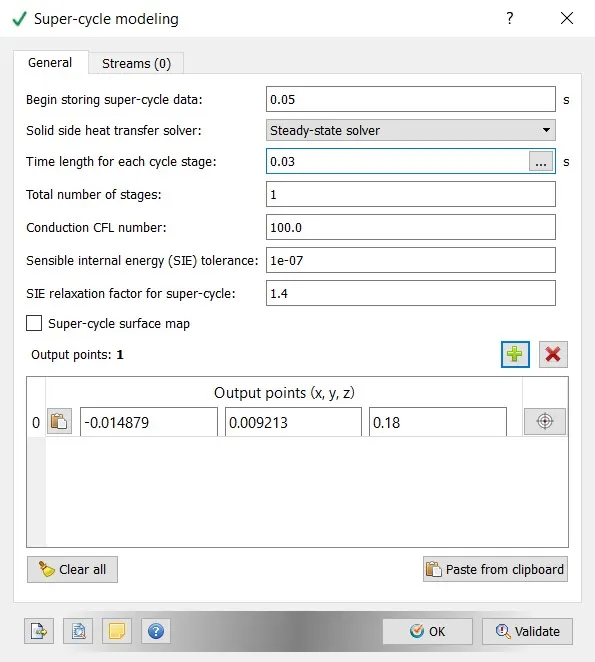
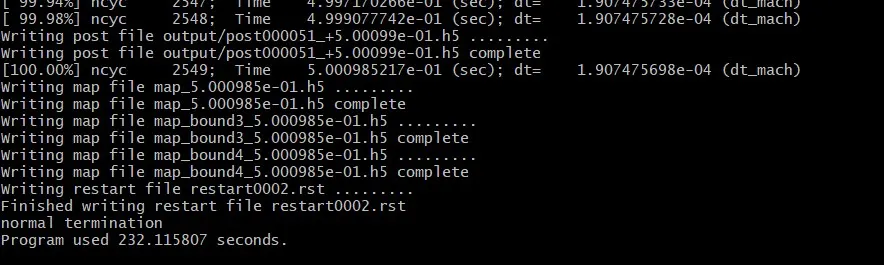
4. Now we start the simualtion. For a baseline super cycling time of 0.05 s we get a standard simulation time for about 240 s.
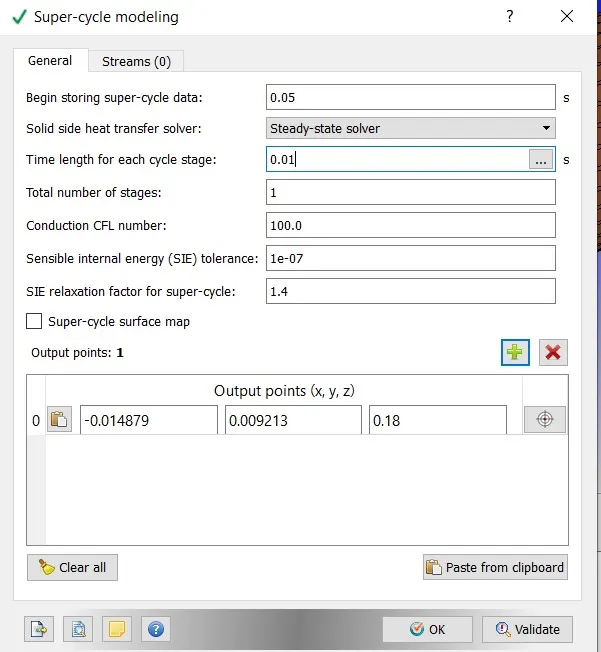
As mentioned in ther challenge i changed the super cycling time parameters and got the following result for the following time.
For the above time we get a simualtion time for 232 s.
Similarly we changed the values of the super cycling time to 0.02 s amd 0.01

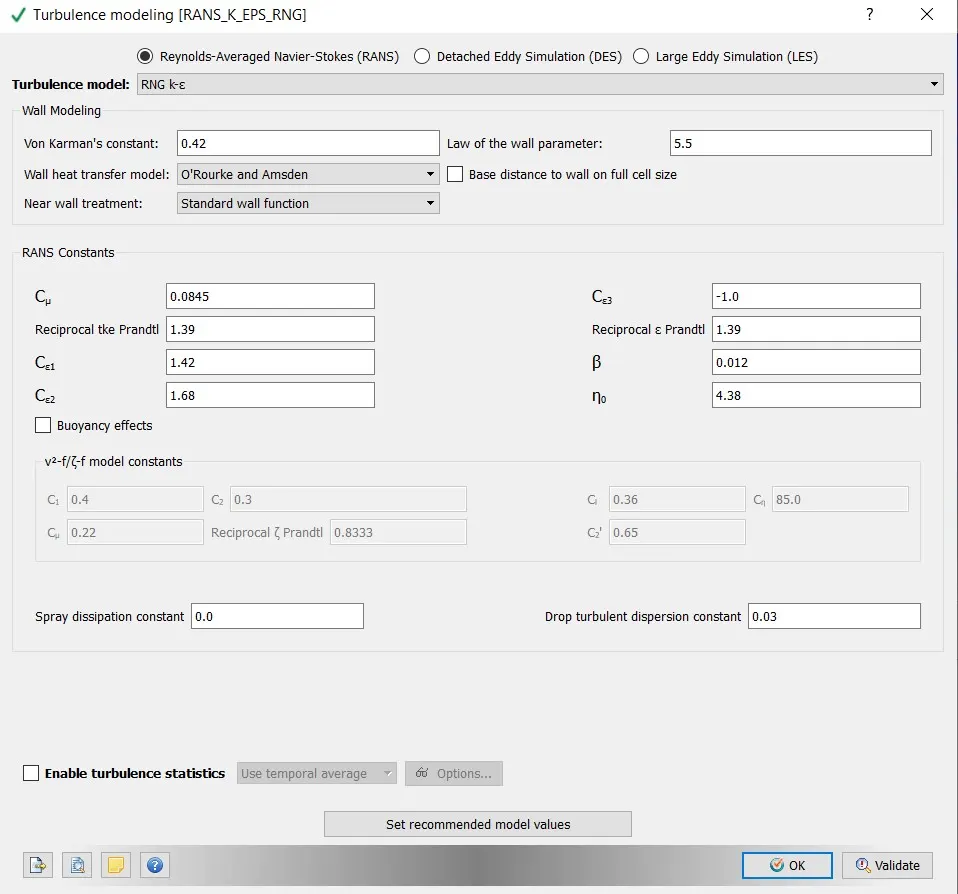
5. For the turbulence model we used the K-Upsilon model for this simulation.
For an initial base grid we observe that the value of temperature converges to 431.01K.
For this simualtion we try to make the grid sizes to make a grid dependance test. For this we use a 3mm grid mesh and check for resultant temperature values of convergence.
For Grid Dependance test we took 3 meshes.
namely 4mm, 3mm and 2mm.
With each grid we can see the simulation time increasing and the temperature decreases very substancially.
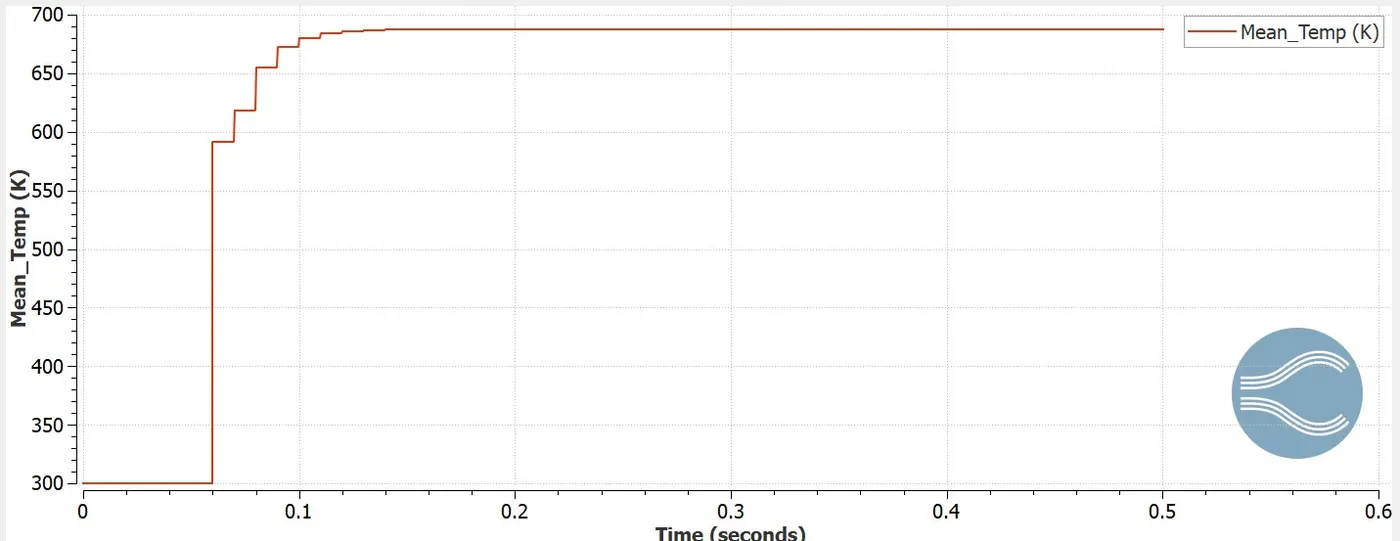
From the above image we can see that the temperature readings at 4mm mesh were recorded around 692K (Mean Temperature). We can also observe how the temperature increased constantly and attained a convergence temperature around 0.17 seconds.
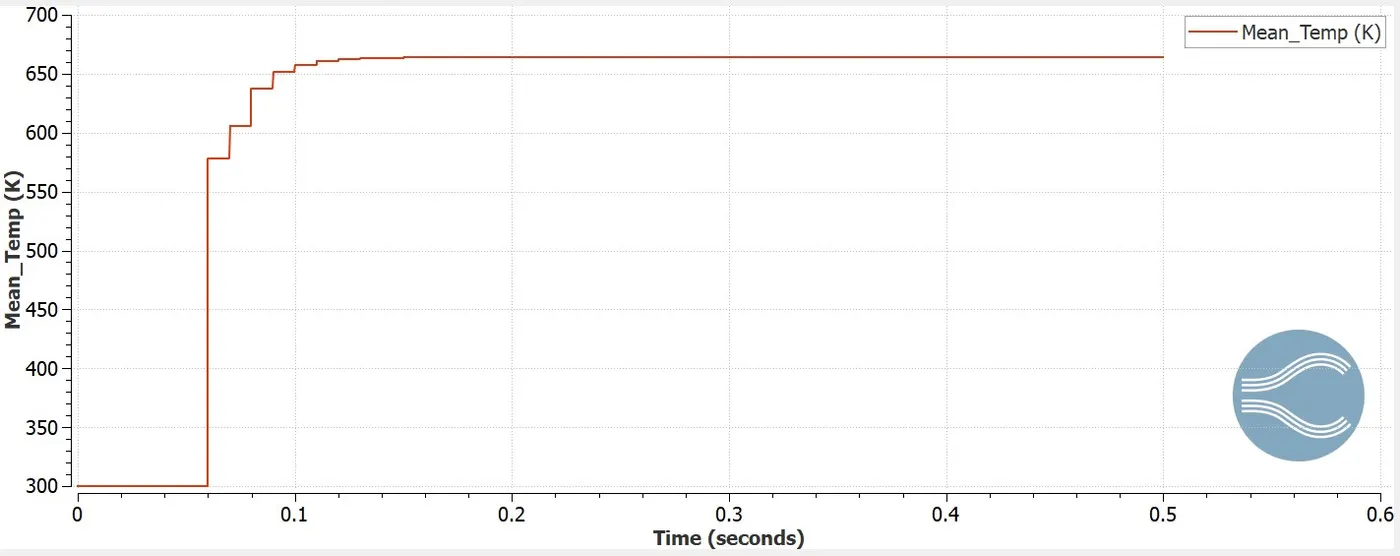
The above image shows the temperature for mesh of 3mm. We can see the max temperature has decreased from the 4mm mesh and has come down to around 660K. The temperature has also converged at 0.15 seconds which is faster than that of the 4 mm mesh.
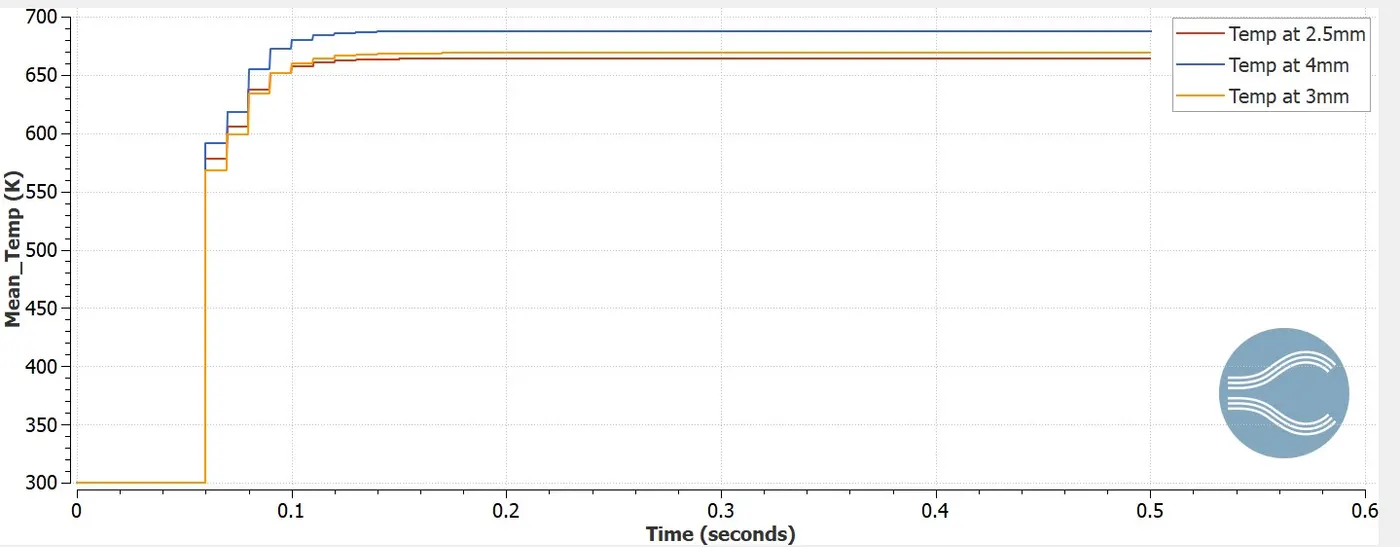
The above image shows the comparison of the temperatures at 4mm, 3mm and 2.5mm. We can clearly observe that when the grid size decreases the temperature of the boundaries also decreases.
The following is the animation for the Temperature at the walls and how it is flowing for convergence
CONCLUTIONS:
We can derive that the temperature of the flow decreases with a much coarse mesh. We have also concluded that the less the time for supercycling the less time the simulation run takes.
The link for the files is :
https://drive.google.com/drive/folders/1i3Wyum5P1rUAA46yn7_ES2JmjwQxTOmv?usp=sharing