Week 6 - CHT Analysis on a Graphics card
Objective:
To simulate the steady-state conjugate heat transfer analysis on the model of a graphics card.
Theory:
Conjugate heat transfer:
The term Conjugate heat transfer is used to describe that when there is a heat transfer between solid to fluid and vice versa.
The conjugate heat transfer (CHT) analysis is an iterative way to simulate the heat transfer between solid and liquid surfaces.
Applications of CHT:
Heat exchanger, cooling fins with natural or forced convection, etc. . . .
Electronics components should be kept below the optimum temperature in order to work.
For processor work with a maximum temperature of (say) 90-degree Celsius and we should know the power consumption of the component.
In order to keep the temperature below its maximum temperature, we need to dissipate the heat.
we can achieve this using forced convection and to increase the surface area fins are used.
By varying the flow rate and surface area to achieve the desired heat dissipation.
K Epsilon Turbulence model:
K epsilon is best suited for flow away from the wall. due to cell constrain we are using the k epsilon model.
Geometry:
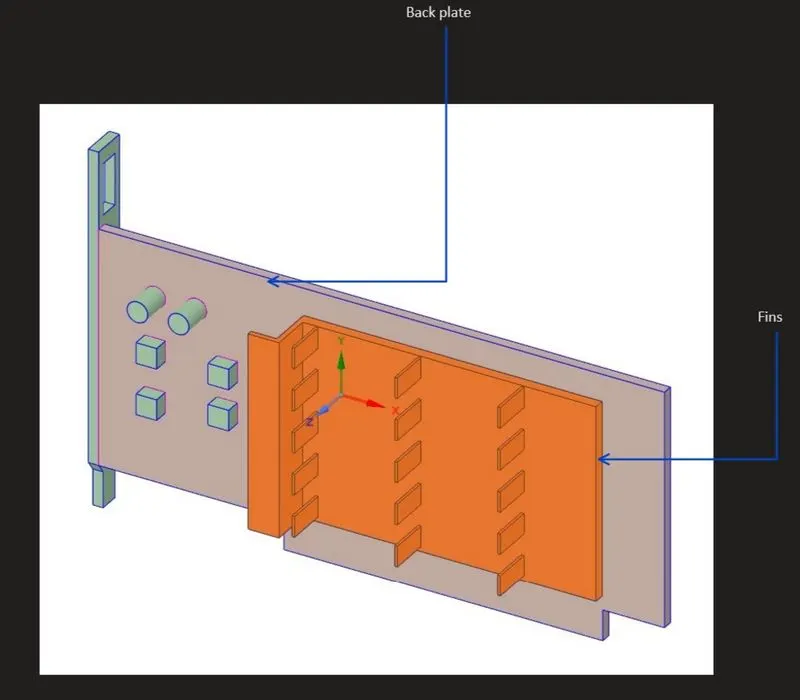
Mesh:
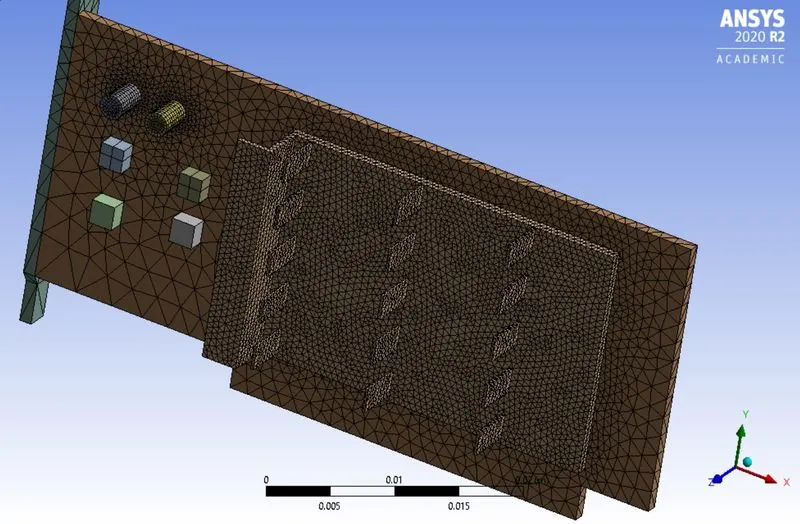
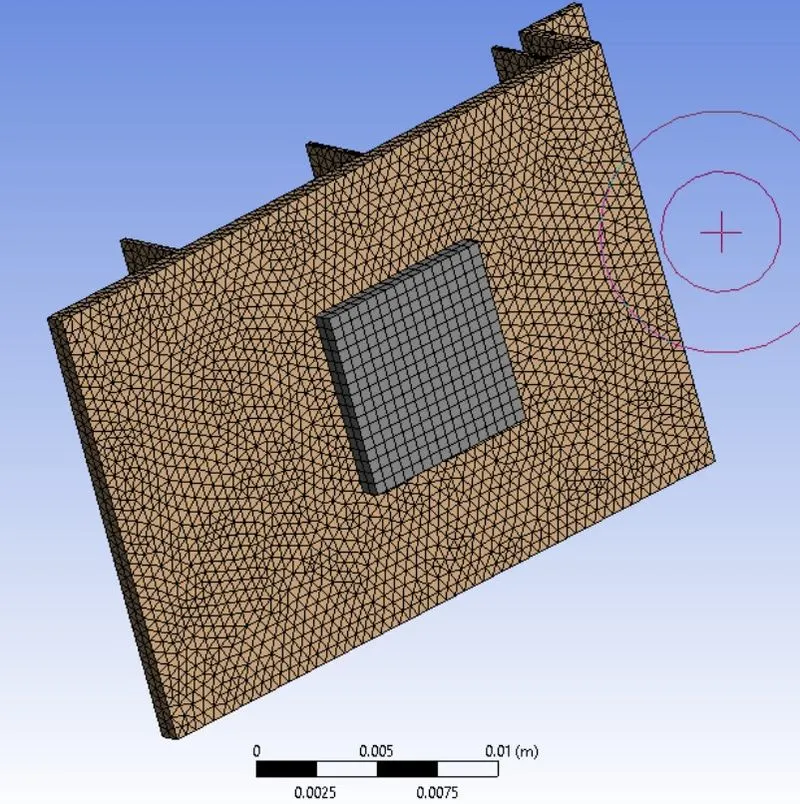
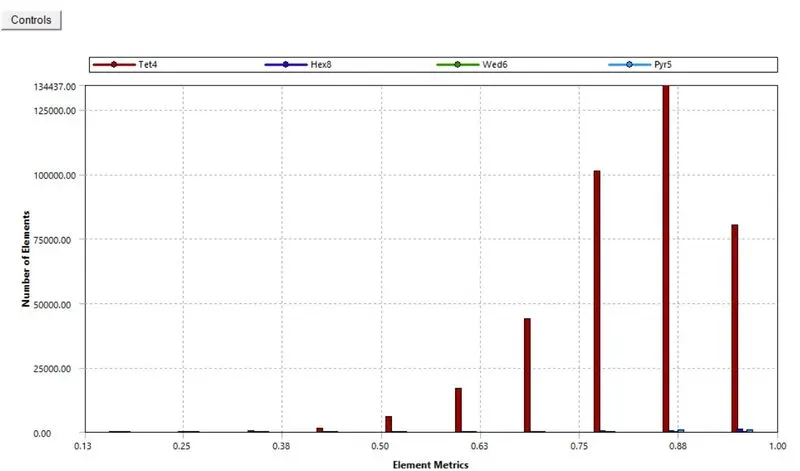
To capture the details in and around fin and processor:
Since the convection heat transfer is going to take place between the fin, processor, and air.
I choose body sizing for both fin and processor for refining.
The reason I am not including the backplate is heat transfer from the left side of the backplate will be far less so I choose to go with the body sizing of both fin and processor.
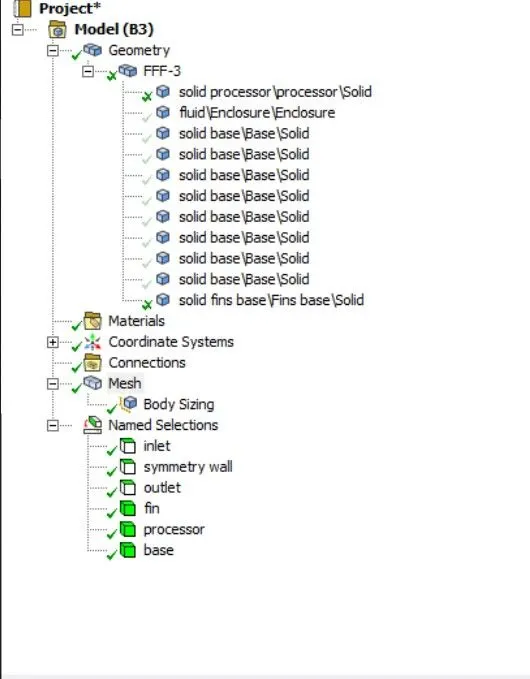
Naming:
Material :
Backplate : wood,
fins : aluminum,
processor : aluminum
Heat generation:
Heat generation will take place in the processor
Assuming 5watt of heat is generated in the processor.
for 64`mm^3` of processor volume,
Heat generation is 7.8e7 `w/m^3`
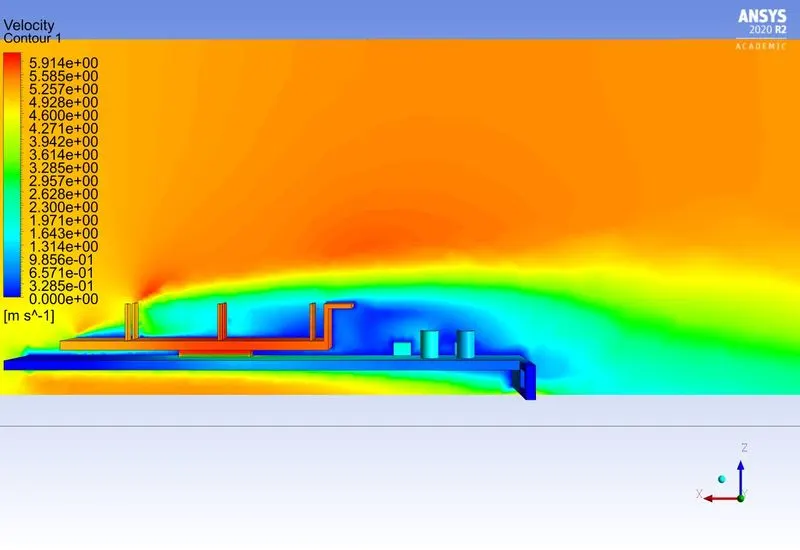
Velocity comparison:
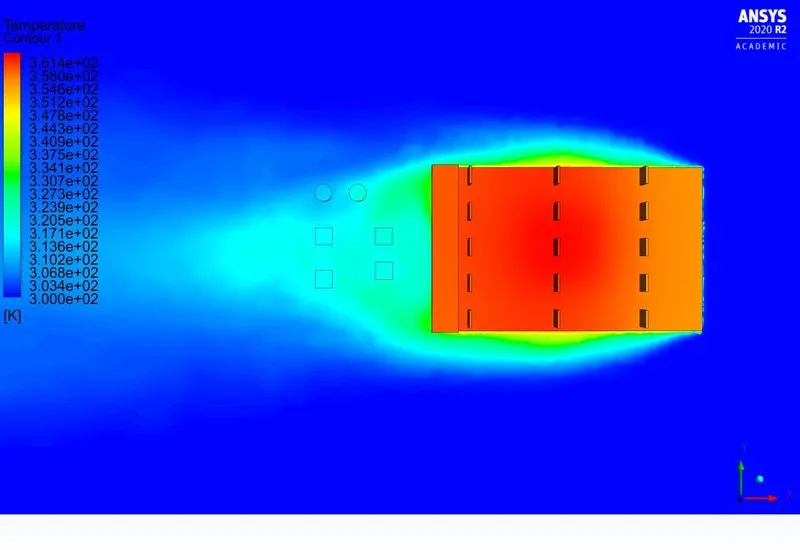
| Velocity | 1m/s | 3m/s | 5m/s |
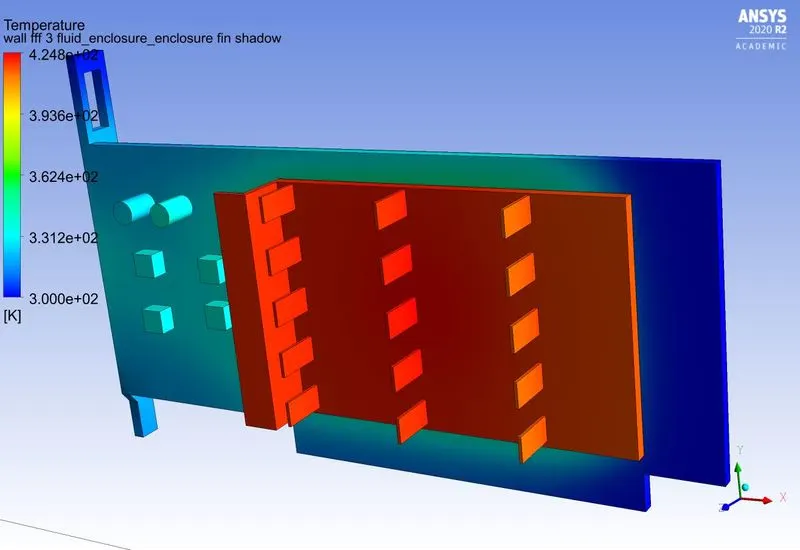
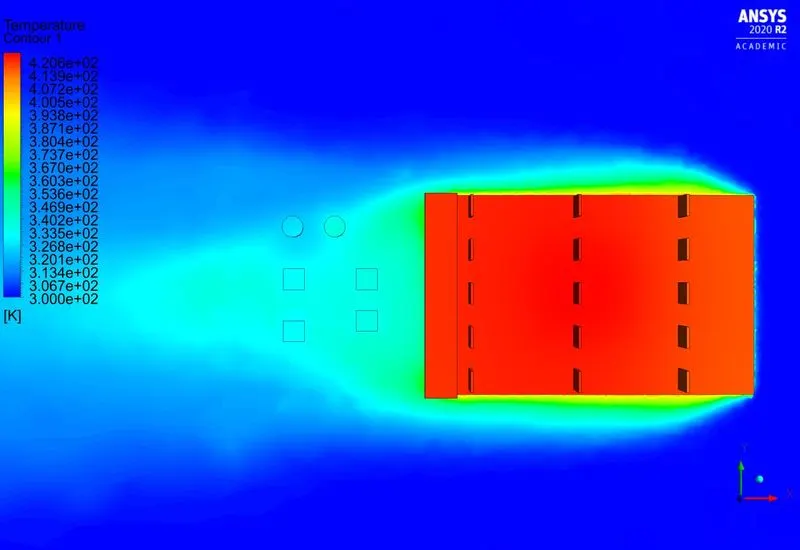
| Maximum temperature | 424.8 | 361.4 | 345.8 |
| Outlet temperature[K] | 301.987 | 300.673 | 300.404 |
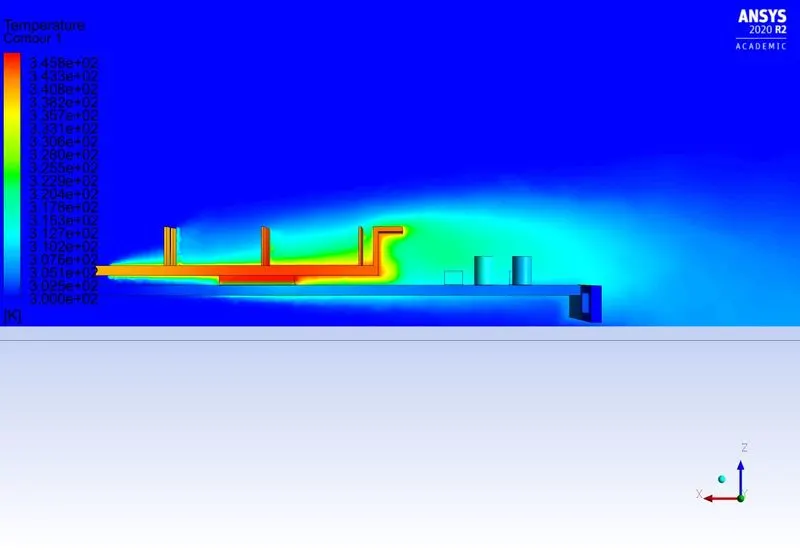
the difference in maximum temperature is higher for 1 and 3 m/s when compare to 3 and 5 m/s.
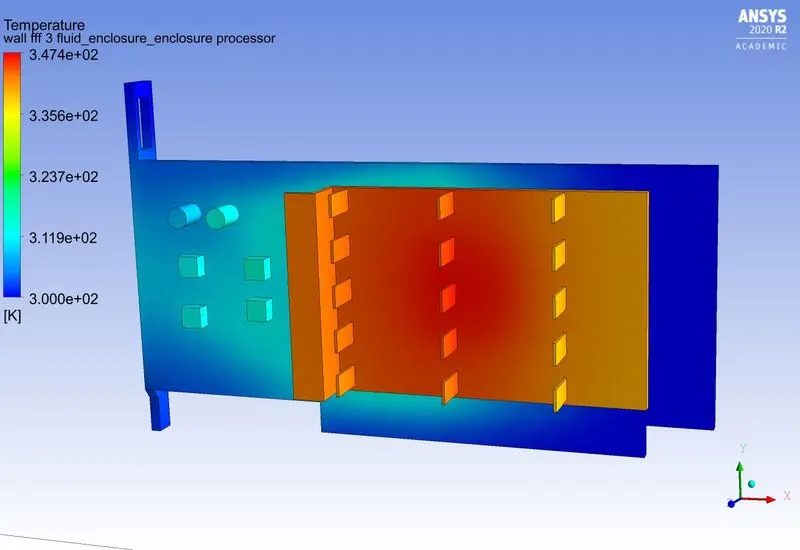
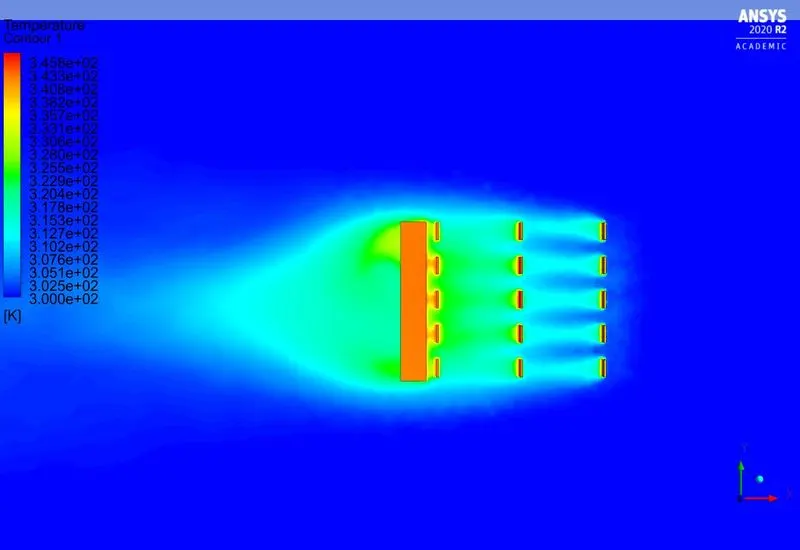
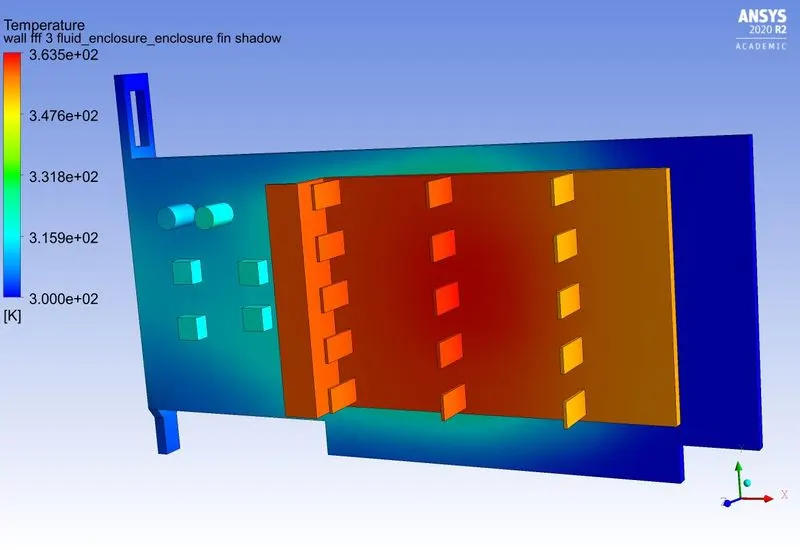
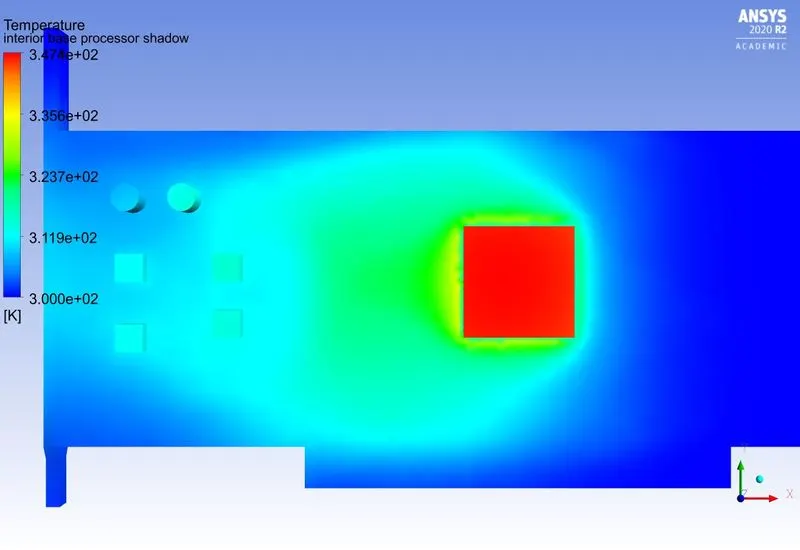
Temperature contour of XY plane in the processor:
5m/s:
3m/s:
1m/s:
Convergence:
(i) Residuals:
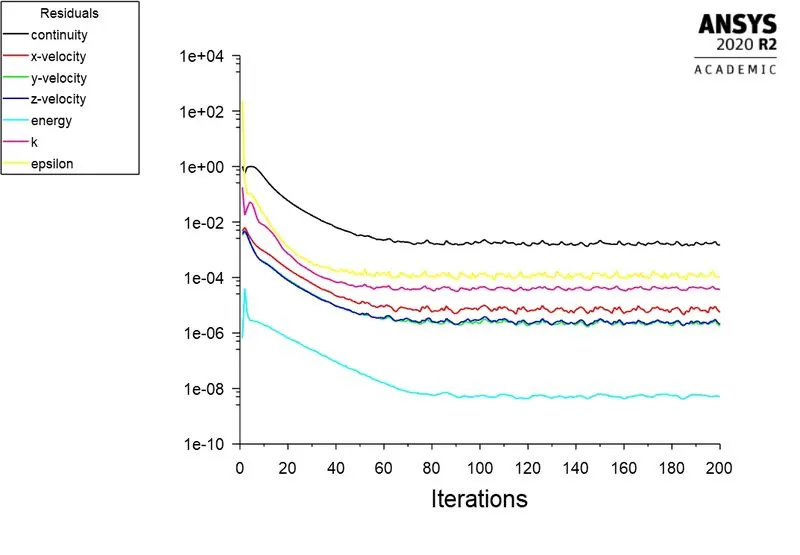
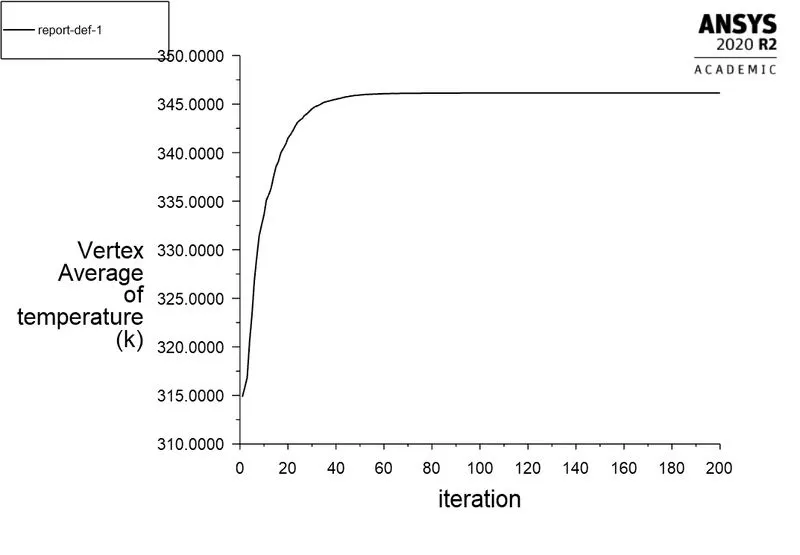
since there is no change in residuals and vertex average of temperature we can that the solution is converged.
Potential hotspot:
Processor, contact surface of fin and processor is the hotspot on the model.
Conclusion:
- Thus the simulation of the graphics card on Ansys fluent is done.
- Velocity is directly proportional to the maximum temperature of the Processor.
- Heat transfer Coefficient `[W m^-2 K^-1]` is 415.328.