Mesh Hood component with quality criteria using Hypermesh
AIM: To Mesh the given Hood component with the given quality criteria.
KEYWORDS: Aspect ratio, Warpage, Skewness, Latch, Hinge, Inner & Outer Extract.
SOFTWARE: Hypermesh
OBJECTIVE:
To clean up the geometry for each part and create the Midsurface.
After creating the midsurface, mesh the part with the given quality criteria.
After meshing, assign the thickness for each part.
INTRODUCTION:
HyperMesh is the market-leading, multi-disciplinary finite element pre-processor which manages the generation of the largest, most complex models, starting with the import of CAD geometry to exporting a ready-to-run solver file. ... Generating high-quality mesh quickly is just one of HyperMesh's core competencies.
Here, the component is given as Hood which consists of 5 sub-parts Latch, Hinges, Inner panel & Outer panel. For all the parts geometry clean up is performed and midsurface is created. After the midsurface, meshing is applied based on the quality criteria.
( I ) Geometry Cleanup: Here, all the parts are fully defined and there is no improper surface are generated so geometry cleanup is not a major role in this component. The Actual Model is shown below,
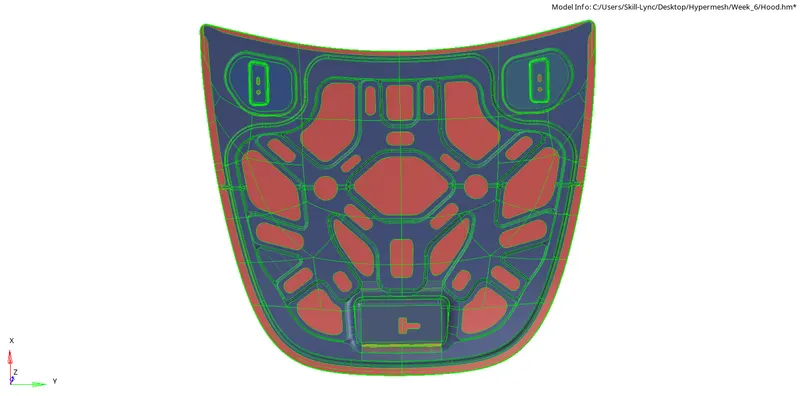
Figure 1: Bonnet Assembly
( II ) Midsurface: The midsurface is performed as Skin_offset which is more accurate and recommended. The thickness for Hinge and Latch component is 1.2 mm and for Inner & Outer extract is 0.75 mm. The properties for all the components are created and also the material used is Steel. The midsurface is a one-time operation that is automatic.
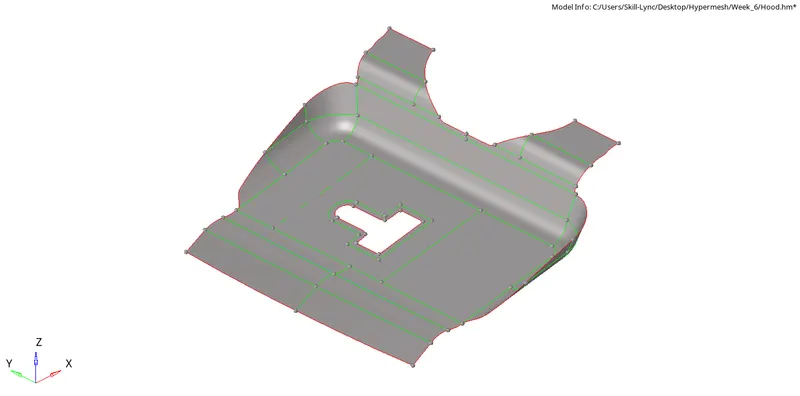
Figure 2: Latch component Midsurface
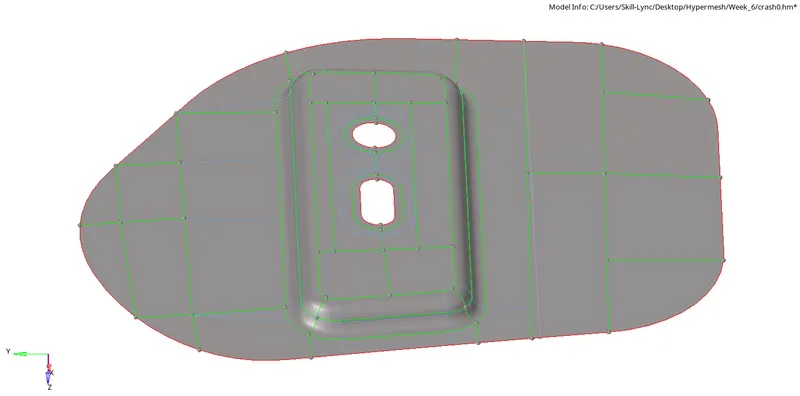
Figure 3: HInge component Midsurface
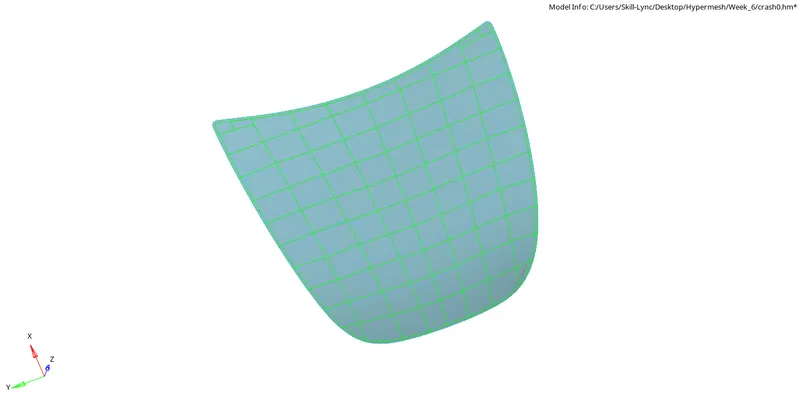
Figure 4: Outer component Midsurface
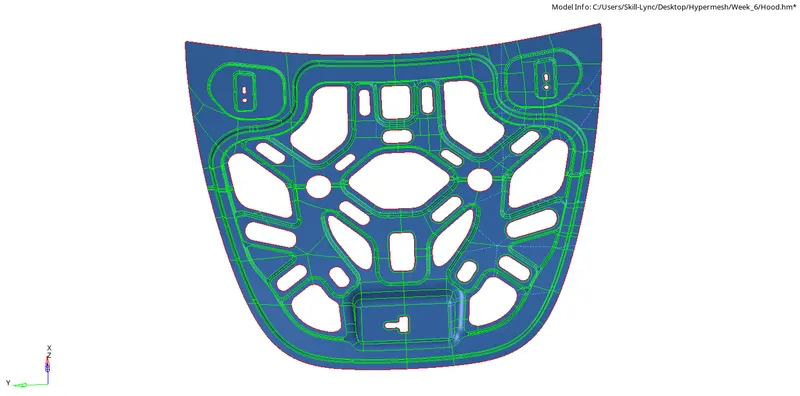
Figure 5: Inner component Midsurface
( III ) Meshing: After created the Midsurface, Meshing is applied based on the quality criteria. The mesh is applied region-wise in order to get the proper flow and better accuracy. After meshed all the components, the thickness should be assigned to know the capturing of mesh. The trias found in overall assembly is 1.1% with a proper flow. The trias are avoided near edge fillets, free edges, and opposite trias.
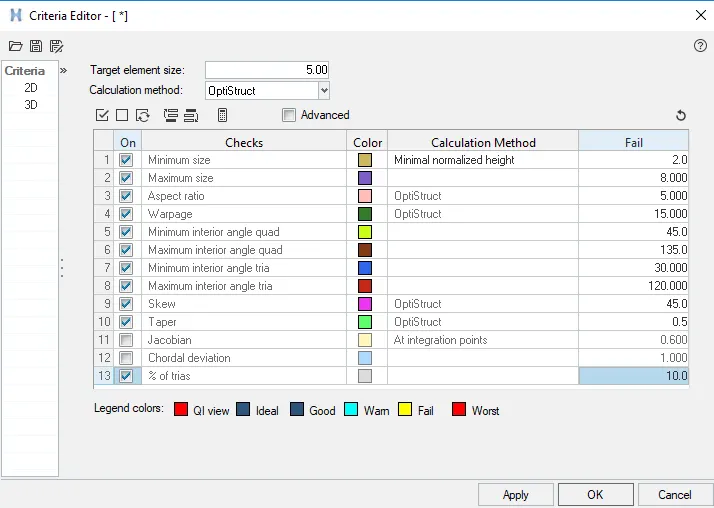
Figure 6: Quality Criteria
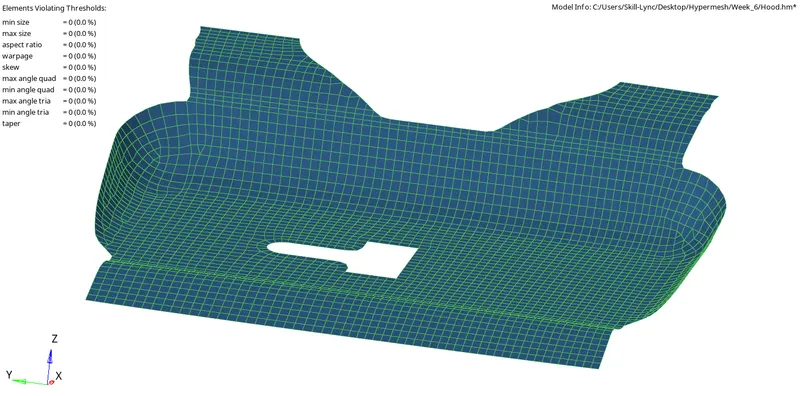
Figure 7: Meshed Latch component with quality index
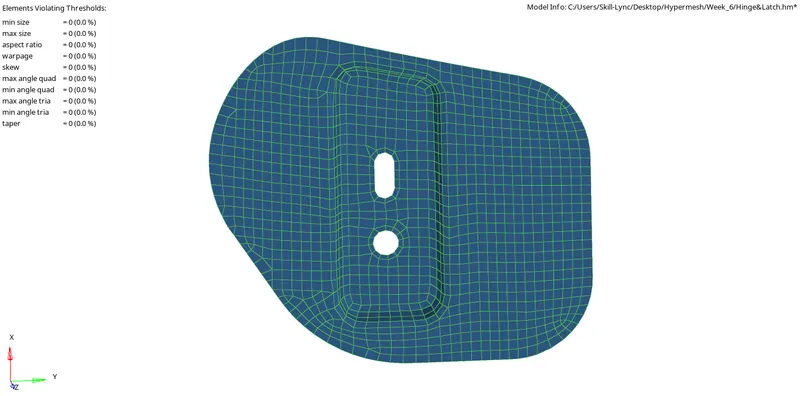
Figure 8: Meshed Hinge component with quality index
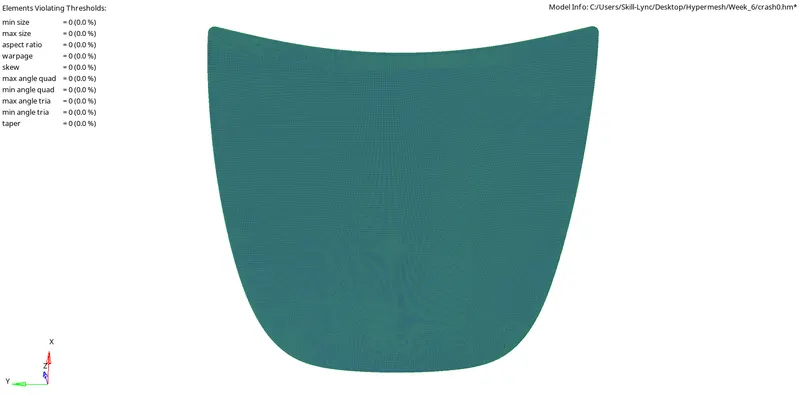
Figure 9: Meshed Outer component with quality index
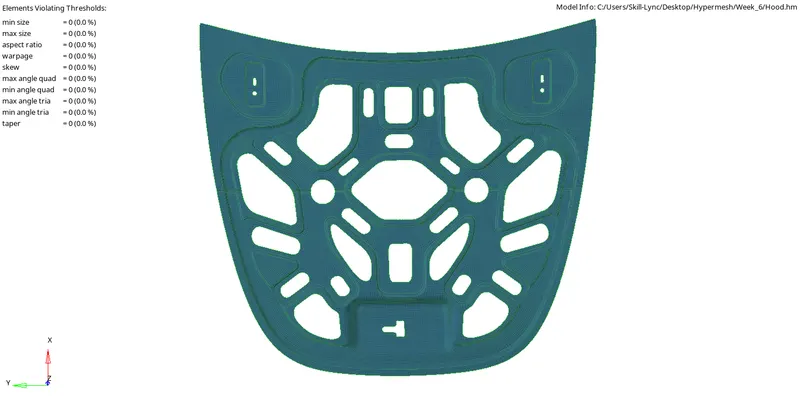
Figure 10: Meshed Inner component with quality index
RESULTS:
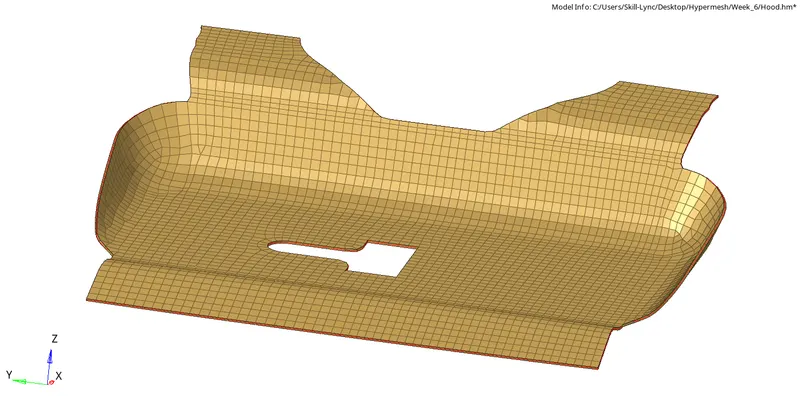
Figure 11: Meshed Latch component with the assigned thickness
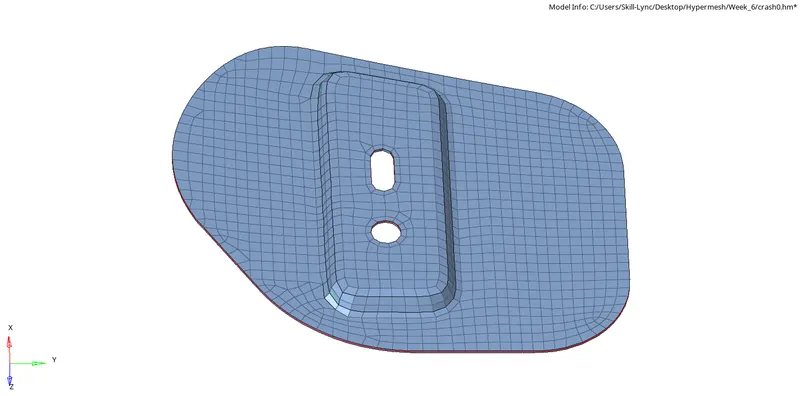
Figure 12: Meshed Hinge component with the assigned thickness
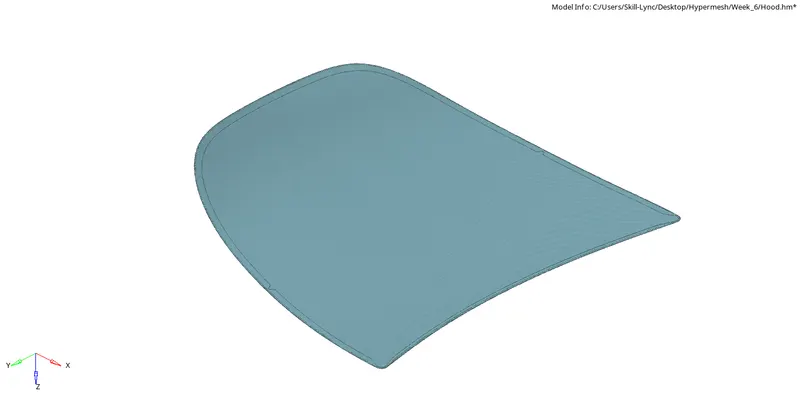
Figure 13: Meshed Outer component with the assigned thickness
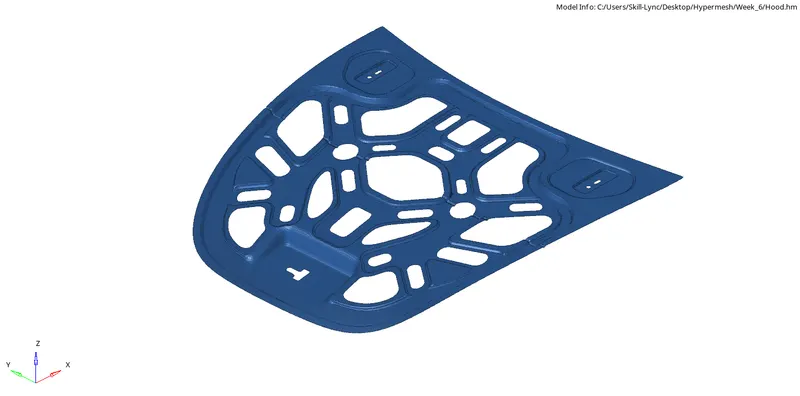
Figure 14: Meshed Inner component with the assigned thickness