Project - Deploying Automotive Connections on a Rear Door using ANSA Connections Manager
Rear door Connections
Aim
Connect the various components of the door using different connections.
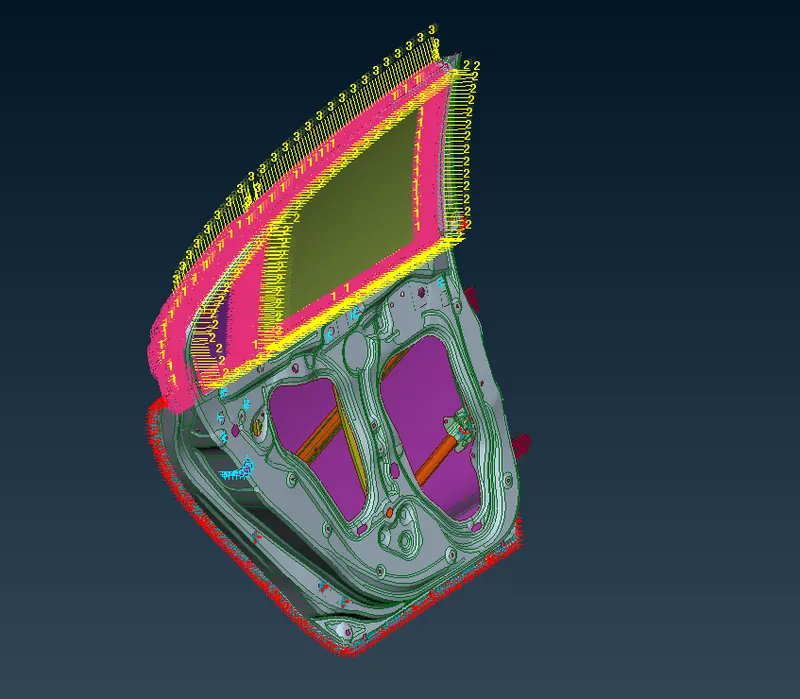
Parts of a Door
- Doors are made of sheet metal and panels mostly.
- Exterior panels are made of sheet metals.
- Exterior door handle is made of plastic or metals - Both the interior and exterior door handles are attached to a long metal rod that extends to the door latch.
- Car doors have windows that can be operated either manually or automatically. Manual windows are operated with a mechanical crank, while power windows are controlled with a switch, electric motor, and accompanying components.
- Trim which is usually made from plastic or rubber helps secure the window in place and provides a certain level of protection for the glass.
- The door hinge is where the door is attached to the car’s body. Like any hinge, it is the mechanism that allows you to open and close the door. Most door hinges are made from strong metal, such as steel.
-
Door seals and weatherstripping prevent leaks, moisture, and wind from entering the passenger cabin. They also help create a tight fit between the door and the body of the car.
Typically, they’re made from rubber and can be fastened around the door using sealants or specialized fasteners.
- The pillar is vertical support integrated into the car window area that supports the windshield and roof (or soft top, if you’ve got a convertible). Different vehicles have different car door pillar designs.
- The door panel covers internal parts like the window regulator, the power window motor, and the wiring. In older cars, door panels used to be made out of cardboard and upholstered with material that matches the rest of the upholstery within the cabin. On the other hand, most modern cars have door panels made of plastic
These parts are connected using various connections like weld, bolt, bush.
Procedure
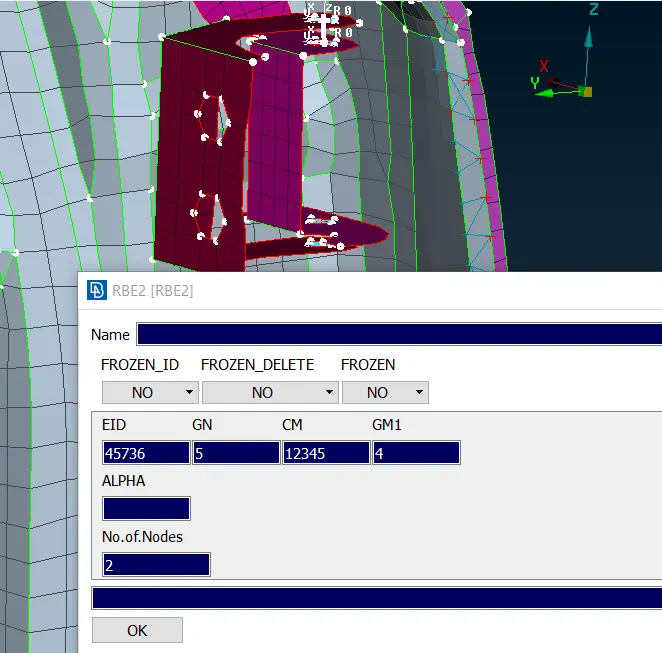
- Hinge - Create rbe2 element using many nodes - connect the hinge and panels using the two-node rbe2 option. DOF in rotation z-axis is set free for the hinge.
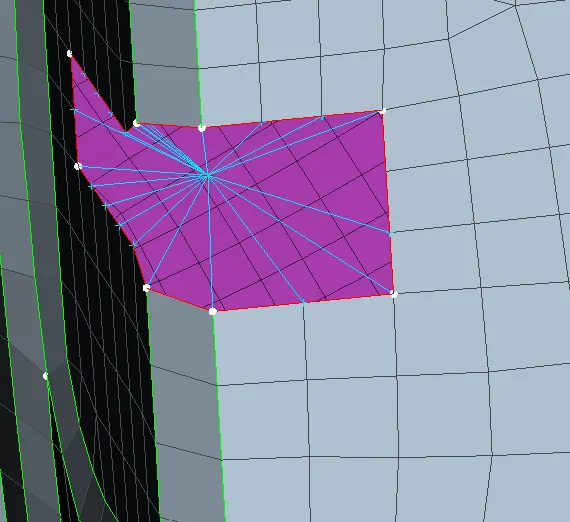
- Latch - Cluster rbe2 is used to represent the latch part of the door.
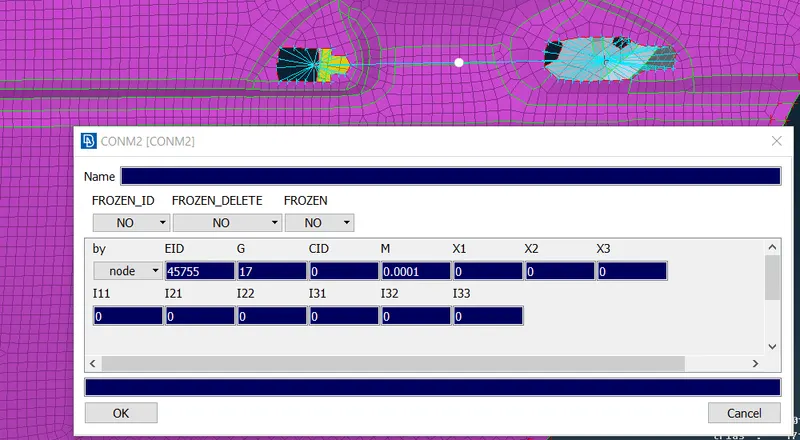
- Door Handle - Cluster and 2 node rbe2 is used to represent the handle along with concentrated mass in tonne
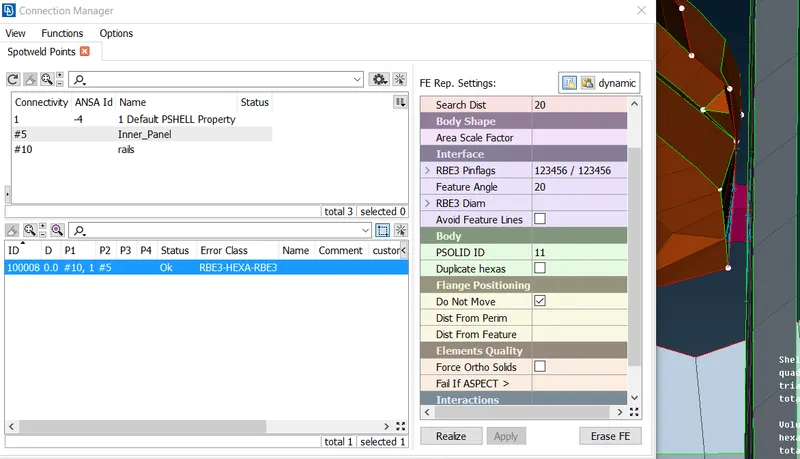
- SpotWeld Hexa Mesh - 3d point is created to generate the solid spot mesh between the inner rails and panel. Input the two parts which have to be connected. Provide the search parameter and weld property.
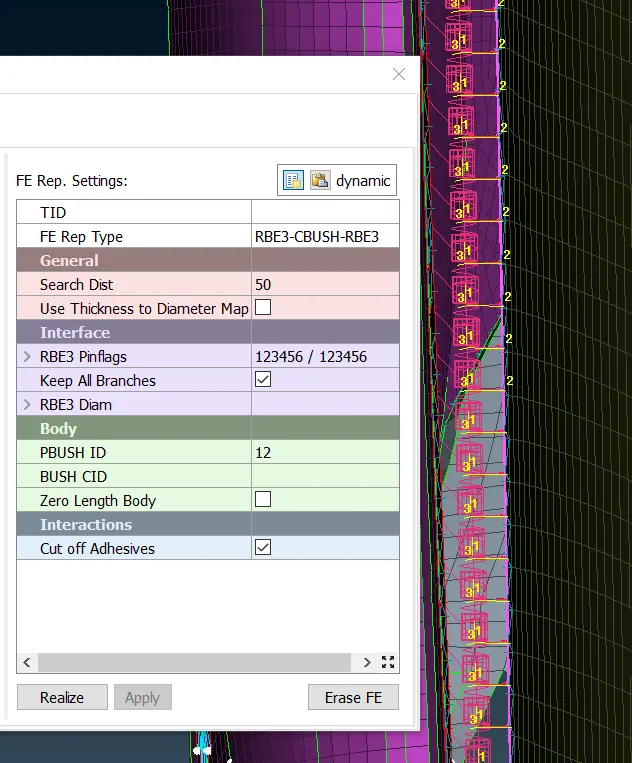
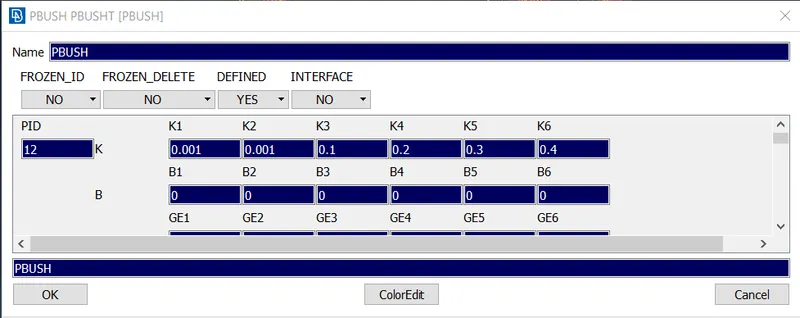
- Weather Strips - Connects the window glass with the panels - RBE3-CBUSH-RBE3 element is to represent the weatherstrip. Curves are converted to a seam line to generate the stip between the two parts. The cbush element needs to be aligned to the global coordinate system, Modify the CID to 0.
Learning outcome
Tailor weld ( tailored blanks) sheet metals are used to reduce the cost and weight reduction of door panel without compromising the design capability of the door. Butt-joint laser-welded sheet metal allowed the use of diversified steels without the drawbacks of spot welding. Connecting various types of parts using different FE representations.
Conclusion
The door panels were connected using various connections are per the given parameters and objective.
Drive link: https://drive.google.com/file/d/1mwKnesn_jRpr8AqQHu8vTkNb_jM8OQnS/view?usp=sharing