Week 6-3D Tetra Meshing Challenge
OBJECTIVE:
To understand the multiple techniques of deploying 3D tetra mesh for a solid component by different methodologies and comparing the mesh quality by each method.
Types of Tetra meshing:
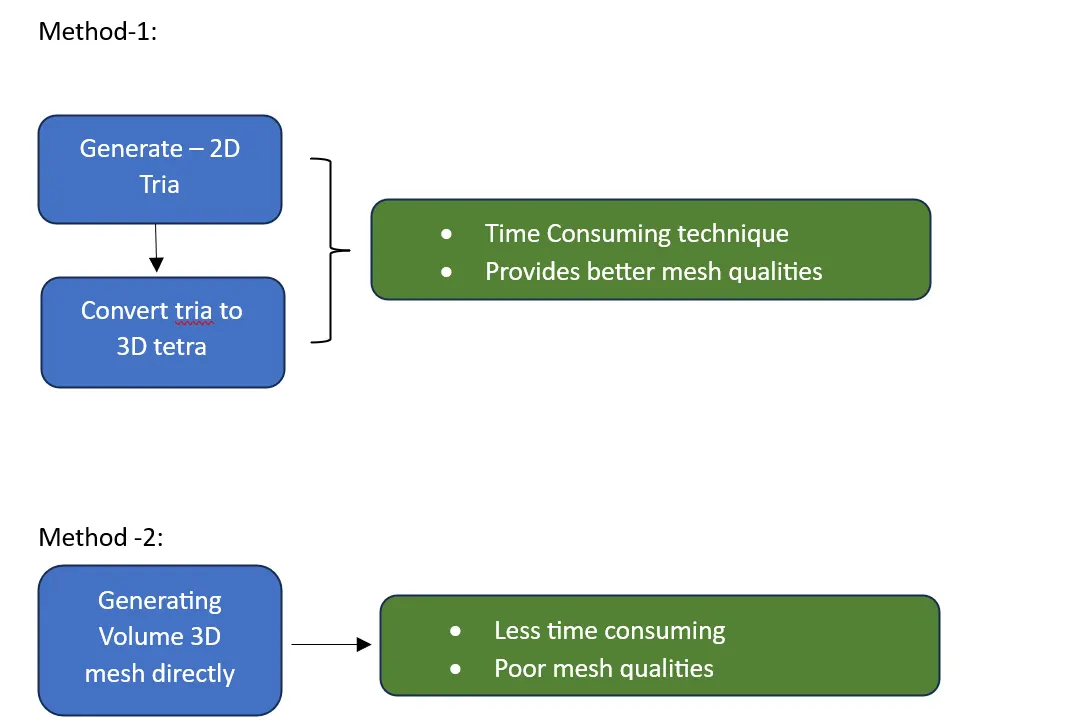
Tetra meshing is a 3D mesh element where each node has 3 DOF. However, these meshes can be deployed by two different methods which vary in their methodology effecting the meshing time, mesh quality etc.
MODEL:
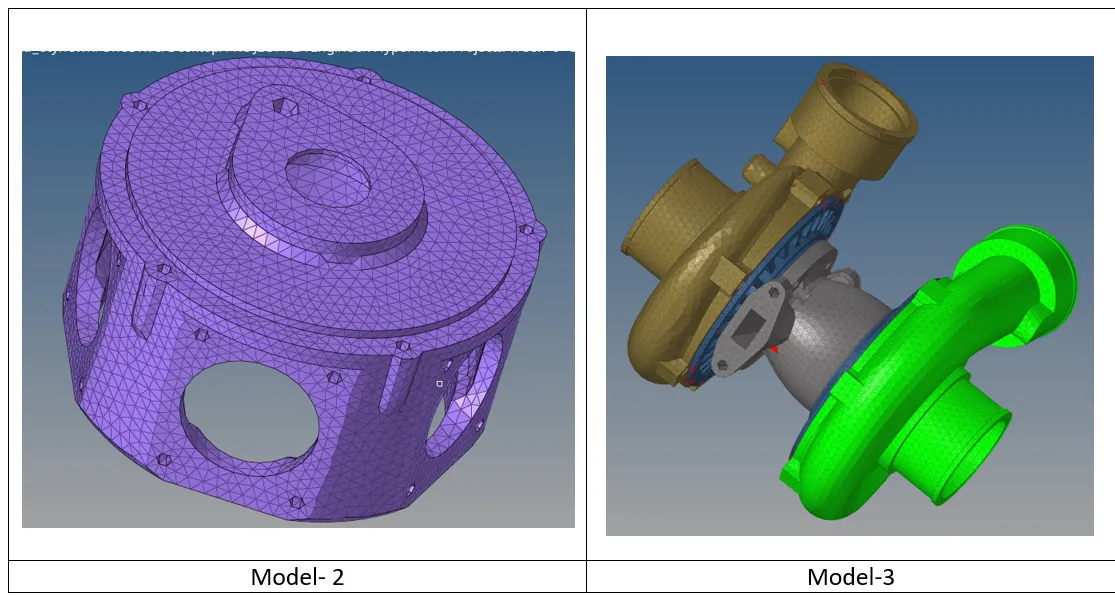
In this project, the following three models are preprocessed with tetra mesh:
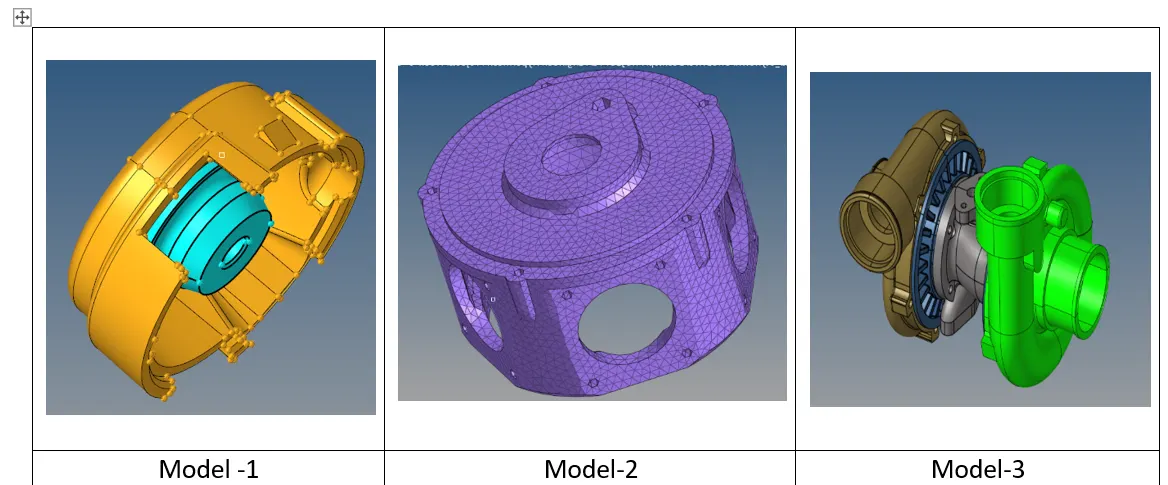
Model-1:
This model is meshed with a intent of obtaining a good quality of tetra mesh. Hence, here the mesh is deployed using method-1.
Initially, we will generate a 2D trias, ensuring that the 2D tria meets all the quality criteria & finally these good quality trias will be converted in to tetras.
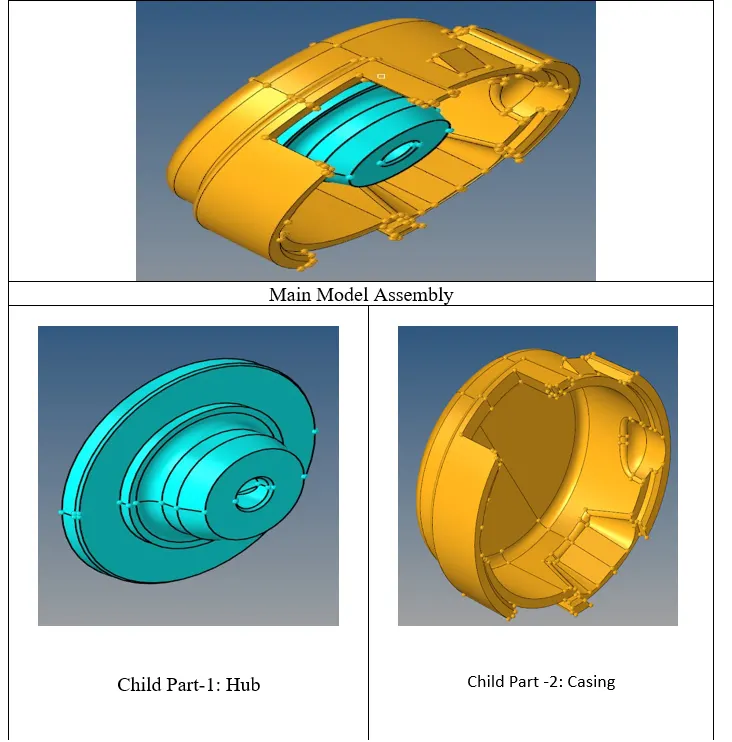
The above assembly goes in to geometric clean up & then 2D meshing. Even after deploying a 2D tria element, there are multiple elements that doesn’t fits in the quality criteria of the project:
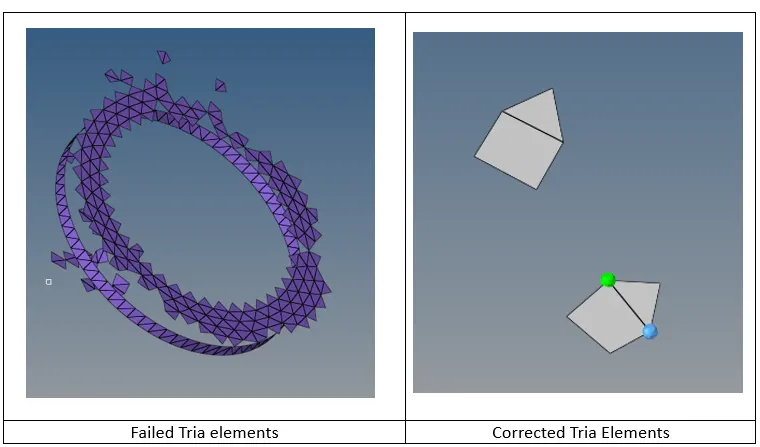
With reference to the above table, whichever elements fails the quality criteria has to be corrected manually one by one which is a time-consuming job. However, it produces a high-quality mesh.
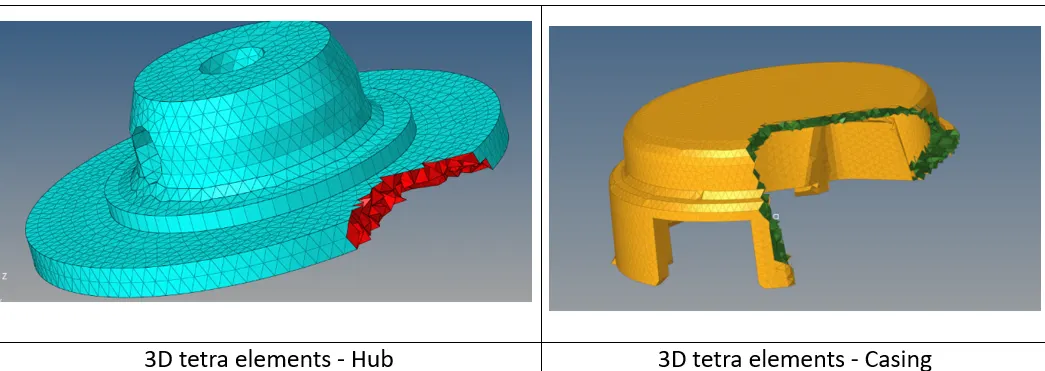
Once, 2D mesh is successfully deployed, then it can be converted in 3D tetra using 3D mesh tools in hypermesh
MODEL -2 & Model-3:
In both the models, the 3D tetra elements are deployed using quick tetra/ volume tetra tools. In which a lot of time is saved in deploying a surface 2D tria mesh & correcting it.
...