Week- 5 - Solid meshing
SOLID MESHING :-
TITLE: Solid meshing of Rear view mirror component.
SUMMARY: A vehicle's rear view mirror component is consider here, we perform a solid meshing on it. Initially the solid geometry is consider, which is checked and certain errors, abnormalities are fixed followed by its mesh execution. Here, after regular mesh execution we deployed a volume mesh on given component which allows to fill the gap between unmesh closed volume space with unstructued 3D elemental type. Followed by checking quality criteria such as Max, Min length for 2D elements while Tet collapse for 3D elements.
INTRODUCTION: Generally,a rear-view mirror is a flat mirror in automobiles and other vehicles, designed to allow the driver to see rearward. Here, we are suppose to mesh its geometry using solid meshing method. The solid meshing itself allow to mesh the entire component without taking any mid surface. Later Volume Mesh methodology allows to fill the empty gaps between the component's surface with unstructured 3D elements. The Tetra Rapid algorithm is used later to do so.
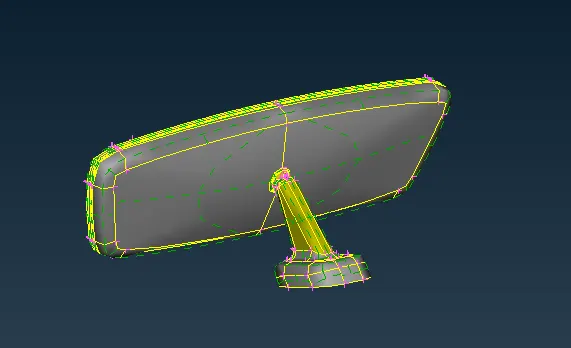
PROCEDURES:
1 . The rear view mirror solid geometry is execute under geometry check manager for any triple cons, cracks or other unwanted abnormalities and are later fixed.
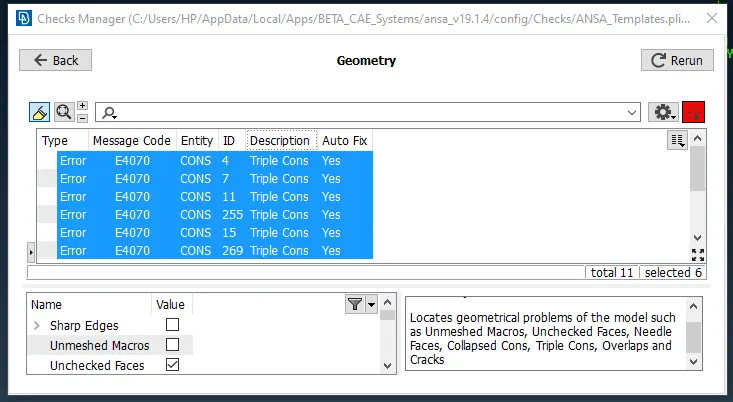
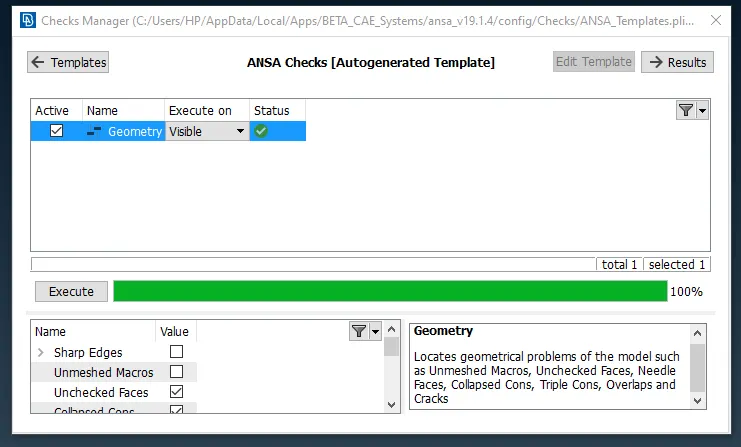
2.The model under mesh module is provided length for both perimeter and macros as 1mm each in order to get fine visibility purpose.
3.First things first, we assign the required quality criteria values which are as follows,
MESH GENERATION :-
Following steps were used to generate the solid mesh using Tetra elements after CAD clea
up process:
a) The quality criteria was assigned and the average element length was defined as given
below:
| S.No | Quality Criteria | Values |
| 1 | Target/Average length | 1 |
| 2 | Minimum Length | 0.5 |
| 3 | Maximum Length | 2 |
| 4 | Tet collapse | 0.2 |
b) The CAD model was refined using 'Length' option from the MESH deck with a perimeter
size of 1.
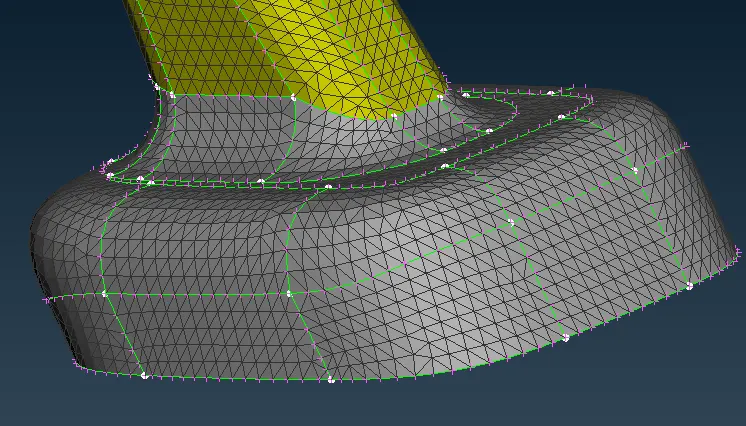
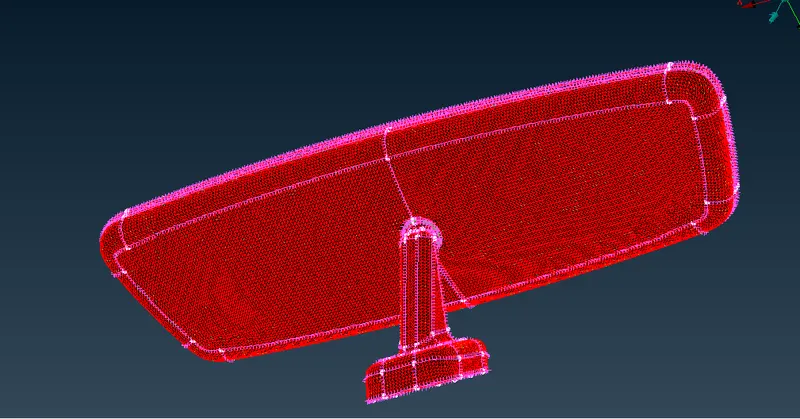
c) Curved surface were meshed using 'Ortho Tria' elements to capture the curved face
more precisely and plane surface were captured using 'Tria' elements which can bee seen
in Figure below
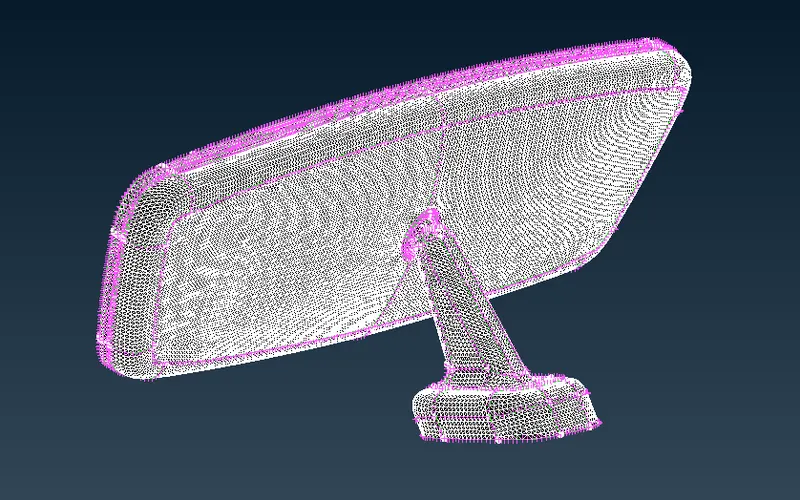
d) All the off elements which were failing for maximum length and minmum length were
being solved using 'Reconstruct' option. Figure 3.2 shows no off element on the surface
mesh.
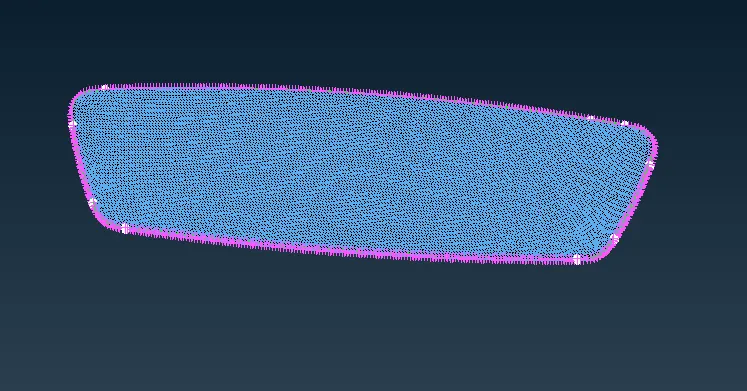
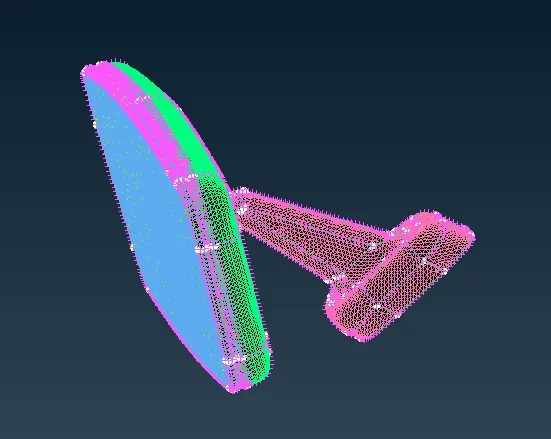
e) New PIDs were defined for the four different parts of the model. (Command Path =
V.Mesh>Volumes>Define)
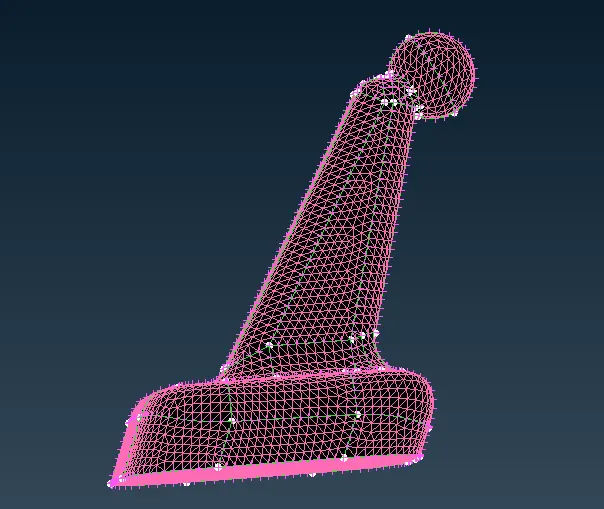
These new PIDs for solid were meshed using 'Tetra Rapid' algorithm which does the volume
meshing faster without following the mesh pattern used in the surface meshing
|
S.No |
Quality Criteria |
Value |
|
1 |
Tet collapse |
0.2 |
conclusion :
It was also noticed that the volume mesh can't be generated if the geomtery is open. So
the geometry has to be closed. Another important thing which has to be taken care of is
the meshed surface should be without any kinks and dips after meshing which was
achieved in here clear the Tet collapse quality criteria.
Result:
Tetra volumetric mesh is done with all quality criteria.
note: i have attached the ansa file along with this report